Need a full custom project? See the options below.
Need a full custom project? See the options below.
This Ansys silo filling pressure model shows how wheat loads a cylindrical steel silo and how the reinforced wall responds. Compare a centered hopper outlet with an eccentric outlet, then follow the grain-wall contact loads into a separate shell stress analysis. The download includes four runnable Workbench studies, a Python launcher and a step-by-step PDF tutorial.
Use this worked finite element analysis to evaluate normal grain pressure, compare a column line with a mid-bay line, and read meridional and hoop stresses from the two faces of a reinforced steel wall. The plots below give the quantities, measurement locations and elevation ranges used in the paper comparisons.
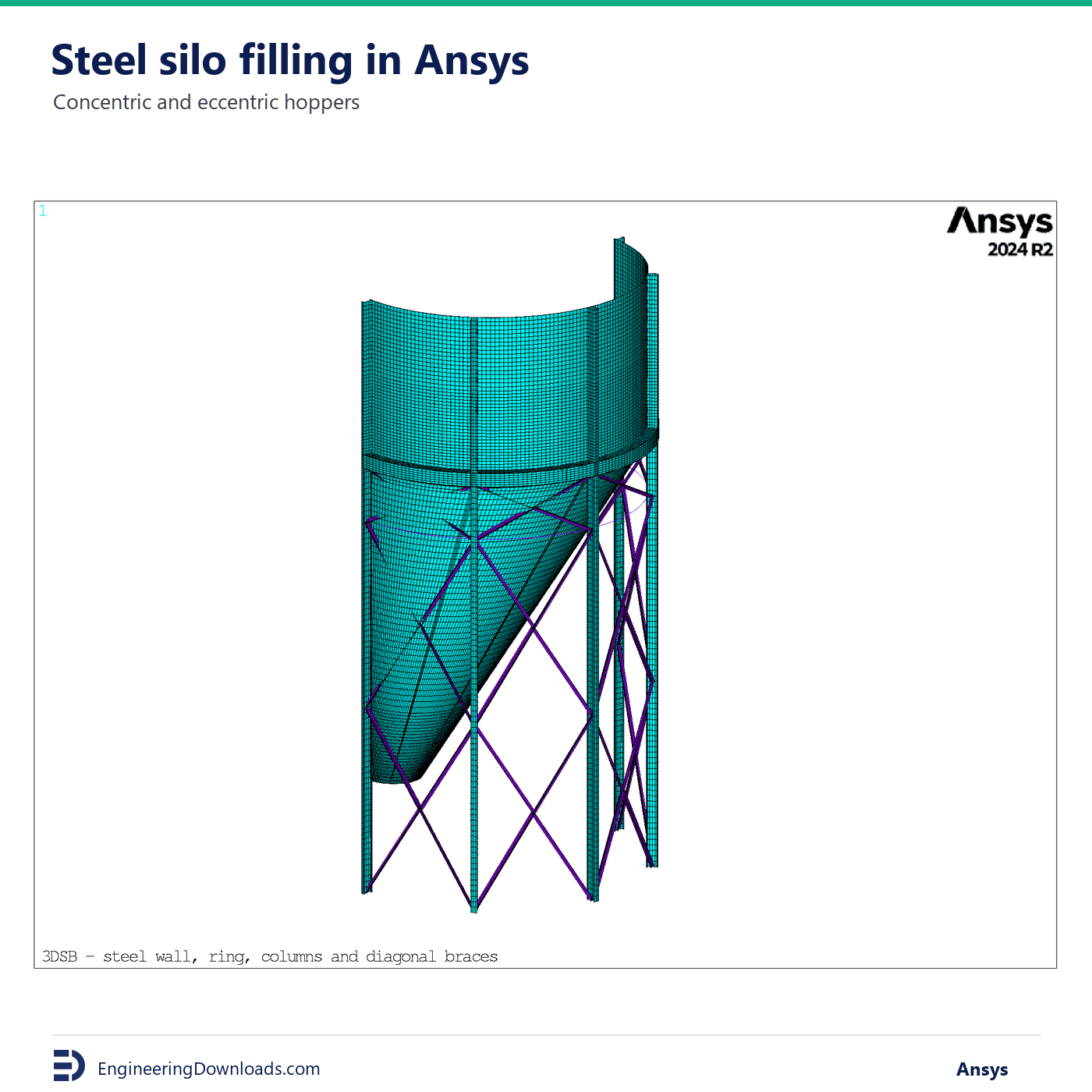
Both silos have a 4 m internal diameter, a 14 m cylindrical barrel, a 4.25 m hopper and a 0.75 m outlet. Silo A has a concentric hopper. Silo B keeps the same barrel and offsets the outlet center by 1.625 m. The concentric model uses a 45° sector and the eccentric model uses a 180° half-domain. Elevation is measured from the outlet, with the hopper-to-barrel transition at 4.25 m.
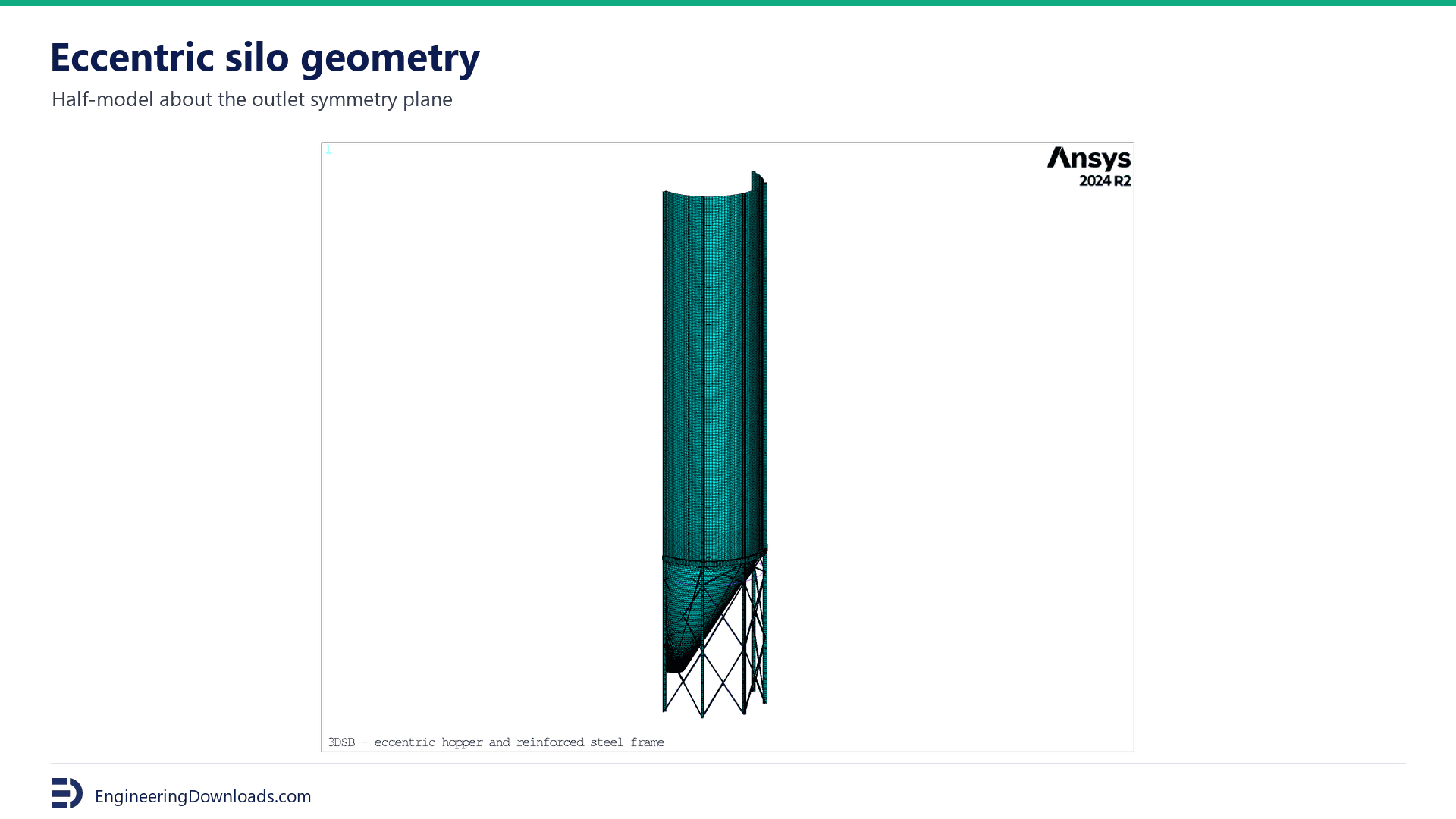
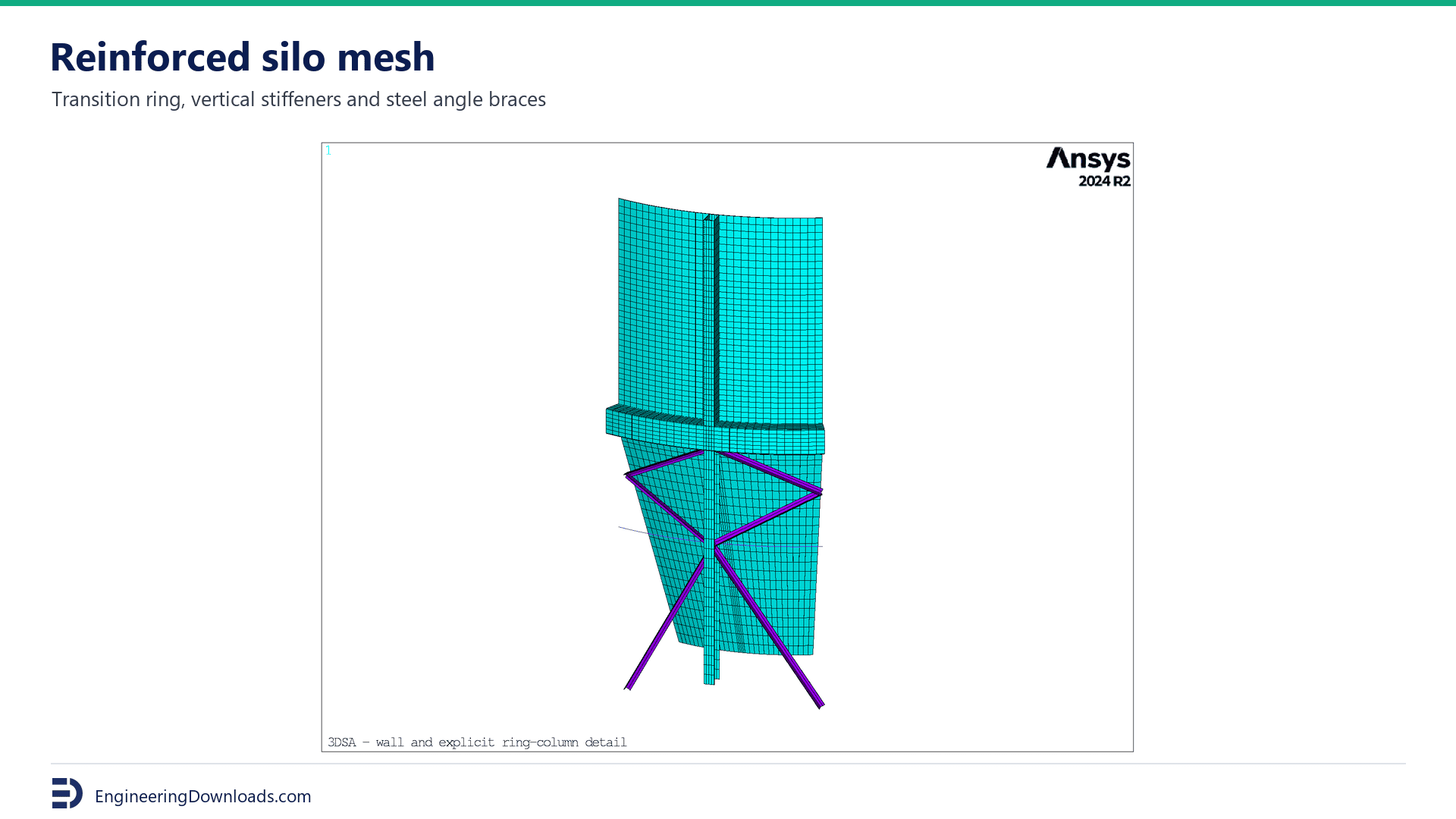
The detailed wall models include a double UPN180 transition ring, a UPN80 lower ring, IPE140 support columns, vertical rectangular hollow-section stiffeners and diagonal steel angle braces. The nominal shell is 4 mm thick. The wall model uses 8 mm at the stiffener overlap and 12 mm at the transition ring overlap. These details define where the grain loads enter the shell, rings and column supports.
The wheat is modeled as an elastic-perfectly plastic Drucker–Prager continuum. The material inputs include a unit weight of 8.388 kN/m³, Young’s modulus of 5.129 MPa, Poisson’s ratio of 0.32, cohesion of 3 kPa, internal friction of 25° and dilation of 17.6°. The wheat body force is applied with a gravity ramp g = λ × 9.81 m/s2, where the dimensionless multiplier λ rises from zero to one.
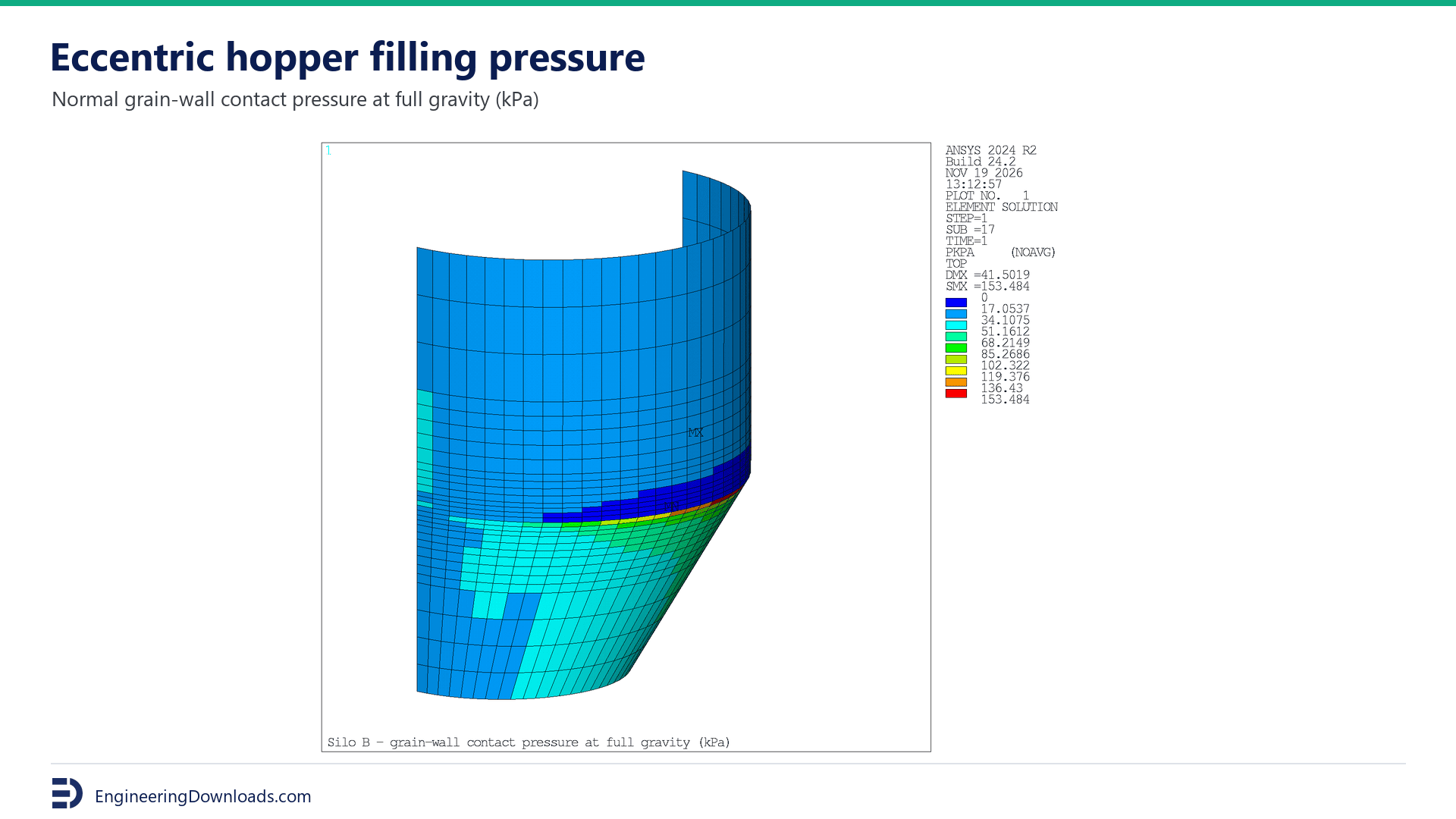
At the wall, Coulomb friction limits tangential traction to |τ| ≤ μp, where p is the compressive normal contact pressure, τ is tangential traction in the same units and μ = 0.25. The two reinforced wall analyses use the recovered normal and tangential grain tractions, steel self-weight and fixed column feet. The contact contour identifies the field used to recover the grain loads.
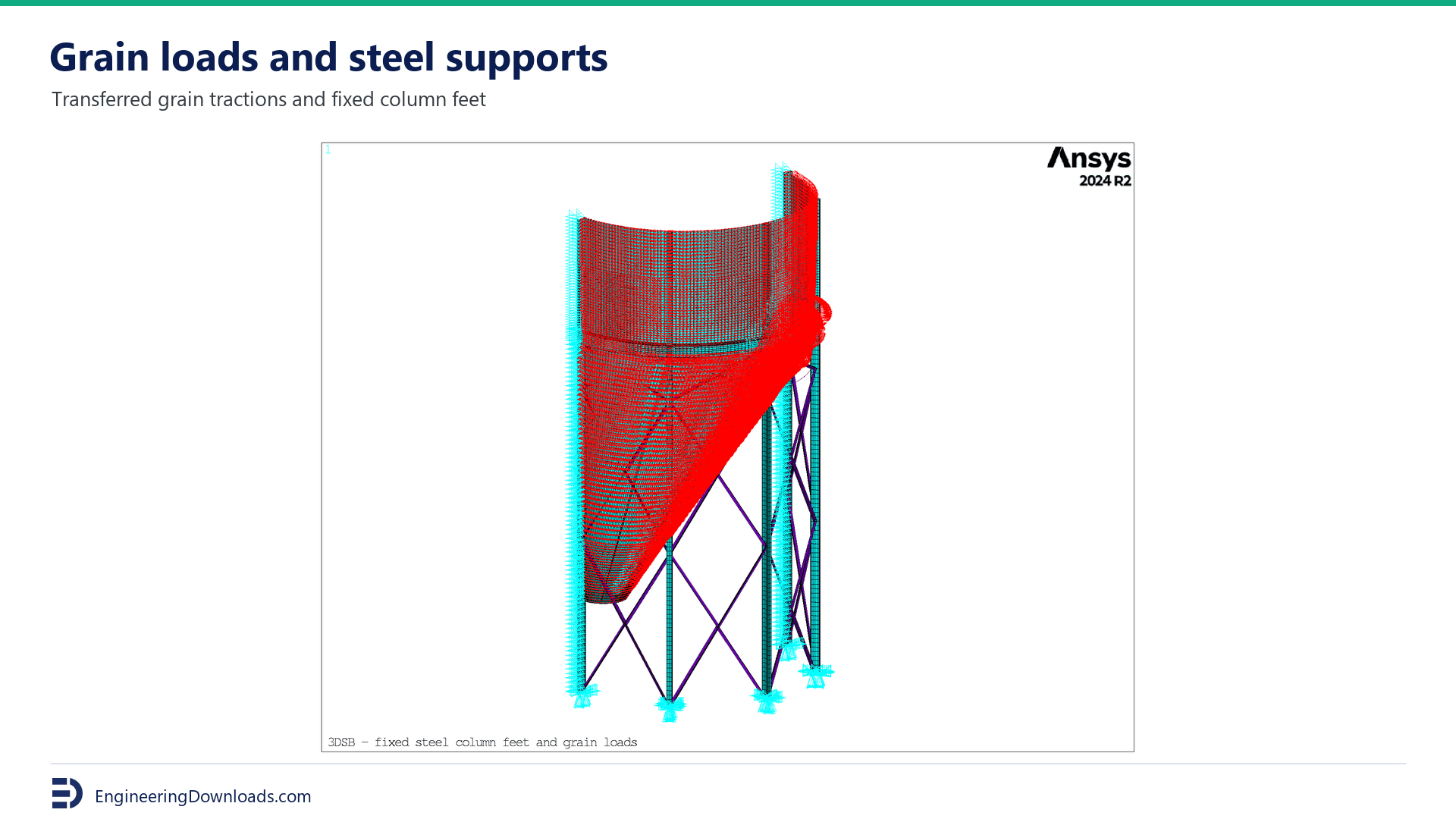
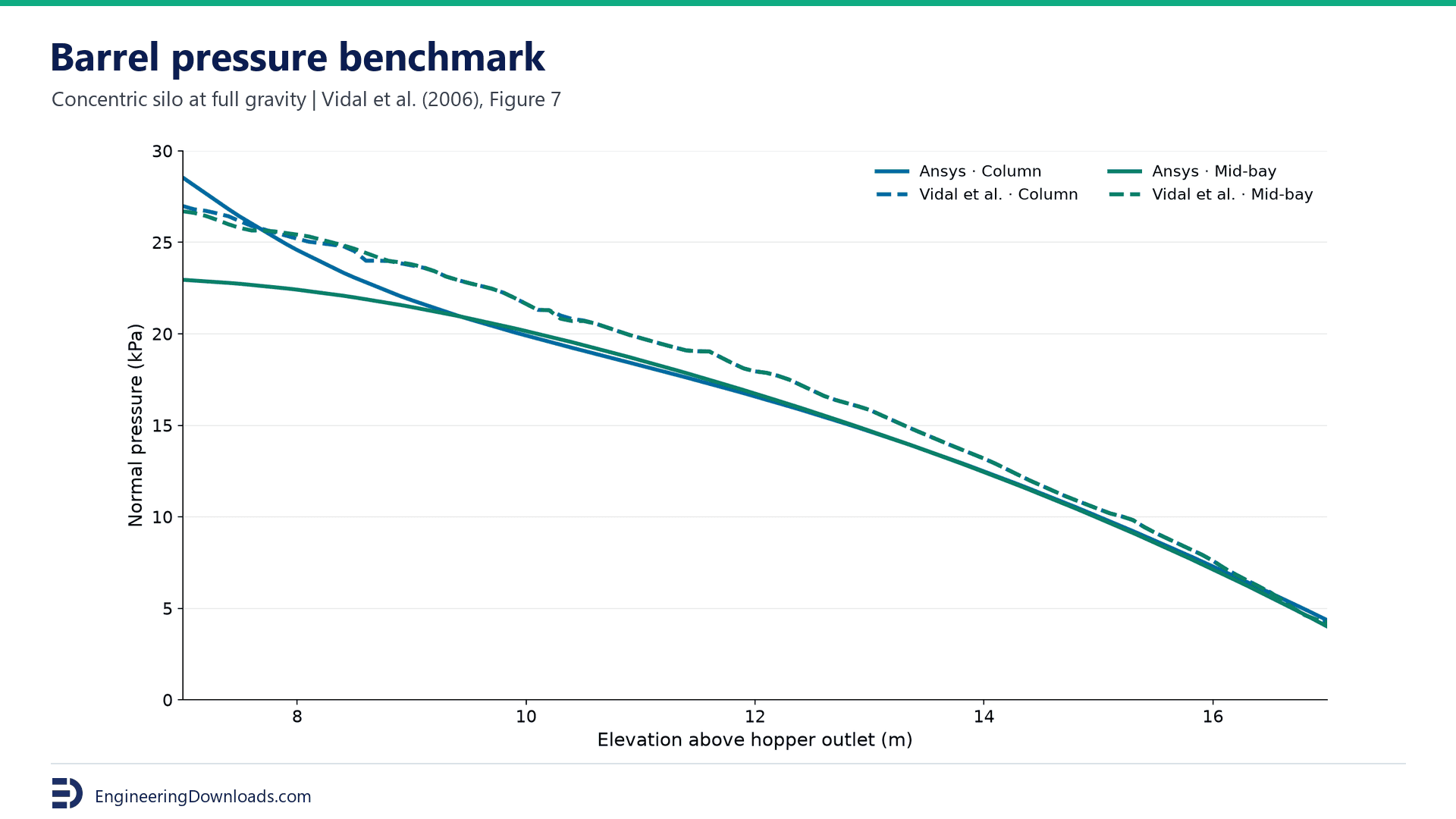
Figure 7 of Vidal et al. provides published finite element results along three vertical lines in Silo A. Comparing matched elevations at full gravity gives a mean absolute error of 1.02–1.40 kPa in the barrel and 7.71–7.84 kPa in the hopper. Here the mean absolute error (MAE) is the average of the absolute differences between the Ansys and digitized paper values at the same elevations.
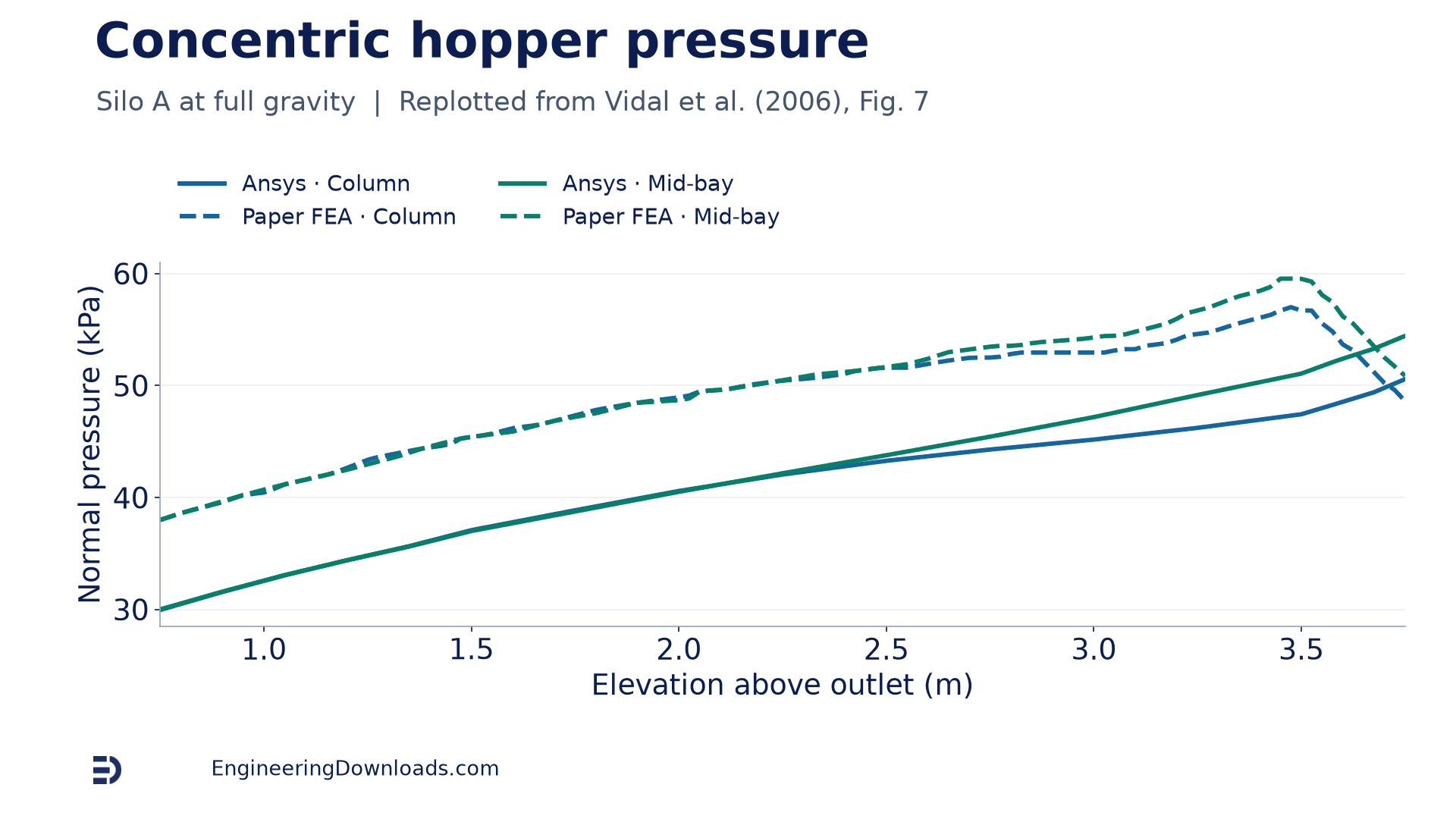
| Result line | Barrel MAE (kPa) 7–17 m | Hopper MAE (kPa) 0.75–3.75 m |
|---|---|---|
| Column, 90° | 1.02 | 7.84 |
| Intermediate, 78.75° | 1.38 | 7.78 |
| Mid-bay, 67.5° | 1.40 | 7.71 |
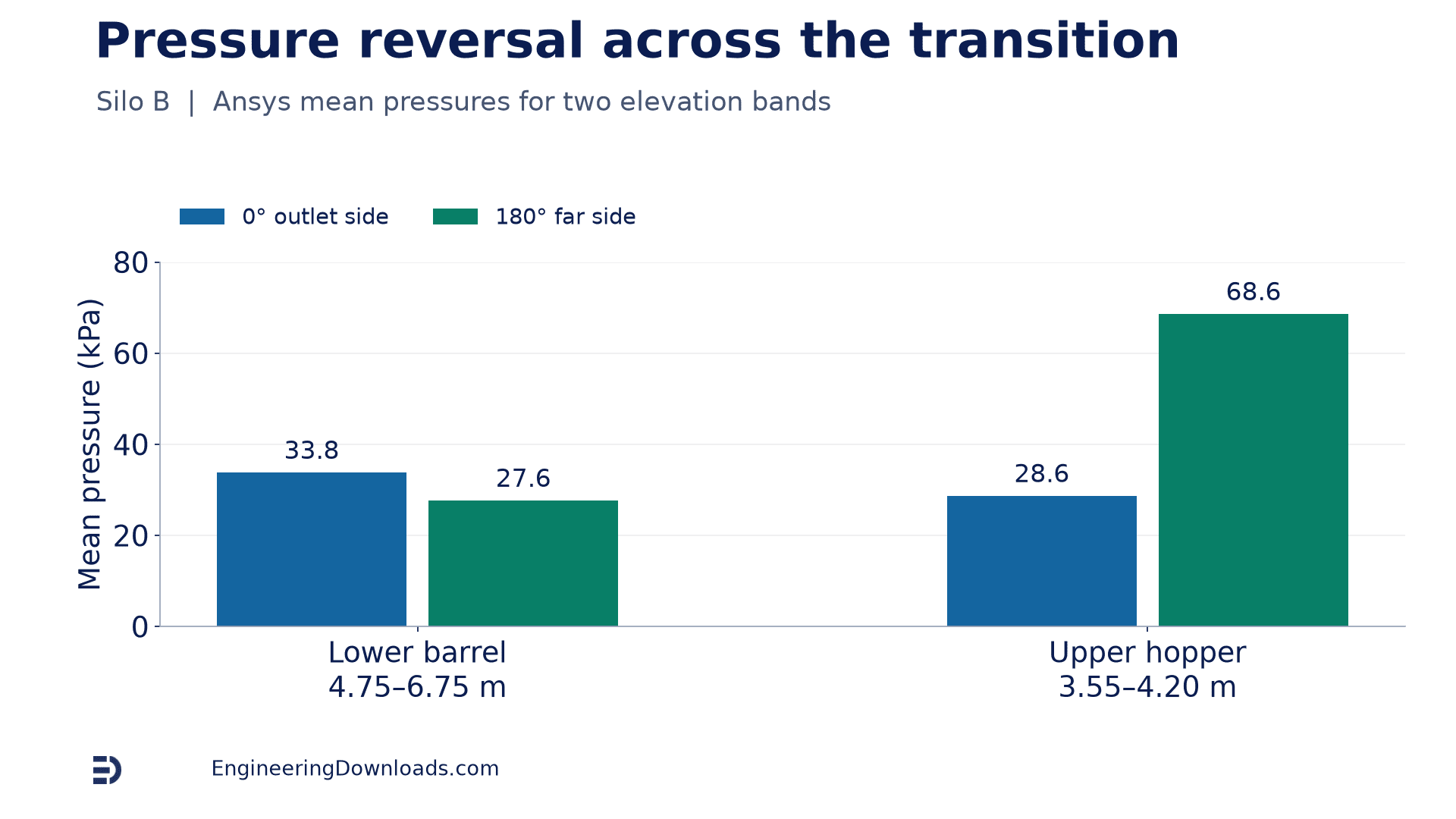
With an offset outlet, the high-pressure side depends on the elevation band. In the lower barrel, the full-gravity Ansys mean is 33.8 kPa on the outlet side (0°) and 27.6 kPa on the far side (180°). In the upper hopper, those means are 28.6 kPa and 68.6 kPa, respectively. This reversal follows the trend reported in Figure 8. The graph labels these four values as simulation results.
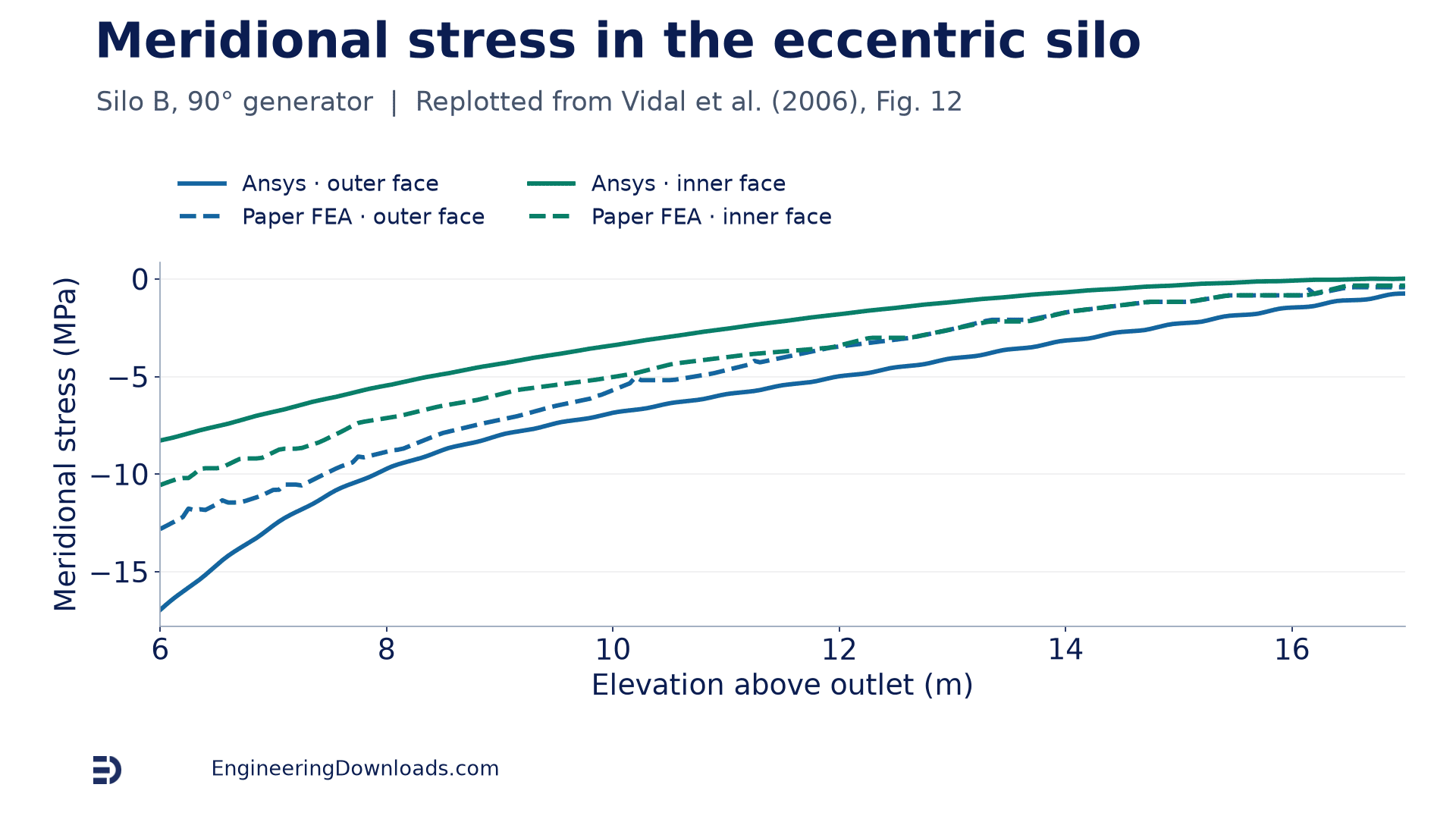
The shell stress results resolve the meridional component along the wall and the hoop component around it. Inspecting both the inner and outer faces helps distinguish membrane stress from the stress variation through the thickness due to bending. In the eccentric silo’s 90° barrel line, the meridional stress MAE over 6–17 m is 1.36 MPa on the outer face and 1.38 MPa on the inner face against Figure 12.
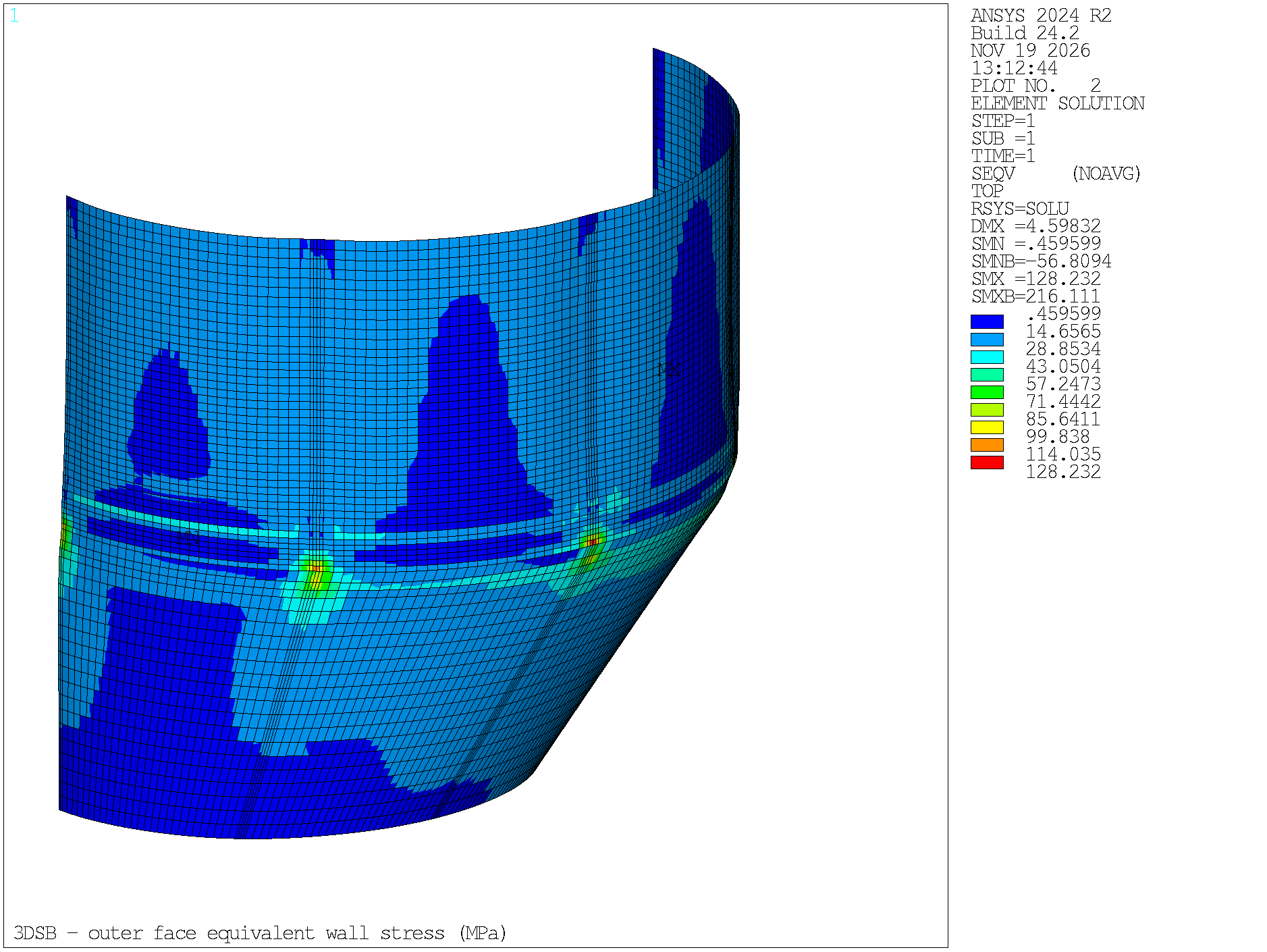
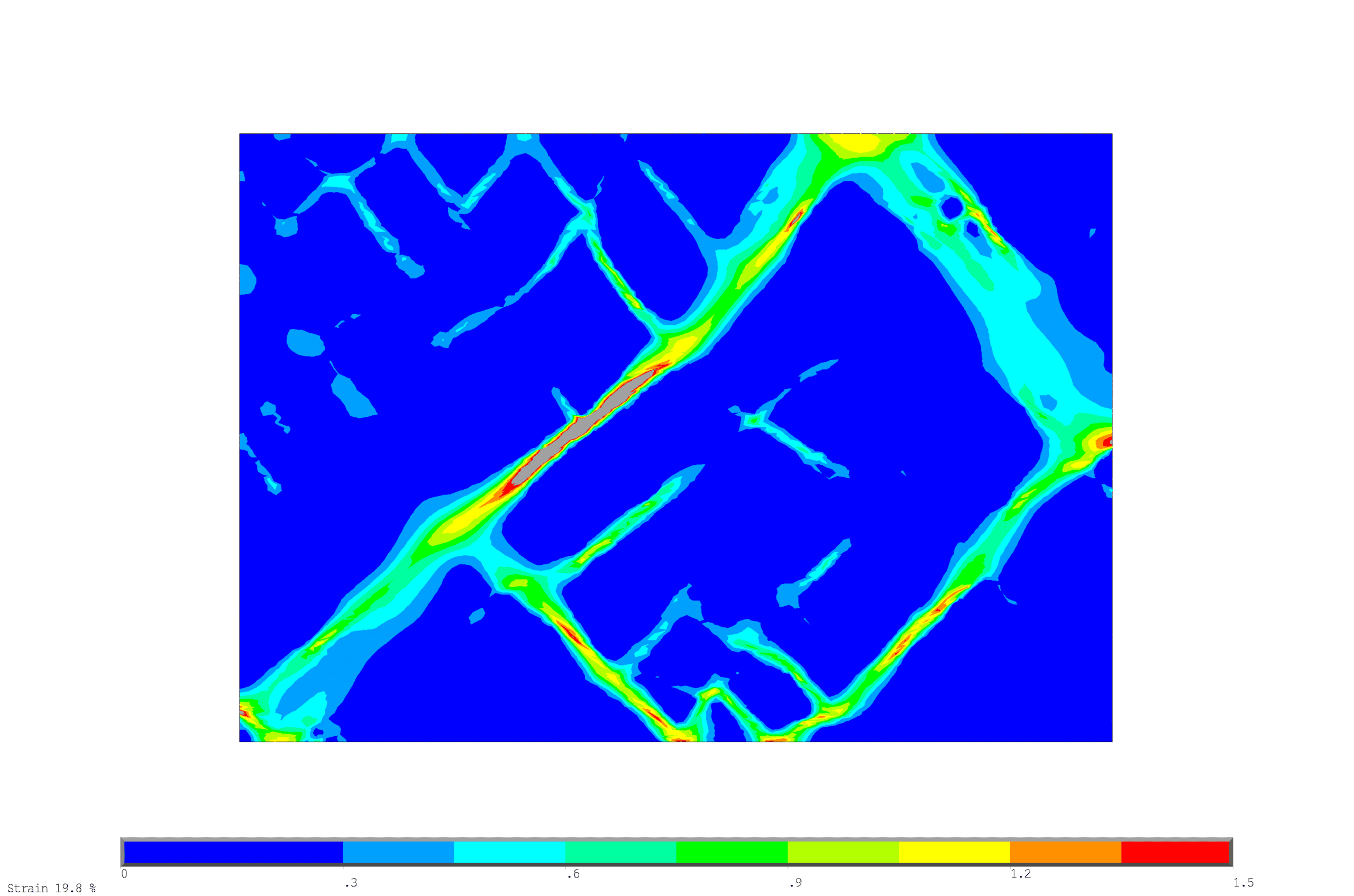
At 2.125 m above the eccentric outlet, both meridional and hoop stresses follow the published outer-minus-inner sign sequence at 0°, 90° and 180°: positive, negative and positive. Figure 17 is the source for this three-position directional comparison. The native Ansys equivalent-stress contour below shows the full field for the reinforced wall model.
Open the Product Files lessons for the model ZIP and the PDF. Extract the ZIP to a writable folder before restoring the archive in Ansys Workbench.
Simulation of the Filling Pressures of Cylindrical Steel Silos with Concentric and Eccentric Hoppers Using 3-Dimensional Finite Element Models
Vidal and colleagues simulated filling in two flexible, column-supported steel silos. They found that columns locally raised the grain pressure above the cylinder-to-hopper junction and reduced it below the junction. The eccentric outlet and discrete column supports changed the stress differences between the two wall faces. Below the junction, some regions of the eccentric hopper bent inward and others bent outward.
Vidal, P., Gallego, E., Guaita, M., and Ayuga, F. (2006). Transactions of the ASABE, 49(6), 1881–1895. DOI 10.13031/2013.22290.
Related study Grain silo wall thickness optimization.
The course includes a Workbench archive with four studies, a Windows Python launcher, a README and a PDF tutorial. Two studies solve wheat filling and two evaluate the reinforced steel silo wall under the recovered loads.
In this study, mean normal pressure is higher on the outlet side of the lower barrel and higher on the far side of the upper hopper. The values describe two specific elevation bands in the full-gravity eccentric case.
Use the normal pressure profiles by elevation for the concentric silo and selected meridional barrel stress profiles for the eccentric silo. The eccentric pressure reversal is a trend comparison with Figure 8.
It runs the four included inputs and saves Ansys databases, result files and CSVs for grain-wall contact pressure or shell wall stress, depending on the study.
Need more than the files?
There are two ways we can help. Book a one hour online consultation if you want to talk a problem through with a CAE engineer, using the checkbox in the order box. Order a project if you need a full simulation built for you, delivered to an agreed scope, price and deadline under a written contract.
We work on FEA and CFD for engineers, researchers and companies. Order your project, or message us on WhatsApp for a quick reply.
Other packages engineers working on this topic also download.
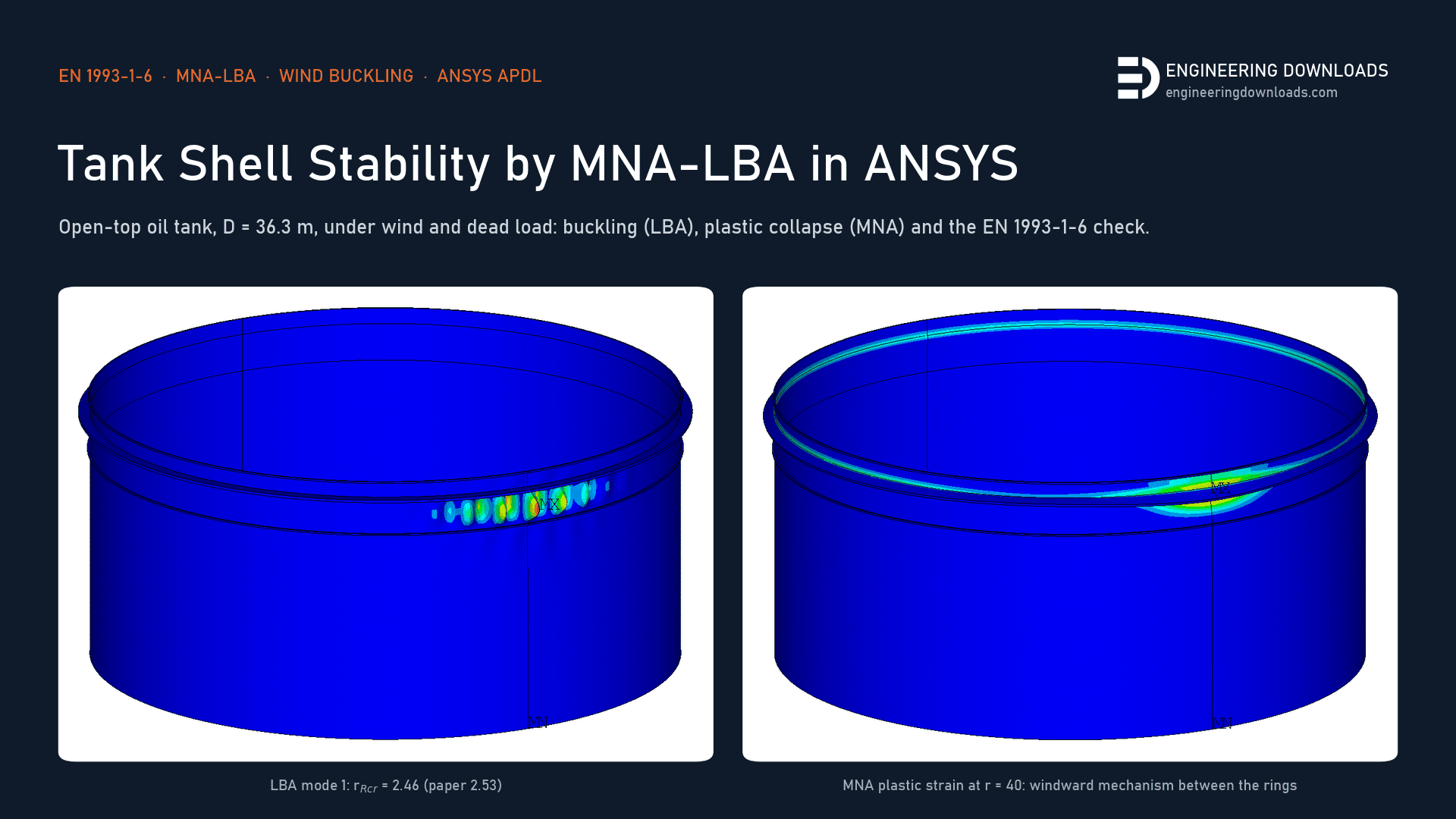 Tank Wind Buckling in ANSYS: EN 1993-1-6 MNA-LBA Model of a Cylindrical Oil Tank€129,00
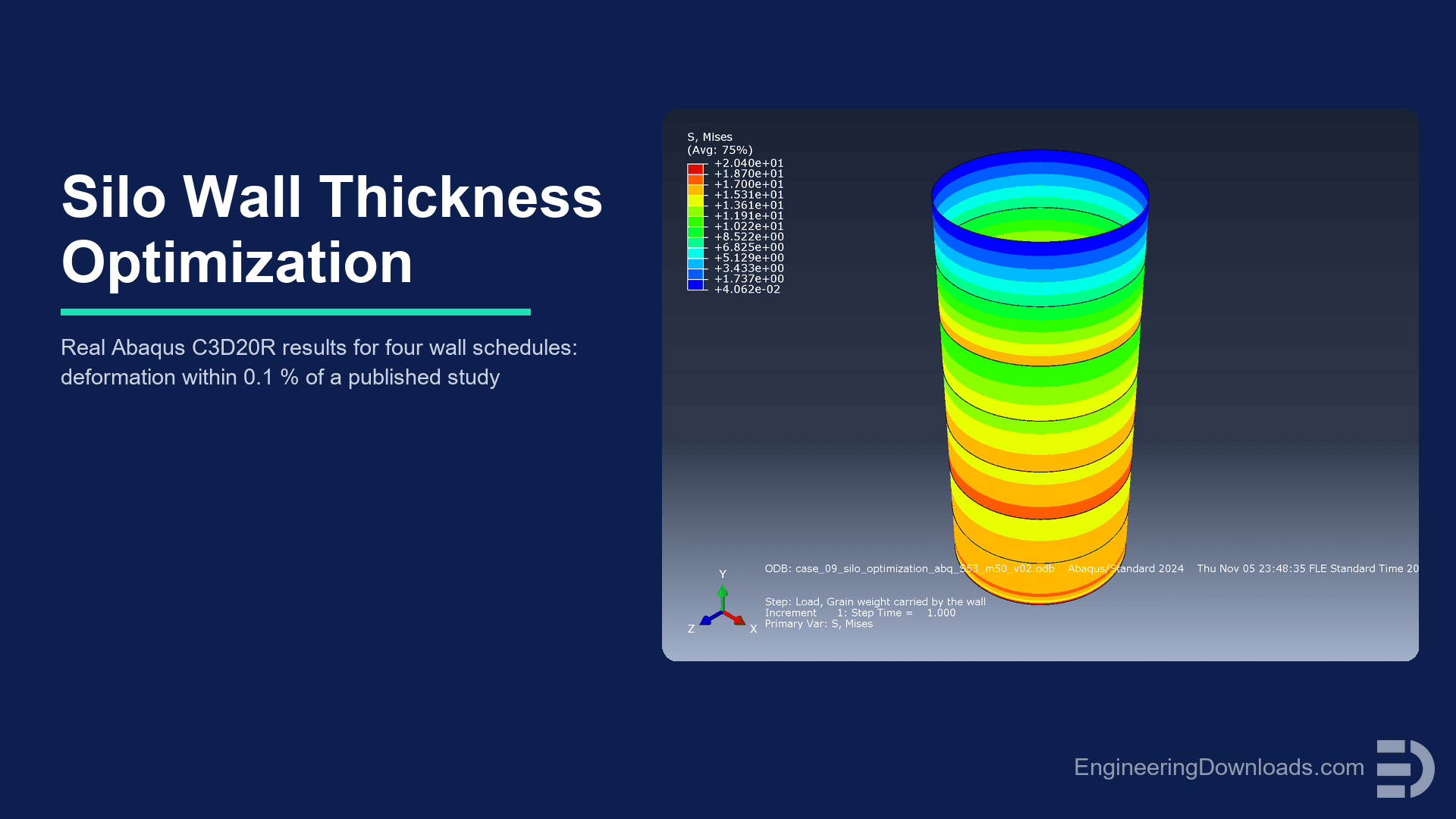 Grain silo wall thickness optimization: Abaqus model of a published four-silo study€129,00
 FEA of Connecting Rod using ANSYS
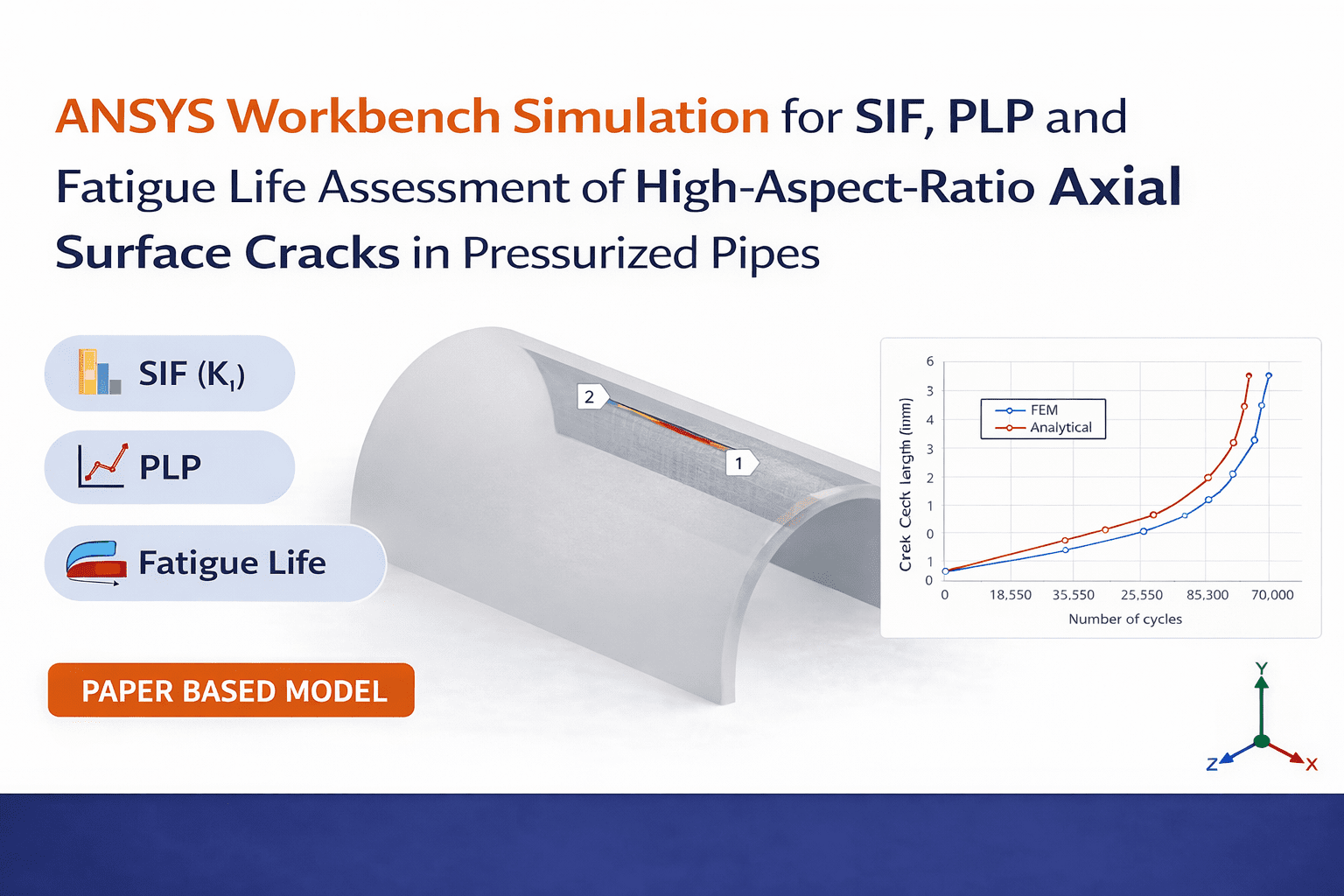 ANSYS Workbench Simulation for SIF, PLP and Fatigue Life Assessment of High-Aspect-Ratio Axial Surface Cracks in Pressurized Pipes€129,00
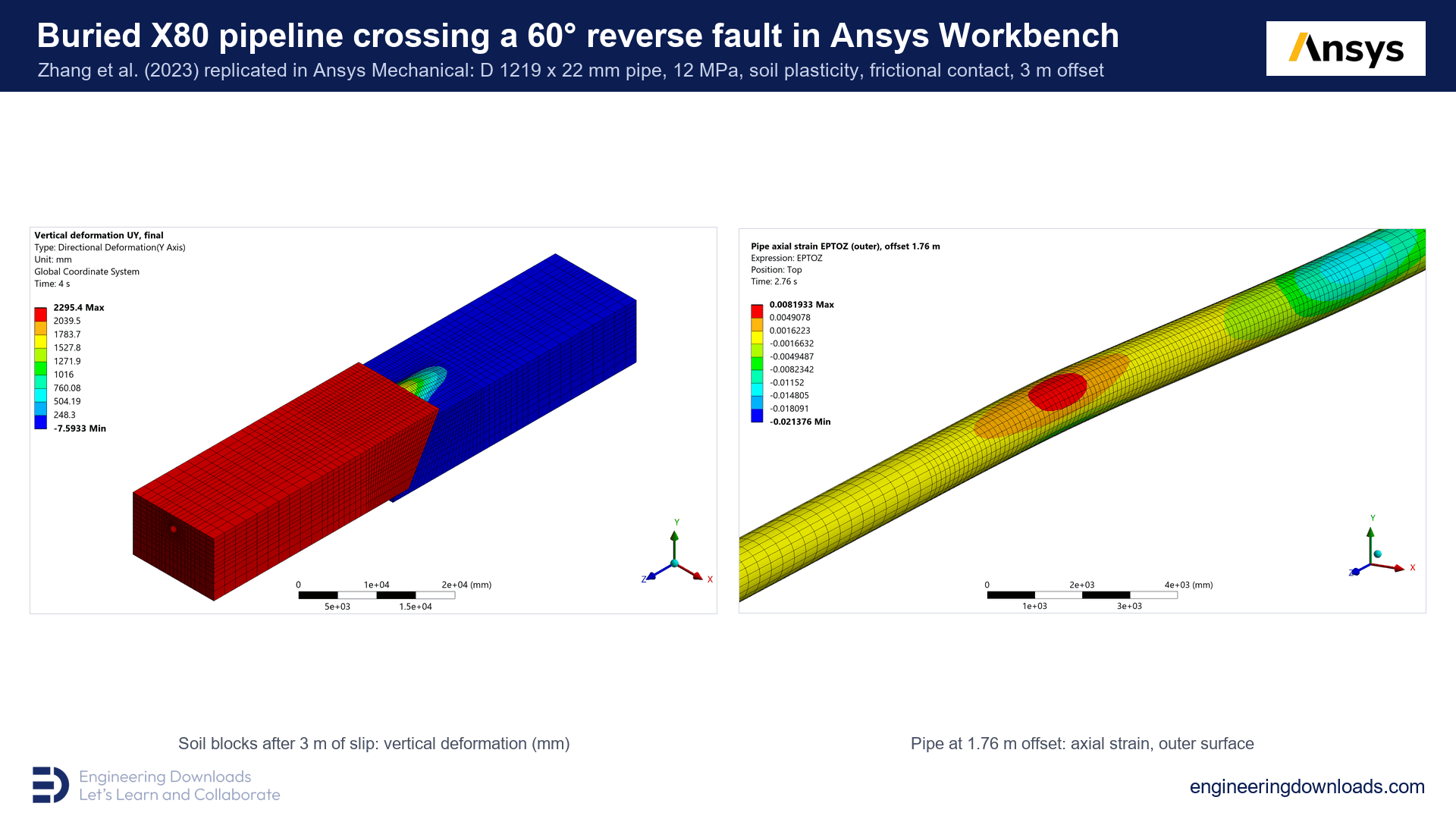 Buried Pipeline Crossing a Reverse Fault in Ansys Workbench, after Zhang et al. (2023)€129,00
 Stamped-End Tube Space Truss Node in Ansys: Shell-Beam Model of the Central Joint (Double-Layer Grid)€129,00
 Bolt Pretension in Ansys Workbench: SC3 End-Plate Connection with All-Hex Bolts (Pretension Section with Lock, Initial Shank Stress, .wbpz)€89,00
 Wind Turbine Tower Man Door and Ventilation Opening Buckling in Ansys: GMNIA after Gantes et al. (2024)€129,00

Need a full custom project? See the options below.
€119,00
€129,00
See more
Want to receive push notifications for all major on-site activities?