Need a full custom project? See the options below.
Need a full custom project? See the options below.
An Abaqus/Explicit micromechanical model of a [0/90] cross-ply CFRP laminate for fatigue life and microscale damage evolution: a representative volume element (RVE) with 96 individually modelled carbon fibers, epoxy matrix, fiber/matrix and ply/ply cohesive interfaces, and one VUMAT that covers all three constituents. You get the CAE databases, input files, the VUMAT source, a Python script and the key result images.
Cross-ply and multidirectional CFRP laminates in aerospace, automotive and wind-energy structures rarely fail where the first damage appears. Fatigue damage starts in the transverse plies as fiber/matrix debonding and matrix cracking, then spreads to ply interfaces, shifts load into the longitudinal plies and ends in fiber fracture. A micromechanical RVE lets you follow that chain constituent by constituent and connect it to laminate-level strength and fatigue life, without a laminate-level test campaign for every stacking sequence.
This product gives you that RVE as a working Abaqus model with the full user material written out as VUMAT source code, so you can read it, change it and reuse it for your own fiber, matrix and interface data.
Source: B.A. Wani, R. Chennamsetti, S. Daggumati, “On the prediction of fatigue life & microscale damage evolution in cross-ply CFRP laminates: An experimentally validated micromechanical framework”, International Journal of Fatigue 216, 110079, doi:10.1016/j.ijfatigue.2026.110079.
In short: The authors present a finite element micromechanics framework that predicts microscale damage and the S-N response of cross-ply CFRP laminates under tension-tension cyclic loading. The RVE contains fibers, matrix and the fiber/matrix interface. Fatigue damage at the interfaces is described with a cohesive zone law combined with Paris-law concepts from fracture mechanics, while the epoxy follows a nonlinear elastic stress-strain law with a pressure-sensitive modified von Mises failure criterion. The framework is compared with experiments under quasi-static and fatigue loading, which links constituent-level damage to the laminate fatigue response. Experiments and simulations show that fatigue damage starts in the transverse plies by fiber/matrix debonding and matrix cracking; these mechanisms then lead to delamination, load moves into the longitudinal plies, and fiber fracture ends the life of the laminate. The paper is the basis of this product; this page, the model and all images are our own independent work.
| Feature | Abaqus implementation |
|---|---|
| RVE | 110 x 55 x 55 um, two plies ([0] and [90]), periodic boundary conditions |
| Fibers | 48 fibers of 3.2 um radius per ply, 51 % nominal fiber volume fraction, T700 carbon fibers with individual strengths |
| Matrix | LY1564 epoxy: nonlinear elastic, pressure-dependent effort, stiffness degradation |
| Interfaces | Fiber/matrix and ply/ply cohesive interfaces, bilinear traction-separation law |
| Fatigue | Basquin-Miner law for fibers, Basquin law for the epoxy, Paris-law interface damage; load-envelope method, R = 0.1 |
| Solver | Abaqus/Explicit with mass scaling |
| User material | One VUMAT (CrossPly_VUMAT.for) for fibers, matrix and cohesive interfaces |
| Jobs | Quasi-static tension to failure and fatigue at 72% of the RVE static strength |
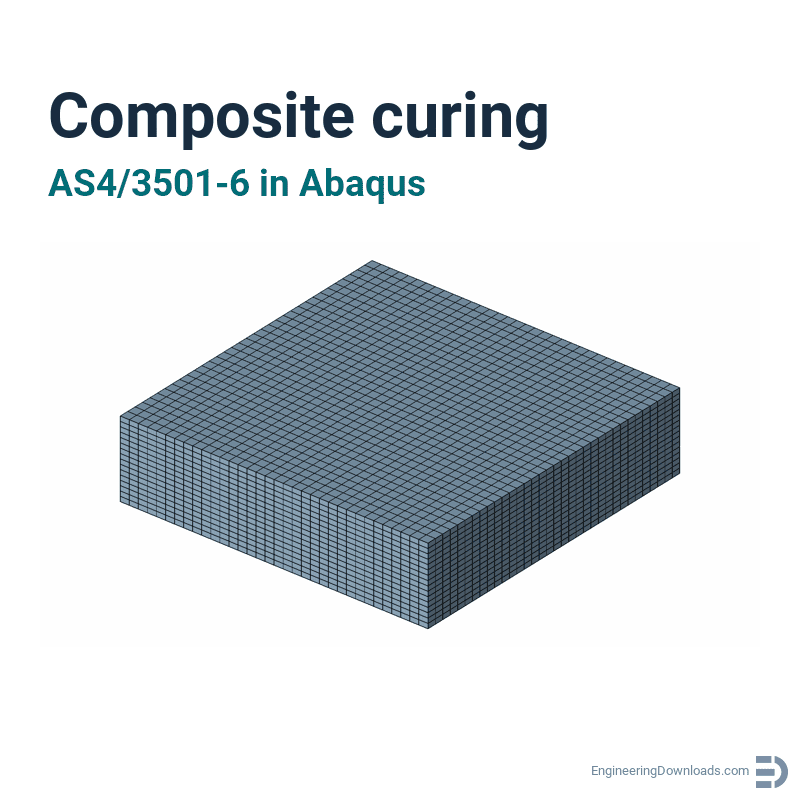
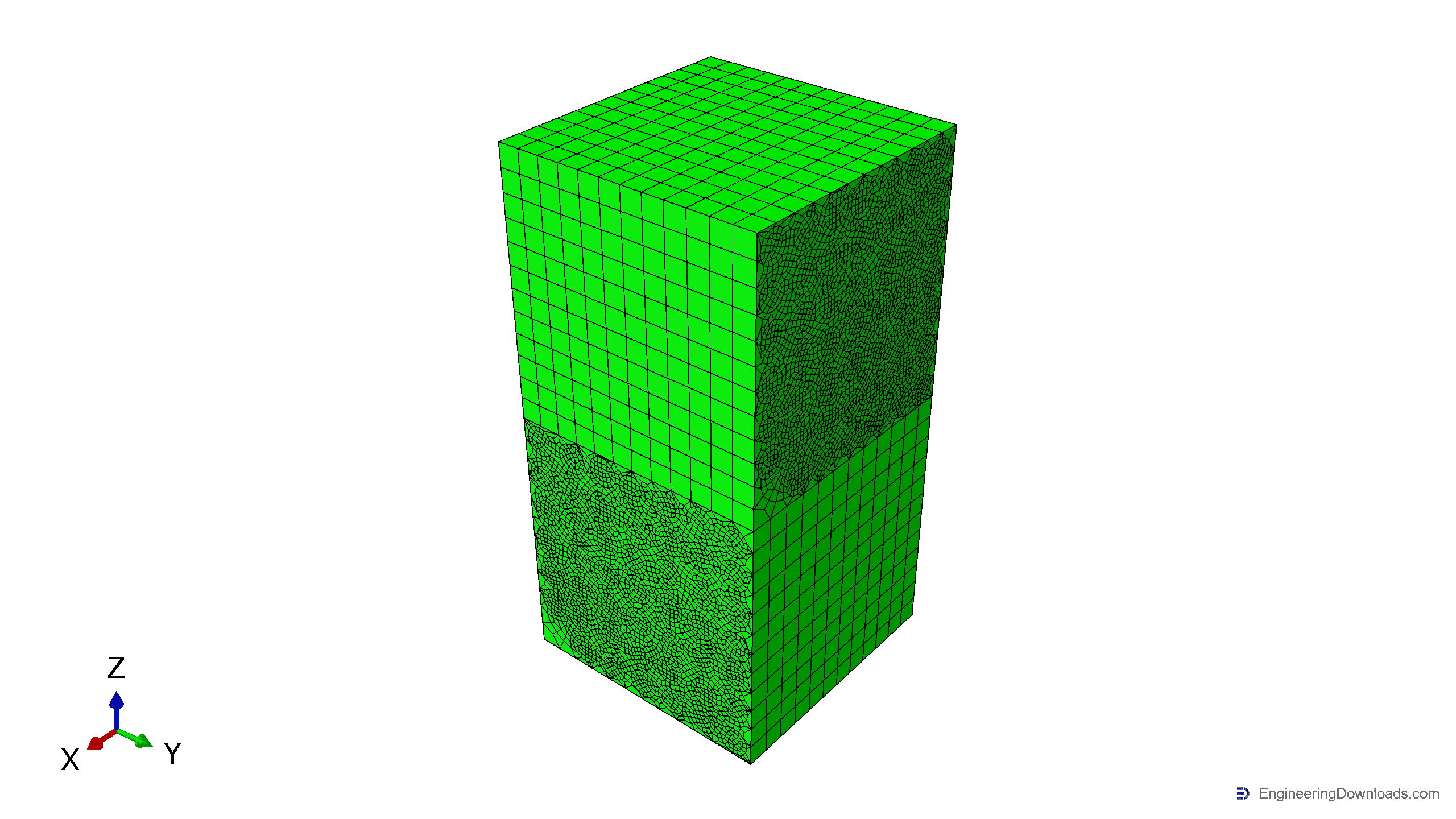
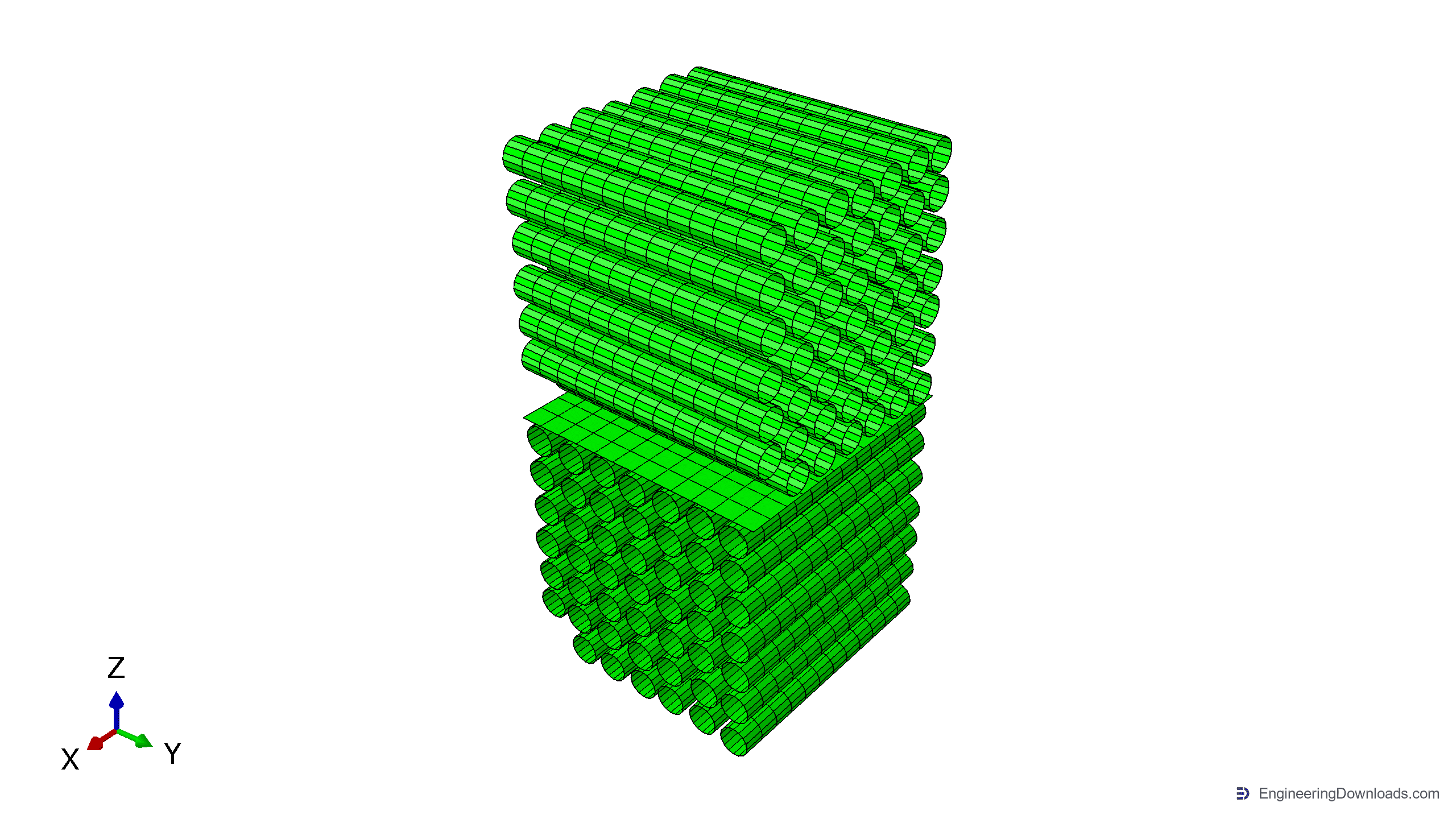
The RVE is built from two stacked plies of 48 circular fibers each, one ply with fibers along the loading direction and one with fibers transverse to it. Fibers and matrix are meshed separately, and cohesive layers sit on every fiber/matrix interface and between the plies. Periodic boundary conditions tie opposite faces of the RVE.
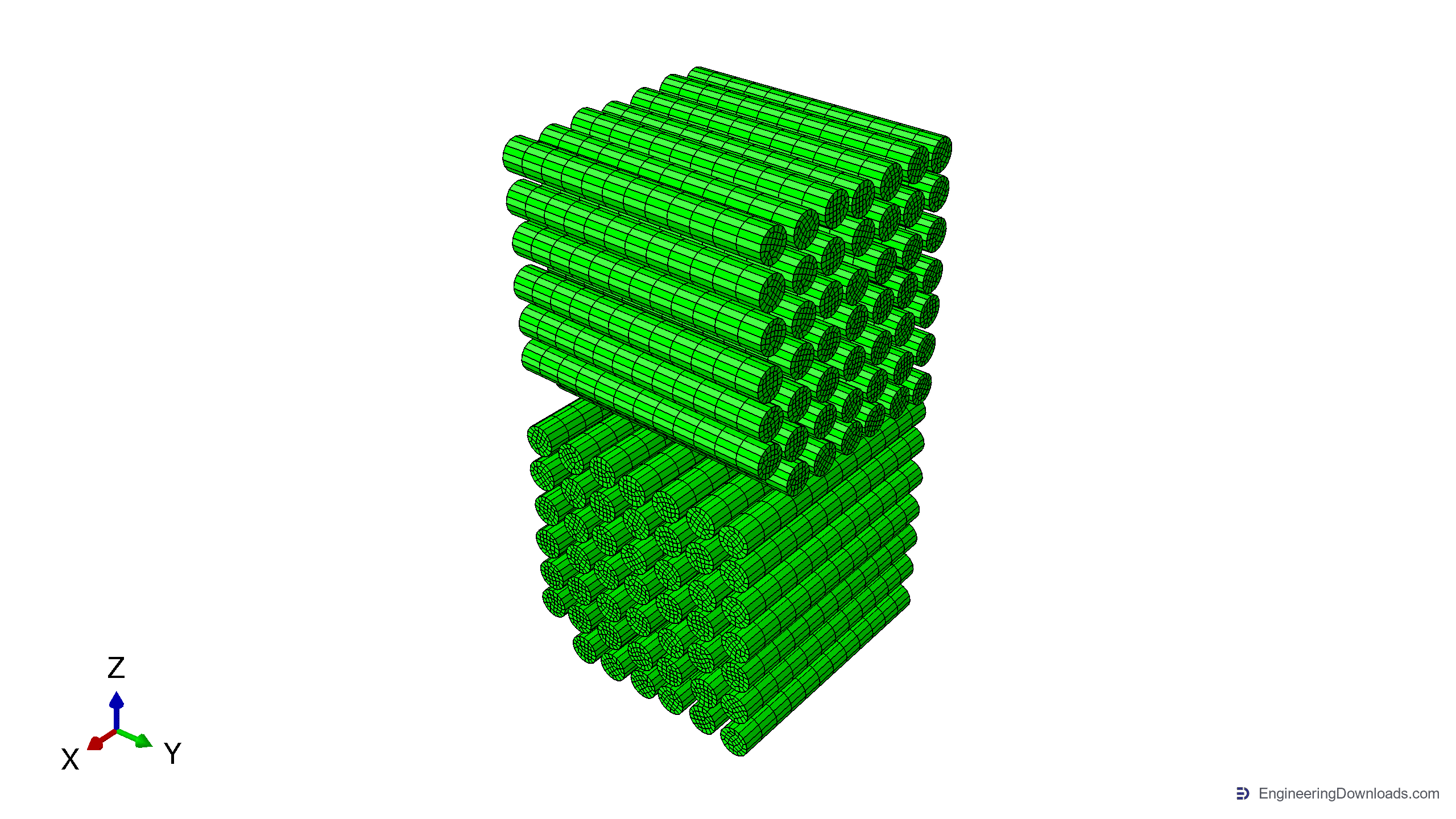
The CAE databases use an orphan mesh with assigned materials, cohesive interfaces and displacement-driven periodic loading.
The VUMAT follows the three constituent laws of the paper’s framework, in plain form:
Model files, source code and the Python script are included, so everything runs in your own Abaqus installation.
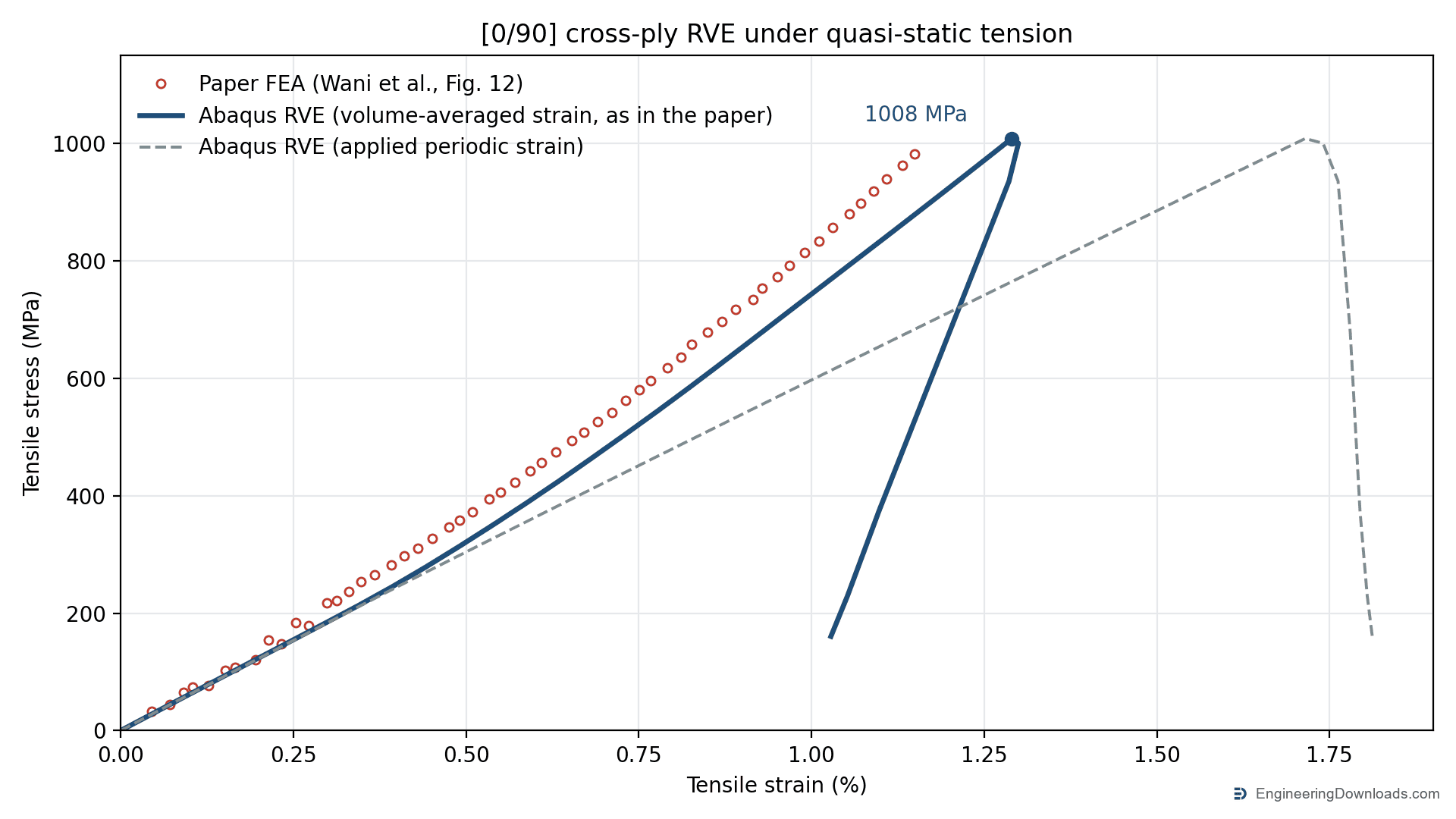
Static peak-stress benchmark. The Abaqus RVE reached 1,008 MPa in static tension. The peak digitized from the paper’s Figure 12 FEA curve is approximately 985 MPa, a difference of about 2.3%. This comparison applies to peak stress. The figure also shows the volume-averaged tensile curves across the loading history.
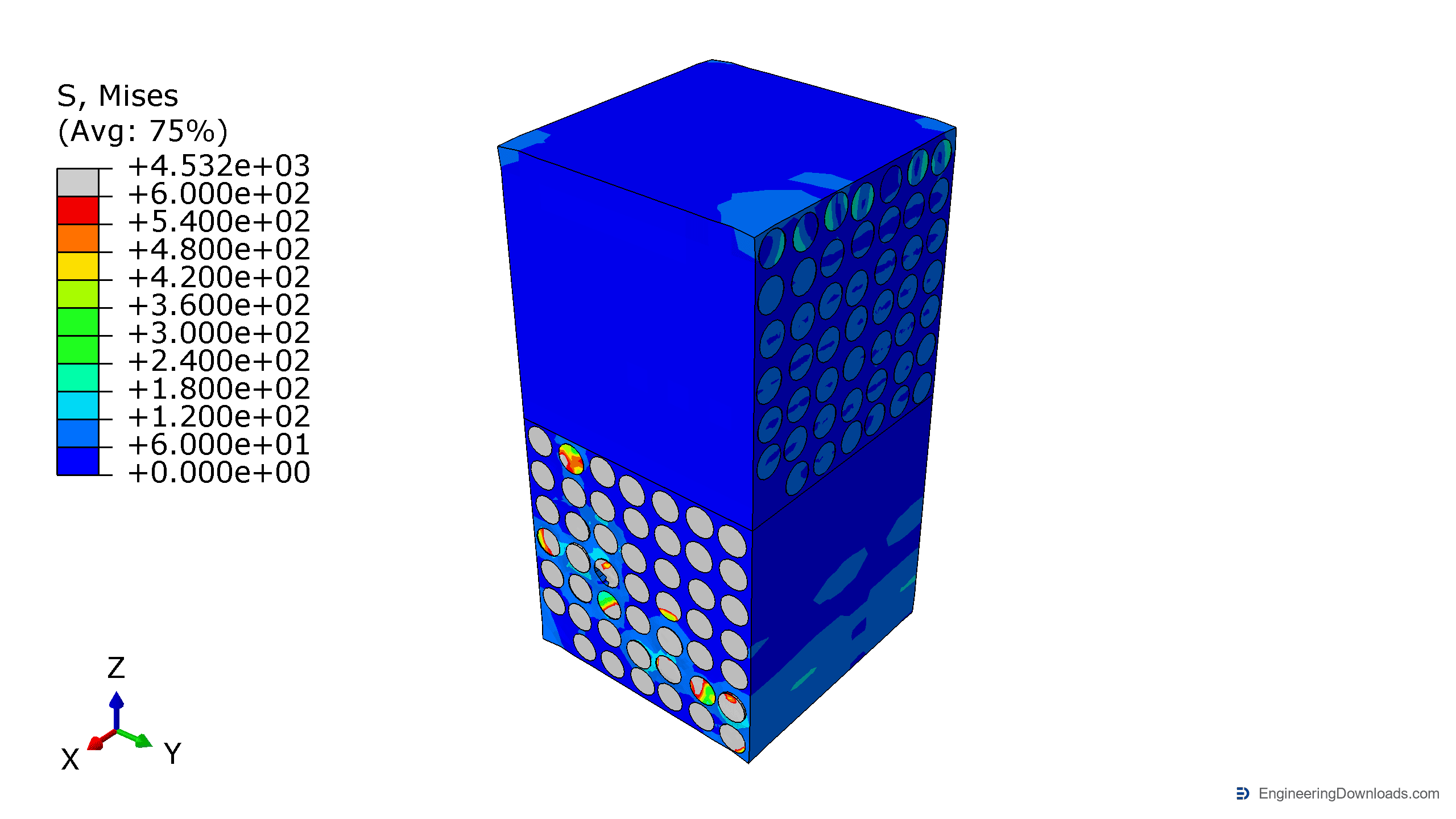
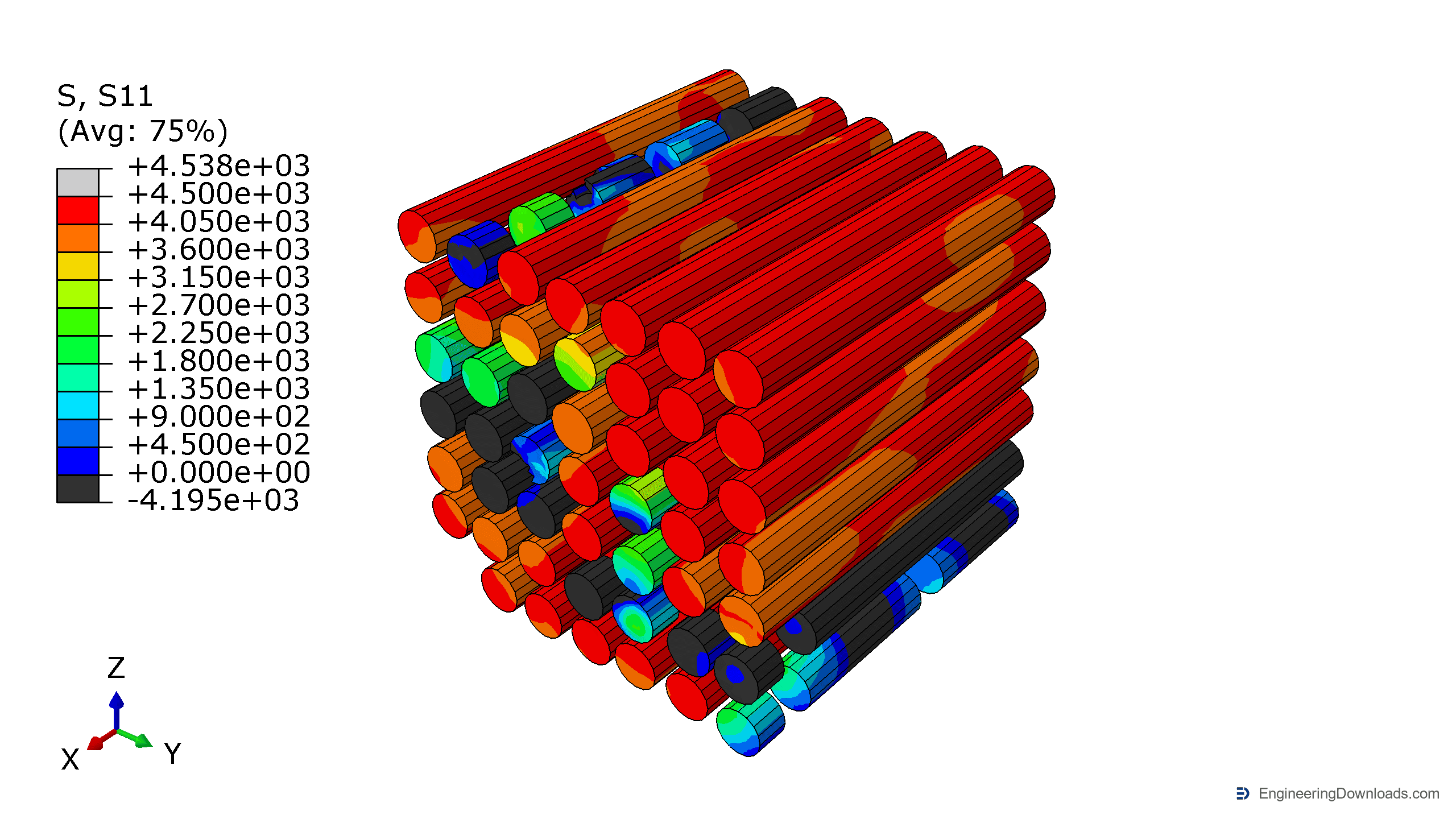
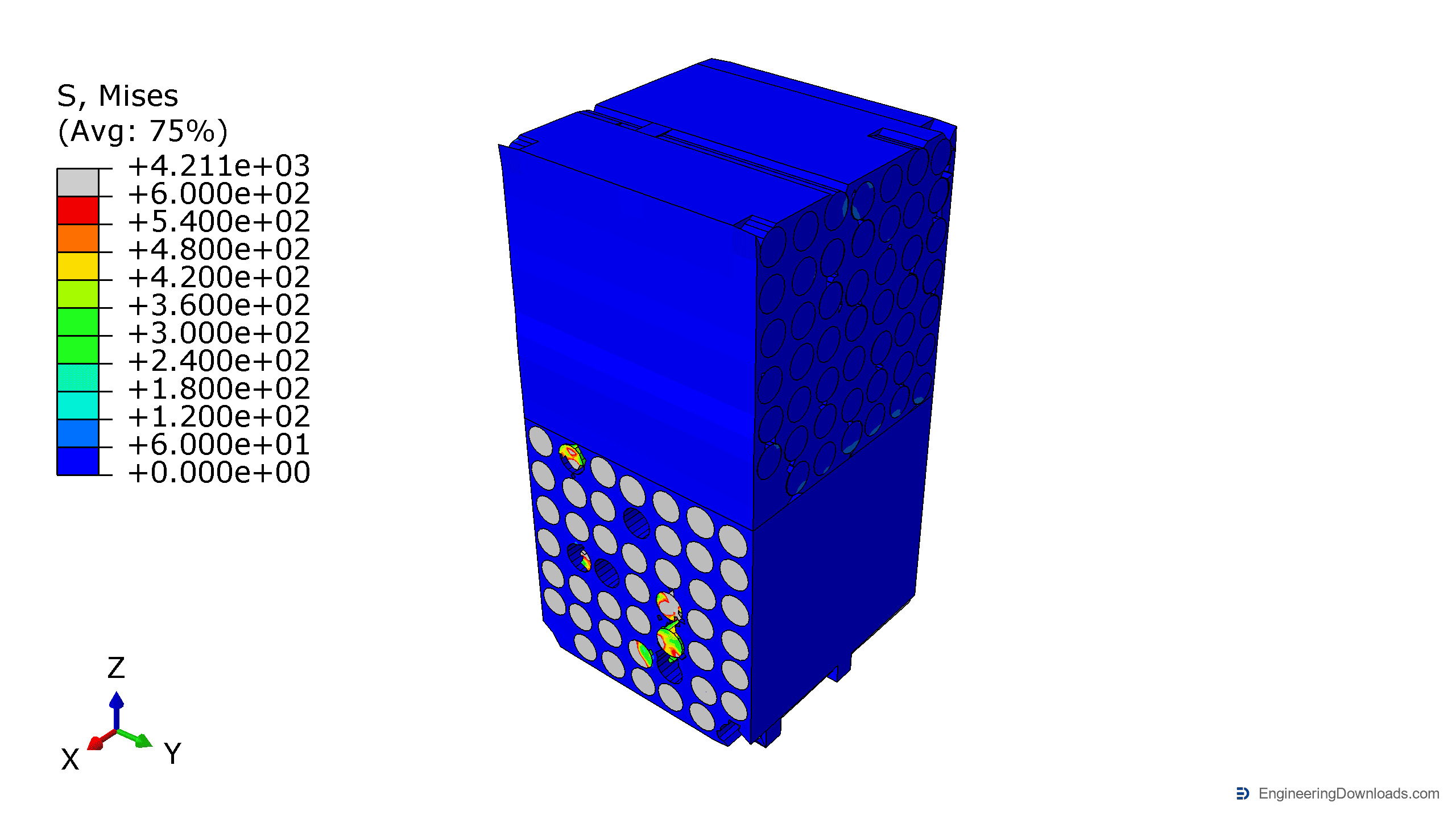
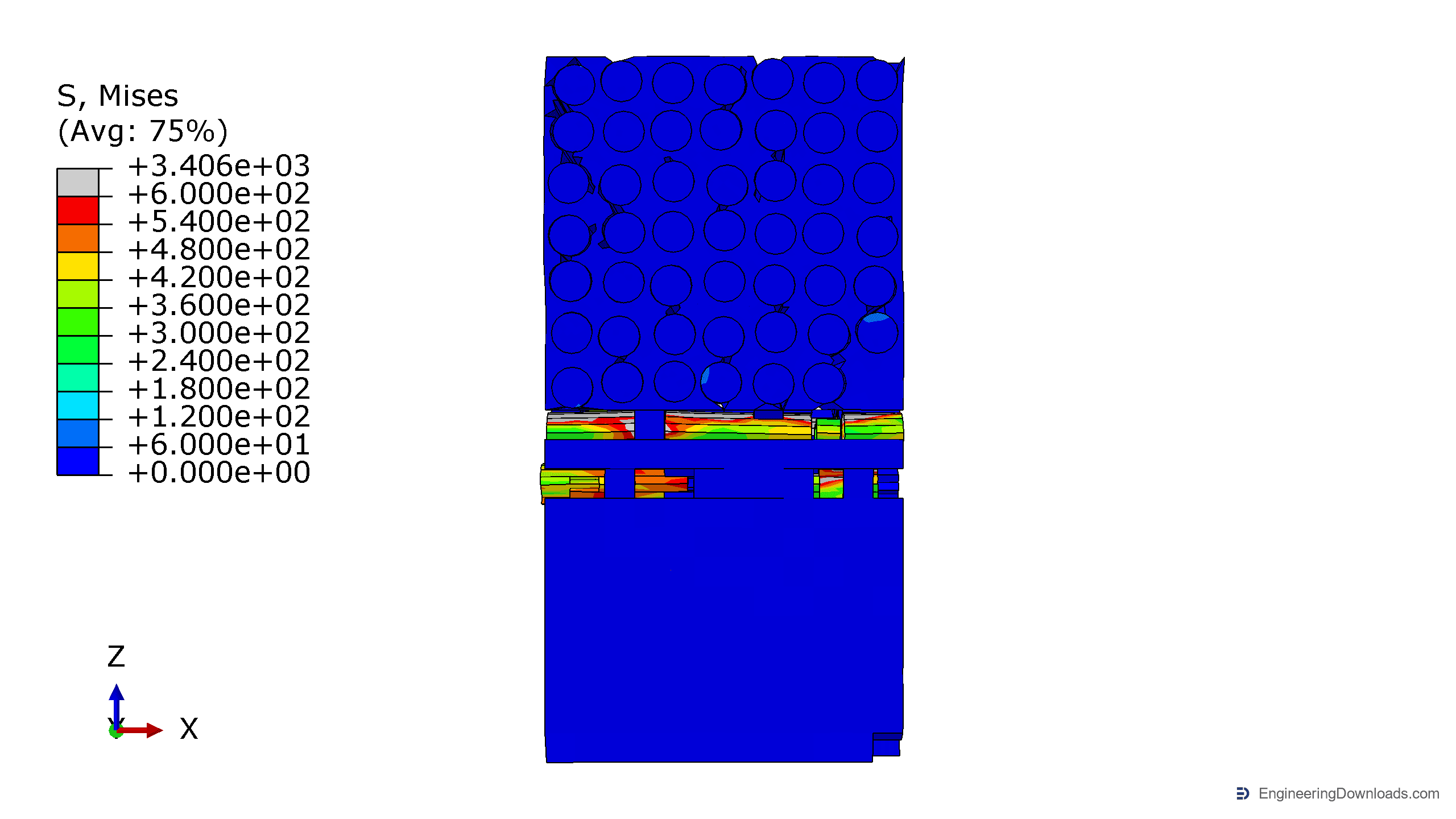
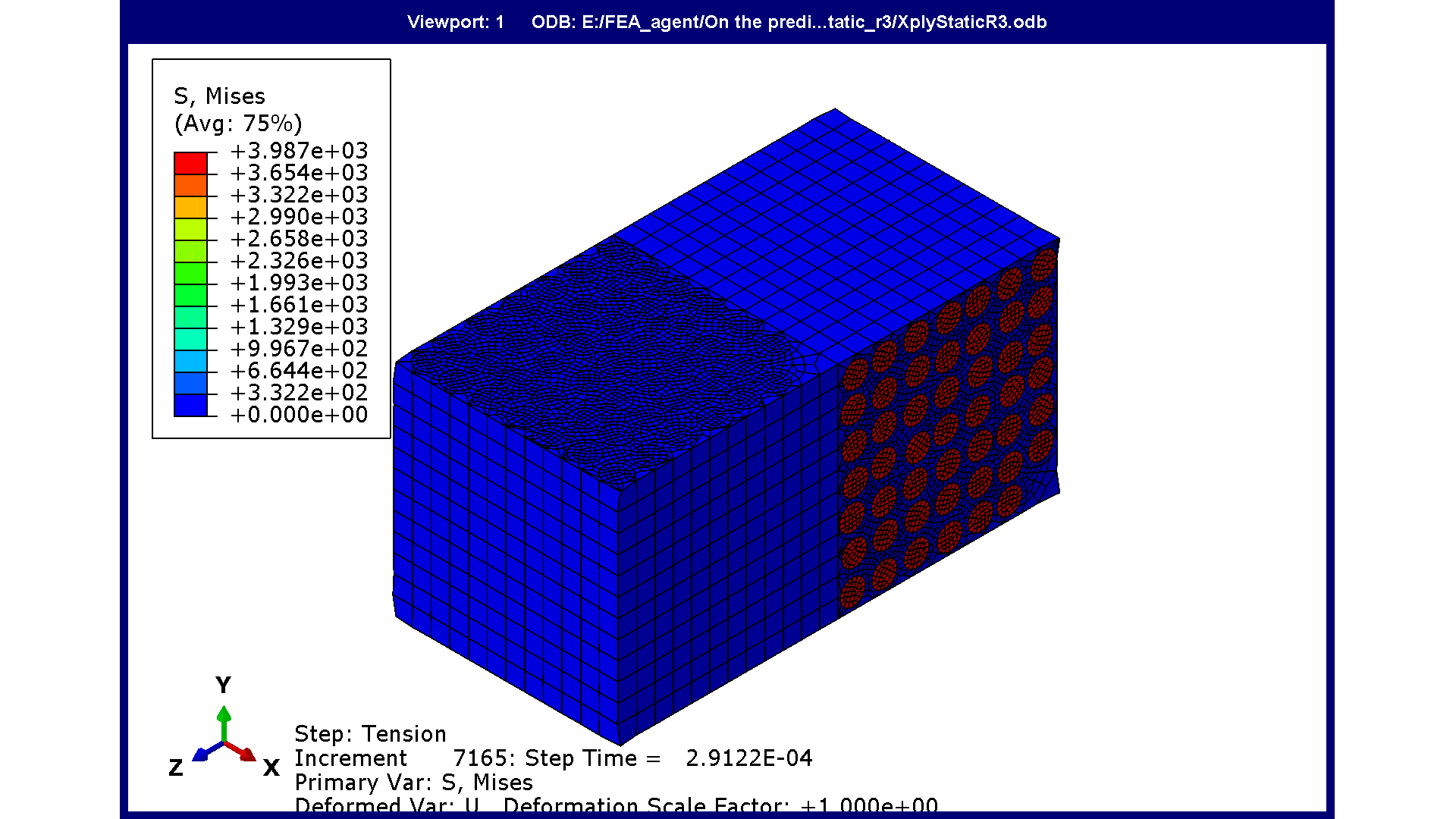
The static model contours show axial stress in the 0° fibers and von Mises stress in the RVE during failure.
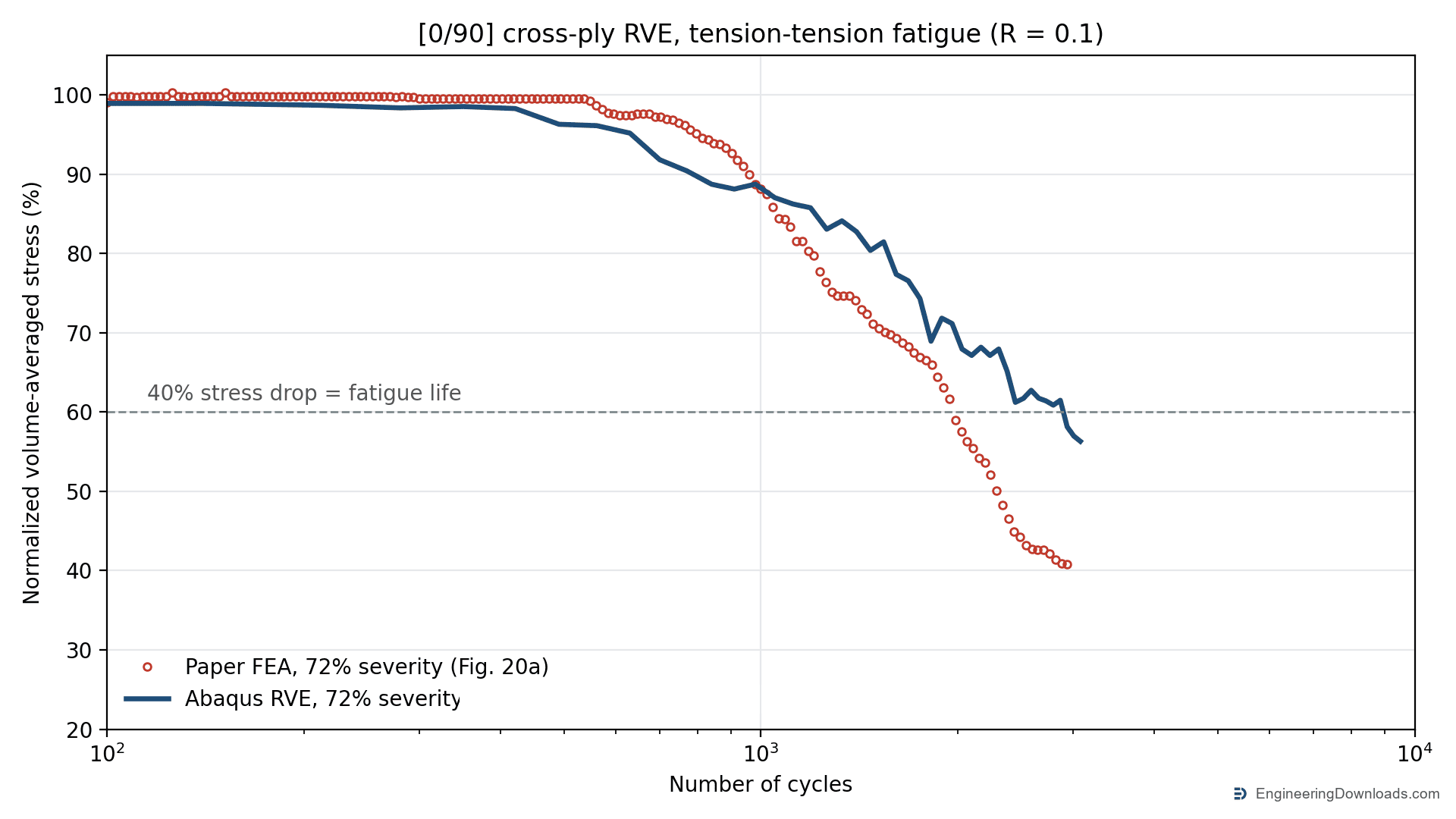
Fatigue model result. At R = 0.1 and 72% of the RVE’s own static strength, the simulation reached a 40% drop in volume-averaged stress at about 2,900 cycles. The plot includes the paper’s Figure 20a curve as reference context.
The model contours show damage in the 90° ply and fracture in the 0° fibers as the RVE loses load-carrying capacity.
Yes. The .cae, .inp and VUMAT source are included, so you run the model in your own Abaqus. You need a Fortran compiler linked to Abaqus for user subroutines.
Yes. The constituent properties are passed to the VUMAT as material constants in the input file, and the Fortran source is included so you can also modify the laws themselves.
Fatigue life is the number of cycles at which the volume-averaged stress of the RVE has dropped by 40 % from its initial value, the same definition used for the paper’s stress-degradation curve.
It submits the static and fatigue jobs with the VUMAT, reads the results, and writes the volume-averaged stress-strain and stress-degradation curves.
Need more than the files?
There are two ways we can help. Book a one hour online consultation if you want to talk a problem through with a CAE engineer, using the checkbox in the order box. Order a project if you need a full simulation built for you, delivered to an agreed scope, price and deadline under a written contract.
We work on FEA and CFD for engineers, researchers and companies. Order your project, or message us on WhatsApp for a quick reply.
Other packages engineers working on this topic also download.
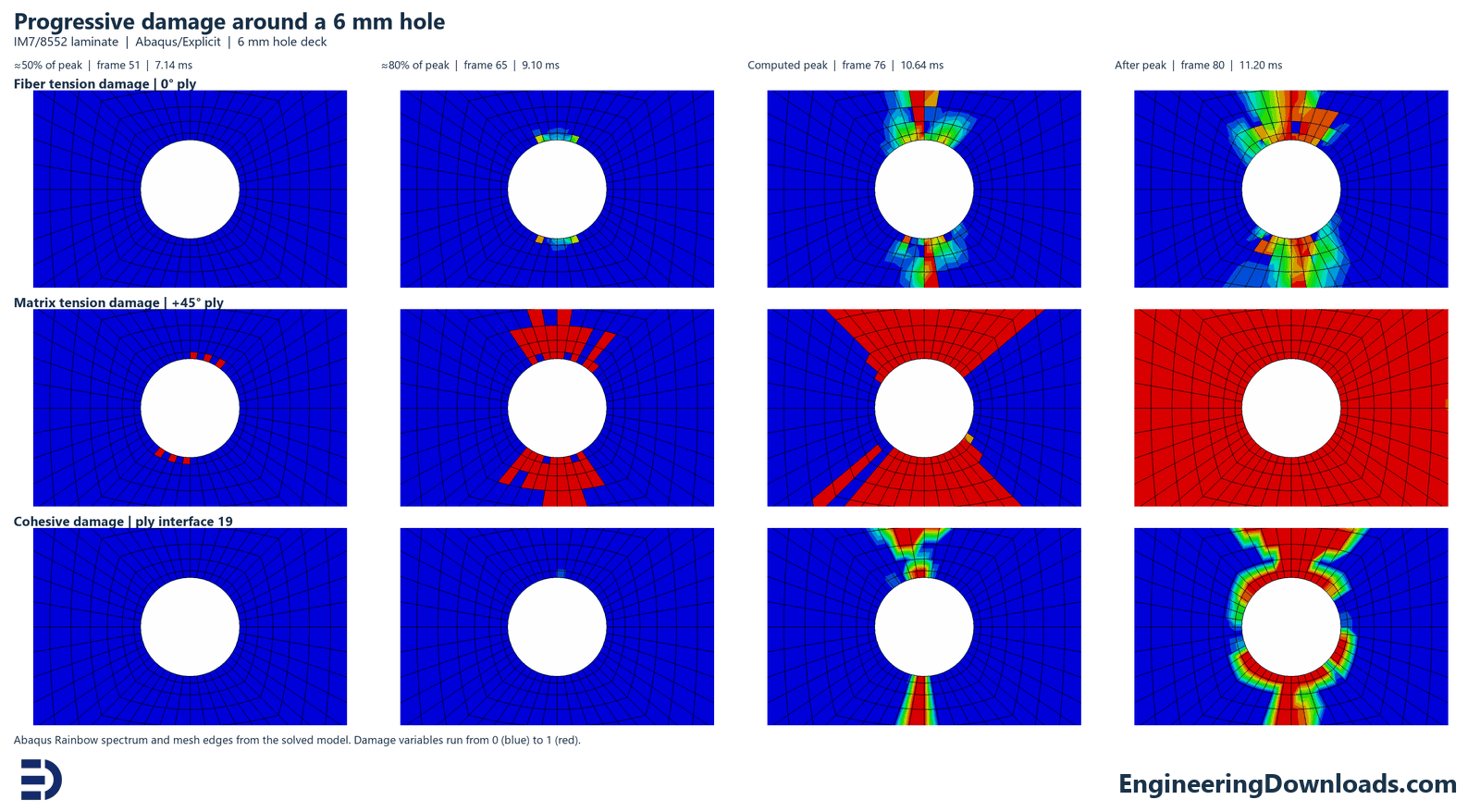 3D Hashin Progressive Damage VUMAT for Abaqus: Open-Hole Laminate with Cohesive Delamination€159,00
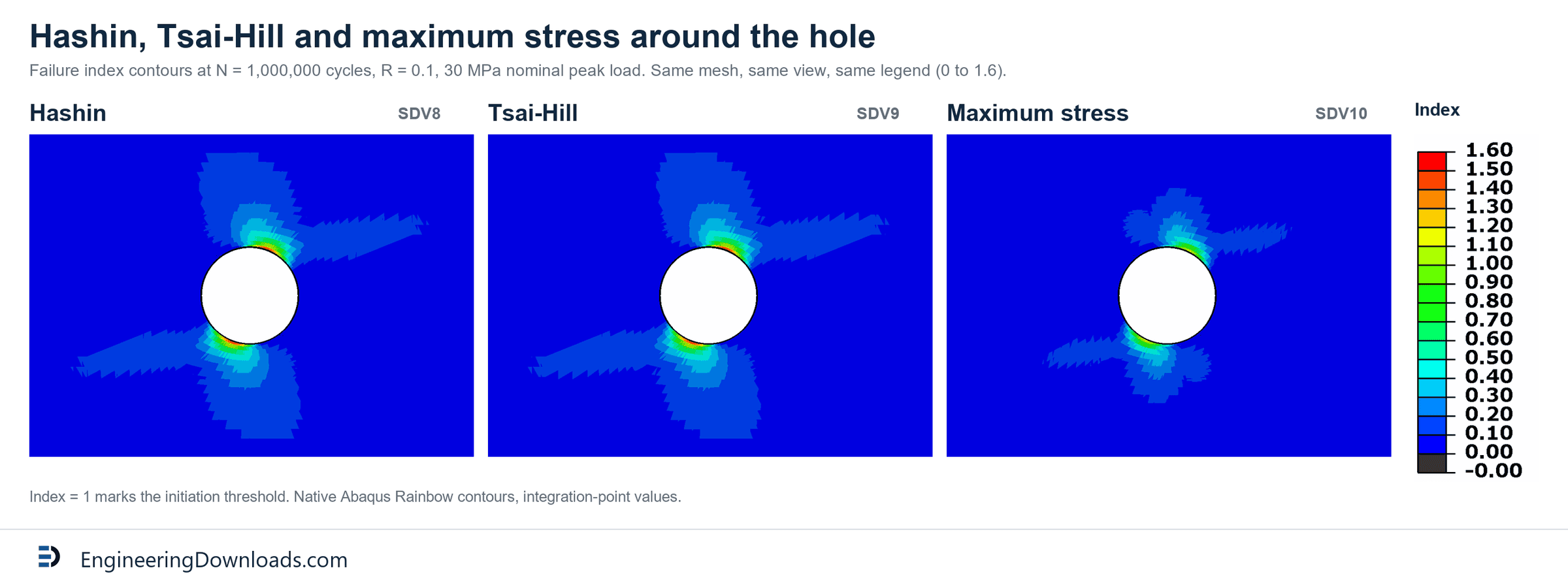 Composite Fatigue UMAT for Abaqus: Hashin, Tsai-Hill and Maximum-Stress Criteria€159,00
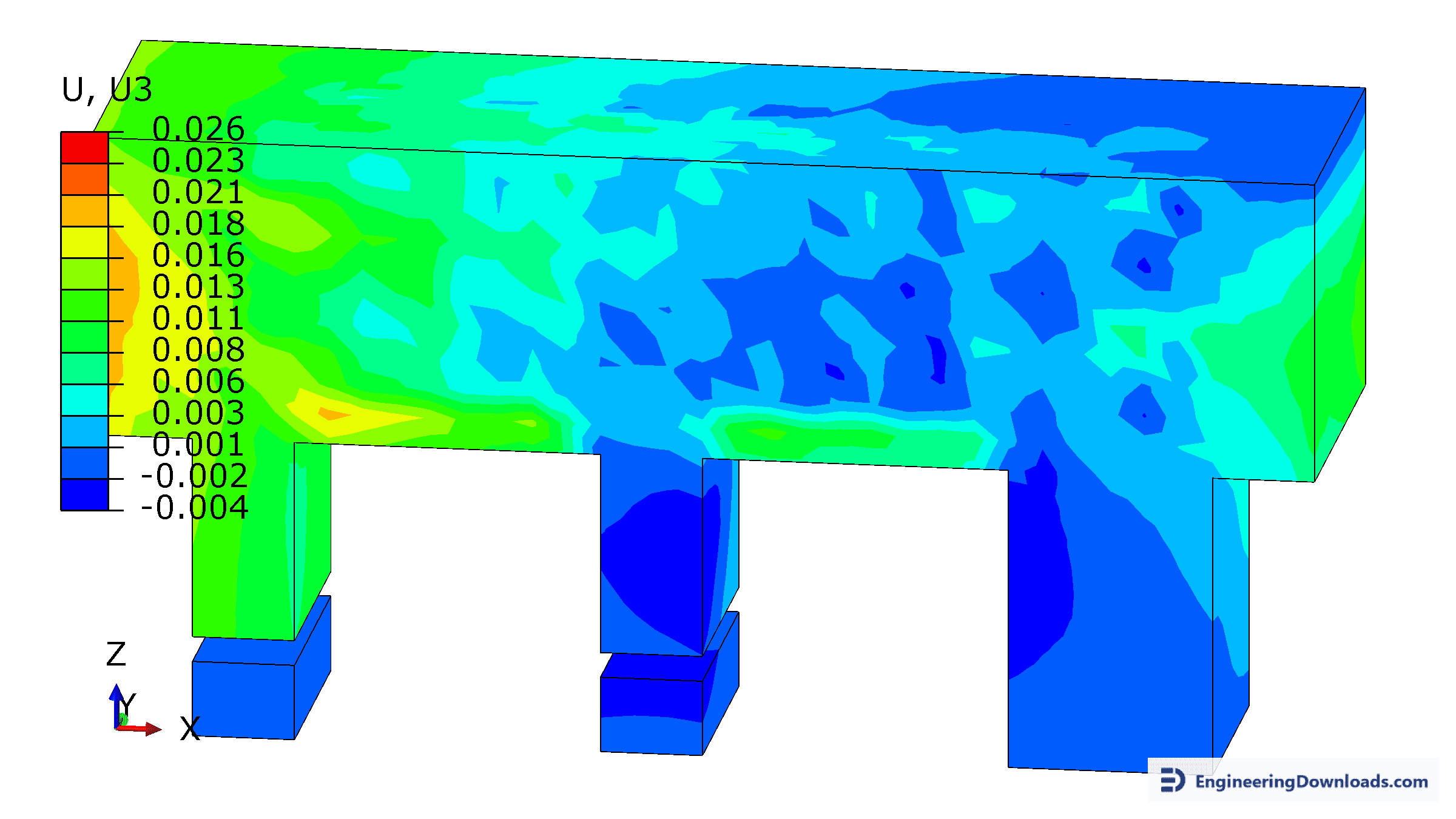 LPBF 316L Residual Stress and Cantilever Distortion in Abaqus: Sequentially Coupled Thermal-Stress Model with DFLUX and USDFLD Subroutines€159,00
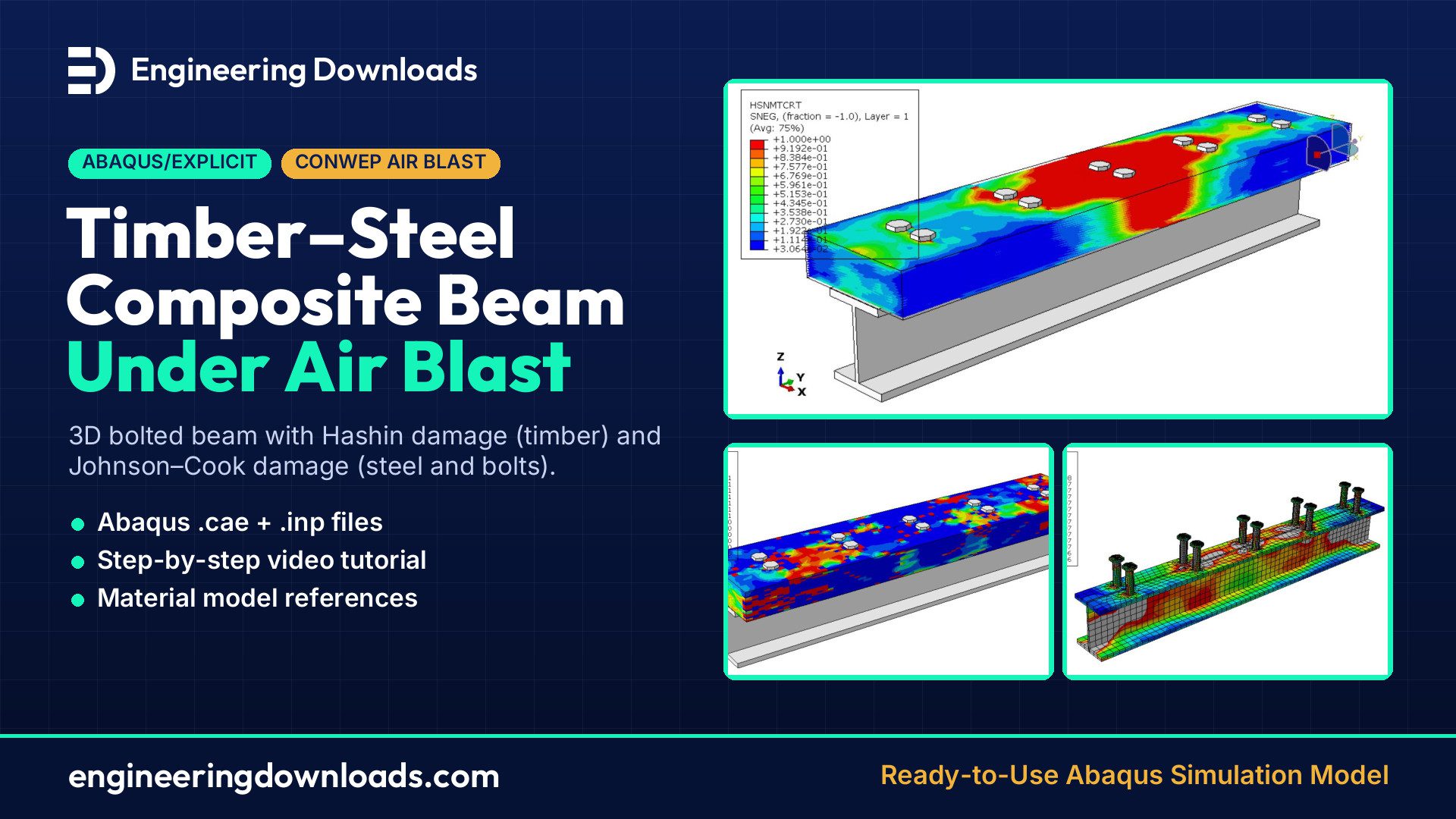 Timber–Steel Composite Beam Under Air Blast in Abaqus: CONWEP, Hashin & Johnson–Cook Damage
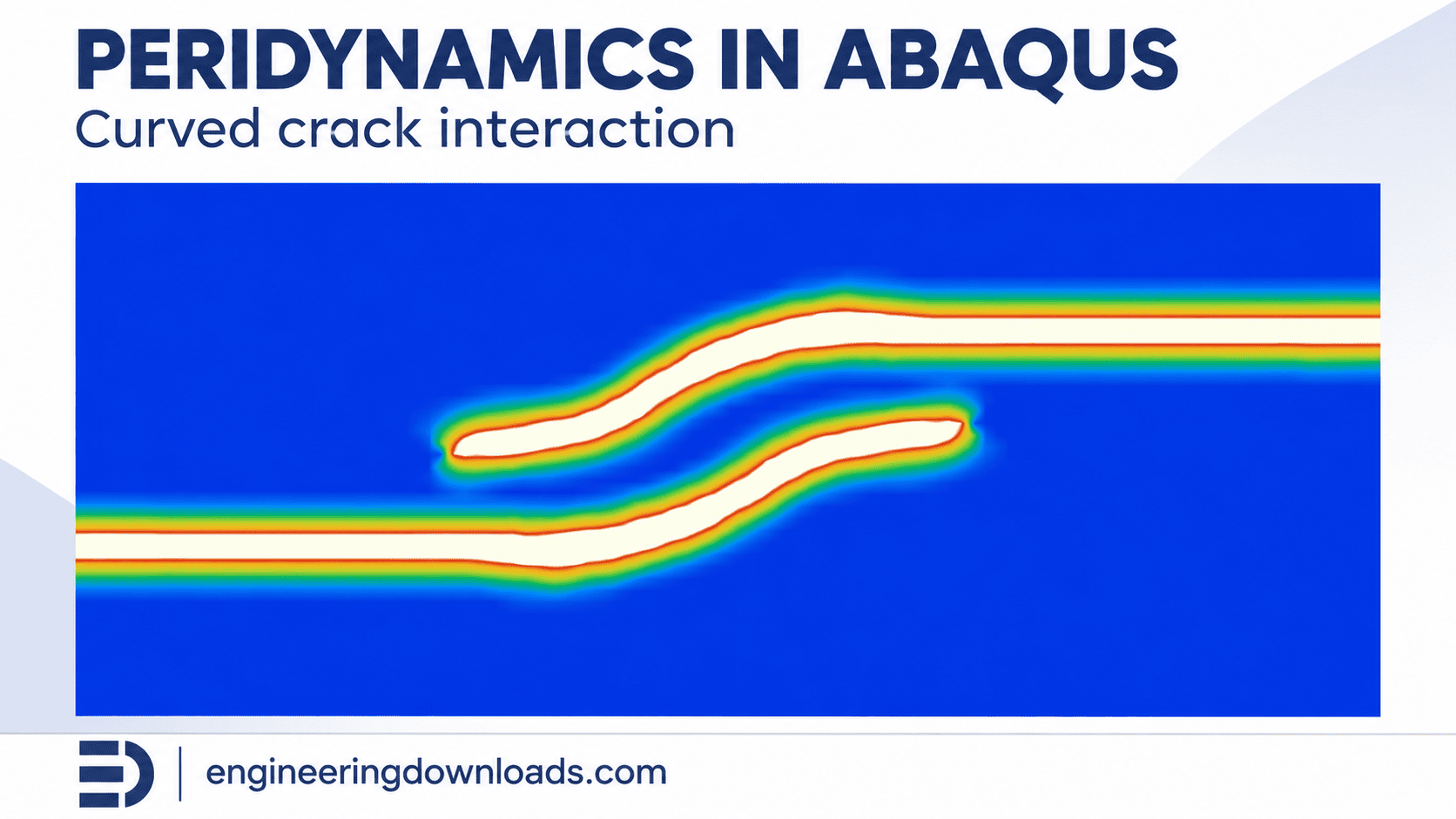 Peridynamics in Abaqus: Brittle Fracture with a VUMAT, after Han et al. (PeriFEM, CMES 2023)€149,00
 Fatigue and Cyclic Loading Package
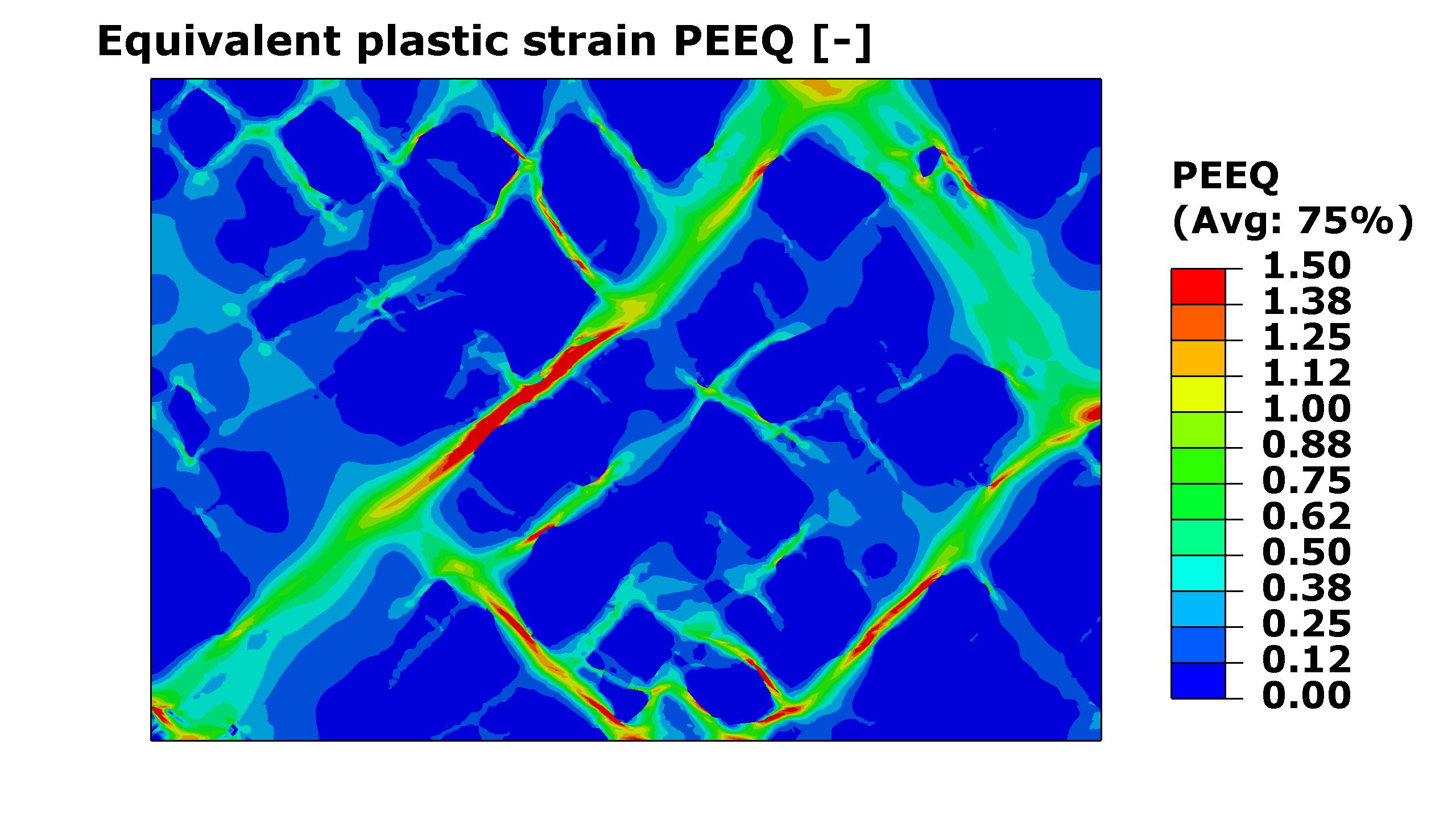 DP600 Dual-Phase Steel Microstructure RVE (Ferrite + Martensite) in Abaqus: Tensile Response and Plastic Strain Localisation€129,00
 DP600 Dual-Phase Steel Microstructure RVE (Ferrite + Martensite) in Ansys Mechanical: Tensile Response and Plastic Strain Localisation€129,00

Need a full custom project? See the options below.
€129,00
€179,00
€149,00
€119,00
See more
Want to receive push notifications for all major on-site activities?