Need a full custom project? See the options below.
Need a full custom project? See the options below.
Hydrogen-induced cracking (HIC) found mid-wall on the long seam of a heavy-wall separator, only 10 in from the head junction. Too close to a structural discontinuity for Level 1 or 2, so the published API 579-2 Example 7.4 goes straight to a Level 3 assessment: an elastic-plastic finite-element check against plastic collapse, then a Part 9 failure assessment diagram (FAD) for the HIC zone treated as embedded cracks. This Abaqus package rebuilds the whole procedure: 4 ready-to-run Abaqus models (CAE + INP), an open Python FAD engine, reference results and a 10-page PDF tutorial. Every number and curve is compared with the example.
Source: API 579-2/ASME PTB-14 Fitness-For-Service Example Problem Manual, Part 7 Hydrogen Blisters and HIC/SOHIC Damage, Example 7.4. The vessel is a high-pressure separator in SA-516 Grade 70: 102 in inside diameter, 6.984 in cylinder wall and a 3.557 in hemispherical head joined by a 3:1 taper, designed for 2640 psig at 450 °F. Ultrasonic inspection (AUT/PAUT) found an HIC zone 17 in long and 8 in around, 1.5 in thick, 2.8 in from the inside surface, on the PWHT long seam and 10 in below the taper. The spacing to the discontinuity fails the Level 1/2 limit, so the example uses Level 3: protection against plastic collapse (Annex 2C) and against brittle fracture (Part 9).
| Item | This package |
|---|---|
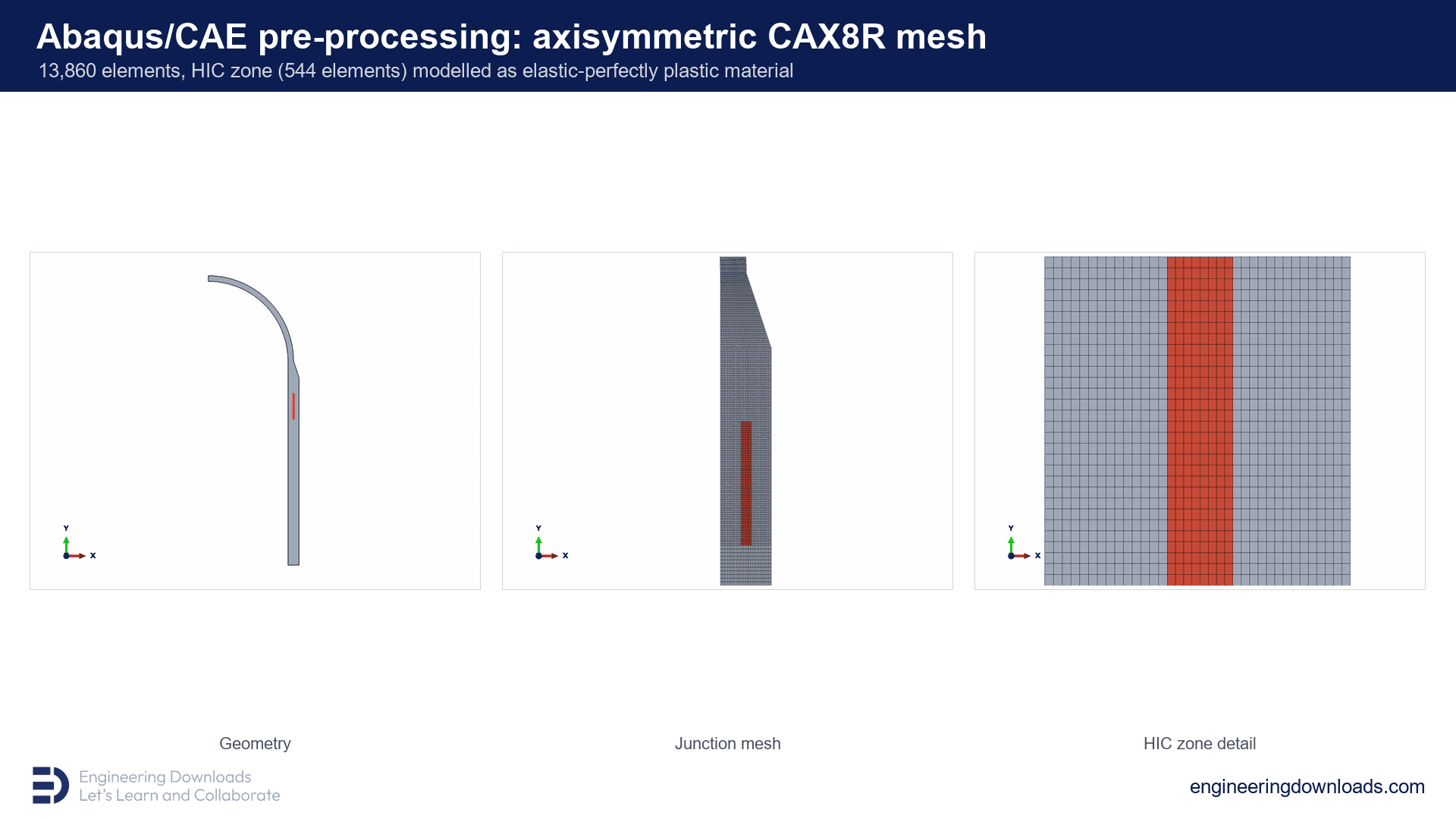
| Geometry | Axisymmetric section: hemispherical head, 3:1 OD taper and 120 in of cylinder; HIC zone modelled explicitly (conservatively 360°) |
| Mesh | 13,860 CAX8R elements, 36 through the wall, 544 in the HIC zone; mapped mesh lines follow the zone edges |
| Material | Annex 2E MPC true stress-strain curve at 450 °F (Sy 31.75 ksi, Su 70 ksi); HIC zone elastic-perfectly plastic at the same yield, as 7.4.4.1 requires |
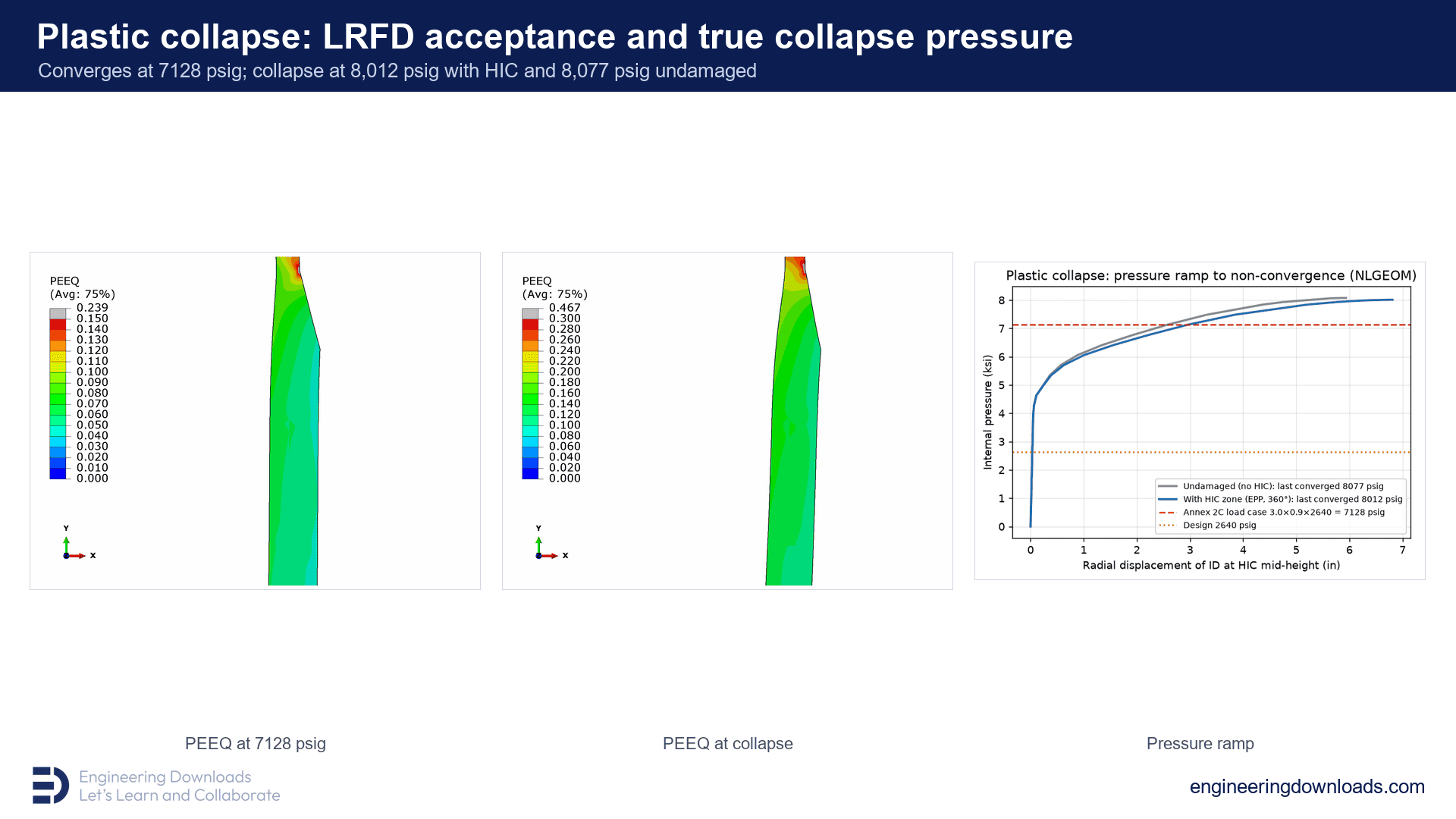
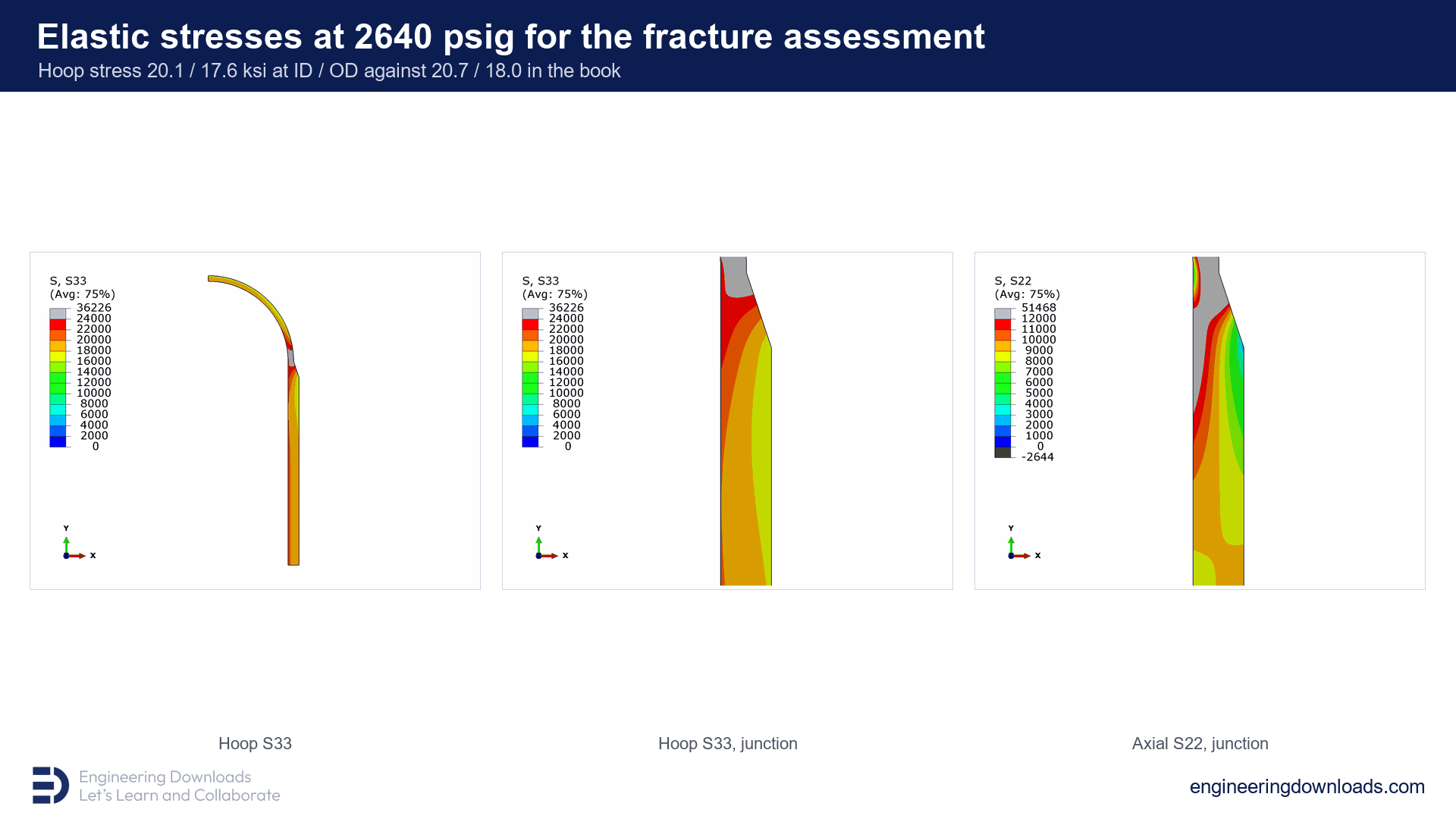
| Analyses | Linear elastic at 2640 psig (fracture stresses); elastic-plastic + NLGEOM at β(P) = 3.0 × 0.9 × 2640 = 7128 psig; pressure ramp to collapse with and without HIC |
| Fracture | Embedded elliptical flaws, longitudinal (2c = 17 in) and circumferential (2c = 8 in): KPECE1, RPECE1, Table 9.3 plasticity factor, Annex 9D PWHT residual stress, arrest Master Curve toughness, FAD with Lr,max = 1.25 |
| Software | Abaqus/CAE and Abaqus/Standard 2024; Python 3 (numpy, scipy, matplotlib) |
| Quantity | Example | This package |
|---|---|---|
| Hoop stress at ID / OD, 2640 psig | 20.7 / 18.0 ksi | 20.68 / 18.04 ksi (Lamé), 20.12 / 17.56 ksi (Abaqus) |
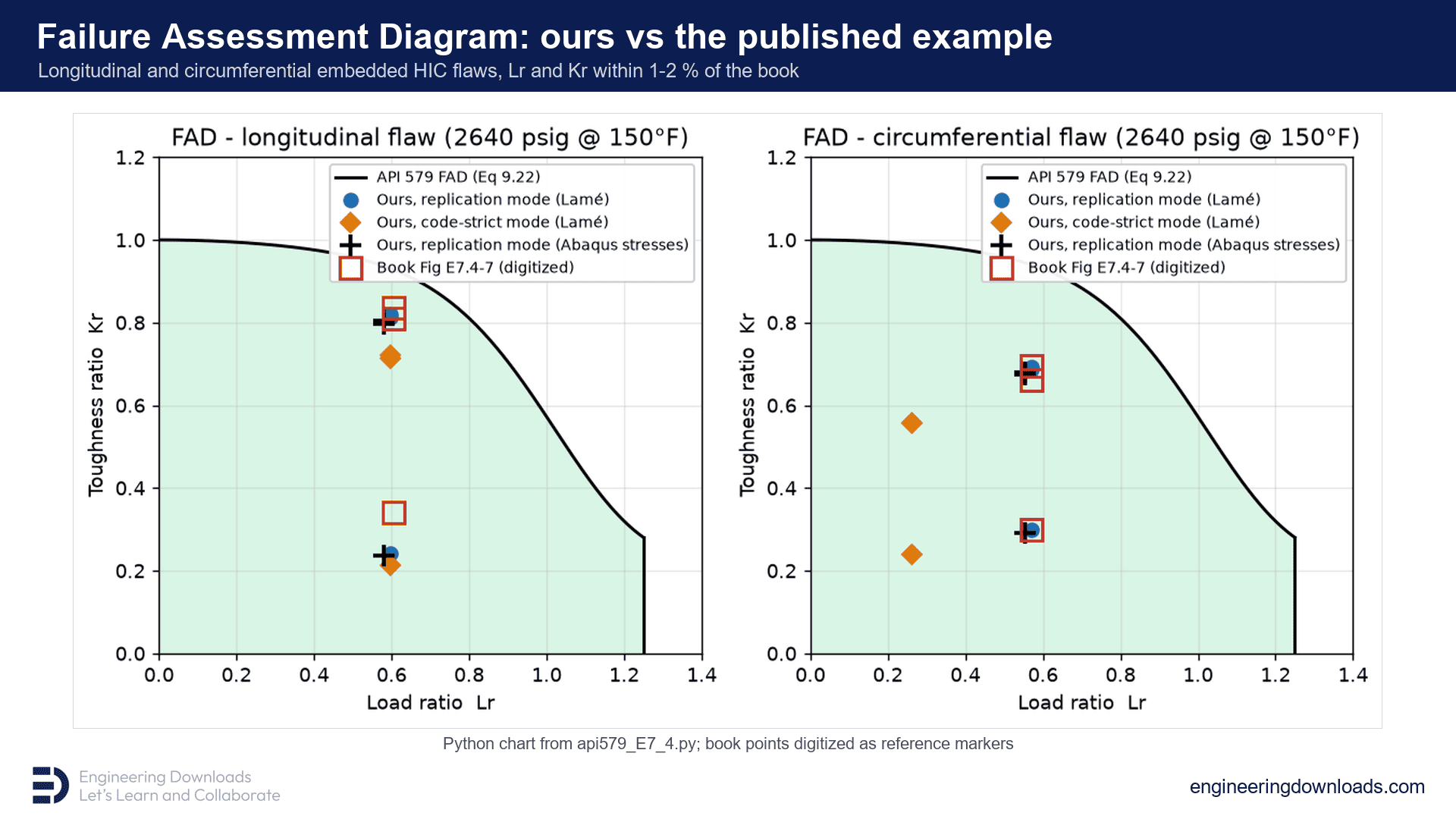
| Lr, longitudinal / circumferential flaw | 0.605 / 0.57 | 0.598 / 0.571 |
| Kr, longitudinal flaw, ID tip (governing) | 0.835 | 0.822 |
| Kr, circumferential flaw, ID tip | 0.695 | 0.693 |
| LRFD analysis at 7128 psig | Converges | Converges (12 increments) |
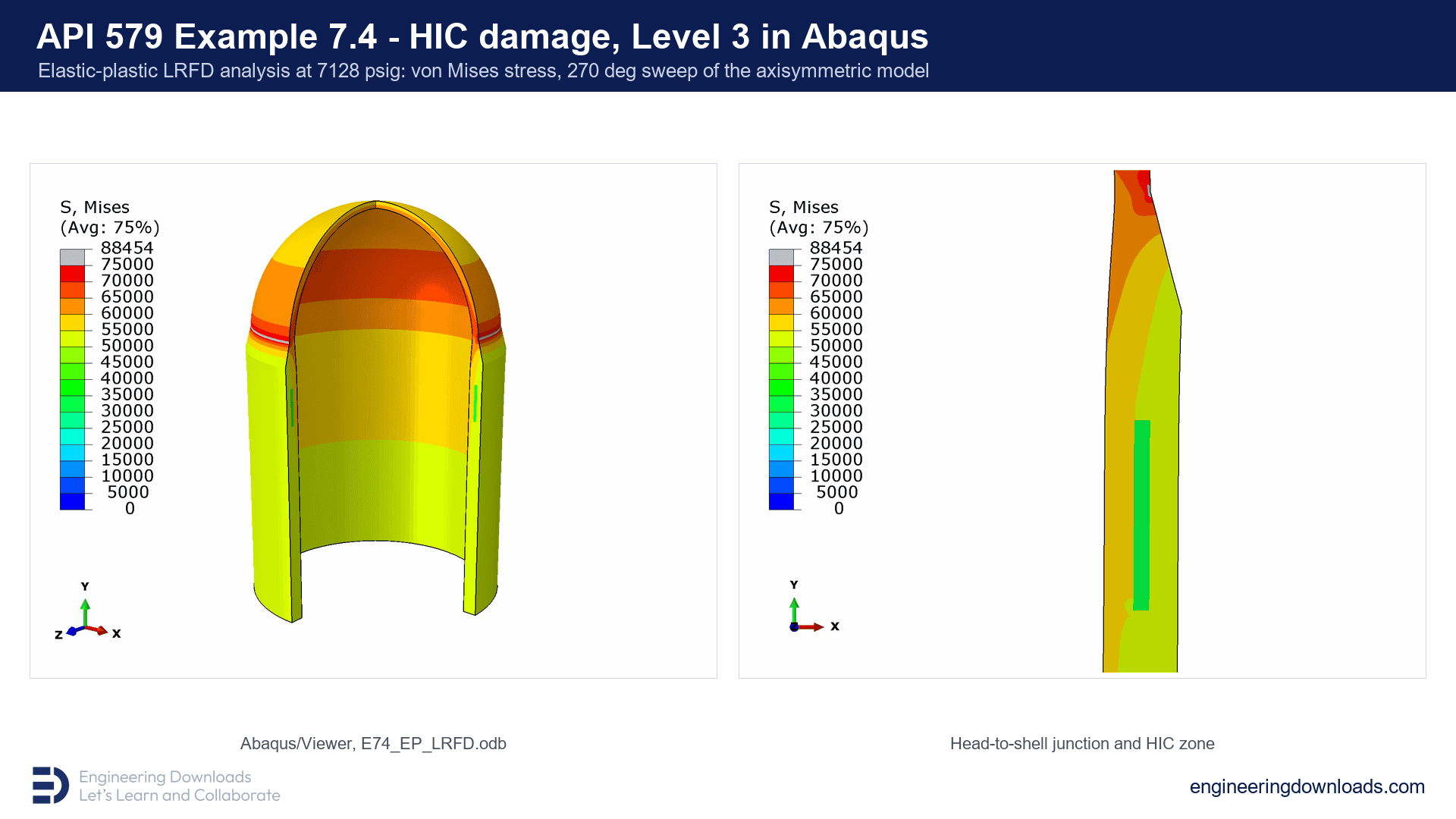
| Max von Mises outside the taper corner | 73.25 ksi | 71.8 ksi |
| Collapse pressure (our addition) | not given | 8,012 psig with HIC, 8,077 psig undamaged |
| Minimum Allowable Temperature | 99 °F | 99–131 °F depending on the stated assumption |
| Level 3 verdict | Acceptable | Acceptable |
We report every gap rather than tune it away. The example’s longitudinal-flaw Kr is only reproduced when the Master Curve crack-front length is L = c = 8.5 in rather than the 2021 rule L = min(2c, 4 in), and its circumferential flaw is loaded by the hoop stress, a conservative bound. The package runs both a replication mode (the inputs the example evidently used) and a code-strict mode (the 2021 text applied literally), so you can see the effect of each choice. The flaw-end point of the longitudinal flaw (φ = 0°, 0.24 vs 0.34) does not govern. The example quotes MAT = 99 °F without stating the pressure, sulfur class or L; across these documented choices MAT runs from 99 to 131 °F. Abaqus hoop stresses are 2–3 % below the closed-form values because the stiff junction still restrains the shell at the HIC height.
All model images are unedited PNG exports from Abaqus/CAE 2024: mesh coloured by material, pressure and boundary conditions from the Load module, and stress and plastic-strain contours from the ODBs. The scripts that make them are included, so you can regenerate every picture from your own runs.
Integrity and inspection engineers who assess HIC, SOHIC or blistering in sour-service vessels; FEA engineers who need a checked Annex 2C elastic-plastic workflow in Abaqus; and anyone learning how API 579 Part 9 fracture mechanics fits into a Part 7 Level 3 assessment. Change the HIC size, position, pressure or temperature in one JSON file to assess your own vessel the same way.
What does this package calculate? The complete Level 3 assessment of API 579-2 Example 7.4: an Annex 2C elastic-plastic analysis of the head-to-shell junction at the load case 3.0 x 0.9 x 2640 = 7128 psig, the Part 9 failure assessment diagram for the HIC zone as longitudinal and circumferential embedded flaws, and the Minimum Allowable Temperature. It also gives the true collapse pressure with and without the HIC zone.
Does it reproduce the API 579 example? Yes for the verdict and the governing numbers. Lr is within 1.2 % of the example for both flaws, the governing Kr values are within 2 %, the closed-form hoop stresses match to 0.2 %, and the LRFD analysis converges at 7128 psig as in the example. The maximum von Mises stress outside the taper corner is 71.8 ksi against 73.25 ksi.
Where does it differ from the example, and why? The example evidently used a Master Curve crack-front length L = c = 8.5 in instead of the 2021 rule L = min(2c, 4 in), and loaded the circumferential flaw with the hoop stress. The package runs both a replication mode and a code-strict mode. The non-governing flaw-end point of the longitudinal flaw is 0.24 against 0.34, and the example's MAT of 99 F can only be reached with some of its unstated choices; our MAT range is 99 to 131 F. The tutorial explains each case.
Are the images real Abaqus results? Yes. Every mesh, load and contour image is an unedited PNG written by Abaqus/CAE 2024 from the included models and their results. The image scripts are included so you can regenerate them. Charts are drawn by the included Python post-processor; the example's values appear only as digitized reference markers.
Can I use it for my own vessel? Yes. All inputs are in one JSON file: vessel geometry, HIC size and position, pressure, temperature and material. The mesh generator writes new Abaqus decks from it, and the FAD engine reruns the Part 9 assessment with Lame or Abaqus stresses.
Which Abaqus version do I need? Abaqus/CAE and Abaqus/Standard 2024 or newer for the CAE files and scripts; the INP files also run in older releases. ODB files are not included: the elastic job runs in seconds, the LRFD job in under a minute and each collapse ramp in 3 to 5 minutes on 6 cores.
What if the package is not what I expected? Write to us. Engineering Downloads refunds clients who are not satisfied with a delivered product.
Is this an API publication or a certified assessment? No. It is an independent worked benchmark and training package. It does not reproduce API figures and does not replace a fitness-for-service assessment by a qualified engineer.
This is an independent worked benchmark for training. It is not an API publication, reproduces no API figures and does not replace an assessment by a qualified engineer. You need your own copy of API 579-1/ASME FFS-1 and API 579-2.
Need more than the files?
There are two ways we can help. Book a one hour online consultation if you want to talk a problem through with a CAE engineer, using the checkbox in the order box. Order a project if you need a full simulation built for you, delivered to an agreed scope, price and deadline under a written contract.
We work on FEA and CFD for engineers, researchers and companies. Order your project, or message us on WhatsApp for a quick reply.
Other packages engineers working on this topic also download.
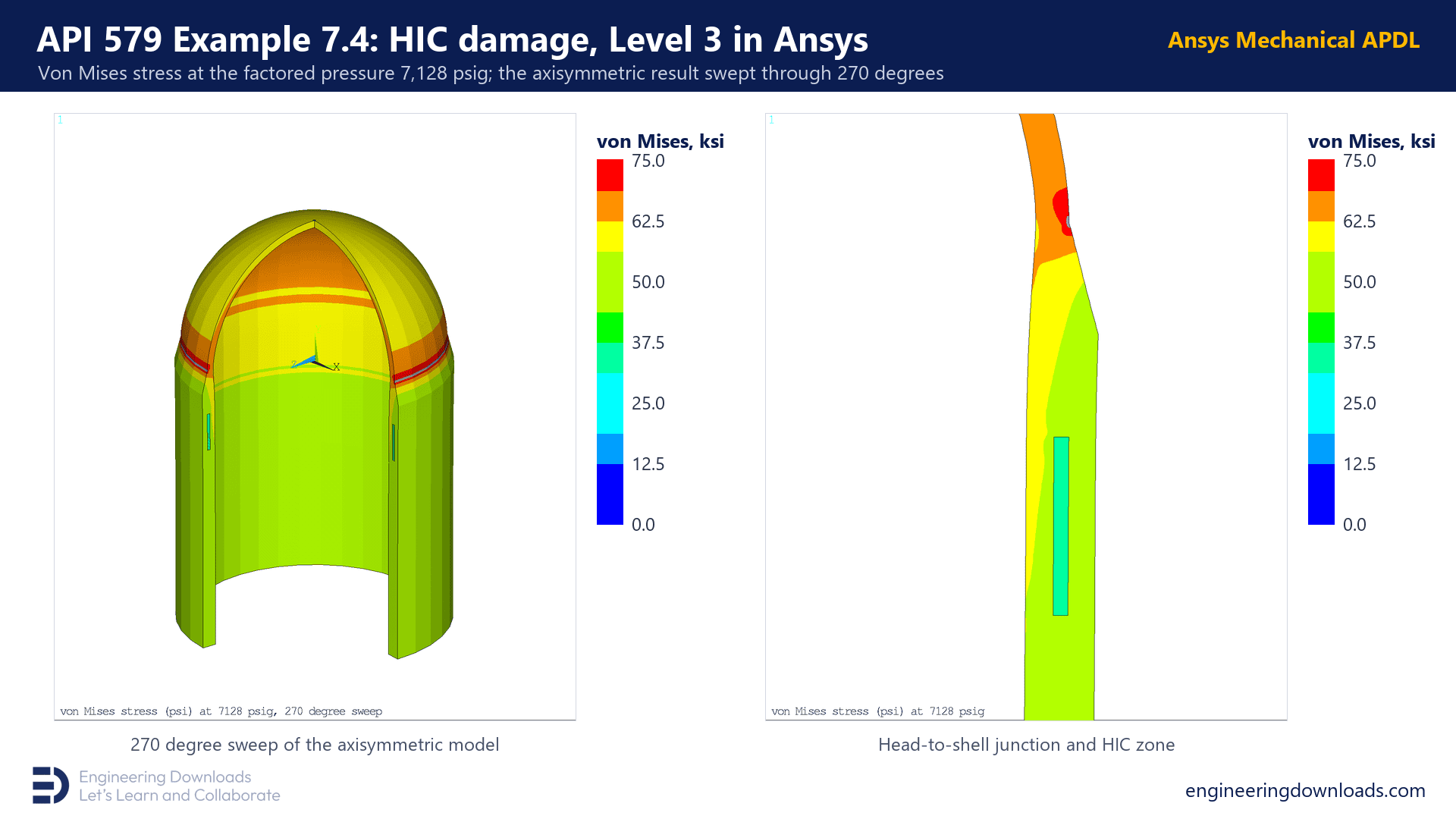 API 579 Example 7.4 in Ansys: HIC Damage Level 3 Assessment with FAD and Plastic Collapse€139,00
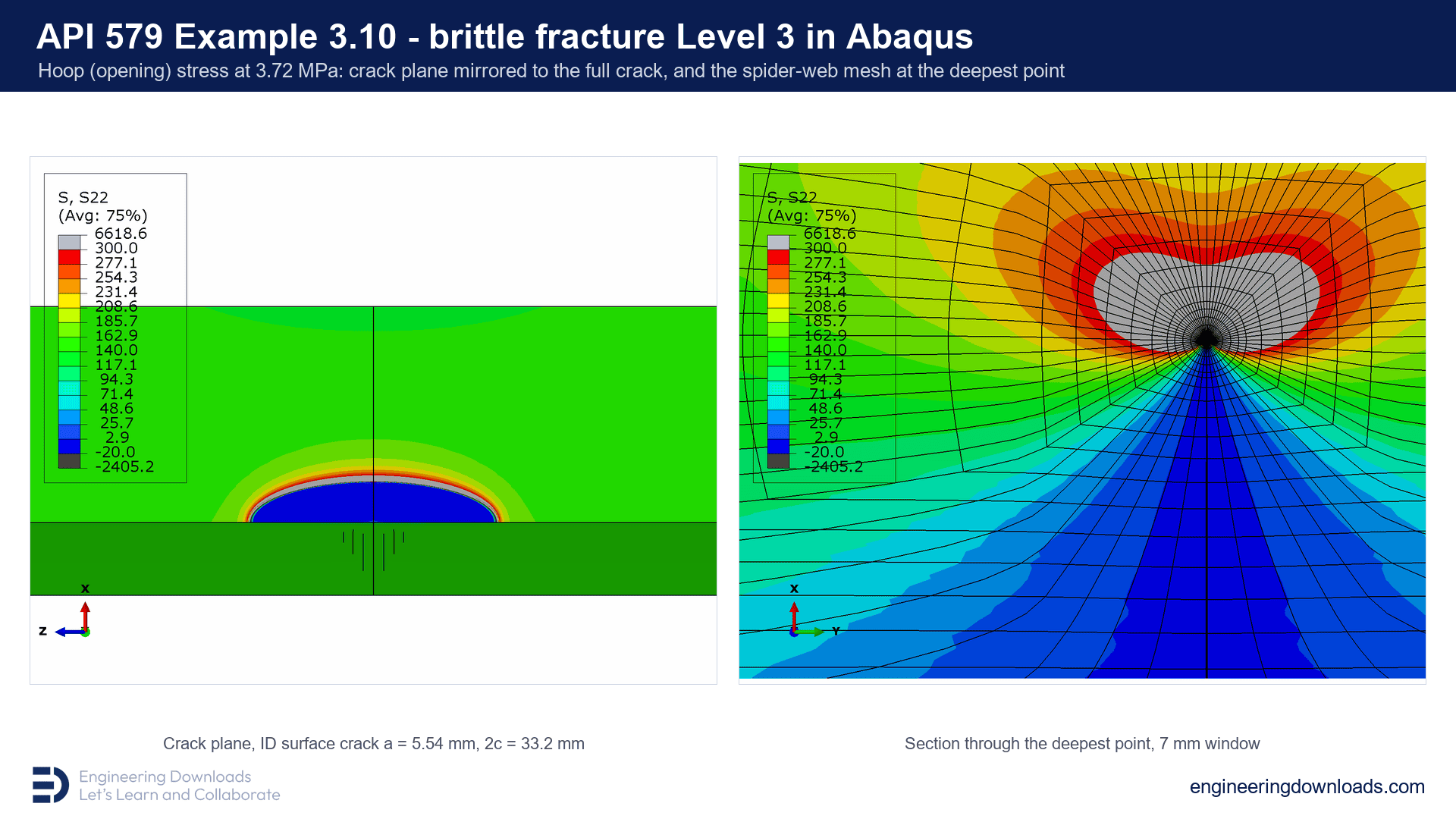 API 579 Example 3.10 in Abaqus: Brittle Fracture Level 3, Demethanizer Thermal Shock€139,00
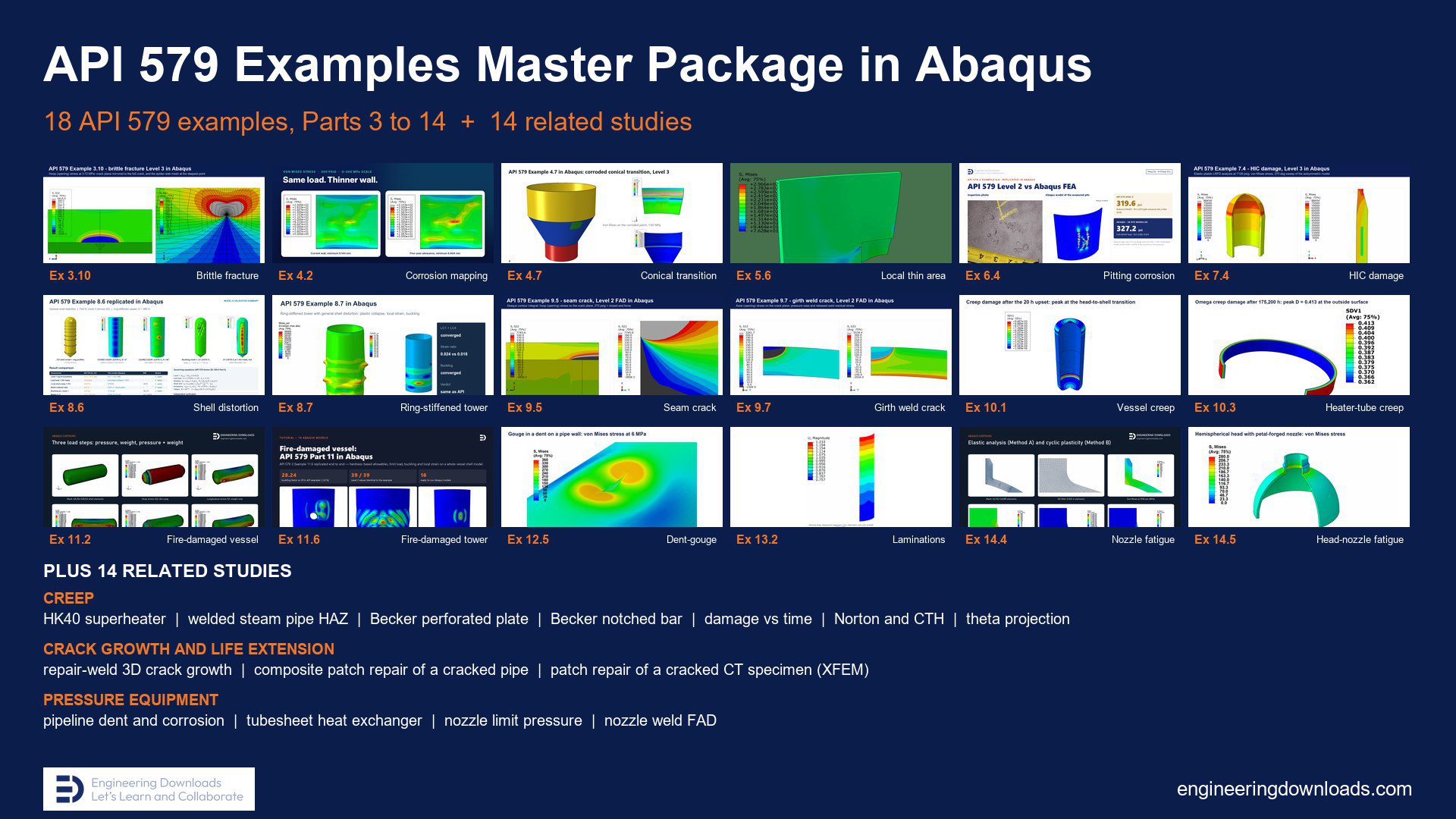 API 579 Examples Master Package in Abaqus: 18 Examples from Parts 3 to 14 plus 14 Creep, Crack Growth, Life Extension and Pressure-Equipment Studies
 Stamped-End Tube Space Truss Node in Ansys: Shell-Beam Model of the Central Joint (Double-Layer Grid)€129,00
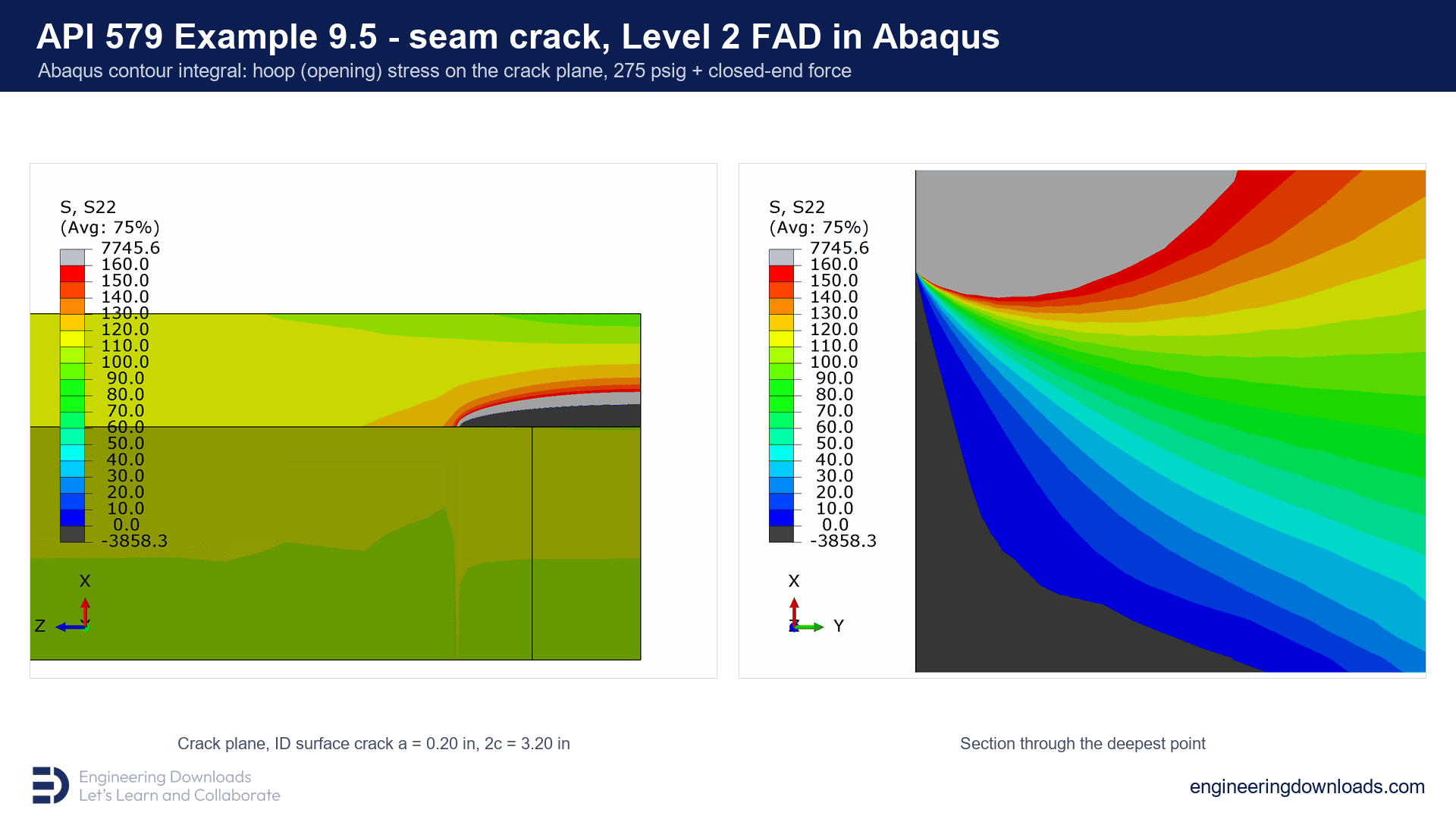 API 579 Example 9.5 in Abaqus: Seam Crack Level 2 FAD with 3D Contour Integral€99,00
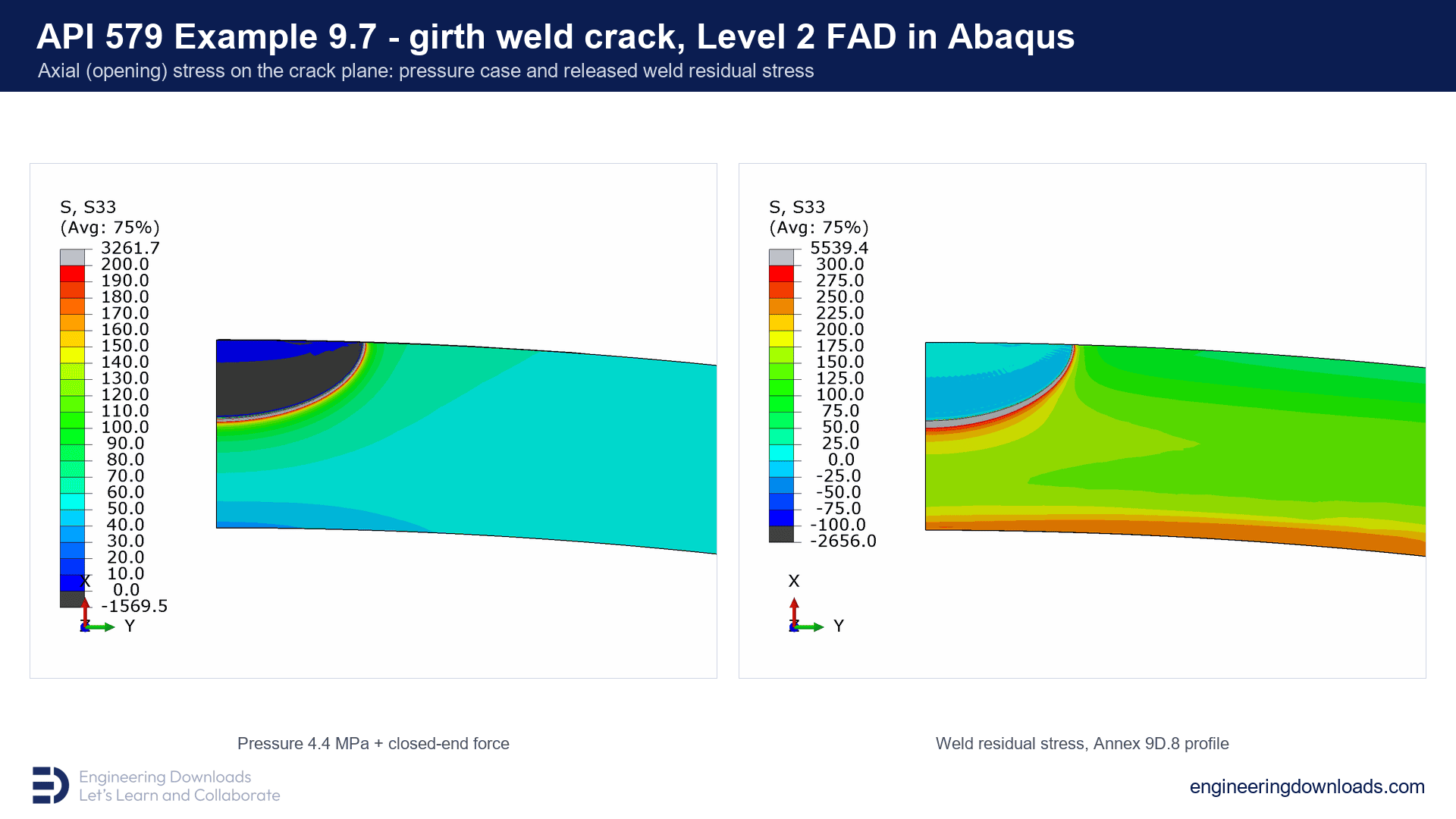 API 579 Example 9.7 in Abaqus: Girth Weld Crack with Weld Residual Stress, Level 2 FAD€129,00
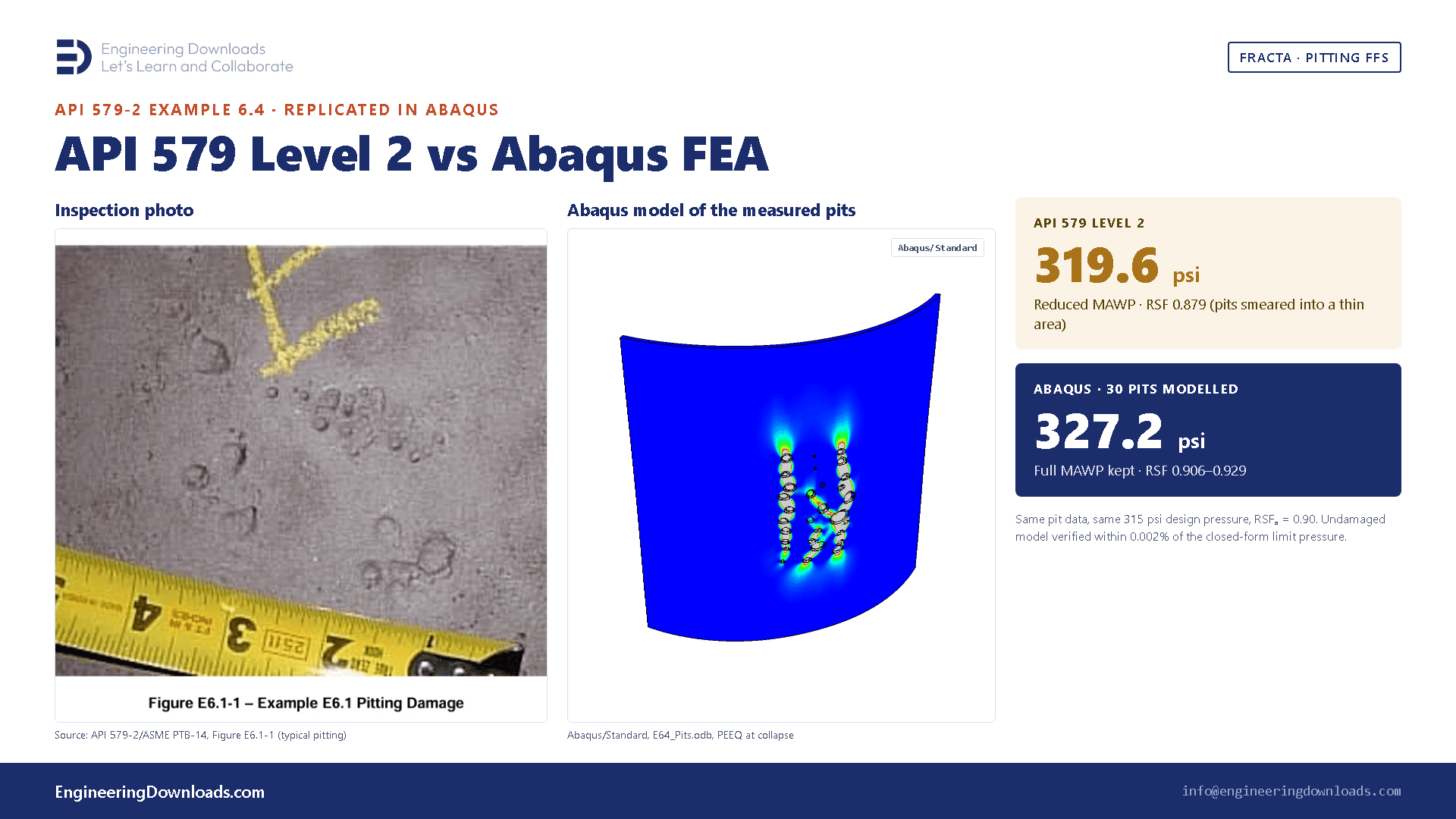 API 579 Example 6.4 in Abaqus: Localized Pitting Corrosion, Level 2 vs Level 3 FFS€129,00
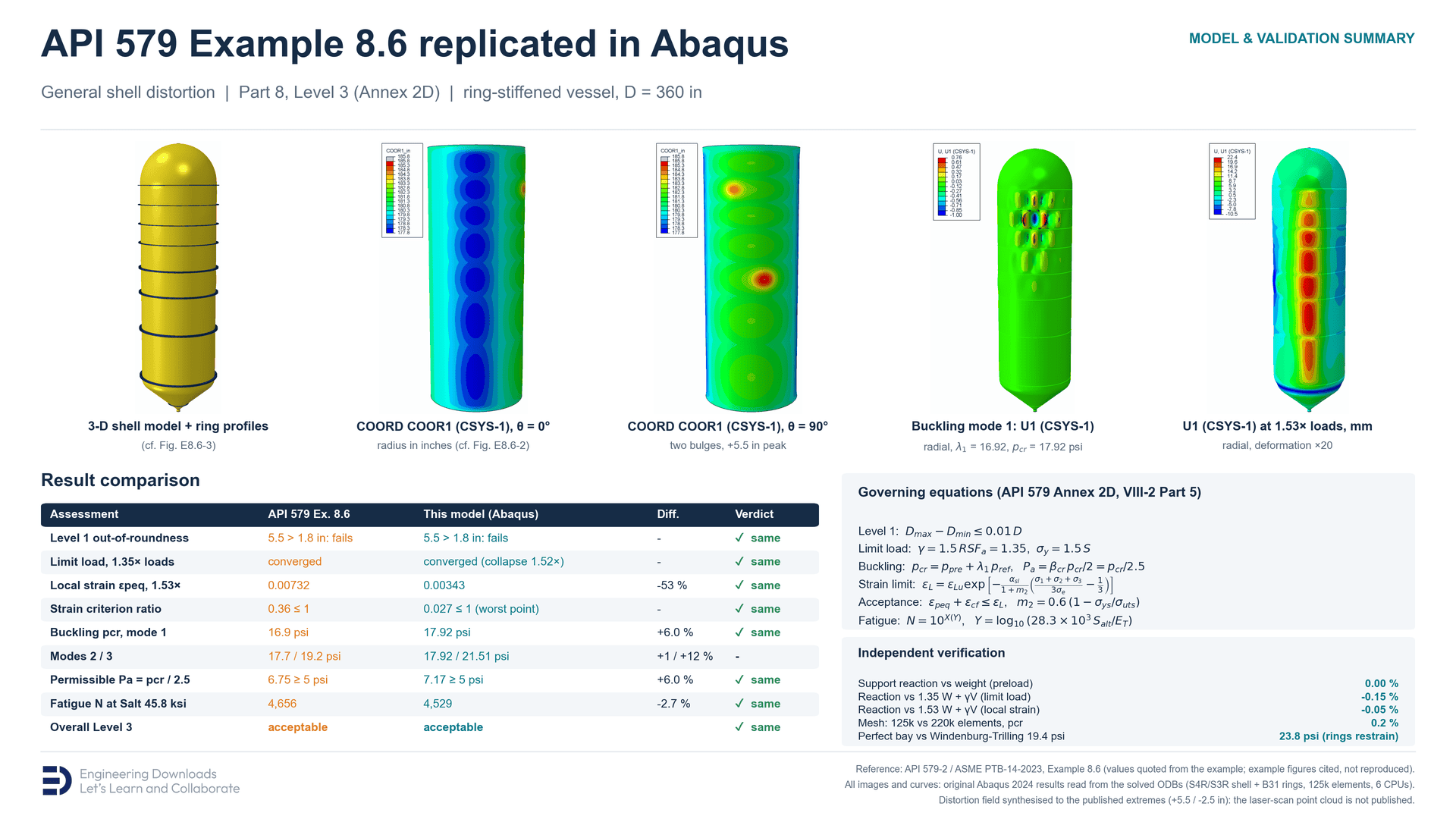 API 579 Example 8.6 in Abaqus: General Shell Distortion and Buckling, Level 3 FFS€129,00

Need a full custom project? See the options below.
€129,00
€179,00
€149,00
€119,00
€129,00
€149,00
See more
Want to receive push notifications for all major on-site activities?