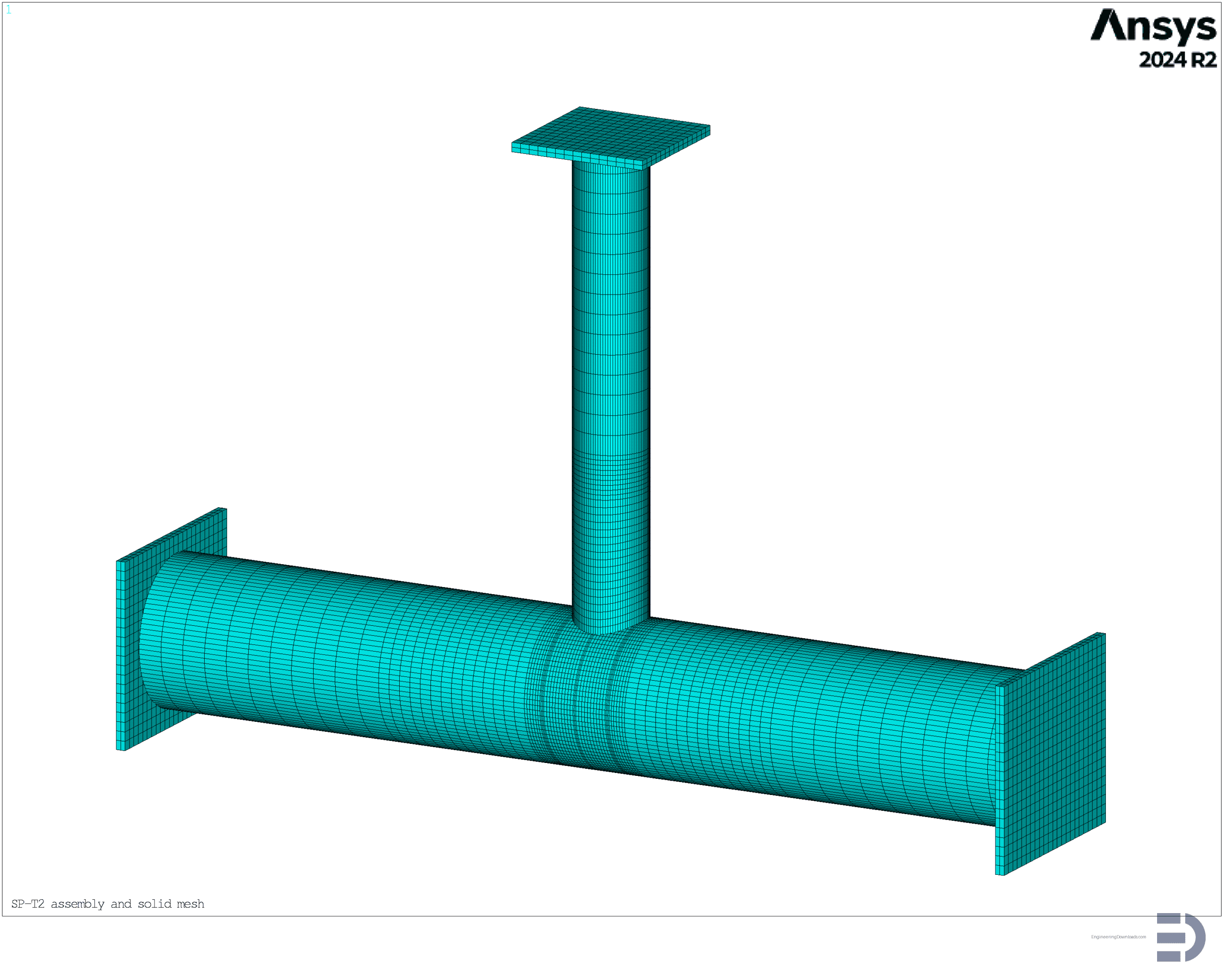
Composite Transverse Fracture in Ansys: AS4/8552 R-Curve and Homogenized Cohesive Softening Laws (Herráez et al. 2018)

€179,00
Optional extras

Need a full custom project? See the options below.

€179,00
Optional extras

Need a full custom project? See the options below.

28 people watching this product now!

Material Includes

  • Ansys Workbench project (.wbpz)
  • 3 APDL decks
  • One-click Python workflow (run_model.py)
  • PDF tutorial

Audience

  • Composite fracture researchers
  • FEA engineers working with cohesive elements
  • MSc and PhD students in composite damage mechanics

What You Will Learn?

  • Run three homogenized cohesive-zone laws for AS4/8552 transverse fracture in Ansys.
  • Extract the rising R-curve with a domain J integral.
  • Compare the Ansys R-curve with the published curves of Herraez et al. 2018 and with the Abaqus model.
  • Solve and post-process everything with one Python script.
  • Workbench project, APDL decks and PDF tutorial included, runs in your own Ansys.

About Course

Ansys Mechanical APDL cohesive zone model of transverse matrix fracture in an AS4/8552 carbon/epoxy ply, with homogenised linear and bilinear softening laws, mode-I K-field loading and R-curve extraction, based on Herraez, Gonzalez and Lopes (2018). Includes the Workbench project (.wbpz), three APDL decks, a one-click Python run script, a README and a PDF tutorial, so it runs in your own Ansys installation.

Watch fibre–matrix separation and crack growth in Ansys

Composite fracture in Ansys: AS4/8552 R-curves and cohesive laws

This product is an Ansys cohesive zone model of transverse matrix fracture in an AS4/8552 carbon/epoxy ply. It follows the numerical framework of Herraez, Gonzalez and Lopes, which links the measured resistance curve (R-curve) of a composite to a homogenised softening law that can be used in ply-level and structural models. Three cases are included: a linear softening law, a baseline bilinear law and a bilinear law with higher interface toughness. All three are solved in Ansys MAPDL, and the R-curve of each is extracted automatically.

The model files, three APDL decks and one Python run script are delivered, so the whole study runs in your own Ansys installation. One script solves the three cases and extracts the R-curves in a single click, an automated workflow rather than manual step-by-step modelling.

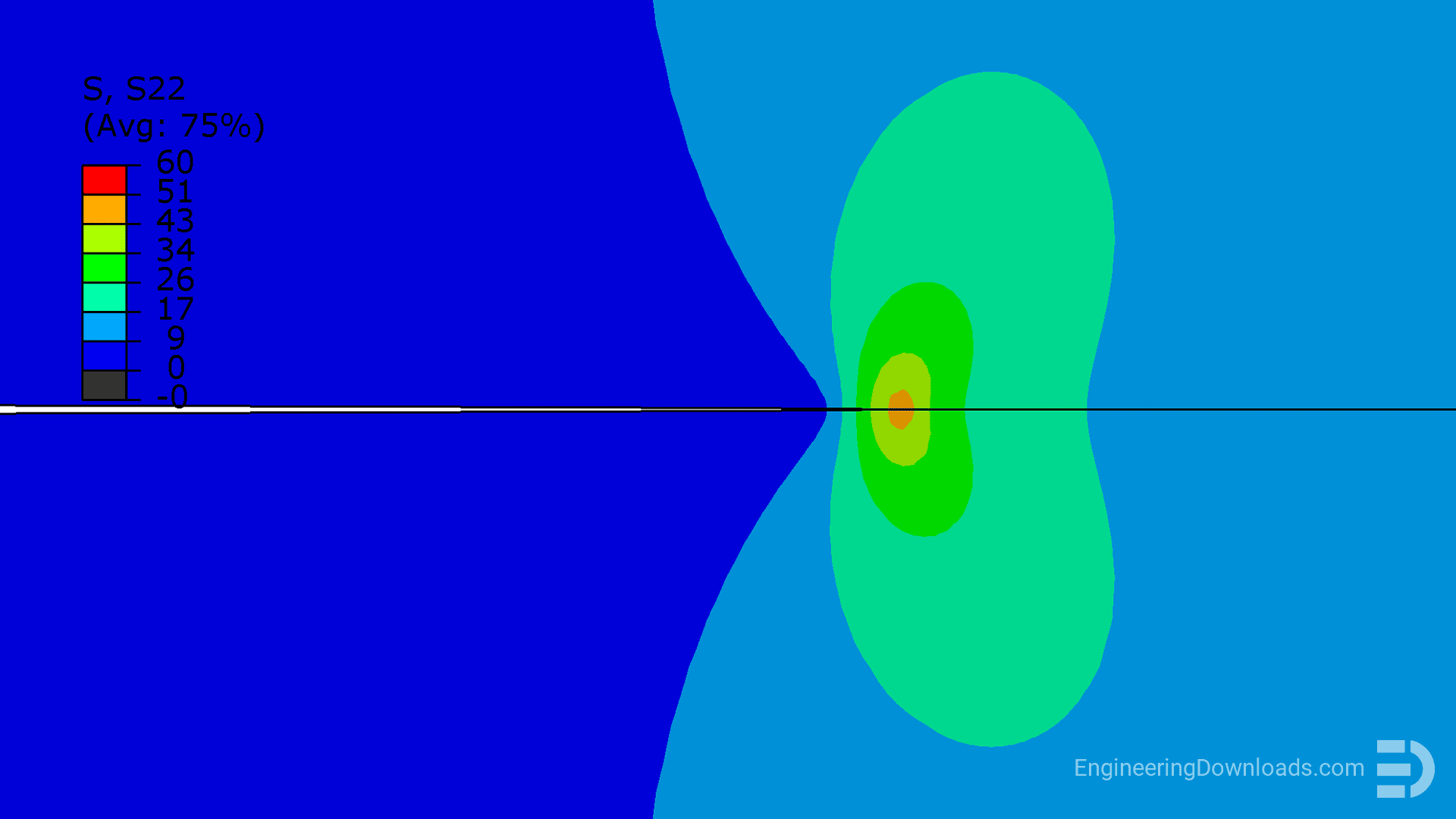
Animation of the transverse stress SY as the crack grows through the cohesive ligament in the Ansys AS4/8552 fracture model (higher interface toughness case)

What the paper is about

The paper (Herráez, González and Lopes, Int. J. Solids Struct. 134, 2018, 216-228) shows how the rising R-curve of a fibre-reinforced ply under transverse tension, a result of fibre bridging and micro-cracking ahead of the crack tip, can be condensed into a single homogenized cohesive law. The law is then used at the ply scale so that a structural model can capture the same fracture resistance without resolving the fibres. This package builds the ply-scale mode-I model in Ansys and reproduces the R-curves for three cohesive laws: linear softening, baseline bilinear and higher interface toughness bilinear.

Source: Int. J. Solids Struct. 134 (2018) 216-228. This product is an independent Ansys implementation prepared for learning and research; it is not the authors’ code.

What you get

  • Ansys Workbench project (.wbpz): one archived project that opens in Workbench so you can inspect the model.
  • Three APDL decks (.dat): linear softening, baseline bilinear softening and higher interface toughness bilinear softening.
  • One-click Python run script (run_model.py): solves the three cases in Ansys MAPDL and extracts the R-curves automatically, commented and ready to run.
  • PDF tutorial: theory explained and the model built step by step, with three workshops (see Course Content below).
  • Short README: one line on how to run the script.

All input files and scripts are included, so the model runs in your own Ansys installation.
Model at a glance

  • Plane-strain ply panel, 76.8 x 19.2 mm, AS4/8552 carbon/epoxy.
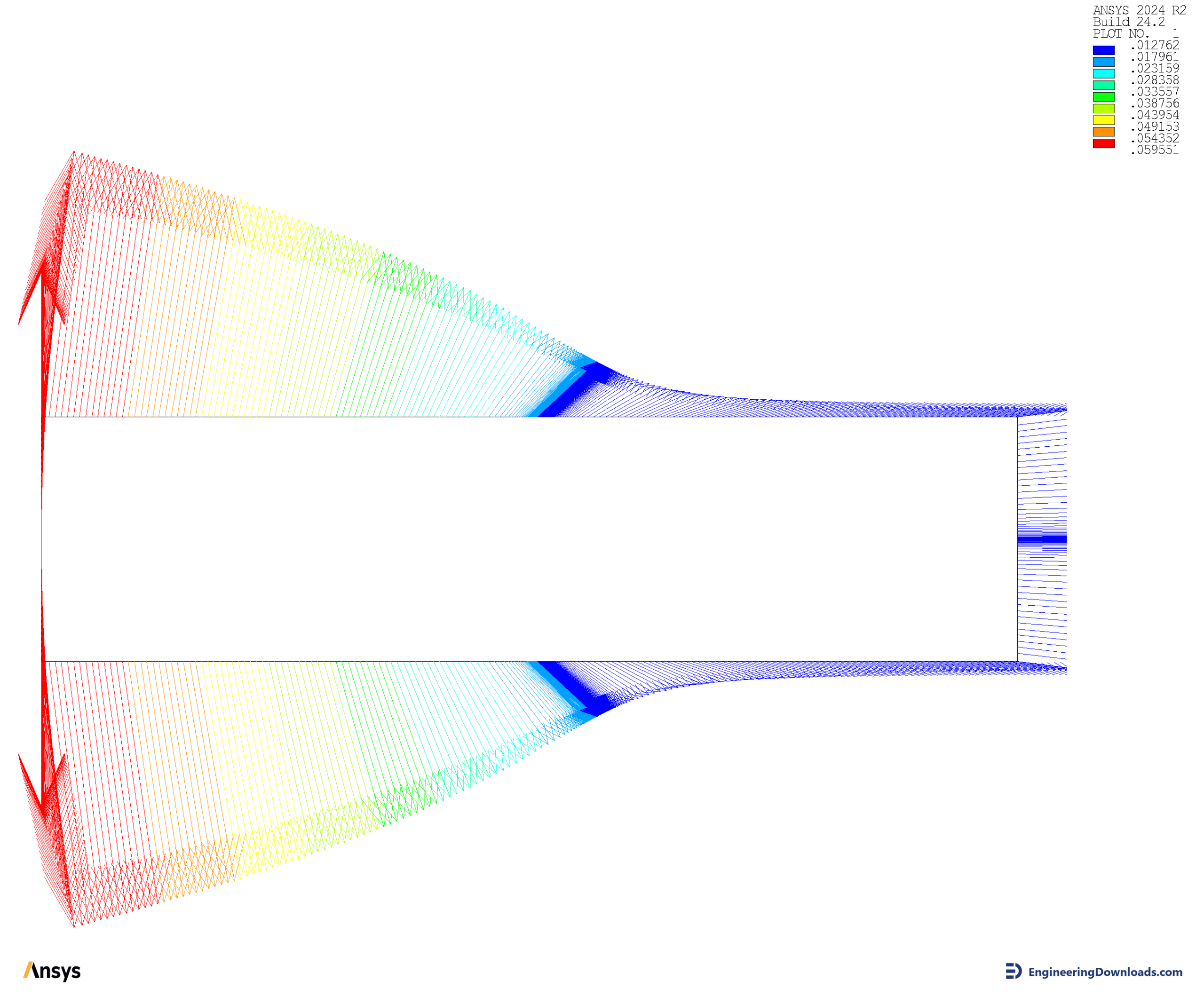
  • Mode-I K-field displacement loading on the outer edges (boundary-layer formulation) with a load ramp.
  • PLANE182 bulk elements and INTER202 cohesive elements along the crack plane (bilinear cohesive zone material, TB,CZM,BILI).
  • Homogenised linear softening law and bilinear softening law built from two parallel cohesive layers.
  • Peak cohesive traction of 50 MPa; linear case 50 J/m2; higher-toughness case 180 J/m2.
  • R-curve extracted from crack extension and the domain J-integral.
Plane-strain panel geometry (76.8 x 19.2 mm) of the Ansys transverse fracture model without mesh lines

Pre-processing

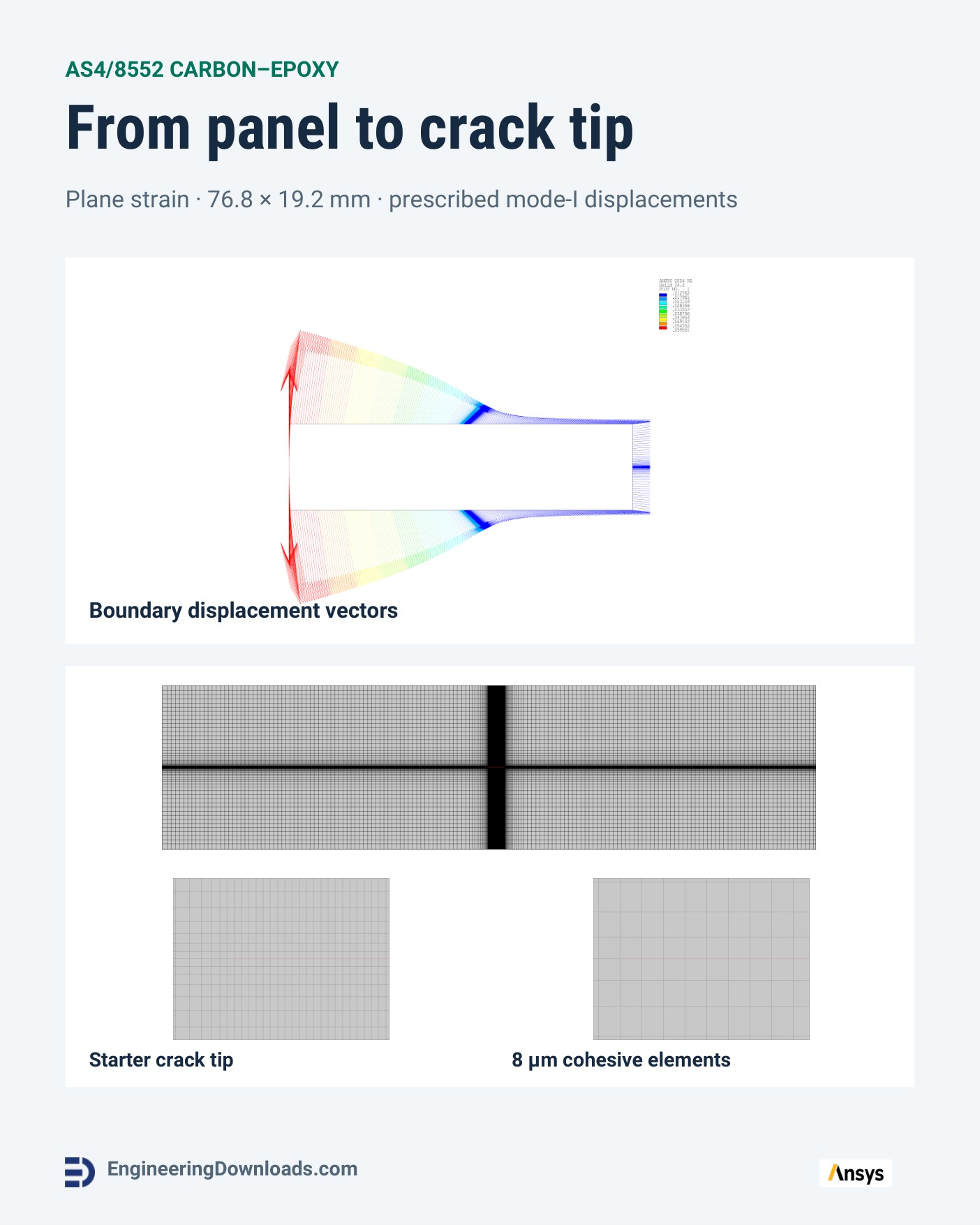
Geometry, mesh and loading of the Ansys model, rendered from the solver.
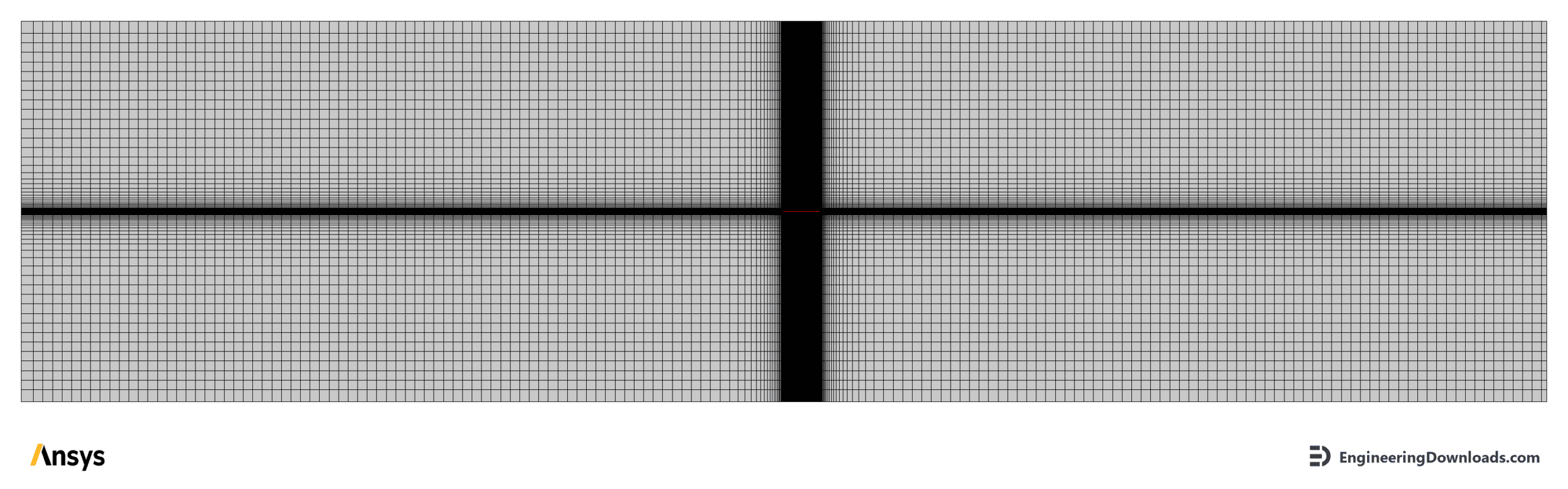
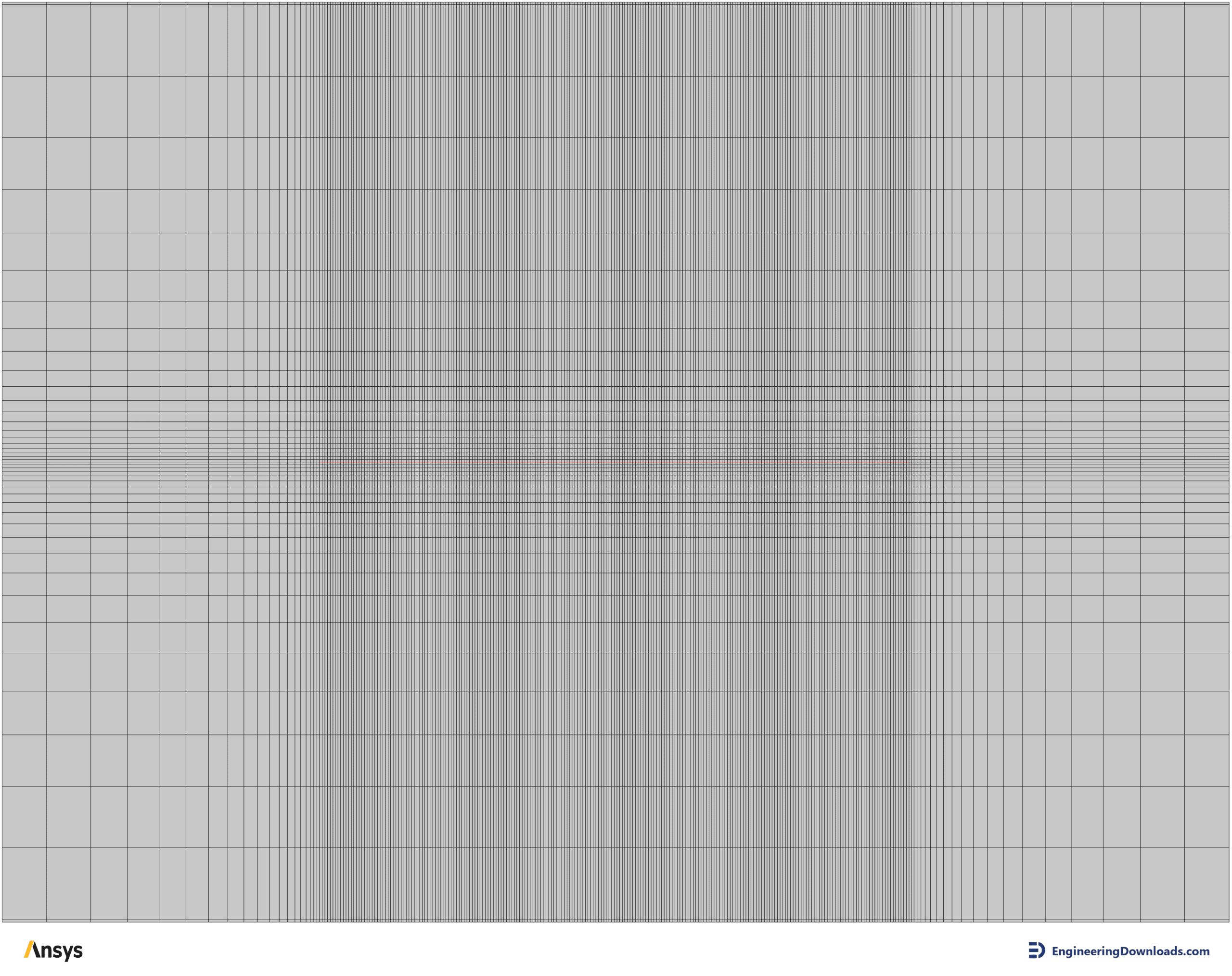
Ansys finite element mesh of the AS4/8552 carbon/epoxy panel for transverse fracture, refined along the crack plane and the cohesive ligament
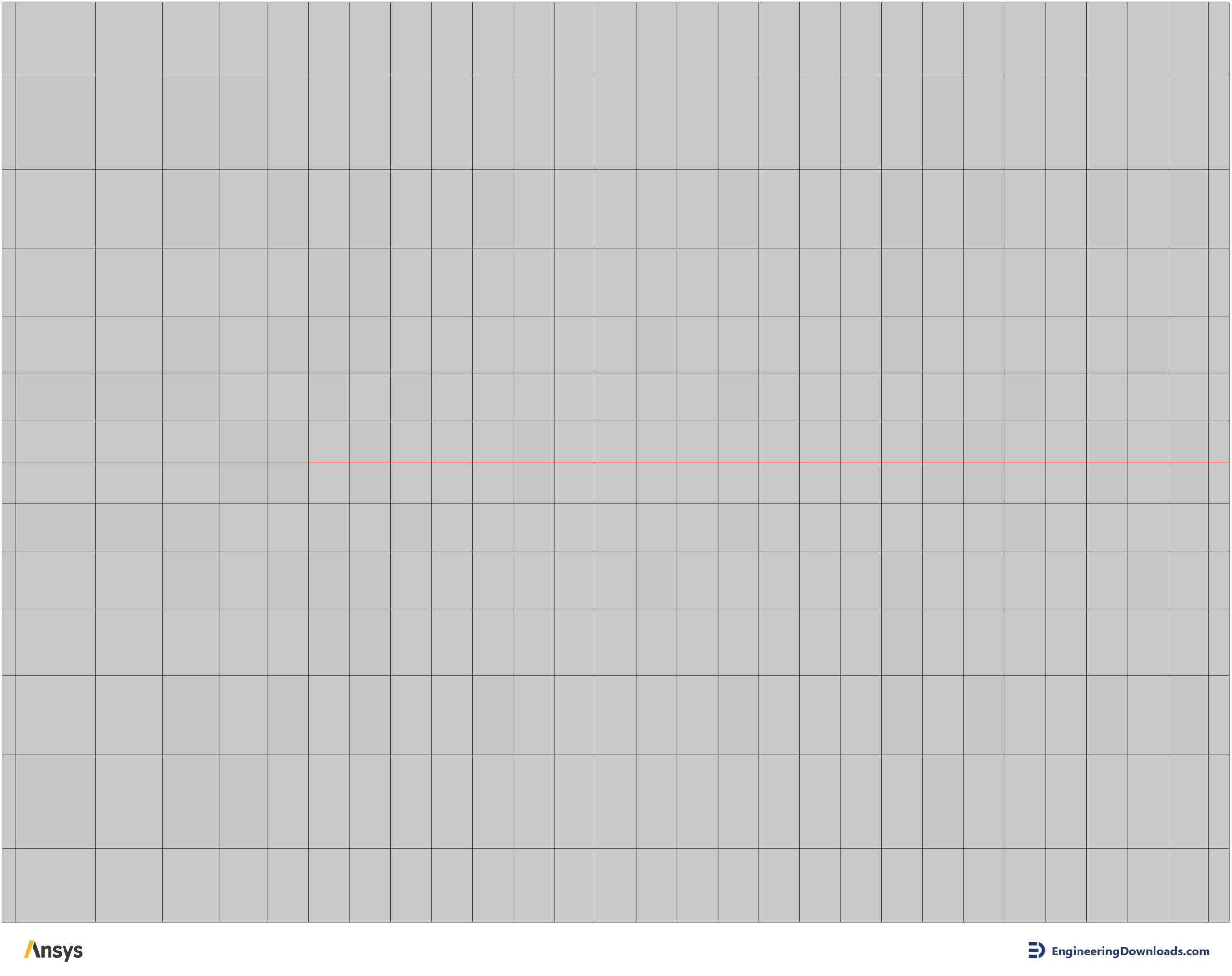
Zoom of the Ansys mesh around the cohesive ligament ahead of the starter crack tip in the composite ply model
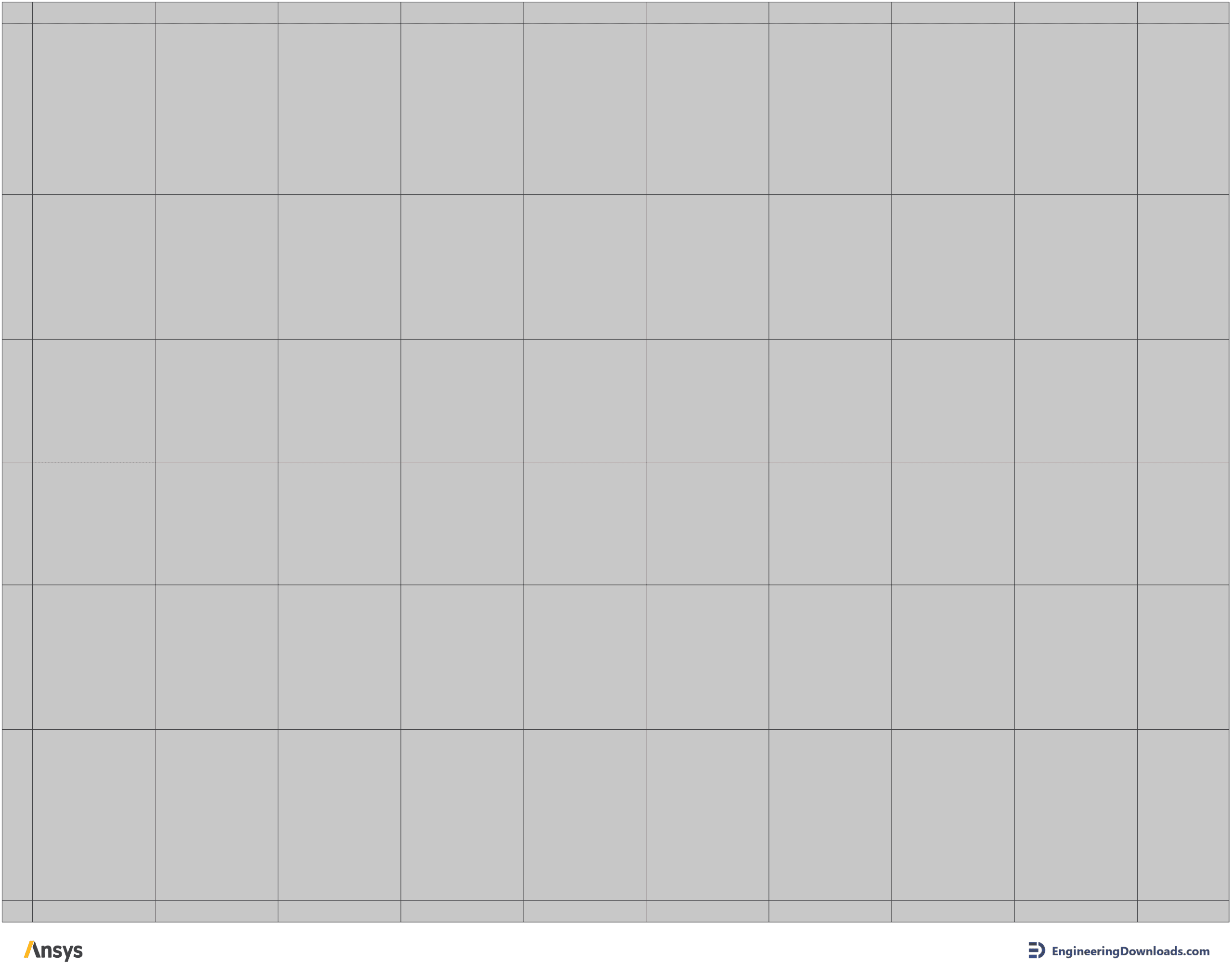
Close-up of the Ansys mesh at the starter crack tip of the AS4/8552 transverse fracture model
Detail of the 8 micrometre INTER202 cohesive element layer along the crack plane in the Ansys composite fracture model
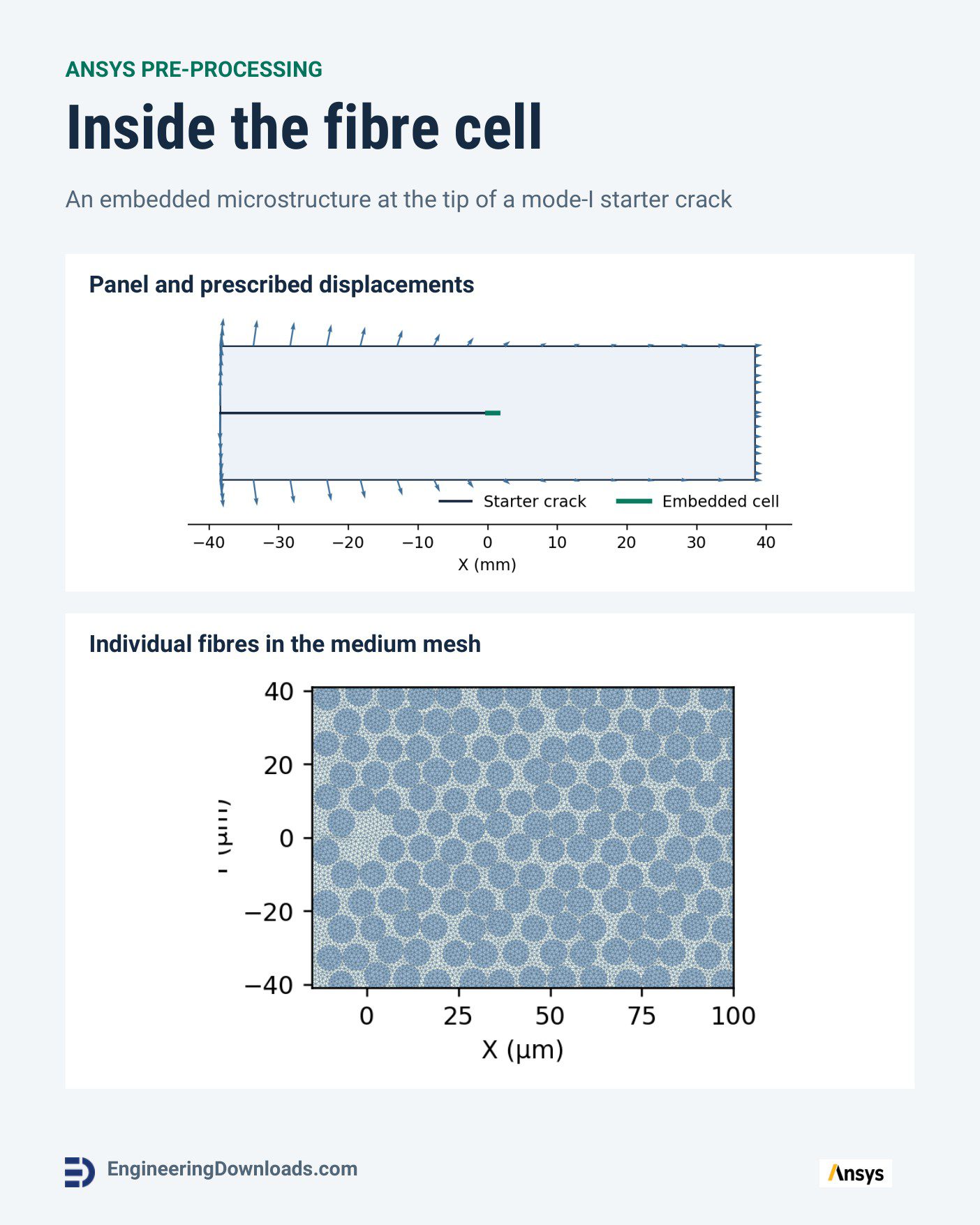
Prescribed displacement boundary conditions on the outer edges of the Ansys plane-strain panel (mode-I K-field loading)
Ansys displacement vectors of the mode-I K-field boundary condition applied to the composite panel, coloured by magnitude
Ansys boundary displacement vectors, panel mesh, starter crack tip and 8 µm cohesive layer.
Panel mesh and mode-I loading

Fibre-scale Ansys study

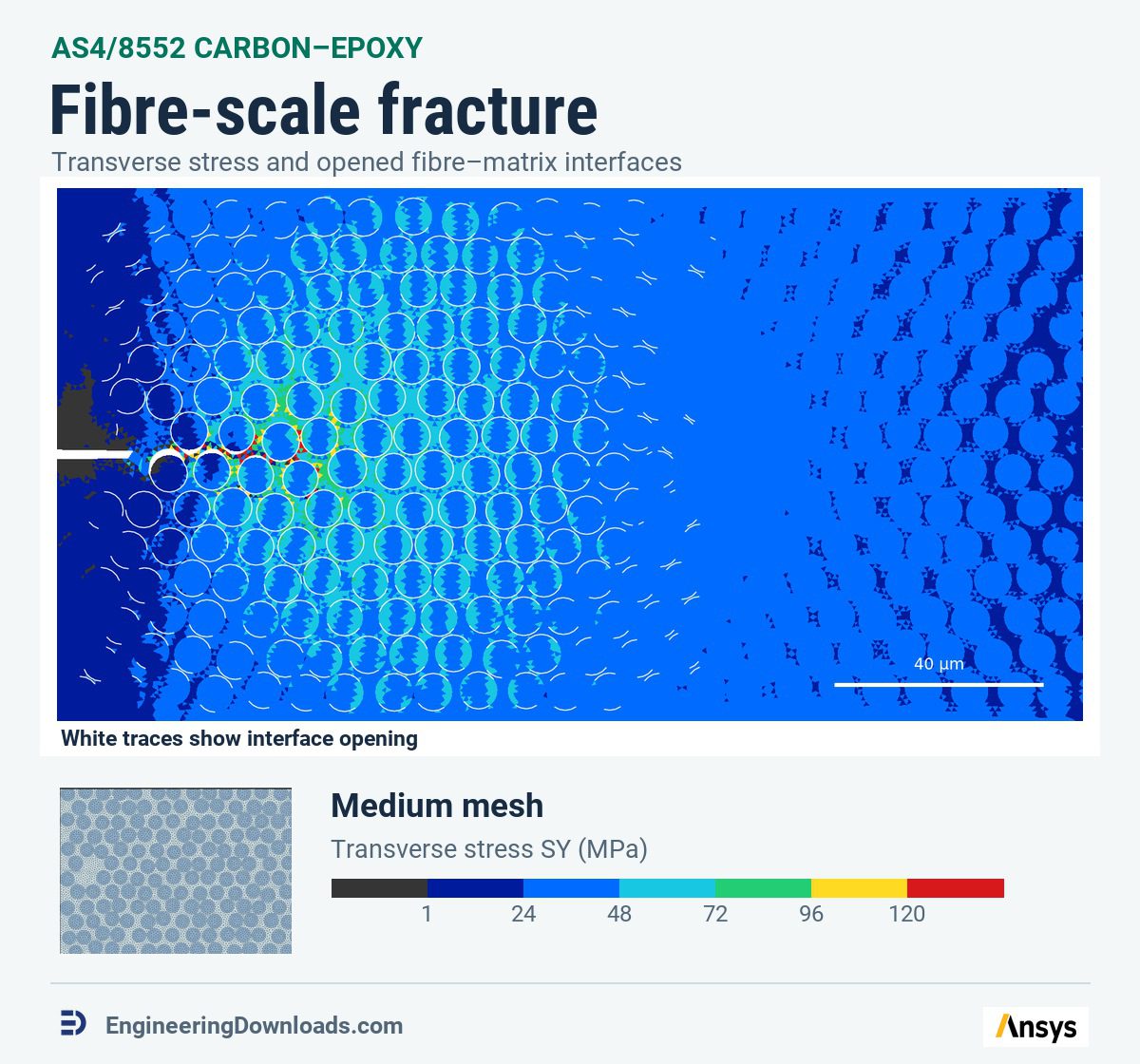
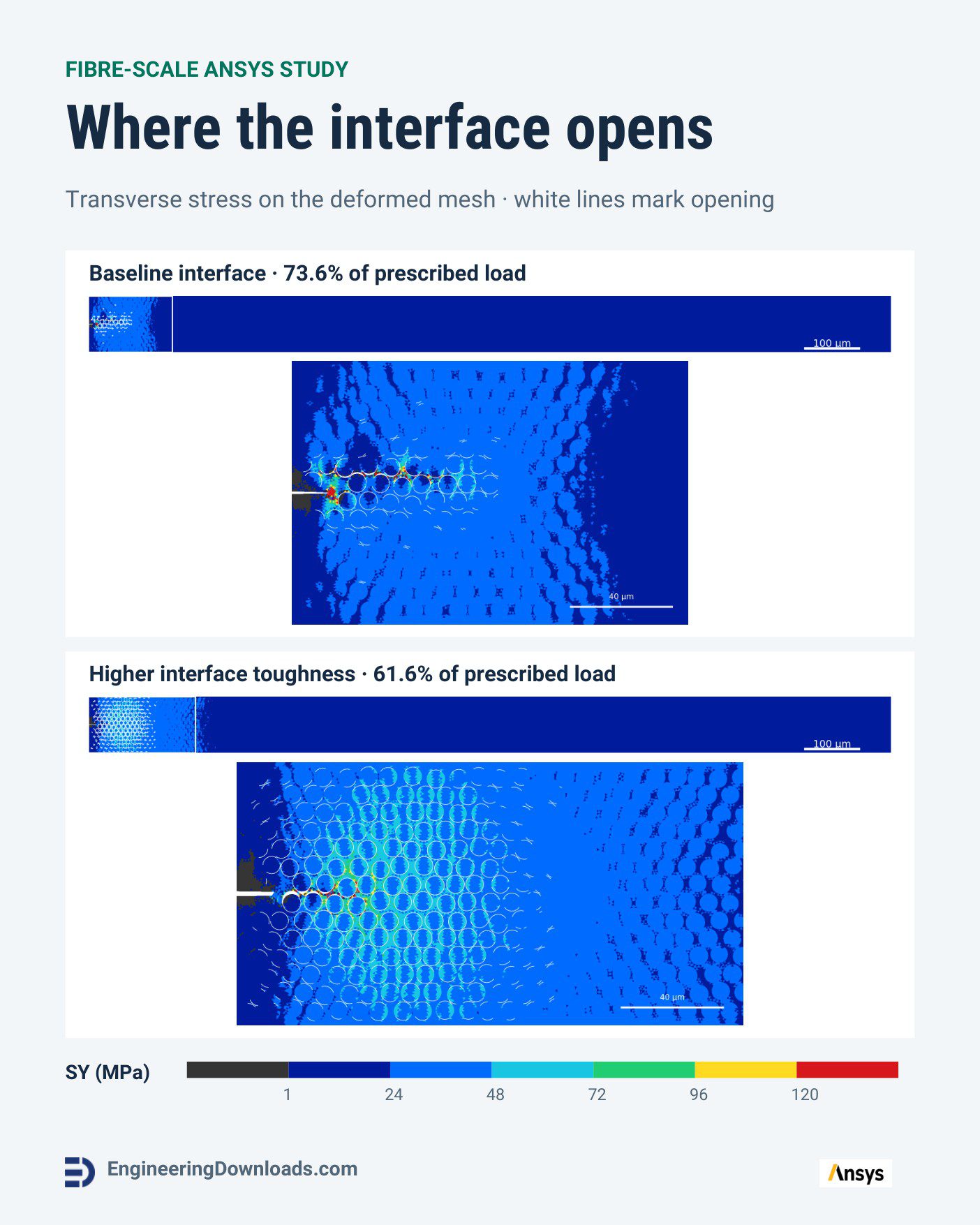
These simulation views show the embedded fibre cell and where the fibre–matrix interfaces open. The downloadable Workbench project contains the homogenised ply-scale benchmark cases.

Individual carbon fibres and epoxy in the ANSYS medium mesh, with mode-I boundary displacements
Ansys panel loading and an enlarged view of the individual carbon fibres in the medium mesh.
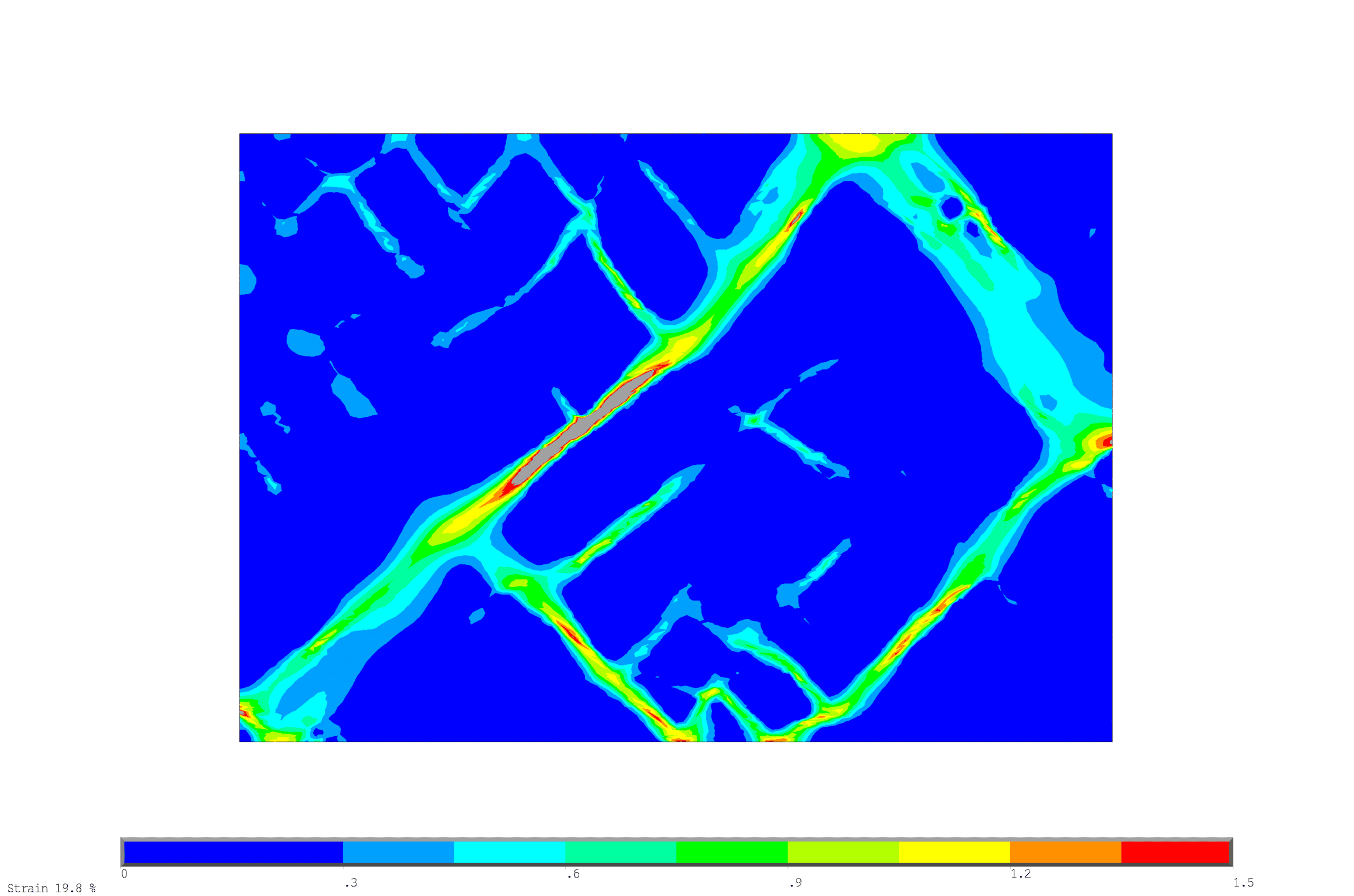
ANSYS transverse stress around individual fibres and opened interfaces marked in white
Transverse stress from two fibre-scale cases shown at different load levels. White traces mark opened interfaces.

Validation: published R-curves, Ansys and Abaqus

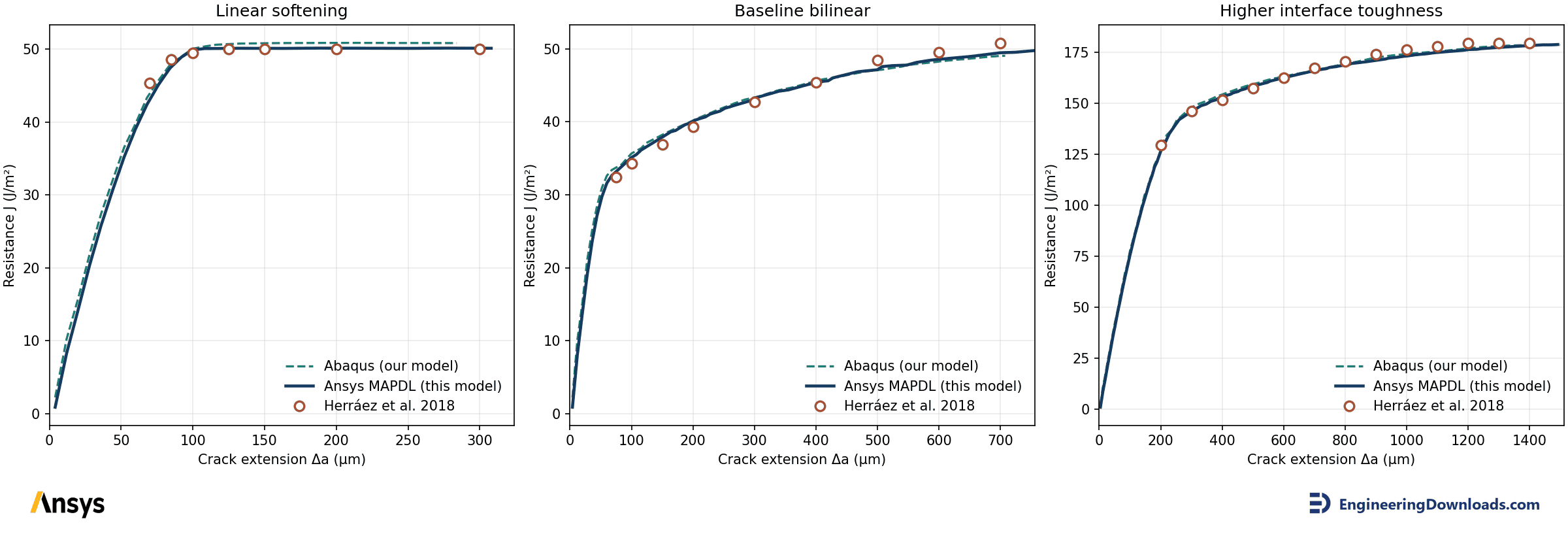
The R-curves from the Ansys model were compared with digitised points of the published finite element results, using a 5% acceptance band. The published values are readings taken from the paper figures.
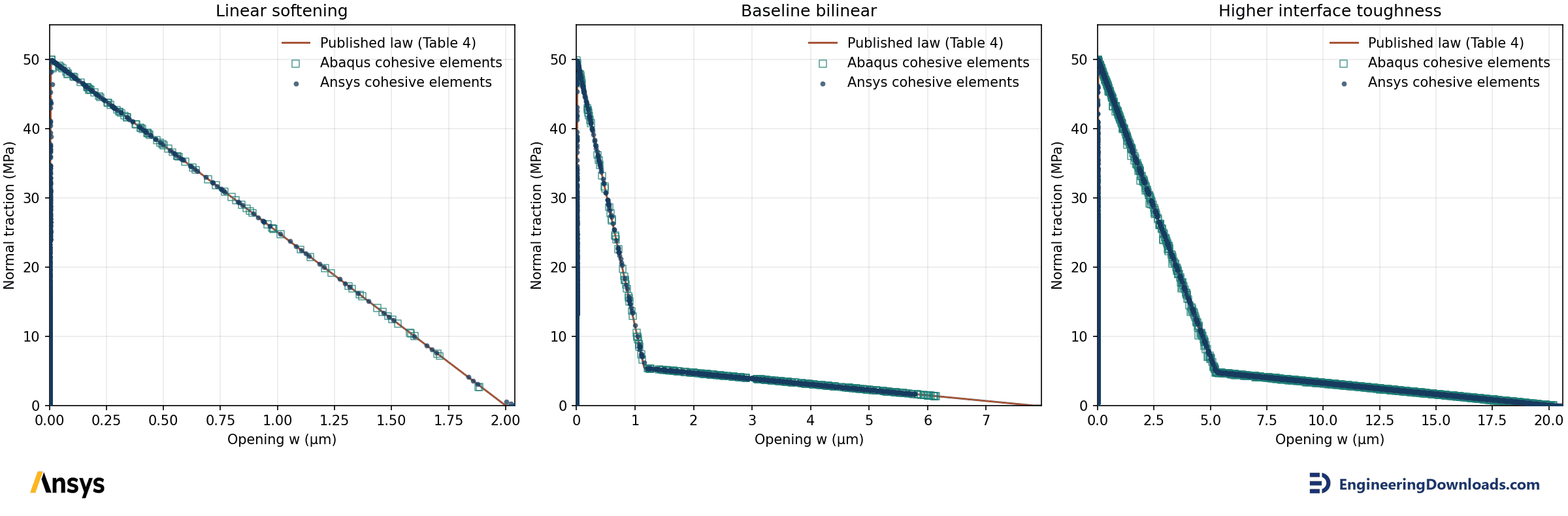
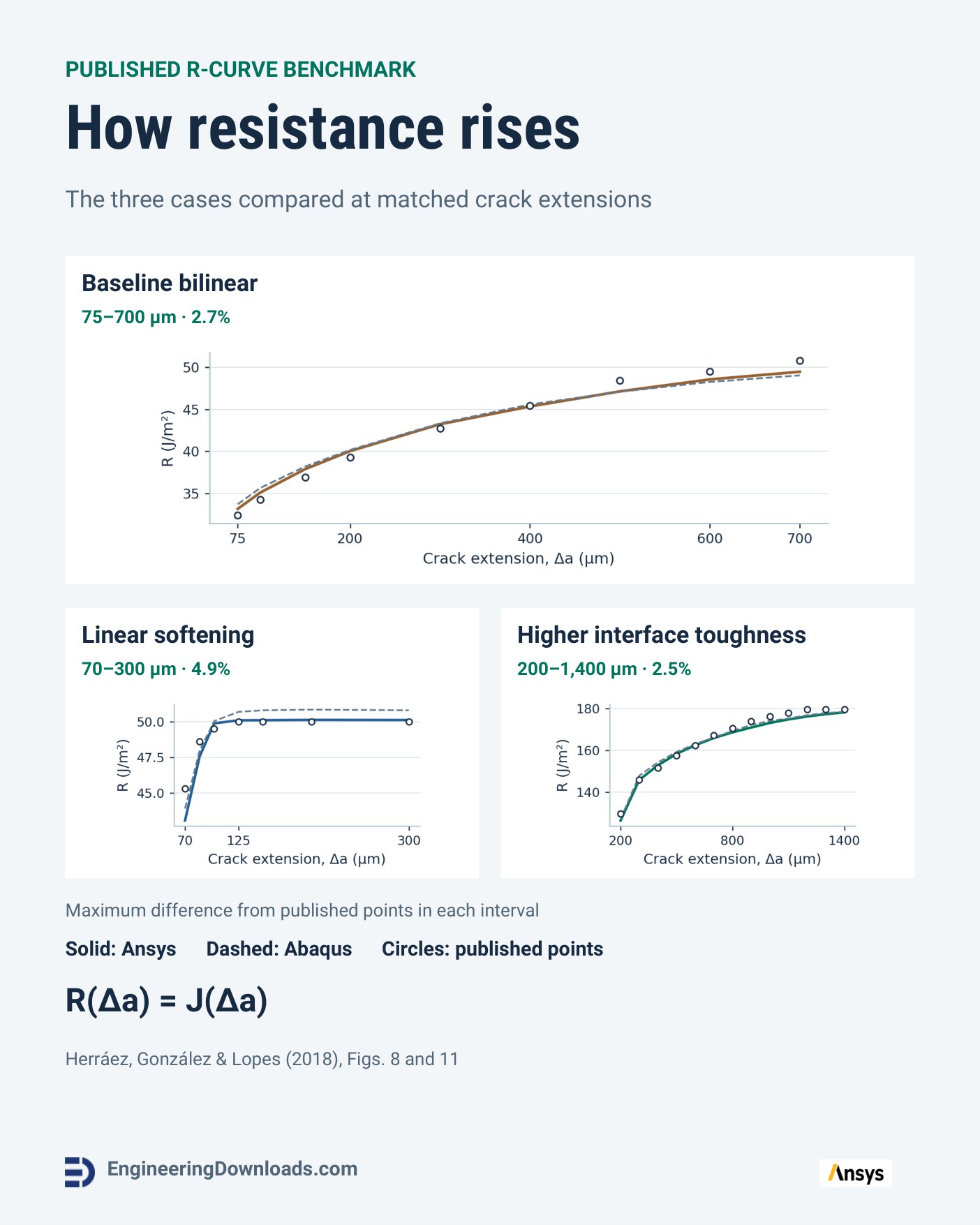
  • Linear softening law: agreement within 5% over crack extensions of 70-300 um (maximum 4.9%); from 85 to 300 um the agreement is within 2.1%.
  • Baseline bilinear law: agreement within 2.7% over 75-700 um.
  • Higher interface toughness bilinear law: agreement within 2.5% over 200-1400 um.
  • Ansys vs Abaqus: the Ansys R-curves agree with our companion Abaqus model within 1.9%.
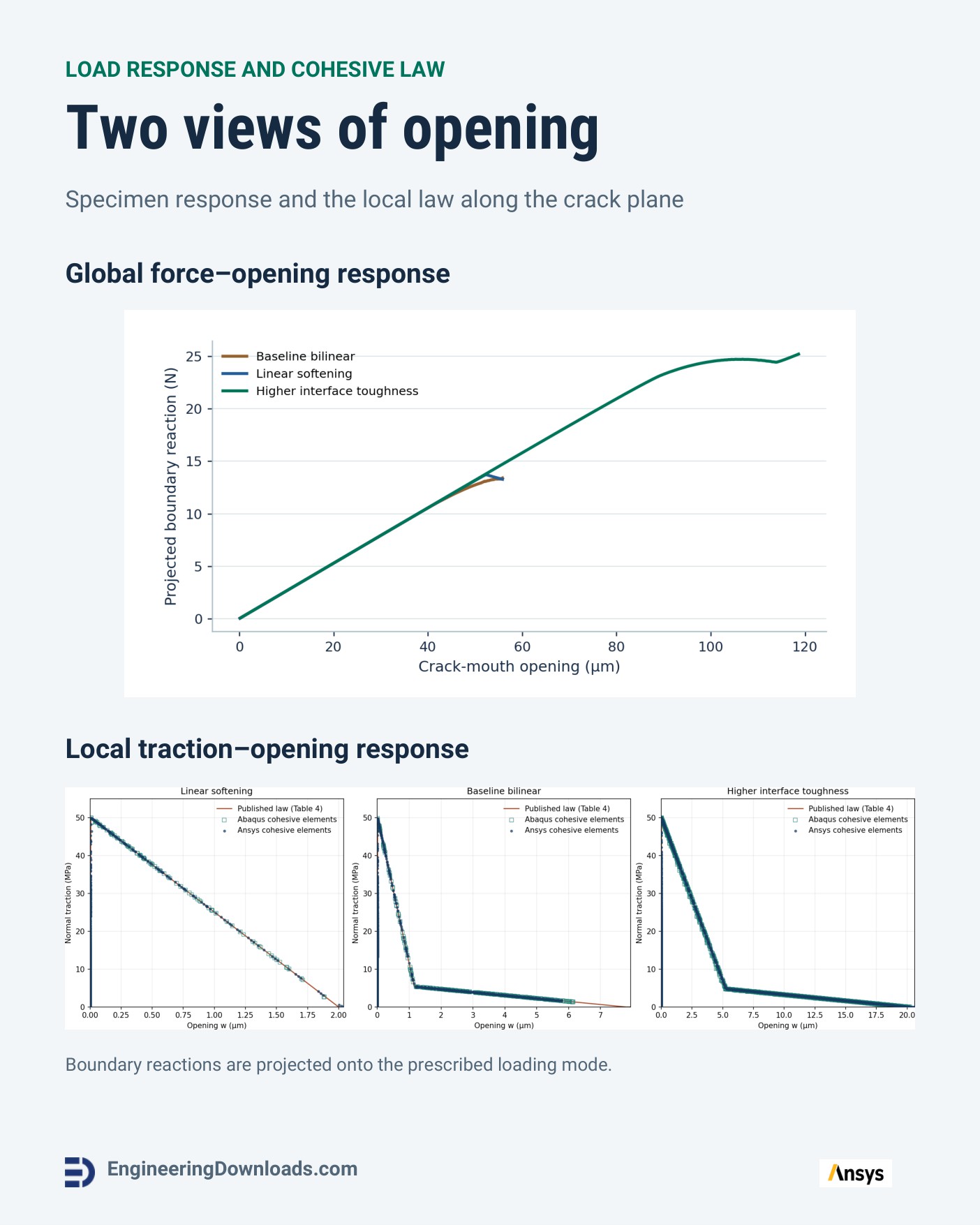
  • Cohesive laws: traction-opening laws sampled from the cohesive elements reproduce the published linear and bilinear laws, with a peak traction of about 50 MPa.
R-curves of AS4/8552 transverse fracture: Ansys MAPDL results compared with an Abaqus model and the published points for linear softening, baseline bilinear and higher interface toughness cohesive laws
Traction-opening cohesive laws sampled from the Ansys and Abaqus cohesive elements, reproducing the published linear and bilinear laws with a peak traction of about 50 MPa
Ansys, Abaqus and digitised published fracture resistance values at matched crack extensions.
Published R-curves and solver results

Post-processing: transverse stress during crack growth

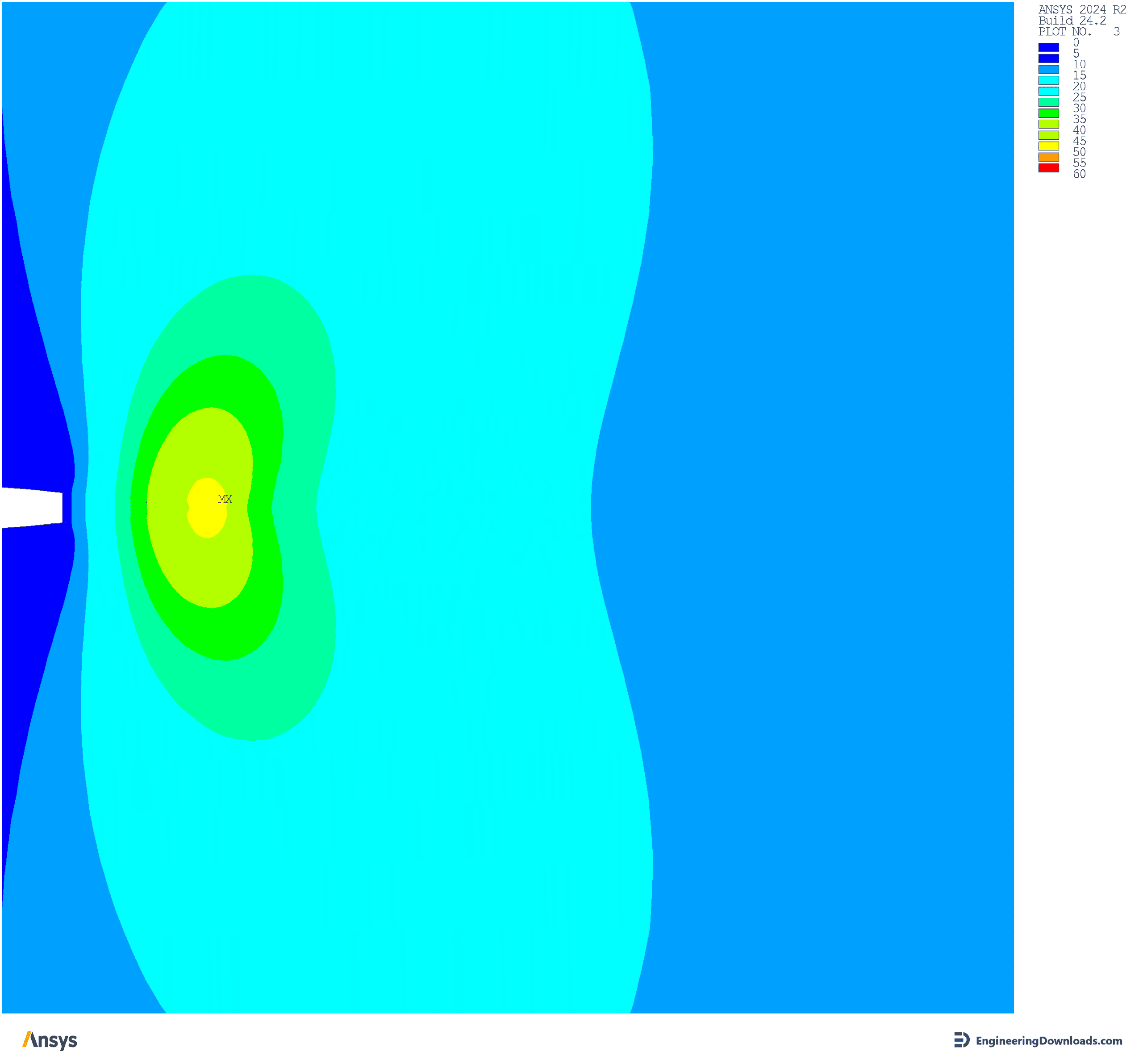
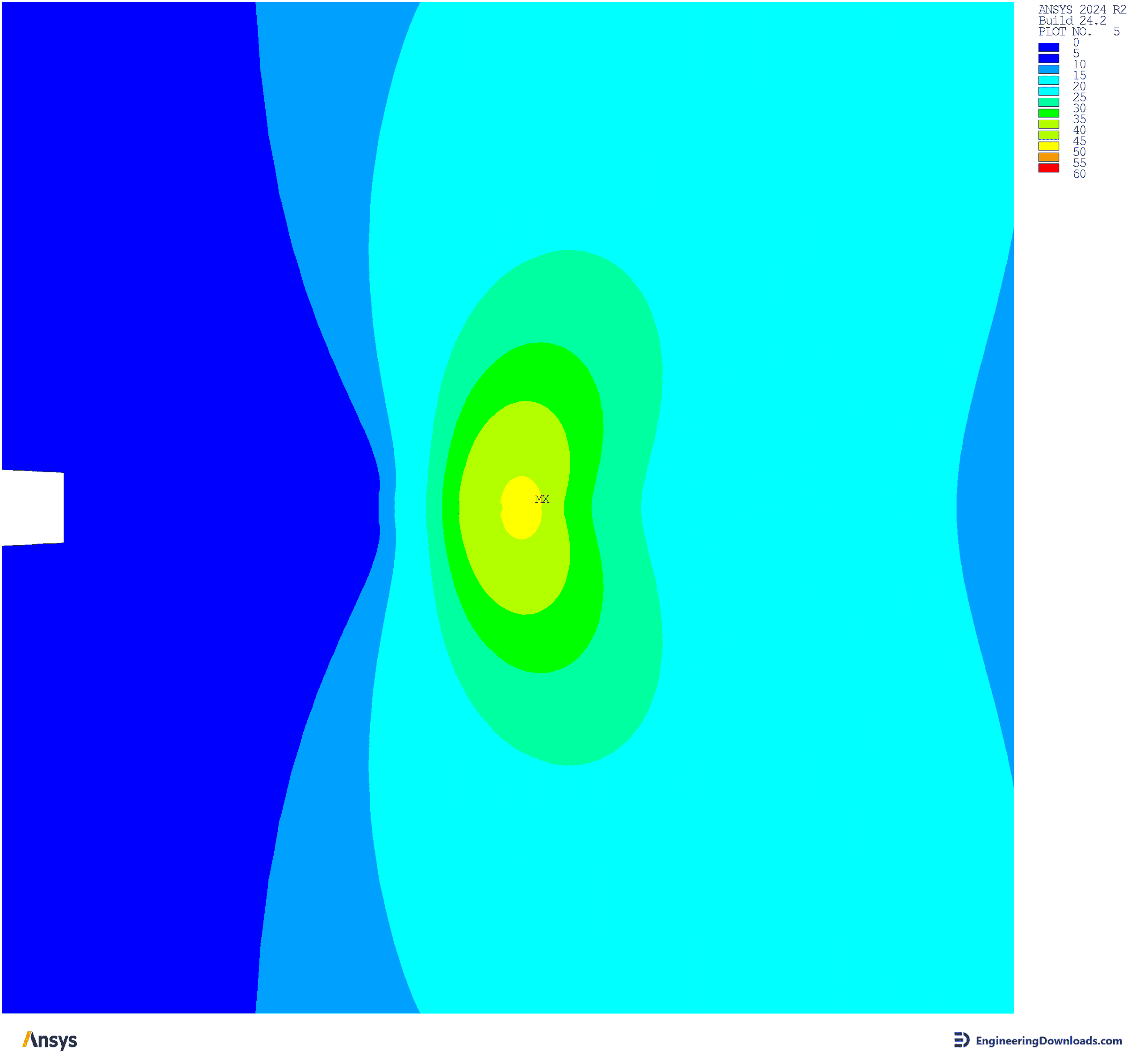
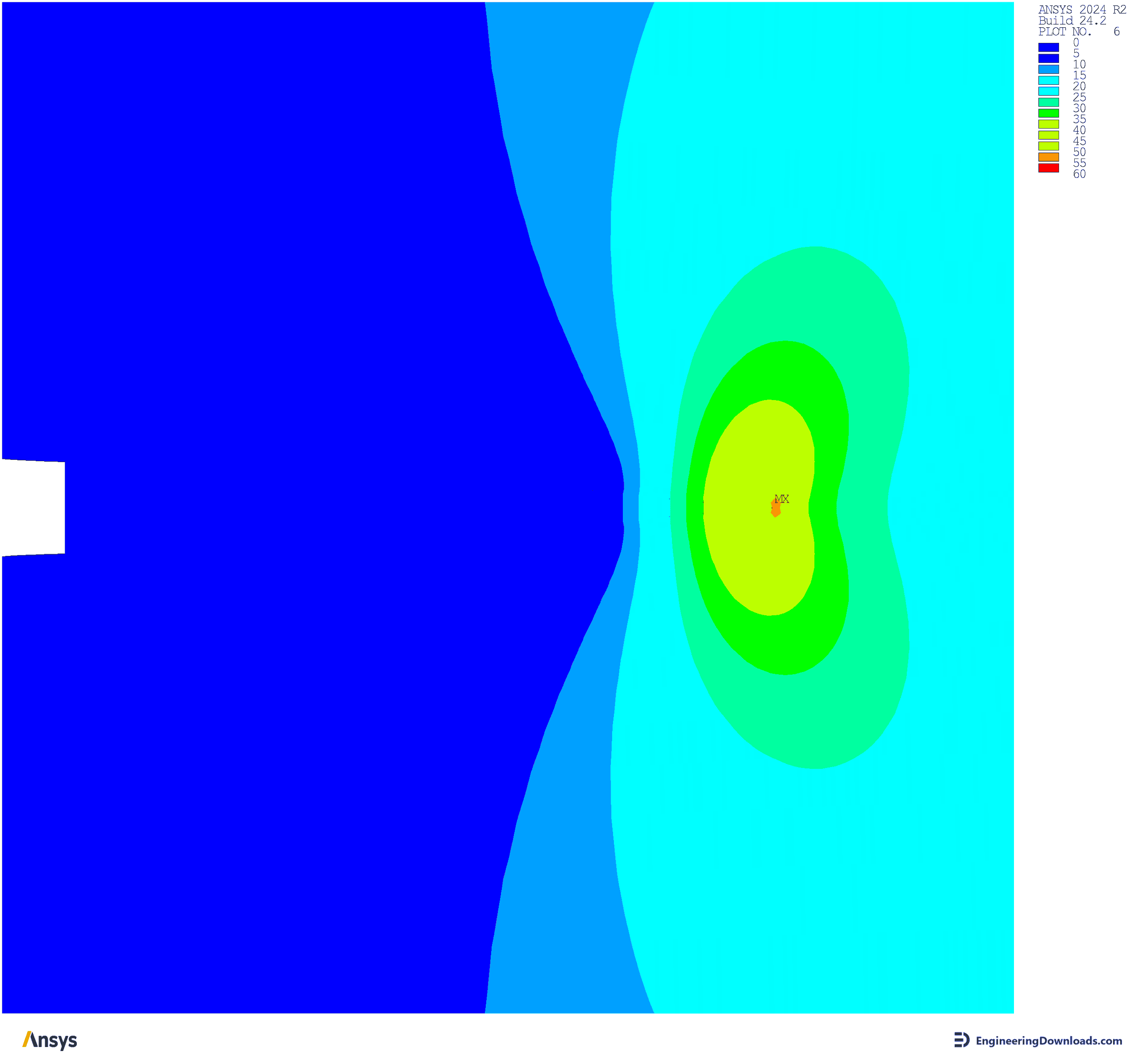
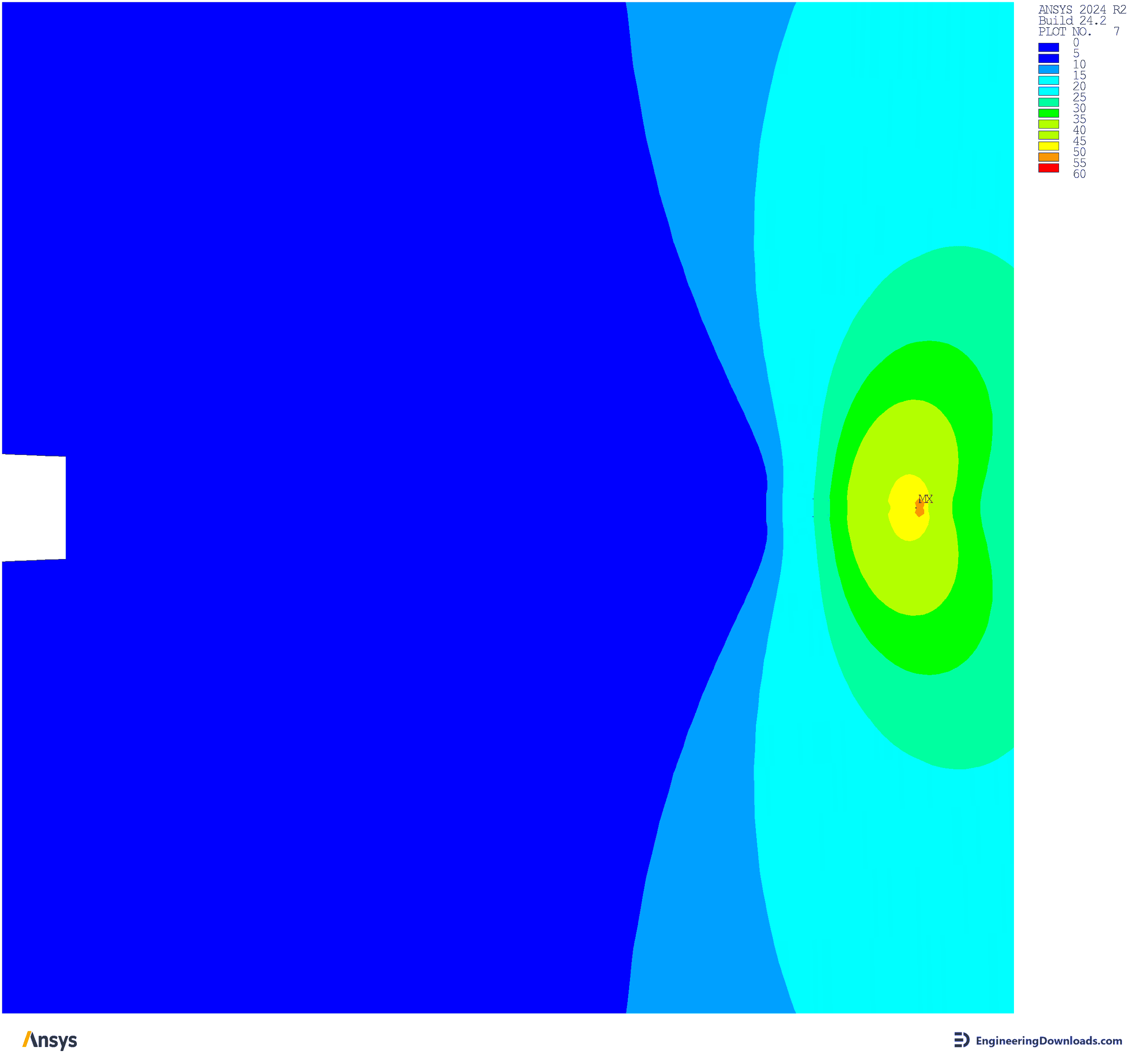
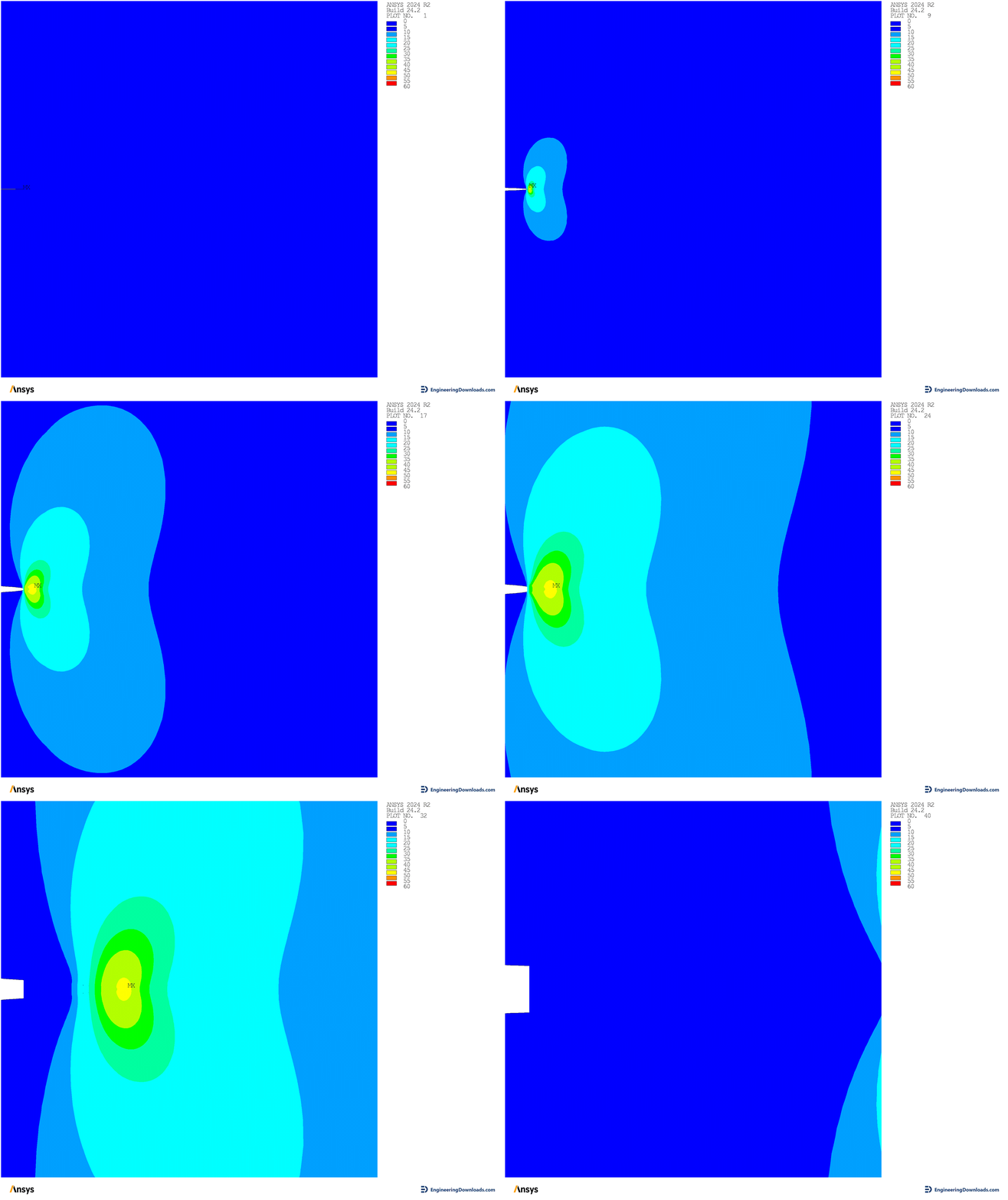
Default Ansys result plot straight from the solver (no overlay), followed by further stages of crack growth.
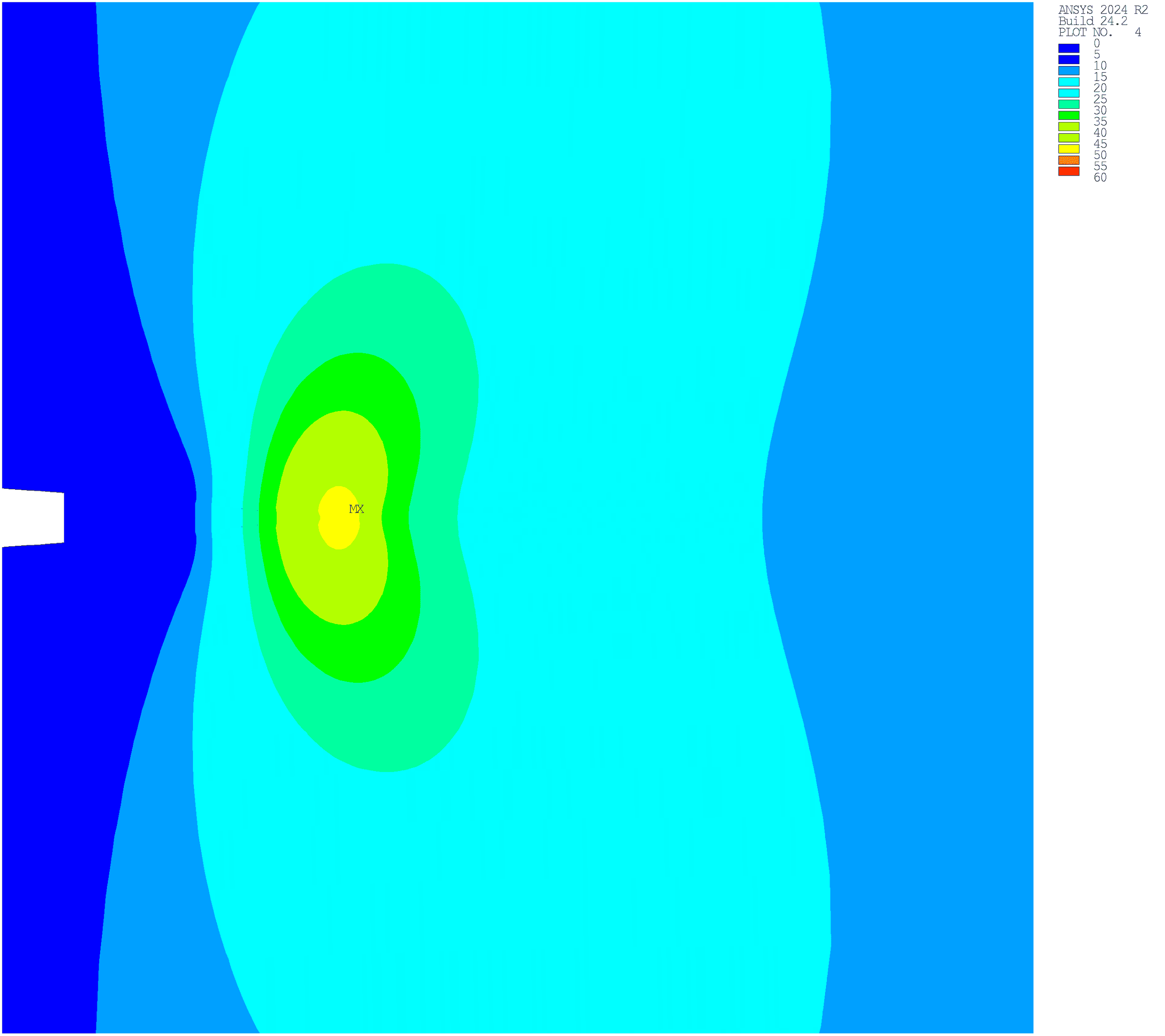
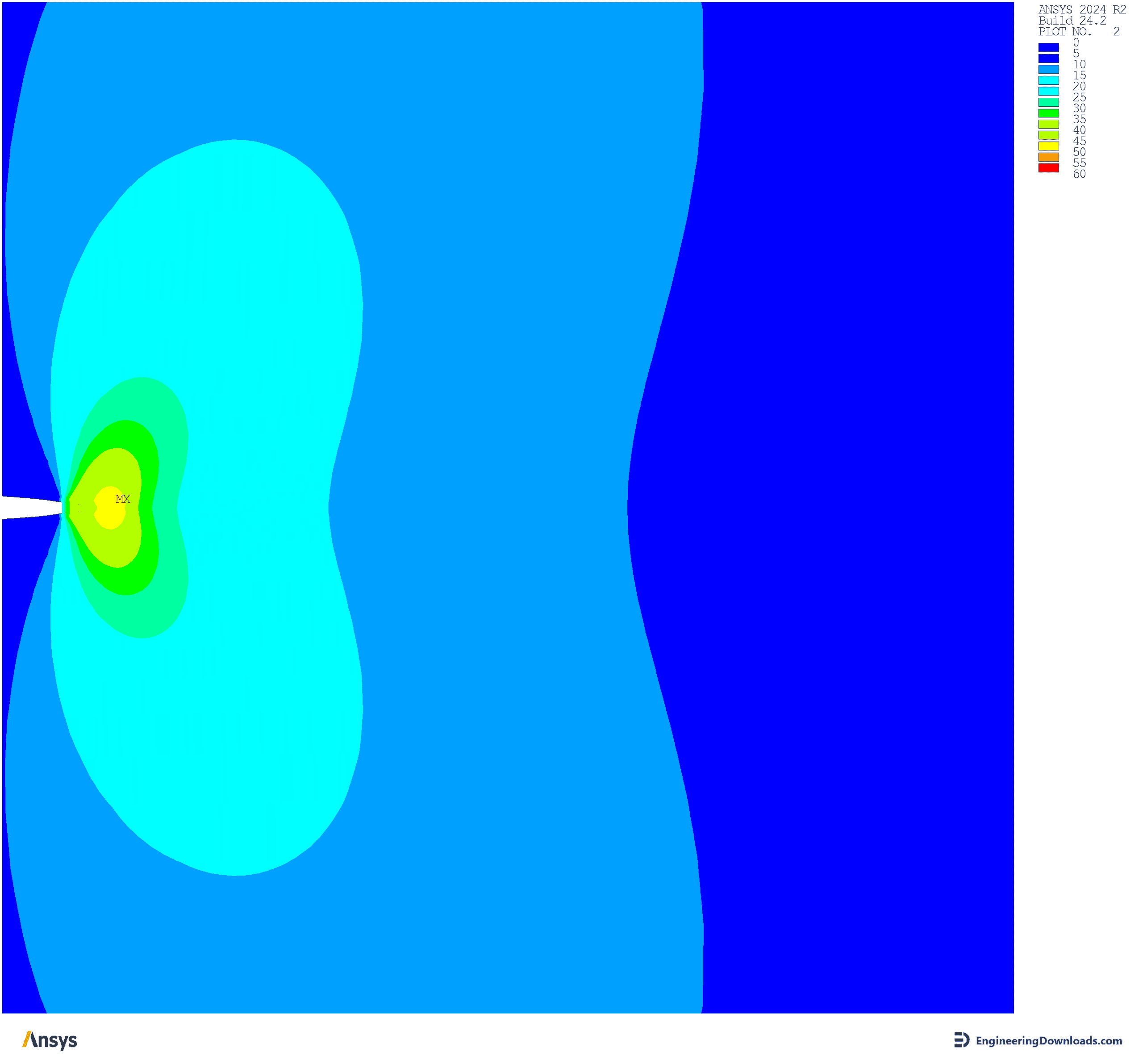
Unedited default Ansys result plot of the transverse stress SY during crack growth in the AS4/8552 cohesive zone model (straight from the solver, no overlay) (higher interface toughness case)
Ansys transverse stress SY contour at the start of crack growth in the AS4/8552 cohesive zone model, stress peak ahead of the crack front (higher interface toughness case)
Ansys SY stress contour during developing crack growth along the cohesive ligament, stress peak moving ahead of the damage front (higher interface toughness case)
Ansys SY stress contour with the crack front advancing through the cohesive ligament of the composite ply model (higher interface toughness case)
Ansys SY stress contour at an extended stage of crack growth, showing the traveling stress peak ahead of the starter crack (higher interface toughness case)
Ansys SY stress contour at a late stage of crack growth in the homogenised cohesive zone model of transverse ply fracture (higher interface toughness case)
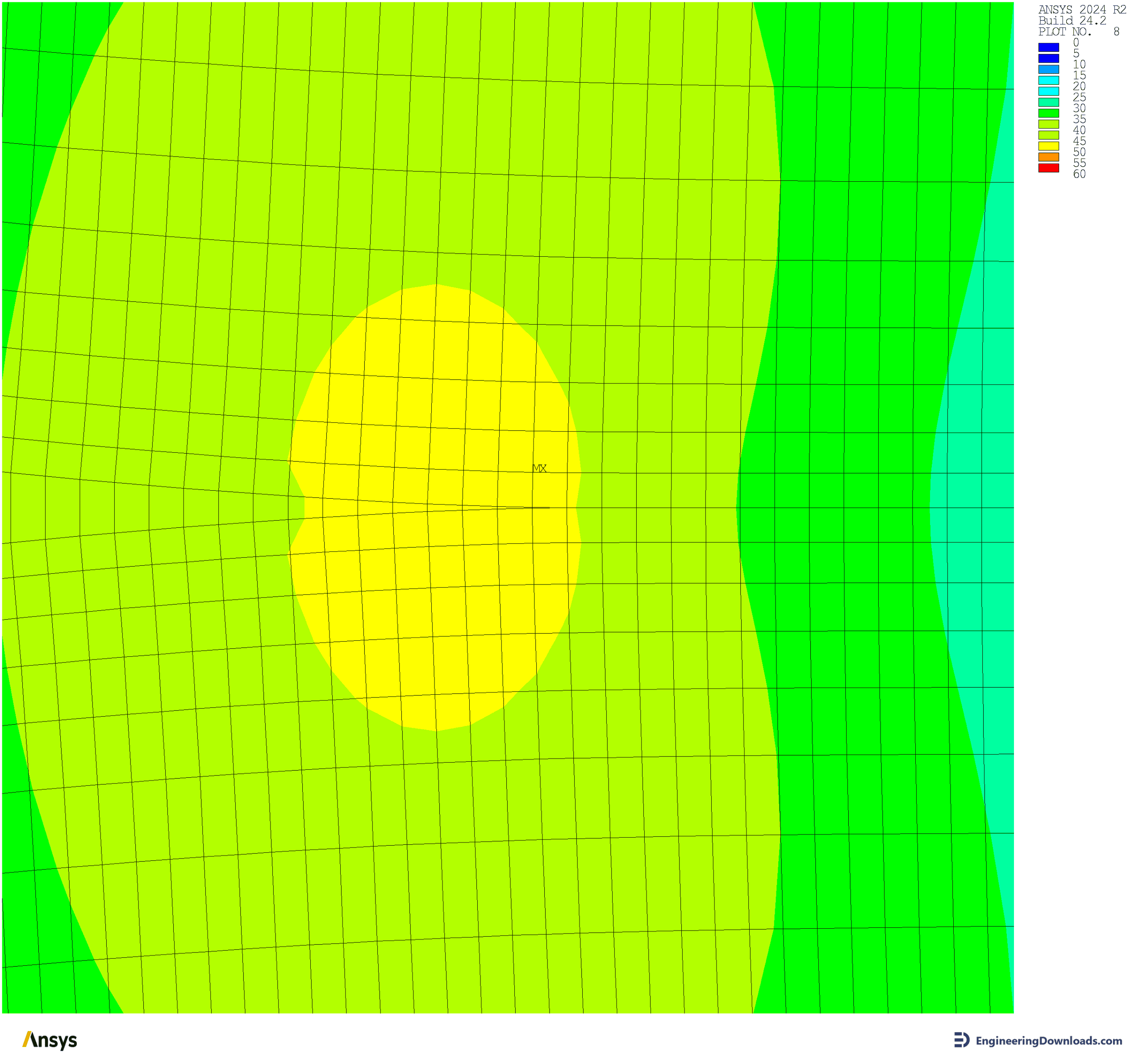
Close-up of the SY stress field and the deformed mesh at the crack front in the Ansys cohesive zone model
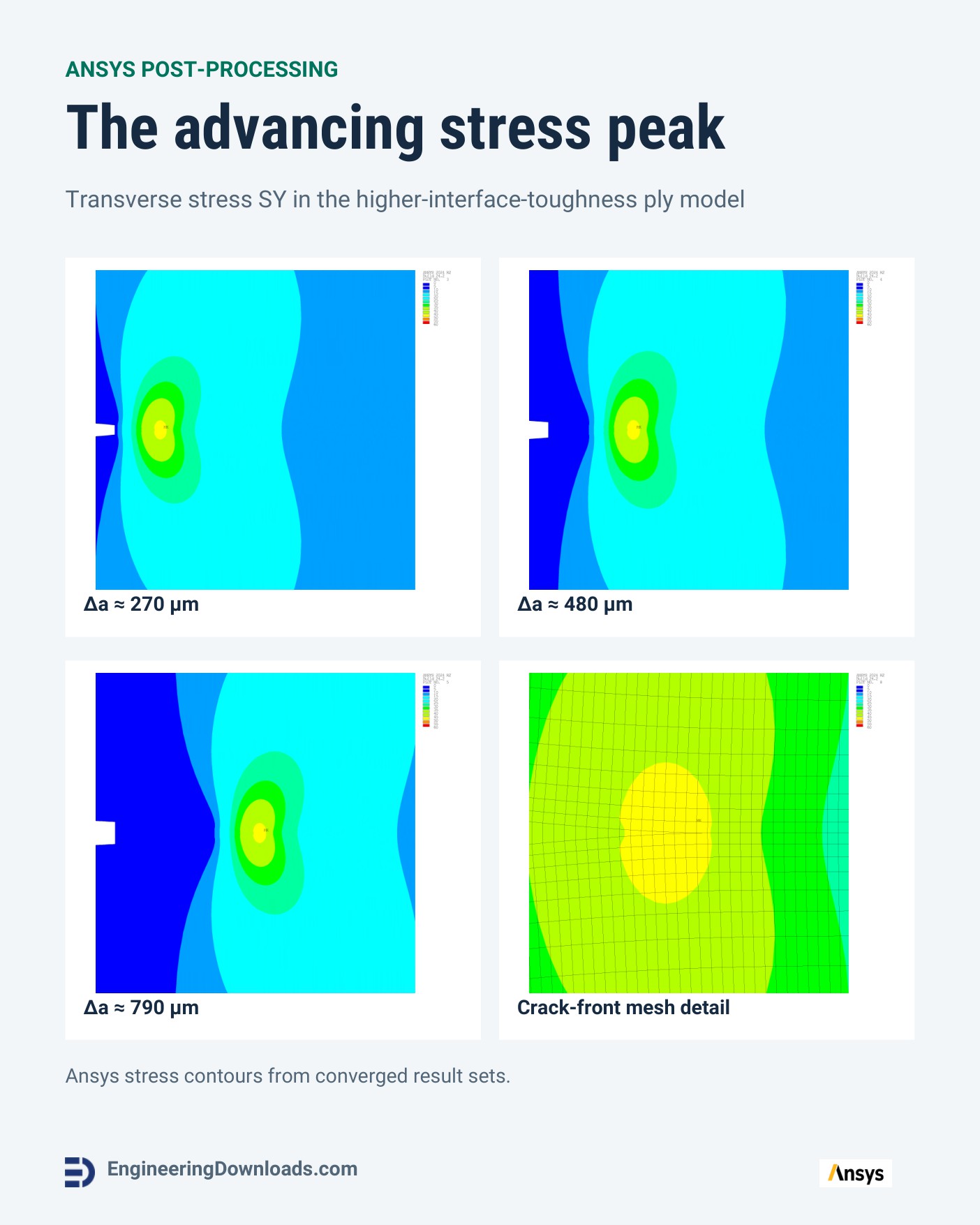
Ansys SY contours at three crack extensions and a mesh close-up for the higher-interface-toughness ply model.
Transverse stress during crack growth
Projected boundary reaction versus crack-mouth opening, with local traction–opening laws for three Ansys cases.
Force–opening response and cohesive laws

Course Content (PDF tutorial)

  • Introduction: Transverse Matrix Fracture of Carbon/Epoxy Plies and Why the R-Curve Matters
  • Theory: R-Curve, Energy Release Rate and J-Integral Explained
  • Theory: Homogenised Linear and Bilinear Cohesive Laws Derived from the R-Curve
  • Theory: Mode-I K-Field Boundary-Layer Loading of a Plane-Strain Panel
  • Model Overview: Plane-Strain Ply Panel with PLANE182 Bulk and INTER202 Cohesive Elements
  • Step-by-Step: Material Properties and Element Types in the Ansys APDL Deck
  • Step-by-Step: Bilinear Cohesive Zone Material TB,CZM,BILI with Parallel Cohesive Layers
  • Step-by-Step: Meshing the Cohesive Ligament, Starter Crack and Tied Ligament End
  • Step-by-Step: Applying K-Field Displacement Boundary Conditions with D Commands and a Load Ramp
  • Step-by-Step: Nonlinear Solution Settings for Crack Propagation in /SOLU
  • Post-Processing: Extracting the R-Curve from Crack Extension and the Domain J-Integral
  • Open the Ansys Workbench Project (.wbpz) and Inspect the Model
  • One-Click Workflow: Solve All Three Cases and Extract the R-Curves with run_model.py
  • Workshop 1: Linear Softening Cohesive Law (50 MPa, 50 J/m2) in Ansys
  • Workshop 2: Baseline Bilinear Cohesive Law Built from Two Parallel INTER202 Layers
  • Workshop 3: Higher Interface Toughness Bilinear Law (180 J/m2) and Its R-Curve
  • Results: Ansys vs Published R-Curves vs Abaqus Validation Summary
  • Results: Cohesive Traction-Opening Laws and Transverse Stress Contours During Crack Growth
  • Adapting the Model: Change Strength, Toughness, Branch Shares and K Ramp for Your Own Composite
  • References and Files Included with the Model

Software and requirements

Requires Ansys with Mechanical APDL. Input files and the Python script are included, so the model runs in your own Ansys installation. The Workbench project (.wbpz) opens in Ansys Workbench.

Who is this for?

  • Researchers and PhD students working on composite fracture, R-curves and cohesive zone modelling.
  • Engineers who want a working INTER202 / TB,CZM,BILI example with bilinear softening in Ansys.
  • Anyone who wants to reproduce the paper’s framework in Ansys and adapt it to their own composite.

FAQ

Do I need to write any code?

No. run_model.py solves the three cases in Ansys MAPDL and extracts the R-curves in one click. The decks are also provided if you prefer to run them yourself.

Can I change the strength, toughness or loading?

Yes. The tutorial chapter on adapting the model explains how to change the cohesive strength, toughness, parallel-layer branch shares and the K-field load ramp for your own composite.

Is there an Abaqus edition of this model?

Yes: Composite Transverse Fracture R-Curve and Cohesive Laws for Abaqus.

Is it a design tool?

It is a research and learning model for understanding cohesive zone fracture in composites. It does not replace a qualified engineer’s assessment.

Reference

Herraez, M., Gonzalez, C., Lopes, C.S. (2018). A numerical framework to analyze fracture in composite materials: From R-curves to homogenized softening laws. International Journal of Solids and Structures 134, 216-228.

Need more than the files?

There are two ways we can help. Book a one hour online consultation if you want to talk a problem through with a CAE engineer, using the checkbox in the order box. Order a project if you need a full simulation built for you, delivered to an agreed scope, price and deadline under a written contract.

We work on FEA and CFD for engineers, researchers and companies. Order your project, or message us on WhatsApp for a quick reply.

Course Content

Product files

  • Ansys Workbench project, APDL decks and Python workflow (complete package)
  • PDF tutorial: AS4/8552 composite fracture benchmark in Ansys

Reviews

No Review Yet
No Review Yet
€179,00
Optional extras

Need a full custom project? See the options below.

28 people watching this product now!

Material Includes

  • Ansys Workbench project (.wbpz)
  • 3 APDL decks
  • One-click Python workflow (run_model.py)
  • PDF tutorial

Audience

  • Composite fracture researchers
  • FEA engineers working with cohesive elements
  • MSc and PhD students in composite damage mechanics

Related  Products

See more

Want to receive push notifications for all major on-site activities?

✕