Need a full custom project? See the options below.
Need a full custom project? See the options below.
A coupled phase-field and hydrogen-transport benchmark for an edge-cracked plate. Includes Abaqus INP, Fortran source, an automated run script and a PDF tutorial. Elastic response and peak force are compared with the 0.5 wppm case in the published paper.
Hydrogen transport can concentrate near a stressed crack tip and reduce fracture resistance. This package gives researchers, graduate students and engineers a working Abaqus example for studying that coupling, with the theory explained and the subroutine coding explained step by step.
These chapters are included in the PDF tutorial. Model files and source code accompany the automated workflow so you can run the benchmark in your own Abaqus installation.
Yousef Navidtehrani, Covadonga Betegón and Emilio Martínez-Pañeda. A generalised framework for phase field-based modelling of coupled problems: Application to thermo-mechanical fracture, hydraulic fracture, hydrogen embrittlement and corrosion. Engineering Fracture Mechanics 326 (2025), 111363. Read the paper.
The paper develops a common formulation for coupling phase-field interface evolution with other physical processes. By expressing diffusion-type equations through a heat-transfer analogy, the method can be implemented in Abaqus using integration-point UMAT and UMATHT subroutines. The authors demonstrate the framework on thermal fracture, hydraulic fracture, hydrogen-assisted cracking and corrosion in two and three dimensions, comparing their examples with experimental, numerical and analytical references. This product implements the hydrogen-exposed tensile plate from Section 5.3, at 0.5 wppm.
| Quantity | Model value |
|---|---|
| Plate | 1 × 1 mm, plane strain |
| Initial edge notch | 0.5 mm |
| Elastic constants | E = 210,000 MPa, ν = 0.3 |
| Fracture energy and length scale | Gc = 2.7 N/mm, ℓ = 0.0075 mm |
| Hydrogen concentration | 0.5 wppm initial and environmental concentration |
| Hydrogen diffusivity | DH = 0.0127 mm²/s |
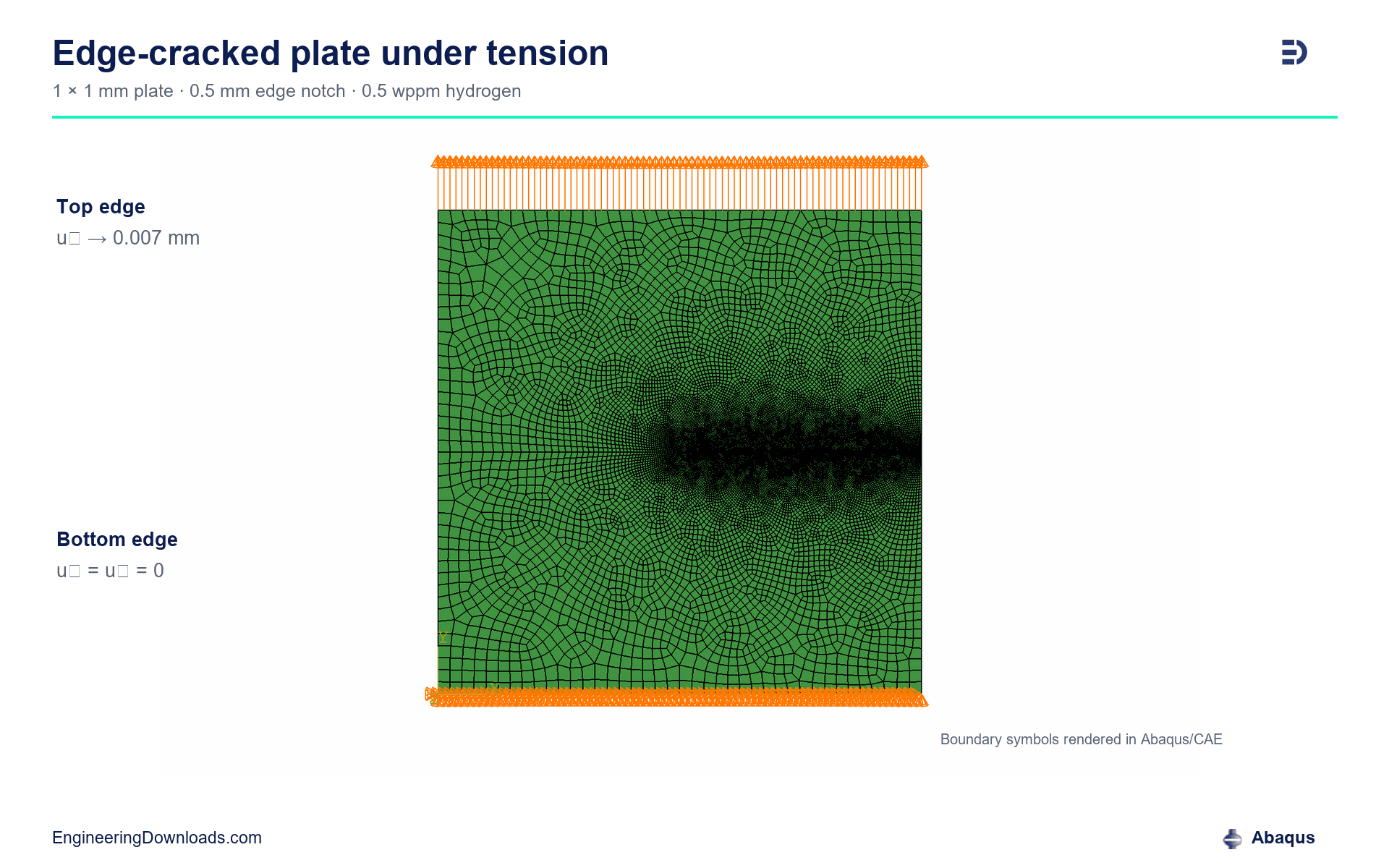
| Mechanical loading | Top displacement increases to 0.007 mm over 107 s |
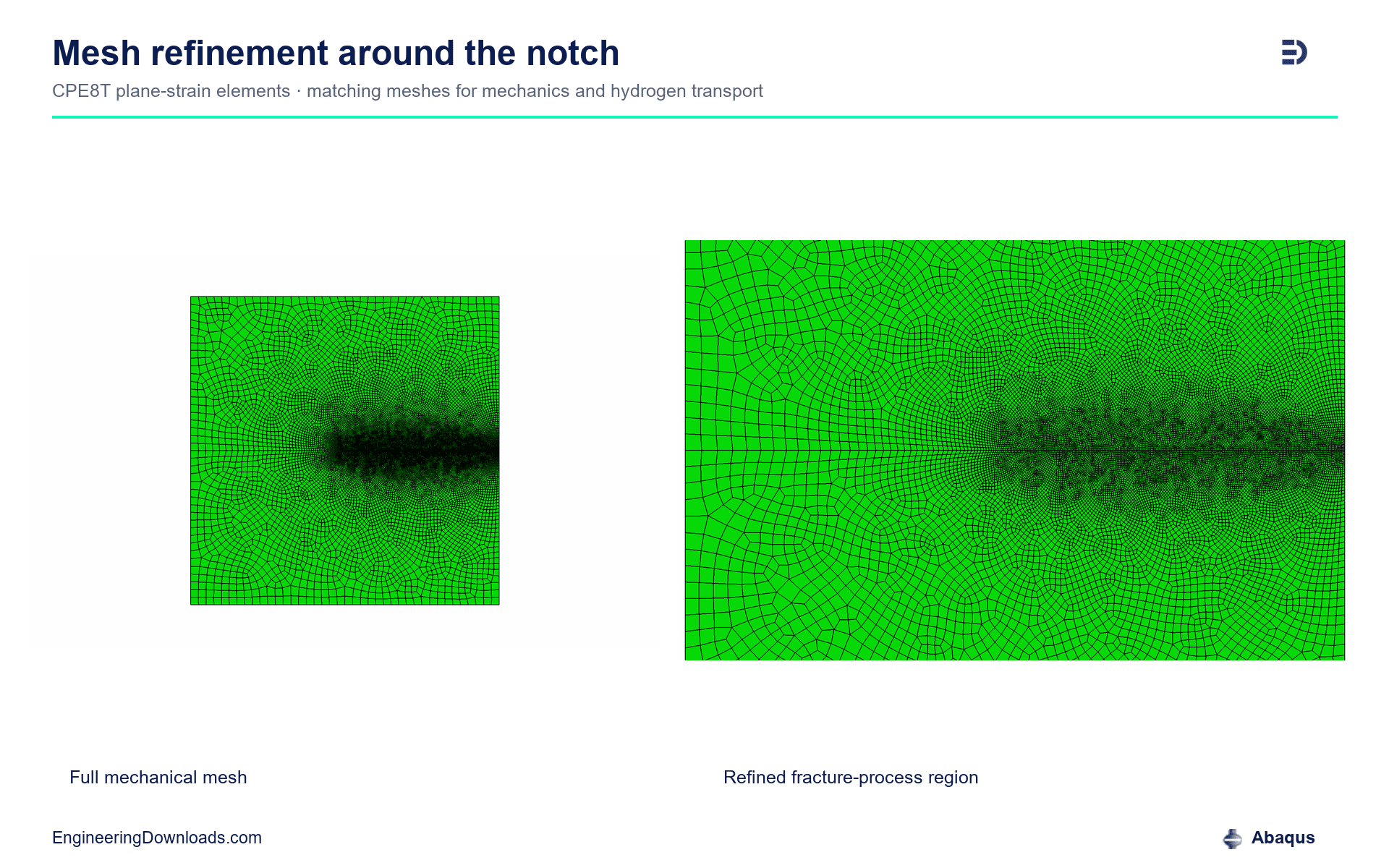
| Mesh | Paired CPE8T meshes, 18,397 elements per part |
| Implementation | UMAT, UMATHT and initial mesh processing through UEXTERNALDB |
The small-strain mechanical problem uses equilibrium ∇ · σ = 0 with σ = g(φ) C0 : ε and g(φ) = (1 − φ)² + 10−7. Here φ = 0 represents intact material, and φ approaches 1 in the diffuse crack.
The phase-field equation is ∇²φ = φ/ℓ² − 2(1 − φ)H/[Gc(cH)ℓ], where H stores the maximum elastic strain-energy density. Hydrogen reduces the local fracture energy through Gc = (1 − χHθ)Gc0, with surface coverage θ obtained from the local hydrogen concentration.
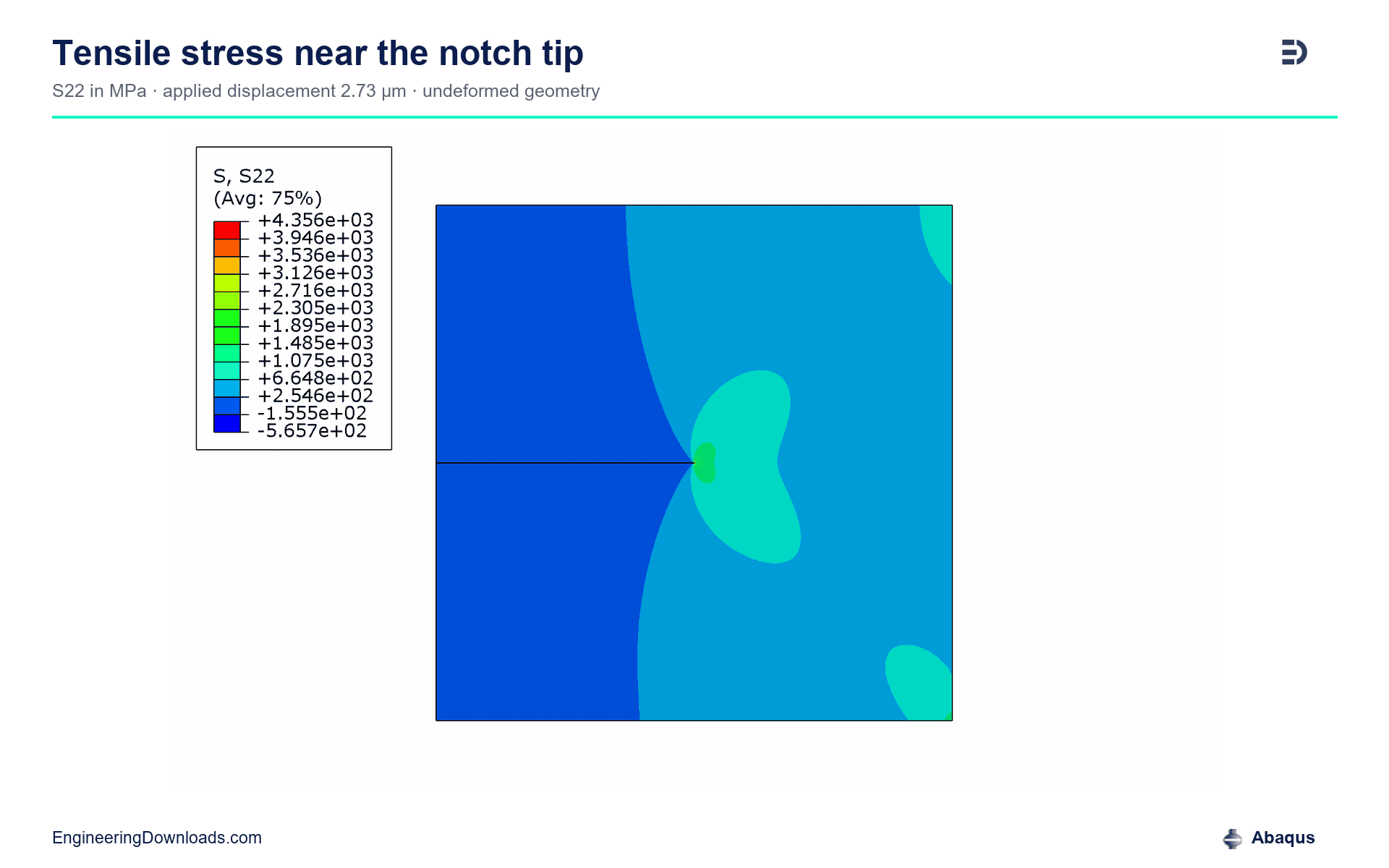
Hydrogen transport follows ∂cH/∂t + ∇ · J = 0, with J = −DH∇cH + DHcHVH∇σh/(RT). The stress gradient drives redistribution near the notch. The tutorial links each term to the Fortran implementation and its unit conversions.
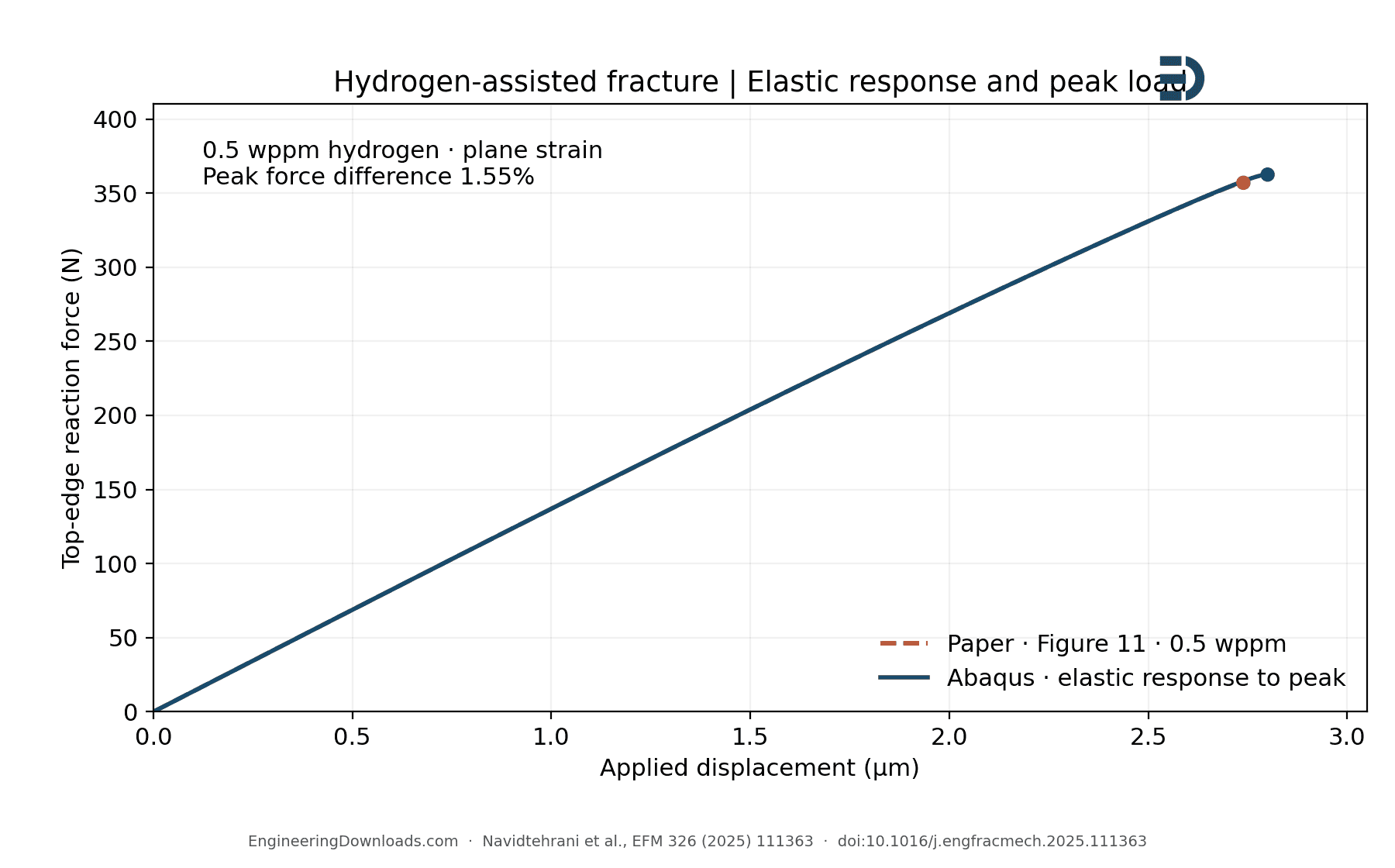
The comparison uses the 0.5 wppm curve in Figure 11 of the paper and the summed reaction forces from all 81 nodes on the loaded edge. Each curve in the comparison is shown through its own peak.
| Metric | Paper | Abaqus |
|---|---|---|
| Force at 0.0025 mm | 330.909 N | 330.954 N |
| Peak force | 356.956 N | 362.476 N |
| Displacement at peak | 0.0027391 mm | 0.0028000 mm |
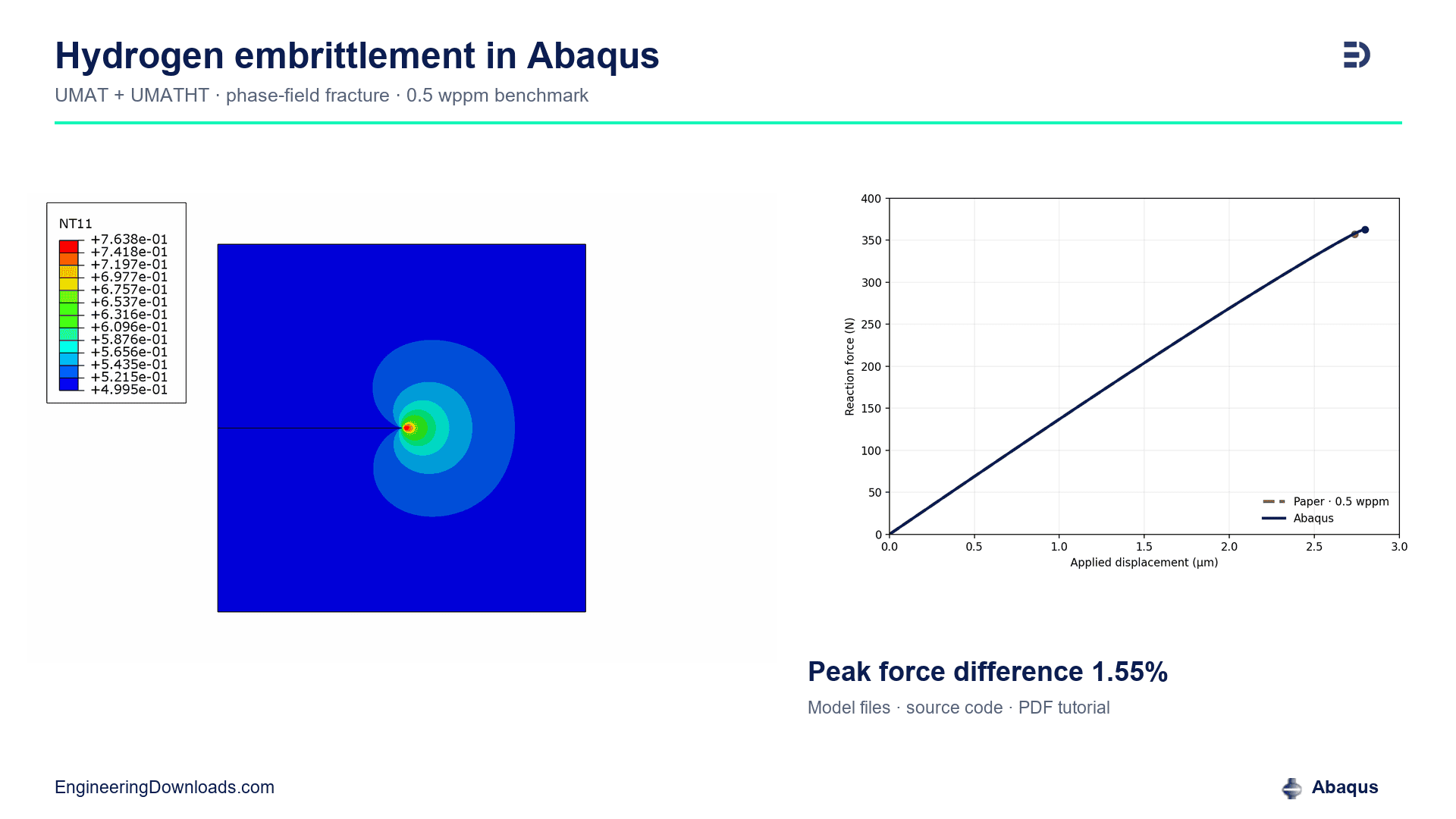
The peak-force difference is 1.55%. Through 0.0027 mm displacement, the elastic-response force RMSE is 0.0352 N against the PDF vector curve. Validation applies to these named response measures for the specified 0.5 wppm tensile case.
Run python run_model.py from a terminal with Abaqus and its supported Fortran compiler configured. The script submits the analysis and exports Force displacement.csv after successful completion. Downloads are provided in the Product Files lessons.
For the mechanical phase-field formulation, see the AT1 and AT2 phase-field fracture model. For a different material-scale hydrogen formulation, see the hydrogen embrittlement crystal-plasticity model.
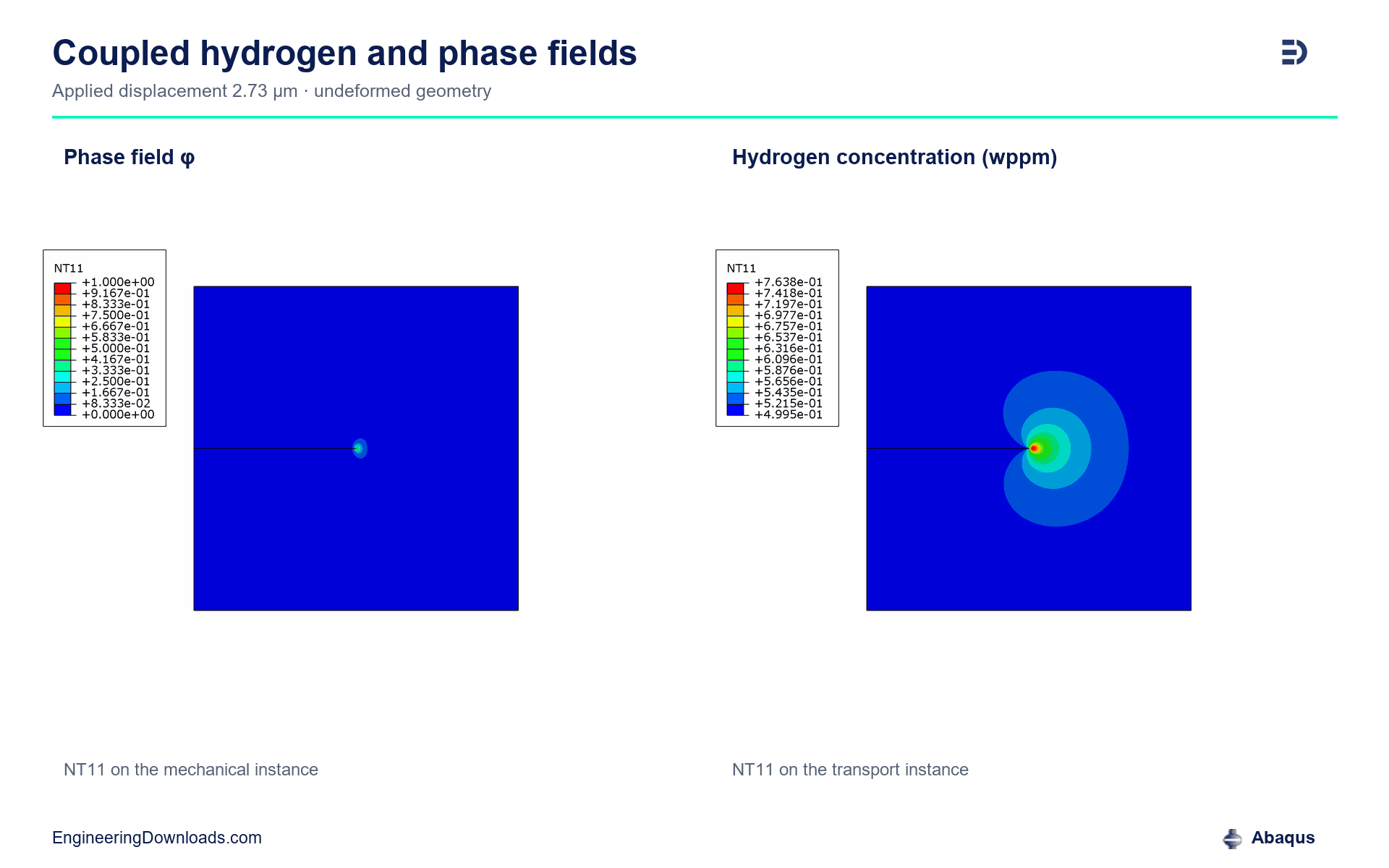
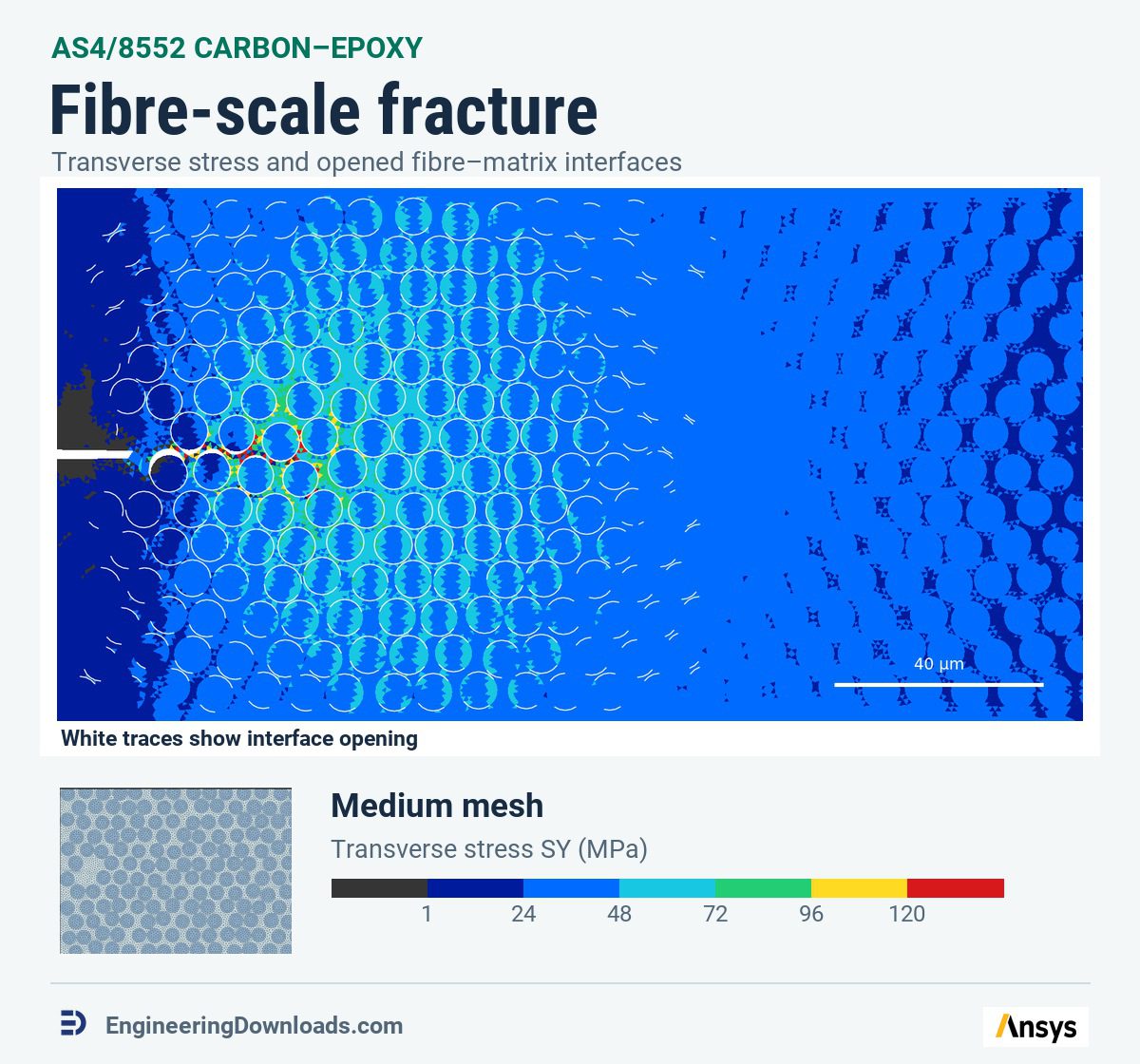
A 1 × 1 mm edge-cracked plate under tension with 0.5 wppm initial and environmental hydrogen. Paired CPE8T meshes couple deformation, phase-field fracture and stress-assisted hydrogen transport.
The elastic force response and peak force of the 0.5 wppm tensile benchmark in Section 5.3 and Figure 11. The Abaqus peak is 362.476 N and the reference peak is 356.956 N, a 1.55% difference.
Abaqus/Standard with a supported Fortran compiler configured for user subroutines, plus Python to launch the supplied automated workflow. The INP and Fortran source are included for use in your own installation.
Extract the ZIP into a writable folder and run python run_model.py from an Abaqus command terminal. The script submits the model, checks successful completion and exports Force displacement.csv.
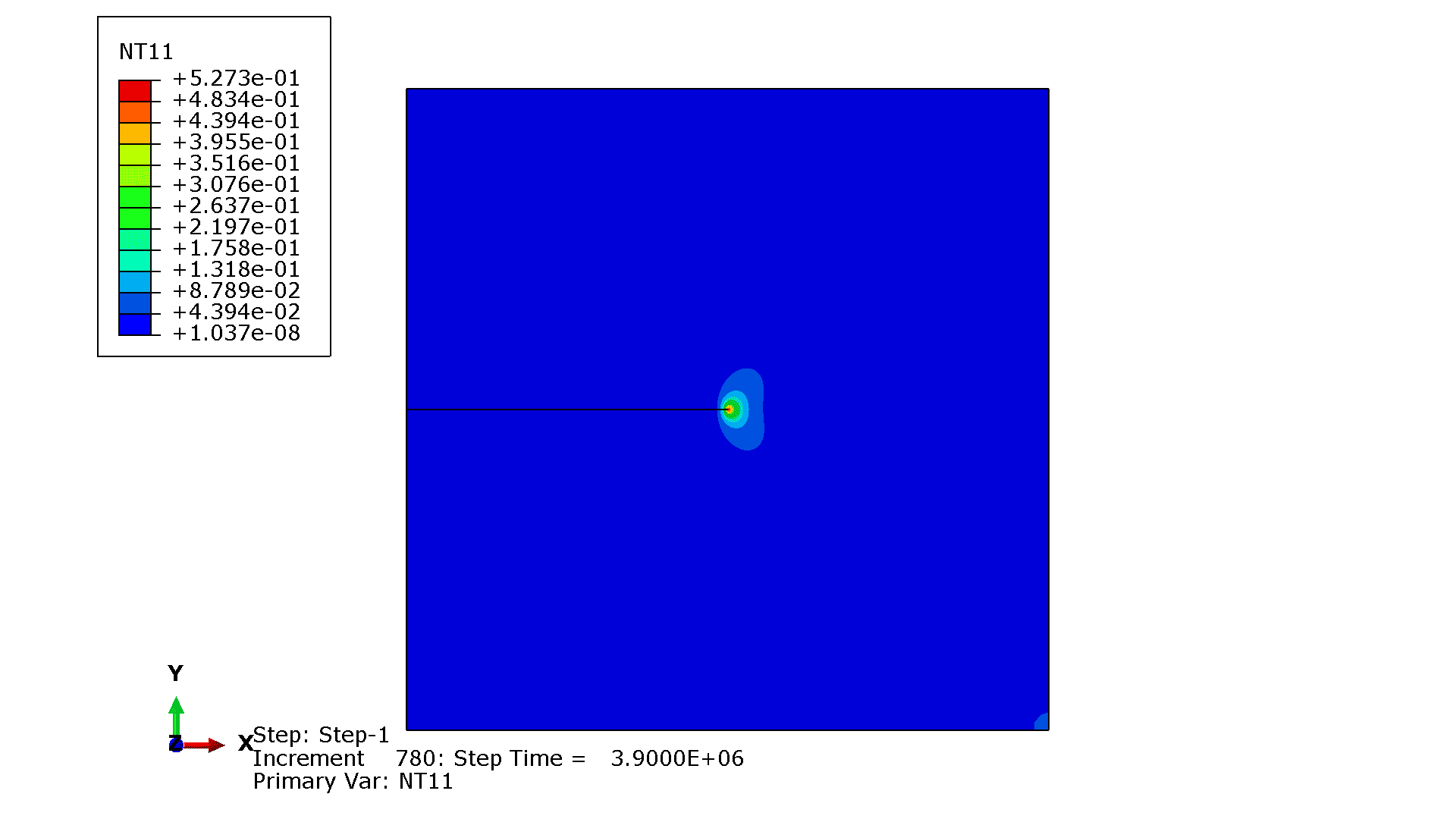
On PART-1-1, NT11 is the dimensionless phase field. On PART-1-COPY-1, NT11 is hydrogen concentration in wppm. The tutorial explains how to select the instance and interpret each field.
Need more than the files?
There are two ways we can help. Book a one hour online consultation if you want to talk a problem through with a CAE engineer, using the checkbox in the order box. Order a project if you need a full simulation built for you, delivered to an agreed scope, price and deadline under a written contract.
We work on FEA and CFD for engineers, researchers and companies. Order your project, or message us on WhatsApp for a quick reply.
Other packages engineers working on this topic also download.
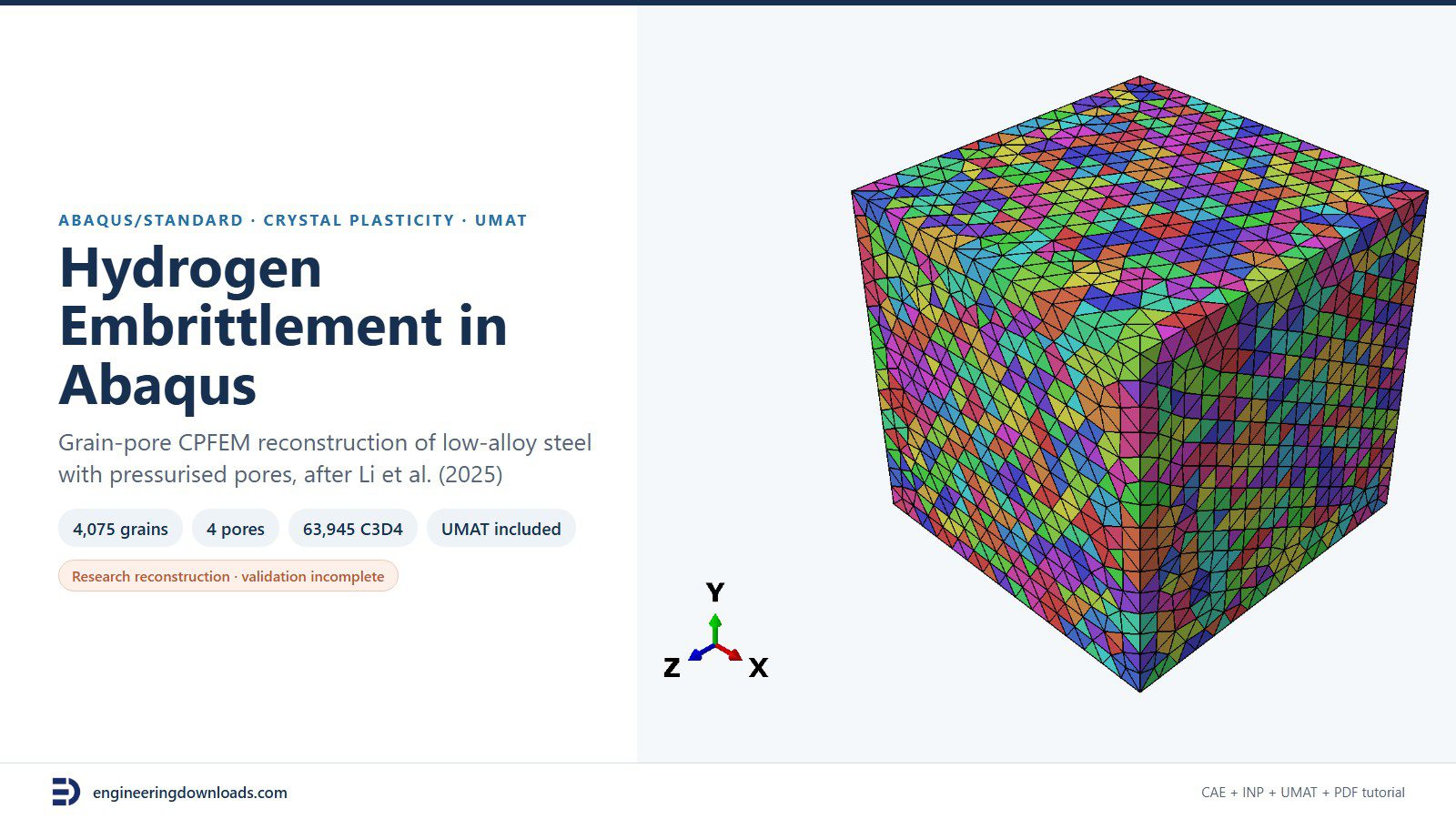 Hydrogen Embrittlement in Abaqus: Grain-Pore Crystal Plasticity (CPFEM) Model with UMAT, after Li et al. (2025)€159,00
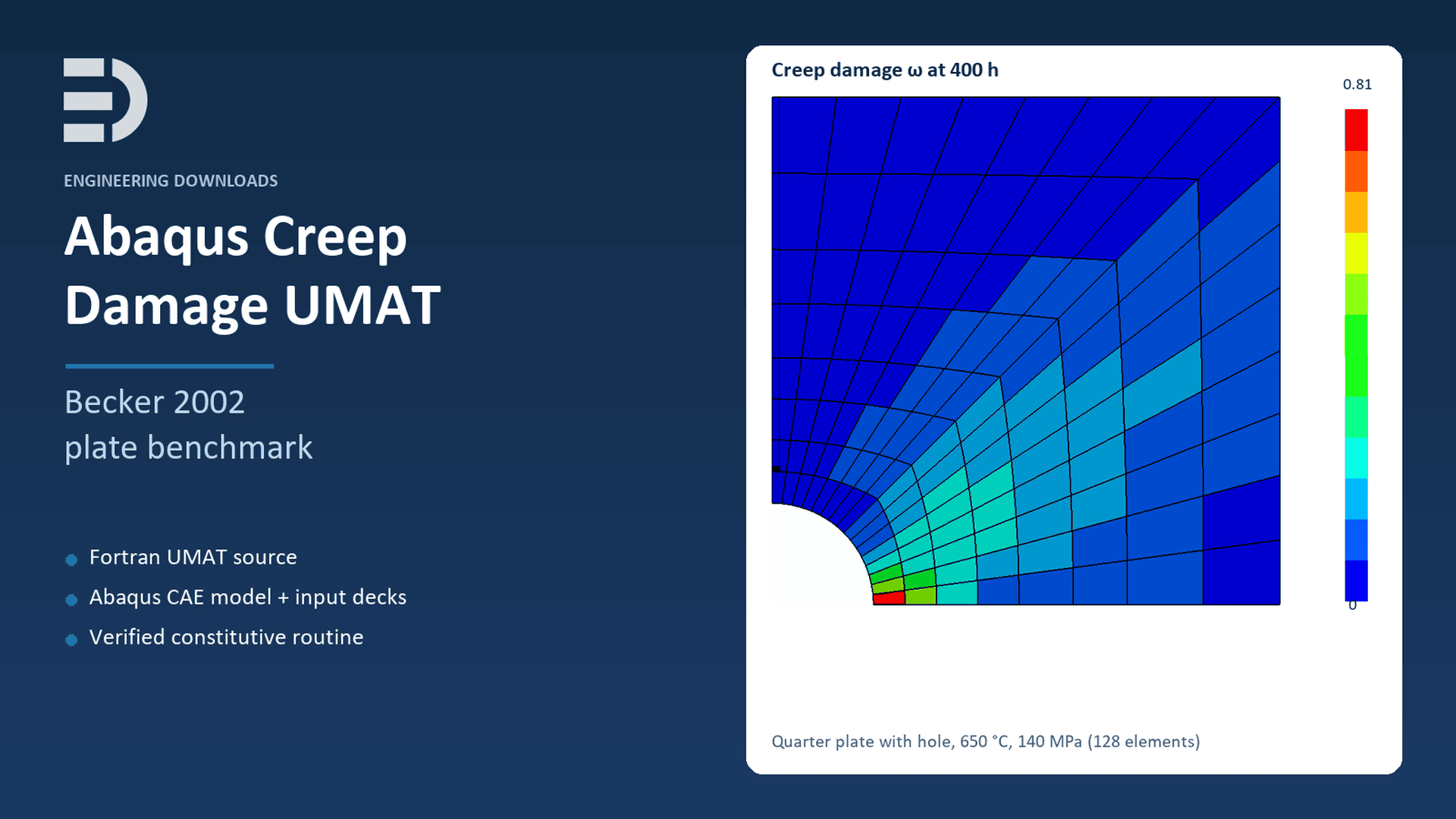 Creep Continuum Damage UMAT in Abaqus: Becker 2002 Perforated Plate Benchmark€49,00
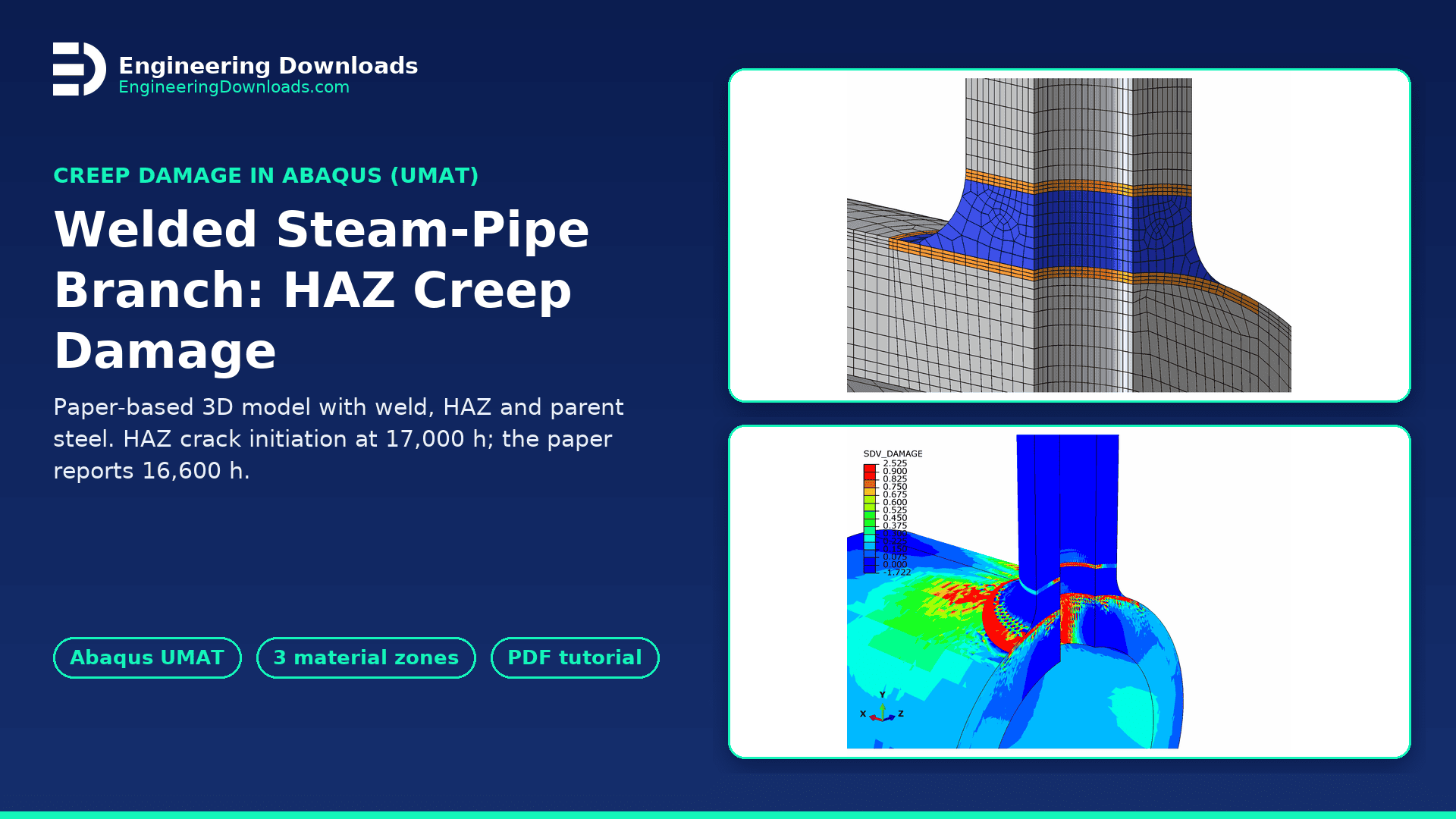 Creep Damage Analysis of a Welded Steam Pipe Branch in Abaqus: UMAT, HAZ Hex Mesh and Paper Comparison€149,00
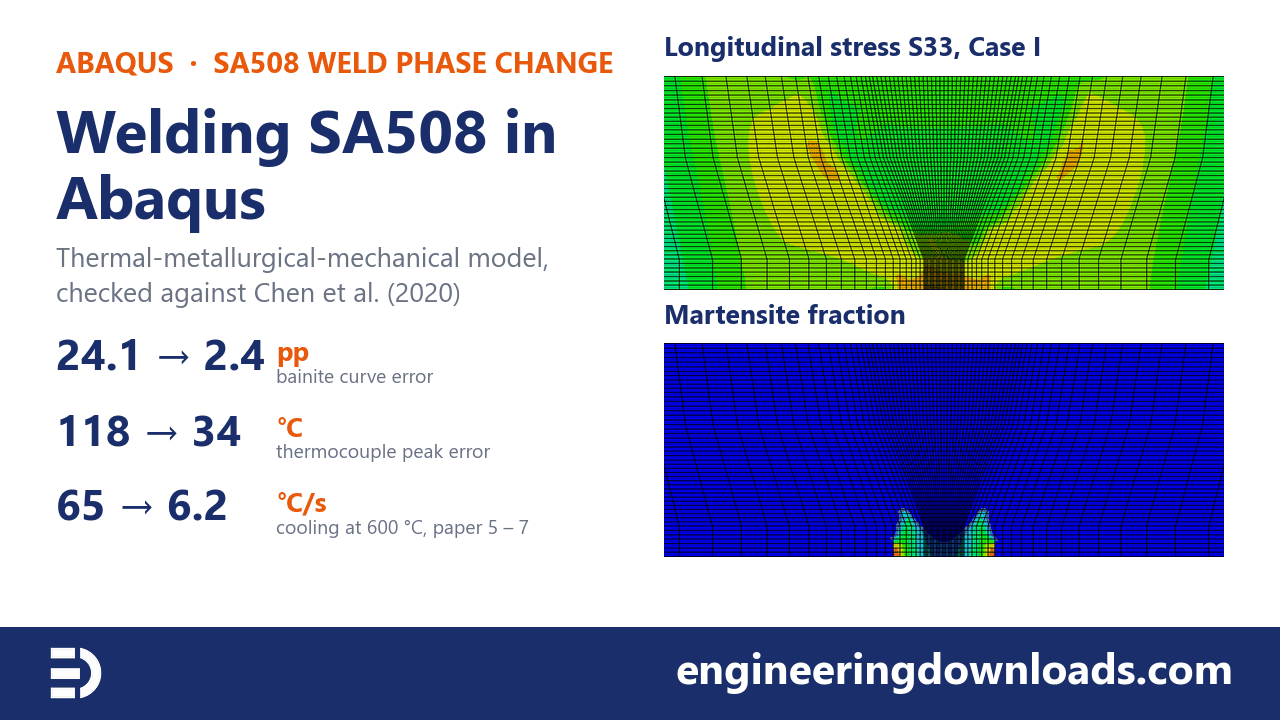 SA508 Weld Phase Transformation in Abaqus: Bainite, Martensite and Residual Stress Model Checked Against a Published Paper€299,00
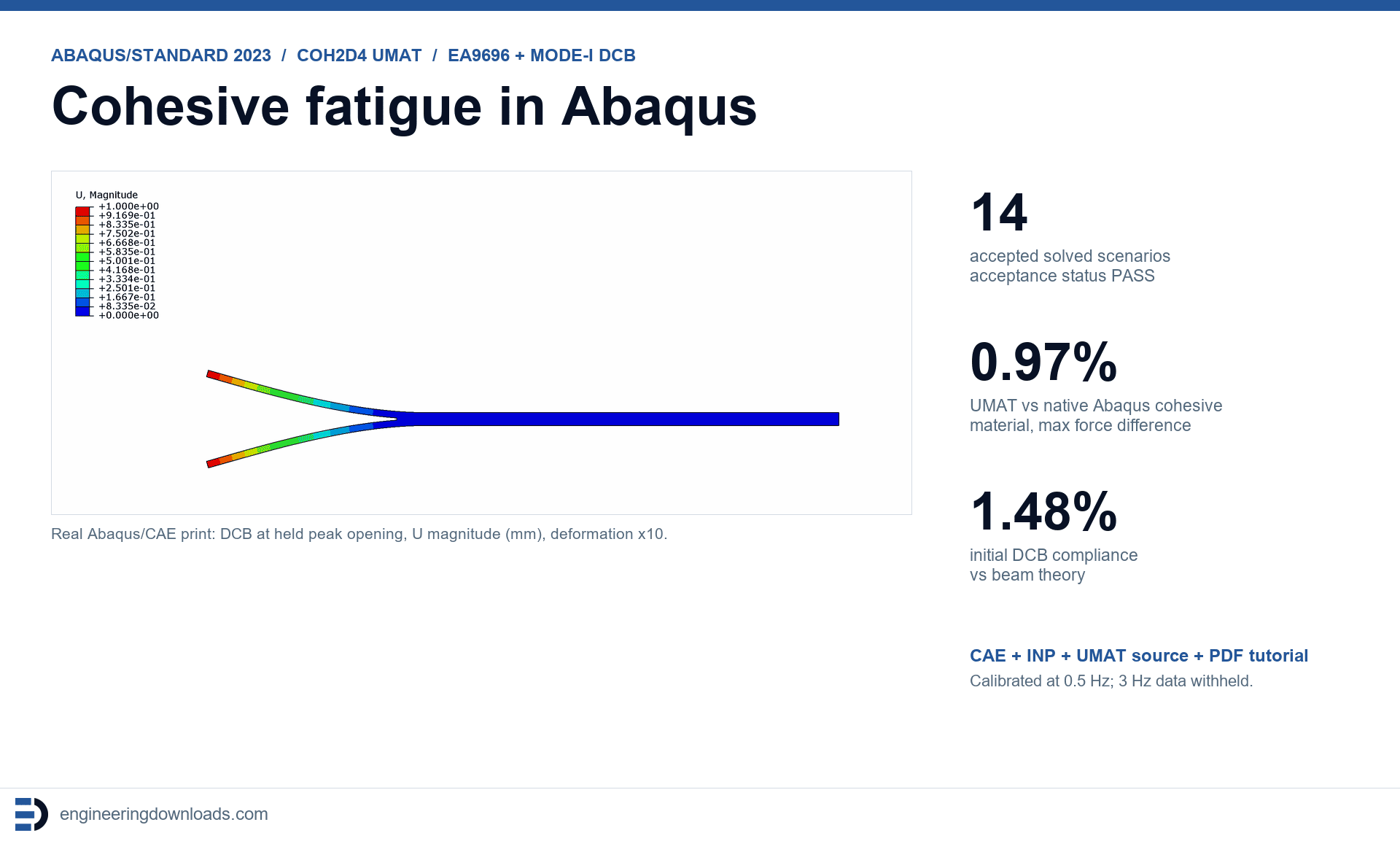 Cohesive Fatigue in Abaqus: EA9696 Adhesive and Mode-I DCB UMAT Package€159,00
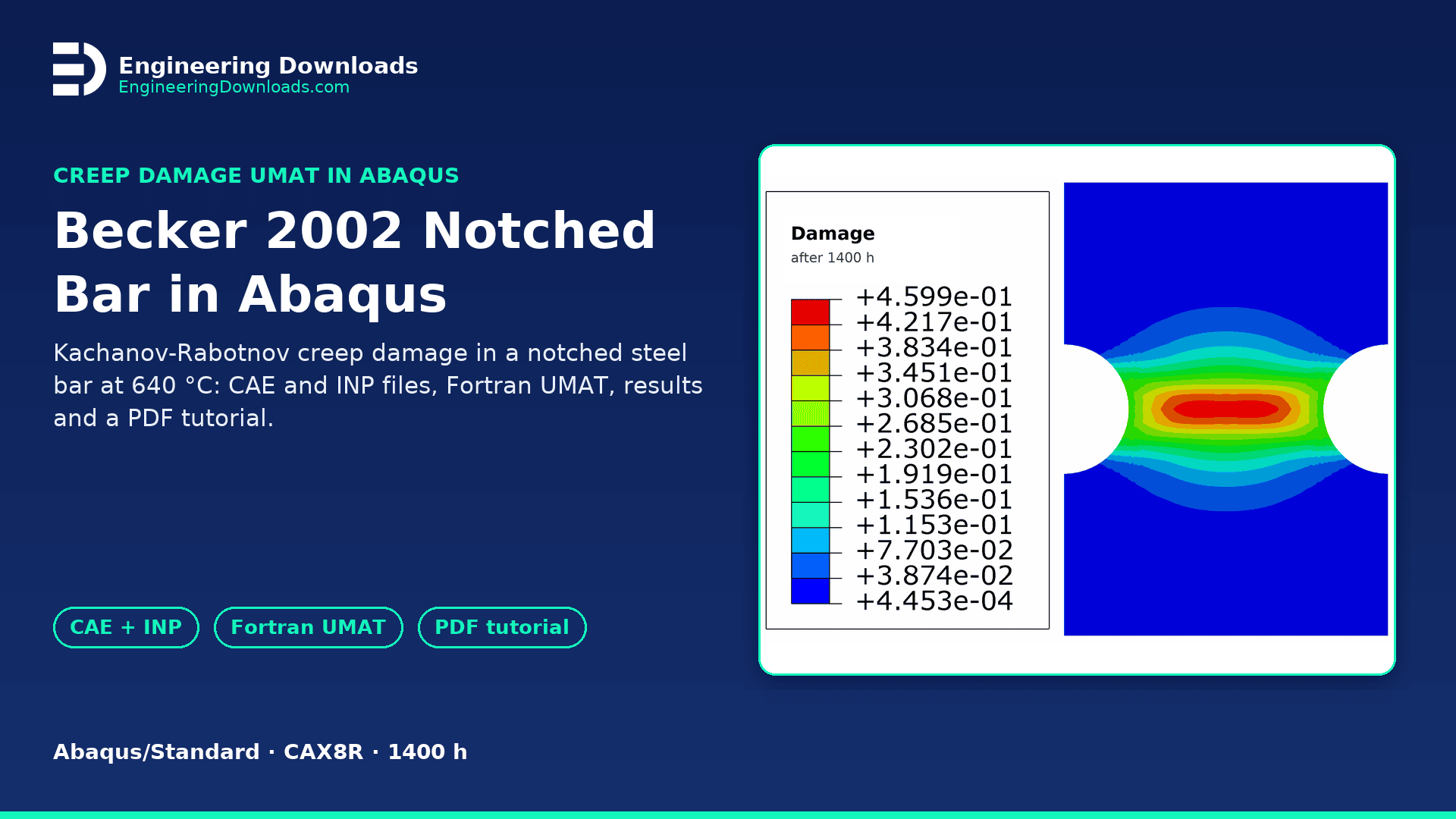 Creep Damage Notched Bar in Abaqus: Becker 2002 Benchmark with UMAT, CAE and INP Files and Paper Comparison€49,00
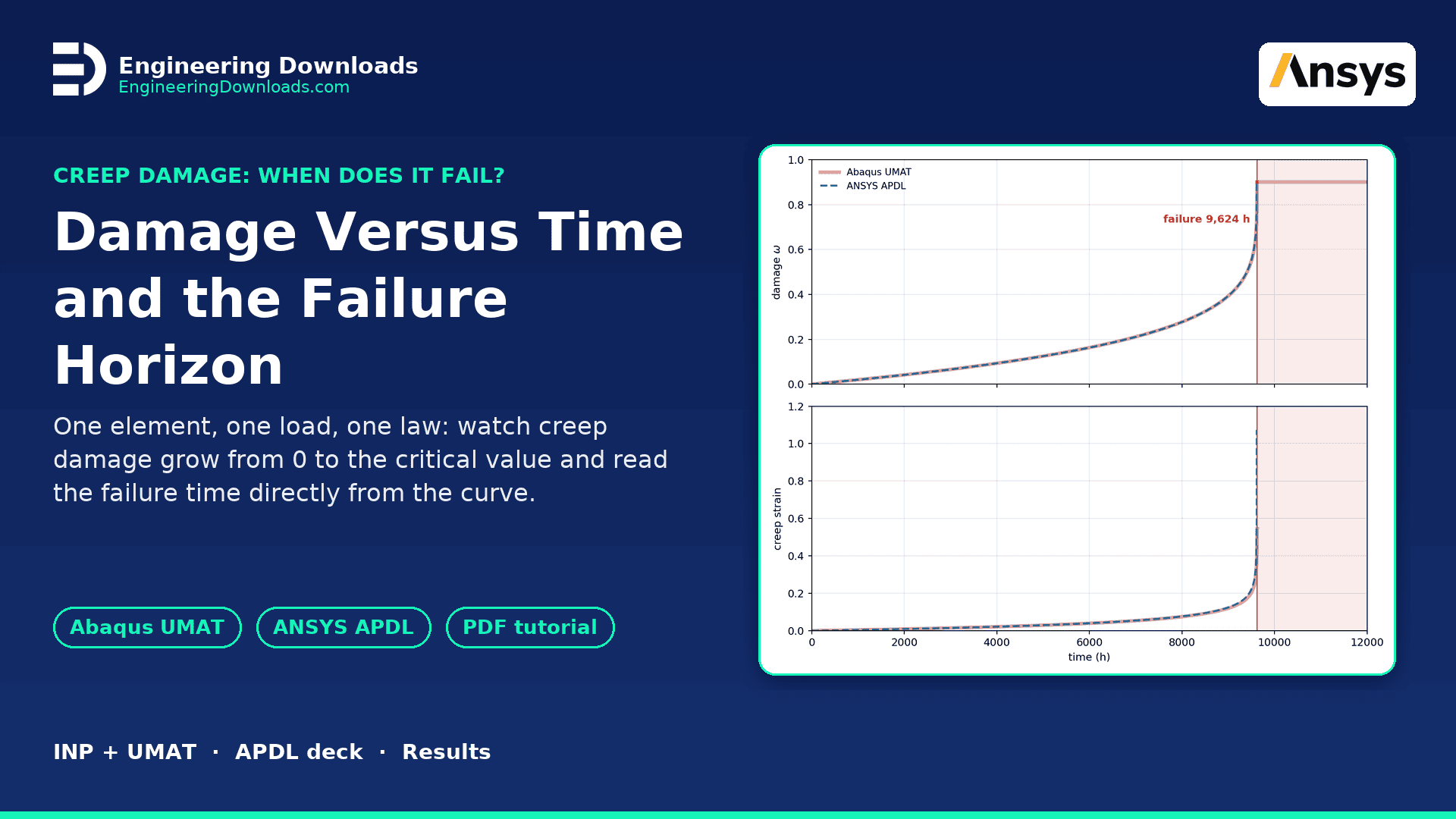 Creep Damage Versus Time in Abaqus: Failure Horizon of a Single Element with a Kachanov-Rabotnov UMAT€49,00
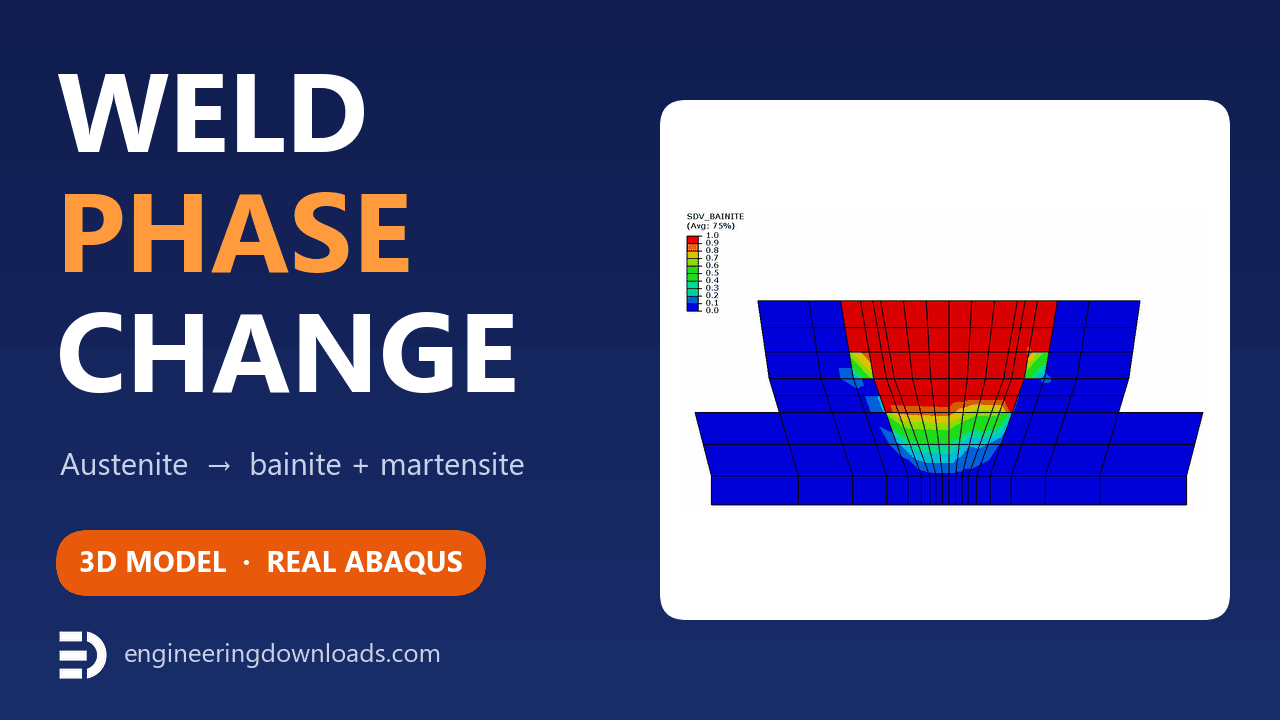 SA508 3D Weld Phase Transformation in Abaqus: Moving Heat Source, UMAT and Residual Stress Checked Against a Published Paper€299,00

Need a full custom project? See the options below.
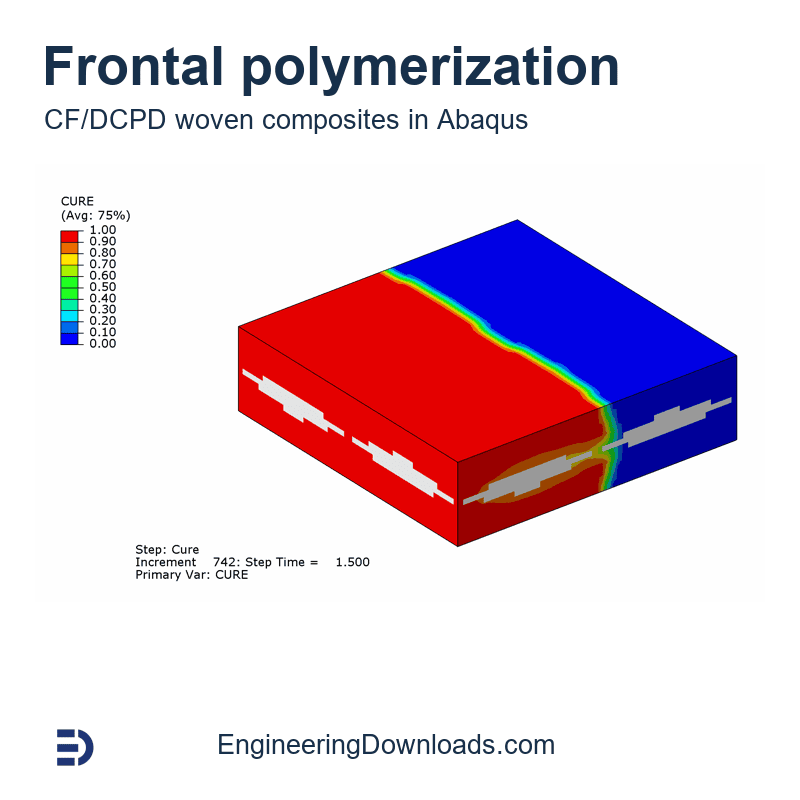
€119,00
€129,00
€179,00
See more
Want to receive push notifications for all major on-site activities?