Unlocking Precision: Your Guide to Material Modeling in Engineering Simulation
As engineers, we constantly push the boundaries of design, from robust structures for oil and gas platforms to lightweight components for aerospace, and even intricate prosthetics in biomechanics. At the heart of accurately predicting how these designs will perform lies a critical discipline: material modeling. It’s the art and science of translating a material’s complex real-world behavior into a mathematical framework that simulation software can understand and compute.
Without a proper material model, even the most sophisticated Finite Element Analysis (FEA) or Computational Fluid Dynamics (CFD) setup is built on shaky ground. It’s the difference between a simulation that gives you confidence in your design and one that offers little more than colorful graphics.

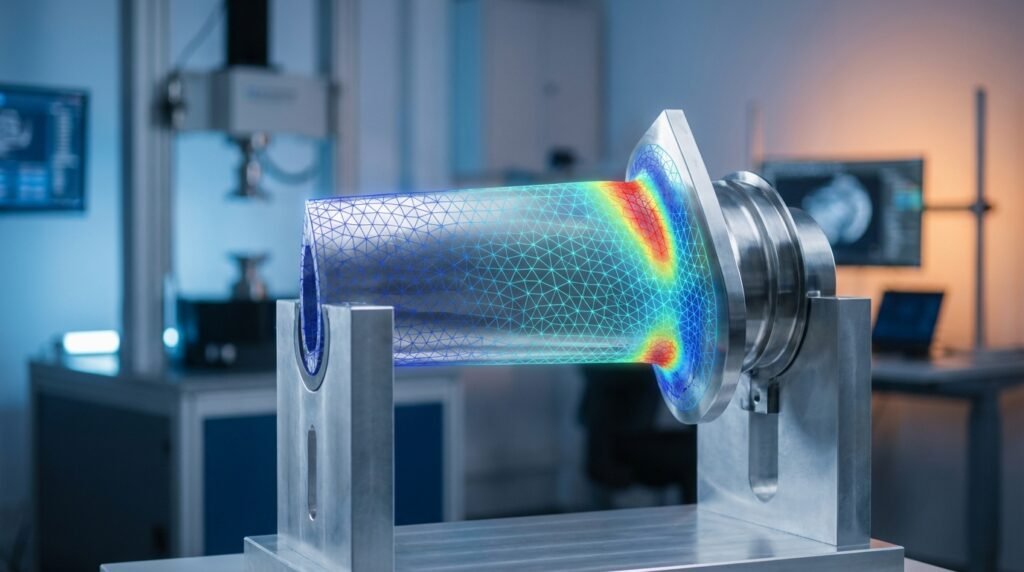
Image by Pexels from Pixabay
Why Material Modeling is Non-Negotiable for Modern Engineering
Imagine designing a critical component that will operate under extreme temperatures and pressures. You need to know if it will deform excessively, creep over time, or even fracture. Material modeling provides the predictive power to answer these questions long before physical prototypes are ever built, saving immense time and cost.
- Design Optimization: Fine-tune geometries and material selections for optimal performance and weight.
- Failure Prediction: Identify potential failure modes like yielding, fatigue, or fracture under various loading conditions, crucial for Structural Integrity and FFS Level 3 assessments.
- Cost Reduction: Minimize the need for expensive physical testing and prototyping.
- Safety & Reliability: Ensure components and systems meet stringent safety standards.
- Innovation: Explore novel materials and designs with confidence.
Fundamental Concepts in Material Modeling
Before diving into specific models, let’s establish some foundational concepts that underpin how materials behave.
Constitutive Laws: The Material’s DNA
A constitutive law is a mathematical relationship describing how a material responds to applied forces or deformations. Think of it as the material’s unique fingerprint, defining its stress-strain relationship, thermal expansion, or fluid viscosity.
- Elasticity: Describes reversible deformation. Materials return to their original shape once the load is removed. Hooke’s Law is the simplest elastic model.
- Plasticity: Accounts for permanent (irreversible) deformation. Once the yield strength is exceeded, the material deforms permanently. Key for metal forming and structural yielding.
- Viscoelasticity: Combines elastic and viscous behaviors. The material’s response is time-dependent; it deforms over time under constant load (creep) and its stiffness depends on the loading rate. Common in polymers and biological tissues.
- Creep: Time-dependent plastic deformation under constant stress, especially at elevated temperatures. Crucial for long-term integrity of components in power generation or oil & gas.
- Damage & Fracture: Models how material integrity degrades leading to crack initiation and propagation. Essential for predicting the remaining life of components.
Isotropy vs. Anisotropy
- Isotropic Materials: Properties are the same in all directions (e.g., most metals, glass).
- Anisotropic Materials: Properties vary with direction (e.g., wood, composites, bone). Modeling these requires more complex constitutive equations.
Rate-Dependent vs. Rate-Independent Behavior
- Rate-Independent: Material response does not depend on the speed of loading (e.g., standard elastic-plastic models).
- Rate-Dependent: Material response changes with loading speed (e.g., viscoelasticity, visco-plasticity, high-strain-rate deformation in impact scenarios).
Small vs. Large Deformations
- Small Deformations: Assumes strains are small, and changes in geometry due to deformation are negligible. Simplifies calculations.
- Large Deformations: Accounts for significant changes in geometry, which can affect the material’s response. Required for applications like rubber components, metal forming, or buckling analysis.
Key Material Models and Their Applications
Let’s explore some widely used material models and where they shine in engineering analysis.
Linear Elastic Isotropic (Hooke’s Law)
Concept: Stress is directly proportional to strain. Defined by Young’s Modulus (E) and Poisson’s Ratio (ν).
Applications: Initial design stages, structural analysis where stresses remain well below yield, components under light loading. Found in almost all FEA software like Abaqus, ANSYS Mechanical, MSC Nastran.
Considerations: Simplistic. Fails if material yields or deforms significantly.
Plasticity Models (Elastic-Plastic)
When materials yield and deform permanently, plasticity models are essential.
-
Von Mises (Yield Criterion)
Concept: Predicts yielding of ductile materials (e.g., metals) under complex loading conditions based on the distortion energy. Often combined with isotropic or kinematic hardening rules.
Applications: Structural integrity, metal forming (stamping, forging), fatigue analysis (predicting plastic zones). Common in Abaqus, ANSYS Mechanical, LS-DYNA. -
Tresca (Yield Criterion)
Concept: Predicts yielding based on maximum shear stress. Often used as a conservative estimate for ductile materials.
Applications: Similar to Von Mises, but sometimes preferred for specific applications or older standards. -
Drucker-Prager (Yield Criterion)
Concept: A pressure-dependent yield criterion, suitable for granular materials (soils, sands) and sometimes concrete. Accounts for both shear and hydrostatic pressure effects.
Applications: Geotechnical engineering, civil engineering (foundations, retaining walls). Available in most advanced FEA packages.
Hyperelasticity Models
For materials that can undergo large, elastic, and reversible deformations (like rubber or biological tissues).
-
Neo-Hookean & Mooney-Rivlin
Concept: These models describe the nonlinear elastic behavior of rubber-like materials based on strain energy density functions.
Applications: Seals, O-rings, tires, biomechanics (modeling soft tissues, implants). Widely available in Abaqus, ANSYS Mechanical.
Viscoelasticity and Creep Models
For time-dependent material behavior, crucial in long-term performance.
-
Maxwell, Kelvin-Voigt, Prony Series (Viscoelasticity)
Concept: Use combinations of springs and dashpots to represent the material’s elastic and viscous response over time.
Applications: Polymers, high-temperature components in aerospace, protective equipment. Often used for predicting long-term deformation or damping characteristics. -
Power Law, Norton-Bailey (Creep)
Concept: Empirical models describing the strain accumulation over time under constant stress, especially at elevated temperatures.
Applications: Turbine blades, high-pressure vessels in oil & gas, nuclear components. Critical for FFS assessments in high-temperature service.
Damage and Fracture Models
When the focus shifts to material degradation and failure.
-
Cohesive Zone Models (CZM)
Concept: Simulates crack initiation and propagation by defining a traction-separation law across an interface, representing the fracture process zone.
Applications: Delamination in composites, brittle fracture, adhesive joints. Supported by advanced FEA codes. -
Gurson-Tvergaard-Needleman (GTN) Model
Concept: A porous plasticity model that accounts for the nucleation, growth, and coalescence of micro-voids, leading to ductile fracture.
Applications: Ductile fracture prediction in metals, especially in scenarios like impact or forming where significant void growth occurs.
Fluid Models for CFD
While often distinct, material modeling also applies to fluids, defining their properties.
-
Equation of State (EOS)
Concept: Relates pressure, temperature, and density for compressible fluids.
Applications: High-speed aerodynamics, turbomachinery, chemical processing in CFD software like Fluent or OpenFOAM. -
Non-Newtonian Models (e.g., Power Law, Bingham Plastic)
Concept: Describes fluids where viscosity is not constant but depends on shear rate (shear-thinning, shear-thickening) or yield stress.
Applications: Polymers, blood (biomechanics), food processing, drilling muds in oil & gas. Available in Fluent, CFX, OpenFOAM.
Data Acquisition for Material Models
The best material model is useless without accurate data. Here’s how engineers acquire it:
- Experimental Testing: The gold standard. This includes tensile, compression, shear, creep, fatigue, impact, and fracture toughness tests. Specialized labs provide stress-strain curves, modulus values, yield strengths, and other critical parameters.
- Material Data Sheets: Manufacturers often provide basic mechanical properties for their standard materials. These are good starting points but may lack the detailed data needed for advanced models.
- Literature Review: Academic papers, engineering handbooks, and industry standards (e.g., ASME, API) can be valuable sources, especially for established materials.
- Reverse Engineering/Calibration: If direct experimental data is scarce, you might perform a simplified test and then use optimization techniques (often with Python or MATLAB scripts) to fit model parameters to the observed response.
Practical Workflow for Material Model Implementation
Implementing a material model in your simulation project is a systematic process. Here’s a step-by-step guide to ensure robust results.
Step 1: Understand the Application & Loading Conditions
Before touching any software, clarify your objective:
Questions to Ask:
- What are the operating temperatures?
- What is the expected maximum stress/strain?
- Is the loading static, dynamic, cyclic, or time-dependent?
- Are large deformations expected?
- What are the failure modes of concern (yield, fracture, creep, fatigue)?
- What is the material and its processing history?
Step 2: Select the Appropriate Material Model
This is where your understanding of constitutive laws comes into play. Use this checklist:
Material Model Selection Checklist:
| Behavior Type | Common Models | Typical Applications | Required Data |
|---|---|---|---|
| Linear Elastic | Isotropic Elastic | Low stress, small deformation, initial designs | Young’s Modulus, Poisson’s Ratio |
| Nonlinear Elastic (Hyperelastic) | Neo-Hookean, Mooney-Rivlin | Rubber, soft tissues, seals | Stress-strain data from uniaxial, biaxial, shear tests |
| Plasticity | Von Mises, Drucker-Prager | Metals yielding, forming, structural failure | Yield strength, plastic stress-strain curve |
| Viscoelasticity | Prony Series, Generalized Maxwell | Polymers, foams, damping materials | Creep or relaxation test data |
| Creep | Power Law, Norton-Bailey | High-temp metals, long-term loads | Creep test data (strain vs. time at constant stress/temp) |
| Damage/Fracture | CZM, GTN, Ductile Damage | Crack initiation/propagation, fatigue | Fracture toughness, void nucleation parameters |
| Anisotropic | Orthotropic Elastic, Hill Plasticity | Composites, rolled metals | Direction-dependent moduli, yield stresses |
Tip: Start simple and add complexity only if the application demands it and data supports it.
Step 3: Acquire Material Data
Gather the necessary parameters for your chosen model. Organize them clearly.
- If using experimental data, ensure it’s from reliable sources and represents the actual material and conditions.
- Convert units consistently for your chosen FEA/CFD software.
Step 4: Calibrate/Fit Model Parameters
Many advanced material models have parameters that are not directly measured but are fitted to experimental data. This often involves optimization routines.
- Software Tools: Most commercial FEA software (Abaqus, ANSYS Mechanical) have built-in material calibration tools.
- Scripting: For custom models or complex fitting, Python with libraries like SciPy or MATLAB’s Optimization Toolbox are invaluable. You might write a script to minimize the error between your model’s prediction and experimental stress-strain curves.
Step 5: Implement in FEA/CFD Software
Input your calibrated material model into your chosen simulation package.
- GUI Input: For standard models, you’ll typically enter parameters directly through the software’s graphical user interface (e.g., Abaqus/CAE, ANSYS Workbench).
- User-Defined Subroutines: For highly specialized or proprietary models, you might need to write a User Material (UMAT in Abaqus, USERMAT in ANSYS, or custom functions in OpenFOAM) subroutine in Fortran or C++. This requires strong programming skills and a deep understanding of the software’s architecture.
Step 6: Verification & Sanity Checks
This is a critical step often overlooked. Don’t just trust the numbers; verify them.
Mesh Sensitivity
Your material model’s response can be sensitive to mesh density, especially in areas of high stress gradients or plastic deformation. Perform a mesh convergence study to ensure your results are independent of mesh size.
Boundary Conditions (BCs)
Double-check that your BCs accurately represent the real-world constraints and loads. Incorrect BCs can easily mask the true material response.
Convergence Criteria
For nonlinear simulations (common with advanced material models), ensure your solver reaches convergence with appropriate tolerances. Non-converged solutions are meaningless.
Validation Against Experiments or Analytical Solutions
Whenever possible, validate your simulation results against simple experimental tests or analytical solutions. For example, simulate a uniaxial tensile test with your material model and compare the predicted stress-strain curve directly against the experimental one.
Sensitivity Analysis
How sensitive are your results to variations in material parameters? If a small change in one parameter leads to a large change in your output, it indicates a critical parameter that needs highly accurate data.
Step 7: Post-Processing & Interpretation
Carefully analyze the simulation outputs (stress, strain, deformation, damage initiation/propagation). Understand the limitations of your chosen material model and clearly state them in your report.
Common Challenges and Pitfalls
- Insufficient/Inaccurate Material Data: The most common issue. Garbage in, garbage out. High-quality data is paramount.
- Over-simplification of Models: Using a linear elastic model for a heavily plastically deforming component will lead to wildly inaccurate results.
- Numerical Instabilities: Complex material models, especially those with damage or fracture, can introduce numerical instabilities, leading to convergence issues. Careful meshing, time stepping, and solver controls are essential.
- Misinterpretation of Results: Understanding what the model *can* and *cannot* predict is crucial. Don’t extrapolate beyond its validated range.
- Computational Cost: Advanced material models (e.g., explicit dynamics with complex plasticity) can be computationally expensive. Balance accuracy with reasonable run times.
Advanced Topics & Future Trends
- Multi-scale Modeling: Bridging the gap between atomic/microstructure level and macroscopic behavior to derive more accurate constitutive laws.
- Machine Learning in Material Modeling: Using AI to predict material behavior, accelerate parameter fitting, or even discover new materials. Python’s machine learning libraries are playing a significant role here.
- Digital Twins: Integrating material models into digital twins for real-time performance monitoring and predictive maintenance of assets throughout their lifecycle.
Tools & Software for Material Modeling
The engineering landscape offers a wide array of tools to implement and analyze material models:
- FEA Software: Abaqus, ANSYS Mechanical, LS-DYNA, MSC Nastran, COMSOL Multiphysics are industry leaders with extensive material model libraries and customization options.
- CFD Software: ANSYS Fluent, ANSYS CFX, OpenFOAM, STAR-CCM+ for fluid material properties and non-Newtonian flows.
- CAD/CAE Platforms: Integrated environments like CATIA, Siemens NX often include basic material definitions that link to their analysis modules.
- Scripting & Programming: Python and MATLAB are indispensable for data processing, custom model development, parameter fitting, and automation of analysis workflows.
- Pre-processors: Tools like HyperMesh and MSC Patran help define and assign complex material properties to intricate geometries.
Enhance Your Material Modeling Expertise with EngineeringDownloads.com
Navigating the complexities of material modeling requires continuous learning and access to the right resources. At EngineeringDownloads.com, we offer a growing library of practical resources:
- Explore our curated collection of downloadable scripts for Python and MATLAB, designed to automate material data processing and parameter fitting.
- Access project templates for common FEA setups that incorporate various material models, helping you kickstart your simulations.
- For personalized guidance on specific material challenges or to deepen your understanding of advanced constitutive models, consider our online consultancy services. Our experts can provide tailored support to your engineering projects.
Conclusion
Material modeling is far more than just inputting numbers into a software package; it’s a fundamental engineering skill that demands a deep understanding of material science, mechanics, and computational methods. By carefully selecting, calibrating, and validating your material models, you can elevate the accuracy and reliability of your simulations, driving better designs and safer products across all engineering disciplines. Embrace the challenge, and you’ll unlock a new level of confidence in your engineering predictions.
Further Reading
Abaqus Documentation: Material Models