As an engineer, your analytical mind and problem-solving skills are invaluable assets. While passion for your craft is often the primary driver, understanding how to strategically increase your income is essential for long-term financial security and career satisfaction. This comprehensive guide, crafted specifically for engineers by engineers, will explore practical, actionable strategies – from technical skill mastery to savvy career moves – to help you elevate your earning potential.

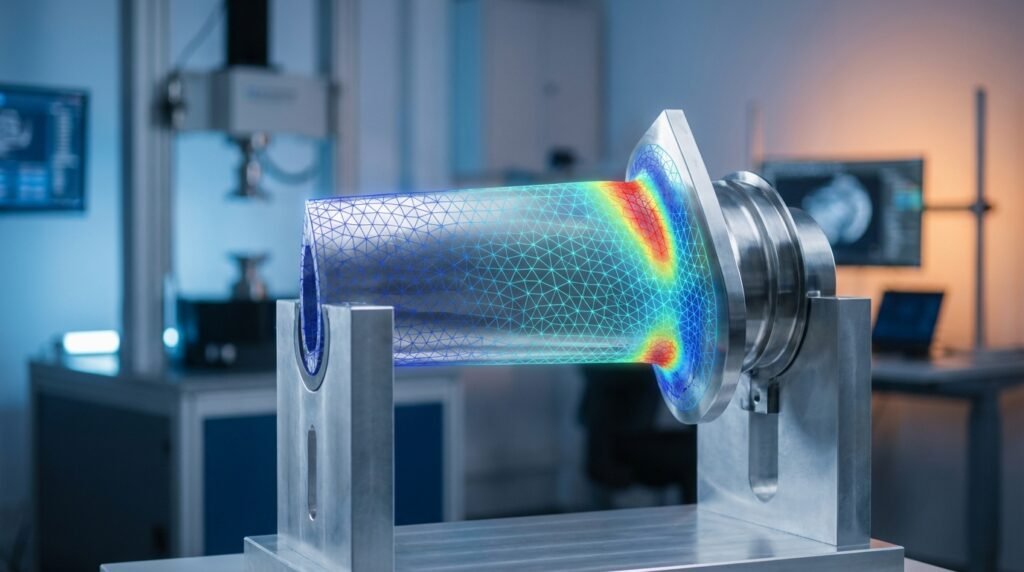
Image by Scott Graham on Unsplash
Whether you’re early in your career or a seasoned professional, applying these insights can significantly impact your financial trajectory. Let’s dive into how you can engineer your own path to a higher income.
Foundational Strategies: Building a Solid Earning Base
The bedrock of any engineer’s income potential lies in their technical competence. Continuously strengthening your foundational skills and adapting to industry demands is paramount.
Master Your Core Engineering Discipline
Deepening your technical expertise within your chosen field is not just about doing your job; it’s about becoming indispensable. For structural engineers, this might mean becoming proficient in advanced topics like seismic analysis or fatigue and fracture mechanics (FFM), including Fitness-for-Service (FFS) Level 3 assessments. For mechanical or aerospace engineers, mastering advanced Finite Element Analysis (FEA) or Computational Fluid Dynamics (CFD) is critical.
- FEA Mastery: Go beyond basic linear static analysis. Delve into non-linear analysis (material, geometric, contact), explicit dynamics for impact simulations, and advanced meshing techniques. Tools like Abaqus, ANSYS Mechanical, and MSC Nastran are industry standards.
- CFD Excellence: Explore turbulent flow modeling, multiphase flows, heat transfer, and fluid-structure interaction. Gaining proficiency in software such as ANSYS Fluent/CFX or OpenFOAM is highly valuable.
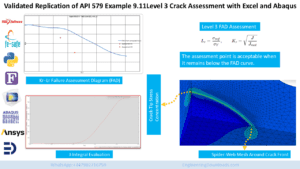
- Structural Integrity: For those in Oil & Gas or power generation, deep knowledge of FFS Level 3 assessments (API 579-1/ASME FFS-1) using tools like Abaqus or ANSYS for detailed stress analysis is a premium skill.
Specialize in High-Demand Niches
While a broad understanding is good, specialization often commands higher compensation. Identify emerging or consistently high-value areas within engineering:
- Oil & Gas: Focus on subsea engineering, pipeline integrity management, risk-based inspection, or FFS assessments for aging infrastructure.
- Aerospace: Expertise in composite materials, aeroelasticity, fracture mechanics, or advanced manufacturing techniques for lightweight structures.
- Biomechanics: Design and analysis of medical implants, prosthetics, or human body mechanics using FEA tools adapted for biological materials.
- Renewable Energy: Specializing in wind turbine blade design, solar panel efficiency, or battery technology.
Acquire Essential Software Proficiency
The modern engineering landscape is heavily reliant on software. Being highly proficient in industry-standard tools and understanding CAD-CAE workflows is non-negotiable.
- CAD/CAE Integration: Master the seamless workflow between CAD software (e.g., CATIA, SolidWorks, NX) and CAE tools (e.g., Abaqus, ANSYS, ADAMS). Understanding how to prepare models for simulation efficiently saves immense time and improves accuracy.
- Advanced Simulation Tools: Beyond the basics, learn specific modules or advanced features of tools like MSC Patran for pre/post-processing or LS-DYNA for explicit dynamics.
- Automation & Scripting: This is a game-changer. Python and MATLAB are indispensable for automating repetitive tasks, developing custom analysis tools, and handling large datasets.
Practical Workflow: Python for CAE Automation
Imagine needing to run hundreds of FEA simulations with slight variations in geometry or boundary conditions. Manually setting up each case in ANSYS Mechanical or Abaqus would be incredibly tedious and error-prone. With Python, you can:
- Pre-processing: Write scripts to automatically generate parametric CAD models (e.g., using libraries like FreeCAD, or scripting APIs in commercial CAD). Then, use Python to create input files for FEA software, define materials, loads, and boundary conditions.
- Execution & Monitoring: Script the submission of jobs to compute clusters and monitor their progress.
- Post-processing: Develop scripts to extract specific results (e.g., maximum stress, deformation, natural frequencies), generate plots, and compile reports. This drastically reduces manual effort and ensures consistency. EngineeringDownloads.com offers Python scripts and MATLAB templates to streamline your CAE workflows, allowing you to focus on analysis rather than repetitive setup.
Continuous Learning and Certification
The world of engineering evolves rapidly. Stagnation is the enemy of income growth.
- Professional Engineer (PE) License: For many fields, especially those involving public safety (e.g., civil, structural), a PE license significantly boosts credibility, earning potential, and career advancement opportunities.
- Industry-Specific Certifications: Acquire certifications relevant to your niche, such as API certifications for pressure vessel inspectors in Oil & Gas, or NDT (Non-Destructive Testing) certifications.
- Online Courses and Workshops: Leverage platforms like Coursera, edX, or specialized engineering training providers. Look for courses in advanced topics, emerging technologies (e.g., AI/ML for engineers), or new software. EngineeringDownloads.com also offers advanced courses and workshops on specialized engineering topics that can quickly upskill you.
Strategic Career Moves to Boost Income
Beyond skill development, smart career navigation plays a crucial role in maximizing your earnings.
Negotiate Effectively
Your skills have value. Don’t leave money on the table.
- Research Market Rates: Use websites like Glassdoor, Salary.com, and LinkedIn to understand typical compensation ranges for your role, experience, and location.
- Highlight Your Value: Clearly articulate how your unique skills and experience (e.g., Abaqus expertise for complex non-linear problems, Python automation that saved XYZ hours) translate into tangible benefits for the company.
- Practice: Negotiation is a skill. Practice discussing your worth confidently and professionally.
Here’s a salary negotiation checklist:
| Action Item | Description | Status |
|---|---|---|
| Research Salary Ranges | Identify average compensation for your role, location, and experience level. | ☐ |
| Quantify Achievements | Document specific projects where you delivered measurable results (e.g., ‘Reduced simulation time by 20% using MATLAB scripts’). | ☐ |
| Understand Full Compensation | Consider benefits, bonuses, stock options, and professional development budgets. | ☐ |
| Prepare Your Pitch | Outline your reasons for requesting a higher salary based on your value. | ☐ |
| Practice Active Listening | Understand the employer’s perspective and budget constraints. | ☐ |
| Be Prepared to Walk Away (if necessary) | Know your minimum acceptable offer. | ☐ |
Consider a Career Shift within Engineering
Sometimes, the highest income growth comes from transitioning into roles that leverage your engineering background differently.
- Project Management: Engineers with strong organizational skills can transition into project management, often with significant salary increases, especially for large-scale projects in aerospace or infrastructure.
- Technical Sales or Consultancy: Your deep technical knowledge makes you ideal for selling complex engineering solutions (e.g., CAE software like ANSYS or specialized services). Consultancy offers high hourly rates for expert problem-solving.
- R&D Leadership: Moving into management or leadership roles in research and development departments.
Explore Contracting and Freelancing
Many experienced engineers find significant income boosts by working as independent contractors or freelancers.
- Higher Hourly Rates: Contractors often command significantly higher hourly rates than salaried employees, reflecting the lack of benefits and job security.
- Diverse Projects: Work on a variety of projects for different clients, expanding your skill set rapidly. For example, offering specialized FEA services for small businesses using Abaqus or OpenFOAM.
- Flexibility: Greater control over your schedule and workload.
Common Mistakes: Not having a strong portfolio, underpricing your services, or neglecting networking can hinder freelance success.
Geographical Relocation
Salaries for the same engineering role can vary dramatically by region or country due to cost of living, demand, and industry concentration. Research areas with high demand for your specific engineering skills (e.g., Houston for Oil & Gas, Seattle for Aerospace, Silicon Valley for tech-focused engineering).
Leveraging Advanced Skills for Premium Earnings
To truly reach the top tier of engineering income, you need to cultivate highly specialized, advanced skills that few others possess.
Simulation & Analysis Expertise
Simply knowing how to run a simulation isn’t enough. True expertise lies in understanding the underlying physics, numerical methods, and limitations.
FEA & CFD Mastery: Beyond Basic Usage
- Non-linearities: Expert knowledge of geometric non-linearity (large deformations), material non-linearity (plasticity, hyperelasticity), and contact non-linearity.
- Advanced Meshing: The ability to create high-quality, efficient meshes for complex geometries, including hex-dominant meshing, adaptive meshing, and boundary layer meshing for CFD.
- Advanced Analysis: Fatigue analysis, fracture mechanics, creep analysis, dynamic analysis (modal, transient, random vibration), acoustic analysis, and fluid-structure interaction (FSI).
Practical Workflow: Advanced FFS Assessment with FEA
For a cracked component in an Oil & Gas facility requiring an FFS Level 3 assessment, you would follow a detailed workflow:
- Geometry & Mesh: Import the component geometry into Abaqus or ANSYS. Create a refined mesh around the crack tip using specialized techniques (e.g., submodeling, singular elements) to accurately capture stress intensity factors (SIFs).
- Material Model: Define appropriate material properties, including plasticity or creep models if operating at high temperatures or under cyclic loading.
- Boundary Conditions & Loads: Apply realistic operating pressures, temperatures, and external forces, mirroring the in-service environment.
- Solve & Post-process: Run the non-linear FEA. Extract SIFs (J-integral, CTOD), stress distributions, and deformation.
- Assessment: Compare results against FFS Level 3 criteria (e.g., API 579-1) for fracture, plastic collapse, and fatigue crack growth.
Verification & Sanity Checks for Simulations
An expert knows that software output isn’t always correct. Rigorous verification is crucial.
- Mesh Independence: Run simulations with progressively finer meshes to ensure your results are not dependent on mesh size.
- Convergence Criteria: For iterative solvers (common in non-linear FEA and CFD), ensure convergence criteria (e.g., residual norms in Fluent, force equilibrium in Abaqus) are met.
- Physical Reasonableness: Does the deformation make sense? Are stress concentrations where you expect them? Use hand calculations or simplified analytical solutions to sanity check key results.
- Validation: Whenever possible, compare simulation results against experimental data or published benchmarks.
- Sensitivity Analysis: Understand how variations in input parameters (material properties, loads) affect your results.
Data Science and AI in Engineering
The integration of data science and artificial intelligence (AI) is transforming engineering, creating lucrative opportunities for those with these hybrid skills.
- Predictive Maintenance: Using sensor data and machine learning algorithms (e.g., Python’s Scikit-learn) to predict equipment failures before they occur, common in large industrial facilities.
- Design Optimization: Employing AI-driven algorithms to explore vast design spaces and optimize parameters for performance, cost, or weight (e.g., topology optimization, generative design).
- Process Optimization: Applying data analytics to manufacturing processes to improve efficiency and reduce defects.
Automation with Python & MATLAB
Beyond simple scripting, advanced automation involves developing sophisticated tools and integrating disparate software packages.
- Custom Tool Development: Building graphical user interfaces (GUIs) in Python or MATLAB to encapsulate complex analysis workflows for non-expert users.
- Interfacing Software: Using APIs (Application Programming Interfaces) to link CAD, CAE, and post-processing tools, creating highly efficient end-to-end solutions. For example, scripting MATLAB to process experimental data and then automatically update an FEA model in ANSYS for further analysis.
- Parallel Computing: Writing scripts to distribute computationally intensive tasks across multiple processors or cloud resources.
Beyond the Day Job: Diversifying Your Income Streams
Your engineering knowledge can generate income through avenues outside traditional employment.
Tutoring and Mentorship
Share your expertise with students or junior engineers. This can be highly rewarding both financially and personally.
- Online Tutoring: Platforms connect you with students needing help in specific subjects (e.g., thermodynamics, structural mechanics, advanced CAE software).
- Mentorship Programs: Offer guidance to younger engineers, potentially through professional organizations or paid mentorship services. EngineeringDownloads.com also offers specialized tutoring services for complex engineering topics like FEA, CFD, and FFS, connecting experienced engineers with those seeking advanced knowledge.
Content Creation
Become a thought leader and educator in your field.
- Technical Blogging/Vlogging: Create articles or videos explaining complex engineering concepts (e.g., ‘Understanding Non-linear Contact in Abaqus’ or ‘Python Scripting for ANSYS Workbench’). Monetize through advertising or sponsorships.
- Online Courses: Develop and sell your own in-depth courses on platforms like Udemy or Teachable, covering highly specialized skills like ‘Mastering FFS Level 3 Assessments’ or ‘Advanced CFD with OpenFOAM’.
- Writing E-books: Compile your expertise into a technical e-book on a niche topic.
Product Development or Entrepreneurship
Identify an unmet need in the engineering market and develop a solution.
- Software Tools: Create a niche software tool or script that solves a common engineering problem.
- Specialized Consulting Firm: Start your own firm offering highly specialized services (e.g., biomechanics consulting for medical device companies, structural integrity assessments).
- Physical Products: Invent or design a new engineering product.
Common Pitfalls and How to Avoid Them
While the path to higher income is clear, there are obstacles to navigate.
Stagnant Skill Set
The biggest trap is becoming complacent. The engineering world changes. What was cutting-edge five years ago might be obsolete today. Regularly assess your skills against industry trends and commit to lifelong learning.
Poor Networking
Many opportunities, both for jobs and new ventures, come through connections. Attending industry conferences, joining professional organizations (ASME, ASCE, AIAA), and engaging on platforms like LinkedIn are crucial.
Undervaluing Your Contributions
Engineers often focus solely on the technical work and neglect to articulate the business value of their contributions. Learn to speak the language of business – how your work saves money, increases efficiency, or mitigates risk.
Over-specialization without Breadth
While specialization is important, becoming too niche in an area with declining demand can be risky. Ensure your specialized skills are transferable or that you maintain a breadth of foundational knowledge to adapt.
Conclusion: Your Roadmap to Financial Growth
Increasing your income as an engineer is an achievable goal that requires a combination of continuous skill development, strategic career planning, and proactive action. By mastering your core discipline, specializing in high-demand areas, leveraging advanced tools like Abaqus, ANSYS, Python, and MATLAB, and exploring diverse income streams, you can significantly enhance your earning potential.
Remember, your journey is unique, but the principles of growth and adaptation remain universal. Start by identifying one or two areas from this guide where you can make immediate improvements, and commit to consistent effort. Your expertise is a powerful asset – invest in it wisely, and watch your income grow.
Further Reading
For more information on professional engineering licensure, visit the official NCEES website: NCEES Engineering