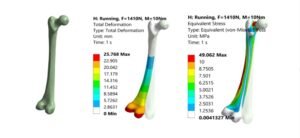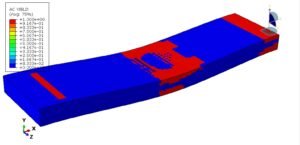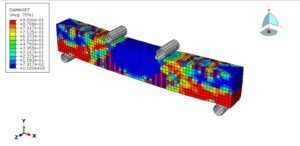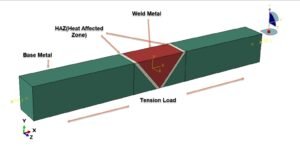
In the fast-paced world of engineering, efficiency, accuracy, and consistency are not just buzzwords – they are critical pillars of success. Whether you’re designing a complex aerospace component, performing finite element analysis (FEA) on a civil structure, or simulating fluid dynamics (CFD) for an oil & gas pipeline, the need to streamline your processes is paramount. This is where engineering templates come into play, transforming repetitive tasks into repeatable, high-quality outcomes.
An engineering template is more than just a pre-formatted document; it’s a meticulously crafted framework that embodies best practices, standardized procedures, and predefined settings. From CAD models to simulation setups and project documentation, templates drastically reduce setup time, minimize errors, and ensure uniformity across projects and teams.

Image by Cjp24, CC BY-SA 3.0
The Power of Engineering Templates: Why Bother?
Templates are foundational to modern engineering workflows, offering significant advantages that impact project timelines, cost, and quality. Think of them as the blueprints for your engineering processes, ensuring every step is executed with precision.
Boosting Efficiency & Productivity
- Reduced Setup Time: Instead of starting from scratch, engineers can leverage pre-configured models, analysis decks, or report structures, cutting hours or even days from project initiation.
- Faster Iteration: With a consistent base, design modifications and analysis iterations become quicker and more manageable.
- Streamlined Workflows: Templates standardize the order of operations, making it easier for new team members to get up to speed and for experienced engineers to maintain a consistent pace.
Ensuring Consistency & Quality
- Standardized Outputs: From engineering drawings in CATIA to FEA results in Abaqus or ANSYS Mechanical, templates ensure a uniform look and feel, making results easier to compare and understand.
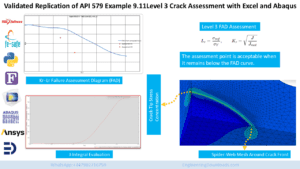
- Best Practice Enforcement: Critical parameters, boundary conditions, and solver settings can be pre-defined based on industry standards (e.g., FFS Level 3 for structural integrity assessments), embedding expertise directly into the template.
- Error Reduction: By pre-filling common data and validating inputs, templates significantly reduce human error, especially in complex calculations or simulation setups.
Facilitating Collaboration & Knowledge Transfer
- Improved Collaboration: Teams working on different parts of a project can use the same templates, ensuring compatibility and seamless integration of components (e.g., in complex CAD-CAE workflows).
- Easier Onboarding: New hires can quickly grasp project methodologies by following established template structures.
- Knowledge Preservation: Templates capture and formalize institutional knowledge, preventing loss when experienced engineers move on.
Types of Engineering Templates
Engineering templates come in various forms, each tailored to specific phases and disciplines within the engineering lifecycle. Understanding the different types helps you choose and develop the right ones for your needs.
CAD & Design Templates
- Part & Assembly Templates: Pre-configured files in software like CATIA, SolidWorks, or Inventor with standard layers, materials, dimensions, and custom properties. Useful for consistent component design and BOM generation.
- Drawing Templates: Standardized drawing sheets with company logos, title blocks, revision tables, and pre-set views, ensuring consistent documentation.
- Jigs & Fixtures: Reusable CAD models of standard manufacturing aids that can be quickly adapted for new products.
Simulation & Analysis Templates
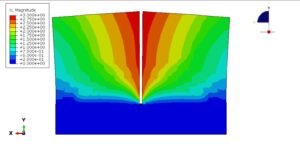
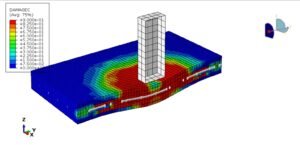
- FEA Model Templates: Pre-meshed geometries, material definitions, boundary conditions, and load cases for common structural components (e.g., bolted joints, pressure vessels, composite laminates). Tools like Abaqus, ANSYS Mechanical, or MSC Nastran heavily benefit from these.
- CFD Simulation Templates: Pre-defined computational domains, mesh settings, fluid properties, turbulence models, and solver controls for typical flow scenarios (e.g., pipe flow, external aerodynamics, heat exchangers) in software like ANSYS Fluent/CFX or OpenFOAM.
- Multibody Dynamics Templates: Pre-assembled mechanisms with defined joints, constraints, and forces in software like ADAMS, useful for vehicle dynamics or robotics.
Documentation & Project Management Templates
- Design Review Checklists: Standardized lists of items to review at various design stages.
- Test Procedure Templates: Outlines for conducting experiments, data collection, and reporting.
- Project Plan Templates: Pre-structured Gantt charts or task lists for managing engineering projects.
- Report Templates: Standard formats for technical reports, analysis summaries, and validation documents, ensuring all necessary information is included.
Automation & Scripting Templates
- Python Scripts: Reusable Python scripts for automating pre-processing (geometry cleanup, mesh generation), post-processing (data extraction, plot generation), or connecting different software packages (e.g., linking CAD to FEA).
- MATLAB Functions & Scripts: Templates for data analysis, algorithm development, control system design, and plotting, promoting consistency in scientific computing. These are invaluable in fields like biomechanics for processing sensor data or developing custom gait analysis algorithms.
- Macro Templates: Automated sequences for repetitive tasks within specific software environments (e.g., Abaqus Python scripting, ANSYS APDL macros).
Designing Effective Engineering Templates: A Practical Guide
Creating a good template isn’t just about saving a file; it’s about thoughtful design that anticipates user needs and enforces best practices. Here’s a step-by-step approach:
- Define the Scope and Purpose:
- What specific task or process will this template streamline?
- Who are the primary users? What are their skill levels?
- What are the critical inputs and desired outputs?
- Identify Key Variables & Parameters:
- Which elements will change from project to project (e.g., material properties, dimensions, load magnitudes)? These should be easily adjustable.
- Which elements should remain fixed for consistency (e.g., meshing standards, report headers)?
- Establish Best Practices & Standards:
- Incorporate relevant industry standards (e.g., ASME, API, ISO) or internal company guidelines.
- For simulations, pre-define mesh element types, aspect ratio checks, contact algorithms, and convergence criteria.
- For CAD, standardize layers, naming conventions, and feature trees.
- Build the Core Template:
- Start with a clean, validated base. For CAD, a simple generic part. For FEA, a basic model with a few elements.
- Add necessary placeholders, default values, and example geometry.
- Use clear, self-explanatory naming conventions for layers, features, and parameters.
- Add Instructions & Documentation:
- Embed comments, tooltips, or a dedicated instruction section within the template itself.
- Create a separate user guide explaining how to use, customize, and troubleshoot the template.
- Test Thoroughly:
- Have multiple users test the template with various scenarios.
- Collect feedback and iterate on improvements.
- Version Control & Maintenance:
- Implement a version control system (e.g., Git for scripts) to track changes.
- Regularly review and update templates as software evolves or best practices change.
Implementing Templates in Your Workflow
Integrating templates effectively requires more than just creating them; it involves adopting them consistently across your team or organization.
Setting Up a Template Repository
Establish a centralized, accessible location for all approved templates. This could be a shared network drive, a cloud storage service, or a dedicated SharePoint site. Ensure proper access controls and clear folder structures.
Training & Adoption
Provide training to engineers on how to use the templates correctly. Explain the ‘why’ behind the templates – the benefits of consistency and efficiency – to encourage adoption. Start with a pilot project to iron out any kinks.
Template Maintenance & Updates
Assign ownership for each template to a subject matter expert. This individual is responsible for reviewing the template periodically, incorporating feedback, and updating it to reflect changes in software versions, standards, or internal processes.
Practical Workflow: Template-Driven Analysis (FEA Example)
Let’s walk through a simplified structural analysis workflow using an FEA template for a common component, such as a bracket, in Abaqus or ANSYS Mechanical.
- Template Selection: Choose the appropriate ‘Structural Bracket Analysis’ template from your repository. This template might include: geometry placeholders, material library, default meshing parameters, standard bolt pretension definitions, and common load cases.
- Geometry Import & Adaptation: Import your specific bracket CAD model (e.g., from CATIA). The template might have pre-defined boolean operations or connections that automatically adapt to the new geometry.
- Material Assignment: Select the correct material from the pre-defined material library within the template.
- Boundary Conditions & Loads: Adjust the magnitudes and locations of loads and boundary conditions to match your specific design requirements. The template ensures you don’t forget critical supports or pressure applications.
- Mesh Generation: The template’s meshing parameters provide a good starting point (e.g., element type, seed sizing, local refinements near critical areas like holes). You might perform local adjustments for specific features.
- Solver Setup & Execution: The template typically has pre-configured solver settings (e.g., linear static, non-linear explicit, contact algorithms) and output requests. You simply hit ‘run’.
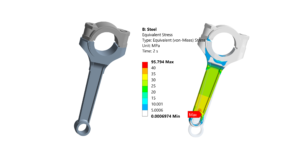
- Post-Processing & Reporting: The template can include predefined result plots (e.g., stress contours, displacement plots) and a report structure, ensuring all critical results are captured consistently.
Verification & Sanity Checks for Template Use
Even with well-designed templates, critical thinking and verification are essential. Templates provide a strong foundation, but they don’t replace engineering judgment.
Pre-Analysis Checks
- Geometry Integrity: Ensure the imported CAD geometry is clean and free of gaps or overlaps that could cause meshing issues.
- Material Properties: Double-check that the correct material properties are assigned for the current analysis.
- Boundary Conditions & Loads: Visually inspect the applied boundary conditions and loads to ensure they are physically realistic and correctly located. Are forces acting in the right direction? Are supports truly fixed as intended?
- Mesh Quality: Review mesh metrics (e.g., aspect ratio, skewness, Jacobian) in critical areas. A template provides defaults, but specific geometries may require local refinement.
Post-Analysis Sanity Checks
- Deformation Plots: Does the deformation pattern make physical sense given the applied loads and constraints? Is the magnitude of deformation realistic (e.g., a few millimeters, not meters)?
- Stress Concentrations: Are stress concentrations appearing in expected areas (e.g., corners, holes)? Are they plausible?
- Reaction Forces: Sum the reaction forces and compare them to the applied loads. They should balance.
- Convergence: For iterative solvers (common in non-linear FEA or CFD with OpenFOAM), check convergence plots. Did the solution converge smoothly?
- Sensitivity Studies: Perform small parameter variations (e.g., slightly adjust a load or a material property) to ensure the model responds as expected.
- Hand Calculations/Benchmarking: For simplified cases, compare critical results to simple hand calculations or analytical solutions. This provides a crucial reality check.
Common Mistakes and How to Avoid Them
Templates are powerful, but misusing them can lead to incorrect results or missed opportunities.
| Mistake | Description | How to Avoid |
|---|---|---|
| Blind Trust | Assuming the template is always correct without verification or understanding its underlying assumptions. | Always perform sanity checks; understand the template’s limitations and intended use. |
| Over-Generalization | Trying to use a template designed for one specific problem (e.g., linear static) for a completely different one (e.g., non-linear dynamic). | Clearly define the scope and assumptions of each template. Train users on template selection. |
| Lack of Documentation | Templates without clear instructions on how to use them, their assumptions, or their limitations. | Embed instructions within the template; create comprehensive user guides. |
| Ignoring Updates | Using outdated templates that don’t reflect current software versions, standards, or best practices. | Implement a robust version control system and a template review/update schedule. |
| Over-Complication | Creating templates that are too complex, trying to cover too many scenarios, making them difficult to use. | Keep templates focused on specific, common tasks. Break down complex problems into multiple simpler templates. |
Troubleshooting Template Issues
Even the best templates can sometimes present challenges. Here’s a practical approach to troubleshooting:
- Read the Documentation: Start by thoroughly reviewing the template’s embedded instructions or user guide. Many issues stem from not understanding specific parameters or workflow steps.
- Check Inputs: Verify all user-defined inputs. Are material properties correct? Are load values reasonable? Is geometry correctly imported and positioned?
- Isolate the Problem: If an analysis fails, try to narrow down the issue. Can you run a simpler version of the template? Does the mesh generate correctly on its own? Is the solver crashing, or is it a pre-processing error?
- Consult the Template Owner: If a specific template is causing consistent issues, reach out to the individual or team responsible for its maintenance. They might be aware of known bugs or specific workarounds.
- Review Software Logs: For simulation software like Abaqus, ANSYS, or OpenFOAM, review the error messages in the output or log files. These often contain crucial clues about the root cause of failure.
- Perform a Manual Setup: If all else fails, try to perform the analysis manually, step by step, without the template. This can help identify where the template deviates or introduces errors.
Further Optimizing with Automation (Python & MATLAB)
While templates standardize processes, integrating scripting languages like Python and MATLAB can take your efficiency to the next level, especially in complex CAD-CAE workflows.
Python for Workflow Automation
Python is incredibly versatile for engineering automation:
- CAD Scripting: Automate repetitive CAD tasks (e.g., creating hundreds of holes, generating different configurations) in tools like CATIA or SolidWorks via their APIs.
- FEA Pre/Post-processing: Write Python scripts to automatically clean up imported geometry, apply complex boundary conditions, define contacts, or extract specific results from Abaqus (via Abaqus Scripting Interface) or ANSYS.
- Data Transfer: Develop scripts to seamlessly transfer data between different software packages, reducing manual data entry errors and speeding up CAE integration.
- Report Generation: Automate the creation of custom reports, populating templates with analysis results, plots, and metadata.
MATLAB for Analysis & Control
MATLAB excels in numerical analysis, signal processing, and control system design:
- Parametric Studies: Use MATLAB to drive parametric studies, varying design variables and automatically running simulations (e.g., in a co-simulation environment with ADAMS or FEA solvers) to optimize designs.
- Data Analysis & Visualization: Process large datasets from experiments or simulations, apply advanced algorithms, and generate publication-quality plots.
- Algorithm Development: Develop and test custom algorithms for structural integrity assessments (like FFS Level 3 calculations), biomechanics simulations, or predictive maintenance.
By combining well-designed templates with intelligent automation scripts, engineers can achieve unparalleled levels of efficiency and reliability in their projects.
The EngineeringDownloads.com Advantage
At EngineeringDownloads.com, we understand the challenges and opportunities that engineering templates present. We offer a growing library of expertly crafted templates, scripts (Python & MATLAB), and project files across various disciplines – from FEA and CFD to CAD-CAE workflows and structural analysis. Our resources are designed by engineers, for engineers, to help you accelerate your projects, ensure consistency, and embed best practices directly into your work.
Explore our downloadable templates, scripts, and project files to elevate your engineering capabilities today. We also offer online consultancy and tutoring for specific software and analysis types.
Further Reading
For more detailed information on specific engineering data practices, you may refer to official standards organizations: