Need a full custom project? See the options below.
Need a full custom project? See the options below.
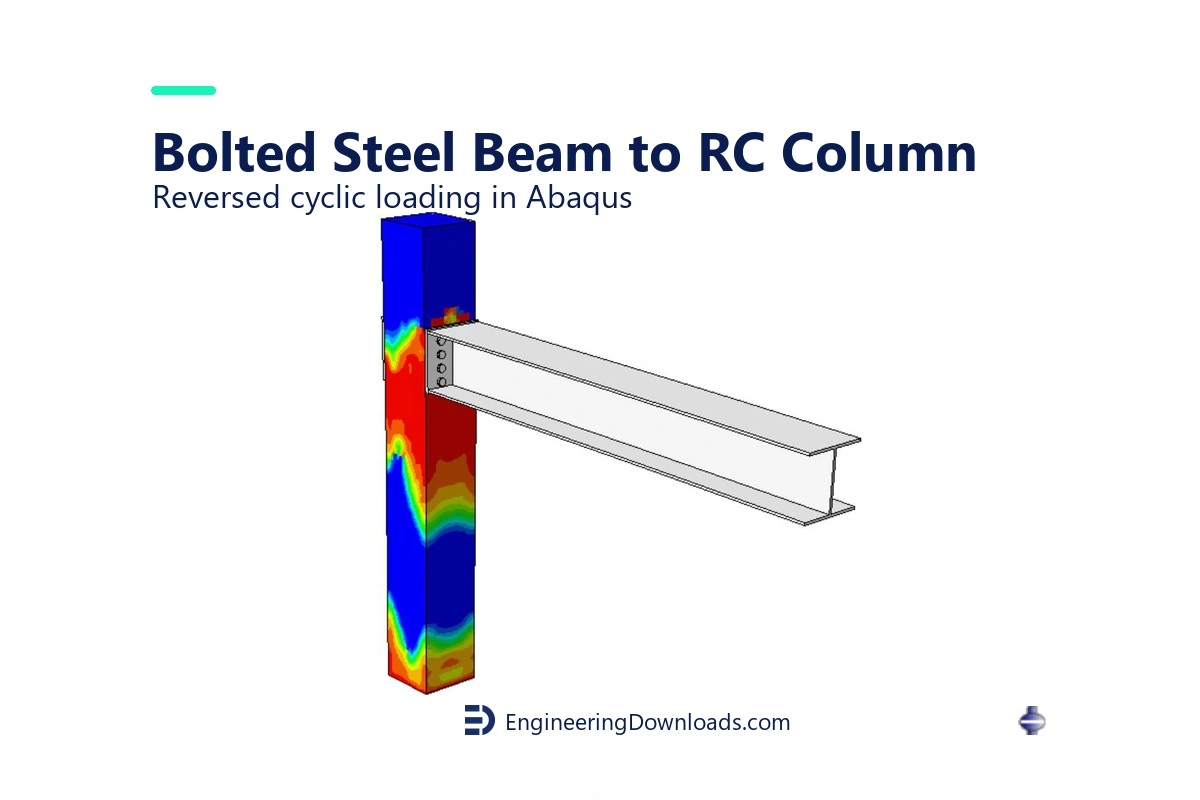
Study how axial compression and repeated load reversals affect a bolted steel beam-to-reinforced concrete column connection in Abaqus. This worked example gives structural engineers and Abaqus users an editable 3D model, a solver input deck, an original Abaqus result image, and a PDF walkthrough. Use it to trace load transfer through the plate and bolts, inspect concrete tensile damage, and extract the beam-end force–displacement response.
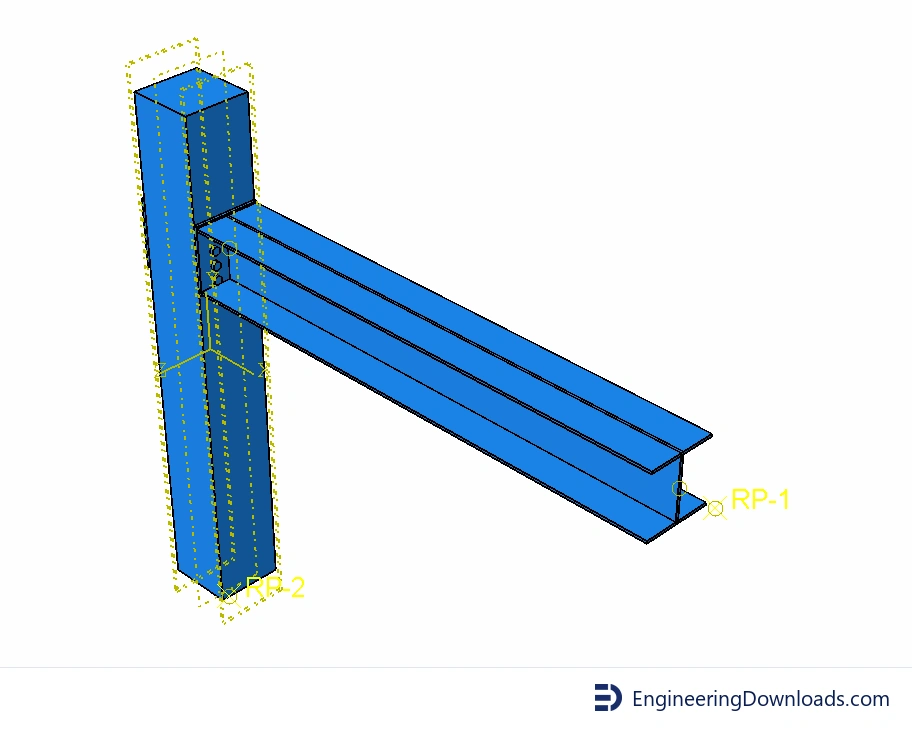
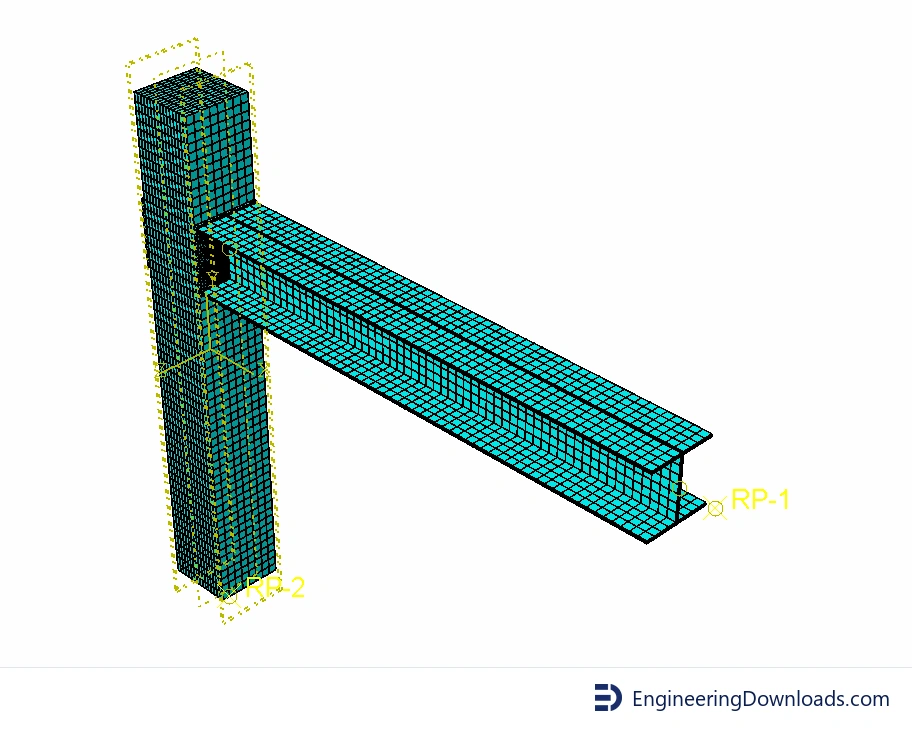
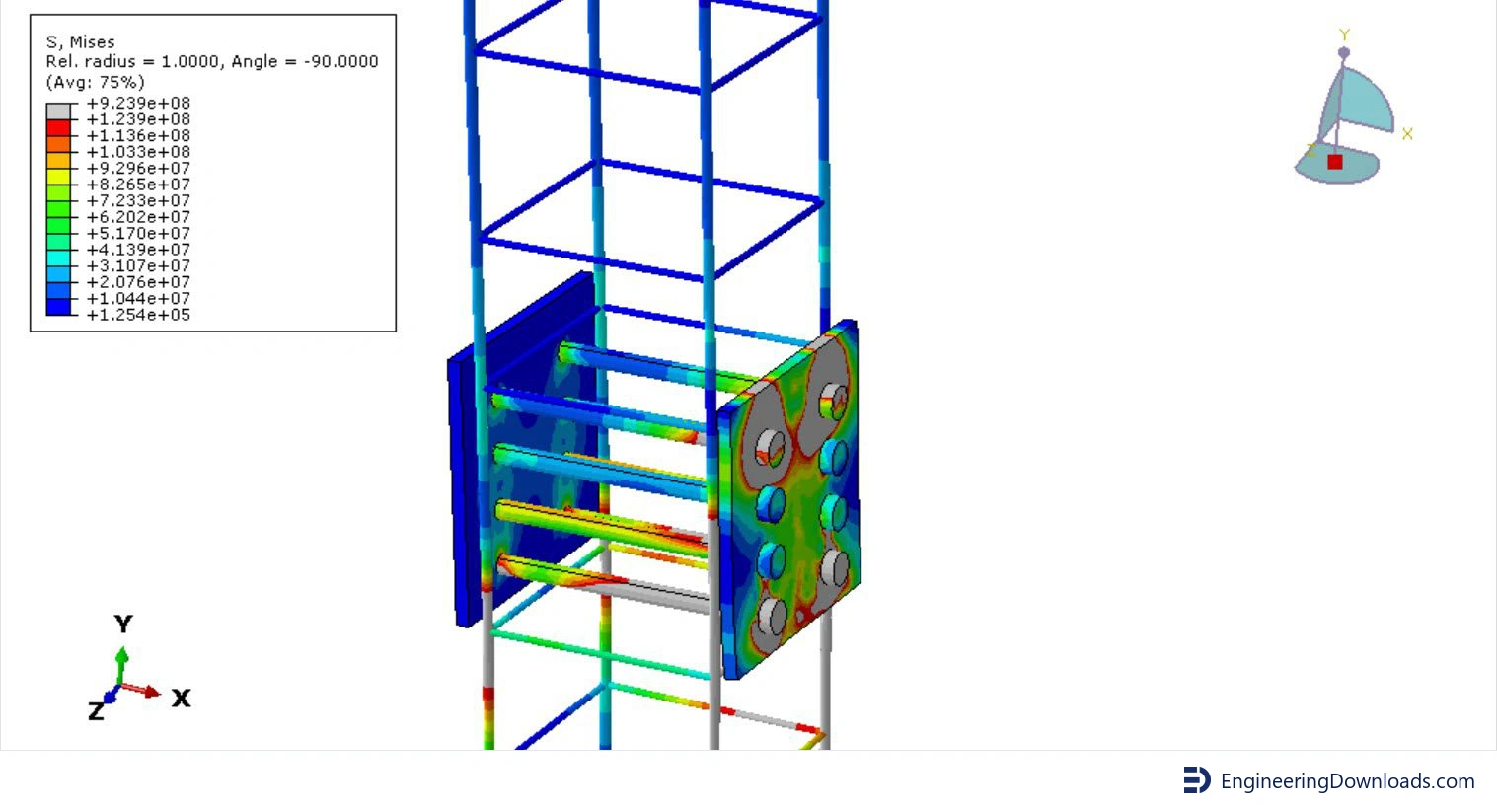
The assembly includes a steel I-beam, a reinforced concrete column, connection plates, bolts, longitudinal bars, and stirrups. The mesh uses C3D8R solid elements and B31 reinforcement elements. An embedded-region constraint couples the bars and stirrups to the concrete. A surface-to-surface tie connects the beam to the plate. General contact uses hard normal behavior and a friction coefficient of 0.10.
The column uses concrete damaged plasticity (CDP) with separate compression hardening, tension stiffening and tensile and compressive damage tables. In uniaxial form, the stress is σ = (1 − d)E0(ε − εpl), where d is the dimensionless damage variable, E0 is the undamaged modulus, and the strains are dimensionless. The model uses combined hardening for cyclic steel response and elastic–plastic definitions for the bolts and reinforcement.
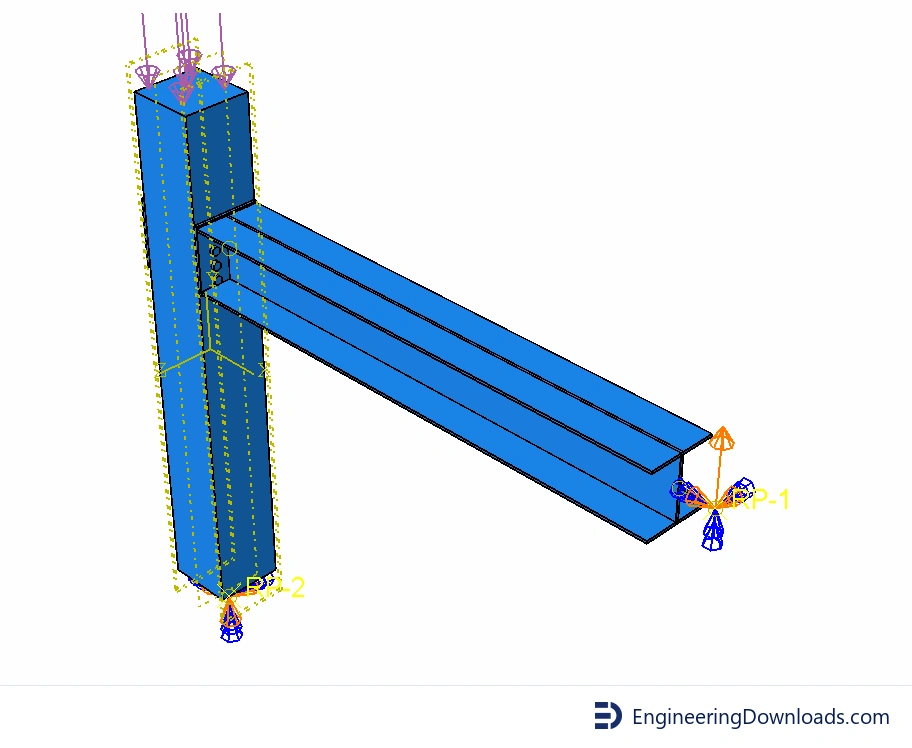
The column base is fixed through a coupled reference point. In the nonlinear static step, the model applies 2.5 MPa pressure to the column loading surface and imposes reversed vertical displacement at the beam reference point. Its prescribed displacement is U2(t) = 4 mm × A(t), where A(t) is the signed, dimensionless Amp-1 ordinate. The input deck requests U2 and reaction force RF2 at the beam reference point so users can plot the cyclic reaction–displacement response after running the case.
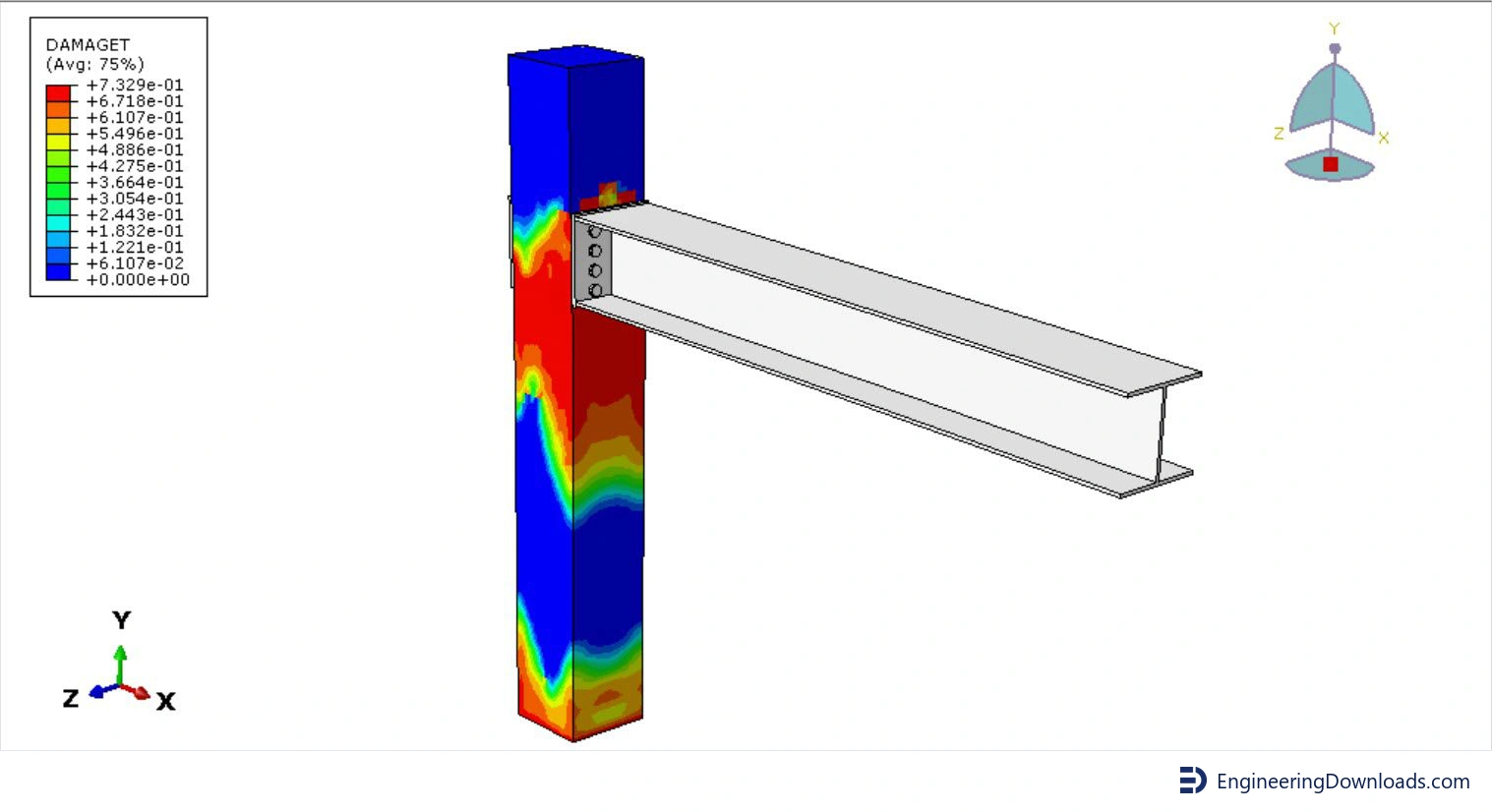
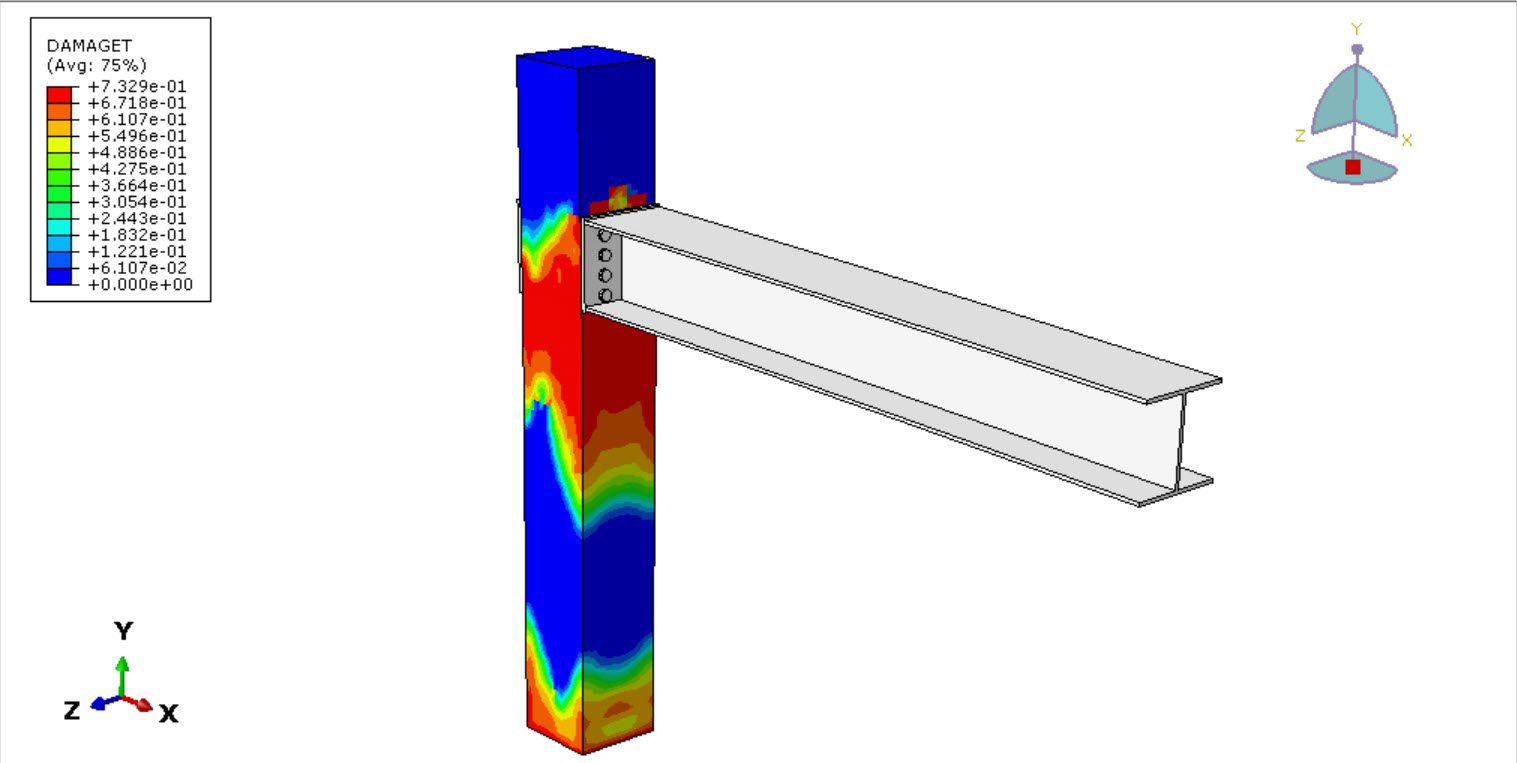
The full-joint contour shows where the model predicts tensile stiffness degradation. At the displayed output frame, the higher DAMAGET values are concentrated around the connection and near the column base. DAMAGET is a dimensionless constitutive output, so the contour indicates damage localization in the model.
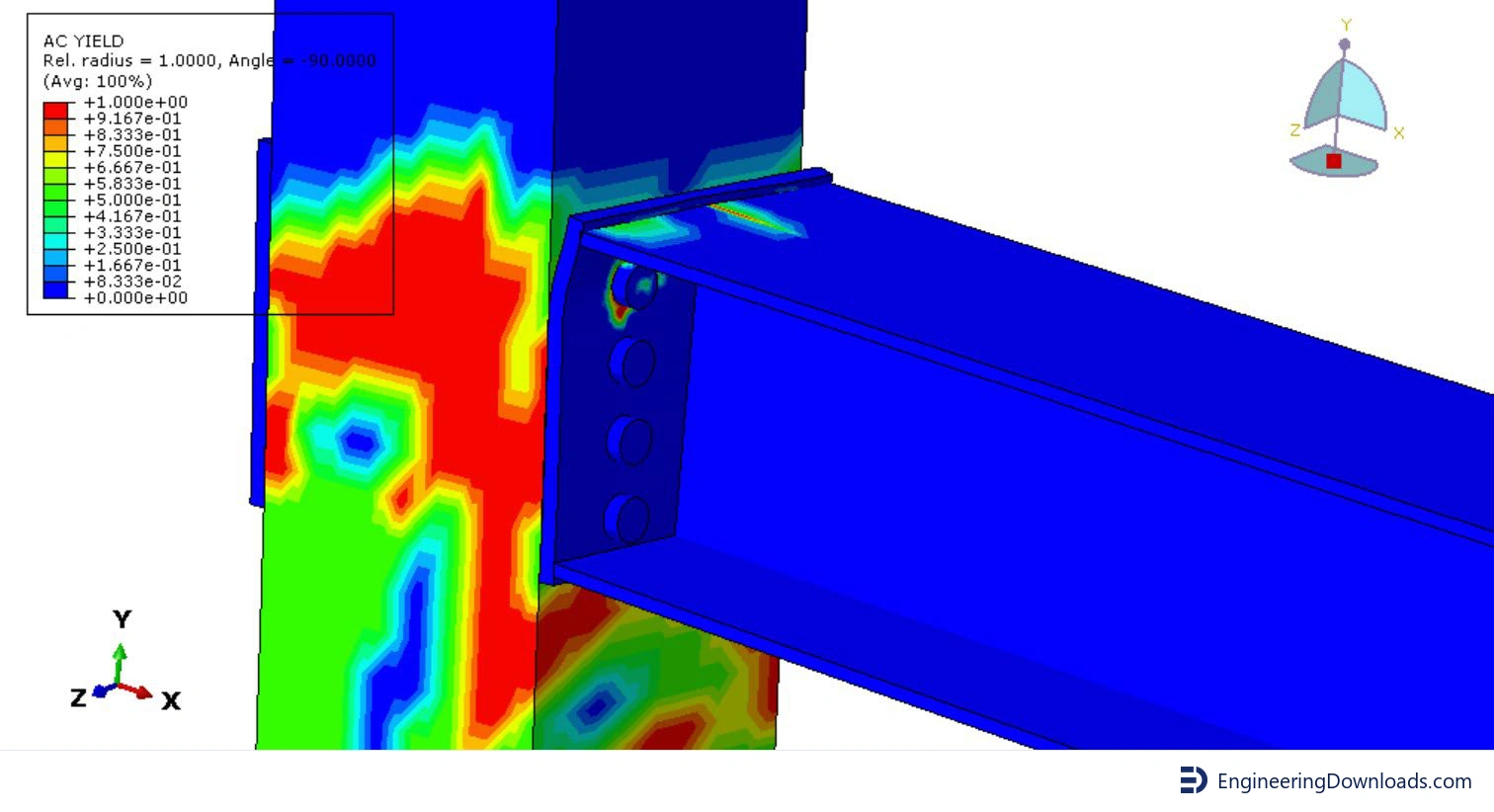
Viewing the connection with the concrete hidden exposes the bolts, plate and reinforcement. The von Mises contour shows how stress is distributed within those visible components. The yield-activity view gives a closer look at the joint zone beside the steel beam.
Seismic performance of precast concrete beam-column joint based on the bolt connection
Ding, Ye and Ma tested full-scale precast concrete joints assembled with two bolt strength grades. They used Abaqus simulations to examine how bolt strength and column axial compression ratio influence the cyclic response after checking their numerical model against the tests. Their precast concrete beam provides context for cyclic testing of bolted joints. This worked example uses a steel I-beam and presents its own Abaqus results.
Ding, K., Ye, Y., & Ma, W. (2021). Engineering Structures, 232, 111884. Read the paper via DOI.
For another Abaqus connection example, see the bolted steel beam–column connection under fire.
Yes. Open the CAE model in Abaqus/CAE to inspect or change the setup. The included input deck can also be submitted directly as an Abaqus input-file job.
Pair the beam-end U2 displacement and RF2 reaction histories at the Load reference point after running the deck. The PDF tutorial explains where to find those outputs.
Need more than the files?
There are two ways we can help. Book a one hour online consultation if you want to talk a problem through with a CAE engineer, using the checkbox in the order box. Order a project if you need a full simulation built for you, delivered to an agreed scope, price and deadline under a written contract.
We work on FEA and CFD for engineers, researchers and companies. Order your project, or message us on WhatsApp for a quick reply.
Other packages engineers working on this topic also download.
 Modeling the Fatigue Response of Reinforced Concrete Columns Using the Direct Cyclic Procedure
 Cyclic loading analysis of a welded steel plate in the middle
 Steel and Concrete Columns Simulation Package in Abaqus (25 Models)
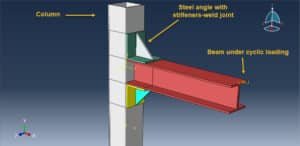 Cyclic loading analysis of a steel beam-column joint with a welded steel angle
 Seismic Response of a Steel Building in Abaqus: Nonlinear Dynamic Analysis with Beam Elements
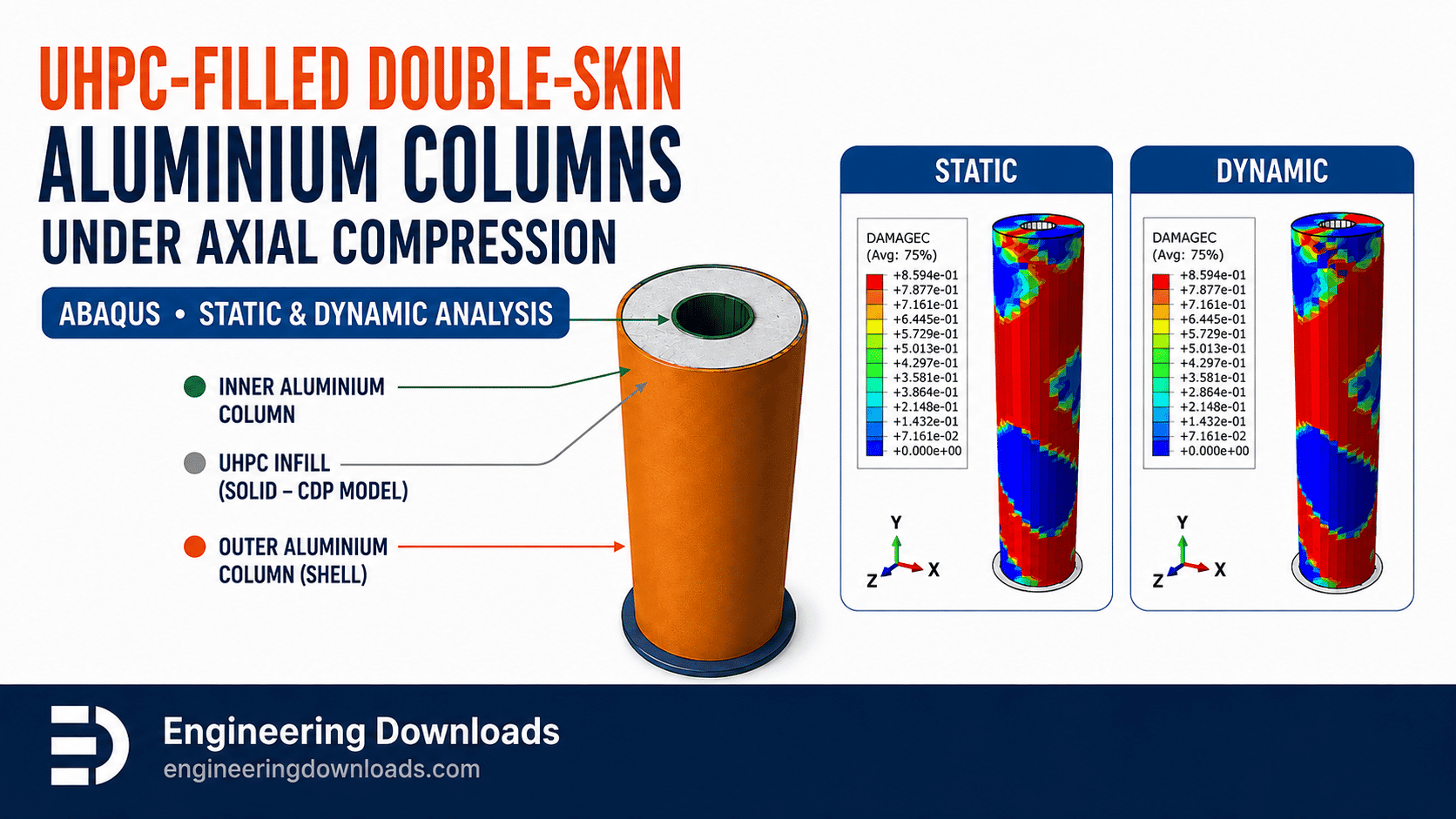 Numerical Investigation of the Structural Behaviour of UHPC-Filled Double-Skin Aluminium Columns under Axial Compression
 Fire Analysis of Timber–Steel Bolted Connections in Abaqus | Sequential Thermal–Structural Simulation
 Fire Analysis of a CFRP-Strengthened Reinforced Concrete Beam Using Abaqus

Need a full custom project? See the options below.
€119,00
See more
Want to receive push notifications for all major on-site activities?