In the dynamic world of engineering, efficiency and accuracy are paramount. As analysis models grow in complexity and design iterations accelerate, manual processes become bottlenecks. This is where engineering scripting steps in, transforming repetitive tasks into streamlined, automated workflows. From complex FEA pre-processing to insightful CFD post-processing and robust CAD model generation, scripting empowers engineers to achieve more with less effort, allowing focus on critical problem-solving rather than rote operations.

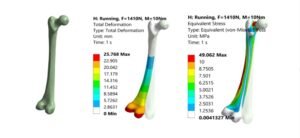
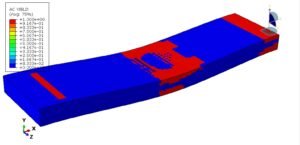
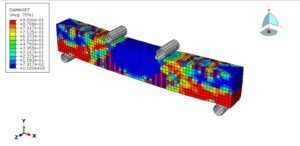
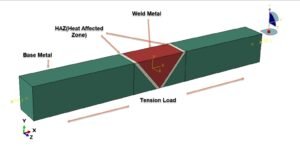
Image: Python’s role in global engineering automation, illustrating its widespread impact.
Why Scripting? The Engineer’s Unfair Advantage
Think of scripting as your digital assistant, ready to execute complex instructions flawlessly, every time. For engineers, its benefits are profound:
- Automation of Repetitive Tasks: Generating hundreds of similar CAD parts, applying identical boundary conditions to multiple load cases, or extracting specific data points from dozens of simulation results – these are prime candidates for scripting. It frees up valuable engineering hours.
- Customization & Extended Capabilities: Commercial software packages are powerful, but no single tool can anticipate every niche requirement. Scripting allows you to create custom tools, automate sequences not built into the GUI, or integrate different software platforms.
- Parametric Studies & Design Optimization: Need to run a simulation with 50 variations of a bolt diameter or a fluid inlet velocity? Manually changing parameters, re-running, and extracting results is tedious and error-prone. Scripts can handle this loop seamlessly, paving the way for advanced optimization algorithms.
- Data Processing & Reporting: Large simulation files often contain far more data than can be manually sifted through. Scripts can parse vast datasets, extract key metrics, perform statistical analysis, and even generate custom, publication-ready reports automatically.
- Improved Consistency & Reduced Errors: Once a script is debugged, it performs the task identically every time, eliminating human error inherent in manual, repetitive operations.
Key Scripting Languages & Tools for Engineers
The choice of scripting language often depends on the task, existing software ecosystems, and personal preference. Here are the front-runners:
Python: The Versatile Workhorse
Python has become the lingua franca of engineering scripting due to its readability, vast library ecosystem, and excellent integration capabilities.
- Numerical & Scientific Computing: Libraries like NumPy (for array operations), SciPy (for scientific computing), and Pandas (for data manipulation) make it ideal for data analysis, post-processing, and even custom solver development.
- Visualization: Matplotlib and Plotly enable powerful, customized plotting of simulation results.
- FEA/CFD Integration: Many commercial FEA/CFD packages (Abaqus, ANSYS, MSC Nastran) offer Python APIs for pre-processing, post-processing, and job submission. Open-source tools like OpenFOAM also leverage Python for utilities and data handling.
- CAD Integration: Libraries like FreeCAD’s Python API, or even connecting to commercial CAD software through COM interfaces, allow for parametric geometry generation.
MATLAB: The Numerical Powerhouse
MATLAB is a proprietary language and environment well-suited for numerical computation, algorithm development, and data visualization, particularly strong in control systems, signal processing, and matrix operations.
- Strong Ecosystem: Its extensive toolboxes (e.g., Optimization Toolbox, Partial Differential Equation Toolbox) provide ready-to-use functions for complex engineering problems.
- Simulation Integration: Excellent for coupling with Simulink for dynamic systems, and often used for pre/post-processing data from other solvers.
- Interactive Environment: Its integrated development environment (IDE) is highly user-friendly for numerical tasks and plotting.
Domain-Specific APIs & Macros
Beyond general-purpose languages, many engineering software packages offer their own scripting interfaces:
- Abaqus Scripting (Python API): Directly control model creation, meshing, load application, job submission, and results extraction within Abaqus using Python. Essential for complex parametric studies.
- ANSYS APDL & ACT:
- APDL (ANSYS Parametric Design Language): A command-line language for direct control over ANSYS Mechanical. Ideal for highly customized pre-processing, solution control, and result evaluation.
- ACT (ANSYS Customization Toolkit): Extends ANSYS Workbench capabilities with Python or XML, allowing creation of custom features, wizards, and connections to external tools.
- Fluent/CFX Journal Files & UDFs: Fluent uses journal files (TUI commands) for scripting repetitive tasks, while User Defined Functions (UDFs) written in C allow for advanced customization of physics. CFX offers a similar command language.
- OpenFOAM: While not a single scripting language, OpenFOAM relies heavily on text-based input files and shell scripts (often combined with Python) for setting up cases, running simulations, and post-processing results.
- CAD Macros (VBA/API): Tools like CATIA (CAA), SOLIDWORKS (VBA/C# API), and Inventor (VBA/Python) allow for geometry automation, feature creation, and drawing generation.
- MSC Patran/Nastran: Patran offers PCL (Patran Command Language) for automating pre- and post-processing tasks, integrating seamlessly with Nastran analyses.
- ADAMS: Commands and scripting are used for defining complex multibody dynamics simulations, parametric variations, and result extraction.
Getting Started: Your First Scripting Steps
Diving into scripting doesn’t have to be daunting. Here’s a pragmatic approach:
1. Define the Problem & Identify Bottlenecks
Start small. What’s the most repetitive, error-prone task you do weekly? Examples:
- Applying 20 different load cases to the same FEA model.
- Extracting max stress from 100 simulation runs.
- Generating a series of CAD parts with varying hole patterns.
2. Choose Your Weapon (Language/Tool)
Based on your chosen bottleneck:
- If it’s within Abaqus, the Python API is your best bet.
- If it’s general data processing, Python or MATLAB are strong contenders.
- If it’s a specific ANSYS Mechanical task, APDL or ACT might be more direct.
3. Set Up Your Environment
- Python: Download Python (Anaconda distribution is excellent for engineers as it includes many scientific libraries) and an IDE like VS Code or PyCharm.
- MATLAB: Install MATLAB.
- Software APIs: Ensure your engineering software is correctly installed and that the scripting environment (e.g., Abaqus/CAE’s built-in Python editor, ANSYS ACT Developer environment) is accessible.
4. Learn the Basics (or Refresh)
Focus on foundational concepts:
- Variables: Storing data (e.g.,
component_thickness = 10.0). - Data Structures: Lists, arrays, dictionaries (e.g.,
materials = ['steel', 'aluminum']). - Control Flow: If/else statements (for decision-making), for/while loops (for repetition).
- Functions: Organizing reusable blocks of code.
- Input/Output: Reading from/writing to files.
5. Record & Review (if applicable)
Many software packages offer a ‘record macro’ feature (e.g., Abaqus journal file, CATIA macro recorder). Perform your manual task once while recording. Then, open the generated script. This is an invaluable learning tool, showing you the exact API calls for specific GUI actions.
Practical Workflows: Automating Engineering Tasks
FEA Pre-processing Automation (e.g., Abaqus, ANSYS, Patran)
Scenario: You need to perform a fatigue analysis on a component where a specific feature (e.g., a weld bead or a fillet radius) has several design variations.
- Geometry Parameterization: Use Python (with a CAD library or Abaqus/ANSYS API) to define key geometry parameters (e.g.,
fillet_radius = [2.0, 2.5, 3.0, 3.5]). - Automated Model Generation: Loop through these parameters. For each iteration, the script:
- Modifies the geometry (e.g., updates a fillet radius).
- Regenerates the mesh (ensuring mesh quality control around critical features).
- Applies boundary conditions and loads (e.g., a fixed support and a cyclic load, potentially varying load magnitude based on another parameter).
- Submits the job to the solver.
- Result Extraction: After each simulation completes, the script automatically extracts relevant results (e.g., maximum principal stress, fatigue life at specific locations).
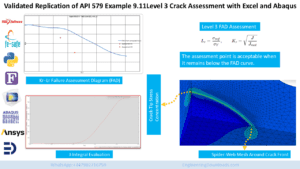
This approach is critical for FFS Level 3 assessments in Oil & Gas, where many scenarios (corrosion depth, crack length, pressure variations) need to be evaluated efficiently.
CFD Post-processing Automation (e.g., Fluent, OpenFOAM)
Scenario: You’ve run 20 CFD simulations of an aerospace wing profile at different angles of attack and need to compare lift/drag coefficients and visualize flow patterns consistently.
- Batch Processing: Use a Python script to iterate through all CFD result directories/files.
- Data Extraction: For each simulation:
- Read the lift and drag coefficients from the solver output file.
- Extract velocity and pressure fields on specific planes or surfaces.
- Calculate derived quantities (e.g., wall shear stress).
- Automated Plotting: Generate standardized plots (e.g., coefficient of pressure distribution, streamlines, velocity contours) using Matplotlib, ensuring consistent legends and scales across all cases.
- Report Generation: Compile all extracted data and plots into a single report (e.g., a PDF) for easy comparison and presentation.
Parametric Studies & Optimization
This is where scripting truly shines for design engineers working on Biomechanics or Structural Integrity projects.
Consider optimizing a biomedical implant’s shape for stress distribution:
- Define Design Variables: Identify geometric parameters (e.g., implant length, curvature, porous coating thickness).
- Scripted Simulation Loop: Write a script (Python or MATLAB) to:
- Generate or modify the CAD model based on a set of design variables.
- Export to FEA software (e.g., Abaqus, ANSYS).
- Run the FEA simulation.
- Extract objective function values (e.g., maximum von Mises stress, strain energy) and constraint violations (e.g., displacement limits).
- Optimization Algorithm Integration: Integrate the script with an optimization algorithm (e.g., gradient-based, genetic algorithms, or surrogate models) to intelligently explore the design space and find optimal or near-optimal solutions.
Data Analysis & Reporting
Large-scale projects, such as FFS Level 3 assessments involving numerous scenarios and complex material models, generate massive amounts of data.
- Consolidate Data: Use Python’s Pandas to read and combine data from various sources (CSV, Excel, simulation output files).
- Perform Analysis: Apply statistical methods, filter data, identify trends, and perform custom calculations.
- Generate Dynamic Reports: Create scripts that generate HTML or PDF reports, complete with embedded plots, tables, and conditional formatting to highlight critical findings (e.g., areas exceeding safety limits).
Pro Tip: Many engineers find it helpful to start with downloadable script templates or example projects. EngineeringDownloads.com offers various pre-built Python and MATLAB scripts for common FEA/CFD tasks, which can serve as an excellent starting point for your own automation journey.
Scripting Best Practices & Tips
1. Start Small, Iterate Often
Don’t try to automate your entire workflow at once. Break it down into small, manageable chunks. Get one part working, then expand.
2. Modular Design: Functions & Classes
Organize your code into reusable functions and classes. This improves readability, makes debugging easier, and promotes code reuse. For example, a function create_bolt(diameter, length) is far better than repeating geometry commands.
3. Error Handling
Anticipate potential issues. Use try-except blocks in Python (or similar constructs in MATLAB) to gracefully handle errors, rather than letting your script crash. For example, what if a required input file is missing?
4. Commenting & Documentation
Your future self (and colleagues) will thank you. Explain what your code does, why it does it, and how it works. Clear comments are crucial for maintaining and updating scripts.
5. Version Control (Git)
Treat your scripts like any other engineering asset. Use version control systems like Git to track changes, collaborate, and revert to previous versions if something goes wrong.
6. Keep it General
Design scripts to be as generic as possible. Instead of hardcoding values, use variables or read inputs from configuration files. This makes them reusable for different projects.
Verification & Sanity Checks in Scripted Workflows
Automating a workflow doesn’t exempt it from scrutiny. In fact, it makes verification even more critical:
- Input Validation: Before running a script, check that all input parameters are within reasonable engineering bounds. For instance, a script for a structural beam should check that cross-sectional dimensions are positive.
- Intermediate Result Checks: If your script performs multiple steps (e.g., geometry creation, meshing, load application), check intermediate outputs. Does the mesh look correct? Are loads applied to the right surfaces? Plot the mesh or BCs to visually verify.
- Comparison with Manual Runs: For a new script or a critical workflow, run a small, representative case manually and compare the results with the script’s output. Ensure consistency.
- Convergence Checks: For iterative solvers (FEA, CFD), ensure your scripts are extracting and checking for solution convergence (e.g., residual plots, energy norms). Automated post-processing should flag non-converged solutions.
- Sensitivity Analysis: If your script is part of a parametric study, consider running small sensitivity checks. Vary a single input parameter by a tiny amount; the output should change proportionally and predictably.
- Logging: Implement robust logging in your scripts to record execution steps, warnings, and errors. This helps tremendously with debugging and auditing automated runs.
| Feature/Scenario | Python’s Strength | MATLAB’s Strength | Domain-Specific API Strength |
|---|---|---|---|
| General-Purpose Automation | Excellent (OS interaction, web, data, ML) | Good (numerical tasks) | Limited (only within specific software) |
| Numerical Computation | Very Good (NumPy, SciPy) | Excellent (matrix operations, toolboxes) | N/A (relies on host software’s solver) |
| Data Visualization | Excellent (Matplotlib, Plotly, Seaborn) | Excellent (built-in plotting, rich options) | Basic (often exports for external plotting) |
| FEA/CFD Pre/Post-processing | Excellent (APIs for Abaqus, ANSYS, OpenFOAM utilities) | Good (data handling, some integration tools) | Direct (native control over specific software) |
| CAD Automation | Good (FreeCAD, some commercial APIs) | Limited (focus on numerical) | Excellent (native CAD API control) |
| Learning Curve | Moderate (broad ecosystem) | Moderate (familiar for engineers) | Varies by software, often steeper for complex tasks |
Common Scripting Mistakes & Troubleshooting
Even seasoned engineers encounter issues. Here’s how to navigate common pitfalls:
- Syntax Errors: These are usually caught by the interpreter (e.g., missing parenthesis, misspelled keywords). Read the error message carefully; it often points to the line number.
- Logical Errors: The script runs, but the output is wrong. This requires careful debugging:
- Print Statements: Sprinkle
print()statements (ordisp()in MATLAB) to inspect variable values at different stages of the script. - Debugger: Learn to use your IDE’s debugger to step through code line by line, inspect variables, and set breakpoints.
- Print Statements: Sprinkle
- API Mismatches/Version Issues: Software APIs change between versions. Ensure your script is compatible with the version of the engineering software you’re using. Consult the official documentation for API changes.
- Pathing Problems: Incorrect file paths are a frequent source of errors. Always use absolute paths or robust relative paths. Be mindful of operating system differences (
/vs.\). - Resource Exhaustion: Large parametric studies can consume significant memory or CPU time. Monitor resource usage. Break down tasks if necessary.
- Consult Documentation & Communities: Official software documentation, language reference guides (e.g., Python Docs), and online forums (Stack Overflow, engineering-specific forums) are invaluable resources.
Advanced Topics & Future Trends
As you become proficient, consider exploring advanced applications:
- Integration with Machine Learning: Use Python’s scikit-learn or TensorFlow to build surrogate models for expensive simulations, enabling rapid design exploration.
- Cloud-based Scripting & Automation: Leverage cloud computing platforms (AWS, Azure, Google Cloud) to run large-scale parametric studies or complex optimizations, scaling resources as needed.
- Custom Graphical User Interfaces (GUIs): For non-scripting users, you can build simple GUIs (using libraries like Tkinter, PyQt for Python) to make your scripts accessible and user-friendly.
- Continuous Integration/Continuous Deployment (CI/CD): Automate testing and deployment of your scripts, ensuring quality and reliability for critical engineering workflows.
Mastering engineering scripting is an ongoing journey of learning and application. It’s an investment that pays dividends in efficiency, innovation, and career growth. Whether you’re a structural engineer analyzing fatigue, a CFD specialist optimizing aerodynamic shapes, or a biomechanics expert designing implants, scripting offers the tools to elevate your work.
Further Reading
For in-depth understanding of Python’s numerical capabilities, explore the official NumPy Documentation.