Understanding energy balance is fundamental to virtually every engineering discipline. From designing efficient heat exchangers to predicting thermal stresses in aircraft components, the principle of energy conservation is your guiding star. It allows engineers to quantify energy flows, predict system behavior, and optimize designs for performance, safety, and efficiency.
At its core, energy balance is simply an accounting exercise: energy cannot be created or destroyed, only transferred or transformed. This article will guide you through the practical application of energy balance, its relevance in advanced simulations (like FEA and CFD), and how to apply it effectively in your engineering projects.

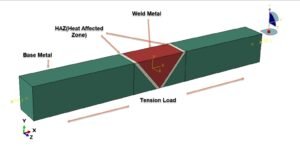
Image courtesy of Wikipedia Commons, licensed under CC BY-SA 3.0.
The First Law Revisited: Foundation of Energy Balance
The First Law of Thermodynamics provides the bedrock for all energy balance calculations. It states that for any system, the change in the total energy of the system is equal to the net energy transferred across its boundaries by heat, work, and mass flow.
Open vs. Closed Systems
- Closed System: A fixed amount of mass; no mass crosses the system boundary. Energy can cross the boundary (heat or work). Example: A sealed pressure vessel.
- Open System (Control Volume): Mass and energy can cross the system boundary. This is most common in fluid dynamics, process engineering, and thermal systems. Example: A pump, a heat exchanger, a jet engine.
The General Energy Balance Equation
For an open system (control volume), the general energy balance equation can be expressed as:
dE_cv/dt = Q_dot_net_in - W_dot_net_out + sum(m_dot_in * e_in) - sum(m_dot_out * e_out)
dE_cv/dt: Rate of change of total energy within the control volume (internal, kinetic, potential).Q_dot_net_in: Net rate of heat transfer into the control volume.W_dot_net_out: Net rate of work done by the control volume.m_dot * e: Rate of energy transfer by mass flow (wheree = h + KE + PE, withhbeing enthalpy).
While this looks complex, it often simplifies significantly based on your system and assumptions (e.g., steady-state, no work, adiabatic).
Key Components of Energy Balance
To apply energy balance effectively, you need to understand the individual energy forms and transfer mechanisms.
Internal Energy (U) and Enthalpy (H)
- Internal Energy (U): Represents the microscopic energy of a system, related to the translational, rotational, vibrational, and electronic energies of its molecules. It’s crucial for understanding temperature changes in closed systems.
- Enthalpy (H): Often used for open systems, enthalpy accounts for internal energy plus the flow work (
PVterm). It simplifies calculations involving mass flow and pressure changes.
Kinetic Energy (KE) and Potential Energy (PE)
- Kinetic Energy (KE): Energy due to motion. Relevant in high-velocity fluid flows (e.g., nozzles, turbines) or dynamic structural analysis.
- Potential Energy (PE): Energy due to position in a force field (e.g., gravity, elastic deformation). Important in systems with significant elevation changes (pumps, hydro-power) or structural deformation.
Heat Transfer (Q)
Heat is energy transfer due to a temperature difference. The three primary modes are:
- Conduction: Energy transfer through direct molecular contact, dominant in solids. Relevant for thermal resistance calculations in FEA.
- Convection: Energy transfer between a solid surface and an adjacent fluid in motion. Crucial for thermal management in electronics, aerospace, and process industries (e.g., using ANSYS Fluent or OpenFOAM).
- Radiation: Energy transfer via electromagnetic waves, requiring no medium. Significant at high temperatures (furnaces, combustion) or in vacuum environments (spacecraft).
Work (W)
Work is energy transfer associated with a force acting through a distance. Common types include:
- Boundary Work (PV work): Expansion or compression of a system boundary.
- Shaft Work: Energy transmitted by rotating shafts (turbines, compressors, pumps).
- Electrical Work: Energy transfer via electrical currents (heaters, motors).
- Spring Work: Energy stored or released by elastic deformation.
Applications Across Engineering Disciplines
Energy balance is not confined to thermodynamics textbooks; it’s a living principle applied daily across various engineering fields.
Thermodynamics & Process Engineering
In process plants, energy balance dictates the design and operation of equipment like heat exchangers, reactors, distillation columns, and turbines. Engineers use it to:
- Calculate heat duties for process streams.
- Determine fuel consumption for heaters and boilers.
- Optimize energy recovery systems.
Fluid Dynamics (CFD)
Computational Fluid Dynamics (CFD) tools like ANSYS Fluent, ANSYS CFX, and OpenFOAM solve complex forms of the energy equation to model thermal phenomena in fluids. Applications include:
- Electronics Cooling: Predicting temperature distribution in PCBs and enclosures.
- Aerospace: Thermal management of aircraft systems, hypersonic re-entry heating.
- Oil & Gas: Temperature profiles in pipelines, heat transfer in reservoirs.
- HVAC: Room air conditioning, building energy performance.
Structural & Solid Mechanics (FEA)
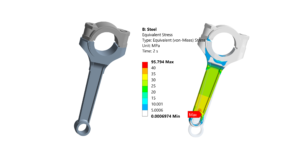
Finite Element Analysis (FEA) packages such as Abaqus and ANSYS Mechanical are vital for understanding how thermal loads impact structural integrity.
- Thermal Stress Analysis: Calculating stresses and deformations induced by temperature gradients. This is critical for power plant components, engine blocks, and pipelines.
- Thermo-Mechanical Coupling: When temperature changes affect material properties, which in turn affect stress, or when mechanical work generates heat (e.g., friction).
- Dynamic Analysis: The work-energy principle (a form of energy balance) is fundamental to understanding transient structural responses and impact events (e.g., using ADAMS or explicit FEA solvers).
Biomechanics and Advanced Materials
Energy balance also plays a role in specialized fields:
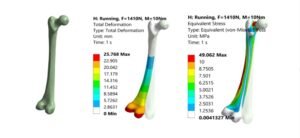
- Biomechanics: Modeling heat dissipation in biological tissues during exercise or medical procedures, or designing prosthetic devices.
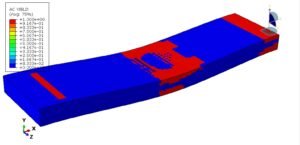
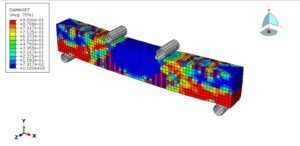
- Advanced Materials: Understanding energy absorption in composites under impact or the thermal response of smart materials.
Practical Workflow: Applying Energy Balance in Engineering Analysis
Applying energy balance systematically is key to accurate results. Here’s a structured approach:
1. Define Your System and Boundaries
This is arguably the most critical step. Clearly draw your system boundary. What’s inside? What’s outside? Is it a closed or open system?
- Tip: Choose boundaries that simplify the problem. For a pump, boundaries might be the inlet and outlet flanges. For a heat exchanger, it might encompass both fluid streams and the separating wall.
2. Identify All Energy Forms and Transfers
List every way energy can enter, exit, or be stored within your system:
- Heat transfer (Q): Conduction, convection, radiation.
- Work (W): Shaft work, boundary work, electrical work.
- Mass flow (m_dot): Carrying internal, kinetic, and potential energy.
- Change in stored energy (dE/dt): Internal, kinetic, potential energy within the system.
3. State Assumptions Clearly
Simplifying assumptions are often necessary and appropriate. Document them explicitly:
- Steady-state: No change with time (
dE/dt = 0). - Adiabatic: No heat transfer (
Q_dot = 0). - Isothermal: Constant temperature.
- Incompressible: Constant density (often for liquids).
- Negligible KE/PE changes: For systems without significant velocity or elevation changes.
- Ideal gas behavior.
4. Select Appropriate Tools
- Hand Calculations: For simple, steady-state problems or initial estimations.
- Spreadsheets: Useful for iterative calculations, parametric studies, and generating tables.
- Custom Scripts (Python, MATLAB): For complex analytical solutions, linking to databases, or automating repetitive tasks. EngineeringDownloads.com offers downloadable templates and scripts for common engineering calculations that can jumpstart your automation efforts.
- CAE Software (FEA/CFD): For detailed, complex geometries, transient behavior, non-linear effects, and coupled phenomena (e.g., ANSYS, Abaqus, MSC Nastran, CATIA).
5. Formulate and Solve Equations
Write down the simplified energy balance equation based on your system definition and assumptions. Then, solve for the unknown quantity.
6. Interpret and Validate Results
Does the answer make sense? Is the magnitude reasonable? Compare with expected values or simplified analytical solutions.
A Deeper Dive: Energy Balance in CAE Simulations (FEA/CFD)
When dealing with complex geometries, transient effects, or non-uniform conditions, CAE tools become indispensable. These tools numerically solve the governing conservation equations, including the energy balance equation, across discretized domains.
Pre-processing for Thermal Analysis
- Geometry & Materials: Accurate representation of the part and its thermal properties (thermal conductivity, specific heat, density).
- Meshing: A fine enough mesh is critical, especially in areas with high-temperature gradients. For CFD, boundary layer meshing around walls is key for convection.
- Boundary Conditions (BCs): This is where your energy balance understanding truly shines. Properly define:
- Temperature (Dirichlet BC): Fixed temperature at a boundary.
- Heat Flux (Neumann BC): Fixed heat flow rate per unit area.
- Convection (Robin BC): Involves a heat transfer coefficient and ambient temperature.
- Radiation: Requires emissivity and view factors.
Solver Settings and Convergence
- Steady-State vs. Transient: Choose based on whether your system conditions change with time.
- Coupled vs. Uncoupled: For thermo-mechanical problems, decide if the thermal and mechanical solutions should be solved simultaneously (coupled) or sequentially (uncoupled).
- Convergence Criteria: Ensure your solution has reached a stable state. Monitor residuals for energy, momentum, and continuity. A non-converged solution gives meaningless results.
Post-processing and Interpretation
- Visualize temperature contours, heat flux vectors, and thermal strains.
- Identify hot spots and critical areas for design modification.
- Extract total heat transfer rates or average temperatures for system-level energy balance verification.
Common Energy Balance Equations and Their Applications
Here’s a table summarizing common energy balance scenarios and their simplified equations:
| Scenario | Key Assumptions | Simplified Energy Balance Equation | Typical Applications |
|---|---|---|---|
| Closed System, No Work, Steady State (Heat Transfer) | No mass flow, dU/dt = 0, W=0 | Q_net_in = 0 | Steady-state conduction through a wall. |
| Closed System, Transient, No Work | No mass flow, W=0 | dU/dt = Q_net_in | Heating/cooling a solid block. |
| Open System, Steady Flow (SFEE) | dE_cv/dt = 0 | Q_dot_net_in – W_dot_net_out + sum(m_dot_in * h_in) – sum(m_dot_out * h_out) + dKE_dot + dPE_dot = 0 | Turbines, compressors, heat exchangers, nozzles (often with dKE/dPE consideration). |
| Heat Exchanger (2-fluid, steady-state) | Adiabatic outer shell, W=0, dKE/dPE=0 | (m_dot * Cp * dT)_hot = (m_dot * Cp * dT)_cold | Designing and analyzing heat exchangers. |
Common Pitfalls & Troubleshooting
Even experienced engineers can stumble. Be aware of these common mistakes:
- Incorrect System Definition: Drawing the boundaries incorrectly or changing them mid-calculation.
- Missing Energy Terms: Forgetting a heat loss, a small amount of work, or kinetic/potential energy changes when they are significant.
- Invalid Assumptions: Assuming steady-state for a transient problem, or adiabatic conditions where heat transfer is significant.
- Unit Inconsistency: Mixing SI and Imperial units without proper conversion. Always double-check!
- Misinterpreting Software Output: Blindly trusting simulation results without understanding the underlying physics or convergence issues.
- Poor Material Property Data: Using incorrect thermal conductivities or specific heats can invalidate your entire analysis.
Verification & Sanity Checks
Never rely solely on one method or tool. Always verify your energy balance results:
- Analytical Solutions: For simplified cases, can you derive a hand calculation or analytical solution to compare against your detailed model?
- Order of Magnitude Checks: Does the calculated heat transfer or temperature rise seem physically plausible?
- Mesh Sensitivity: In FEA/CFD, refine your mesh and check if the results change significantly. If they do, your mesh might be too coarse.
- Solver Convergence Reports: Look at the energy residuals. Are they sufficiently low? For example, in CFD, checking the energy balance report generated by Fluent or OpenFOAM can highlight discrepancies.
- Comparison to Similar Systems/Empirical Data: If available, compare your results with data from similar existing systems or published empirical correlations.
Leveraging Automation with Python & MATLAB
For repetitive calculations, parametric studies, or integrating with other engineering tools, Python and MATLAB are invaluable for energy balance problems:
- Scripting Equations: Easily automate the solution of complex energy balance equations for various inputs.
- Data Analysis: Process experimental data or simulation outputs to verify energy conservation.
- Optimization: Perform design optimization by varying parameters (e.g., heat transfer area, flow rates) and calculating the resulting energy balance.
- Custom Post-processing: Create specialized plots and reports beyond standard software capabilities.
At EngineeringDownloads.com, we provide ready-to-use Python and MATLAB scripts that can help you implement complex energy balance models efficiently. These resources can save you significant time and effort in your design and analysis work.
Conclusion
Energy balance is more than just an equation; it’s a powerful framework for problem-solving in engineering. By systematically applying its principles, from defining systems to verifying results, you can gain deep insights into your designs, optimize performance, and ensure reliability. Whether you’re working with hand calculations or advanced CFD/FEA software, a solid grasp of energy balance is indispensable for any competent engineer.
Further Reading
Purdue University – Energy Principles