Need a full custom project? See the options below.
Need a full custom project? See the options below.
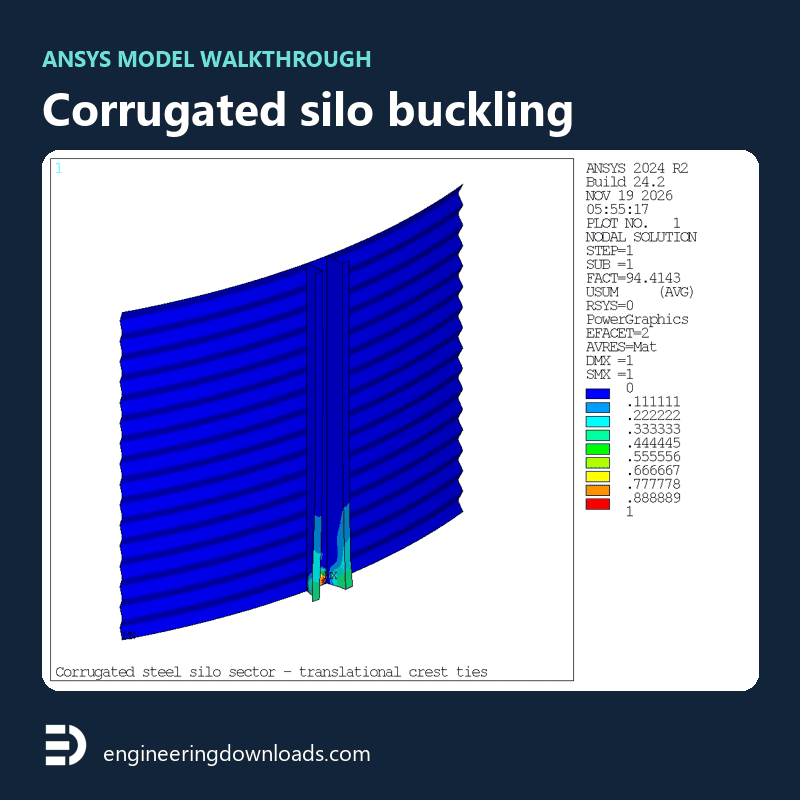
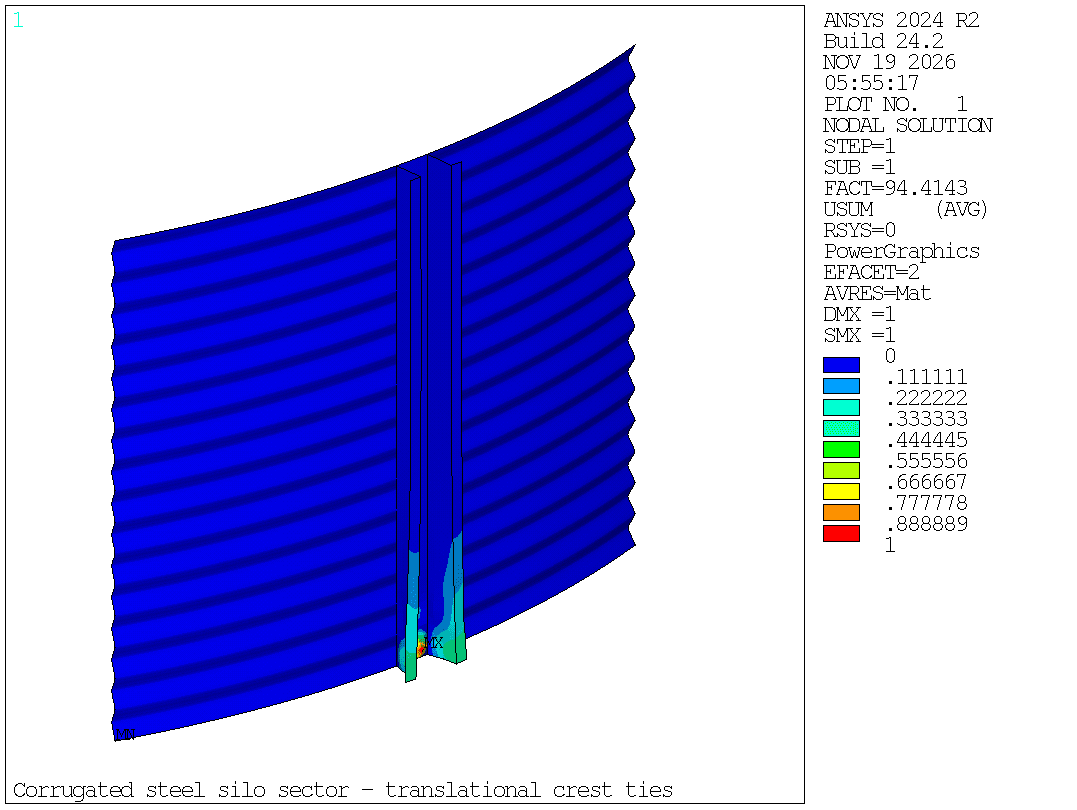
Explore linear eigenvalue buckling in a corrugated steel silo wall under axial compression. This Ansys example follows a stiffened shell sector from the preload and boundary conditions to the first positive buckling mode.
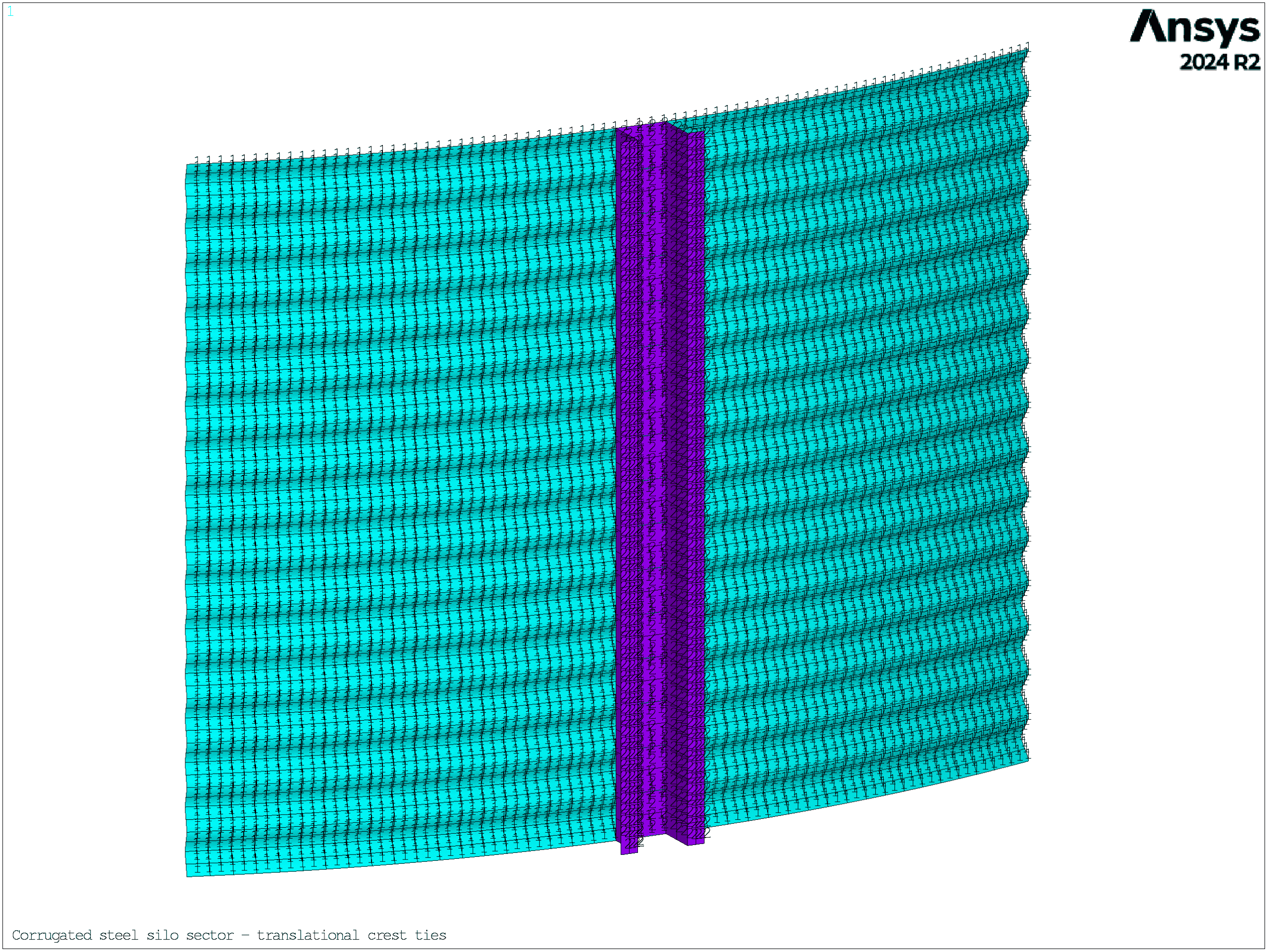
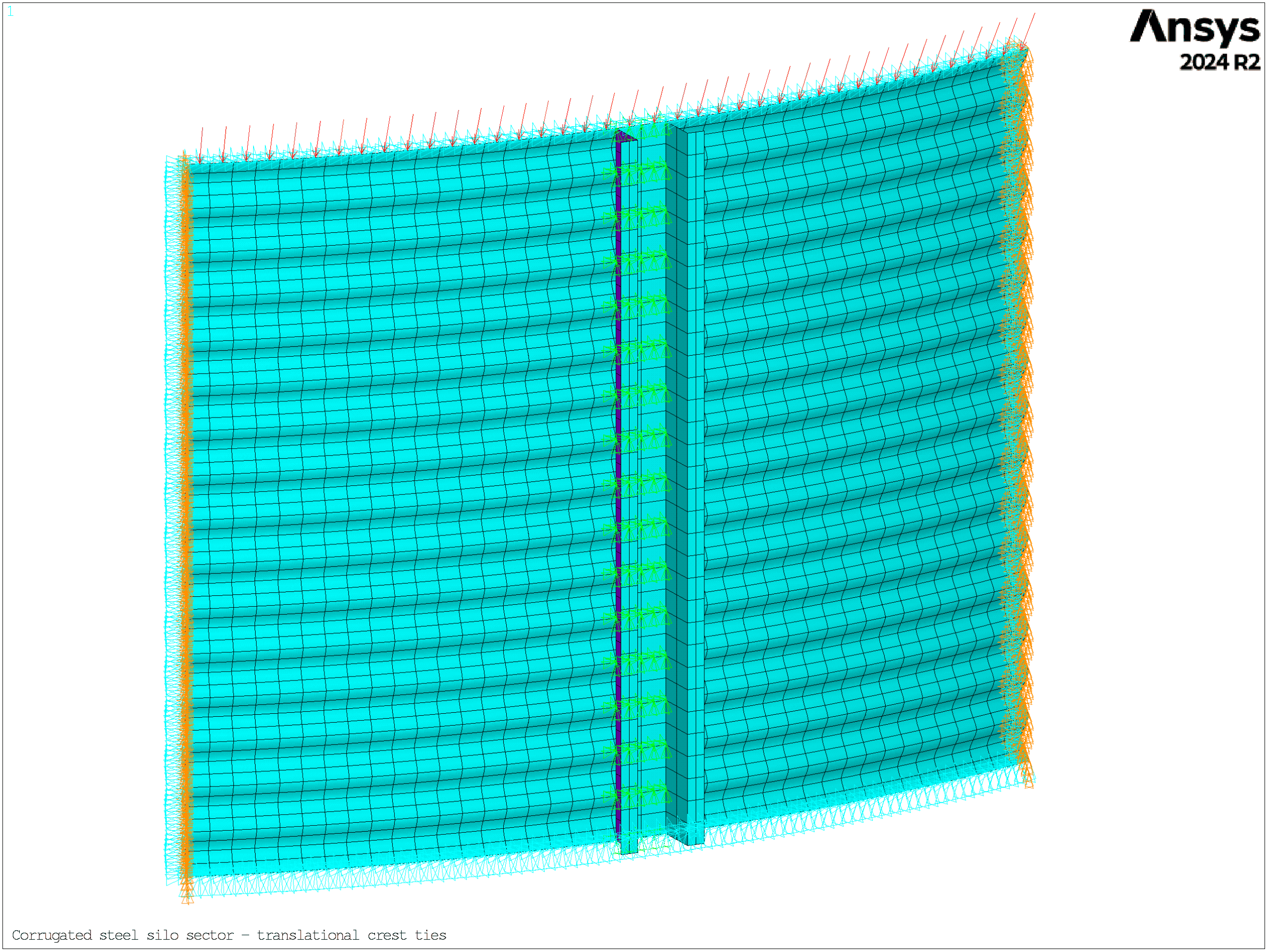
The model uses a 36-degree sector with one vertical top-hat stringer. The wall has a nominal 2,500 mm outer radius, 76 mm corrugation pitch and 18 mm crest-to-trough depth. Side cuts use mirror symmetry. The upper and lower rims restrain transverse motion, and the base also restrains axial translation. A normal edge load of 1 N/mm on the upper wall rim establishes the prestress.
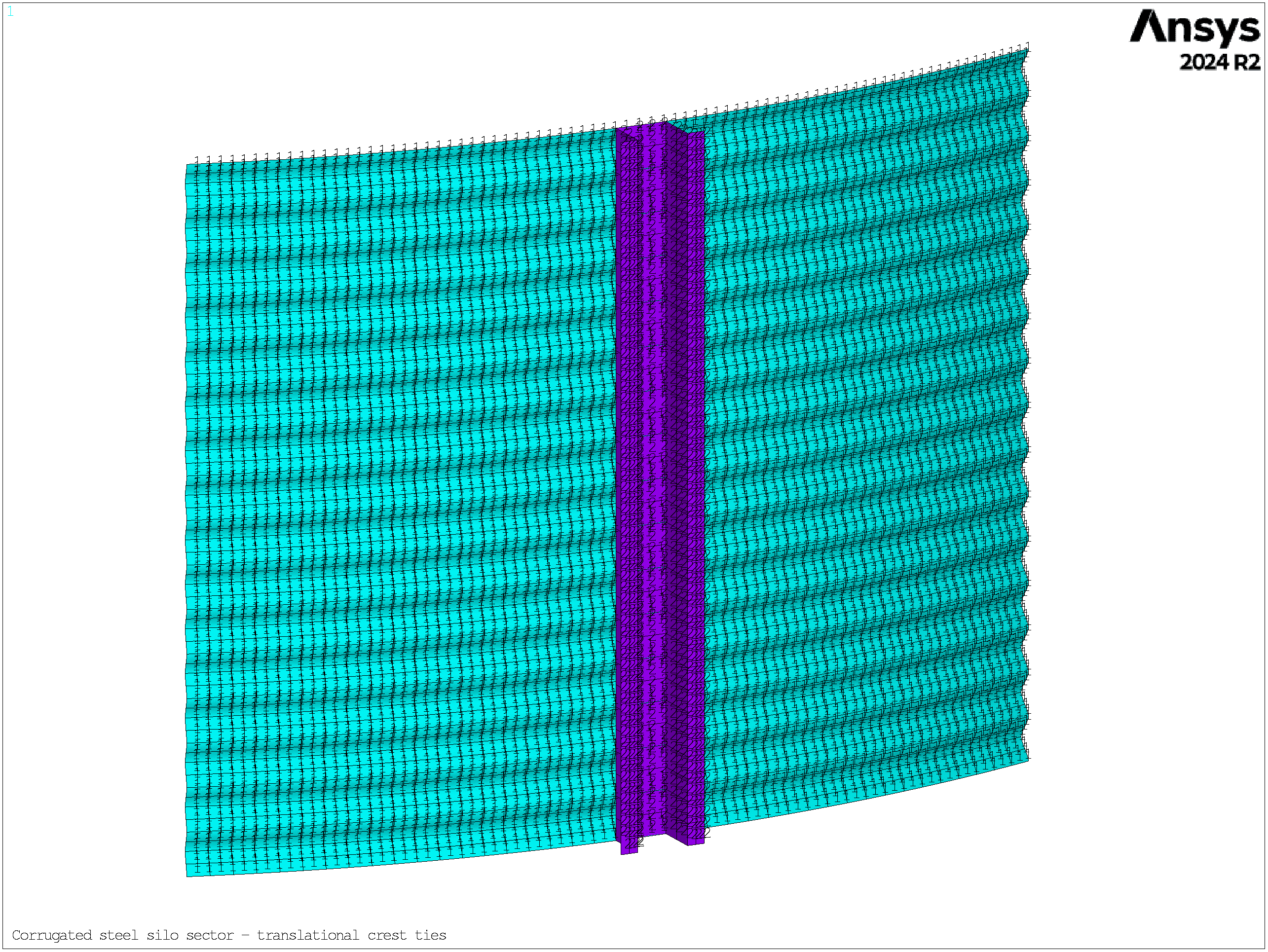
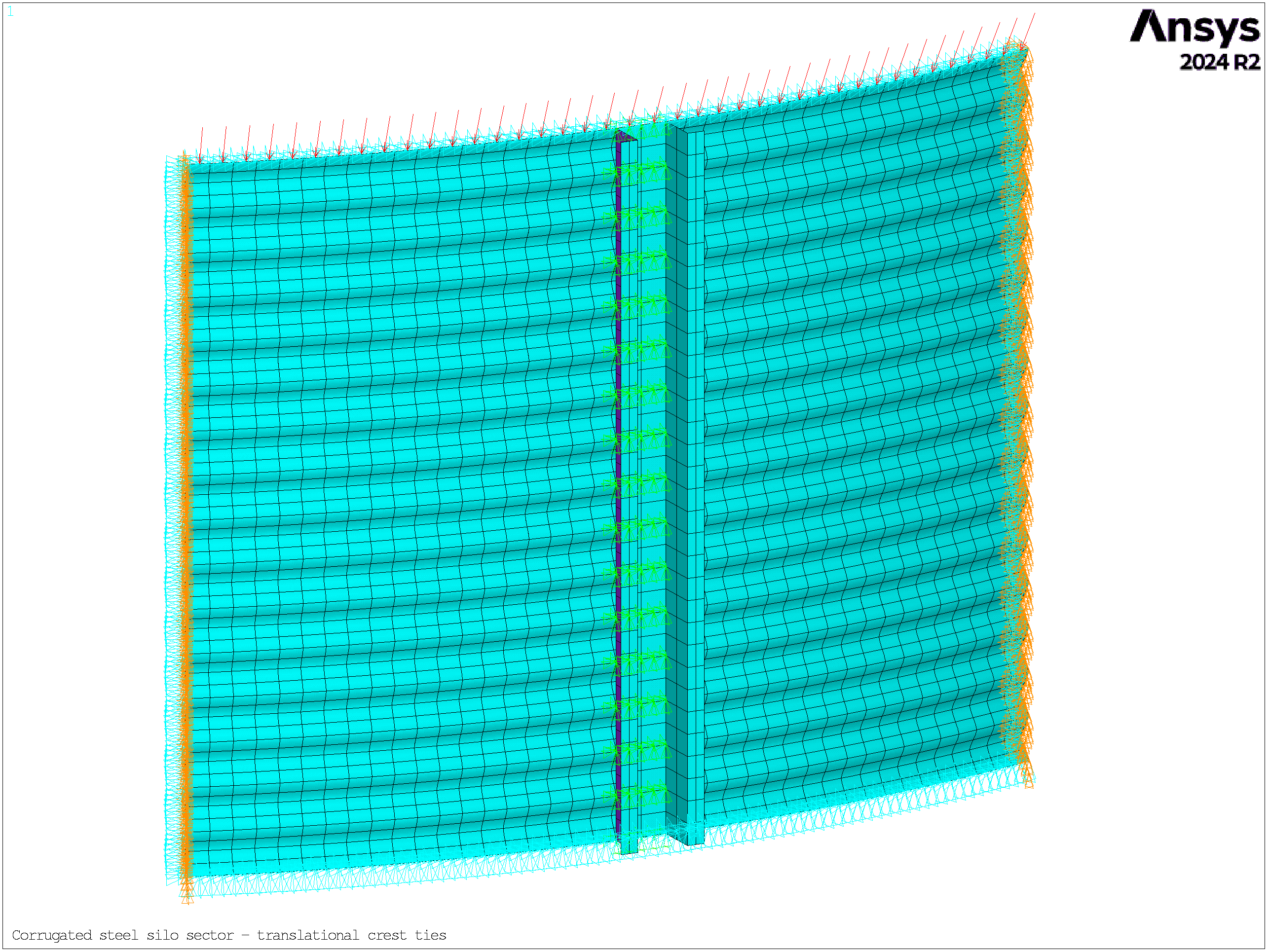
Eight-node shell elements represent the wall and stringer. The connection couples translations at the corrugation crests while leaving the shell rotations independent. After the static preload solve, Ansys solves (K + λKσ)φ = 0. K is the elastic stiffness matrix, Kσ is the geometric stiffness matrix from the reference load, λ is a dimensionless load multiplier and φ is the normalized mode shape. The critical axial line load is λ times the 1 N/mm reference edge load.
The first positive mode of the 1 mm case localizes near the loaded upper rim. In the 2 mm and 3 mm cases, it localizes near the lower stringer cap. The mode shapes illustrate where the modeled instability occurs. Their magnified displacements describe the eigenvector shape.
Tănase, M., Portoacă, A. I., Gabor, M. R., and Veres, C. (2024). Integrated Analytical, Numerical, and Statistical Analysis of Buckling Behavior in Steel Cylindrical Silos with Corrugated Walls. Processes, 12(11), 2443. Read the paper.
The authors combine analytical calculations, finite element modeling and statistical analysis to study how silo radius, wall thickness and corrugation geometry affect axial buckling. Their study considers both stiffened and unstiffened walls and examines how corrugation depth affects the balance between buckling resistance and structural weight.
The Product Files lessons contain a Workbench model ZIP and the PDF tutorial.
Need more than the files?
There are two ways we can help. Book a one hour online consultation if you want to talk a problem through with a CAE engineer, using the checkbox in the order box. Order a project if you need a full simulation built for you, delivered to an agreed scope, price and deadline under a written contract.
We work on FEA and CFD for engineers, researchers and companies. Order your project, or message us on WhatsApp for a quick reply.
Other packages engineers working on this topic also download.
 FEA of Connecting Rod using ANSYS
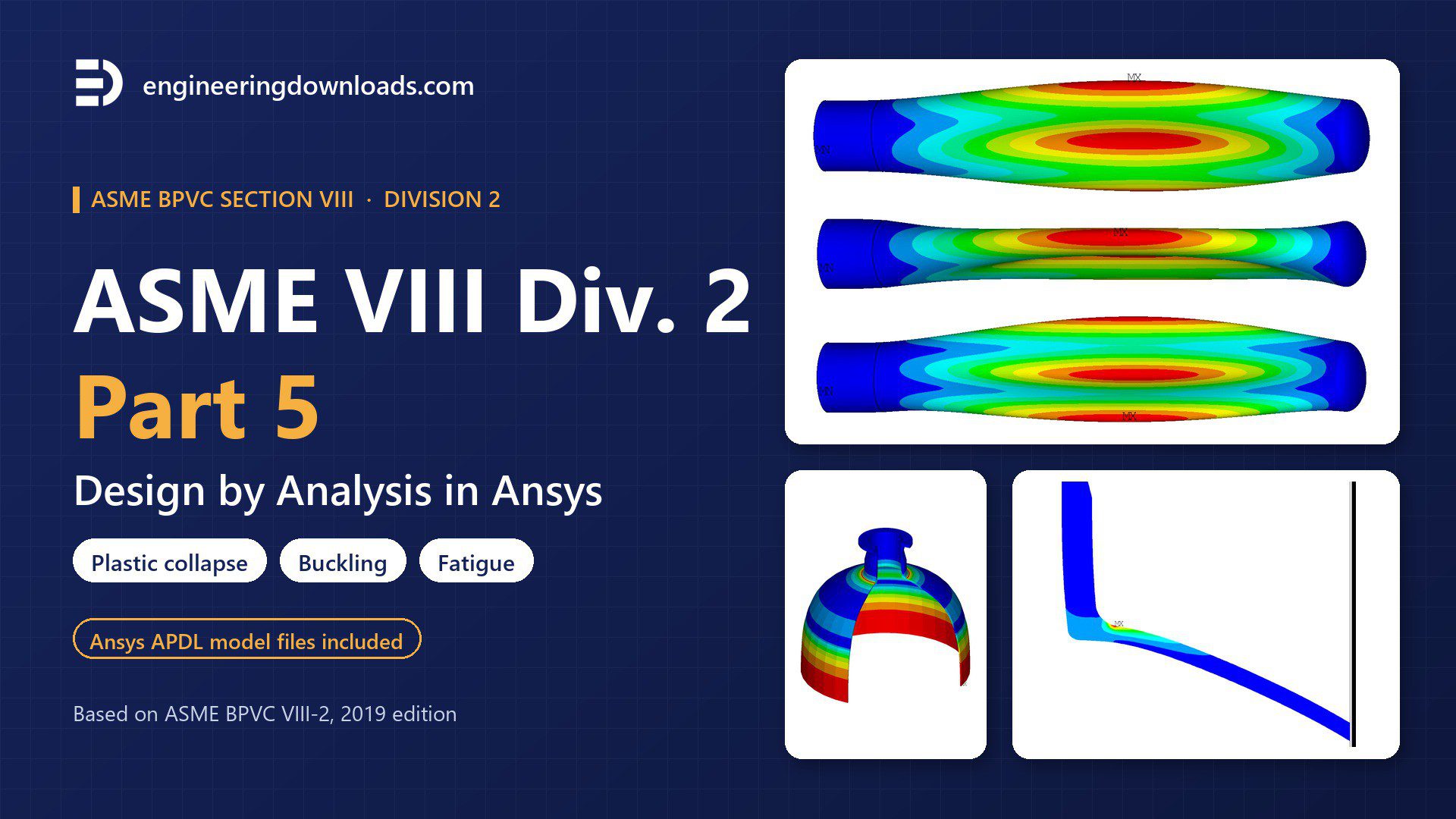 ASME VIII Div.2 Part 5 Design by Analysis with Ansys: Collapse, Buckling and Fatigue
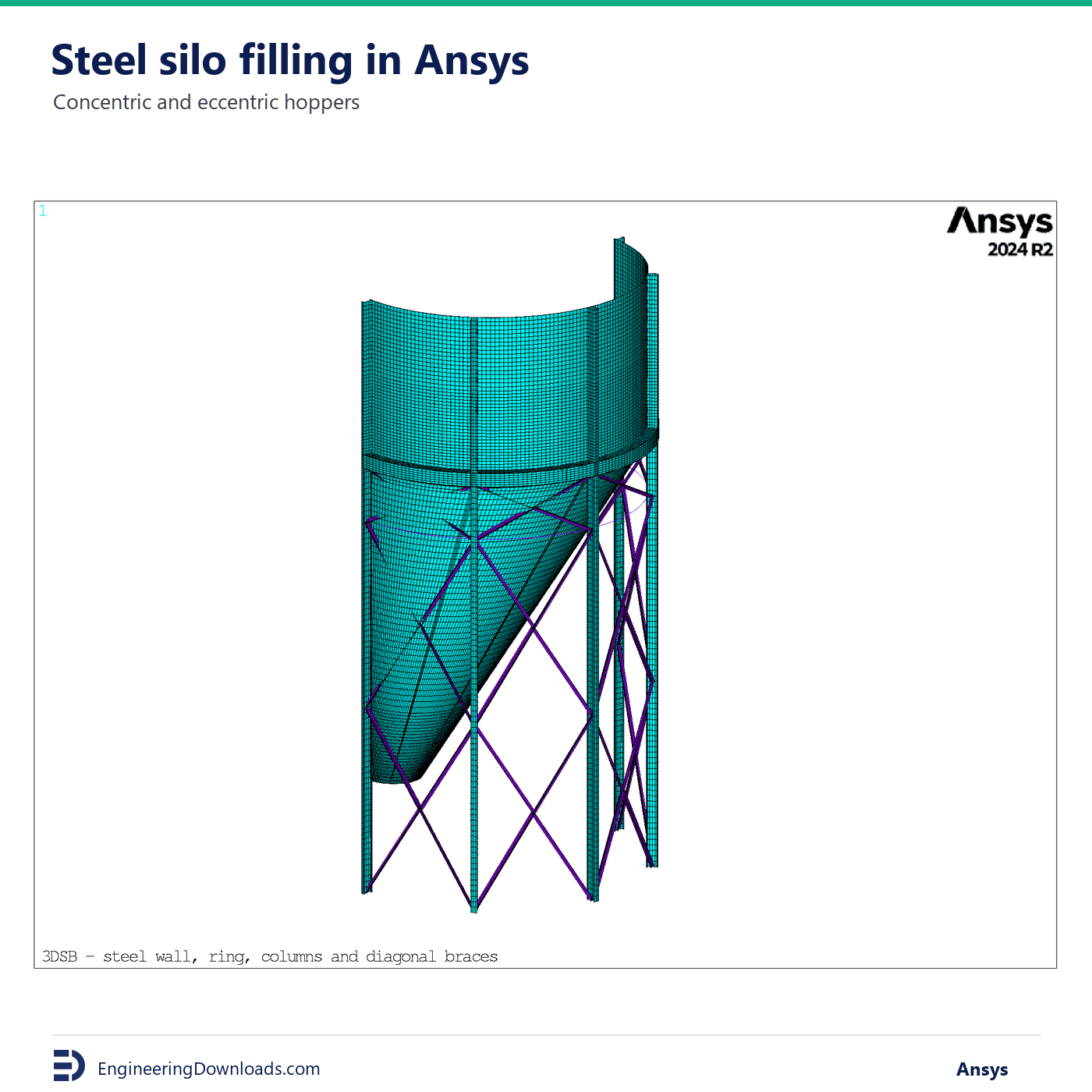 Steel Silo Filling and Hopper Wall Stress in Ansys€139,00
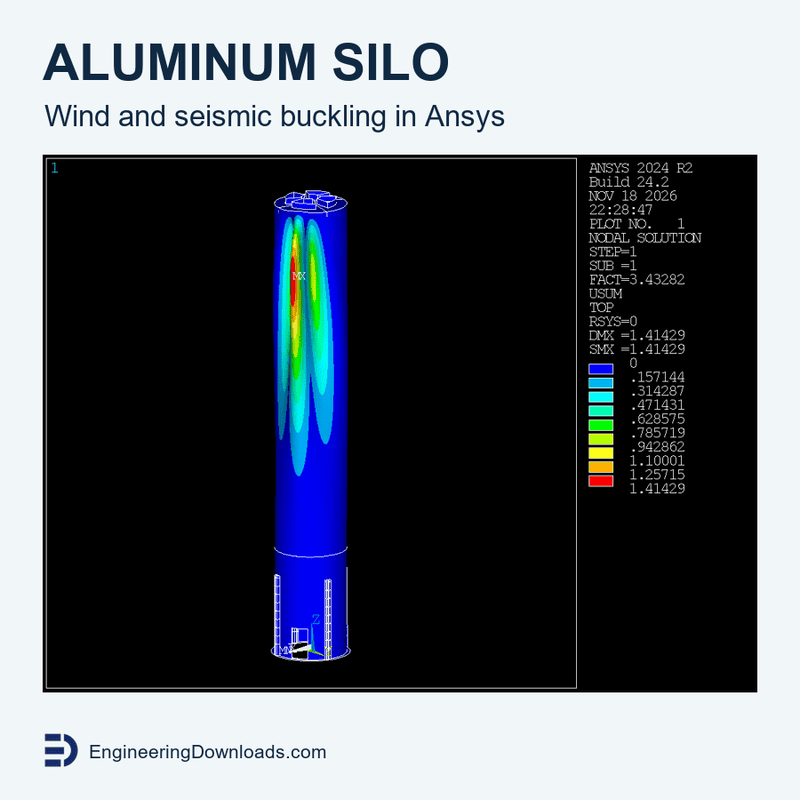 Aluminum Silo Buckling in Ansys: Köll’s Eurocode Thesis€129,00
 Optimization in ANSYS: Learn Design Optimization
 ANSYS Mechanical Tutorial for Beginners to Intermediate Users
 Non-Linear Structural Analysis of Rolling Tyre on Rubber Surface in Ansys
 Dynamic Transient Structural Analysis of Ball Bearing with Cage in Ansys

Need a full custom project? See the options below.
See more
Want to receive push notifications for all major on-site activities?