What is Structural Engineering?
Structural engineering is a specialized field within civil engineering that focuses on the design, analysis, and construction of structures that safely support and resist loads. From towering skyscrapers and expansive bridges to critical industrial facilities in oil & gas, aerospace components, and even biomechanical implants, structural engineers ensure the stability, durability, and resilience of our built environment.
It’s a discipline that blends physics, materials science, and mathematics with a deep understanding of practical construction techniques and regulatory codes. For engineers, it’s about solving complex spatial puzzles, ensuring safety, and optimizing resource use.

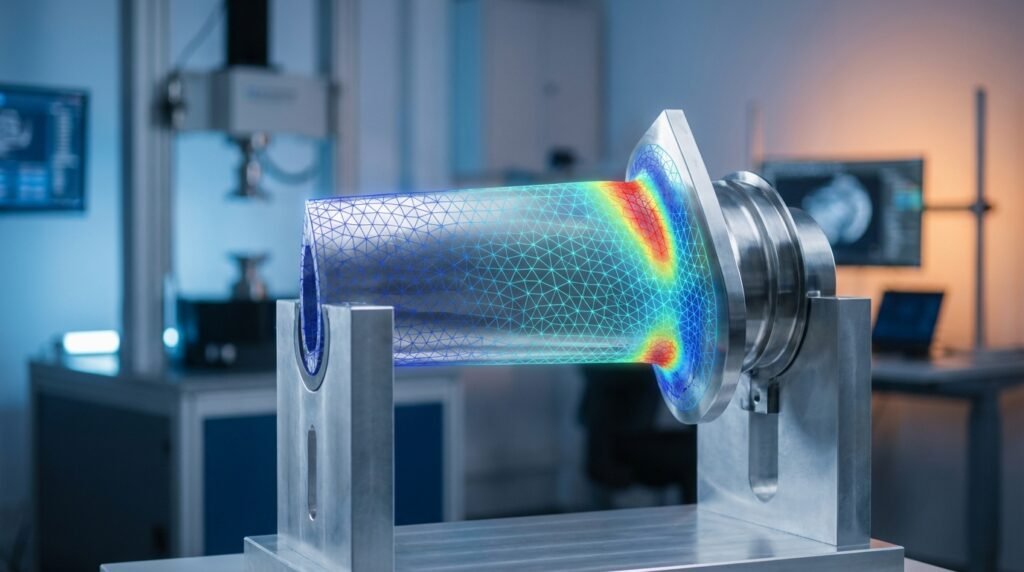
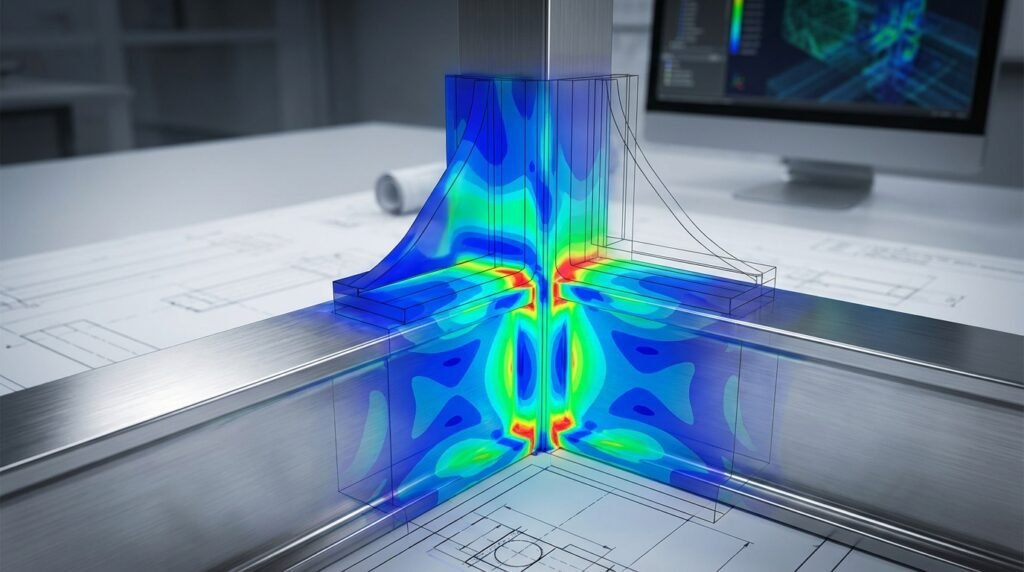
Finite element model of a bridge illustrating stress distribution.
The Pillars of Structural Engineering
At its core, structural engineering relies on understanding how structures react to forces. This involves three fundamental pillars:
Load Types and Analysis
Structures must withstand various forces, or ‘loads,’ throughout their lifespan. Accurately identifying and quantifying these is the first critical step.
- Dead Loads: The self-weight of the structure itself (e.g., concrete slabs, steel beams, permanent fixtures).
- Live Loads: Variable loads due to occupancy or use (e.g., people, furniture, vehicles).
- Environmental Loads: Forces from natural phenomena, including wind loads, snow loads, seismic (earthquake) loads, and thermal expansion/contraction.
- Special Loads: Impact, blast, fluid pressure (for tanks), and pre-stressing forces.
Engineers analyze load paths – how these forces travel through structural members to the foundations – to ensure no component is overstressed.
Material Behavior and Selection
The choice of material profoundly impacts a structure’s design, cost, and performance. Understanding material properties is paramount.
- Steel: Known for its high strength-to-weight ratio, ductility, and predictable behavior. Ideal for tall buildings, bridges, and industrial frameworks.
- Concrete: Excellent compressive strength, fire resistance, and versatility. Often combined with steel reinforcement (reinforced concrete) to handle tensile forces.
- Timber: Sustainable, lightweight, and aesthetically pleasing. Used in residential, light commercial, and specific large-span structures (e.g., glulam).
- Composites: Advanced materials like fiber-reinforced polymers (FRPs) offer high strength, corrosion resistance, and low weight, finding applications in aerospace, specialized infrastructure, and retrofitting.
Each material has unique stress-strain relationships, yield strengths, and moduli of elasticity that dictate its suitability for specific applications.
Structural Systems and Components
Structural systems are the arrangements of components working together to resist loads. Understanding these systems is key to an efficient and safe design.
- Beams: Horizontal members primarily resisting bending.
- Columns: Vertical members primarily resisting axial compression.
- Trusses: Triangulated assemblies of slender members, efficient for long spans.
- Frames: Interconnected beams and columns, often moment-resisting.
- Slabs: Flat, horizontal elements forming floors and roofs.
- Foundations: Transfer structural loads safely to the ground.
The interaction between these components defines the system’s overall stiffness, stability, and redundancy.
The Structural Engineering Workflow: From Concept to Completion
A typical structural engineering project follows a well-defined process, iterative and collaborative in nature.
Conceptual Design and Feasibility
This initial phase involves understanding the client’s requirements, site constraints, local building codes, and budget. Engineers develop preliminary structural schemes, assess material options, and perform initial sizing calculations to determine feasibility. This is where big-picture thinking and experience in structural systems come into play.
Detailed Design and Analysis
Once a concept is approved, the detailed design phase begins. This involves:
- Sophisticated Analysis: Using advanced tools like Finite Element Analysis (FEA) to model complex geometries, load combinations, and material behaviors.
- Component Sizing: Precisely dimensioning beams, columns, slabs, and connections to meet strength, serviceability, and constructability criteria.
- Connection Design: Detailing how individual members connect, often the most critical and intricate part of the design.
- Foundation Design: Tailoring foundations to soil conditions and expected loads.
- Drawing Production: Creating detailed structural drawings and specifications for construction.
Construction Support and Inspection
The engineer’s role extends beyond the design office. During construction, they provide essential support, respond to Requests for Information (RFIs), review shop drawings, and conduct site inspections to ensure adherence to the design and specifications. This oversight is crucial for maintaining structural integrity and safety.
Tools of the Trade: Software and Methods
Modern structural engineering relies on a powerful blend of traditional methods and advanced computational tools.
Analytical and Hand Calculation Methods
Despite the proliferation of software, hand calculations and first-principles analysis remain indispensable. They provide quick estimations, serve as sanity checks for software outputs, and deepen an engineer’s understanding of structural behavior. Simple beam bending equations, moment distribution methods, and basic strength of materials principles are fundamental.
Finite Element Analysis (FEA) in Structural Design
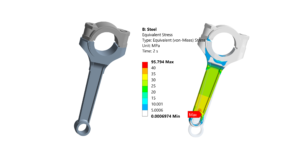
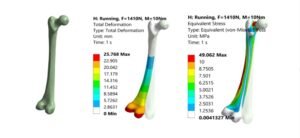
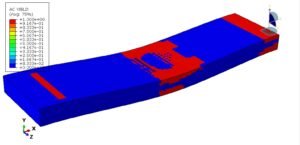
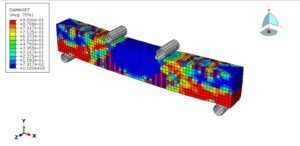
FEA is a cornerstone of modern structural analysis, enabling engineers to model complex geometries, non-linear material behavior, dynamic loads, and intricate boundary conditions that are impossible to analyze by hand. Software like Abaqus, ANSYS Mechanical, and MSC Nastran are industry standards, providing robust capabilities for static, dynamic, thermal, and fatigue analyses.
Practical FEA Workflow for Structural Engineers
Implementing FEA effectively requires a structured approach:
- Geometry Preparation: Simplify complex CAD models (e.g., from CATIA) for meshing, removing small features that don’t impact global behavior.
- Material Model Definition: Accurately define linear elastic, plastic, hyperelastic, or composite material properties.
- Meshing: Generate an appropriate finite element mesh. Consider element type (beams, shells, solids), size, and quality. Fine meshes in stress concentration areas are often critical.
- Boundary Conditions (BCs): Apply realistic restraints (fixed, pinned, rollers) and interactions (contact definitions) to mimic real-world support and assembly.
- Load Application: Apply forces, pressures, temperatures, or displacements accurately. Ensure all load cases (dead, live, wind, seismic) and their combinations are covered.
- Solver Execution: Run the simulation. Monitor for convergence issues, especially in non-linear analyses.
- Post-processing and Interpretation: Visualize results (stress, strain, displacement), identify critical regions, and compare against design criteria and material limits.
Verification and Sanity Checks in FEA
Never blindly trust FEA results. Rigorous verification is essential:
- Mesh Convergence Study: Rerun the analysis with finer meshes to ensure results (e.g., peak stress) stabilize, indicating that the solution is mesh-independent.
- Boundary Condition Review: Visually inspect applied BCs and loads. Do reactions balance external forces? Is the model artificially constrained or under-constrained?
- Simple Hand Calculations: Compare global deflections and reactions against approximate hand calculations for simpler load cases.
- Deformed Shape Visualization: Does the deformed shape make physical sense given the applied loads and supports? Look for unexpected deformations.
- Energy Balance: Check the strain energy and kinetic energy plots for stability and convergence in dynamic analyses.
- Mode Shapes: For dynamic or buckling analyses, visually inspect mode shapes to ensure they are physically plausible and not artifacts of poor meshing or BCs.
- Sensitivity Analysis: Evaluate the impact of variations in material properties, load magnitudes, or geometric parameters on critical results.
CAD-CAE Integration
The synergy between CAD (Computer-Aided Design) and CAE (Computer-Aided Engineering) tools is vital for modern engineering. Direct interfaces between design software like CATIA and analysis platforms streamline workflows, reducing errors and saving time. This enables seamless transfer of geometry and facilitates design optimization through iterative analysis.
Automation with Python and MATLAB
Scripting languages like Python and MATLAB are increasingly valuable in structural engineering. They can automate repetitive tasks, parameterize models, perform post-processing of FEA results, conduct complex optimizations, and manage large datasets. Python, with libraries like NumPy, SciPy, and Matplotlib, is excellent for scripting Abaqus or ANSYS Mechanical, while MATLAB excels in numerical analysis, algorithm development, and data visualization. For downloadable Python scripts or MATLAB templates for structural analysis tasks, explore EngineeringDownloads.com.
Advanced Topics and Specializations
Structural engineering encompasses several specialized areas.
Structural Integrity and FFS Level 3
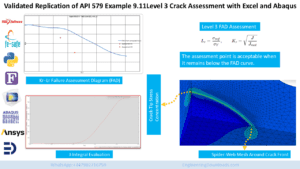
In industries like Oil & Gas and Aerospace, ensuring structural integrity is paramount. Fitness-for-Service (FFS) assessments, particularly API 579 / ASME FFS-1 Level 3 analyses, involve advanced FEA to evaluate the remaining life of components with flaws (cracks, corrosion, dents) under operating conditions. This requires sophisticated fracture mechanics principles and material models to determine if a component can continue safe operation without repair or replacement, minimizing downtime and cost.
Dynamic Analysis and Seismic Design
Designing structures to resist dynamic loads, such as vibrations, impacts, or earthquakes, requires specialized knowledge. Dynamic analysis involves evaluating natural frequencies, mode shapes, and response to time-varying forces. Seismic design, crucial in active fault zones, focuses on ensuring structures can safely deform without collapse during a major earthquake, often incorporating principles of ductility and energy dissipation.
Structural Health Monitoring
Structural Health Monitoring (SHM) uses sensors and data acquisition systems to continuously monitor the condition of structures in real-time. This provides early warning of potential issues, helps predict remaining useful life, and informs maintenance decisions, particularly for critical infrastructure like bridges and offshore platforms.
Common Mistakes and How to Avoid Them
Even experienced engineers can stumble. Being aware of common pitfalls helps prevent costly errors:
- Over-reliance on Software: Treating FEA as a ‘black box’ without understanding the underlying theory or performing sanity checks. Always validate results.
- Incorrect Boundary Conditions or Loads: Mismatching model supports or applied forces to real-world conditions. This is a primary source of inaccurate results.
- Poor Meshing Practices: Using overly coarse meshes in critical areas or poor-quality elements leading to inaccurate stress predictions.
- Ignoring Non-linear Behavior: Assuming linear elastic behavior for materials or geometries where plasticity, large deformations, or contact non-linearity are significant.
- Neglecting Constructability: Designing elements that are difficult, expensive, or impossible to build in the field.
- Inadequate Communication: Failing to clearly communicate design intent, assumptions, or limitations to clients, fabricators, or contractors.
Career Path and Continuous Learning
A career in structural engineering is challenging yet rewarding, offering diverse opportunities across various sectors.
Essential Skills for Structural Engineers
- Strong Analytical & Problem-Solving Skills: The ability to break down complex problems and apply fundamental principles.
- Solid Understanding of Mechanics: Statics, dynamics, strength of materials, and fluid mechanics (especially for offshore or CFD-related structural interaction).
- Proficiency in Software: Expertise in CAD, FEA (e.g., Abaqus, ANSYS Mechanical), and potentially scripting (Python, MATLAB).
- Communication Skills: Essential for collaboration, report writing, and client interaction.
- Attention to Detail: Even small errors can have significant consequences in structural design.
Professional Development and Resources
The field evolves constantly. Continuous learning through professional organizations, workshops, and advanced courses is vital. Pursuing professional licensure (e.g., Professional Engineer, PE) opens up significant career opportunities. Engaging with platforms like EngineeringDownloads.com for tutoring or online consultancy can also provide specialized knowledge and practical guidance.
Further Reading
For more in-depth information on structural engineering standards and practices, refer to official professional organizations like the American Society of Civil Engineers (ASCE).