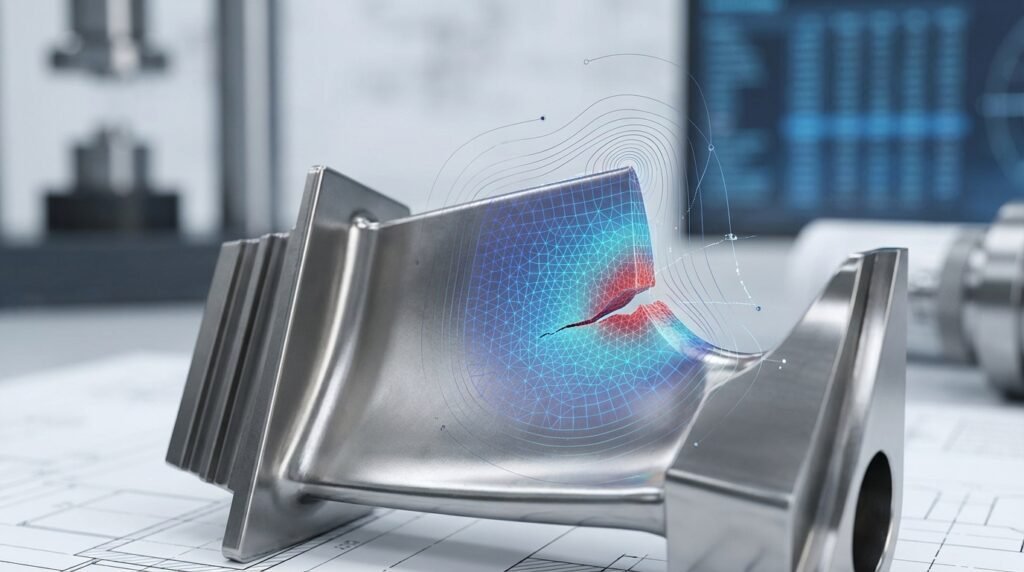
Understanding Crack Growth: A Critical Engineering Challenge
As engineers, we design and build systems meant to withstand immense forces and operate reliably for decades. Yet, even the most robust structures, from aerospace components to oil pipelines, can succumb to a silent, insidious threat: crack growth. This phenomenon, often microscopic at its inception, can propagate under cyclic loading, sustained stress, or aggressive environments, leading to catastrophic failures if not properly understood and managed.
Ignoring crack growth is not an option. It’s a fundamental aspect of structural integrity and damage tolerance design, directly impacting safety, operational lifespan, and economic viability across nearly every engineering discipline. In this comprehensive guide, we’ll dive deep into the mechanisms of crack growth, explore practical assessment methodologies including advanced simulation techniques, and provide actionable insights for engineers working in diverse fields.

Illustration of a typical fatigue crack growth curve, demonstrating the relationship between crack growth rate and stress intensity factor range.
The Fundamentals: What is Crack Growth?
Crack growth refers to the propagation of a pre-existing flaw or defect within a material under applied stress. These flaws, which can be manufacturing defects, material imperfections, or service-induced damage, act as stress concentrators. When the local stress at the crack tip exceeds the material’s strength, the crack can advance.
Understanding this process requires a grasp of basic fracture mechanics principles, which quantify the stress field around a crack tip. The primary parameter used is the Stress Intensity Factor (K), a measure of the stress singularity at the crack tip. It depends on the applied stress, crack size, and geometry of the component. Fracture occurs when K reaches a critical value, known as the material’s fracture toughness (KIC).
Why Crack Growth Matters in Engineering
- Safety: Preventing sudden, brittle fractures in critical components.
- Reliability: Ensuring long-term performance and minimizing downtime.
- Economic Impact: Avoiding costly repairs, replacements, and potential liability.
- Design Optimization: Creating lighter, more efficient structures without compromising safety.
- Regulatory Compliance: Meeting industry standards and codes for structural integrity.
Types of Crack Growth: A Multitude of Mechanisms
Crack growth isn’t a singular phenomenon. Different mechanisms drive crack propagation, each with its own characteristics and engineering implications.
1. Fatigue Crack Growth
This is arguably the most common and dangerous type, responsible for a vast majority of in-service failures. Fatigue cracks initiate and propagate under cyclic (fluctuating) loading, even when the applied stresses are well below the material’s yield strength. The process involves:
- Crack Initiation: Microscopic cracks form at stress concentrations (e.g., notches, inclusions, surface defects).
- Stable Crack Growth (Propagation): The crack slowly extends with each load cycle. This phase is often described by the Paris-Erdogan Law.
- Unstable Fracture: Once the crack reaches a critical size, the remaining cross-section can no longer sustain the load, leading to rapid, brittle failure.
2. Creep Crack Growth
Creep is time-dependent deformation under constant stress, typically at elevated temperatures. Creep crack growth occurs when a crack propagates under these conditions, often in high-temperature applications like power generation components (e.g., turbine blades, boiler tubes).
3. Stress Corrosion Cracking (SCC)
SCC is a synergistic process involving tensile stress, a susceptible material, and a specific corrosive environment. It leads to crack initiation and propagation that would not occur if either the stress or the corrosive environment were absent. Common in oil & gas pipelines, nuclear reactors, and marine environments.
4. Environmentally Assisted Cracking (EAC)
A broader category that includes SCC, hydrogen embrittlement, and liquid metal embrittlement. These mechanisms involve chemical or electrochemical interactions at the crack tip that accelerate crack growth or reduce fracture toughness.
Key Parameters and Predictive Models
Engineers rely on specific parameters and empirical models to characterize and predict crack growth.
Stress Intensity Factor (K)
As mentioned, K quantifies the stress field near the crack tip. It’s critical for understanding both crack initiation and propagation. For plane strain conditions, the critical stress intensity factor, KIC, represents a material’s resistance to brittle fracture when a sharp crack is present. K values are calculated based on geometry, crack size, and applied load.
The Paris-Erdogan Law for Fatigue Crack Growth
The most widely used empirical model for stable fatigue crack growth, particularly in the mid-range of crack growth rates. It relates the crack growth rate (da/dN, where ‘a’ is crack length and ‘N’ is the number of cycles) to the range of the stress intensity factor (ΔK).
da/dN = C (ΔK)m
- da/dN: Crack growth rate (e.g., mm/cycle).
- ΔK: Range of stress intensity factor during a load cycle (Kmax – Kmin).
- C, m: Material constants determined experimentally.
This law is invaluable for predicting fatigue life once a crack has initiated, and it forms the basis for many damage tolerance assessments.
Other Fracture Mechanics Parameters
- J-integral: Used for elastic-plastic fracture mechanics, especially when materials exhibit significant plastic deformation at the crack tip. It characterizes the energy release rate.
- Crack Tip Opening Displacement (CTOD): Another elastic-plastic parameter, representing the physical opening of the crack tip, often correlated with ductility and toughness.
Engineering Significance: Damage Tolerance and FFS
Crack growth analysis is at the heart of modern engineering design philosophies.
Damage Tolerance Design
Instead of assuming a perfect, flaw-free structure, damage tolerance design acknowledges that defects will inevitably exist or initiate during service. The goal is to design components such that any crack that initiates will grow slowly and predictably, allowing for detection before it reaches a critical size and causes failure. This approach is paramount in aerospace engineering, where safety is non-negotiable.
Fitness-for-Service (FFS) Assessments (API 579 / ASME FFS-1)
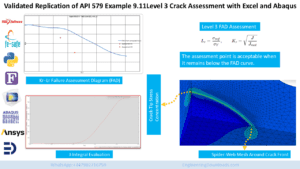
In industries like oil & gas, petrochemicals, and power generation, existing equipment often develops flaws (e.g., corrosion, fatigue cracks) during operation. FFS assessments, guided by standards like API 579 / ASME FFS-1, provide a methodology to evaluate the integrity of such components. The core question is: Can this component continue to operate safely with the observed flaw until the next scheduled inspection or repair? Crack growth analysis is a critical Level 2 or Level 3 FFS assessment technique.
Practical Approaches to Crack Growth Assessment
Assessing crack growth typically involves a combination of experimental data, analytical models, and increasingly, advanced numerical simulations.
1. Experimental Testing
While often expensive and time-consuming, experimental tests remain the gold standard for obtaining fundamental material properties like fracture toughness (KIC) and Paris Law constants (C, m). Standardized tests (e.g., ASTM E647 for fatigue crack growth) provide reliable data for engineering analysis.
2. Analytical Methods
For simple geometries and loading conditions, analytical solutions can be used to calculate stress intensity factors and apply models like the Paris-Erdogan Law. These are often used for preliminary design, screening assessments, or validation of more complex numerical models.
3. Numerical Simulation: FEA for Crack Growth
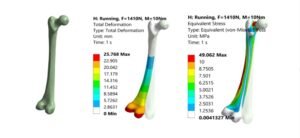
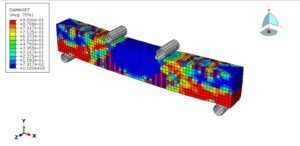
Finite Element Analysis (FEA) has revolutionized crack growth assessment, allowing engineers to analyze complex geometries, non-uniform stress fields, and intricate loading scenarios that are impossible with analytical methods. Tools like Abaqus, ANSYS Mechanical, and MSC Nastran offer robust capabilities for fracture mechanics simulations.
Practical Workflow: Simulating Crack Growth with FEA
- Geometry and Initial Crack Definition:
Start with your CAD model. The critical step is to introduce the initial crack. This often means creating a sharp notch or a predefined crack front in the geometry. Software like Abaqus and ANSYS have specialized tools for crack meshing and definition (e.g., seam cracks, arbitrary cracks). - Material Properties:
Define your material’s elastic properties (Young’s modulus, Poisson’s ratio) and, if performing elastic-plastic analysis, its plastic stress-strain curve. For fracture mechanics, you’ll need fracture toughness (KIC), Paris Law constants (C, m), and potentially J-R curves. - Meshing Considerations:
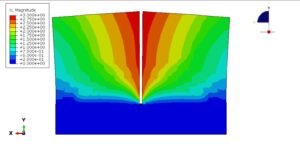
This is where FEA for crack growth diverges significantly from standard stress analysis. Accurate stress intensity factor calculation demands a highly refined mesh around the crack tip.- Singular Elements: Use specialized crack-tip elements (e.g., quarter-point elements in 2D, collapsed brick elements in 3D) to capture the stress singularity.
- Mesh Refinement: Ensure a fine mesh in the crack growth path to accurately capture the stress gradient and allow for smooth crack propagation.
- Mesh Independence: Perform mesh sensitivity studies to ensure your results are independent of mesh density.
- Boundary Conditions and Loading:
Apply realistic boundary conditions to constrain the model and accurate service loads (cyclic for fatigue, constant for creep/SCC). Ensure these represent the operational environment. - Crack Propagation Algorithms:
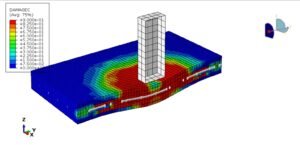
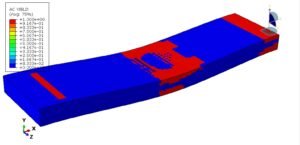
Modern FEA software uses various algorithms to simulate crack growth:- XFEM (Extended Finite Element Method): Allows cracks to propagate independently of the mesh, simplifying pre-processing for complex crack paths. Available in Abaqus, ANSYS.
- Nodal Release/Morphing: Classical approach where crack nodes are released or the mesh is adapted to allow the crack to advance.
- Contour Integral Method: Used to calculate stress intensity factors (K), J-integral, and CTOD values from the FEA solution.
- Post-Processing and Interpretation:
After the simulation, extract critical data:- Stress Intensity Factors (KI, KII, KIII): Determine the mode of fracture.
- Crack Growth Rate (da/dN): Plot against ΔK to compare with experimental data.
- Fatigue Life: Integrate da/dN over the crack path to predict the number of cycles to failure.
- J-integral/CTOD: For elastic-plastic scenarios.
- Crack Path: Visualize the predicted crack trajectory.
Example: FEA Software Capabilities
Both Abaqus and ANSYS Mechanical are industry leaders with extensive capabilities for crack growth simulation:
| Feature | Abaqus | ANSYS Mechanical |
|---|---|---|
| Stress Intensity Factor Calculation | Yes (Contour Integral, K-integral) | Yes (Contour Integral) |
| J-Integral/CTOD | Yes | Yes |
| XFEM for Crack Propagation | Yes | Yes |
| Fatigue Crack Growth Models | Yes (Paris, Forman, etc.) | Yes (Paris, NASGRO, etc.) |
| Meshing Tools for Cracks | Advanced mesh seeding, seam cracks | Smart crack meshing, arbitrary cracks |
| Creep Crack Growth | Yes | Yes |
| User Subroutines | UMAT, UEL, UDMGINI for custom models | User-defined material models (UserMat), APDL scripting |
For those looking to deepen their understanding of these powerful tools or need custom scripts for automating workflows (e.g., with Python for Abaqus scripting or MATLAB for post-processing), EngineeringDownloads.com offers specialized online tutoring and consultancy services to help you master these techniques.
Verification & Sanity Checks in Simulation
FEA is powerful, but results are only as good as the input and modeling choices. Always perform rigorous checks.
- Mesh Sensitivity: Rerun with finer/coarser meshes in critical areas. Ensure K or J values converge.
- Boundary Conditions (BCs) and Loading: Double-check that BCs accurately represent real-world constraints and that loads are applied correctly (magnitude, direction, cyclic nature).
- Material Properties: Verify that correct material constants (especially C and m for Paris Law) are used. Are they valid for your temperature and loading regime?
- Initial Crack Size: Is the initial crack size realistic based on NDT (Non-Destructive Testing) limits or assumed defect sizes?
- Analytical Comparison: Whenever possible, compare FEA results for simple cases (e.g., an edge crack in a plate) against well-established analytical solutions.
- Convergence Criteria: For non-linear analyses or explicit dynamics, ensure solution convergence is achieved without excessive numerical oscillations.
- Validation with Experimental Data: The ultimate check is to compare simulation predictions with actual experimental crack growth data for similar materials and geometries.
- Sensitivity Analysis: How do your results change with small variations in input parameters (e.g., crack size, material properties, load amplitude)? This helps understand robustness.
Common Challenges and Troubleshooting
- Meshing Issues: Poor quality elements at the crack tip will lead to inaccurate stress fields and K values. Use mesh quality checks and targeted refinement.
- Material Data Scarcity: Obtaining reliable Paris Law constants or J-R curve data can be challenging. Use conservative estimates or perform your own tests.
- Computational Cost: Detailed 3D crack growth simulations, especially with XFEM or re-meshing, can be computationally intensive. Plan your analysis carefully and use appropriate hardware.
- Complex Loading: Variable amplitude loading and multi-axial stress states make crack growth prediction more complex. Advanced models (e.g., cycle counting, interaction effects) may be needed.
- Environmental Effects: Modeling SCC or hydrogen embrittlement in FEA is highly complex and often requires specialized constitutive models or coupling with environmental transport equations.
Industry Applications of Crack Growth Analysis
The principles of crack growth are applied across a vast spectrum of engineering disciplines:
- Aerospace: Critical for damage tolerance design of aircraft fuselages, wings, and engine components. Ensures ‘safe life’ or ‘fail-safe’ operations.
- Oil & Gas: Integrity assessment of pipelines, pressure vessels, offshore structures, and drilling equipment, especially for sour service conditions (SCC, HIC). FFS Level 3 assessments are routine.
- Power Generation: Life extension of turbine components, boiler tubes, and nuclear reactor pressure vessels where creep and fatigue are dominant.
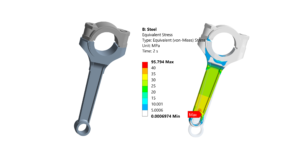
- Automotive: Durability of chassis components, engine blocks, and suspension systems under fatigue loading.
- Biomechanics: Understanding the failure of implants (e.g., hip prostheses) due to fatigue or wear, considering body fluids as corrosive environments.
- Civil Engineering: Assessment of bridges, concrete structures, and steel connections, especially under seismic or high-cycle wind loading.
Optimizing Designs for Crack Resistance
Proactive design measures are crucial to mitigate crack growth issues:
- Material Selection: Choose materials with high fracture toughness and low fatigue crack growth rates for critical components.
- Geometry Optimization: Minimize stress concentrations through generous fillets, smooth transitions, and avoiding sharp corners. CAD software like CATIA can aid in this.
- Surface Treatments: Shot peening, case hardening, or coating can introduce compressive residual stresses, inhibiting crack initiation and early growth.
- Redundancy: Design with multiple load paths so that failure of one element doesn’t lead to catastrophic system failure.
- Inspection & Monitoring: Implement robust NDT (Non-Destructive Testing) protocols and structural health monitoring systems to detect cracks early.
- Life Extension Strategies: Develop repair procedures (e.g., crack arrest holes, patching) and operational limits based on detailed crack growth predictions.
Conclusion: Mastering Crack Growth for Enduring Designs
Crack growth analysis is a cornerstone of modern structural engineering. It’s not just about predicting failure; it’s about enabling safer, more reliable, and more economically viable designs. By combining a solid understanding of fracture mechanics, diligent experimental testing, and advanced numerical simulation techniques using tools like Abaqus and ANSYS, engineers can confidently tackle the challenges of fatigue, creep, and environmental cracking.
Embracing a damage tolerance philosophy and integrating FFS methodologies into your workflow will empower you to create enduring structures that stand the test of time and operational stress. The journey to mastering crack growth is continuous, but with the right knowledge and tools, you’re well-equipped to protect your designs and assets.
Further Reading
For in-depth technical specifications on fatigue crack growth testing, refer to the ASTM International standards:
ASTM E647 – Standard Test Method for Measurement of Fatigue Crack Growth Rates