

API 579 vs BS 7910: When to Use Each Standard in Fitness for Service Assessments
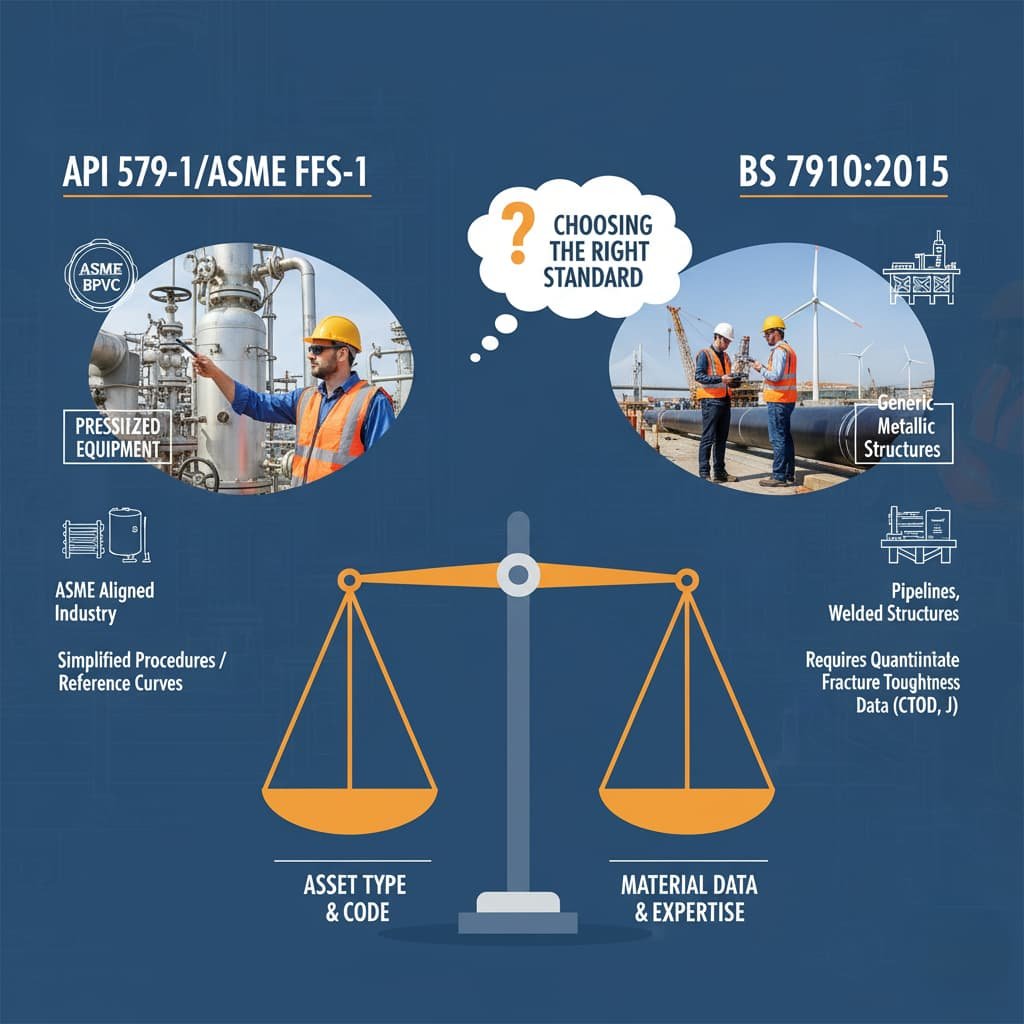
API 579 vs BS 7910 Fitness for Service (FFS) assessments help engineers decide whether a component with defects can continue operating safely. Different standards exist for performing these evaluations, and two of the most widely used are API 579‑1/ASME FFS‑1 and BS 7910. Both documents use fracture mechanics to determine whether flaws are acceptable, but their scopes and data […]
Understanding API 579 and FFS Assessment Levels
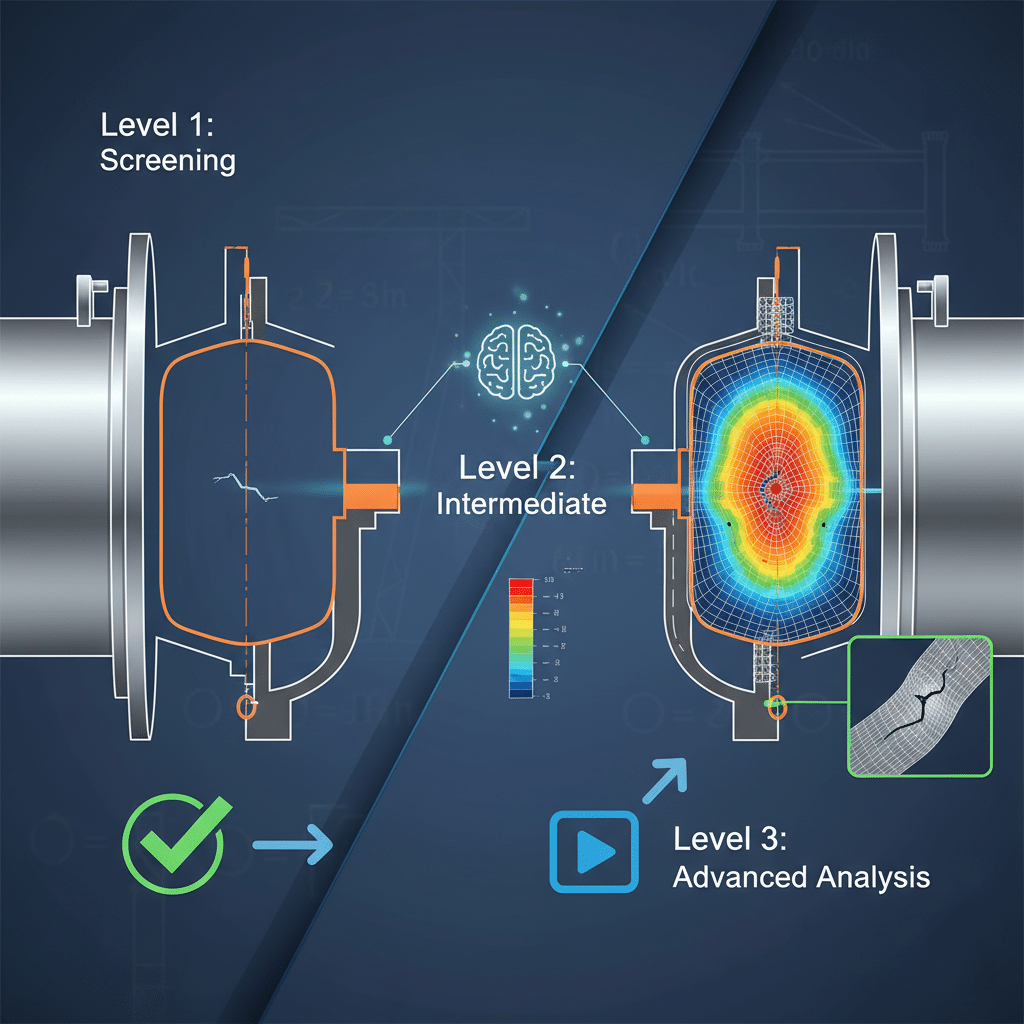
Understanding API 579 and FFS Assessment Levels: From Screening to Advanced Analysis Industrial equipment doesn’t last forever. Corrosion, fatigue and accidental damage gradually erode the strength of pipelines, pressure vessels and other critical assets. Fitness for Service (FFS) assessments give engineers a structured way to decide whether a piece of equipment can safely continue operating or whether it […]
Fitness for Service (FFS) in Asset Integrity
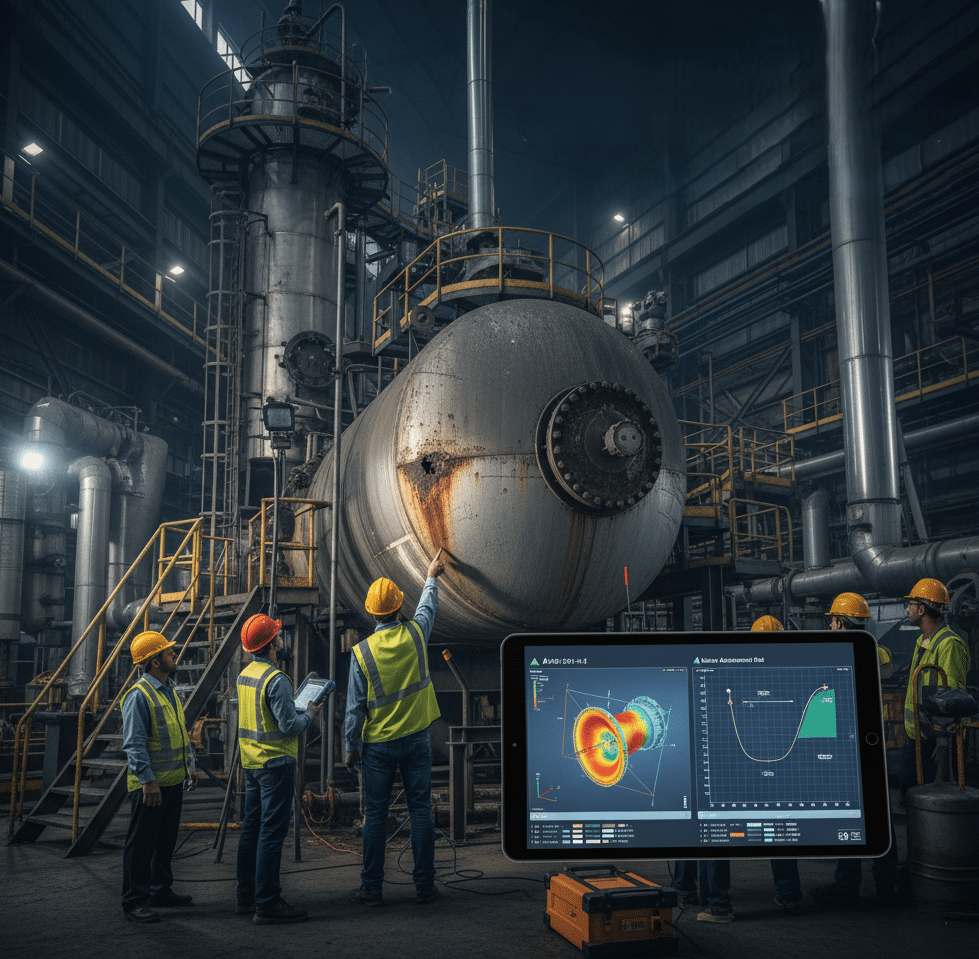
The Role of Fitness-for-Service (FFS) in Asset Integrity Fitness-for-Service (FFS) analysis is a structured engineering approach to determine if equipment with flaws or damage can continue to operate safely and reliably. It is a crucial part of asset integrity management, especially in high-risk sectors like oil & gas, power generation, and manufacturing. Over an asset’s […]
What is the Best FEA Software in 2025

What is the Best FEA Software in 2025 Finite Element Analysis (FEA) software has become a cornerstone of modern engineering, allowing designers to virtually test how products and structures behave under various forces and conditions. By breaking complex structures into smaller “finite” elements and simulating physical phenomena (like stress, heat, or fluid flow) on each […]
Abaqus vs ANSYS: Which Simulation Software Is Better in 2025?
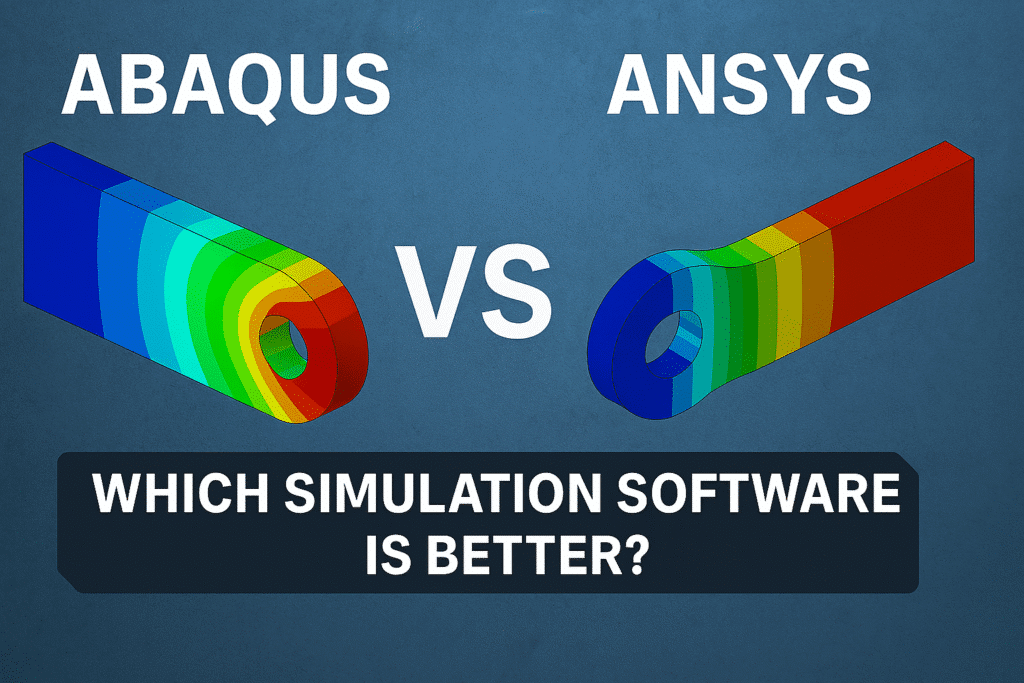
Introduction In modern engineering workflows, simulation tools are indispensable. They enable engineers to virtually test designs under various conditions, reducing the need for costly physical prototypes and accelerating innovation. Two of the leading finite element analysis (FEA) platforms are Abaqus and ANSYS, each with decades of development behind them. In 2025, these tools remain at […]
How FEM is changing biomechanics
Intro Finite-element modeling (FEM) gives engineers and clinicians a virtual lab for the body. Instead of cutting bone or running many costly experiments, we build digital bones, discs and implants, apply realistic loads, and watch how the parts behave. This helps teams design safer implants, plan surgeries, and teach students — all while saving time […]
Cold Gas Spraying & Shot Peening: A clear, practical guide to simulating high-velocity impacts
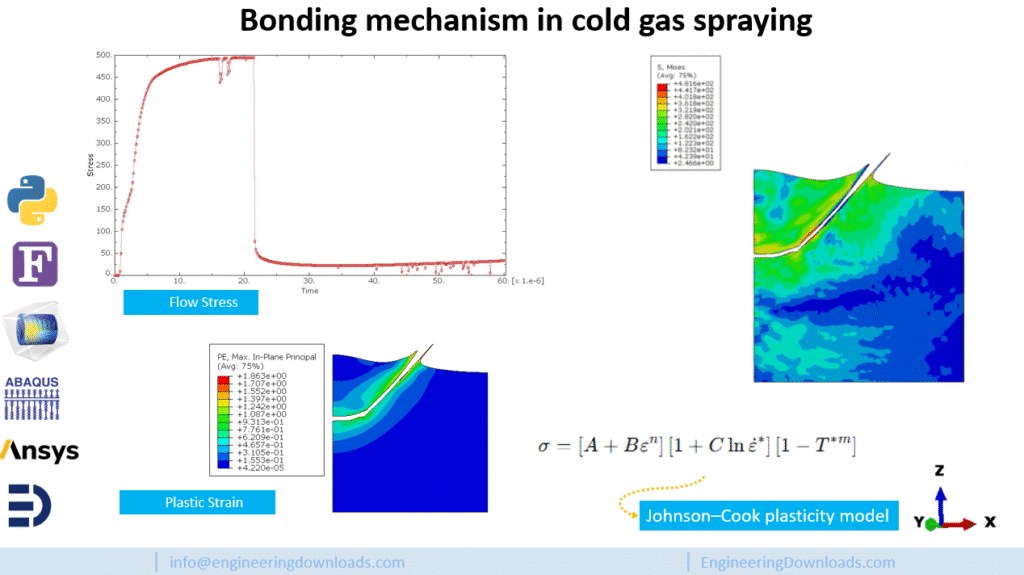
Cold gas spraying and shot peening may look different at first glance — one deposits material, the other changes the surface — but both are driven by the same physics: high-velocity impacts that create intense, highly localized plastic deformation. That makes them perfect candidates for finite-element simulation with tools like Abaqus, Ansys, COMSOL, or other […]
Large Deformation in ABAQUS via UMAT
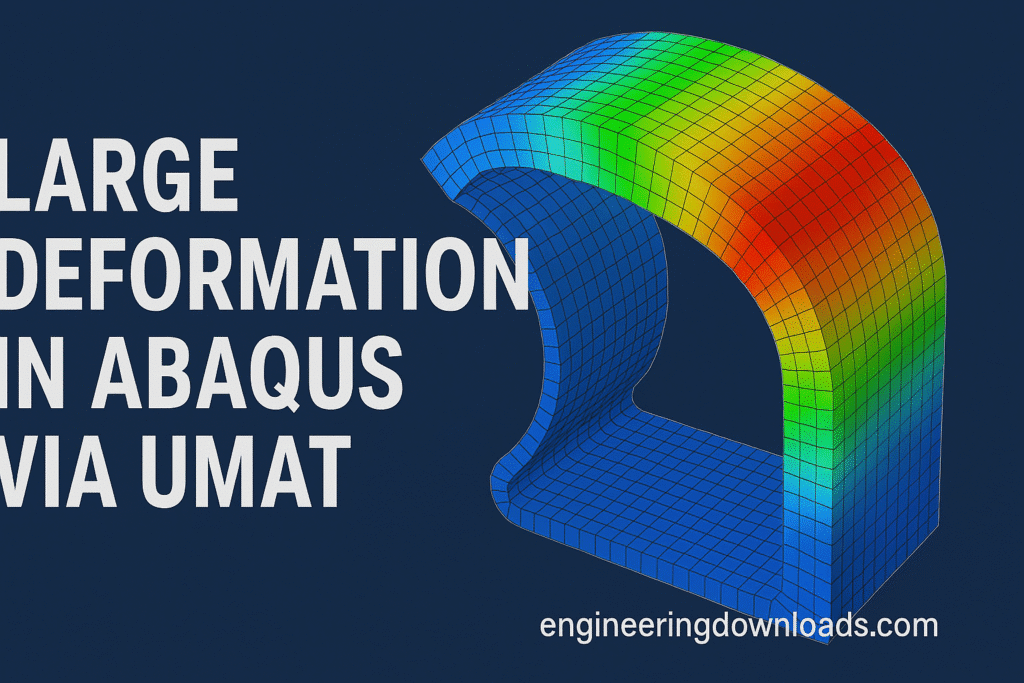
1. An Introduction to Non-Linear Continuum Mechanics Finite deformation (also called large deformation or finite strain theory) is a framework in continuum mechanics that describes the behavior of materials undergoing significant volume changes, where strains and rotations are not small. Contrary to small deformation theories, which assume infinitesimal changes, finite deformation accounts for geometric non-linearities […]
Which one is better? Abaqus or ANSYS?
As an engineer, we need to build a model to simulate a process so we can save many and reduce processing time. For this aim, we need to use conventional solvers such as Abaqus, ANSYS, Solidwork (I know, Solidwork solver is a joke), and etc. In this post, we are trying to explore the differences […]
Linking Abaqus and FORTRAN: A Step-by-Step Guide

In this tutorial, we aim to explain the first step of subroutine programming in the Abaqus software, which is linking the Abaqus software and FORTRAN compiler. You can watch the video tutorial for additional tips, more detailed explanations, and a step-by-step demonstration of installing and linking FORTRAN with Abaqus. Initially, you need to locate the […]
