Computational Fluid Dynamics (CFD) has long been an indispensable tool in engineering, helping us understand and predict complex fluid behaviors across countless applications. From optimizing aerospace designs to simulating blood flow in biomechanics, CFD drives innovation. However, traditional CFD can be computationally intensive and time-consuming, especially for intricate systems or during iterative design processes. This is where the power of Artificial Intelligence (AI) and Machine Learning (ML) steps in.
Integrating AI into CFD workflows isn’t just a trend; it’s a transformative shift. It promises to accelerate simulations, enhance accuracy, and unlock new possibilities for design and analysis that were previously out of reach. For engineers navigating the complexities of modern projects, understanding and applying AI in CFD offers a significant competitive advantage. Let’s dive into how AI is revolutionizing fluid dynamics.

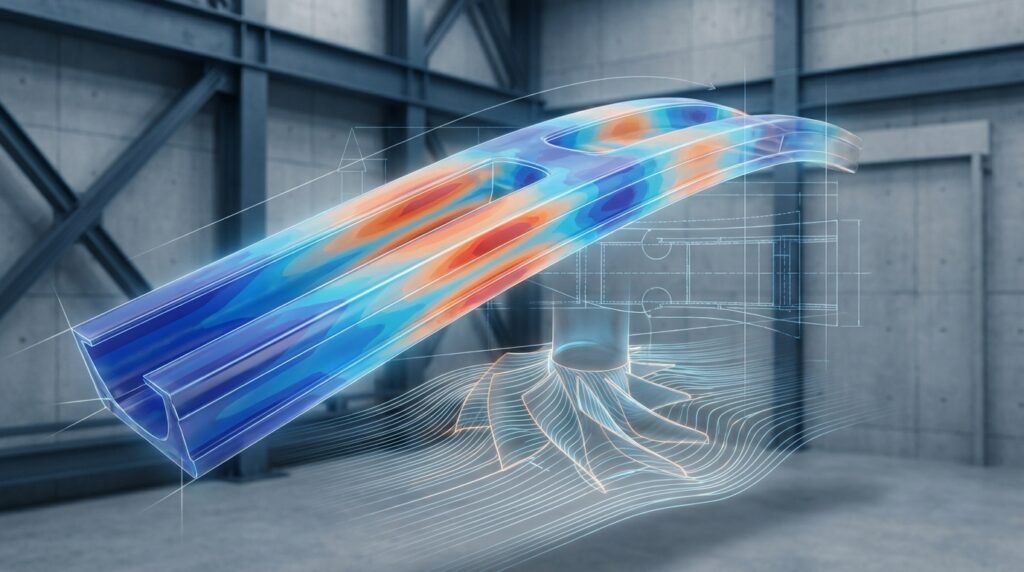
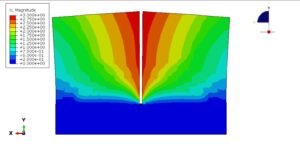
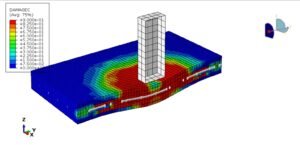
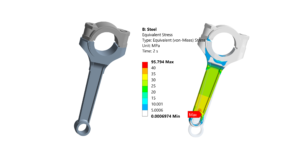
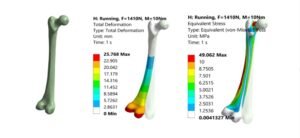
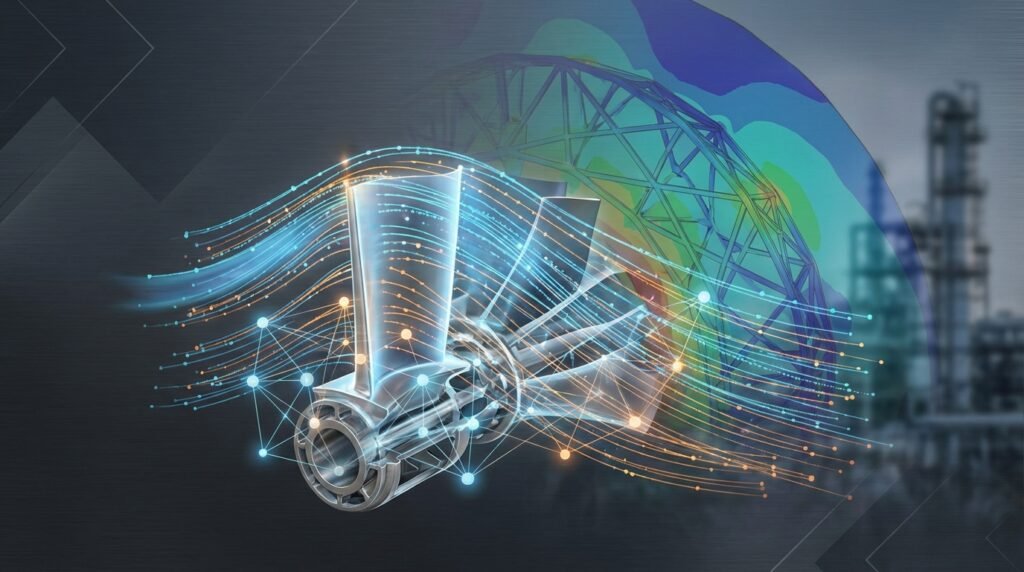
Image: Deep learning predicting flow fields, showcasing AI’s application in CFD.
The Rise of AI in Computational Fluid Dynamics (CFD)
The synergy between AI and CFD is rapidly reshaping how engineers approach fluid dynamics problems. AI provides powerful capabilities to learn from data, identify patterns, and make predictions, perfectly complementing CFD’s first-principles-based simulation prowess.
Why Combine AI with CFD?
The marriage of AI and CFD addresses some of the long-standing challenges in simulation while opening doors to unprecedented levels of insight and efficiency.
Addressing Traditional CFD Challenges
- Computational Cost: High-fidelity CFD simulations, especially for transient, turbulent, or multiphase flows, demand enormous computational resources and time. AI can create fast, surrogate models that provide near real-time predictions.
- Design Space Exploration: Optimizing designs often requires thousands of CFD runs, which is impractical. AI-driven optimization algorithms can intelligently navigate vast design spaces.
- Complexity of Physics: Accurately modeling complex phenomena like turbulence or combustion often relies on empirical models. AI offers data-driven approaches to improve these models, learning from high-fidelity simulations or experimental data.
New Frontiers in Engineering Design
- Real-time Decision Making: AI-powered models can enable real-time analysis for applications like aerospace control systems or active flow manipulation.
- Personalized Engineering: In fields like biomechanics, AI can help tailor simulations to individual patient data, improving medical device design or surgical planning.
- Predictive Maintenance: Monitoring fluid systems with embedded sensors and AI-driven CFD models can predict component failure before it occurs, crucial in Oil & Gas pipelines or power generation.
Key AI/ML Concepts Relevant to CFD
To effectively leverage AI in CFD, engineers need a foundational understanding of key machine learning concepts:
Machine Learning (ML) Fundamentals
ML algorithms learn from data without explicit programming. For CFD, this often involves supervised learning (e.g., predicting pressure fields from geometry) or unsupervised learning (e.g., identifying dominant flow patterns).
- Supervised Learning: Training a model on labeled data (input-output pairs). Examples include regression (predicting continuous values like velocity) and classification (categorizing flow regimes).
- Unsupervised Learning: Finding hidden patterns or structures in unlabeled data. Clustering techniques can identify similar flow structures or streamline patterns.
- Feature Engineering: The process of selecting and transforming raw data into features that can be used to create predictive models. This is critical for good model performance.
Deep Learning (DL) Architectures
A subset of ML, deep learning uses neural networks with multiple layers (deep architectures) to learn complex patterns directly from raw data. DL is particularly powerful for high-dimensional data, like flow fields.
- Convolutional Neural Networks (CNNs): Excellent for processing grid-like data, such as images of flow fields or mesh structures. They can extract spatial features.
- Recurrent Neural Networks (RNNs) / LSTMs: Suitable for sequential data, potentially useful for time-dependent fluid phenomena or transient simulations.
- Autoencoders: Used for dimensionality reduction and learning compressed representations of complex flow fields, crucial for Reduced-Order Models (ROMs).
Reinforcement Learning (RL)
RL involves an ‘agent’ learning to make decisions by interacting with an environment and receiving rewards or penalties. In CFD, RL can be applied to optimize active flow control strategies or intelligent design exploration, where the ‘agent’ learns to improve flow characteristics.
Practical Applications of AI in CFD
The integration of AI offers tangible benefits across various stages of the CFD workflow. Here’s how engineers are applying these techniques today:
Accelerating CFD Simulations
One of the most immediate and impactful applications of AI is in speeding up the simulation process, enabling faster iterations and more comprehensive analyses.
Surrogate Models and Reduced-Order Models (ROMs)
Instead of running full-fidelity CFD simulations every time, AI can build data-driven ‘surrogates’ or ROMs that capture the essential physics with significantly less computational cost. These models are trained on a subset of high-fidelity CFD results (e.g., from ANSYS Fluent or OpenFOAM) and can then predict outcomes for new input parameters in milliseconds.
- Polynomial Chaos Expansion (PCE): A spectral projection method often enhanced with ML for uncertainty quantification and surrogate modeling.
- Proper Orthogonal Decomposition (POD) with Neural Networks: POD reduces dimensionality, and NNs then learn the evolution of these reduced modes.
- Generative Adversarial Networks (GANs): Can generate new, physically plausible flow field data, useful for data augmentation or rapid prototyping.
Smart Meshing and Adaptive Refinement
Mesh generation is a critical, often manual, step in CFD. AI can automate and optimize this process:
- AI-guided Mesh Generation: Machine learning models can learn optimal meshing strategies from previous simulations, predicting where refinement is needed based on geometry or flow characteristics, improving accuracy in tools like Abaqus or ANSYS Mechanical/Fluent pre-processors.
- Adaptive Mesh Refinement (AMR): AI can dynamically identify regions requiring higher mesh density (e.g., shear layers, shock waves) during a simulation, guiding AMR algorithms for more efficient and accurate solutions.
Turbulence Modeling with AI
Turbulence remains one of the most challenging aspects of CFD. AI is offering new avenues:
- Data-driven Turbulence Closures: Training neural networks to correct or augment traditional RANS (Reynolds-Averaged Navier-Stokes) models by learning from Direct Numerical Simulation (DNS) or experimental data, leading to more accurate predictions of complex turbulent flows.
- Hybrid RANS/ML Models: Combining the robustness of RANS with the flexibility of ML for specific flow features.
Enhancing Design Optimization
AI can transform the iterative design process by guiding engineers toward optimal solutions more efficiently.
Generative Design and Inverse Problems
Instead of engineers proposing designs and then analyzing them, AI can generate design candidates that meet specific performance criteria directly. This is particularly powerful for inverse problems, where the desired output (e.g., drag reduction) is known, and the input (geometry) needs to be determined.
- Topology Optimization: AI can help explore structural and fluid domain topology optimization, identifying optimal shapes for minimal drag or maximum lift, complementing traditional CAD-CAE workflows with tools like CATIA or design exploration platforms.
Real-time Performance Prediction
For applications requiring immediate feedback, such as aircraft control surfaces or active mixing systems, AI models can provide instant predictions of performance based on sensor inputs or control actions.
Post-Processing and Data Analysis
Extracting meaningful insights from vast CFD datasets can be daunting. AI excels at this.
Feature Extraction and Pattern Recognition
ML algorithms can automatically identify and classify complex flow structures (e.g., vortices, separation bubbles, boundary layer transitions) that might be difficult to detect manually, providing deeper insights into fluid behavior.
Uncertainty Quantification (UQ)
AI/ML methods are increasingly used to quantify uncertainties in CFD predictions arising from input parameters, model assumptions, or numerical errors. This is crucial for robust engineering decisions, especially in critical applications like structural integrity assessment or FFS Level 3 analyses where margins are tight.
AI in CFD Workflow: A Step-by-Step Guide
Implementing AI into your CFD projects requires a structured approach. Here’s a practical workflow:
1. Problem Definition and Data Collection
- Identify the Goal: What do you want AI to achieve? Accelerate simulation, optimize a design, predict performance?
- Define Data Needs: What data is required? High-fidelity CFD runs (e.g., from ANSYS Fluent, OpenFOAM), experimental data, sensor readings?
- Data Generation Strategy: If using CFD data, define simulation parameters (geometry variations, boundary conditions, fluid properties) to ensure comprehensive coverage of the design/operating space. Consider using Design of Experiments (DOE) principles.
2. Data Pre-processing and Feature Engineering
- Clean and Normalize Data: Remove outliers, handle missing values, and scale data to prevent bias (e.g., using Python’s scikit-learn).
- Feature Extraction: Convert raw simulation outputs (e.g., velocity fields) into meaningful features for your ML model. For example, instead of raw grid points, use integral quantities like drag coefficients, lift forces, or pressure distributions at specific surfaces.
- Dimensionality Reduction: Techniques like Principal Component Analysis (PCA) or autoencoders can reduce the complexity of high-dimensional flow field data, making it more manageable for ML models.
3. Model Selection and Training
- Choose an ML Model: Based on your problem (regression, classification, generative), select an appropriate AI architecture (e.g., neural network, Random Forest, Gaussian Process Regression). Python libraries like TensorFlow, PyTorch, or scikit-learn are essential here.
- Split Data: Divide your collected data into training, validation, and test sets. A typical split might be 70% training, 15% validation, 15% test.
- Train the Model: Use your training data to teach the model. Monitor performance on the validation set to tune hyperparameters and prevent overfitting.
- Evaluate Performance: Assess the model’s accuracy, robustness, and generalization capabilities using the unseen test data. Metrics like R-squared, Mean Squared Error (MSE), or custom physical error metrics are vital.
4. Integration with CFD Solvers
Once trained, the AI model needs to be integrated into your simulation environment.
- Coupled Approach: The AI model runs alongside the CFD solver, providing real-time predictions or corrections (e.g., for turbulence models or boundary conditions).
- Decoupled Approach: The AI model acts as a fast surrogate, replacing full CFD runs for rapid design exploration or sensitivity studies, often feeding results back into CAD-CAE workflows.
- Scripting: Use Python or MATLAB scripting capabilities within or alongside your CFD software (e.g., ANSYS scripting, OpenFOAM function objects, Abaqus Python API) to manage data exchange and model execution.
5. Deployment and Iteration
- Deployment: Implement the trained AI model for practical use, whether in an automated design loop, a real-time monitoring system, or a fast prediction tool.
- Continuous Improvement: AI models are not static. As new high-fidelity data becomes available (e.g., from experiments or more accurate simulations), retrain and refine your models.
Tools and Technologies for AI-Powered CFD
A robust toolkit is essential for integrating AI into your fluid dynamics work.
Programming Languages
- Python: The de-facto standard for AI/ML development due to its extensive libraries, ease of use, and strong community support.
- MATLAB: Popular in engineering for its matrix operations, built-in toolboxes for ML, and strong visualization capabilities, especially useful for signal processing in fluid dynamics data.
Machine Learning Libraries
- TensorFlow & PyTorch: Leading deep learning frameworks for building complex neural networks.
- scikit-learn: A comprehensive library for traditional machine learning algorithms (regression, classification, clustering, dimensionality reduction).
- Keras: A high-level API for TensorFlow, making deep learning models easier to build and prototype.
Integration with Commercial & Open-Source CFD Software
Modern CFD platforms offer increasing flexibility for AI integration:
- ANSYS Products (Fluent, CFX, Mechanical): Can be scripted with Python (PyFluent, PyMAPDL) to automate workflows, extract data, and interface with external ML models.
- OpenFOAM: Its open-source nature allows for deep customization, enabling direct integration of ML models for turbulence, boundary conditions, or source terms, often using C++ and Python wrappers.
- Abaqus (especially with CFD capabilities or coupled FSI): Python API facilitates data extraction and model control for complex coupled simulations like fluid-structure interaction.
Specialized AI Frameworks for Scientific Computing
- DeepXDE: A Python library for Physics-Informed Neural Networks (PINNs), which can solve forward and inverse problems involving partial differential equations.
- Modulus (NVIDIA): A framework for developing physics-informed machine learning models and digital twins, aiming to accelerate scientific discovery and engineering design.
Overcoming Challenges and Common Mistakes
While promising, AI in CFD is not without its hurdles. Being aware of these can save significant time and effort.
Data Scarcity and Quality
- Mistake: Relying on a small, unrepresentative dataset for training.
- Tip: Invest time in generating high-quality, diverse data. Utilize Design of Experiments (DOE) to efficiently sample your parameter space. Consider data augmentation techniques if applicable.
Model Interpretability
- Mistake: Treating AI models as black boxes without understanding their underlying mechanisms.
- Tip: Employ explainable AI (XAI) techniques (e.g., SHAP, LIME) to gain insights into which features drive predictions. This is crucial for gaining trust in the model, especially in safety-critical applications like structural integrity.
Generalization and Robustness
- Mistake: Assuming a model trained on a specific range of conditions will perform well outside that range.
- Tip: Thoroughly test your model’s performance on unseen data that covers the expected operational envelope. Implement robustness checks and evaluate extrapolation capabilities.
Computational Resources
- Mistake: Underestimating the computational power required for training large deep learning models.
- Tip: Leverage cloud computing platforms (AWS, Azure, GCP) or high-performance computing (HPC) clusters. Optimize your code and utilize GPUs effectively (e.g., with CUDA).
Verification and Sanity Checks in AI-Enhanced CFD
Just like traditional CFD, AI-enhanced simulations require rigorous verification and validation (V&V) to ensure confidence in the results. The ‘black box’ nature of some AI models makes these checks even more critical.
Model Validation against Ground Truth
Always compare AI predictions against reliable ground truth data. This could be high-fidelity CFD results (e.g., LES/DNS), experimental measurements, or analytical solutions where available.
- Checklist:
- Compare key engineering quantities (drag, lift, pressure drop) directly.
- Visually inspect flow fields (velocity, pressure contours) for qualitative agreement.
- Perform statistical analysis (e.g., error distributions, R-squared values) across the entire dataset.
- Validate across a range of operating conditions, not just the training domain.
Sensitivity Analysis of AI Parameters
Understand how variations in input parameters affect the AI model’s output. This is crucial for identifying critical sensitivities and ensuring model stability.
- Practical Tip: Perturb input boundary conditions or geometric parameters slightly and observe the change in the AI model’s prediction. Does it respond physically?
Ensuring Physical Consistency
AI models, especially data-driven ones, can sometimes produce physically implausible results if not properly constrained or trained. This is where physics-informed approaches shine.
- Common Mistake: Accepting non-physical oscillations or violations of conservation laws (mass, momentum, energy).
- Troubleshooting: Incorporate physical constraints into the AI model’s loss function during training (e.g., using Physics-Informed Neural Networks – PINNs). Validate that fundamental fluid mechanics principles are upheld in the AI’s predictions.
Boundary Condition (BC) Influence
If your AI model is predicting flow fields based on boundary conditions, ensure its predictions are consistent with those BCs. Incorrectly handled BCs are a frequent source of error in any CFD analysis.
Convergence Criteria in Coupled Systems
When an AI model is coupled with a traditional CFD solver (e.g., for turbulence modeling or adaptive meshing), ensure the coupled system reaches a stable, converged solution. Monitor residuals and other convergence metrics just as you would in a pure CFD run.
Comparative View: AI Applications in Engineering Fields
AI’s impact extends beyond CFD, creating exciting parallels and integration opportunities across engineering domains.
| Application Area | AI/ML Technique | Engineering Benefit | Relevant Tools/Context |
|---|---|---|---|
| CFD Simulation Acceleration | Surrogate Models (ROMs, NNs) | Reduced computational time, faster design iterations | ANSYS Fluent, OpenFOAM, Python (TensorFlow, PyTorch) |
| Structural Optimization (FEA) | Generative Design, Topology Opt. (CNNs) | Lightweighting, improved performance, material reduction | Abaqus, ANSYS Mechanical, MATLAB, Python (scikit-learn) |
| Fatigue & Fracture Prediction | Regression, Classification (RNNs, LSTMs) | Predicting crack growth, FFS Level 3 assessment automation | Abaqus, Python (TensorFlow), Structural Integrity context |
| Biomechanics Flow Analysis | Image-based Flow Rec. (CNNs), Personalized ROMs | Custom prosthetic design, surgical planning for patient-specific flows | OpenFOAM, COMSOL, Python (Keras), Medical Imaging |
| Oil & Gas Pipeline Monitoring | Anomaly Detection (Autoencoders), Time-series Pred. (LSTMs) | Predictive maintenance, leak detection, flow assurance | SCADA data, Python, MATLAB, Sensor Networks |
The Future of AI in Fluid Dynamics
The journey of AI in CFD is just beginning, with several exciting directions on the horizon.
Digital Twins and Real-time Monitoring
AI-powered CFD models will form the core of high-fidelity digital twins, replicating physical systems in real-time. This is crucial for predictive maintenance, operational optimization in Oil & Gas, and active control systems in aerospace, allowing for rapid decision-making and anomaly detection.
Autonomous Design and Optimization
We can anticipate increasingly autonomous design workflows where AI agents (using Reinforcement Learning) iteratively refine geometries, material properties, and operating conditions to achieve optimal performance without extensive human intervention. This will further integrate CAD-CAE workflows.
Physics-Informed Neural Networks (PINNs)
PINNs are a rapidly evolving field where neural networks are trained not only on data but also directly on the governing partial differential equations (like Navier-Stokes). This approach inherently ensures physical consistency, reduces data requirements, and offers robust solutions for complex problems, bridging the gap between data-driven and physics-based modeling.
To deepen your understanding or kickstart your AI in CFD projects, explore our range of downloadable Python and MATLAB scripts for CFD data analysis, or consider an online consultation with our engineering experts at EngineeringDownloads.com.
Further Reading
For more in-depth information on applying AI and machine learning to CFD, consider reviewing official documentation and research from leading software providers:
ANSYS Blog: AI and Machine Learning in CFD – What You Need to Know
Frequently Asked Questions about AI in CFD
Here are some common questions engineers have regarding the integration of Artificial Intelligence into Computational Fluid Dynamics.
Q1: What is the primary benefit of using AI in CFD?
A: The primary benefit is significantly reducing the computational cost and time required for simulations, enabling faster design iterations, more extensive parameter studies, and ultimately, quicker innovation cycles. AI also helps extract deeper insights from simulation data and can automate complex tasks like meshing and optimization.
Q2: Does AI replace traditional CFD solvers like ANSYS Fluent or OpenFOAM?
A: No, AI typically complements and enhances traditional CFD solvers rather than replacing them. AI is often used to build fast surrogate models, optimize inputs for solvers, improve sub-models (like turbulence models), or accelerate post-processing. High-fidelity CFD remains crucial for generating training data and for verification and validation of AI models.
Q3: What programming languages and tools are essential for AI in CFD?
A: Python is the most essential language due to its rich ecosystem of AI/ML libraries like TensorFlow, PyTorch, and scikit-learn. MATLAB is also valuable, especially for engineers familiar with its scientific computing environment. Familiarity with scripting within CFD software (e.g., Python APIs for ANSYS or Abaqus) is also highly beneficial.
Q4: How can AI help with turbulence modeling in CFD?
A: AI can significantly improve turbulence modeling by learning from high-fidelity data (like DNS or experimental results) to correct or augment traditional RANS models. This data-driven approach can lead to more accurate predictions for complex turbulent flows, especially in regimes where empirical models struggle, offering advancements for both aerospace and industrial applications.
Q5: What are Physics-Informed Neural Networks (PINNs) and why are they important for CFD?
A: PINNs are a type of neural network that incorporates the governing physical laws (e.g., Navier-Stokes equations) directly into their training process, typically through the loss function. This is crucial for CFD because it ensures that the AI model’s predictions are physically consistent, even with limited training data, leading to more robust and reliable results without violating fundamental conservation laws.
Q6: Is AI only for large-scale CFD problems, or can it benefit smaller projects too?
A: While AI shines in accelerating large-scale, computationally expensive problems (like complex aerospace simulations or industrial process optimization), it can absolutely benefit smaller projects too. For instance, creating a simple surrogate model for a common component can rapidly assess design changes, or using ML for automated mesh quality checks can streamline pre-processing even for moderate-sized simulations.
Q7: How do I ensure my AI-enhanced CFD results are reliable?
A: Reliability is ensured through rigorous verification and validation (V&V). This includes comparing AI model predictions against high-fidelity CFD results or experimental data, performing sensitivity analyses on AI parameters, ensuring physical consistency of the AI outputs (e.g., checking conservation laws), and monitoring convergence when AI is coupled with a solver. Don’t blindly trust AI; always apply engineering judgment and established V&V practices.