Introduction to Thermal Analysis
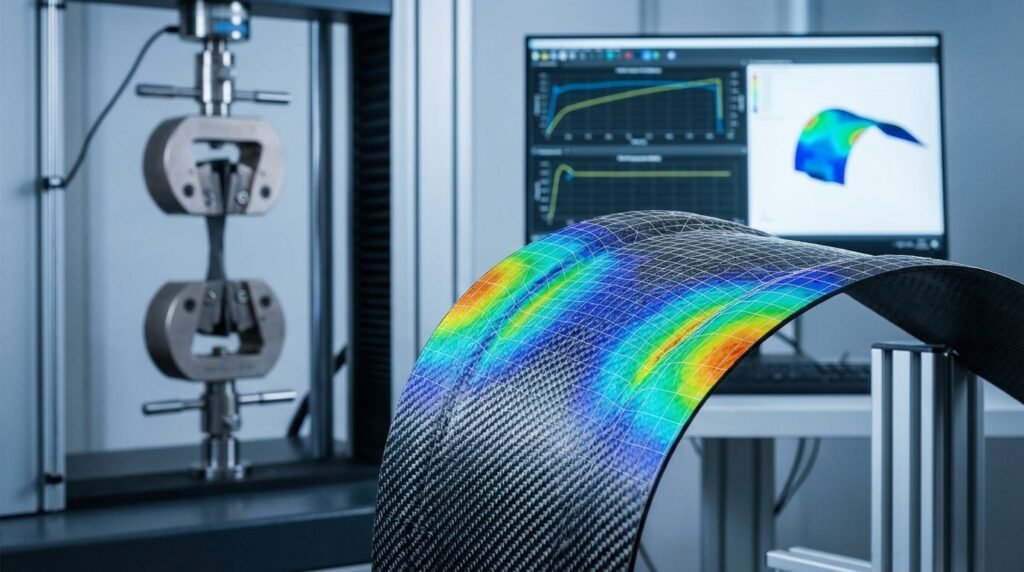
Thermal analysis is an indispensable discipline within engineering, focusing on understanding and predicting how heat energy is transferred through and interacts with materials and systems. From the intricate circuitry of microelectronics to the vast structures of aerospace vehicles and offshore platforms, managing thermal loads is paramount to ensuring operational efficiency, safety, and longevity. This guide provides a comprehensive, engineer-to-engineer overview of thermal analysis, emphasizing practical application, simulation methodologies, and crucial verification steps.
What is Thermal Analysis?
At its core, thermal analysis involves the mathematical and computational study of heat transfer phenomena. It encompasses the principles of conduction, convection, and radiation to evaluate temperature distributions, heat fluxes, and thermal stresses within components or assemblies. Engineers utilize thermal analysis to design systems that operate within safe temperature limits, optimize thermal performance, prevent thermal fatigue, and ensure structural integrity under varying thermal environments.
Why is Thermal Analysis Critical in Engineering?
The criticality of thermal analysis spans virtually every engineering domain. Heat, if not properly managed, can lead to material degradation, reduced component lifespan, system failure, and even catastrophic events. Consider the following applications where thermal analysis is non-negotiable:
- Aerospace: Designing high-performance jet engines, re-entry vehicles, and satellite components subjected to extreme temperature gradients. Thermal analysis ensures material survival and structural stability.
- Oil & Gas: Evaluating pipelines, pressure vessels, and drilling equipment operating in high-temperature, high-pressure environments. Critical for Fitness-for-Service (FFS Level 3) assessments to prevent thermal creep or fracture.
- Electronics: Preventing overheating in CPUs, power devices, and compact electronic assemblies to maintain performance and reliability.
- Automotive: Optimizing engine cooling systems, brake performance, and exhaust components to enhance efficiency and safety.
- Structural Engineering: Assessing the impact of fire on building structures or solar loading on bridge decks, ensuring integrity under extreme thermal expansion/contraction.
- Biomechanics: Understanding heat dissipation in medical implants or thermal effects during surgical procedures.
- Manufacturing: Controlling temperatures in welding, heat treatment, and casting processes to achieve desired material properties and minimize residual stresses.
Fundamentals of Heat Transfer
A solid grasp of the three primary modes of heat transfer is fundamental to any thermal analysis endeavor. These mechanisms dictate how thermal energy moves through and between systems.
Conduction
Conduction is the transfer of thermal energy through direct contact, primarily driven by temperature gradients within a solid material or between solids in contact. At the microscopic level, it involves the vibration and collision of atoms and molecules, or the movement of free electrons (especially in metals). Fourier’s Law of Conduction describes this process, relating heat flux to the material’s thermal conductivity and the temperature gradient.
Convection
Convection involves heat transfer through the movement of fluids (liquids or gases). This can be natural (free convection), where fluid motion arises from density differences caused by temperature variations, or forced (forced convection), where external means like pumps or fans induce fluid movement. Newton’s Law of Cooling is commonly used to model convective heat transfer, involving a heat transfer coefficient, surface area, and the temperature difference between the surface and the fluid.
Radiation
Radiation is the transfer of heat through electromagnetic waves, requiring no intervening medium. All objects with a temperature above absolute zero emit thermal radiation. The Stefan-Boltzmann Law governs the rate of radiative heat transfer, depending on the object’s absolute temperature, emissivity, and surface area. This mode is particularly significant at high temperatures and in vacuum environments, such as in space applications.
Combined Heat Transfer Mechanisms
In most real-world engineering problems, heat transfer occurs through a combination of these modes simultaneously. For example, a hot pipe might lose heat by convection to the surrounding air and by radiation to nearby surfaces. Understanding how to model and couple these mechanisms is crucial for accurate thermal analysis.
| Heat Transfer Mode | Mechanism | Key Equation Basis | Typical Engineering Examples |
|---|---|---|---|
| Conduction | Direct molecular/atomic contact and vibration; electron movement | Fourier’s Law: Q = -kA(dT/dx) | Heat sink, wall insulation, integrated circuit boards |
| Convection | Fluid motion (advection) carrying thermal energy | Newton’s Law of Cooling: Q = hA(Ts – Tinf) | Engine cooling systems, forced air heaters, natural convection around a hot pipe |
| Radiation | Electromagnetic waves; no medium required | Stefan-Boltzmann Law: Q = εσAT^4 | Solar heating, satellite thermal control, furnace heat transfer |
Methods for Thermal Analysis
Engineers employ various methods to perform thermal analysis, ranging from analytical solutions for simplified cases to sophisticated numerical simulations for complex geometries and boundary conditions.
Analytical Methods
Analytical solutions provide exact mathematical expressions for temperature distributions. These methods are invaluable for validating numerical models and gaining fundamental insights. However, they are typically limited to simple geometries (e.g., flat plates, cylinders, spheres) with idealized boundary conditions and material properties. For instance, calculating steady-state temperature distribution in a 1D wall with constant thermal conductivity is a classic analytical problem.
Numerical Methods: The Power of FEA and CFD
For the vast majority of real-world engineering problems involving complex geometries, heterogeneous materials, and non-uniform boundary conditions, numerical methods are indispensable. The two most prominent are Finite Element Analysis (FEA) and Computational Fluid Dynamics (CFD).
Finite Element Analysis (FEA) for Thermal Problems
Thermal FEA is widely used to determine temperature distributions and heat fluxes within solid bodies. It discretizes the continuous domain into a finite number of elements, solving the heat diffusion equation (or energy balance) at discrete points (nodes). Popular FEA software packages like ANSYS Mechanical, Abaqus, and MSC Nastran offer robust capabilities for steady-state and transient thermal analysis, including conduction, convection, and radiation. These tools are often integrated into broader CAD-CAE workflows, allowing direct import of geometries from software like CATIA or SolidWorks.
Computational Fluid Dynamics (CFD) for Convective Heat Transfer
CFD is the go-to method for analyzing fluid flow and associated heat transfer, particularly when convective effects are dominant or when fluid dynamics significantly influence the thermal profile. CFD solves the Navier-Stokes equations along with the energy equation, providing detailed insights into fluid velocities, pressures, temperatures, and heat transfer coefficients. Tools such as ANSYS Fluent/CFX and OpenFOAM are industry standards for complex CFD simulations, enabling engineers to design more efficient heat exchangers, optimize electronic cooling, or predict aerodynamic heating.
Practical Workflow for Thermal Simulation
Conducting a successful thermal simulation, especially using FEA or CFD, follows a structured workflow. Adhering to these steps ensures accuracy, efficiency, and reliable results.
1. Problem Definition and Simplification
Clearly define the objective of the analysis. What quantities need to be determined (e.g., maximum temperature, heat flux, thermal gradients)? Identify the domain of interest, relevant heat sources, heat sinks, and initial conditions. Simplification is key: Remove irrelevant geometric features or idealize complex components where their impact on overall thermal behavior is negligible to reduce computational cost without sacrificing accuracy.
2. Material Properties and Boundary Conditions
Accurate input data is critical. Define material properties such as thermal conductivity, specific heat capacity, density, and emissivity. Crucially, specify appropriate boundary conditions (BCs):
- Temperature (Dirichlet) BC: Fixed temperature at a surface.
- Heat Flux (Neumann) BC: Fixed heat flow rate per unit area.
- Convection (Robin) BC: Heat transfer to/from an ambient fluid, requiring a heat transfer coefficient and fluid temperature.
- Radiation BC: Heat exchange with surroundings via radiation, requiring surface emissivity and ambient radiation temperature.
- Insulated/Symmetric BC: Zero heat flux across a surface.
Pay close attention to how these conditions represent the real-world thermal environment.
3. Geometry Preparation and Meshing
Prepare the CAD geometry for analysis. This often involves de-featuring (removing small holes, fillets, chamfers) or idealizing components. The domain is then discretized into a mesh of finite elements (FEA) or control volumes (CFD). Mesh quality is paramount:
- Element Size: Finer meshes capture gradients more accurately but increase computational cost.
- Element Type: Tetrahedral, hexahedral, or quadrilateral elements are common. Hexahedral meshes generally provide better accuracy for the same element count.
- Aspect Ratio & Skewness: Aim for elements with low aspect ratios and skewness to avoid numerical errors.
- Boundary Layer Meshing: Critical for CFD simulations near walls where strong velocity and temperature gradients exist.
Modern pre-processors in tools like Abaqus/CAE or ANSYS Meshing offer advanced controls for generating high-quality meshes.
4. Solver Setup and Execution
Configure the solver parameters. This includes:
- Analysis Type: Steady-state (time-independent) or transient (time-dependent).
- Solver Settings: Convergence criteria, time stepping schemes (for transient), and iteration limits.
- Coupling: If performing coupled thermal-structural or multi-physics analysis, define interaction settings.
Once set, execute the simulation. For complex models, this can be computationally intensive, requiring high-performance computing resources.
5. Post-Processing and Interpretation
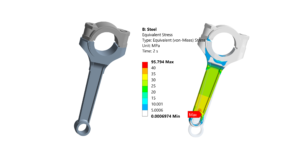
After the simulation completes, analyze the results. Visualizations of temperature contours, heat flux vectors, and thermal gradients are crucial. Extract quantitative data such as maximum/minimum temperatures, average heat transfer rates, and temperature histories (for transient cases). Interpret these results in the context of the initial problem definition, ensuring they are physically realistic and meet design requirements.
Advanced Thermal Analysis Considerations
Transient vs. Steady-State Analysis
Steady-state thermal analysis assumes that temperatures and heat fluxes do not change over time. It’s suitable for systems operating under constant thermal loads for extended periods. Transient thermal analysis accounts for time-dependent changes in temperature and heat flow, essential for scenarios like start-up/shutdown cycles, quenching processes, or sudden environmental changes.
Coupled Thermal-Structural Analysis
Temperature changes induce thermal expansion or contraction, leading to thermal stresses. In many applications, especially in structural integrity assessments (e.g., FFS Level 3 in Oil & Gas), it is critical to perform a coupled thermal-structural analysis. This involves using the temperature distribution from a thermal analysis as an input to a subsequent structural analysis to calculate thermally induced stresses and deformations. Tools like ANSYS Mechanical and Abaqus are highly capable of performing such sequential or fully coupled simulations.
Non-Linear Thermal Effects
Thermal analyses can become non-linear due to several factors:
- Temperature-dependent material properties: Thermal conductivity, specific heat, or emissivity changing with temperature.
- Radiation: The Stefan-Boltzmann Law is inherently non-linear (T^4 dependence).
- Phase change: Latent heat effects during melting or solidification.
- Contact heat transfer: Thermal resistance at interfaces can be non-linear.
These non-linearities require iterative solution procedures in FEA/CFD software.
Multi-Physics Simulations
Beyond thermal-structural coupling, thermal analysis often integrates with other physics domains. Examples include:
- Thermo-electric: Joule heating in electronic components, where electrical current generates heat.
- Thermo-fluid-structure interaction: Complex scenarios where fluid flow, heat transfer, and structural deformation are mutually dependent, relevant in Biomechanics (e.g., blood flow and tissue heating).
Verification & Sanity Checks in Thermal Simulation
A simulation result is only as good as its underlying assumptions and inputs. Robust verification and sanity checks are non-negotiable for trustworthy thermal analysis.
Mesh Sensitivity Analysis
Always perform a mesh sensitivity (or convergence) study. Run the simulation with progressively finer meshes and observe how the key results (e.g., maximum temperature, heat flux at a critical location) change. The mesh is considered adequate when further refinement yields negligible changes in the results.
Boundary Condition Validation
Review all applied boundary conditions rigorously. Do they realistically represent the physical situation? Are there any missing heat sources or sinks? Incorrect BCs are a common source of error. For instance, ensure heat transfer coefficients for convection are appropriate for the fluid and flow regime.
Convergence Criteria
For iterative solvers (common in non-linear or transient problems), check the convergence history. Ensure that the solution has converged to within acceptable tolerances. A non-converged solution is meaningless.
Comparison with Analytical Solutions or Hand Calculations
If possible, compare simulation results for a simplified version of your problem (or a sub-component) against analytical solutions or simple hand calculations. This provides a fundamental sanity check on the model’s setup and solver accuracy. For example, a simple 1D conduction calculation can validate a complex FEA model’s heat flux through a wall.
Experimental Data Validation (Conceptual)
Ideally, simulation results should be validated against experimental data. While direct experimental validation might not always be feasible for every design iteration, referencing existing test data for similar components or systems is crucial for building confidence in the simulation methodology. (Note: EngineeringDownloads.com does not perform these tests; this is a general engineering principle.)
Sensitivity Analysis
Explore how changes in uncertain input parameters (e.g., material properties, heat transfer coefficients, ambient temperatures) affect the results. This helps identify critical parameters and understand the robustness of your design to variations.
Automation and Optimization in Thermal Analysis
Scripting with Python and MATLAB
Automating repetitive tasks in thermal analysis workflows can significantly boost efficiency and reduce human error. Scripting languages like Python and MATLAB are invaluable for:
- Pre-processing: Generating complex geometries, applying boundary conditions programmatically, or automating mesh generation. Many FEA/CFD software packages (e.g., Abaqus, ANSYS, OpenFOAM) have Python APIs or scripting capabilities.
- Post-processing: Extracting specific data, generating custom plots, or compiling reports automatically.
- Parametric Studies: Running multiple simulations with varying input parameters to explore design spaces.
EngineeringDownloads.com offers a variety of downloadable Python and MATLAB scripts and templates designed to streamline common engineering analysis tasks, including thermal analysis post-processing and parametric studies. These resources can accelerate your projects and deepen your understanding of automation in CAD-CAE workflows.
Design Optimization and Parametric Studies
Thermal analysis is often an iterative process aimed at optimizing a design. By coupling thermal simulations with optimization algorithms (either through built-in software features or external scripts), engineers can automatically search for design parameters that minimize weight, reduce peak temperatures, or maximize heat dissipation while adhering to constraints. This is a powerful application of CAE for developing superior engineering solutions.
Conclusion
Thermal analysis is a cornerstone of modern engineering design, enabling the creation of safe, efficient, and reliable products and systems across diverse industries. By mastering the fundamentals of heat transfer, leveraging advanced numerical methods like FEA and CFD, and adhering to rigorous verification processes, engineers can accurately predict thermal behavior and make informed design decisions. The continuous evolution of simulation tools and the integration of scripting for automation further enhance the power and reach of thermal analysis, ensuring that thermal challenges are met with innovative and robust solutions.