Structural Health Monitoring (SHM) isn’t just a buzzword; it’s a critical engineering discipline that’s transforming how we manage and maintain vital assets. From towering bridges and offshore platforms to advanced aerospace components, SHM provides the eyes and ears needed to understand a structure’s real-time condition, predict its future performance, and prevent catastrophic failures.
In this comprehensive guide, we’ll dive into the practical aspects of SHM, exploring its core principles, essential technologies, and actionable workflows. Whether you’re a structural engineer, an asset manager, or a researcher, you’ll find valuable insights to implement effective SHM strategies in your projects.

Image: Example of sensors deployed for Structural Health Monitoring on a bridge structure.
The Imperative for Structural Health Monitoring
Why should engineers invest time and resources into SHM? The benefits extend far beyond simply ‘knowing’ a structure’s status. They directly impact safety, operational efficiency, and long-term economic viability.
Why SHM Matters in Modern Engineering
- Enhanced Safety & Reliability: SHM offers continuous insights into structural integrity, allowing for early detection of potential issues. This proactive approach significantly reduces the risk of sudden failures, protecting lives and minimizing environmental impact. For high-stakes applications like oil & gas pipelines or aerospace components, this is non-negotiable.
- Optimized Maintenance & Cost Savings: Moving from time-based or reactive maintenance to condition-based predictive maintenance is a game-changer. SHM data helps pinpoint when and where maintenance is truly needed, preventing unnecessary interventions and minimizing costly downtime. Imagine saving millions on inspecting an offshore platform only when sensors indicate a critical change.
- Extended Asset Lifespan: By understanding degradation mechanisms and their progression, engineers can implement timely repairs or strengthening measures. This extends the operational life of assets that might otherwise be prematurely decommissioned, maximizing return on investment.
- Regulatory Compliance & Risk Management: Many industries, particularly Oil & Gas, require stringent monitoring and reporting to meet regulatory standards. SHM provides the robust data needed to demonstrate compliance and effectively manage structural risks, especially for FFS Level 3 assessments.
- Data-Driven Decision Making: SHM provides objective, quantifiable data that supports engineering decisions, whether it’s optimizing operational loads, planning retrofits, or validating design assumptions.
Key Principles & Technologies of SHM
At its core, SHM involves three main steps: data acquisition, data processing/analysis, and decision-making. Each step relies on specific technologies and methodologies.
Sensor Technologies for Data Acquisition
The choice of sensor is crucial and depends heavily on the type of damage you want to detect, the environment, and the structure’s material. Here’s a look at common types:
- Strain Gauges: Widely used to measure surface deformation. They’re excellent for detecting localized stress concentrations, fatigue crack initiation, or overall structural response to applied loads. Modern electrical resistance strain gauges are robust, while fiber optic strain gauges (e.g., Fiber Bragg Grating – FBG) offer immunity to electromagnetic interference and multiplexing capabilities.
- Accelerometers & Seismometers: These measure vibrations and dynamic responses. Critical for modal analysis, identifying changes in natural frequencies (a key indicator of stiffness degradation), and seismic monitoring of civil structures like bridges and dams.
- Acoustic Emission (AE) Sensors: Passive sensors that listen for transient elastic waves generated by rapid energy release events, such as crack propagation, delamination in composites (common in aerospace), or active corrosion. They’re excellent for detecting ‘live’ damage events.
- Fiber Optic Sensors (FOS): Beyond strain, FOS can measure temperature, pressure, displacement, and chemical changes. They offer long-distance monitoring, high sensitivity, and are ideal for harsh environments, including those in Oil & Gas.
- GPS & Satellite Interferometry (InSAR): For large-scale deformation monitoring of structures like bridges, dams, or even ground settlement affecting pipelines. GPS provides point-based displacement, while InSAR offers wide-area deformation maps.
- Temperature & Humidity Sensors: Crucial for environmental compensation in other sensor readings and for detecting thermal stresses or condensation issues that could lead to corrosion.
- Corrosion Sensors: Directly measure corrosion rates or the presence of corrosive agents. Essential for metallic structures, especially in marine environments or chemical processing plants.
Data Acquisition Systems (DAS)
A DAS is the backbone of any SHM system, connecting sensors to data storage and processing units.
- Wired Systems: Offer high bandwidth and reliability, but installation can be complex and costly for large structures. Best for critical, localized monitoring.
- Wireless Sensor Networks (WSN): Increasingly popular due to ease of deployment, scalability, and reduced cabling. Ideal for distributed monitoring over large areas. However, power management and data synchronization can be challenges.
- Data Loggers: Often integrated into DAS, these devices store sensor data locally before transmission. Critical for remote locations or intermittent connectivity.
Data Processing & Analysis Techniques
Raw sensor data is just noise without intelligent processing. This is where engineering analysis and computational power come in.
- Signal Processing: Techniques like Fast Fourier Transform (FFT) for frequency domain analysis, wavelets for time-frequency analysis, and filtering (e.g., Kalman filters) are fundamental for extracting meaningful features from noisy sensor data. Python’s SciPy library is excellent for this.
- Statistical Methods: Principal Component Analysis (PCA), Support Vector Machines (SVM), and various regression techniques help identify patterns, outliers, and correlations in large datasets. These are crucial for anomaly detection.
- Modal Analysis: By comparing measured modal parameters (natural frequencies, mode shapes, damping ratios) with baseline or FEA-predicted values, engineers can infer changes in stiffness or mass, indicative of damage. Software like ANSYS Mechanical or Abaqus can be used to generate the FEA baseline.
- Damage Detection Algorithms: These can range from simple thresholding to complex machine learning models trained to identify specific damage patterns (e.g., crack growth, delamination, loosening of connections). Python and MATLAB are powerful platforms for developing and deploying these algorithms.
- Machine Learning & AI: For complex structures and vast datasets, ML algorithms (neural networks, random forests) can learn to distinguish healthy behavior from damaged states, classify damage types, and even predict remaining useful life (RUL). This is particularly relevant for predicting fatigue life in components for aerospace or oil & gas.
Practical Workflow for Implementing SHM
Implementing SHM isn’t a ‘one-size-fits-all’ solution. It requires a structured, phase-based approach.
Phase 1: Planning & System Design
- Define Objectives: What problems are you trying to solve? Are you looking for crack initiation, corrosion, scour, fatigue, or overall structural degradation? The objectives dictate everything that follows.
- Structure Assessment: A thorough understanding of the structure’s materials, geometry, loading conditions (static, dynamic, environmental), critical components, and potential failure modes is paramount. This often involves reviewing design documents, inspection reports, and performing preliminary analyses. For complex structures, this might involve an initial FFS assessment to prioritize critical zones.
- Sensor Selection & Placement Strategy: This is where engineering judgment meets analysis. Use tools like Abaqus or ANSYS Mechanical to perform FEA. Identify critical stress/strain hotspots, areas prone to fatigue, or regions where specific failure modes are likely to initiate. Place sensors strategically in these areas, considering redundancy and optimal coverage. Don’t overdo it – target key locations.
- Data Acquisition System Design: Determine if wired or wireless is appropriate, select data logger capacity, sampling rates, and power solutions. Consider environmental protection for hardware.
- Communication & Power Requirements: Plan how data will be transmitted (cellular, satellite, Ethernet) and how the system will be powered (grid, solar, batteries).
Phase 2: Installation & Calibration
- Sensor Installation Best Practices: Proper installation is critical for data quality. This includes surface preparation, adhesive selection, correct orientation, and protection from environmental factors. Refer to manufacturer guidelines.
- DAS Setup: Install data loggers, communication modules, and power supplies. Ensure secure connections and proper grounding.
- Baseline Data Collection: Before the structure experiences significant changes or damage, collect a comprehensive dataset representing its ‘healthy’ state. This baseline is invaluable for comparison during damage detection.
- System Calibration: Validate that sensors are reading correctly. This might involve applying known loads or displacements and comparing sensor outputs to theoretical or physical measurements.
Phase 3: Data Management & Analysis
- Data Storage & Archiving: Implement a robust data management plan. Cloud storage, local servers, and databases are common. Ensure data integrity, security, and accessibility.
- Real-time vs. Periodic Monitoring: Decide on the appropriate monitoring frequency. Critical structures might require continuous real-time data streaming, while others might only need hourly or daily samples.
- Data Pre-processing: Clean and prepare the raw data. This involves filtering out noise, handling missing data points, and environmental compensation (e.g., correcting strain readings for temperature changes). Python and MATLAB scripts are excellent for automating these tasks.
- Anomaly Detection & Feature Extraction: Apply algorithms to identify deviations from the baseline or expected behavior. Extract meaningful features from the data (e.g., changes in natural frequencies, damping, amplitude of specific frequency bands).
- Damage Localization & Quantification: Once an anomaly is detected, use further analysis to pinpoint its location and estimate its severity. This might involve comparing sensor readings across a network or using inverse problem techniques.
- Trend Analysis: Monitor changes over time to predict degradation rates and estimate remaining useful life. This is key for predictive maintenance.
Phase 4: Decision Making & Action
- Alerting Systems: Establish clear thresholds for triggering alerts when anomalies exceed predefined limits. These alerts should go to relevant personnel (e.g., asset managers, structural engineers).
- Maintenance Scheduling: Use SHM data to schedule maintenance activities precisely when needed, minimizing downtime and optimizing resource allocation.
- Repair & Retrofit Decisions: Data-driven insights help determine the most effective repair strategies and inform decisions about structural retrofits or strengthening.
- Feedback Loop for SHM System Improvement: Continuously review the performance of the SHM system itself. Are the sensors adequate? Are the algorithms accurate? What can be improved for future deployments?
SHM in Specific Engineering Domains
SHM finds applications across a vast spectrum of engineering fields, each with unique challenges and requirements.
Oil & Gas Industry
The O&G sector relies heavily on SHM for critical infrastructure such as pipelines, offshore platforms, and storage tanks. Early detection of corrosion, stress cracking, and fatigue is vital to prevent spills, explosions, and ensure operational continuity. SHM data is often fed into advanced integrity management systems and supports Fitness-for-Service (FFS) Level 3 assessments, where detailed analysis of damage mechanisms and remaining life is paramount. Advanced tools like ANSYS Mechanical or Abaqus are used for fracture mechanics simulations to interpret sensor data related to crack growth.
Aerospace & Defense
In aerospace, the focus is on lightweight, high-performance materials like composites, where damage can be difficult to detect visually (e.g., delamination). SHM for aircraft structures aims to monitor fatigue crack growth, impact damage, and delamination to ensure flight safety and optimize maintenance schedules. Technologies like acoustic emission and fiber optic sensors are particularly effective here.
Civil Infrastructure
Bridges, buildings, and dams are constantly exposed to environmental loads, traffic, and seismic activity. SHM helps monitor their long-term health, detect deterioration, assess post-event damage (e.g., after an earthquake), and ensure public safety. Examples include monitoring cable tension in suspension bridges, detecting scour around bridge foundations, or assessing seismic response of high-rise buildings using accelerometers. CFD tools like Fluent/CFX or OpenFOAM might be used to understand wind-induced vibrations that contribute to fatigue.
Biomechanics (Illustrative Example)
While still an emerging area, SHM principles can be conceptually applied in biomechanics. Imagine instrumented prosthetics or implants that monitor wear, fatigue, or loosening over time, providing feedback for personalized medical care. This involves miniaturized sensors and advanced data interpretation to ensure long-term functionality and patient safety.
Leveraging Simulation and Automation in SHM
Modern SHM is incomplete without robust computational tools. FEA, CFD, CAD/CAE, and scripting languages like Python and MATLAB are indispensable for design, analysis, and automation.
Finite Element Analysis (FEA) for Sensor Placement & Data Interpretation
FEA software like Abaqus, ANSYS Mechanical, or MSC Patran/Nastran plays a crucial role:
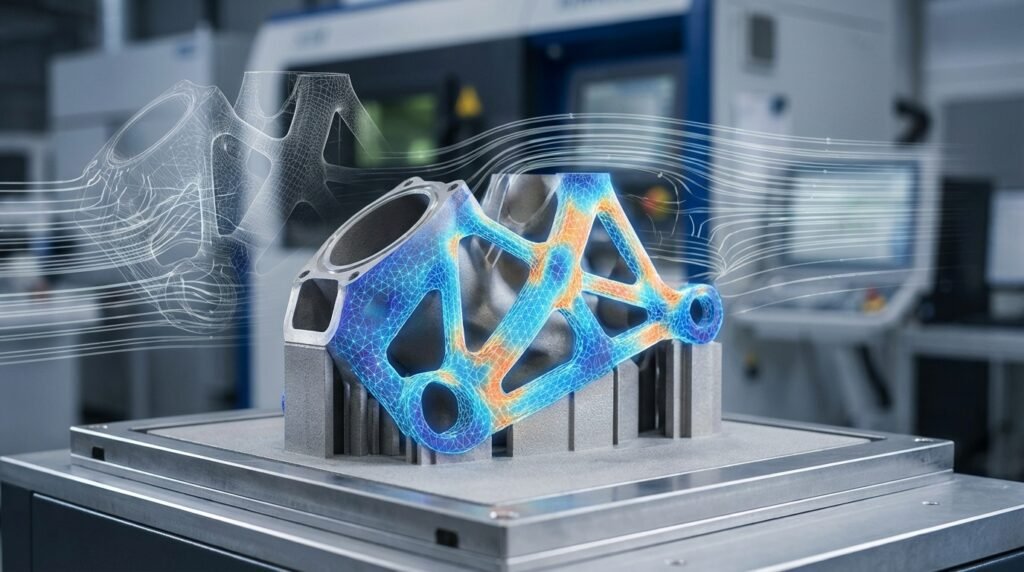
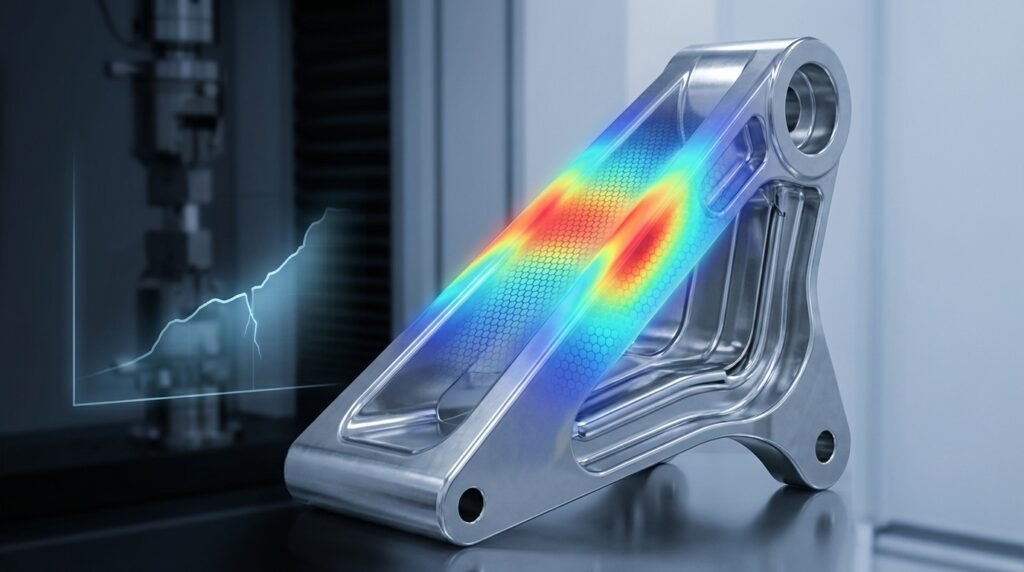
- Predicting Critical Areas: Before deploying sensors, engineers use FEA to simulate various loading scenarios and identify areas of high stress, strain, or fatigue accumulation. This helps optimize sensor placement, ensuring you’re monitoring the most critical zones.
- Simulating Damage Propagation: FEA can model the effects of different damage types (cracks, corrosion thinning, delamination) on structural response. This helps in training damage detection algorithms and understanding how sensor readings might change as damage evolves.
- Modal Analysis: FEA is used to calculate the theoretical natural frequencies and mode shapes of a structure. These FEA-derived modal parameters serve as a baseline for comparison with experimentally measured modal responses from SHM accelerometers.
- Sensitivity Studies: Using parametric FEA models (often controlled by Python or MATLAB scripts), engineers can investigate how sensor readings are affected by variations in material properties, boundary conditions, or damage extent.
Computational Fluid Dynamics (CFD) for Environmental Effects
For structures exposed to fluid flow, CFD tools can enhance SHM:
- Wind Loading Analysis: For tall buildings, bridges, or offshore structures, CFD (e.g., with Fluent/CFX or OpenFOAM) can simulate complex wind flow patterns and the resulting pressure distributions and vortex-induced vibrations, which contribute to structural fatigue. SHM data can then be correlated with these predicted aerodynamic forces.
- Fluid-Structure Interaction (FSI): For structures interacting with water (e.g., offshore platforms, dams), FSI simulations can provide insights into hydrodynamic loads, which are critical for interpreting SHM data.
CAD/CAE Integration
Integrating design (CAD) with analysis (CAE) streamlines the SHM process. Using platforms like CATIA that have integrated analysis capabilities, or linking CAD models to dedicated CAE software (e.g., MSC Patran/Nastran), ensures that SHM efforts are based on accurate structural geometry and material definitions. This also helps in visualizing sensor locations and data overlays directly on the 3D model.
Python & MATLAB for Data Automation and AI/ML
These programming environments are essential for automating complex SHM tasks:
- Scripting Data Acquisition & Processing: Develop scripts to automate data collection from various sensors, perform real-time filtering, aggregation, and feature extraction.
- Custom Algorithm Development: Implement advanced damage detection algorithms, statistical analyses, and machine learning models (e.g., using Python’s scikit-learn or TensorFlow, or MATLAB’s built-in ML toolboxes).
- Visualization & Reporting: Create custom dashboards and reports to visualize SHM data trends, anomalies, and alerts. Python libraries like Matplotlib and Plotly are highly effective.
- FEA/CFD Post-processing & API Integration: Scripting can be used to extract specific results from FEA/CFD output files, automate parameter changes for sensitivity studies, and even control simulation runs via APIs.
If you’re looking to develop custom Python scripts for SHM data analysis, or require expert guidance on advanced algorithm development, explore our downloadable Python scripts for SHM or consider our online consultancy services at EngineeringDownloads.com.
Verification & Sanity Checks in SHM Implementations
An SHM system is only as good as the trust you can place in its data. Robust verification is critical.
Sensor Data Validation
- Cross-referencing: If multiple sensor types are measuring related phenomena (e.g., strain and vibration), their outputs should show logical correlations.
- Physical Inspections: Periodically validate sensor readings against traditional visual inspections or NDT methods. If SHM indicates damage, confirm it physically. If it indicates no damage, ensure visual inspection confirms this.
- Environmental Compensation: Always verify that environmental factors (temperature, humidity) are properly accounted for in sensor data processing. Run sanity checks to see if uncompensated data shows spurious ‘damage’ during temperature swings.
Model Validation (FEA)
- Experimental vs. Numerical Modal Analysis: Compare the natural frequencies and mode shapes derived from SHM (e.g., using accelerometers) with those predicted by your FEA model. Significant discrepancies indicate issues with the FEA model’s assumptions (material properties, boundary conditions) or the SHM setup itself.
- Sensitivity to BCs & Material Properties: Conduct sensitivity analyses using your FEA model. Understand how changes in input parameters affect output. This helps in understanding the uncertainty in your SHM predictions.
- Convergence Checks: Ensure your FEA models have converged appropriately for mesh density and time step, crucial for reliable results.
Data Anomaly Review
- Distinguishing Noise from Real Damage: This is a common challenge. Develop robust filtering and outlier detection methods. False positives lead to unnecessary inspections, while false negatives lead to missed damage.
- False Positive/Negative Analysis: Systematically review instances where the SHM system incorrectly identified damage (false positive) or failed to identify existing damage (false negative). Use this feedback to refine algorithms.
System Redundancy Checks
- Ensure that critical measurements have some level of redundancy. If one sensor fails, another should ideally provide similar data or allow for an estimation of the missing data.
Common Mistakes to Avoid in SHM
Even seasoned engineers can fall into these traps:
- Over-sensing or Under-sensing: Deploying too many sensors can lead to data overload and increased costs without proportionate benefit. Too few, and you miss critical information. Strategic placement based on analysis is key.
- Ignoring Environmental Factors: Temperature, humidity, wind, and even biological growth can significantly affect sensor readings and structural behavior. Failing to account for these can lead to erroneous damage detection.
- Lack of Baseline Data: Without a clear understanding of the ‘healthy’ state, it’s impossible to identify deviations effectively. Invest time in collecting quality baseline data.
- Poor Data Management: Disorganized data, incompatible formats, or insufficient storage capacity can cripple even the most advanced SHM system. Plan for data storage, retrieval, and archiving from day one.
- Failure to Act on Data: An SHM system that generates alerts but doesn’t trigger timely inspections or maintenance is useless. Establish clear action protocols.
- Not Validating Damage Algorithms: Damage detection algorithms must be tested and validated against known damage scenarios, ideally through laboratory experiments or controlled field tests.
Future Trends in Structural Health Monitoring
The field of SHM is constantly evolving. Here’s a glimpse of what’s on the horizon:
- Distributed Sensing Networks: Miniaturized, low-cost sensors deployed in vast networks, potentially even embedded within materials during manufacturing.
- Self-powered Sensors: Energy harvesting technologies will enable sensors to power themselves, reducing maintenance and expanding deployment possibilities.
- Digital Twins: Coupling SHM data with high-fidelity computational models (like those in Abaqus, ANSYS) to create ‘digital twins’ that mirror the physical structure’s real-time state and predict future behavior. This enables powerful ‘what-if’ scenarios.
- Edge Computing & AI: Performing data processing and initial anomaly detection directly on sensor nodes (at the ‘edge’) reduces data transmission bandwidth requirements and enables faster response times.
Structural Health Monitoring is more than just a collection of sensors; it’s an integrated engineering discipline that enhances safety, optimizes costs, and extends the life of our most critical infrastructure. By embracing a data-driven approach and leveraging modern simulation and automation tools, engineers can build a safer, more resilient world.
Further Reading
For more detailed information on sensor technologies and applications in civil engineering, consider consulting academic and industry resources such as the American Society of Civil Engineers (ASCE) publications.
Frequently Asked Questions (FAQ)
| Question | Answer |
|---|---|
| What is Structural Health Monitoring (SHM)? | Structural Health Monitoring (SHM) is the process of implementing a damage detection and characterization strategy for engineering structures. It involves continuous or periodic monitoring using sensors, data acquisition, analysis, and decision-making to assess a structure’s integrity and performance over time. |
| What are the main benefits of using SHM? | The main benefits of SHM include enhanced safety and reliability, optimized maintenance scheduling leading to significant cost savings, extended asset lifespan, improved regulatory compliance, and data-driven decision-making for structural management. |
| What types of sensors are commonly used in SHM? | Common SHM sensors include strain gauges (electrical and fiber optic), accelerometers, acoustic emission sensors, fiber optic sensors (for multiple parameters), GPS, and temperature/humidity sensors. The choice depends on the specific damage mechanisms being monitored. |
| How does FEA (Finite Element Analysis) contribute to SHM? | FEA software like Abaqus or ANSYS Mechanical helps in SHM by identifying critical stress/strain areas for optimal sensor placement, simulating damage propagation, providing baseline modal parameters for comparison with experimental data, and performing sensitivity studies to understand structural response. |
| Can SHM predict the remaining useful life (RUL) of a structure? | Yes, with sufficient historical data, advanced data analysis techniques (including machine learning), and correlation with known damage progression models (e.g., fatigue curves), SHM can be used to predict the remaining useful life (RUL) of a structure or its components, enabling proactive maintenance. |
| Is SHM only for large-scale civil structures? | No, while SHM is widely used for bridges, buildings, and dams, its principles apply to a broad range of structures including aerospace components, oil & gas pipelines and offshore platforms, wind turbines, pressure vessels, and even potentially in biomechanics for prosthetics. |
Internal Linking Opportunities
- Fatigue and Fracture Mechanics for Engineers
- Advanced Nondestructive Testing (NDT) Methods
- Practical Applications of Finite Element Analysis (FEA)
- Data Science and Machine Learning in Engineering
- Asset Integrity Management in Oil & Gas