What is Structural Analysis? The Engineer’s Core Skill
Structural analysis is the backbone of engineering design, ensuring that structures and components can safely withstand the loads and environments they’ll encounter. Whether you’re designing a skyscraper, an airplane wing, a medical implant, or an oil rig platform, understanding how forces distribute and materials react is paramount. It’s about predicting performance before construction or manufacturing, saving costs, preventing failures, and ultimately, safeguarding lives.
This guide dives into the practical aspects of structural analysis, from fundamental concepts to advanced simulation techniques, presented in an engineer-to-engineer tone. We’ll explore the why and how, discuss essential tools, and share practical tips to help you master this critical discipline.

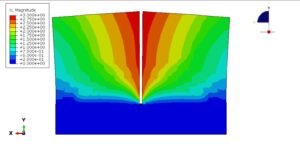
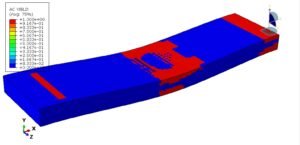
Visual representation of finite element analysis (FEA) on a cantilever beam.
Why Structural Analysis Matters
- Safety: Foremost, it ensures structural integrity, preventing catastrophic failures.
- Cost-Efficiency: Optimizing material use and design reduces manufacturing and construction expenses.
- Compliance: Meets industry standards, regulations, and certification requirements.
- Performance: Predicts how a structure will behave under various conditions (stress, deformation, vibration).
- Innovation: Allows for the design of complex and novel structures with confidence.
The Core Types of Structural Analysis
Structural analysis encompasses several methodologies, each suited for different engineering challenges. Understanding these types is crucial for selecting the right approach.
Linear Static Analysis
This is often the starting point. It assumes material properties are linear elastic, deformations are small, and loads are applied slowly. It’s ideal for structures where loads don’t change rapidly and materials don’t yield significantly. Think of a simple beam under a constant load.
- Key Output: Stress, strain, displacement.
- Common Tools: Nearly all FEA software (e.g., Abaqus, ANSYS Mechanical, Nastran) perform linear static analysis efficiently.
Non-Linear Static Analysis
When assumptions of linear analysis break down, you enter the non-linear realm. This is necessary for:
- Material Non-linearity: When materials yield, plastic deformation occurs (e.g., metals approaching their yield strength, rubber, composites).
- Geometric Non-linearity: When deformations are large enough to significantly change the structure’s stiffness or load path (e.g., thin shells, cables).
- Contact Non-linearity: When components come into or out of contact with each other.
Non-linear analysis requires more computational power and careful setup but provides a more accurate representation of real-world behavior.
Dynamic Analysis
When loads change rapidly or inertia forces become significant, dynamic analysis is required. This includes:
- Modal Analysis: Determines natural frequencies and mode shapes, critical for avoiding resonance.
- Harmonic Analysis: Evaluates steady-state response to cyclic loads (e.g., rotating machinery vibration).
- Transient Dynamic Analysis: Simulates the time-dependent response to arbitrary dynamic loads (e.g., impact, seismic events, blast loading).
Buckling Analysis
Slender structures under compression can fail by buckling before their material strength is reached. Buckling analysis predicts the critical load at which this instability occurs. It’s vital for columns, thin-walled structures, and aerospace components.
Fatigue Analysis
Repeated loading, even below the material’s yield strength, can lead to fatigue failure over time. Fatigue analysis predicts component life under cyclic loading, crucial for components like aircraft fuselages, bridges, and engine parts.
Fracture Mechanics & Fitness-for-Service (FFS) Level 3
When a crack is present or suspected, fracture mechanics assesses its stability and potential for propagation. FFS Level 3, as per standards like API 579, involves detailed engineering analysis to determine if a component with flaws can safely remain in service, common in Oil & Gas and process industries. This often involves advanced FEA to calculate stress intensity factors.
The Structural Analysis Workflow: A Practical Guide
A typical structural analysis project follows a structured approach. Let’s break it down into phases.
Phase 1: Problem Definition & Scope
This is arguably the most critical step. Clear communication with stakeholders is key.
- Understand the Objective: What specific questions need to be answered? (e.g., Max stress? Fatigue life? Natural frequency?)
- Identify Loads & Boundary Conditions: What forces, pressures, temperatures, or displacements will act on the structure? How is it supported or constrained?
- Define Material Properties: What materials are used? Obtain their stress-strain curves, Young’s modulus, Poisson’s ratio, density, etc.
- Determine Success Criteria: What constitutes a ‘pass’? (e.g., Stress below yield, displacement within tolerance, no buckling).
- Choose Analysis Type: Based on the above, select the appropriate analysis (static, dynamic, non-linear, etc.).
- Simplify as Needed: Can symmetry be exploited? Are certain features negligible?
Phase 2: Pre-Processing (Geometry, Materials, Meshing)
This is where you prepare your model for simulation.
Geometry Preparation
Start with a CAD model. Tools like CATIA, SolidWorks, or Inventor are common. Simplify the geometry by removing small features (fillets, holes, chamfers) that won’t significantly impact global structural behavior but would drastically increase mesh complexity. For shells or beams, convert 3D solids to 2D surfaces or 1D lines.
Material Property Assignment
Accurately assign material models (e.g., linear elastic, elastic-plastic, hyperelastic) with correct properties. Data sheets and material testing are your best friends here.
Meshing
This is converting your continuous geometry into discrete elements (finite elements). The quality of your mesh directly impacts the accuracy and convergence of your solution.
- Element Types: Choose wisely (e.g., 3D solids (hex, tet), 2D shells (quad, tri), 1D beams).
- Mesh Density: Refine mesh in areas of high-stress gradients (stress concentrations like holes, corners, load application points). Coarsen where stresses are uniform.
- Mesh Quality: Pay attention to aspect ratio, skewness, and Jacobian. Poor quality elements can lead to solver errors or inaccurate results.
- Convergence Study Hint: We’ll revisit this in ‘Verification & Sanity Checks’, but initially, aim for a reasonable mesh, then refine.
Phase 3: Analysis Setup (Loads, Boundary Conditions)
Apply the forces, pressures, and constraints identified in Phase 1.
- Loads: Apply point loads, distributed loads, pressure, body forces (gravity), thermal loads. Understand if they are static or time-dependent.
- Boundary Conditions (BCs): These define how the structure is constrained. Incorrect BCs are a major source of error.
- Fixed (Encastre): Constrains all translational and rotational degrees of freedom (DoFs).
- Pinned: Constrains translational DoFs but allows rotation.
- Roller: Constrains translation in one direction.
- Symmetry: Used to model only a portion of a symmetric structure to save computational time.
- Interactions/Contacts: Define how separate parts interact (e.g., ‘no separation’, ‘frictionless contact’, ‘rough contact’).
- Steps & Increments: For non-linear or dynamic analyses, define load steps and time increments.
Phase 4: Solving the Model
Once the pre-processing is complete, the solver (e.g., Abaqus/Standard, ANSYS Mechanical, MSC Nastran) takes over. This step is largely automated but requires monitoring, especially for non-linear problems.
- Computational Resources: Complex models require significant RAM and CPU.
- Convergence: For non-linear problems, the solver iteratively finds a solution. Monitor convergence plots; non-convergence indicates a problem with setup (loads, BCs, material, mesh).
Phase 5: Post-Processing & Interpretation
This is where you extract meaningful results from the simulation data.
- Visualization: View stress, strain, displacement contours. Animate deformations.
- Quantitative Results: Extract maximum/minimum values, plot results along paths, create stress intensity factor plots.
- Comparison to Criteria: Compare results against design criteria, material allowables, and codes.
- Documentation: Clearly document assumptions, methodology, results, and conclusions.
Verification & Sanity Checks: Trusting Your Results
Never blindly trust simulation results. A critical engineer always verifies.
Mesh Sensitivity Analysis
Perform the analysis with progressively finer meshes. The results (e.g., maximum stress or displacement) should converge to a stable value. If results change significantly with mesh refinement, your original mesh was too coarse.
Convergence Criteria
For non-linear problems, ensure the solver’s iterations converge within specified tolerances. Divergence often points to issues with loads, boundary conditions, or material models.
Boundary Condition Validation
Are your BCs realistic? What happens if you slightly adjust them? Sometimes, a small change in constraint can drastically alter local stresses. Consider sensitivity to BC variations.
Hand Calculations & Simplified Models
For global behavior or simplified load cases, perform quick hand calculations (e.g., beam bending equations, simple stress formulas) to get a ballpark estimate. Does your FEA result fall within the expected range? This is your primary sanity check.
Physical Intuition & Engineering Judgment
Do the deformation patterns and stress distributions make sense? If applying a load causes a structure to move in an illogical way, something is wrong. Trust your engineering experience.
Sensitivity Analysis
Vary key input parameters (material properties, load magnitudes, geometric dimensions) within their expected ranges. How sensitive are your results to these variations? This helps understand the robustness of your design.
Advanced Topics & Specializations
Structural Integrity & Life Assessment
Beyond initial design, structural integrity focuses on the ongoing reliability and remaining life of existing structures, especially in aging infrastructure or high-consequence industries (like Oil & Gas, nuclear power). This often involves FFS assessments and advanced fatigue and fracture analysis.
Optimization in Structural Design
Structural analysis can drive design optimization. Tools can automatically adjust geometry, material distribution, or topology to minimize weight, maximize stiffness, or meet other performance targets, often through iterative FEA cycles.
Multiphysics Simulations
Real-world problems often involve coupled physics. For instance, thermal-structural analysis combines heat transfer (e.g., from combustion or environmental sources) with structural response. Fluid-structure interaction (FSI) couples CFD (Computational Fluid Dynamics) with structural analysis, critical for aerospace, marine, and biomedical devices (e.g., analyzing blood flow in an artery with a stent).
Biomechanics & Aerospace Applications
Structural analysis plays a vital role in these specialized fields. In biomechanics, it models the human body (bones, tissues, implants) under load. In aerospace, it’s critical for lightweight, high-performance designs, analyzing everything from aircraft frames to satellite components under extreme conditions.
Automation in Structural Analysis (Python & MATLAB)
Repetitive tasks, parametric studies, and complex data processing can be significantly streamlined using scripting languages.
- Python: Widely used for scripting FEA software (Abaqus, ANSYS have Python APIs), post-processing results, managing input files, and automating report generation. Libraries like NumPy and SciPy are invaluable.
- MATLAB: Excellent for numerical analysis, algorithm development, and custom post-processing of simulation data. It’s often used for pre- and post-processing scripts or integrating with external analysis tools.
For engineers looking to enhance their automation skills, EngineeringDownloads.com offers downloadable Python scripts and MATLAB templates for common structural analysis tasks, helping you accelerate your workflow and focus on engineering insights rather than repetitive clicks.
Choosing the Right Tools
The market offers powerful FEA software packages, each with strengths:
- Abaqus (Dassault Systèmes): Renowned for its advanced non-linear capabilities, material models, and explicit dynamics. Favored in research and industries with complex material behavior (automotive, aerospace).
- ANSYS Mechanical (ANSYS, Inc.): A versatile package with a broad range of physics solvers, user-friendly interface, and strong integration with CAD. Excellent for general structural, thermal, and multiphysics simulations.
- MSC Nastran (MSC Software): A long-standing industry standard, particularly strong in linear static, dynamic, and buckling analysis. Widely used in aerospace and automotive.
- OpenFOAM: While primarily a CFD tool, it has structural capabilities. It’s open-source and highly customizable, requiring significant expertise.
The ‘best’ tool depends on your specific needs, industry, and budget.
Common Pitfalls & Troubleshooting
Even experienced engineers encounter issues. Here’s a look at common problems and how to troubleshoot them.
Meshing Errors
Problem: Poor element quality, distorted elements, elements too large in critical areas.
Troubleshooting: Use mesh quality checks in your pre-processor. Refine mesh in high-stress gradients. Simplify geometry before meshing. Consider using different element types (e.g., hex elements where geometry allows for better accuracy).
Incorrect Boundary Conditions
Problem: Model is either over-constrained (leading to artificial stresses) or under-constrained (leading to rigid body motion and solver errors).
Troubleshooting: Visualize applied BCs. Use simplified hand calculations to predict global behavior. For rigid body motion, check solver output for ‘large displacement’ or ‘pivot’ warnings. For over-constraining, remove redundant constraints or use soft springs to stabilize the model without affecting the primary load path.
Material Model Limitations
Problem: Using a linear elastic model for a problem with significant plasticity or hyperelasticity.
Troubleshooting: Understand the material behavior. Review stress-strain curves. If results show stresses far exceeding yield strength in a linear elastic model, a non-linear material model is likely needed.
Solver Convergence Issues
Problem: For non-linear analyses, the solver fails to converge, often due to severe non-linearity, highly distorted elements, or unstable boundary conditions.
Troubleshooting: Slowly apply loads (incrementally). Check mesh quality around areas of high deformation. Adjust solver controls (e.g., number of increments, time step). Simplify contact definitions. Review the solver output for hints on where the instability occurs.
Further Reading
For a deeper dive into the theoretical underpinnings of finite element analysis, consider resources like university engineering department notes or textbooks. A good starting point can be ANSYS’s Introduction to Finite Element Analysis (FEA) for a commercial software perspective.
Conclusion
Structural analysis is a dynamic and evolving field, blending fundamental mechanics with powerful computational tools. By mastering its principles, understanding the various analysis types, and diligently applying verification techniques, engineers can confidently design structures that are safe, efficient, and innovative. Embrace the continuous learning journey, leverage automation, and never stop questioning your results – that’s the mark of a true engineering professional.