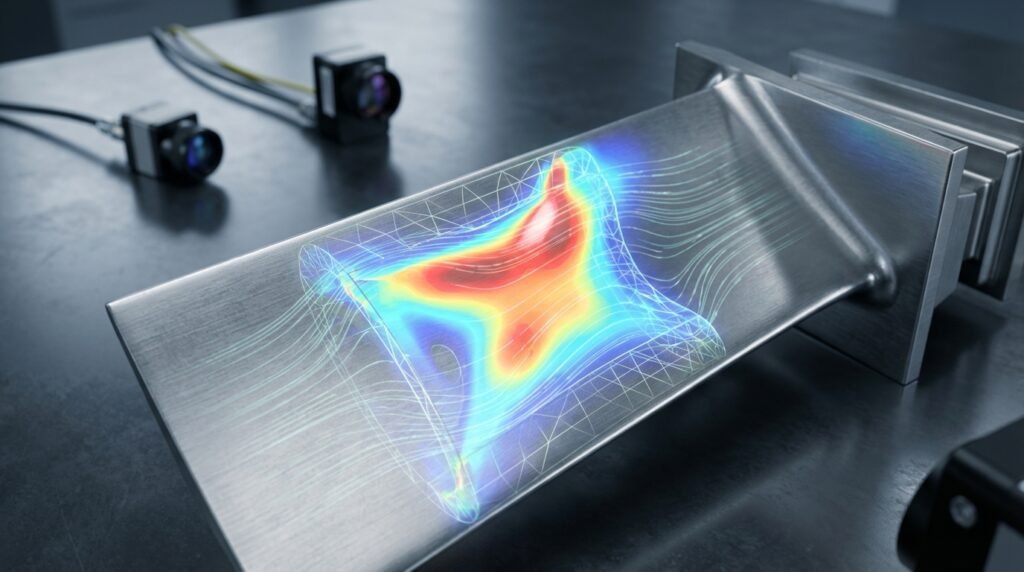
In the world of engineering, especially when dealing with critical components and structures, understanding and managing residual stresses is paramount. Residual monitoring isn’t just a buzzword; it’s a critical discipline that ensures the long-term reliability, safety, and operational efficiency of everything from aircraft components to offshore platforms.
This comprehensive guide dives deep into residual monitoring, offering practical insights, actionable strategies, and common pitfalls to avoid. Whether you’re a structural engineer, a materials specialist, or involved in product design and integrity, mastering residual monitoring will significantly enhance your capabilities.

Illustration of the hole-drilling method for tensile residual stress measurement. (Source: Wikimedia Commons)
The ‘Why’: Importance of Residual Monitoring
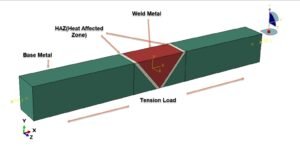
Why should engineers invest time and resources into residual monitoring? The answer lies in its profound impact on structural behavior and component lifespan. Residual stresses, inherent in materials due to manufacturing processes (like welding, machining, heat treatment), can be either beneficial (compressive) or detrimental (tensile).
Ensuring Structural Integrity
- Fatigue Life Extension: Compressive residual stresses can significantly improve fatigue resistance by counteracting applied tensile stresses, delaying crack initiation and propagation.
- Fracture Prevention: High tensile residual stresses can act as pre-existing cracks, drastically reducing a component’s fracture toughness and making it susceptible to brittle failure.
Preventing Catastrophic Failures
Unmonitored, detrimental residual stresses can lead to unexpected failures in service, even under conditions considered safe based on nominal applied loads. This is particularly critical in industries like Aerospace and Oil & Gas, where failures have severe consequences.
Optimizing Maintenance Schedules and Asset Management
Accurate knowledge of residual stress states allows for more precise Remaining Useful Life (RUL) predictions. This data drives smarter, condition-based maintenance strategies, moving away from time-based or reactive approaches, and ultimately reducing operational costs.
Regulatory Compliance and Safety Standards
Many industry standards (e.g., ASME, API) implicitly or explicitly require consideration of residual stresses in design and integrity assessments, especially for pressure vessels, pipelines, and critical load-bearing structures.
Key Concepts and Terminology
Before diving into techniques, let’s clarify some fundamental terms:
- Residual Stress: Stresses that remain in a body after all external forces and moments have been removed. They exist in equilibrium within the material.
- Residual Strain: The corresponding deformation state associated with residual stresses.
- Damage Accumulation: The process by which material degradation (e.g., micro-cracks, void formation) progresses under cyclic loading or environmental attack, often accelerated by tensile residual stresses.
- Fatigue Life: The number of stress cycles a material can withstand before failure, heavily influenced by residual stresses.
- Creep: Time-dependent deformation under sustained stress, which can interact with and redistribute residual stresses, particularly at elevated temperatures.
- Corrosion: Degradation of materials due to chemical or electrochemical reactions. Stress corrosion cracking (SCC) is a major concern where tensile residual stresses significantly accelerate corrosive attack.
Methods and Techniques for Residual Monitoring
Residual monitoring employs a range of techniques, broadly categorized into non-destructive (NDT), semi-destructive, and destructive methods, along with advanced simulation approaches.
Non-Destructive Testing (NDT) Techniques
NDT methods are favored for in-service monitoring as they do not impair the component’s future usability.
X-ray Diffraction (XRD)
- Principle: Measures lattice spacing changes due to stress using Bragg’s Law. Highly accurate for surface stresses.
- Application: Ideal for thin coatings, surface treatments, and shallow depth analysis.
- Limitations: Limited penetration depth (typically tens of micrometers), requires specific material crystallography, and complex interpretation for multi-phase materials.
Neutron Diffraction
- Principle: Similar to XRD but uses neutrons, which penetrate much deeper into materials (several centimeters).
- Application: Measuring bulk residual stresses in large components like welds, forgings, and castings.
- Limitations: Requires access to a neutron source (reactor or spallation source), which is expensive and not widely available.
Ultrasonic Testing (UT)
- Principle: Relies on the acoustoelastic effect, where sound wave velocity changes with stress.
- Application: Can probe significant depths; useful for detecting stress gradients and evaluating material anisotropy.
- Limitations: Sensitivity to material microstructure, temperature variations, and calibration requirements can be challenging.
Magnetic Barkhausen Noise (MBN)
- Principle: Detects changes in magnetic properties of ferromagnetic materials due to applied or residual stresses, which affect domain wall movement.
- Application: Rapid, surface-sensitive assessment of tensile/compressive residual stresses and material hardness in ferromagnetic components.
- Limitations: Only applicable to ferromagnetic materials, depth limited to a few hundred micrometers, sensitive to surface conditions.
Semi-Destructive and Destructive Testing Techniques
These methods involve material removal but offer high accuracy, often used for validation or when NDT is insufficient.
Hole Drilling Method
- Principle: A small hole is drilled into the component, releasing localized residual stresses, which are then measured by strain gauges positioned around the hole.
- Application: Widely used in structural engineering and mechanical components; provides depth-resolved stress profiles.
- Tools: Strain gauge rosettes, specialized drilling rigs.
- Limitations: Semi-destructive, requires careful calibration, and accuracy depends on hole quality and material properties.
Sectioning / Slitting Method
- Principle: Gradually removing material (e.g., cutting a slit) and measuring the resulting deformations with strain gauges or digital image correlation.
- Application: Excellent for analyzing through-thickness residual stress distributions, especially in welded plates or thick sections.
- Limitations: Destructive, time-consuming, and requires precise cutting and measurement.
Simulation-Based Monitoring
Computational methods offer powerful predictive capabilities, especially during design and manufacturing stages, or to complement experimental data.
Finite Element Analysis (FEA)
- Principle: Simulating manufacturing processes (welding, forming, heat treatment) to predict the resulting residual stress and distortion fields.
- Application: Crucial for virtual prototyping, optimizing process parameters, and assessing structural integrity under combined operational and residual stresses (FFS Level 3 assessments).
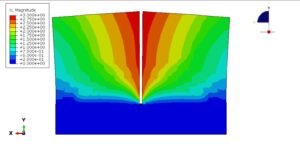
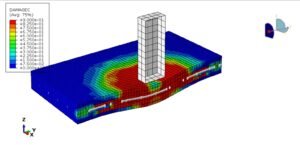
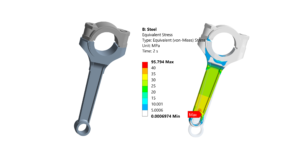
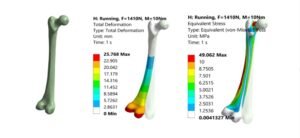
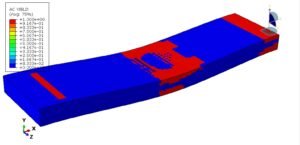
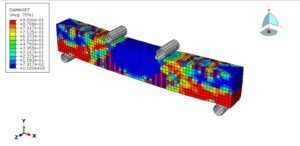
- Tools: Abaqus, ANSYS Mechanical, MSC Nastran. These tools allow for complex thermo-mechanical coupling, plasticity, and creep models essential for accurate residual stress prediction.
- CAD-CAE Workflows: Seamless integration with CAD software (e.g., CATIA) ensures that geometric models are directly used for analysis, streamlining the design-to-simulation process.
Practical Workflow: Integrating Residual Monitoring
An effective residual monitoring strategy follows a structured approach.
Phase 1: Planning and Assessment
- Identify Critical Components: Determine which parts are most susceptible to residual stress-induced failure based on design, operating conditions, and material properties.
- Define Monitoring Objectives: What information is needed? (e.g., surface stress, through-thickness profile, long-term evolution).
- Select Appropriate Techniques: Based on material, geometry, required depth, accuracy, and cost, choose NDT, semi-destructive, or simulation methods. Combine methods for comprehensive understanding.
- Baseline Data: Collect as-manufactured residual stress data for future comparison.
Phase 2: Data Acquisition
- On-site Measurements: Execute chosen NDT/semi-destructive tests according to established standards. Ensure proper equipment calibration and environmental control.
- Simulation Setup:
- Geometry and Mesh: Create an accurate FE model. Mesh density is critical, especially in regions with high-stress gradients (e.g., weld toes, notch roots).
- Material Models: Use temperature-dependent material properties, appropriate plasticity models (e.g., kinematic hardening for cyclic loading), and creep models if relevant.
- Boundary Conditions (BCs): Apply realistic thermal and mechanical BCs that mimic the manufacturing or operational environment. Pay attention to fixturing in welding simulations.
- Loading Steps: Define sequential loading steps for manufacturing processes (e.g., heating, cooling, mechanical forming).
Phase 3: Data Analysis and Interpretation
- Post-processing Simulation Results: Extract stress and strain fields from FEA. Visualize stress contours, plot stress profiles, and identify critical areas.
- Statistical Analysis of Measured Data: Evaluate repeatability and statistical significance of experimental data.
- Correlation and Validation: Crucially, compare simulation predictions with experimental measurements to validate your FEA models. Discrepancies often highlight areas for model refinement or measurement improvement.
- Trend Analysis: Use tools like Python or MATLAB for automated data processing, plotting, and identifying trends in residual stress evolution over time or during service.
Phase 4: Action and Feedback Loop
- Maintenance Decisions: Use monitoring data to inform repair, replacement, or life extension strategies.
- Design Modifications: Feed insights back into the design process to mitigate detrimental residual stresses in future components.
- Process Optimization: Adjust manufacturing parameters (e.g., welding sequence, heat treatment cycles) to induce beneficial residual stresses.
Applications Across Engineering Domains
Residual monitoring finds critical applications across diverse engineering fields:
- Oil & Gas: Assessing residual stresses in pipelines (due to welding, bending), pressure vessels, and offshore structures to prevent stress corrosion cracking and fatigue failure.
- Aerospace: Evaluating residual stresses in aircraft landing gear, turbine blades, and fuselage sections, which significantly impact fatigue life and damage tolerance.
- Structural Engineering: Monitoring bridges, buildings, and other large structures, especially around welded connections, to ensure long-term stability and safety.
- Biomechanics: Understanding residual stresses in medical implants (e.g., hip prostheses) resulting from manufacturing, which can affect implant longevity and bio-compatibility.
Verification & Sanity Checks in Simulation-Based Residual Monitoring
Simulations are powerful but require rigorous verification to be trustworthy. Here’s a checklist for your FEA models:
Mesh Sensitivity Analysis
- Perform analyses with varying mesh densities, especially in high-gradient regions. Ensure that further mesh refinement does not significantly change the residual stress results.
Material Model Validation
- Verify that the chosen material models (plasticity, creep, temperature dependence) accurately represent the material behavior under the simulated conditions. Compare against experimental stress-strain curves or creep data.
Boundary Condition Influence
- Test the sensitivity of results to minor variations in boundary conditions (e.g., support constraints in welding). Ensure they realistically represent the physical situation.
Convergence Criteria
- For non-linear simulations, ensure that convergence criteria are sufficiently tight. Diverging or loosely converged solutions can yield unreliable residual stress predictions.
Experimental Validation
- Wherever possible, compare your simulation results with experimental residual stress measurements (e.g., using hole drilling or XRD) on a representative sample. This is the ultimate sanity check.
Common Pitfalls to Avoid in FEA
- Incorrect Initial Conditions: Starting a simulation with inaccurate initial temperature or stress states.
- Simplified Material Behavior: Omitting plastic hardening, creep, or phase transformations if they are relevant to residual stress formation.
- Inadequate Time Stepping: Using too large time steps in transient thermo-mechanical analyses, leading to inaccurate temperature histories and stress evolution.
Leveraging Computational Tools for Enhanced Monitoring
Modern engineering software plays a pivotal role in advanced residual monitoring.
- Abaqus & ANSYS Mechanical: These FEA powerhouses are essential for modeling complex manufacturing processes (welding, forging, additive manufacturing) to predict intricate residual stress states. Their robust non-linear solvers and extensive material libraries enable accurate thermo-mechanical coupled analyses.
- Python & MATLAB Automation: Beyond simulation, Python and MATLAB are invaluable for:
- Data Post-processing: Automating the extraction, plotting, and statistical analysis of experimental and simulation data.
- Predictive Analytics: Developing machine learning models to correlate manufacturing parameters with residual stress outcomes or predict residual stress evolution in service.
- Workflow Scripting: Automating repetitive tasks in CAD-CAE workflows, such as meshing parameterization or batch processing multiple simulation scenarios.
For engineers looking to deepen their expertise in advanced FEA for residual stress analysis or to leverage Python/MATLAB for automating their monitoring workflows, EngineeringDownloads.com offers downloadable templates, scripts, and expert online consultancy. Our resources are designed to provide practical, hands-on guidance to tackle your specific engineering challenges.
Common Mistakes to Avoid in Residual Monitoring
Even experienced engineers can stumble. Here are typical errors to sidestep:
| Mistake | Consequence | Best Practice |
|---|---|---|
| Ignoring Manufacturing History | Misinterpretation of residual stress origins and effects. | Always consider welding, heat treatment, machining, and forming processes. |
| Selecting Inappropriate Monitoring Technique | Inaccurate or irrelevant data (e.g., using surface method for bulk stress). | Match technique to material, geometry, and required depth/accuracy. Consult standards. |
| Insufficient Data Density | Missing critical stress gradients or peak stress locations. | Plan measurement grids carefully, especially near discontinuities. |
| Misinterpreting Results Without Context | Drawing incorrect conclusions about structural integrity. | Correlate residual stress data with operational loads, material properties, and failure modes. |
| Lack of Regular Calibration for NDT Equipment | Drifting measurements and unreliable data over time. | Implement a strict calibration schedule and use reference standards. |
Tips for Effective Residual Monitoring
To maximize the value of your residual monitoring efforts, consider these practical tips:
- Integrate Early in Design: Consider residual stress generation during the design phase. Design for manufacture (DfM) principles can minimize detrimental stresses.
- Combine Methods: Use a combination of simulation (FEA) for prediction and NDT/destructive testing for validation and in-service monitoring. This provides a holistic view.
- Continuous Data Logging: For long-term assets, implement systems for continuous or periodic data logging to track residual stress evolution.
- Expert Consultation: When facing complex residual stress challenges, consult with specialists who have deep experience in material characterization, FEA, and advanced NDT.
- Utilize EngineeringDownloads.com Resources: Explore our library for project templates, Python scripts for data analysis, or connect with our tutors for personalized guidance on complex simulation setups.
Conclusion
Residual monitoring is far more than a specialized niche; it’s a fundamental aspect of modern engineering that underpins structural integrity, extends asset life, and prevents costly, sometimes catastrophic, failures. By strategically employing a blend of advanced NDT techniques, rigorous simulation with tools like Abaqus and ANSYS Mechanical, and smart data analysis using Python or MATLAB, engineers can gain unprecedented control over the hidden stresses within their designs.
Embracing a proactive approach to residual monitoring ensures not only compliance with safety standards but also paves the way for optimized designs, smarter maintenance, and ultimately, more reliable and durable engineering solutions. Keep learning, keep monitoring, and build better, safer structures for tomorrow.
Further Reading
For detailed methodology on residual stress measurement, refer to industry standards like ASTM E837: Standard Test Method for Determining Residual Stresses by the Hole-Drilling Strain-Gage Method. ASTM E837 Standard