Unlocking Asset Longevity: A Practical Guide to Remaining Life Estimation
As engineers, we’re constantly striving to optimize performance, minimize downtime, and ensure the safety of our structures and components. A critical aspect of this mission is understanding how long an asset will reliably operate before failure. This is where Remaining Life Estimation (RLE) comes into play.
RLE is the process of predicting the future operational lifespan of a component or system, often accounting for degradation mechanisms like fatigue, corrosion, creep, or wear. It’s a vital tool in asset management, informing maintenance schedules, replacement strategies, and overall risk assessment. For industries from oil & gas to aerospace, getting RLE right means safer operations, reduced costs, and enhanced productivity.

Fig 1: The ‘bathtub curve’ is a common model for predicting failure rates over the lifetime of a product or system, showing early failures, constant useful life failures, and wear-out failures. Image courtesy of Wikimedia Commons.
Why Remaining Life Estimation Matters for Every Engineer
- Proactive Maintenance: Shift from reactive repairs to predictive maintenance, scheduling interventions precisely when needed, not too early (costly) or too late (catastrophic).
- Optimized Asset Utilization: Maximize the operational lifespan of expensive equipment, delaying capital expenditure on replacements.
- Enhanced Safety: Identify and address potential failure points before they lead to accidents or structural failures, especially critical in sectors like structural engineering or biomechanics.
- Cost Reduction: Minimize unexpected downtime, reduce emergency repair costs, and optimize spare parts inventory.
- Regulatory Compliance: Meet stringent industry standards and safety regulations, particularly relevant for FFS Level 3 assessments.
The Fundamentals of Component Degradation
Before we can estimate remaining life, we need to understand how things fail. Various mechanisms drive degradation, often interacting in complex ways.
Common Degradation Mechanisms
- Fatigue: Cyclic loading causes microscopic cracks that grow over time, leading to fracture. This is a primary concern in aerospace and structural applications.
- Corrosion: Electrochemical reactions degrade materials, reducing cross-section and mechanical strength. Prevalent in oil & gas pipelines and marine structures.
- Creep: Time-dependent deformation under constant stress, especially at elevated temperatures. Critical for power generation components and high-temperature process equipment.
- Erosion/Wear: Material loss due to abrasive contact or fluid flow. Common in pumps, pipelines, and mechanical systems.
- Fracture: Sudden brittle or ductile failure under stress, often initiated by existing flaws.
- Environmental Cracking: Stress corrosion cracking (SCC), hydrogen embrittlement (HE), etc., where environmental factors accelerate crack growth.
Key Concepts in RLE
- Damage Accumulation: The progressive degradation of a material or component under various loads and environmental conditions.
- Crack Propagation: The growth of a crack from an initial flaw until it reaches a critical size, leading to unstable fracture. Paris’ Law is a fundamental model here.
- Stress Intensity Factor (K): A parameter that characterizes the stress field ahead of a crack tip, crucial for fracture mechanics.
- Fitness-for-Service (FFS): Engineering assessments used to determine if a component containing flaws can continue to operate safely for a specified period. FFS Level 3 typically involves advanced FEA and fracture mechanics.
- Probability of Failure (PoF): The likelihood that a component will fail within a given timeframe, often incorporating uncertainty in material properties, loads, and flaw sizes.
- Remaining Useful Life (RUL): The predicted duration from the current time until a component or system loses its ability to perform its intended function. RLE is the process of calculating RUL.
Methods for Remaining Life Estimation
A variety of approaches can be employed for RLE, ranging from simple empirical models to sophisticated physics-based simulations.
1. Analytical & Empirical Methods
These methods rely on established formulas, statistical data, and simplified models.
- Fatigue Life Prediction Models: Based on S-N curves (stress vs. number of cycles) or E-N curves (strain vs. number of cycles). Miner’s Rule for cumulative damage is a classic example.
- Fracture Mechanics Models: Using principles like Paris’ Law (da/dN = C(ΔK)^m) to predict crack growth rates based on stress intensity factor range. This is fundamental for components with known flaws.
- Statistical Reliability Analysis: Utilizing historical failure data (e.g., Weibull distribution) to predict the probability of future failures for a population of components.
- Creep Life Models: Larson-Miller parameter, Manson-Haferd parameter, etc., to extrapolate creep rupture data from short-term tests.
2. Simulation-Based Methods (FEA/CFD)
For complex geometries, loading conditions, or material behaviors, advanced simulation tools are indispensable.
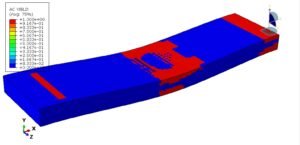
- Finite Element Analysis (FEA): The cornerstone for structural integrity assessments.
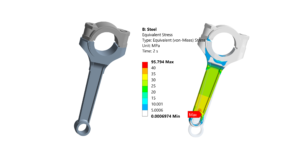
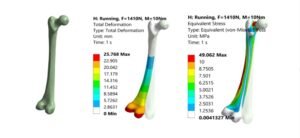
- Stress/Strain Analysis: Determine stress distributions under operational loads. Tools like Abaqus, ANSYS Mechanical, and MSC Nastran excel here.
- Fatigue Analysis: Integrate FEA results with fatigue models to predict crack initiation and propagation. Many FEA packages have built-in fatigue modules (e.g., ANSYS nCode DesignLife, Abaqus/Fatigue).
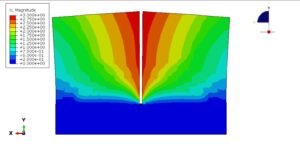
- Fracture Mechanics (FEA): Calculate stress intensity factors (K) or J-integrals for complex crack geometries. Advanced meshing techniques (e.g., quarter-point elements for crack tips) are crucial. This is often part of an FFS Level 3 assessment.
- Creep Analysis: Model time-dependent material deformation at high temperatures.
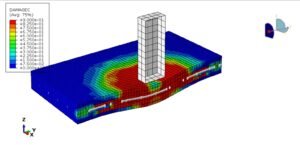
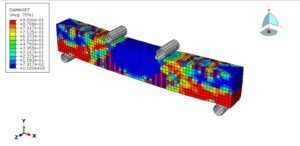
- Damage Mechanics: Simulate material degradation using continuum damage mechanics models.
- Computational Fluid Dynamics (CFD): For erosion, flow-accelerated corrosion (FAC), or thermal-fatigue driven by fluid flow. OpenFOAM, ANSYS Fluent, and ANSYS CFX can simulate fluid behavior and interaction with solids.
3. Data-Driven Methods (Prognostics and Health Management – PHM)
Leveraging real-time data from sensors and machine learning.
- Sensor Data Analysis: Monitoring vibration, temperature, acoustic emissions, strain, etc., to detect early signs of degradation.
- Machine Learning Algorithms: Develop predictive models from historical data to estimate RUL based on current operational parameters and degradation trends. Python libraries (scikit-learn, TensorFlow) are widely used.
4. Hybrid Methods
Combining the strengths of different approaches, e.g., using FEA to get stress states, then applying empirical crack growth laws, and finally updating with sensor data. This is often the most robust approach for complex systems.
Practical Workflow for Remaining Life Estimation
Executing an RLE study requires a systematic approach. Here’s a step-by-step guide:
Step 1: Define the Problem and Scope
- Identify the Component/System: Clearly define what you’re analyzing.
- Failure Mode Identification: What are the most likely failure mechanisms (fatigue, creep, corrosion, etc.)?
- Criticality Assessment: How critical is this component to overall system safety and operation? This determines the depth of analysis required.
- Operational Context: Understand the service environment (temperature, pressure, aggressive media), loading history (static, cyclic, transient), and desired remaining life.
Step 2: Data Collection and Characterization
- Design Data: Original drawings, specifications, material properties (yield strength, ultimate tensile strength, fracture toughness, S-N curves).
- Operational Data: Loading history (pressure cycles, temperature fluctuations, vibration data), operational hours, environmental conditions.
- Inspection Data: Non-destructive testing (NDT) results (ultrasonic, radiographic, eddy current, visual inspection) to identify existing flaws, crack sizes, or corrosion levels.
- Material Testing: If necessary, conduct new material tests (tensile, fatigue, creep rupture) on representative samples or even material extracted from the component itself.
Step 3: Develop the Degradation Model
Based on the dominant failure mechanism, select or develop an appropriate model.
- If Fatigue is Dominant: Use S-N or E-N curves, cumulative damage theories (Miner’s Rule), and possibly fracture mechanics for crack propagation (Paris’ Law).
- If Creep is Dominant: Apply creep rupture models calibrated with material data.
- If Corrosion is Dominant: Model corrosion rates based on environmental exposure and material type.
- If Flaws Exist: Fracture mechanics (Stress Intensity Factor, J-Integral) is essential.
Step 4: Perform the Analysis (FEA/CFD/Scripting)
FEA for Stress Analysis and Damage Assessment
This is often the most resource-intensive step. Use tools like Abaqus, ANSYS Mechanical, or MSC Nastran.
- CAD Model Preparation: Clean up or create a detailed CAD model (e.g., in CATIA) of the component, including any identified flaws.
- Material Model Definition: Input accurate material properties (linear elastic, elastic-plastic, creep models, fatigue properties).
- Meshing: Generate an appropriate mesh. Finer meshes are needed in high-stress areas or around crack tips. For crack tips, special elements like quarter-point singular elements are crucial.
- Boundary Conditions & Loading: Apply realistic operational loads (pressure, thermal, mechanical) and boundary conditions. This is where accurate operational data from Step 2 is vital.
- Run Simulation: Execute the FEA solver.
- Post-processing: Extract critical results: stress contours, strain distributions, stress intensity factors, accumulated plastic strain, fatigue damage.
CFD for Environmental Effects
If erosion or flow-accelerated corrosion is a concern, use ANSYS Fluent/CFX or OpenFOAM to model fluid flow and particle interaction.
Automation with Python/MATLAB
For repetitive tasks, parameter studies, or integrating different software, Python (with libraries like NumPy, SciPy, Matplotlib) or MATLAB are invaluable. They can:
- Automate pre-processing (mesh generation scripts).
- Drive FEA solvers via scripting APIs.
- Post-process results and perform further life prediction calculations.
- Integrate sensor data for real-time RUL updates.
Step 5: Remaining Life Calculation
Apply the chosen degradation model(s) to the analysis results.
- For Fatigue: Calculate fatigue life based on stress ranges and material S-N curves. If a crack exists, integrate Paris’ Law to determine cycles until critical crack size.
- For Creep: Calculate time to rupture based on stress, temperature, and creep models.
- For Flaws: Determine the number of cycles or time for the crack to grow from its current size to a critical size that would cause unstable fracture (e.g., when K > KIC).
Step 6: Uncertainty & Sensitivity Analysis
Material properties, loads, and flaw sizes all have uncertainties. Incorporate these into your RLE.
- Monte Carlo Simulation: Vary input parameters within their statistical distributions to obtain a probabilistic RUL.
- Sensitivity Analysis: Identify which input parameters have the greatest impact on the predicted remaining life.
Step 7: Reporting and Recommendations
Present the predicted remaining life, along with assumptions, limitations, and confidence levels. Provide actionable recommendations for maintenance, inspection intervals, or replacement strategies. Consider a range for RUL, not just a single number.
Verification & Sanity Checks for Simulation-Based RLE
Simulations are powerful, but ‘garbage in, garbage out’ applies. Rigorous verification is crucial.
Mesh Quality & Convergence
- Element Type: Use appropriate elements (e.g., 3D solids for thick sections, shells for thin-walled structures, quarter-point elements for crack tips).
- Mesh Density: Ensure sufficient mesh density, especially in areas of high-stress gradients or near flaws. Perform a mesh sensitivity study: refine the mesh and check if key results (stress, strain, K-factor) change by less than a predefined tolerance (e.g., 5%).
- Aspect Ratio: Avoid highly distorted elements.
Boundary Conditions (BCs) & Loading Validation
- Realistic Constraints: Do your BCs accurately represent how the component is supported or fixed? Over-constraining can lead to artificially low stresses.
- Load Application: Are loads applied correctly (pressure, point loads, distributed loads, thermal loads)? Double-check units and magnitudes.
- Self-Weight: Don’t forget gravity if relevant.
Material Model Validation
- Correct Properties: Are the material properties (E, ν, yield, ultimate, fatigue curves) correctly entered and appropriate for the operating temperature and environment?
- Temperature Dependence: If applicable, are temperature-dependent properties included?
Convergence Criteria
- For non-linear analyses (plasticity, creep, contact), ensure the solver converges. Review convergence plots and warning messages. Non-convergence usually indicates a problem with the model setup.
Validation Against Analytical Solutions or Test Data
- Simplified Models: For basic cases, compare FEA results to hand calculations or analytical solutions (e.g., beam bending, simple pressure vessel stresses).
- Experimental Data: If available, compare simulation results to actual test data or field measurements. This is the ultimate validation.
Sensitivity Analysis
- Vary key input parameters (e.g., material properties, crack size, load magnitude) within their expected ranges. How sensitive is the RUL prediction to these variations? This helps understand the robustness of your prediction.
Common Mistakes in Remaining Life Estimation
Even experienced engineers can stumble. Here’s what to watch out for:
- Ignoring Synergistic Effects: Failing to consider how different degradation mechanisms (e.g., corrosion and fatigue) might interact and accelerate failure.
- Inaccurate Material Data: Using generic material properties instead of those specific to the component’s actual condition (e.g., after long-term service, material properties might change).
- Underestimating Loading Conditions: Not accounting for peak loads, transient events, or complex multi-axial stress states.
- Poor NDT Data Interpretation: Misjudging flaw sizes or locations, leading to incorrect fracture mechanics inputs.
- Inadequate Mesh Refinement: Especially at stress concentrators or crack tips, leading to inaccurate stress or stress intensity factor calculations.
- Extrapolating Data Too Far: Applying models or data outside their validated range (e.g., using short-term fatigue data to predict very long lives).
- Neglecting Uncertainty: Providing a single RUL number without acknowledging the inherent variability and uncertainty in inputs.
- Ignoring Operating Environment: Not considering temperature, humidity, chemical exposure, or radiation effects.
Tips for More Accurate RLE
- Embrace Hybrid Approaches: Combine physics-based modeling with data-driven insights from PHM systems.
- Utilize Advanced Material Models: Don’t stick to linear elastic models if plastic deformation, creep, or specific damage mechanisms are active.
- Invest in NDT & Monitoring: High-quality inspection data and continuous monitoring significantly improve RLE accuracy.
- Regularly Update Models: As new operational data or inspection results become available, update and refine your RLE models.
- Peer Review: Have another qualified engineer review your assumptions, methodology, and results.
Industry-Specific RLE Considerations
While the principles remain similar, specific industries have unique challenges.
Oil & Gas
- Corrosion Under Insulation (CUI): A major concern for pipelines and vessels.
- Hydrogen Embrittlement: Critical for high-pressure hydrogen service.
- Fatigue in Risers & Offshore Structures: Due to wave action and vortex-induced vibrations.
- Tools: Often uses specialized FFS software alongside Abaqus or ANSYS Mechanical. Python is great for automating data processing from sensors.
Aerospace
- High-Cycle & Low-Cycle Fatigue: For aircraft structures, engine components, and landing gear.
- Damage Tolerance Analysis: Design philosophy where components are allowed to contain flaws if their growth can be safely monitored.
- Creep-Fatigue Interaction: For engine hot sections.
- Tools: MSC Patran/Nastran, Abaqus, ANSYS Mechanical are standard. MATLAB is often used for control system analysis and data processing.
Biomechanics
- Fatigue of Implants: For prosthetics, dental implants, and orthopedic devices.
- Wear Analysis: For joint replacements.
- Corrosion: Biocompatibility and degradation in biological environments.
- Tools: ANSYS Mechanical, Abaqus are popular. Python for image processing and custom analysis scripts. ADAMS for multi-body dynamics.
Leveraging EngineeringDownloads.com for Your RLE Projects
Mastering Remaining Life Estimation can be complex, involving advanced simulations, material science, and data analysis. EngineeringDownloads.com is here to support your journey.
Explore our library for downloadable project templates that can jumpstart your FEA fatigue analyses, Python scripts for automating crack growth predictions, or MATLAB code for statistical RUL modeling. If you’re tackling a particularly challenging RLE problem or need tailored guidance, consider our online consultancy services. Our experts can provide one-on-one tutoring or project-specific support to ensure your analyses are robust and reliable.
| RLE Method Category | Key Advantage | Typical Tools Used | Best Suited For |
|---|---|---|---|
| Analytical & Empirical | Quick, good for simple cases, historical data use | Spreadsheets, hand calculations, Python/MATLAB scripts | Preliminary assessments, well-understood failure modes, large populations |
| Simulation-Based (FEA/CFD) | High accuracy for complex geometries/loads, physics-based | Abaqus, ANSYS Mechanical, MSC Nastran, Fluent/CFX, OpenFOAM | Detailed structural integrity, fracture mechanics, FFS Level 3, novel designs |
| Data-Driven (PHM) | Real-time insights, adapts to operational changes, prognostics | Python (scikit-learn, TensorFlow), MATLAB, specialized PHM software | Continuous monitoring, large fleets of identical assets, complex unknown degradation |
| Hybrid Methods | Combines strengths, robust, accounts for uncertainty | Integration of all above, custom Python/MATLAB frameworks | Critical assets, complex degradation, evolving operational environments |
Further Reading
For more in-depth information on Fitness-for-Service assessments, refer to the official ASME FFS-1 / API 579-1 Standard, which provides comprehensive guidelines for evaluating existing equipment for continued service.
Conclusion
Remaining Life Estimation is more than just a calculation; it’s a strategic engineering discipline that underpins effective asset management, safety, and operational efficiency across numerous industries. By combining rigorous data collection, advanced analytical techniques, powerful simulation tools like Abaqus and ANSYS, and intelligent data-driven approaches, engineers can make informed decisions that extend asset life, prevent costly failures, and ensure the integrity of critical systems. Embrace these methodologies, and you’ll be well-equipped to face the challenges of maintaining a reliable and resilient infrastructure.