Engineering Downloads
Let’s Learn and Collaborate
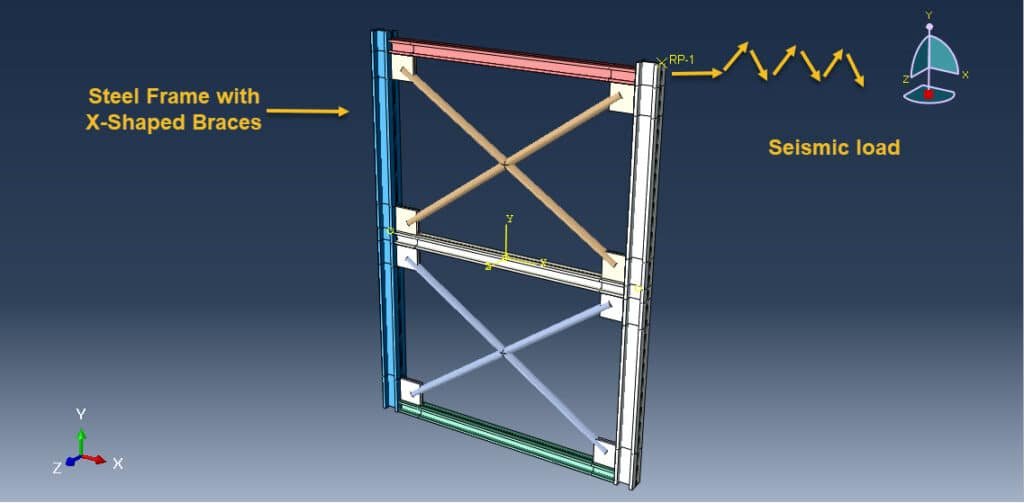
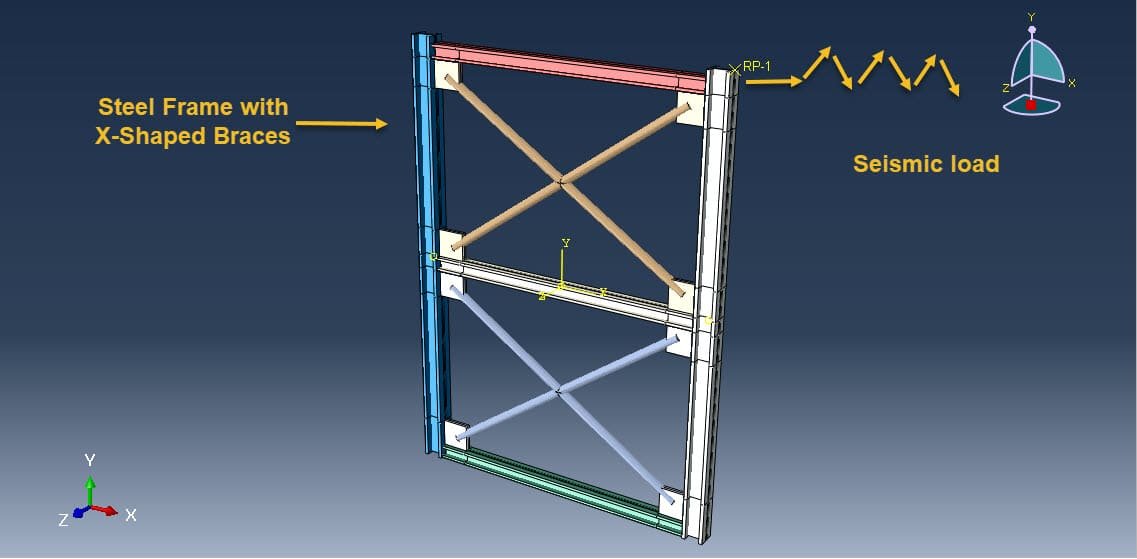
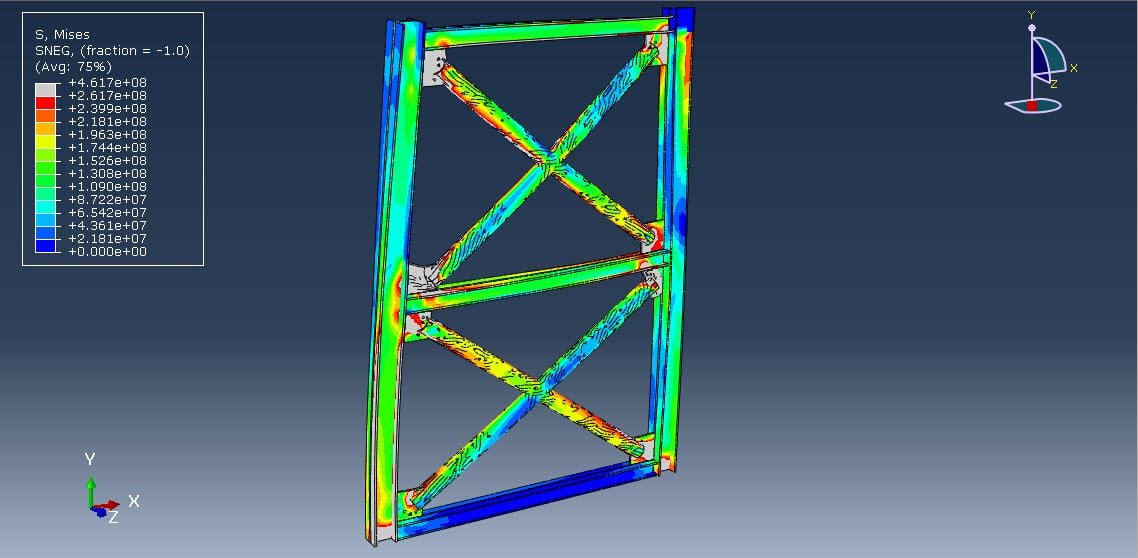
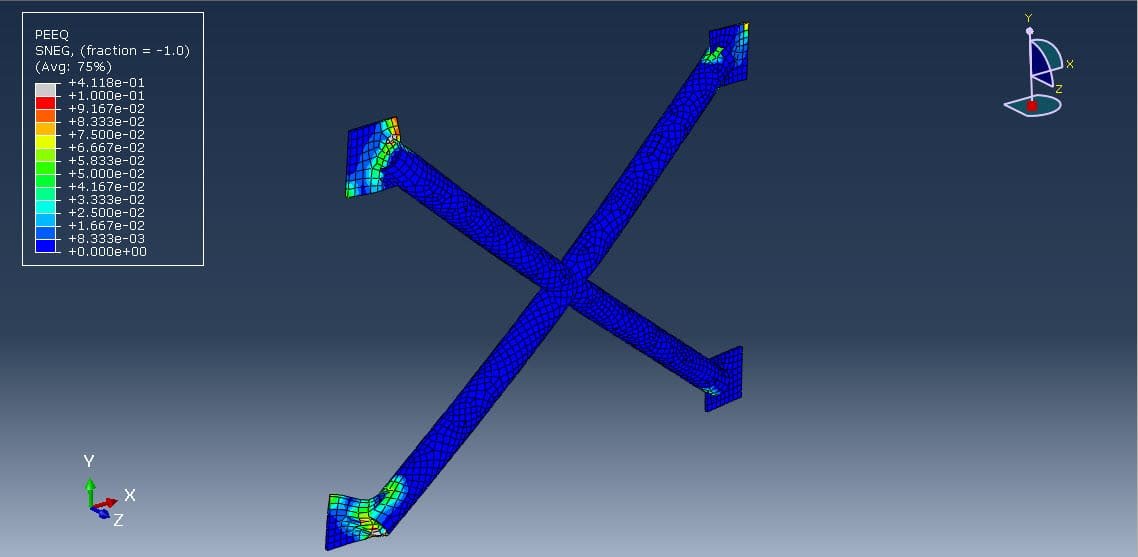
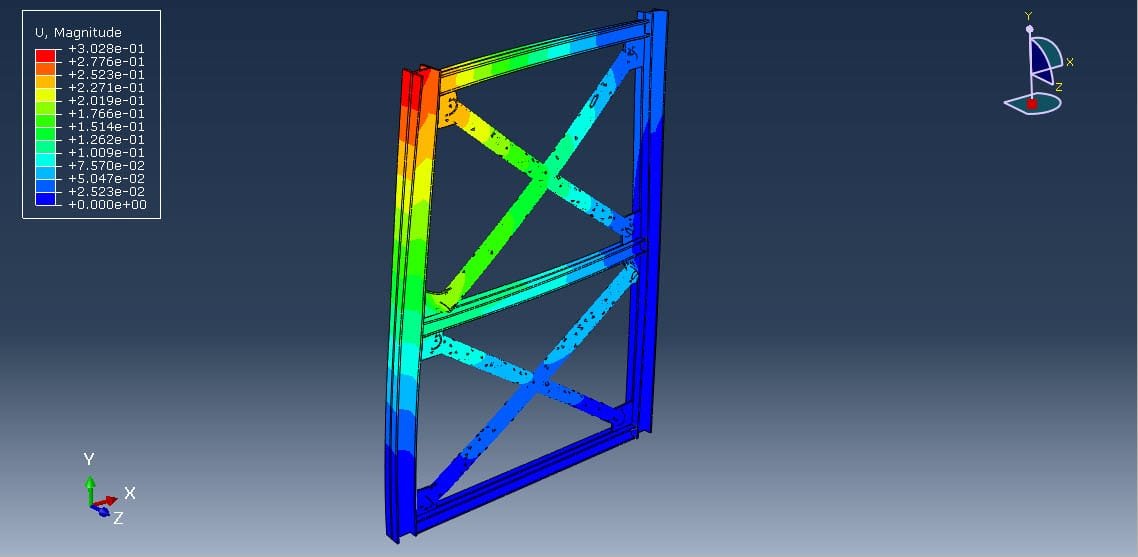
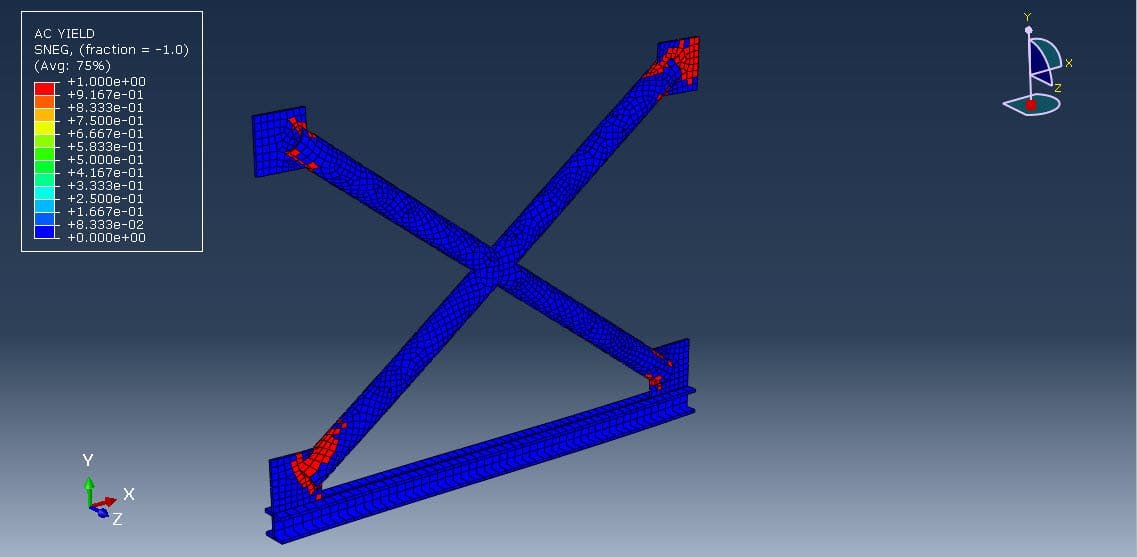
Steel frame structures are widely used in modern construction due to their high strength, ductility, and adaptability to various architectural designs. Traditionally, these frames are modeled as either rigid or pinned; however, real-world behavior often falls between these extremes, hence the term “semirigid connections.” These semirigid joints exhibit partial moment resistance and rotational flexibility, which significantly affect the frame’s overall response to lateral loads, particularly under seismic excitation.
To enhance lateral stiffness and energy dissipation, steel frames are often reinforced with bracing systems, such as X-shaped (diagonal cross) braces. These braces improve a structure’s ability to withstand seismic forces by redistributing stresses and controlling deformations. The combination of semirigid connections and X-bracing creates a complex dynamic system that requires careful analysis to accurately predict seismic performance.
Ignoring semirigid behavior can lead to inaccurate assessments of seismic performance and unsafe designs.
Several methods can be used to analyze the seismic behavior of semirigid steel frames with X-shaped braces:
Understanding the seismic behavior of such systems helps in:

Abaqus
€97,00 €54,00
Engineering files
€60,00 €50,00
Abaqus
€146,00 €89,00
Abaqus
€85,00 €47,00
Abaqus
€78,00 €39,00
See more

Want to receive push notifications for all major on-site activities?