Engineering Downloads

Let’s Learn and Collaborate
Engineering Downloads

Analysis of the new concrete masonry block under compression load in Abaqus

41,00 78,00
41,00 78,00
10 people watching this product now!

Material Includes

  • 1- Abaqus Files
  • 2- Paper+Excel Files
  • 3- Tutorial Video

Audience

  • 1- Civil Engineers
  • 2- Structural Engineers
  • 3- Mechanical Engineers

What You Will Learn?

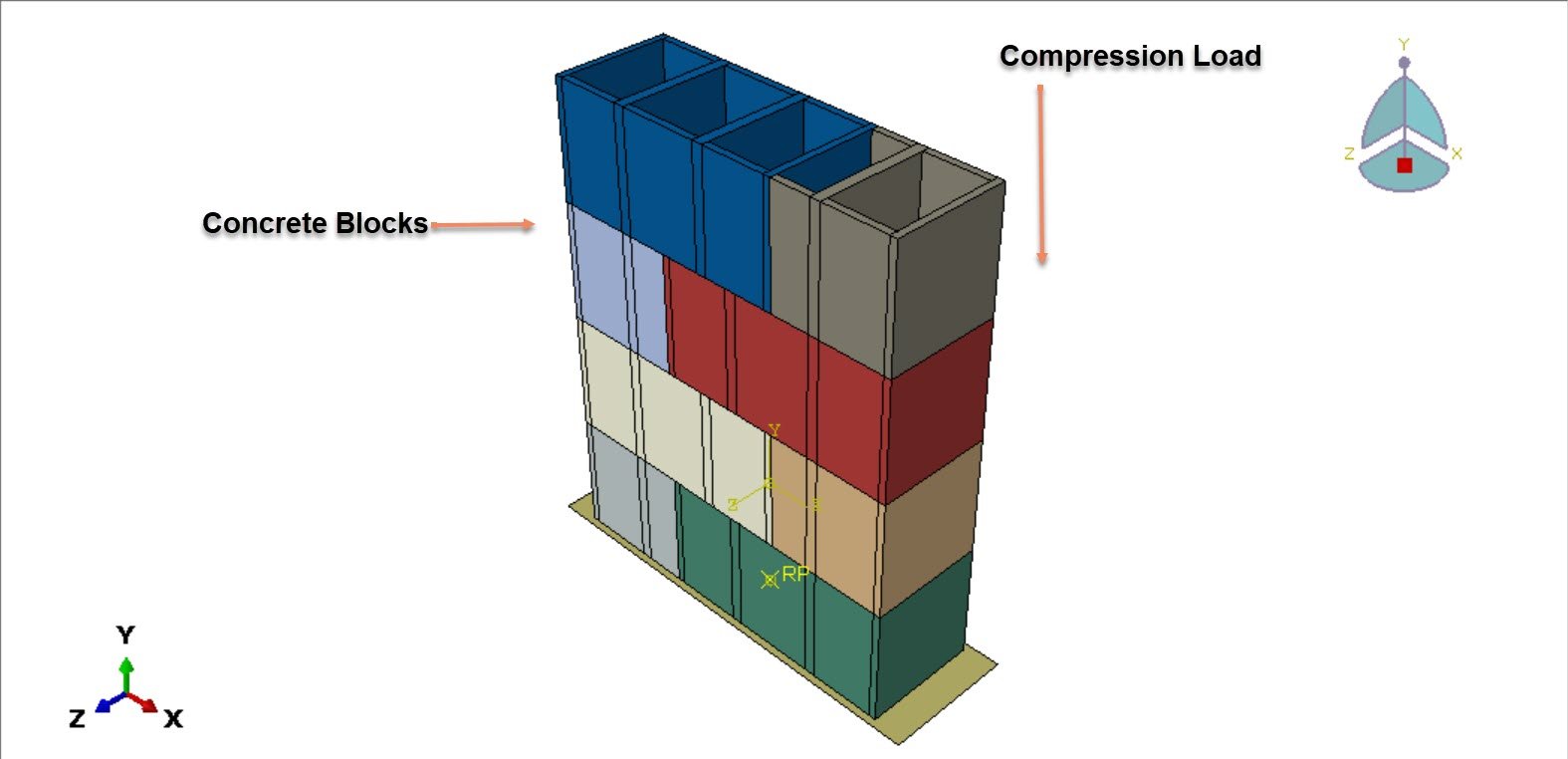
  • Through the Abaqus tutorial, we developed a comprehensive understanding of the numerical modeling procedures required to analyze concrete masonry blocks under compression loading. The tutorial provided step-by-step guidance on creating the geometric model of the masonry unit and mortar joints, defining appropriate material properties, and assigning nonlinear constitutive behavior using the Concrete Damaged Plasticity (CDP) model.
  • You will learn how to use CDP parameters such as dilation angle, flow potential eccentricity, viscosity parameter, and damage variables to realistically simulate concrete cracking and crushing. In addition, the tutorial demonstrated how to implement cohesive interaction properties to represent the bonding behavior between the concrete block and mortar, enabling the simulation of interface debonding and crack initiation.
  • The setup of the general static step solver was also covered, including load application, boundary condition definition, and convergence control for nonlinear analysis. Furthermore, you'll gain practical experience in mesh generation, element selection, and boundary conditions considerations to ensure accurate stress and deformation results.
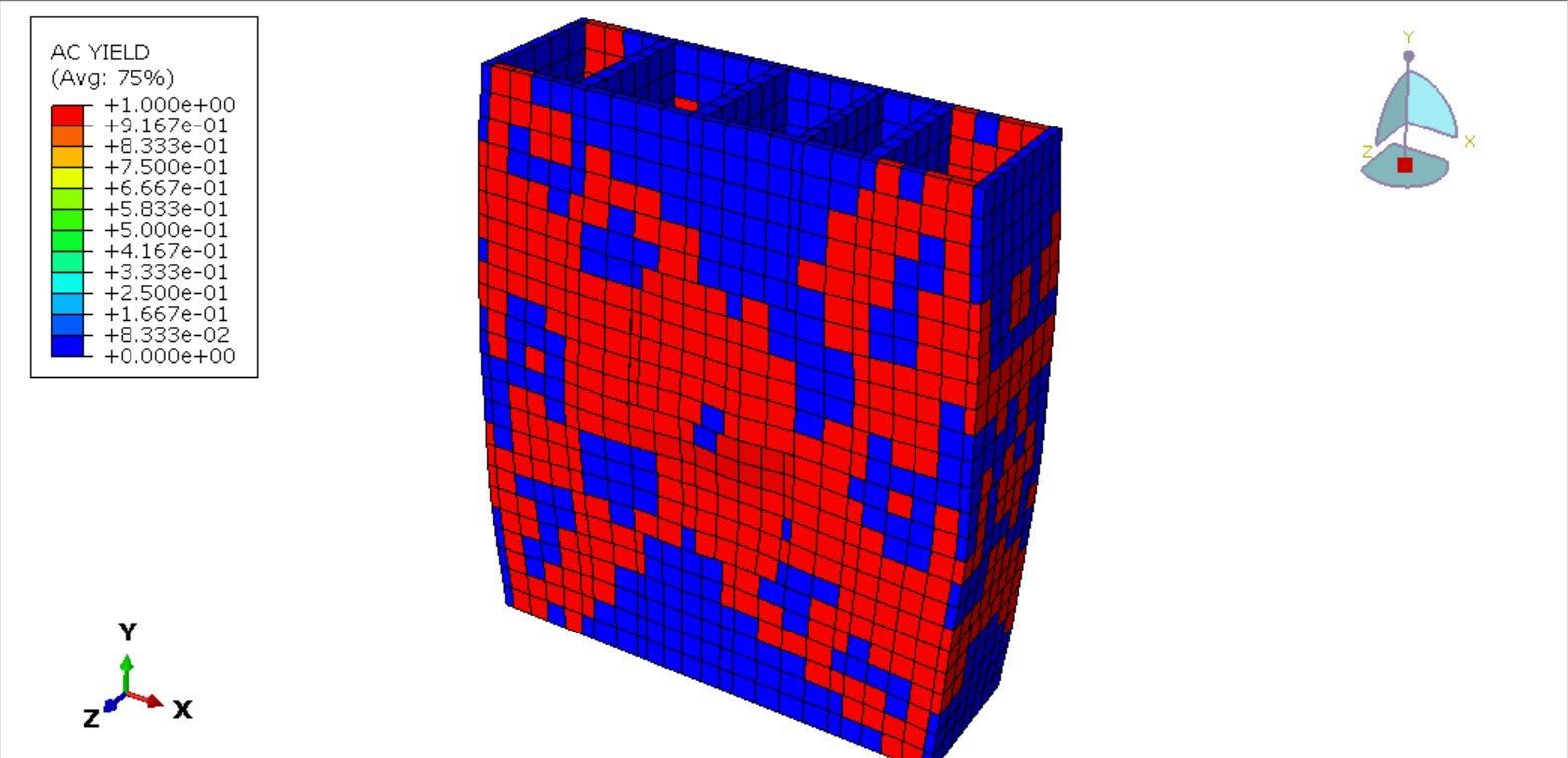
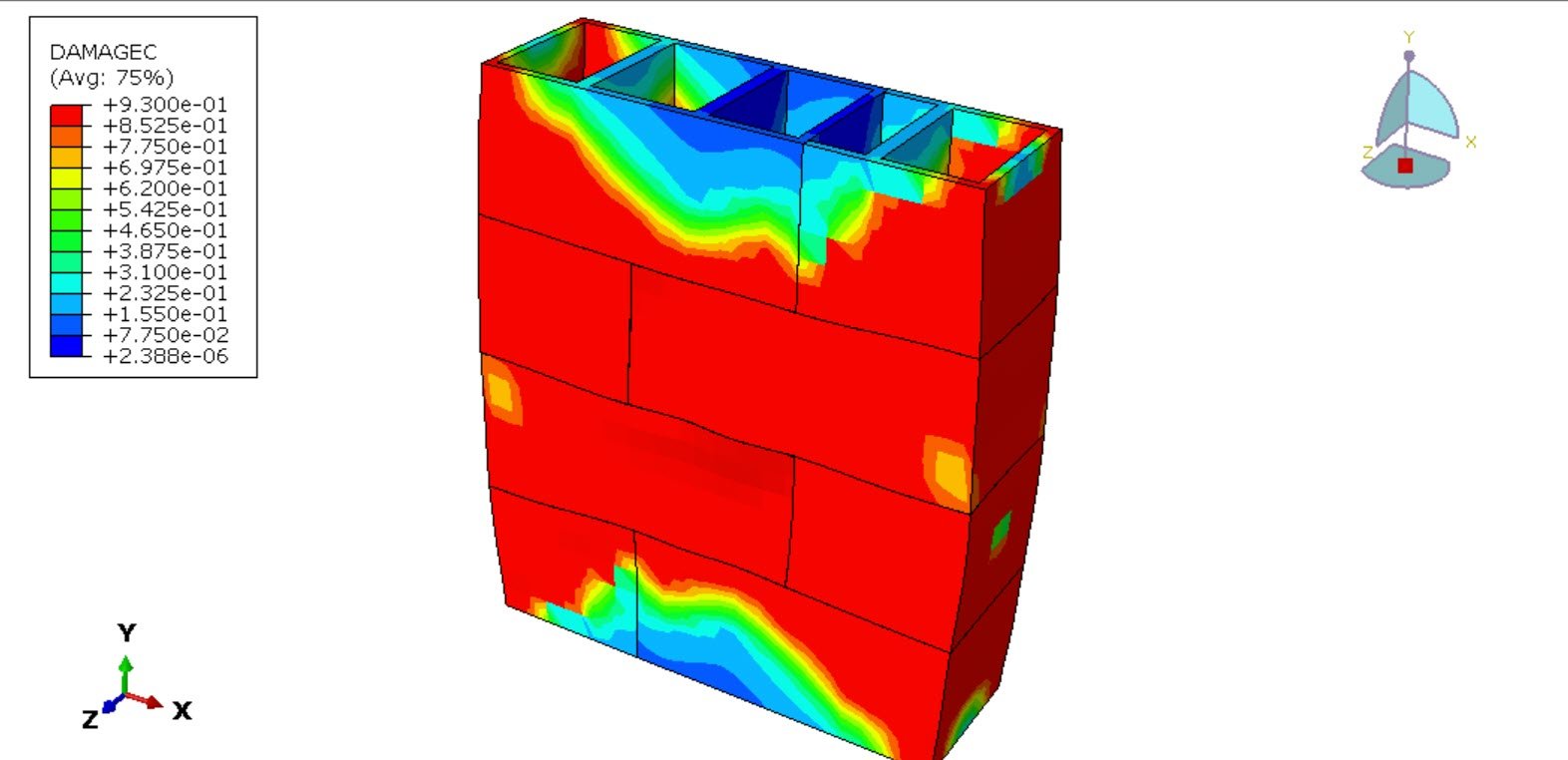
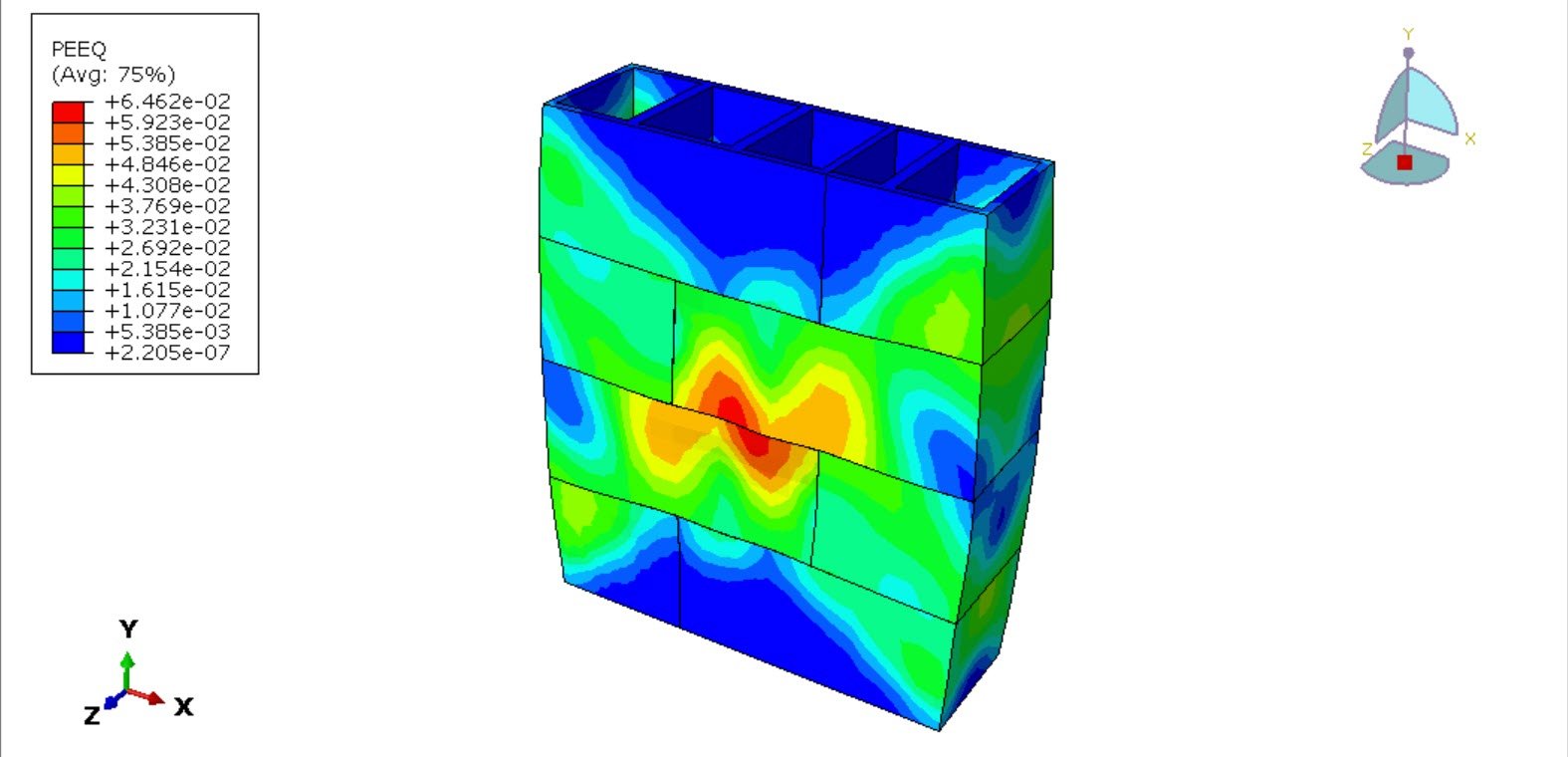
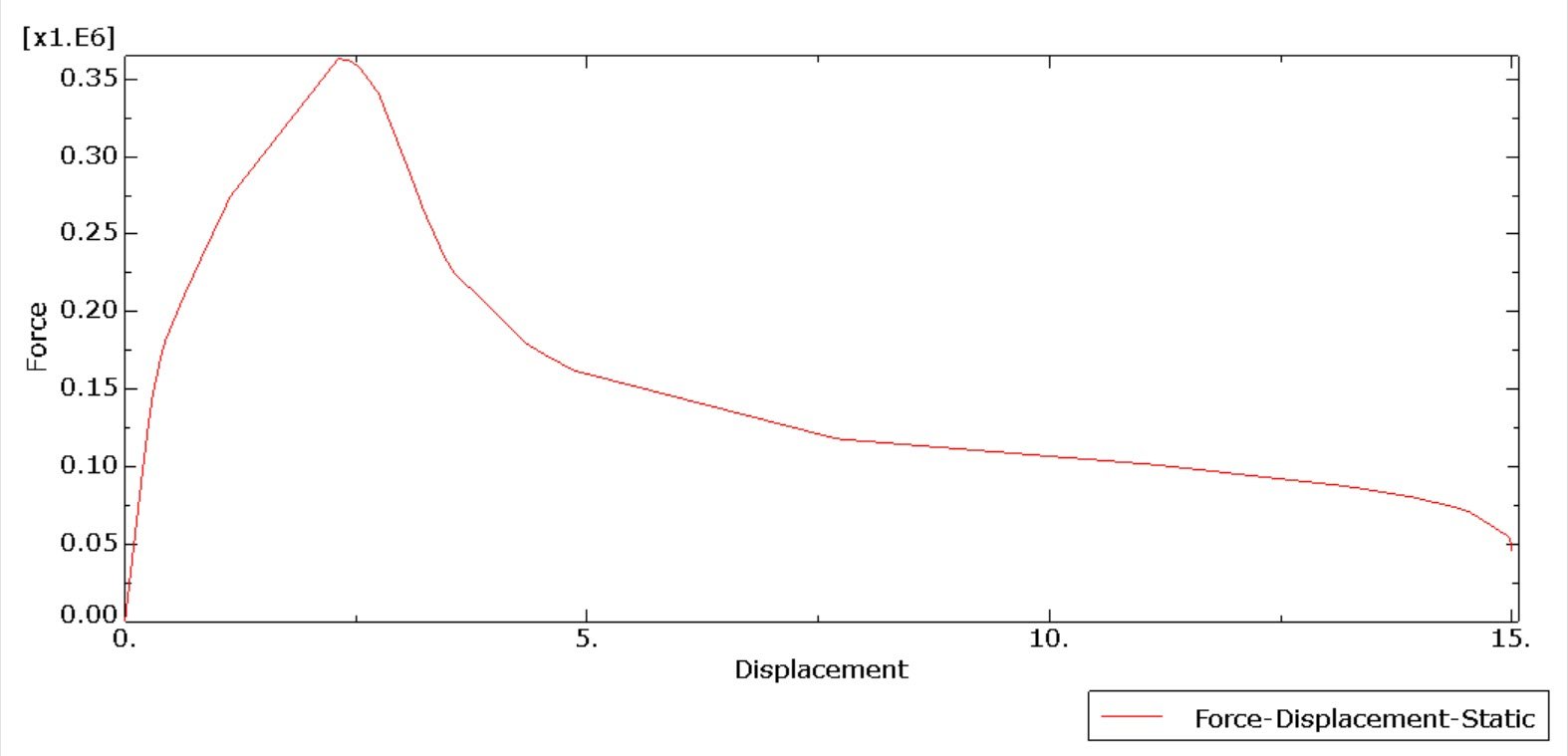
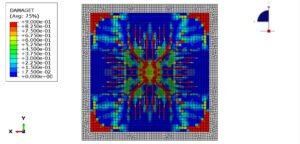
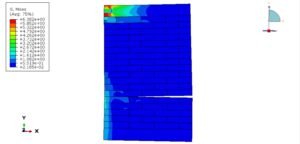
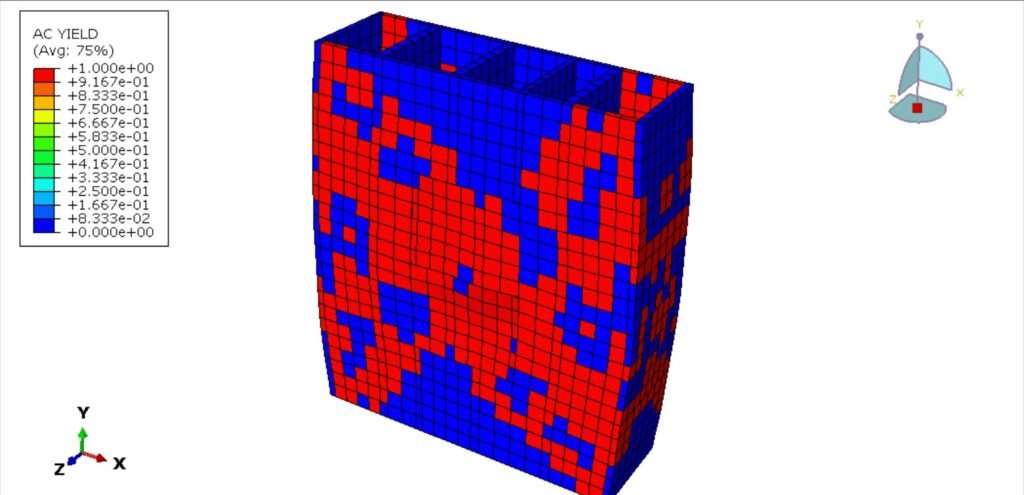
  • Post-processing techniques were another key learning outcome. I learned how to interpret load–displacement curves, stress contours, plastic strain distribution, and damage propagation patterns to evaluate structural performance and failure mechanisms.
  • Overall, the tutorial enhanced your ability to conduct advanced finite element analysis of masonry systems, providing the technical foundation required to assess the compressive behavior and structural efficiency of newly developed concrete masonry block configurations.

About Course

Concrete Masonry Block Analysis Under Axial Compression Using Abaqus

Concrete masonry blocks are among the most widely used construction materials due to their cost-effectiveness, durability, and ease of production. Their structural performance, particularly under compressive loading, plays a critical role in determining the load-bearing capacity and overall stability of masonry structures. With the development of new block geometries and material compositions aimed at improving strength, weight reduction, and thermal efficiency, it has become essential to evaluate their mechanical behavior through advanced analytical and numerical methods.

Experimental testing of masonry units and prisms provides valuable insight; however, it is often time-consuming, costly, and limited in capturing detailed stress–strain distribution and damage evolution. Finite Element Analysis (FEA) offers an efficient alternative for predicting structural response, enabling detailed investigation of nonlinear material behavior, cracking patterns, and failure mechanisms.

In this study, a newly developed concrete masonry block is analyzed under axial compression using the finite element software Abaqus. The nonlinear behavior of concrete is simulated using the Concrete Damaged Plasticity (CDP) model, which is capable of representing stiffness degradation, tensile cracking, and compressive crushing. A general static step solver is employed to capture the quasi-static response of the block up to failure.

To realistically represent the masonry assembly, the mortar joints are explicitly modeled and connected to the concrete block units’ cohesive interaction properties. This approach allows simulation of interface debonding, slip, and crack initiation along the mortar–block interface, which are critical to the overall compressive performance of masonry systems.

The objective of this analysis is to evaluate the load-bearing capacity, stress distribution, deformation characteristics, and damage progression of the proposed block configuration. The numerical results provide insight into the structural efficiency of the new masonry unit and establish a basis for comparison with conventional block systems, supporting its potential application in structural masonry construction.

Course Content

New concrete masonry block under compression load
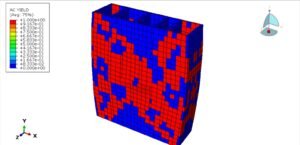
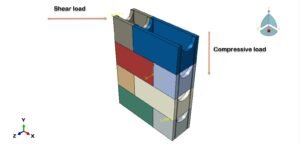
In this lesson, the new concrete masonry block under compression load in Abaqus software is studied. In this study, a newly developed concrete masonry block is analyzed under axial compression using the finite element software Abaqus. The nonlinear behavior of concrete is simulated using the Concrete Damaged Plasticity (CDP) model, which can represent stiffness degradation, tensile cracking, and compressive crushing. A general static step solver is employed to capture the block's quasi-static response up to failure. The goal of this study is to capture the force-displacement diagram(Load capacity), crack pattern, compressive damage, and...

  • Abaqus Files
  • Paper+Excel Files
  • Tutorial Video
    00:00

Reviews

No Review Yet
No Review Yet
41,00 78,00
10 people watching this product now!

Material Includes

  • 1- Abaqus Files
  • 2- Paper+Excel Files
  • 3- Tutorial Video

Audience

  • 1- Civil Engineers
  • 2- Structural Engineers
  • 3- Mechanical Engineers

Related  Products

See more

Want to receive push notifications for all major on-site activities?