Introduction to Engineering in the Oil & Gas Sector
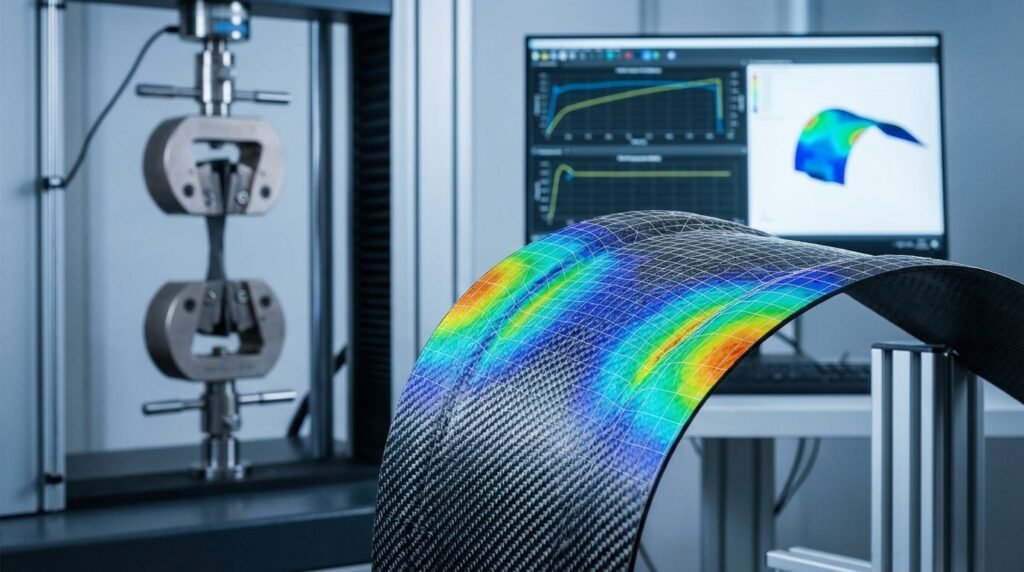
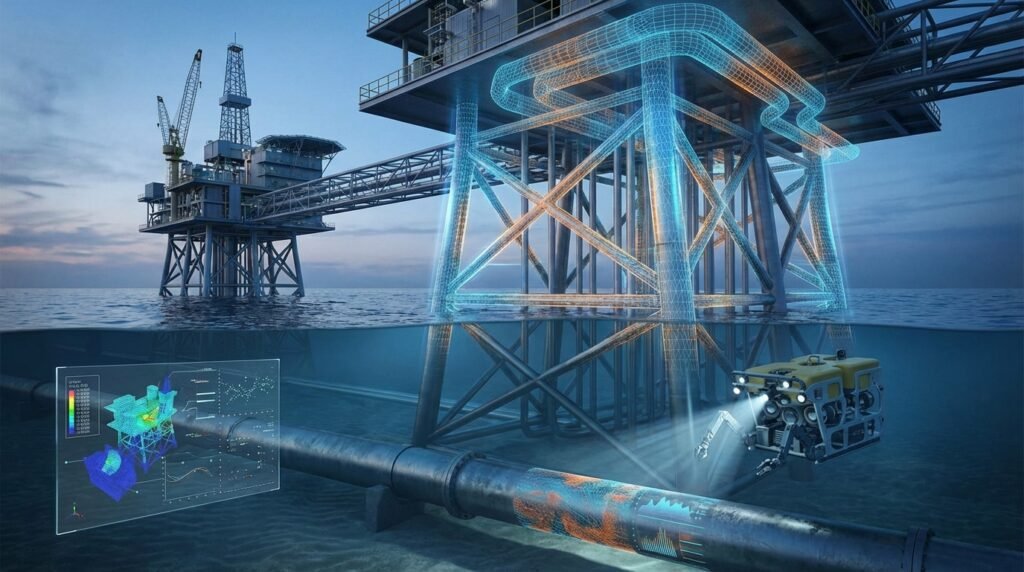
The Oil & Gas industry is a cornerstone of global energy, presenting complex engineering challenges across its vast value chain—from exploration and production to transportation, refining, and distribution. Engineers in this sector are tasked with ensuring the safety, reliability, and efficiency of high-value assets operating under extreme conditions, often involving high pressures, temperatures, corrosive environments, and dynamic loads. This requires a deep understanding of mechanics, fluid dynamics, material science, and advanced computational tools. This article delves into the critical engineering disciplines and methodologies essential for navigating the complexities of Oil & Gas projects, focusing on the practical application of advanced simulation and analysis techniques.
Exploration & Production (E&P) Engineering Challenges
The upstream segment of the Oil & Gas industry involves locating, extracting, and bringing crude oil and natural gas to the surface. This phase is characterized by significant technical hurdles, demanding robust engineering solutions.
Upstream Operations: Subsurface to Wellhead
Reservoir Simulation & Optimization
Understanding subsurface reservoirs is paramount for efficient hydrocarbon recovery. Engineers utilize sophisticated reservoir simulation models to predict fluid flow, pressure depletion, and production profiles. While primarily a geosciences domain, structural engineers contribute to understanding rock mechanics and wellbore stability. Computational Fluid Dynamics (CFD) can be employed to model fluid movement within the porous media, providing insights into enhanced oil recovery (EOR) techniques.
Drilling & Well Completion
Drilling operations involve significant mechanical stresses on drill bits, casing strings, and downhole tools. Finite Element Analysis (FEA) is indispensable for:
- Drill Bit Design: Optimizing geometry and material selection for improved penetration rates and longevity under abrasive and impact loads.
- Casing String Design: Analyzing stress distribution, buckling, and collapse resistance of tubulars due to external pressure (formation pressure) and internal pressure (fluid pressure), as well as axial loads during installation and operation.
- Wellbore Stability: Predicting and mitigating wellbore collapse or fracturing, especially in challenging geological formations, often involving coupled geomechanical and fluid flow simulations.
Offshore Structures: Design for Extreme Loads
Offshore platforms, Floating Production Storage and Offloading (FPSO) units, and subsea infrastructure are exposed to formidable environmental forces from waves, currents, wind, and seismic activity. Structural integrity is a paramount concern.
- Fatigue Analysis: Critical for structures subjected to cyclic loading from waves and currents over decades of service. Advanced FEA tools like Abaqus or ANSYS Mechanical are used to perform spectral fatigue analysis, considering stress concentration factors and weld details.
- Buckling Analysis: Ensuring the stability of slender members (e.g., jacket legs, risers) under compressive loads, hydrostatic pressure, and combined axial, bending, and torsional forces.
- Extreme Load Scenarios: Designing for ultimate limit states, including accidental events such as ship impact or dropped objects, requiring non-linear dynamic FEA.
- Hydrodynamics: CFD simulations (e.g., using ANSYS Fluent/CFX or OpenFOAM) are crucial for analyzing wave-structure interaction, vortex-induced vibrations (VIV) of risers, and optimizing hull forms for reduced drag and improved stability.
Midstream Operations: Transportation & Storage
Midstream activities involve the transportation and storage of crude oil, natural gas, and refined products from production sites to refineries and processing plants.
Pipeline Engineering: Flow Assurance & Structural Integrity
Pipelines are the arteries of the Oil & Gas industry, requiring rigorous engineering for safe and efficient operation.
- Flow Assurance: CFD is critical for modeling multiphase flow, predicting hydrate formation, wax deposition, and slugging phenomena which can severely impact pipeline efficiency and safety. This ensures optimal design of pigging schedules and chemical inhibition strategies.
- Structural Integrity: Pipelines are subject to internal pressure, external soil loads, thermal expansion/contraction, and seismic activity. FEA is used for:
- Stress Analysis: Ensuring pipelines can withstand operational and extreme loads.
- Fitness-for-Service (FFS) Level 3 Assessments: Evaluating the integrity of degraded pipelines (e.g., with corrosion, dents, cracks) to determine if they can continue safe operation without immediate repair or replacement, often using advanced fracture mechanics simulations in tools like Abaqus or ANSYS.
- Buckling & Ovalization: Analyzing subsea pipelines for buckling under external hydrostatic pressure or expansion.
Storage Tanks & Terminals
Large storage tanks for crude oil and refined products require careful structural design against hydrostatic pressure, wind loads, seismic events, and potential foundation settlement. FEA is used to analyze tank shell stresses, roof stability, and anchorage systems. Consideration for fatigue and fracture of tank bottoms due to cyclic filling/emptying and corrosion is also vital.
Downstream Operations: Refining & Processing
The downstream sector transforms crude oil into various refined products and processes natural gas. This involves complex chemical processes and high-temperature/high-pressure equipment.
Process Equipment Design & Analysis
Refineries and petrochemical plants house a myriad of critical equipment, including pressure vessels, heat exchangers, reactors, and furnaces. FEA is extensively used for:
- Pressure Vessel Design: Detailed stress analysis of shells, heads, nozzles, and supports according to industry codes (e.g., ASME BPVC), considering internal pressure, external loads, and thermal gradients.
- Heat Exchanger Performance: Thermal-stress analysis to predict deformation and potential failure due to differential thermal expansion. CFD is used for optimizing flow paths and heat transfer efficiency.
- Component Life Extension: Assessing creep, fatigue, and environmental cracking mechanisms for equipment operating at elevated temperatures and pressures.
Plant Layout & Safety
Safety is paramount in downstream facilities. CFD simulations are used to model:
- Gas Dispersion: Predicting the spread of hazardous gas releases in case of a leak, informing safety zones and detection system placement.
- Fire & Explosion Modeling: Simulating combustion and overpressure waves from potential explosions, crucial for designing blast-resistant structures and optimizing emergency response.
Advanced Engineering Analysis in Oil & Gas
The complexity and criticality of Oil & Gas assets necessitate advanced simulation capabilities.
Finite Element Analysis (FEA) Applications
FEA is a cornerstone of structural and mechanical design in Oil & Gas. Key applications include:
- Structural Integrity & Fitness-for-Service (FFS): Beyond initial design, FEA enables Level 3 FFS assessments (e.g., API 579-1/ASME FFS-1), which involve detailed non-linear analysis of cracked or damaged components to determine remaining life or safe operating limits. Tools like Abaqus, ANSYS Mechanical, and MSC Nastran are commonly used.
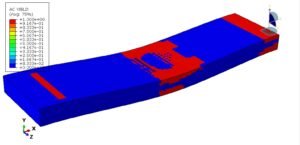
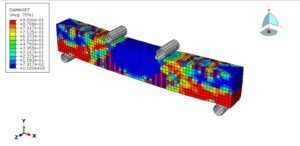
- Fatigue & Fracture Mechanics: Detailed prediction of crack initiation and propagation in components subjected to cyclic loading, crucial for asset life management and preventing catastrophic failures.
- Geomechanics: Coupled hydro-mechanical analysis for wellbore stability, hydraulic fracturing, and subsidence prediction.
- Thermomechanical Analysis: Evaluating stresses and deformations arising from temperature gradients, critical for high-temperature process equipment and hot tap procedures.
Computational Fluid Dynamics (CFD) Applications
CFD provides invaluable insights into fluid flow phenomena across the industry:
- Flow Assurance & Multiphase Flow: Modeling complex flow regimes (gas-liquid, liquid-liquid, gas-liquid-solid) in pipelines and processing equipment to prevent blockages and optimize separation processes.
- Offshore Hydrodynamics: Detailed analysis of wave and current forces on offshore structures, risers, and moorings.
- Flare & Dispersion Modeling: Simulating combustion in flare stacks and dispersion of exhaust gases or accidental releases for environmental compliance and safety planning.
- Pump & Compressor Performance: Optimizing impeller and volute designs for improved efficiency and cavitation prevention.
Popular CFD software packages include ANSYS Fluent, ANSYS CFX, and the open-source OpenFOAM.
Integrated CAD-CAE Workflows
Effective engineering in Oil & Gas relies heavily on seamless integration between Computer-Aided Design (CAD) and Computer-Aided Engineering (CAE) tools.
CAD software like CATIA is used for detailed 3D modeling of components and assemblies. This geometric data is then transferred to CAE tools (FEA, CFD) for analysis. An integrated workflow:
- Design Optimization: Allows for rapid iteration and optimization of designs by directly linking CAD models to analysis parameters, reducing design cycles.
- Data Management: Ensures consistency and traceability of design and analysis data throughout the project lifecycle, often managed through Product Data Management (PDM) or Product Lifecycle Management (PLM) systems.
Practical Workflow for Simulation & Analysis
Executing a successful simulation project in Oil & Gas requires a structured approach.
Defining the Scope & Objectives
Before any simulation, clearly define what questions the analysis needs to answer. What failure modes are being investigated? What are the key performance indicators? What accuracy is required? This guides model complexity and resource allocation.
Pre-processing: Geometry, Meshing, Material Models
Geometry Preparation
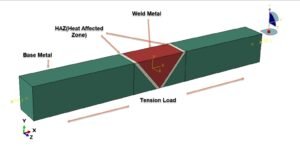
Simplify complex CAD geometries to remove irrelevant features while retaining critical details (e.g., fillets, weld profiles). This step significantly impacts meshing efficiency and accuracy.
Mesh Generation Strategies
The quality of the mesh directly affects simulation accuracy and computational cost.
- Element Type Selection: Choose between linear or quadratic elements (e.g., C3D8R vs. C3D20 in Abaqus) based on expected deformation and stress gradients.
- Mesh Density: Refine the mesh in areas of high stress concentration (e.g., nozzles, weld toes, crack tips) or significant flow gradients (e.g., near walls, mixing regions). Coarser meshes can be used in regions of low interest. Hexahedral meshes are generally preferred for structural analysis due to their efficiency and accuracy, while tetrahedral meshes offer flexibility for complex geometries.
- Boundary Layer Meshing (CFD): Essential for accurately capturing near-wall flow phenomena and heat transfer in CFD simulations.
Material Characterization
Accurate material models are crucial. This often involves experimental data for:
- Elasto-plasticity: Stress-strain curves for metals under tension and compression.
- Creep: Time-dependent deformation at elevated temperatures.
- Fatigue Properties: S-N curves and crack growth rate data.
- Environmental Effects: Consideration of corrosion, hydrogen embrittlement, and other degradation mechanisms.
Solver Execution: Boundary Conditions, Load Cases
Applying Realistic Boundary Conditions
Correctly applying boundary conditions (BCs) is vital. This includes:
- Pressure Loads: Internal and external pressures on vessels, pipelines.
- Thermal Loads: Temperature distributions, thermal expansion coefficients.
- Displacement Constraints: Supports, anchors, symmetry conditions.
- Fluid Inlets/Outlets (CFD): Mass flow rates, pressure profiles, turbulence parameters.
Load Combination & Time-History Analysis
Engineers must consider various operating and extreme load scenarios, combining them according to relevant codes and standards. For dynamic problems (e.g., seismic, wave loads), time-history analysis is often required.
Post-processing & Interpretation: Results Visualization
Once simulations are complete, robust post-processing is essential to extract meaningful insights.
Results Visualization
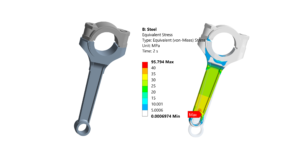
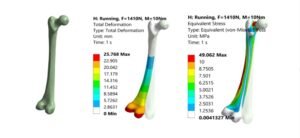
- Stress Contours: Identifying high-stress regions (e.g., von Mises stress, principal stresses).
- Deformation Plots: Visualizing structural displacement and identifying potential buckling modes.
- Flow Vectors & Streamlines (CFD): Understanding fluid path, velocity profiles, and recirculation zones.
- Pressure & Temperature Maps: Identifying gradients and hot spots.
Data Extraction & Reporting
Extracting numerical data for critical locations, generating plots, and compiling comprehensive reports with clear conclusions and recommendations is a crucial step.
Verification & Sanity Checks in O&G Simulations
Rigorous verification and validation are non-negotiable for reliable simulation results.
Mesh Sensitivity & Convergence Studies
Perform analyses with progressively finer meshes to ensure that the results (e.g., maximum stress, displacement, flow rate) converge to a stable value. This demonstrates that the mesh is sufficiently refined to capture the physics accurately.
Boundary Condition & Load Sensitivity
Investigate the impact of small variations in boundary conditions and load magnitudes. This helps understand the robustness of the design and the sensitivity of the results to input uncertainties.
Material Model Validation
Where possible, compare simulated material behavior against experimental test data to ensure the constitutive models accurately represent the material’s response under the simulated conditions.
Hand Calculation & Empirical Formula Cross-Checks
For simplified cases or specific components, perform quick hand calculations or use empirical formulas (e.g., basic beam theory, pressure vessel formulas) to establish an order of magnitude check for simulation results. This serves as an invaluable sanity check against gross errors.
Comparison with Field Data & Industry Standards
When available and appropriate, compare simulation results with historical field data, monitoring information, or established industry benchmarks. Ensure the results comply with relevant design codes (e.g., ASME, API, DNV) and best practices. It’s important to remember that simulation results, even validated ones, represent an idealized scenario and should be interpreted with engineering judgment.
Automation & Advanced Techniques
To enhance efficiency and explore complex design spaces, engineers leverage automation and advanced computational methods.
Python & MATLAB for Data Analysis & Scripting
Both Python and MATLAB are powerful tools for automating various aspects of the simulation workflow:
- Parametric Studies & Optimization: Scripts can be developed to automatically modify geometric parameters, material properties, or boundary conditions, run multiple simulations, and extract results. This is invaluable for design optimization and sensitivity analysis.
- Pre-processing & Post-processing Automation: Automating repetitive tasks such as mesh generation for similar components, applying complex boundary conditions, or extracting specific result data for reporting.
- Integration with Simulation Software: Many commercial FEA and CFD packages offer Python or MATLAB APIs (Application Programming Interfaces) for scripting and custom tool development.
For advanced Python or MATLAB scripts to streamline these workflows, explore the downloadable resources available on EngineeringDownloads.com.
Probabilistic Methods & Reliability Engineering
Traditional deterministic simulations assume fixed input parameters. Probabilistic methods account for uncertainties in material properties, loads, and geometries, providing insights into the probability of failure and asset reliability. Techniques like Monte Carlo simulation or FORM/SORM are employed to enhance risk assessments.
Key Industry Challenges & Future Trends
The Oil & Gas industry is constantly evolving, driven by new technologies and global shifts.
Energy Transition & Decarbonization
The global push towards decarbonization is profoundly impacting the Oil & Gas sector. Engineering efforts are increasingly focused on:
- Carbon Capture, Utilization, and Storage (CCUS): Designing and analyzing new infrastructure for CO2 pipelines, storage reservoirs, and injection wells, requiring specialized FEA for geomechanics and FFS for existing assets repurposed for CO2.
- Hydrogen Economy: Engineering for hydrogen production, transportation (pipelines, storage), and utilization, which presents unique material compatibility and structural challenges due to hydrogen embrittlement.
- Offshore Wind Integration: Leveraging offshore Oil & Gas expertise for developing and installing offshore wind farm foundations and related infrastructure.
Digitalization & AI/ML Integration
The industry is embracing digitalization, using data analytics, Artificial Intelligence (AI), and Machine Learning (ML) to optimize operations, predict equipment failures, and enhance decision-making. Engineering simulation data provides valuable training sets for ML models.
Asset Life Extension & Decommissioning
As many Oil & Gas assets age, engineers are focused on safely extending their operational life through robust FFS assessments, advanced monitoring, and targeted repairs. Conversely, the decommissioning of aging infrastructure presents complex structural and environmental challenges.
Common Oil & Gas Challenges and Relevant Engineering Analysis
| Engineering Challenge | Primary Engineering Analysis Method(s) | Key Considerations | Relevant Tools/Disciplines |
|---|---|---|---|
| Pipeline Corrosion/Damage | FFS (Fitness-for-Service) Level 3, Non-linear FEA | Remaining strength, crack growth, brittle fracture, plastic collapse | Abaqus, ANSYS Mechanical, Structural Integrity, Fracture Mechanics |
| Offshore Platform Fatigue | Spectral Fatigue Analysis (FEA), Dynamic Analysis | Stress concentration, weld details, environmental loading (waves, current) | ANSYS Mechanical, Abaqus, DNVGL Standards, Structural Engineering |
| Reservoir Fluid Flow | CFD (Porous Media Flow), Coupled Geomechanics | Pressure drop, multiphase flow, wellbore stability, permeability | ANSYS Fluent, OpenFOAM, Geomechanics |
| Pressure Vessel Integrity (High Temp/Press) | Non-linear FEA, Creep Analysis, Thermal Stress Analysis | ASME code compliance, creep damage, thermal gradients, fatigue | Abaqus, ANSYS Mechanical, PV Design, Material Science |
| Multiphase Pipeline Flow Assurance | CFD (Multiphase Models) | Slug flow, hydrate formation, wax deposition, pressure drop | ANSYS Fluent, ANSYS CFX, Flow Assurance, Fluid Mechanics |
Conclusion
The Oil & Gas industry is a field of immense engineering complexity and critical importance. From the deep subsurface to vast processing facilities, advanced engineering analysis using tools like FEA and CFD, combined with robust CAD-CAE workflows and automation via Python and MATLAB, is indispensable for ensuring the safety, reliability, and efficiency of operations. As the industry navigates future challenges such as energy transition and digitalization, the role of skilled engineers leveraging cutting-edge computational methods will only grow in significance, driving innovation and sustainable solutions for global energy needs.