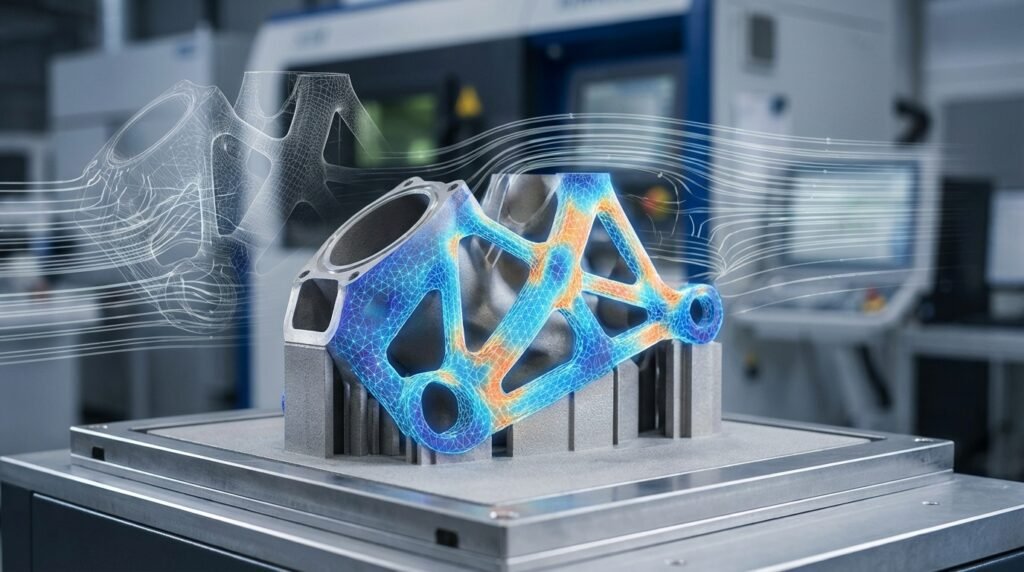
Fatigue is a silent destroyer of structures and components. Unlike sudden fracture, fatigue involves progressive, localized, permanent structural change occurring in a material subjected to fluctuating stresses and strains. It’s responsible for a significant percentage of in-service failures across industries, from aerospace to oil & gas and even civil infrastructure. Understanding and accurately predicting fatigue life is paramount for ensuring structural integrity, safety, and economic viability.

Image: A typical Stress-Life (S-N) curve illustrating the relationship between stress amplitude and the number of cycles to failure. (Source: Wikimedia Commons)
What is Fatigue in Structural Engineering?
In structural engineering, fatigue refers to the degradation of a material under repeated or fluctuating loads. Even if the applied stresses are well below the material’s yield strength, cumulative damage can lead to crack initiation and propagation, eventually resulting in catastrophic failure. This phenomenon is distinct from static failure, which occurs when a single load exceeds the material’s ultimate strength.
The Stages of Fatigue
- Crack Initiation: Microscopic cracks form, often at stress concentration points like surface imperfections, sharp corners, or inclusions within the material.
- Crack Propagation: These tiny cracks grow under continued cyclic loading. The rate of growth depends on factors like stress intensity, material properties, and environmental conditions.
- Final Fracture: The crack reaches a critical size where the remaining cross-section can no longer withstand the applied load, leading to rapid, brittle fracture.
Why Accurate Prediction Matters
For critical structures like aircraft components, offshore platforms, or high-speed machinery, unexpected fatigue failure can have dire consequences, including loss of life, significant economic damage, and environmental disasters. Accurate fatigue life prediction allows engineers to:
- Design components with sufficient durability and safety margins.
- Optimize material usage and reduce over-engineering.
- Plan effective inspection and maintenance schedules.
- Extend the operational life of existing structures through life extension studies.
Key Factors Influencing Fatigue Life
Many variables interact to determine a component’s fatigue resistance. A thorough understanding of these factors is crucial for effective prediction.
Stress Amplitude and Mean Stress
The magnitude of the cyclic stress variation (stress amplitude) is the primary driver of fatigue. Higher amplitudes generally lead to shorter lives. However, the mean stress (the average stress over a cycle) also plays a significant role. Tensile mean stresses tend to reduce fatigue life, while compressive mean stresses can often extend it.
Material Properties
The inherent fatigue resistance of a material is quantified through experimental data (S-N or E-N curves). Factors like ultimate tensile strength, yield strength, ductility, and fracture toughness all contribute. Material microstructure, grain size, and heat treatment also have a profound impact.
Surface Condition and Residual Stresses
Surface quality is critical. Scratches, pits, machining marks, and corrosion can act as stress concentrators, significantly reducing fatigue life. Conversely, surface treatments like shot peening or nitriding can introduce beneficial compressive residual stresses, enhancing fatigue resistance.
Geometric Factors and Stress Concentrators
Abrupt changes in geometry (e.g., fillets, holes, grooves) create stress concentrations, where local stresses are much higher than the nominal applied stress. These hotspots are prime locations for crack initiation. Proper design to minimize stress concentration factors is vital.
Environmental Effects
Aggressive environments can severely accelerate fatigue damage. Corrosion fatigue, fretting fatigue, and thermal fatigue are examples where chemical attack, relative motion between surfaces, or repeated thermal cycling exacerbate the fatigue process.
Approaches to Fatigue Life Prediction
Several methodologies are employed for fatigue life prediction, each suitable for different loading regimes and design philosophies.
Stress-Life (S-N) Method (High Cycle Fatigue)
The S-N method is the oldest and most widely used approach, particularly for high cycle fatigue (HCF) where the number of cycles to failure is large (typically > 10^4 cycles) and stresses are predominantly elastic. It’s based on experimental data where smooth specimens are subjected to constant amplitude, fully reversed cyclic loading until failure. The results are plotted as stress amplitude (S) versus cycles to failure (N) on a log-log scale.
Basics and Application
- Concept: For a given stress amplitude, a material will fail after a certain number of cycles.
- Endurance Limit: For some materials (e.g., steels), there’s a stress amplitude below which fatigue will theoretically not occur, regardless of the number of cycles. This is the endurance limit.
- Limitations: Assumes constant amplitude loading and doesn’t explicitly account for local plastic deformation. It’s less accurate for low cycle fatigue.
- Typical Applications: Rotating shafts, structural components experiencing vibrations, components where stresses remain elastic.
Illustrative S-N Data Example (Hypothetical Steel Alloy)
Below is an illustrative table of S-N data for a hypothetical steel alloy. Note that actual data would come from rigorous experimental testing.
| Stress Amplitude (MPa) | Cycles to Failure (N) | Fatigue Regime |
|---|---|---|
| 700 | 5 x 10³ | Low Cycle Fatigue (LCF) |
| 500 | 1.5 x 10⁴ | Transition |
| 300 | 1 x 10⁵ | High Cycle Fatigue (HCF) |
| 200 | 5 x 10⁶ | High Cycle Fatigue (HCF) |
| 150 | > 107 (Endurance Limit) | Infinite Life |
Strain-Life (E-N) Method (Low Cycle Fatigue)
The E-N method is preferred for low cycle fatigue (LCF), where loads are high enough to cause significant localized plastic deformation, and failure occurs in fewer cycles (typically < 10^4 cycles). It focuses on strain rather than stress as the damage parameter.
Basics and When to Use It
- Concept: Relates total strain amplitude (elastic + plastic) to the number of reversals (2N) to failure.
- Morrow Equation: A common mathematical representation of E-N curves.
- When to Use: Components experiencing severe overloads, thermal fatigue, or high stress concentrations where plastic deformation is unavoidable.
- Advantages: More accurately accounts for localized yielding and plastic strain, which are critical in LCF.
Fracture Mechanics Approach (Crack Propagation)
This approach focuses on predicting the growth of existing cracks rather than crack initiation. It’s particularly relevant for assessing the remaining life of damaged components or for damage-tolerant design. Key concepts include stress intensity factor (K) and Paris’ Law.
Basics and Paris’ Law
- Stress Intensity Factor (K): Quantifies the stress state at the tip of a crack.
- Paris’ Law: Describes the rate of stable crack growth per cycle (da/dN) as a function of the stress intensity factor range (ΔK). Typically:
da/dN = C (ΔK)^m, where C and m are material constants. - Application: Critical for aerospace components, pressure vessels, and structures where even small cracks cannot be tolerated without careful monitoring.
Practical Workflow for Fatigue Analysis using FEA
Finite Element Analysis (FEA) is an indispensable tool for modern fatigue life prediction, especially for complex geometries and loading conditions. Here’s a typical workflow:
Modeling & Meshing
- CAD Model Preparation: Simplify the CAD model by removing features irrelevant to stress analysis (e.g., small fillets far from critical regions) to reduce computational cost.
- Material Assignment: Assign appropriate material properties, including elastic modulus, Poisson’s ratio, and importantly, the fatigue-specific material data (S-N or E-N curves).
- Mesh Generation: Create a suitable FE mesh. For fatigue analysis, mesh quality is paramount, especially at stress concentration points. Use finer meshes in regions expected to experience high stresses or where cracks are likely to initiate. Hexahedral elements are often preferred over tetrahedral for accuracy, where feasible.
Loading & Boundary Conditions
- Define Loads: Accurately apply cyclic loads. This includes identifying minimum and maximum loads, frequencies, and load sequences (if variable amplitude).
- Apply Boundary Conditions (BCs): Ensure BCs accurately represent real-world constraints. Incorrect BCs can lead to wildly inaccurate stress distributions. Avoid over-constraining or under-constraining the model.
- Identify Load Cases: For complex systems, define various operational load cases and their combinations.
Analysis Setup & Post-processing
- Static/Transient Analysis: Perform a static or transient structural analysis to obtain stress/strain distributions under peak loading conditions. For fatigue, often an elastic analysis is sufficient if stresses are well below yield; otherwise, non-linear analysis is needed.
- Fatigue Module Setup: Use the dedicated fatigue module within your FEA software (e.g., Abaqus/Fatigue, ANSYS nCode DesignLife). Input the previously defined material fatigue data.
- Damage Calculation: The software will typically use a fatigue algorithm (e.g., Palmgren-Miner rule for damage accumulation under variable amplitude loading) to calculate fatigue damage or life at each element.
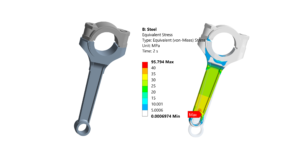
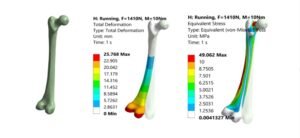
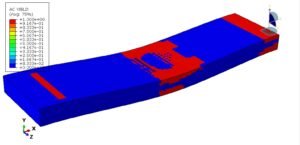
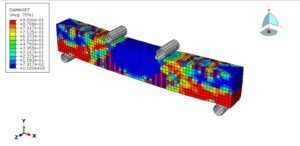
- Results Visualization: Identify critical locations, visualize fatigue life contours, and analyze damage maps.
Tools of the Trade
Leading FEA software suites like Abaqus and ANSYS Mechanical offer comprehensive fatigue analysis capabilities, including tools for defining cyclic material properties, advanced mean stress corrections, and various fatigue theories. For specialized tasks or automation, scripting with Python or MATLAB can be used to pre-process complex load histories or post-process extensive results datasets.
Verification & Sanity Checks in Fatigue Analysis
The reliability of fatigue predictions heavily depends on the accuracy of the FEA model inputs and assumptions. Rigorous verification and sanity checks are non-negotiable.
Mesh Sensitivity Study
Perform a mesh refinement study to ensure that your results (especially peak stresses and strains) are independent of mesh density. A common mistake is using too coarse a mesh, underpredicting critical stresses and overpredicting fatigue life.
Boundary Condition Realism
Critically review if your boundary conditions accurately reflect the physical constraints and load transfer mechanisms. Misrepresented supports or connections can lead to incorrect global and local stress distributions.
Load Path Assessment
Visually inspect stress contours. Do the loads flow through the structure as expected? Are there unexpected stress concentrations or regions of very low stress that might indicate modeling errors?
Material Data Validation
Verify that the S-N or E-N curves used are appropriate for the specific material, processing, and environmental conditions. Generic data can lead to significant errors. Source your material data from reliable standards or experimental testing.
Local Stress Hotspot Review
Pay special attention to areas of peak stress. Are these physically plausible? Is the mesh adequately refined in these regions? Spurious stress peaks can arise from poor element quality or improper contact definitions.
Convergence Criteria
For non-linear analyses, ensure that the solver has converged properly. Non-converged solutions are meaningless for fatigue prediction.
Hand Calculations/Benchmarking
For simple sub-components or idealized cases, perform hand calculations (e.g., using analytical stress concentration factors) or compare with established benchmark problems. This provides an essential sanity check for the FEA results.
Common Mistakes in Fatigue Life Prediction
Even experienced engineers can fall into common traps when performing fatigue analysis. Awareness is the first step to avoidance.
- Ignoring Mean Stress Effects: Assuming fully reversed loading when significant mean stresses are present can lead to optimistic life predictions.
- Poor Mesh Quality at Critical Locations: Coarse or distorted elements at stress hotspots will inaccurately capture stress gradients and peak values.
- Incorrect Material Fatigue Data: Using generic S-N curves instead of data specific to the material, heat treatment, and surface condition can drastically skew results.
- Over-reliance on Safety Factors: While safety factors are crucial, they should not compensate for a poor understanding of fatigue mechanisms or inaccurate input data.
- Neglecting Environmental Factors: Corrosion, elevated temperatures, or other environmental stressors can significantly reduce fatigue life and must be accounted for.
- Improper Interpretation of Results: Confusing local element failure with global component failure, or misinterpreting probabilistic fatigue data.
Tips for Robust Fatigue Design
Proactive design strategies are key to mitigating fatigue risks and ensuring long-term structural integrity.
Design for Manufacturability
Consider manufacturing processes during design. Machining marks, welding defects, and residual stresses from fabrication can all influence fatigue performance. Design features that are easy to inspect and maintain.
Surface Finish Improvements
Smooth surfaces generally have better fatigue resistance. Consider surface treatments like polishing, grinding, or shot peening (which introduces beneficial compressive residual stresses).
Stress Concentration Mitigation
Avoid sharp corners, abrupt changes in cross-section, and unnecessary holes. Use generous fillets and smooth transitions to distribute stresses more evenly. Optimize hole patterns and spacing.
Material Selection
Choose materials with inherently good fatigue resistance for critical applications. This often means materials with high tensile strength, good ductility, and a clear endurance limit (if applicable).
Redundancy and Fail-Safe Design
For critical components, incorporate redundancy (multiple load paths) or design for fail-safe behavior, where a single failure does not lead to catastrophic system collapse. This is common in aerospace.
Advanced Considerations
Beyond the basics, several advanced topics enhance the accuracy and applicability of fatigue analysis.
Multi-axial Fatigue
Many components experience complex, multi-axial stress states rather than simple uniaxial loading. Theories like critical plane approaches are used to predict fatigue life under these conditions.
Variable Amplitude Loading (Palmgren-Miner Rule)
Real-world loads are rarely constant amplitude. The Palmgren-Miner linear damage rule (or variations thereof) is commonly used to sum damage from different stress cycles to predict life under variable amplitude loading. It states that failure occurs when the sum of damage fractions equals one.
Environmental Effects (Corrosion Fatigue)
As mentioned, corrosive environments can drastically reduce fatigue life. Specialized material data and models are needed to account for simultaneous mechanical and chemical degradation.
Fatigue of Welded Joints
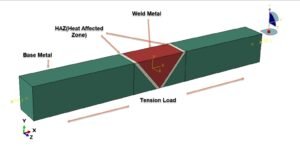
Welds introduce complex geometries, residual stresses, and metallurgical changes that make them particularly susceptible to fatigue. Dedicated standards and assessment methods (e.g., nominal stress, structural stress, notch stress, or fracture mechanics methods) are used for welded connections.
Leveraging Automation for Fatigue Analysis
Automation can significantly streamline and enhance the efficiency and accuracy of fatigue analysis, especially for parametric studies or complex load histories.
Python & MATLAB for Pre/Post-processing
Scripting languages like Python and MATLAB are invaluable. They can be used to:
- Automate the generation of complex input files for FEA software.
- Process vast amounts of time-history load data to extract relevant cycles (e.g., using rainflow counting algorithms).
- Develop custom post-processing routines to extract specific results, generate custom plots, or perform statistical analysis on fatigue life distributions.
- Integrate with FEA software APIs for seamless workflow automation.
Parametric Studies
Automation enables efficient execution of parametric studies, where design variables (e.g., fillet radius, material thickness) are varied systematically to understand their impact on fatigue life and optimize the design. This reduces manual effort and accelerates the design iteration process.
Achieving Structural Integrity with Accurate Predictions
Mastering fatigue life prediction is more than just performing calculations; it’s about integrating this knowledge into a robust design philosophy. By combining theoretical understanding with advanced simulation tools and diligent verification, engineers can significantly enhance the reliability and safety of structures across all industries.
For those looking to deepen their expertise, EngineeringDownloads offers comprehensive online courses, internship-style training, and project consultancy, alongside affordable HPC rental services to run complex simulation models efficiently.
Frequently Asked Questions (FAQ)
What is the primary difference between S-N and E-N curves?
The S-N (Stress-Life) curve primarily relates stress amplitude to cycles to failure and is suitable for high-cycle fatigue (HCF) where deformation is largely elastic. The E-N (Strain-Life) curve relates strain amplitude (including plastic strain) to cycles to failure, making it more accurate for low-cycle fatigue (LCF) where significant plastic deformation occurs.
Can fatigue occur even if stresses are below the yield strength?
Yes, absolutely. Fatigue is characterized by progressive damage under fluctuating stresses, even when these stresses are well below the material’s static yield strength. It’s the repeated application of stress, not just its peak magnitude, that causes fatigue failure.
Why is mesh quality so critical in FEA fatigue analysis?
Mesh quality is crucial because fatigue crack initiation often occurs at highly localized stress concentrations. An insufficiently fine or poor-quality mesh in these critical regions will fail to accurately capture the steep stress gradients, leading to an underestimation of peak stresses and an overestimation of fatigue life.
What is the endurance limit, and do all materials have one?
The endurance limit (or fatigue limit) is a stress amplitude below which a material can theoretically withstand an infinite number of load cycles without failing by fatigue. Steels typically exhibit a distinct endurance limit, but many non-ferrous alloys like aluminum and copper do not, meaning they will eventually fail regardless of how low the stress amplitude is, given enough cycles.
How do environmental factors like corrosion affect fatigue life?
Environmental factors like corrosion can significantly reduce fatigue life, a phenomenon known as corrosion fatigue. The corrosive environment accelerates crack initiation and propagation, even at stress levels that would be benign in a non-corrosive atmosphere. This is due to the combined action of mechanical stress and chemical attack.
Further Reading
For more in-depth information on fatigue analysis principles and applications, refer to specialized engineering handbooks and standards, such as the ASME Boiler and Pressure Vessel Code, Section VIII, Division 2, which provides guidelines for fatigue design of pressure vessels.