As structural engineers, we design components and systems to withstand static and dynamic loads. While static strength is often well understood, the insidious nature of fatigue — progressive, localized, permanent structural damage under fluctuating stresses and strains — often poses a greater threat to long-term structural integrity. Mastering fatigue analysis is not just an academic exercise; it’s a critical skill for ensuring the safety, reliability, and longevity of engineered structures, from aircraft components to bridge decks and oil & gas pipelines.
This comprehensive guide will walk you through the practical aspects of fatigue analysis, blending theoretical foundations with real-world application, common tools, and best practices.

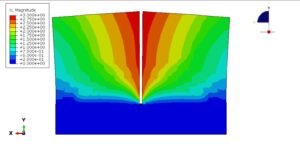
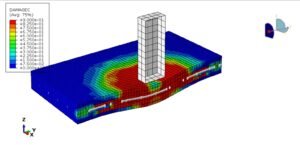
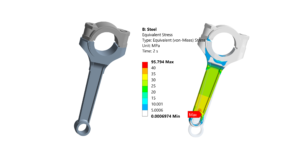
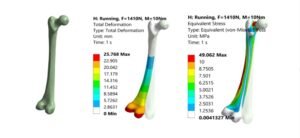
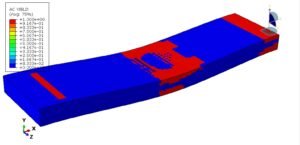
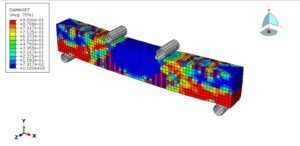
Image: Illustrative finite element analysis of stress distribution in a component.
Why Fatigue Analysis Matters: The Silent Killer
Many structural failures aren’t due to a single catastrophic overload but rather the accumulation of damage over millions of load cycles. This phenomenon, known as fatigue, can lead to cracks initiating and propagating even when stresses remain below the material’s yield strength. Ignoring fatigue can result in:
- Catastrophic Failures: Sudden, brittle fracture with little warning.
- Reduced Service Life: Components wearing out much faster than expected.
- Increased Maintenance Costs: Frequent inspections and repairs.
- Reputational Damage: For manufacturers and engineering firms.
- Safety Hazards: Especially in critical applications like aerospace or oil & gas.
Key Concepts in Fatigue
Understanding fatigue requires familiarity with several core concepts:
- Stress Concentration: Geometric discontinuities (holes, fillets, notches) amplify local stresses, creating initiation sites for fatigue cracks.
- Stress Amplitude (S): The half-range of the fluctuating stress.
- Mean Stress (Sm): The average stress over a cycle. Mean stress effects can significantly influence fatigue life.
- Stress Ratio (R): Minimum stress divided by maximum stress (Smin/Smax).
- Load Cycles (N): The number of stress cycles a component endures.
- Fatigue Limit/Endurance Limit: For some materials (e.g., steels), a stress amplitude below which fatigue failure will not occur, regardless of the number of cycles.
- Fatigue Strength: The stress amplitude at which failure occurs for a given number of cycles.
- S-N Curve (Wöhler Curve): A graph of stress amplitude versus the number of cycles to failure, typically on a log-log scale.
Approaches to Fatigue Analysis
There are several primary approaches to fatigue analysis, each suited for different scenarios and data availability:
1. Stress-Life (S-N) Approach
The most common method, the S-N approach, is based on nominal stresses and empirical S-N curves derived from smooth, polished specimens. It’s best suited for high-cycle fatigue (HCF) where stresses are predominantly elastic.
Practical Workflow for S-N Analysis:
- Material Data Acquisition: Obtain S-N curves and material properties (ultimate tensile strength, yield strength, endurance limit).
- Stress Calculation: Determine nominal stresses in critical areas using hand calculations, beam theory, or more commonly, Finite Element Analysis (FEA).
- Stress Concentration Factors (Kt): Apply Kt to account for local stress amplification.
- Mean Stress Correction: Apply Goodman, Gerber, Soderberg, or other mean stress correction theories if mean stress is present.
- Fatigue Life Prediction: Use the corrected stress amplitude and S-N curve to estimate the number of cycles to failure.
- Damage Accumulation (Miner’s Rule): For variable amplitude loading, use Miner’s linear damage rule to sum up damage from different load blocks.
2. Strain-Life (ε-N) Approach
The ε-N approach focuses on local strains rather than stresses, making it ideal for low-cycle fatigue (LCF) where plastic deformation occurs. It provides more accurate predictions for crack initiation.
Practical Workflow for ε-N Analysis:
- Material Data Acquisition: Obtain cyclic stress-strain curves and strain-life parameters (fatigue strength coefficient, fatigue ductility coefficient, exponents).
- Local Strain Calculation: Perform a refined FEA to capture local plastic strains at potential crack initiation sites.
- Mean Stress Correction: Account for mean stress effects on strain-life, often using Smith-Watson-Topper (SWT) or Morrow equations.
- Fatigue Life Prediction: Use the local strain amplitude and ε-N curve to estimate cycles to crack initiation.
3. Fracture Mechanics Approach
This approach deals with the propagation of existing cracks. It’s crucial for damage tolerance assessment and fitness-for-service (FFS) evaluations (e.g., API 579 / ASME FFS-1, Level 3). It uses concepts like stress intensity factor (K) and Paris’s Law.
Practical Workflow for Fracture Mechanics:
- Identify Initial Flaw: Based on NDE (Non-Destructive Examination) or assumed flaw sizes (e.g., from standards).
- Stress Intensity Factor (K): Calculate K for the crack geometry and loading. This often requires specialized FEA techniques (e.g., enriched elements, contour integrals).
- Crack Growth Rate (da/dN): Use material-specific da/dN vs. ΔK curves (Paris’s Law or similar).
- Integrate Crack Growth: Numerically integrate da/dN over load cycles to predict crack size evolution until a critical size (KIC) is reached.
Here’s a quick comparison of the S-N and ε-N approaches:
| Feature | Stress-Life (S-N) Approach | Strain-Life (ε-N) Approach |
|---|---|---|
| Primary Focus | Nominal Stress, Total Life (Initiation + Propagation) | Local Strain, Crack Initiation |
| Loading Regime | High Cycle Fatigue (HCF, >10^4 cycles) | Low Cycle Fatigue (LCF, <10^4 cycles) |
| Material Behavior | Elastic | Elastic-Plastic |
| Data Requirement | S-N Curves, Tensile Properties | Cyclic Stress-Strain, Strain-Life Parameters |
| FEA Type | Linear Elastic FEA | Non-linear Elastic-Plastic FEA |
Practical Workflow: Integrating FEA for Fatigue Analysis
Modern fatigue analysis heavily relies on Finite Element Analysis (FEA) to accurately determine stresses and strains. Here’s a typical CAD-CAE workflow:
Step-by-Step Guidance:
- CAD Model Preparation:
- Simplify the geometry for FEA (remove small features irrelevant to global stress).
- Create accurate representations of critical features like fillets, holes, and welds where stress concentrations are expected.
- Material Properties:
- Define appropriate material models: linear elastic for S-N, elastic-plastic for ε-N.
- Input fatigue-specific material data (S-N curves, ε-N parameters, mean stress correction constants).
- Meshing:
- Create a refined mesh in areas of high stress concentration. Avoid overly coarse meshes that may miss stress gradients.
- Consider using sub-modeling or local mesh refinement techniques.
- Boundary Conditions (BCs) & Loads:
- Apply realistic constraints that prevent rigid body motion but don’t over-constrain the model.
- Apply cyclic loads accurately, considering their amplitude, mean, and frequency.
- For multi-axial fatigue, consider the phasing of loads.
- FEA Solver Execution:
- Run the structural analysis (static for S-N, static or transient non-linear for ε-N if plasticity is significant).
- Post-Processing & Fatigue Calculation:
- Extract nodal/element stresses and strains from the FEA results.
- Use specialized fatigue modules within FEA software (e.g., Abaqus/Fatigue, ANSYS Fatigue Tool, nCode DesignLife with Nastran/Patran outputs) or external Python/MATLAB scripts for calculations.
- Apply mean stress corrections and damage accumulation theories.
- Generate fatigue life contours, damage plots, and safety factors.
- Interpretation & Reporting:
- Analyze critical locations, identify potential failure modes, and quantify fatigue life.
- Document assumptions, material data, analysis methods, and results clearly.
Tools of the Trade
Several powerful software packages aid in fatigue analysis:
- Abaqus: Comprehensive FEA tool with a dedicated Abaqus/Fatigue module for both stress-life and strain-life analyses. Excellent for complex non-linear simulations.
- ANSYS Mechanical: Robust FEA suite with integrated fatigue tools (e.g., Fatigue Tool, ANSYS nCode DesignLife integration) covering various methods.
- MSC Nastran/Patran: Widely used in aerospace; Patran provides pre/post-processing, and Nastran is a powerful solver. Integrates well with fatigue-specific software like nCode DesignLife.
- HyperWorks (Altair OptiStruct/Radioss): Offers fatigue analysis capabilities, often used with Altair’s HyperLife for advanced fatigue studies.
- nCode DesignLife: A specialized, highly capable fatigue analysis software that integrates with results from most major FEA codes.
- Python & MATLAB: Invaluable for automating post-processing tasks, custom fatigue calculations, creating scripts for parameter studies, and visualizing large datasets.
You can find downloadable templates and Python scripts for common fatigue post-processing tasks on EngineeringDownloads.com to streamline your workflow.
Verification & Sanity Checks in Fatigue Analysis
Trusting simulation results blindly can be dangerous. Always perform verification and sanity checks:
- Mesh Convergence Study: Ensure that further refinement of the mesh does not significantly change critical stress/strain results.
- Boundary Condition (BC) Sensitivity: Vary BCs slightly to understand their impact on results. Are they realistic?
- Load Case Review: Are all critical load cycles, amplitudes, and mean stresses considered?
- Material Property Validation: Double-check that correct material data (S-N curves, fatigue properties) is used, and it’s applicable to the temperature and environment.
- Hand Calculation Cross-Checks: For simple geometries or specific features, perform a quick hand calculation (e.g., stress concentration factor) to compare with FEA results.
- Stress Distribution Sanity: Do the stress contours make physical sense? Are stresses highest at expected locations (notches, holes)?
- Convergence Criteria: For non-linear analyses, ensure proper solution convergence.
- Validation with Test Data: Where possible, compare simulation predictions with experimental fatigue test results for similar components or materials.
Common Mistakes to Avoid
- Ignoring Stress Concentrations: Treating nominal stress as sufficient without accounting for local amplification.
- Incorrect Material Data: Using static properties for fatigue analysis, or generic data instead of specific material grades and conditions.
- Poor Meshing: Overly coarse meshes in critical areas or highly distorted elements.
- Inaccurate Load Spectrum: Not adequately capturing the real-world load history or neglecting critical load events.
- Ignoring Mean Stress Effects: Failure to apply appropriate mean stress corrections can lead to unconservative predictions.
- Extrapolating S-N Curves: Extending S-N curves beyond the tested range without sound engineering judgment.
- Over-Reliance on Software Defaults: Always understand the underlying fatigue theory and assumptions used by the software.
- Neglecting Surface Finish & Residual Stresses: These factors can significantly impact fatigue life.
Troubleshooting Fatigue Analysis Issues
- Unrealistic High Stresses: Check loads, boundary conditions, and mesh quality. Could it be a singularity or over-constrained model?
- Non-Convergence: For non-linear analysis, review material properties (especially plastic regions), step sizes, and constraints.
- Unexpected Fatigue Life: Re-verify input S-N/ε-N curves, mean stress corrections, and stress concentration factors. Is the chosen fatigue method appropriate for the loading regime?
- Post-Processing Errors: Ensure correct units, proper mapping of FEA results to fatigue tools, and consistent material orientation.
Best Practices for Robust Fatigue Design
Beyond analysis, proactive design considerations are key:
- Design for Manufacturability: Avoid sharp corners, abrupt changes in cross-section, and features that induce high residual stresses during manufacturing (e.g., aggressive welding, machining).
- Material Selection: Choose materials with good fatigue properties for cyclically loaded components.
- Surface Treatments: Consider shot peening, case hardening, or coatings to improve surface finish and induce beneficial compressive residual stresses.
- Redundancy: Incorporate multiple load paths where possible to mitigate the risk of single-point fatigue failure.
- Regular Inspection & Monitoring: Establish appropriate inspection intervals, especially for critical components in challenging environments.
- Factor of Safety: Apply appropriate safety factors to fatigue life predictions to account for uncertainties.
Further Reading
For detailed information on standard practices for S-N data generation, refer to ASTM E739-10.
Conclusion
Fatigue analysis is an indispensable part of modern structural engineering. By understanding its principles, leveraging powerful simulation tools, performing thorough verification, and applying sound design practices, engineers can significantly enhance the safety, reliability, and economic viability of their designs. Invest in your expertise, and remember that for advanced topics or project-specific challenges, expert online consultancy through EngineeringDownloads.com is always available to guide you.