Impact engineering is a specialized field focused on understanding, predicting, and mitigating the effects of high-speed collisions and sudden loading on structures and materials. From protecting occupants in a car crash to designing blast-resistant structures, impact engineering is crucial for ensuring safety, reliability, and structural integrity across countless industries.

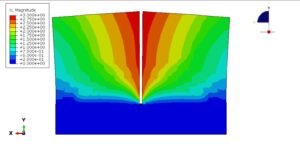
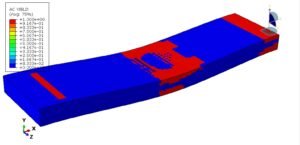
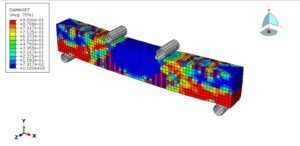
Illustration of stress wave propagation in a material, a core concept in impact engineering.
What is Impact Engineering?
At its core, impact engineering deals with the dynamic response of materials and structures when subjected to very short-duration, high-magnitude loads. Unlike static or quasi-static loads, impact events involve rapid energy transfer, stress wave propagation, and often significant non-linear material deformation, including plasticity, fracture, and even fragmentation.
Why is Impact Engineering Crucial?
The consequences of neglecting impact loads can be catastrophic. Think about:
- Safety: Protecting human life in automotive accidents, sports injuries, or military engagements.
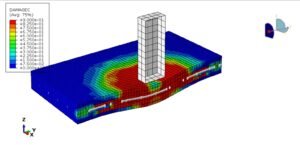
- Structural Integrity: Ensuring offshore platforms withstand dropped objects, or aerospace components survive bird strikes.
- Performance: Optimizing designs for energy absorption, minimizing damage, and maximizing operational life.
- Regulatory Compliance: Meeting industry standards for crashworthiness, blast resistance, and protective gear.
Key Principles of Impact Dynamics
Understanding these principles is fundamental to effective impact analysis:
Stress Wave Propagation
- When an impact occurs, energy isn’t instantly distributed. It travels through the material as stress waves (e.g., compressional and shear waves).
- The speed of these waves depends on the material’s density and elastic properties.
- Reflections and superpositions of these waves can lead to complex stress states, often initiating failure at unexpected locations.
Energy Absorption
- Materials absorb impact energy through various mechanisms: elastic deformation, plastic deformation, fracture, and friction.
- Ductile materials excel at absorbing energy through plastic yielding, while brittle materials tend to fracture rapidly after minimal plastic deformation.
- The goal of many impact designs is to maximize energy absorption in a controlled manner, preventing energy from reaching critical components or occupants.
Material Response at High Strain Rates
- Many materials exhibit different mechanical properties (e.g., yield strength, ultimate tensile strength, ductility) when subjected to very rapid loading compared to static loading. This is known as strain rate dependency.
- Polymers and some metals can become stiffer and stronger, yet sometimes more brittle, at high strain rates.
- Accurately characterizing and modeling this behavior is critical for realistic impact simulations.
Materials Under Impact Loading
Material selection is paramount in impact engineering. Different materials behave distinctly under dynamic loads:
- Ductile Materials (e.g., steels, aluminum alloys): Absorb significant energy through plastic deformation before fracture. They are often chosen for crash structures.
- Brittle Materials (e.g., ceramics, cast iron): Tend to fracture with little plastic deformation. While strong in compression, their impact resistance is low without careful design.
- Composites (e.g., carbon fiber reinforced polymers): Offer high strength-to-weight ratios but exhibit complex failure modes like delamination, fiber breakage, and matrix cracking. Simulating these requires advanced FEA techniques.
- Foams and Cellular Structures: Excellent for energy absorption due to their ability to crush and densify, providing a controlled deformation zone. Used in helmets and protective packaging.
Here’s a simplified comparison of material responses:
| Material Type | Primary Energy Absorption Mechanism | Typical Failure Mode | Application Example |
|---|---|---|---|
| Ductile Metals | Plastic Deformation | Plastic Hinge Formation, Tearing | Automotive Chassis, Guardrails |
| Brittle Materials | Elastic Deformation (minimal) | Fracture, Fragmentation | Ceramic Armor (in combination) |
| Composites | Fiber Breaking, Matrix Cracking, Delamination | Progressive Damage | Aerospace Fuselage, Sports Equipment |
| Foams | Crushing, Densification | Localized Compaction | Helmet Liners, Packaging |
Impact Simulation and Analysis (FEA/CAE)
Numerical simulation, primarily using Finite Element Analysis (FEA), has revolutionized impact engineering. It allows engineers to predict structural response, optimize designs, and test scenarios that would be costly or impossible to reproduce physically.
Choosing the Right Simulation Tools
Most impact simulations utilize explicit dynamics solvers due to the highly non-linear and transient nature of the problems:
- Abaqus/Explicit: Widely used for highly non-linear problems, including contact, large deformations, and complex material models.
- ANSYS Explicit Dynamics: Part of the ANSYS Workbench suite, offering strong integration with other physics and user-friendly setup.
- LS-DYNA: A standalone, highly specialized code for crashworthiness, occupant safety, and impact/blast analysis, known for its robustness.
- MSC Nastran/Patran (SOL 700): Offers explicit capabilities for dynamic non-linear events.
- OpenFOAM (for FSI): While primarily a CFD tool, OpenFOAM, often coupled with structural solvers, can be used for Fluid-Structure Interaction (FSI) involving impact in fluids (e.g., underwater blasts).
Explicit vs. Implicit Solvers
- Explicit Solvers: Ideal for highly dynamic, non-linear events with many contact interactions, large deformations, and potential element deletion (e.g., crash, ballistic impact). They use small time increments to march through the solution, which is computationally efficient for these problems.
- Implicit Solvers: Better suited for static, quasi-static, or mildly dynamic problems where large time steps are desired and convergence can be achieved. They are generally less efficient for highly transient, non-linear impact events.
Practical Workflow for Impact Simulations
A typical FEA workflow for impact analysis involves several critical steps:
- Geometry Preparation: Simplify CAD models (e.g., remove small features) to reduce mesh complexity without compromising critical details. Use tools like CATIA or ANSYS SpaceClaim.
- Material Modeling: Define accurate material properties, including density, elastic moduli, yield strength, hardening curves, and crucially, strain rate dependency (e.g., Johnson-Cook, Cowper-Symonds models). Account for failure criteria.
- Meshing: Generate an appropriate mesh. Finer meshes are needed in high-deformation zones, contact areas, and potential failure regions. Use solid elements (hex/tet) for bulk parts and shells for thin structures. Mesh quality is paramount for explicit solvers.
- Contact Definition: Precisely define all potential contact interactions between parts. This includes friction coefficients and appropriate contact algorithms (e.g., penalty, kinematic).
- Boundary Conditions & Initial Conditions: Apply realistic constraints (fixed supports, symmetry) and initial velocities or prescribed displacements to simulate the impact event.
- Solver Settings: Configure solver-specific parameters like time step control, mass scaling (if applicable and carefully used), output frequency, and termination criteria.
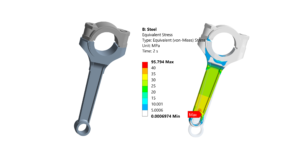
- Post-processing: Visualize results (deformations, stresses, strains, energy absorption), create plots (e.g., force-displacement, energy history), and extract key performance indicators.
Verification & Sanity Checks for Robust Results
Never trust simulation results without thorough verification. Here’s a checklist:
- Mesh Quality & Independence: Ensure mesh elements are not severely distorted. Perform a mesh sensitivity study to confirm results don’t change significantly with finer meshes in critical areas.
- Boundary Condition (BC) & Initial Condition (IC) Checks: Visually confirm BCs and ICs are applied correctly. Do initial velocities make sense? Are constraints realistic?
- Energy Balance: For explicit solvers, total energy should remain relatively constant (kinetic + internal + damping = work done by external forces). Large artificial energy or non-physical energy histories indicate problems (e.g., unstable time step, poor contact definition).
- Contact Penetration: Check for excessive contact penetration, which suggests issues with contact algorithms or mesh refinement.
- Mass Scaling: If used, ensure that the mass scaling factor doesn’t artificially stiffen the response or mask critical dynamic effects. Only apply if the natural time step is prohibitively small and dynamic effects are not sensitive to the small amount of added mass.
- Deformation & Stress Patterns: Do the deformation and stress distributions make engineering sense? Are they consistent with expected material behavior and failure modes?
- Convergence: While explicit solvers don’t iterate to convergence per step like implicit, ensuring a stable time step is crucial for accuracy.
- Comparison to Hand Calculations/Literature: For simplified cases, compare results to analytical solutions or published experimental data (if available) to build confidence.
- Parameter Sensitivity: Understand how changes in material properties (e.g., strain rate parameters) or contact friction influence the outcome.
Applications of Impact Engineering
Impact engineering spans a vast range of industries:
- Aerospace & Defense: Bird strike analysis on aircraft, foreign object damage (FOD) assessments, blast survivability of military vehicles, crashworthiness of helicopters and drones.
- Oil & Gas Industry: Designing offshore platforms to withstand dropped objects, blast protection for critical infrastructure, pipeline integrity under impact. This often involves FFS (Fitness-for-Service) Level 3 assessments.
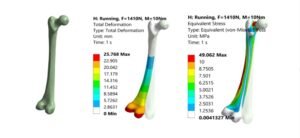
- Biomechanics & Sports: Designing protective gear (helmets, body armor), analyzing joint impacts, studying injury mechanisms, and optimizing prosthetic devices.
- Automotive Crashworthiness: Frontal, side, and rear impact simulations, pedestrian protection, airbag deployment, seatbelt design, and occupant safety. ADAMS is often used for multi-body dynamics in these scenarios.
- Industrial & Manufacturing: Drop tests for consumer electronics, design of protective barriers, and analysis of stamping or forging processes.
Common Challenges & Troubleshooting in Impact Analysis
- Solver Instability: Often due to poor mesh quality, excessively large time steps, or incorrect contact definitions. Review energy balance and adjust time step or mesh.
- Material Model Calibration: Obtaining accurate high-strain-rate material data can be challenging. Experimental data is vital; otherwise, use validated models from literature.
- Contact Convergence: Complex contact interactions can lead to numerical noise or solver termination. Refine contact surfaces, adjust contact parameters, or consider different algorithms.
- Computational Cost: Detailed impact simulations can be extremely time-consuming. HPC (High-Performance Computing) resources are often necessary. EngineeringDownloads.com offers affordable HPC rental to run your large-scale models efficiently.
- Fracture Prediction: Accurately predicting crack initiation and propagation in impact scenarios remains a research-intensive area. Use advanced fracture models (e.g., cohesive elements, XFEM) with caution and validation.
Enhancing Your Impact Engineering Skills
Mastering impact engineering requires a blend of theoretical knowledge, practical software skills, and critical thinking. Consider deepening your expertise through specialized training, like online or live courses, or internship-style programs that offer hands-on experience. For complex projects, engaging with project or contract consultancy can provide expert guidance.
Further Reading
For more in-depth technical understanding of explicit dynamics in FEA, consider resources from reputable university courses or major software documentation platforms: