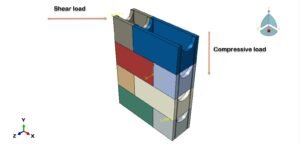
Ensuring the long-term reliability and safety of engineering structures is paramount, especially when components are subjected to cyclic loading. Fatigue crack growth analysis is a critical discipline within structural integrity, helping engineers predict how existing cracks will propagate under operational stresses and determine a component’s remaining useful life. This understanding is vital for preventing catastrophic failures, optimizing inspection intervals, and making informed run-or-repair decisions.
This article dives deep into the practical aspects of fatigue crack growth analysis, covering its fundamental principles, the influence of various factors, and the robust methods, including Finite Element Analysis (FEA), used to model and predict crack behavior. We’ll also explore its application in Fitness-for-Service (FFS) assessments, providing engineers with actionable insights and a practical workflow for their projects.

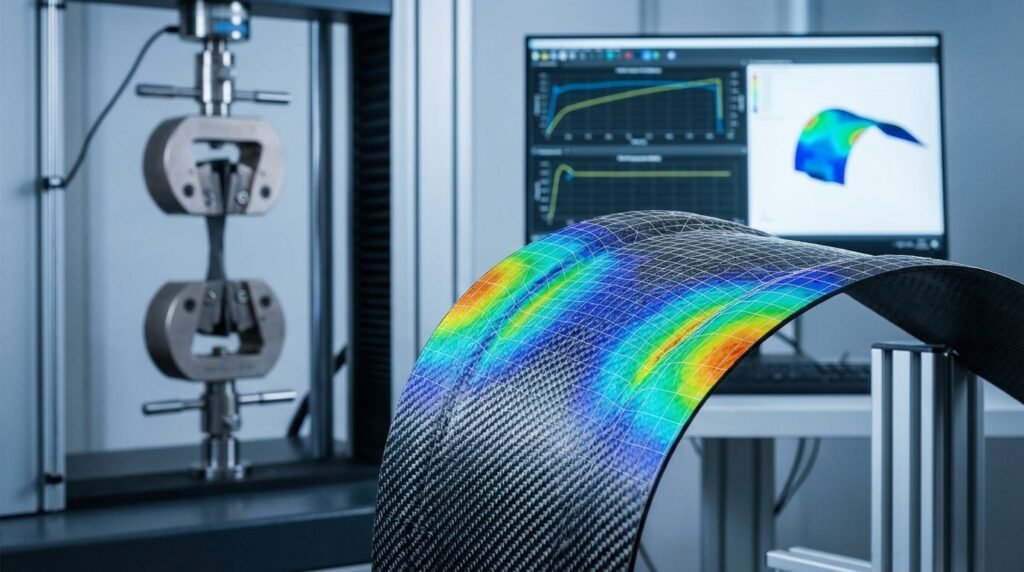
Conceptual diagram illustrating the three stages of fatigue crack propagation.
Understanding Fatigue Crack Growth
Fatigue crack growth is the process where a microscopic crack in a material, typically initiated by cyclic loading, gradually extends and coalesces until it reaches a critical size, leading to sudden fracture. Unlike static fracture, fatigue failure can occur at stress levels well below the material’s yield strength.
The Three Stages of Crack Growth
- Crack Initiation: This stage involves the formation of micro-cracks, often at stress concentrations (e.g., notches, defects, inclusions) or slip bands on the material surface.
- Stable Crack Propagation (Stage II): The crack grows incrementally with each loading cycle, driven by the stress intensity factor at the crack tip. This is the stage primarily governed by models like Paris’ Law.
- Unstable Fracture (Stage III): Once the crack reaches a critical size, the remaining cross-section can no longer sustain the applied load, leading to rapid and often brittle fracture.
Key Concepts: Stress Intensity Factor (K) and Paris’ Law
The Stress Intensity Factor (K) is a fundamental parameter in fracture mechanics that characterizes the stress field ahead of a crack tip. It depends on the applied stress, crack size, and geometry. When K reaches the material’s fracture toughness (KIC), unstable fracture occurs.
Paris’ Law (or the Paris-Erdogan equation) is an empirical relationship that describes the stable crack growth rate (da/dN) in Stage II:
da/dN = C (ΔK)^m
da/dN: Crack growth rate (change in crack length ‘a’ per cycle ‘N’).ΔK: Range of stress intensity factor during a load cycle (Kmax – Kmin).Candm: Material constants determined experimentally.
While Paris’ Law is widely used, other models like the Forman equation (which accounts for mean stress effects and fracture toughness limits) and the Walker equation offer improved accuracy for specific conditions.
Factors Influencing Crack Growth
Several factors can significantly influence the rate and path of fatigue crack growth, necessitating a comprehensive approach to analysis.
Material Properties
- Fracture Toughness (KIC): A material’s resistance to crack propagation. Higher KIC means greater resistance.
- Yield Strength & Ultimate Tensile Strength: Influence plastic zone size at the crack tip, indirectly affecting growth rates.
- Microstructure: Grain size, phases, and inclusions can act as barriers or facilitators for crack growth.
Stress State and Loading Conditions
- Stress Intensity Range (ΔK): As per Paris’ Law, larger ΔK leads to faster growth.
- Mean Stress & Load Ratio (R): A higher mean stress (or higher R = Kmin/Kmax) can increase crack growth rates due to crack closure effects.
- Load Sequence Effects: Overloads or underloads can introduce residual stresses that temporarily retard or accelerate crack growth.
Environmental Factors
- Corrosion Fatigue: Synergistic action of cyclic stress and corrosive environment accelerates crack growth.
- Stress Corrosion Cracking (SCC): While distinct, SCC mechanisms can interact with fatigue in aggressive environments.
Temperature
Elevated temperatures can alter material properties, promote creep-fatigue interactions, and affect environmental degradation, significantly impacting crack growth rates.
Methods for Fatigue Crack Growth Analysis
Engineers employ a range of methods, from empirical equations to advanced numerical simulations, to perform crack growth analysis.
Empirical and Semi-Empirical Models
These models, such as Paris’ Law and Forman’s equation, rely on experimentally determined material constants. They are suitable for relatively simple geometries and constant amplitude loading, providing quick estimates of remaining life. Their primary limitation lies in their inability to accurately capture complex geometries, varying load spectra, and mixed-mode loading conditions.
Numerical Methods (FEA-Based)
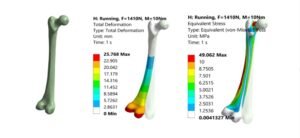
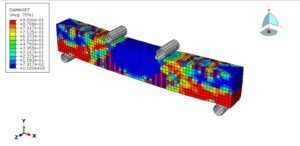
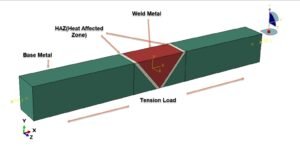
Finite Element Analysis (FEA) provides a powerful platform for detailed crack growth analysis, especially for complex geometries, heterogeneous materials, and variable loading. Modern FEA tools offer several approaches:
- Nodal Release/Remeshing: The classic approach where the mesh is updated as the crack propagates. This can be computationally intensive and requires careful control of mesh quality.
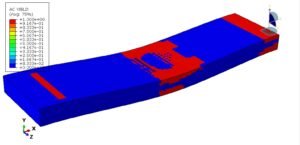
- Extended Finite Element Method (XFEM): A robust method that allows cracks to propagate through the mesh without explicit remeshing. XFEM enriches the standard FE approximation, making it highly effective for complex crack paths and multiple cracks. Tools like Abaqus and ANSYS Mechanical offer strong XFEM capabilities.
- Virtual Crack Closure Technique (VCCT): This method calculates the energy release rate (G) at the crack tip by analyzing nodal forces and displacements in the elements immediately ahead of the crack. It’s often used for delamination and crack propagation in composites.
- Contour Integrals (J-integral, C*-integral): These integrals provide a path-independent measure of the stress and strain fields around a crack tip, which can be related to the stress intensity factor or energy release rate.
Fitness-for-Service (FFS) Assessments
FFS assessments (e.g., API 579-1/ASME FFS-1) provide a structured methodology for evaluating the integrity of components containing flaws. Level 3 FFS assessments often integrate advanced FEA-based crack growth analysis to determine the remaining life, establish safe operating limits, and define appropriate inspection intervals for flawed components.
Practical Workflow for FEA-Based Crack Growth Analysis
Conducting an FEA-based fatigue crack growth analysis requires a systematic approach. Here’s a typical workflow:
1. Problem Definition and Scope
- Identify the component: What is being analyzed?
- Loading conditions: What are the cyclic loads (magnitude, frequency, R-ratio)?
- Material properties: Obtain accurate fatigue crack growth parameters (C, m) and fracture toughness.
- Initial flaw characterization: Determine the initial crack location, size, and orientation (e.g., from NDT inspections).
- Failure criterion: Define what constitutes failure (e.g., reaching critical crack size, exceeding remaining ligament stress).
2. Geometry and Mesh Preparation
- CAD Model: Create or import a precise 3D model of the component.
- Crack Definition: Introduce the initial crack into the geometry. This can be done explicitly by cutting the geometry or implicitly for XFEM.
- Meshing Strategy: For conventional methods, apply fine mesh refinement around the crack tip (e.g., using singular elements or very small elements). For XFEM, a standard, coarser mesh can often suffice, with local refinement if desired. Ensure good element quality.
3. Material Model Selection
- Define elastic properties (Young’s modulus, Poisson’s ratio).
- Input fatigue crack growth constants (C, m for Paris’ Law, or parameters for other models).
- Specify fracture toughness (KIC).
4. Loading and Boundary Conditions (BCs)
- Applied Loads: Define the cyclic loads corresponding to the operating conditions (e.g., pressure, forces, moments).
- Boundary Conditions: Apply appropriate displacement constraints to prevent rigid body motion and accurately represent supports.
5. Simulation Setup (Abaqus, ANSYS Mechanical)
- Analysis Type: Select a fracture mechanics analysis (e.g., static, dynamic, or specific crack growth module).
- Crack Propagation Method: Choose between XFEM, VCCT, or nodal release techniques.
- Crack Growth Control: Define criteria for crack increment per step or per cycle, and total number of cycles.
- Output Requests: Specify outputs like crack length, stress intensity factor (K), crack tip opening displacement (CTOD), and accumulated cycles.
6. Post-processing and Interpretation of Results
- Crack Path Visualization: Review the predicted crack path.
- Life Prediction: Extract the number of cycles to reach the critical crack size or failure.
- SIF Evolution: Plot K vs. crack length to understand the driving force.
- Sensitivity Analysis: Evaluate the impact of variations in initial crack size or material parameters.
For complex crack growth simulations requiring significant computational resources, remember that EngineeringDownloads offers affordable HPC rental services. We also provide online courses and internship-style training to help engineers master these advanced analysis techniques.
Key Considerations for FEA Setup
Achieving accurate results in FEA-based crack growth analysis hinges on careful setup.
Meshing Strategies for Crack Tips
- Conventional FEA: Use highly refined meshes at the crack tip, often employing collapsed singular elements (quarter-point elements) to capture the stress singularity. A typical approach is to have at least 3-5 elements across the crack front.
- XFEM: The beauty of XFEM is that it doesn’t require the mesh to conform to the crack geometry. However, local mesh refinement in the region where crack propagation is expected can still improve accuracy, especially for capturing the stress field precisely.
Singular Elements vs. Advanced Techniques (XFEM)
While singular elements are effective for stationary cracks or for the initial step of conventional crack growth, XFEM offers significant advantages for propagating cracks, especially when the crack path is unknown or tortuous. It reduces user effort in remeshing and allows for more complex crack scenarios.
Calculating Stress Intensity Factors (SIF)
FEA software typically calculates SIFs using methods like the J-integral or crack opening displacement (COD) methods. Ensure you understand which method is being used and its applicability to your specific problem. Careful selection of the contour integral path in J-integral calculations is also crucial.
Python/MATLAB for Automating Crack Growth Simulations
Scripting capabilities in Python (e.g., for Abaqus scripting) or MATLAB can significantly streamline the crack growth analysis workflow. This includes:
- Automating geometry generation and crack insertion.
- Running multiple simulations with varying parameters for sensitivity analysis.
- Post-processing large datasets and generating custom plots.
- Coupling FEA with external life prediction algorithms.
Verification & Sanity Checks in Crack Growth Analysis
To ensure the reliability of your simulation results, robust verification and validation are non-negotiable.
Mesh Convergence Studies
Perform simulations with progressively finer meshes, especially around the crack tip, to confirm that key results (e.g., SIF, crack growth rate) converge to a stable value. This ensures that the mesh discretization is adequate.
Boundary Condition Review
Carefully review all applied loads and boundary conditions. Misapplied BCs are a common source of error. Ensure they realistically represent the component’s supports and external forces. If possible, compare reaction forces to expected values.
Material Property Validation
Verify that the fatigue crack growth parameters (C, m) and fracture toughness (KIC) used in the simulation are appropriate for the specific material and environmental conditions. Consult material standards or experimental data.
Comparison with Analytical Solutions
For simple geometries (e.g., an edge crack in a plate), compare your FEA-derived SIF values with well-established analytical solutions. This provides a fundamental sanity check for your model setup.
Convergence Criteria for Fatigue Algorithms
If your software uses iterative solvers for crack propagation, ensure that the convergence criteria are tight enough to achieve accurate results without excessive computational cost. Monitor the solution status for warnings or errors.
Sensitivity Analysis
Investigate the sensitivity of your results to variations in key input parameters, such as initial crack size, material constants, or load magnitudes. This helps understand the robustness of your predictions and identify critical parameters.
Common Mistakes and Troubleshooting
Even experienced engineers can encounter pitfalls in fatigue crack growth analysis. Being aware of common mistakes can save significant time.
- Incorrect SIF Calculation: Ensure the correct method (J-integral path, crack opening) is used and correctly applied. Verify units.
- Inadequate Mesh Refinement: The crack tip stress singularity requires a very fine mesh or specialized elements (XFEM) to capture accurately. A coarse mesh will underpredict SIFs and overestimate life.
- Choosing the Wrong Crack Growth Model: Paris’ Law might not be suitable for high R-ratios or near-threshold/final fracture regions. Consider Forman, Walker, or other advanced models.
- Ignoring Residual Stresses: Residual stresses (from manufacturing, welding, or overloads) can significantly affect the effective stress intensity range and thus crack growth. Incorporate them if present.
- Misinterpreting Crack Path: If using conventional remeshing, arbitrary crack path assumptions can lead to incorrect results. XFEM is generally better for unknown paths.
- Overlooking Environmental Effects: In corrosive environments, crack growth rates can be orders of magnitude higher. Neglecting these effects is a major safety risk.
- Incorrect Loading Sequence: Variable amplitude loading requires cycle counting (e.g., Rainflow counting) and appropriate crack growth accumulation models.
Applying FFS Level 3 for Fatigue Crack Growth
Fitness-for-Service (FFS) assessments, particularly Level 3, provide a rigorous framework for evaluating the remaining life of components with detected flaws, moving beyond simple go/no-go decisions.
When to Use FFS Level 3
FFS Level 3 is typically employed when:
- Simpler Level 1 or Level 2 assessments are insufficient or yield conservative results.
- The component geometry is complex, making analytical solutions difficult.
- The loading conditions are complex or involve varying amplitude.
- A highly accurate remaining life prediction is required for critical equipment.
- Advanced FEA capabilities are needed to model complex flaw shapes or interactions.
Key Steps in a Level 3 Assessment
- Flaw Characterization: Detailed inspection to define flaw type, size, and location.
- Stress Analysis: Often involves advanced FEA to determine local stresses and stress intensity factors at the flaw.
- Crack Growth Analysis: Using methods discussed in this article (often FEA-based) to predict crack propagation under anticipated cyclic loads.
- Fracture Assessment: Comparing the predicted critical crack size with the material’s fracture toughness.
- Remaining Life Determination: Calculating the number of cycles or time until the crack reaches a critical size.
- Remedial Actions: Based on the assessment, recommending repair, replacement, or continued operation with revised inspection intervals.
Illustrative Paris Law Parameters for Various Materials
The following table provides illustrative Paris Law parameters (C and m) for different engineering materials. These values are highly dependent on factors such as temperature, environment, and specific material heat treatment, and should be confirmed with material-specific data or standards for any real-world application.
| Material Class | Typical C (mm/cycle / (MPa√m)m) | Typical m | Application Notes |
|---|---|---|---|
| Low Alloy Steels | 5.0E-12 to 2.0E-11 | 2.8 to 3.5 | General structural, pressure vessels. |
| Aluminum Alloys (e.g., 7075-T6) | 5.0E-10 to 2.0E-9 | 3.0 to 4.0 | Aerospace, lightweight structures. |
| Titanium Alloys (e.g., Ti-6Al-4V) | 1.0E-12 to 5.0E-12 | 2.5 to 3.0 | Aerospace, medical implants. |
| Nickel-Based Superalloys | 1.0E-13 to 5.0E-13 | 3.0 to 4.5 | High-temperature applications, turbine engines. |
Advantages of Advanced Fatigue Crack Growth Analysis
Implementing advanced fatigue crack growth analysis offers significant benefits:
- Extended Component Life: By understanding crack behavior, engineers can justify extending the operational life of components beyond initial design conservative estimates.
- Optimized Inspection Intervals: More accurate predictions allow for condition-based maintenance, scheduling inspections only when necessary, reducing downtime and costs.
- Improved Safety and Reliability: Proactive identification of critical flaw sizes and remaining life ensures components are retired or repaired before catastrophic failure.
- Cost Savings: Reduced unscheduled downtime, optimized maintenance, and avoiding premature replacement of expensive components lead to substantial cost efficiencies.
- Enhanced Design: Insights from analysis can feed back into design improvements, leading to more robust and durable products.
Conclusion
Fatigue crack growth analysis is an indispensable tool in the structural engineer’s arsenal. By combining a deep understanding of fracture mechanics principles with advanced numerical techniques like FEA, engineers can accurately predict the behavior of flaws under cyclic loading. This capability not only enhances the safety and reliability of critical structures in industries like Oil & Gas and Aerospace but also optimizes operational costs and extends asset lifespans. Mastering these techniques, from practical FEA workflows to verification and sanity checks, is crucial for anyone involved in structural integrity and Fitness-for-Service assessments.
Further Reading
For more in-depth information on fatigue and fracture mechanics, consider resources from authoritative bodies: