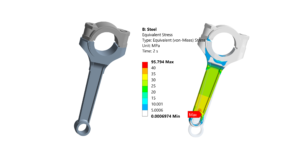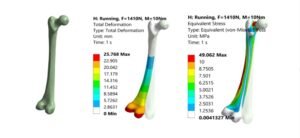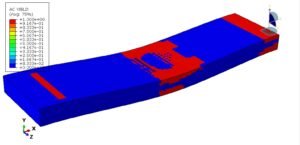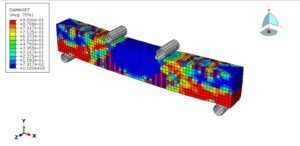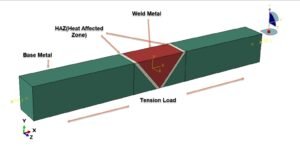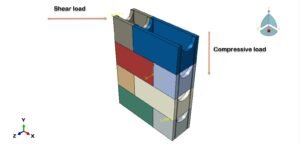
In the world of engineering, designing components and structures that not only perform their intended function but also endure over time is paramount. Many critical engineering failures aren’t due to a single, catastrophic overload, but rather the cumulative damage from repeated loading cycles. This phenomenon is known as fatigue, and it’s a silent killer of components, leading to unexpected breakdowns and significant costs.
This is where fatigue analysis steps in – a vital discipline that helps engineers predict the life of components under cyclic loading conditions. By understanding and applying fatigue analysis, we can design more robust, reliable, and safer products, moving beyond simple static strength calculations to truly engineer for durability.

Illustration of an S-N curve, a fundamental concept in fatigue analysis (Image via Wikimedia Commons by Vlasta Vokurka).
The Critical Role of Fatigue Analysis in Modern Engineering
Fatigue analysis is not just an academic exercise; it’s a practical necessity in industries ranging from aerospace and automotive to energy and biomedical. Imagine a critical aircraft component, a rotating shaft in a power plant, or a prosthetic implant – all subjected to millions of load cycles throughout their operational lives. Without understanding fatigue, predicting their lifespan becomes a guessing game, with potentially catastrophic consequences.
What is Fatigue and Why Does it Matter?
Fatigue is the progressive and localized structural damage that occurs when a material is subjected to cyclic or fluctuating loads. Unlike static failure, fatigue can occur at stresses well below the material’s yield strength. Cracks typically initiate at stress concentrations (like fillets, holes, or surface defects) and propagate with each load cycle until the remaining cross-section can no longer withstand the applied load, leading to sudden fracture.
The implications are immense:
- Safety Risks: Unexpected failures can endanger lives.
- Economic Losses: Downtime, repairs, and replacements are costly.
- Reputational Damage: Product recalls or field failures erode trust.
Why Invest in Fatigue Analysis? Core Benefits
Investing time and resources into fatigue analysis offers a multi-faceted return. It transforms design from reactive problem-solving to proactive prevention, embedding durability from the ground up.
Key Benefits of Integrating Fatigue Analysis
Let’s dive deeper into the tangible advantages that fatigue analysis brings to the engineering table.
Enhanced Product Reliability and Safety
This is arguably the most critical benefit. By identifying potential fatigue hotspots and predicting component lifespan, engineers can proactively reinforce designs, select more appropriate materials, or introduce manufacturing processes that improve fatigue resistance. This leads to products that are less likely to fail unexpectedly, significantly boosting user safety and operational reliability.
- Reduced Failure Rate: Design for a target lifespan under anticipated loading.
- Improved Safety Margins: Quantify and ensure adequate safety factors against fatigue failure.
- Prevent Catastrophic Events: Especially vital in industries like aerospace (e.g., aircraft structures) and oil & gas (e.g., offshore platforms, pipelines).
Optimized Design and Material Usage
Fatigue analysis isn’t just about making things stronger; it’s about making them smartly strong. It allows engineers to:
- Avoid Over-engineering: Prevent unnecessary material usage, reducing weight and cost, which is crucial in sectors like aerospace (e.g., lighter airframes) and automotive (e.g., fuel efficiency).
- Identify Critical Zones: Pinpoint exactly where stress concentrations are highest and fatigue cracks are most likely to initiate, allowing for targeted design modifications.
- Material Selection: Guide the choice of materials with superior fatigue properties for specific applications, considering factors like weldability and manufacturing ease.
Reduced Warranty Claims and Operational Costs
Product failures in the field are expensive. They incur direct costs (repair, replacement, shipping) and indirect costs (reputation, loss of future sales). A robust fatigue analysis can dramatically reduce the incidence of such failures.
- Lower Maintenance Expenses: Components designed for a longer fatigue life require less frequent replacement.
- Increased Uptime: Reliable components mean less unscheduled downtime for machinery and systems.
- Better Brand Image: A reputation for durable products enhances market position.
Compliance with Industry Standards and Regulations
Many industries operate under stringent regulations that mandate fatigue life assessments for critical components. For example, the design of pressure vessels, aircraft, and certain medical devices must adhere to specific codes (e.g., ASME, FAA, ISO) that require demonstrable fatigue resistance. Fatigue analysis provides the necessary data and documentation to achieve compliance.
Predictive Maintenance and Life Extension
Beyond initial design, fatigue analysis plays a crucial role in managing the operational life of existing structures and components. Techniques like Fitness-for-Service (FFS) assessments, particularly FFS Level 3, heavily rely on fatigue principles to evaluate the integrity of aged or damaged components in sectors like oil & gas and power generation. This allows for:
- Proactive Scheduling: Schedule maintenance and replacements based on predicted remaining life, rather than reactive failure.
- Asset Life Extension: Justify continued operation of assets beyond their original design life, maximizing return on investment.
- Risk-Based Inspection: Focus inspection efforts on high-risk, fatigue-prone areas.
Practical Workflow for Fatigue Analysis
Performing a comprehensive fatigue analysis involves a systematic approach, often leveraging advanced simulation tools like Abaqus, ANSYS Mechanical, or MSC Patran/Nastran.
Phase 1: Defining the Problem and Loading Conditions
Before any simulation, a clear understanding of the component’s operational environment is essential.
- Identify Critical Components: Which parts are most susceptible to fatigue?
- Define Load Spectra: What are the types of loads (tension, compression, bending, torsion), their magnitudes, frequencies, and sequences? Is it constant amplitude or variable amplitude loading? This often requires sensor data or operational profiles.
- Environmental Factors: Consider temperature, corrosive environments, and other factors that can accelerate fatigue (e.g., corrosion fatigue).
Phase 2: Material Characterization
Accurate material properties are non-negotiable for reliable fatigue analysis.
- S-N Curves: Stress-life curves for high-cycle fatigue, typically obtained from experimental testing.
- E-N Curves: Strain-life curves for low-cycle fatigue, critical for ductile materials under large plastic strains.
- Cyclic Stress-Strain Behavior: How does the material behave under repeated loading, especially beyond its elastic limit?
- Mean Stress Effects: How does the mean stress of a cycle influence fatigue life (e.g., Goodman, Soderberg, Gerber criteria)?
Phase 3: Model Setup and Simulation Execution
This phase typically involves Finite Element Analysis (FEA) to determine stress and strain distributions.
Choosing the Right Software
Modern CAE tools are indispensable. Software like Abaqus, ANSYS Mechanical, or Nastran offer robust fatigue modules. For complex multi-body dynamics involving fatigue, ADAMS can be integrated. Even Python or MATLAB can be used for post-processing and custom fatigue algorithms once stress results are exported from FEA.
Meshing Considerations
Mesh quality is paramount, especially in areas of high stress concentration where fatigue cracks initiate.
- Fine Mesh in Critical Areas: Ensure sufficient element density to accurately capture stress gradients.
- Element Type: Use higher-order elements (e.g., quadratic) where possible.
- Mesh Convergence: Ensure that further refinement of the mesh does not significantly change the stress results.
Applying Boundary Conditions and Loads
Accurately replicate the operational environment.
- Realistic Constraints: Ensure supports and connections accurately reflect how the part is constrained in reality.
- Load Application: Apply loads (forces, pressures, temperatures, accelerations) as defined in Phase 1, including their cyclic nature. For variable amplitude loading, rainflow counting algorithms are often used to reduce complex load histories into equivalent constant amplitude cycles.
Phase 4: Post-Processing and Interpretation
Analyzing the simulation results to predict fatigue life.
- Stress/Strain Hotspot Identification: Locate areas with the highest cyclic stresses/strains.
- Life Calculation: Apply selected fatigue theories (e.g., Stress-Life, Strain-Life, Fracture Mechanics) to predict cycles to failure or cumulative damage.
- Damage Accumulation: For variable amplitude loading, theories like Miner’s Rule are used to sum damage from different load blocks.
- Factor of Safety: Determine the fatigue factor of safety at critical locations.
If your models are complex or require extensive computational resources, remember that EngineeringDownloads offers affordable HPC rental solutions, alongside specialized online courses and project consultancy to help you master these advanced simulations.
Verification & Sanity Checks in Fatigue Analysis
Even with advanced software, errors can creep in. Rigorous verification and validation are essential.
Mesh Quality and Convergence
Always inspect your mesh. Are element aspect ratios acceptable? Are there distorted elements? Perform mesh sensitivity studies to ensure your results are independent of mesh density.
Boundary Condition and Load Application Checks
Visualize applied loads and constraints. Do they make physical sense? Are any degrees of freedom unintentionally constrained or unconstrained? Simple static checks can often reveal major errors here.
Material Property Verification
Double-check all material inputs: Young’s Modulus, Poisson’s Ratio, yield strength, ultimate tensile strength, and crucially, the S-N or E-N curves. Are they sourced from reliable databases or experimental data relevant to your material’s specific condition (e.g., heat treatment, surface finish)?
Sensitivity Analysis
How do changes in input parameters (e.g., load magnitude, material properties, geometry tolerances) affect the predicted fatigue life? Performing sensitivity analysis helps understand the robustness of your design and identifies critical parameters needing tighter control.
Validation Against Test Data (If Available)
The gold standard. If experimental fatigue test data is available for similar components or materials, compare your simulation predictions against these. This step is crucial for building confidence in your numerical models.
Common Mistakes to Avoid
Even experienced engineers can stumble. Here are typical pitfalls in fatigue analysis:
-
Ignoring Load History Complexity
Assuming constant amplitude loading when the actual service load is highly variable can lead to significant errors. Rainflow counting is often necessary.
-
Inaccurate Material Data
Using generic S-N curves not specific to your material’s processing, surface finish, or environment is a common mistake. Data for welds, for example, is very different from base material.
-
Poor Mesh Quality
A coarse mesh in a critical stress concentration area will severely underpredict local stresses and thus overpredict fatigue life.
-
Neglecting Stress Concentrations
Sharp corners, holes, fillets, and welds are stress raisers. Failing to model these accurately or account for their effect is a primary cause of fatigue analysis errors.
-
Improper Safety Factors
Applying an arbitrary safety factor without a clear understanding of its basis or the uncertainties in the analysis can be misleading. Safety factors should reflect the confidence in inputs and analysis method.
Industry-Specific Applications and Insights
Aerospace Engineering
In aerospace, fatigue analysis is a cornerstone of airframe and engine design. Every component, from turbine blades to landing gear, undergoes rigorous fatigue assessment to ensure safe operation over thousands of flight cycles. Software like Abaqus and ANSYS are heavily utilized, often coupled with Python scripts for automating complex load sequencing and post-processing for probabilistic fatigue life assessment.
Oil & Gas Sector (FFS Level 3)
The oil & gas industry deals with extreme environments and aging infrastructure. Fatigue analysis is critical for pressure vessels, pipelines, risers, and offshore structures subjected to wave loading and operational cycles. Fitness-for-Service (FFS) assessments, particularly Level 3, frequently involve advanced fatigue crack growth analysis using fracture mechanics principles to justify continued operation of components with known defects.
Automotive and Biomechanics
In the automotive industry, fatigue analysis ensures the durability of chassis components, engine parts, and suspension systems under road loads. For biomechanics, understanding the fatigue life of medical implants (e.g., hip implants, dental prosthetics) is crucial for patient safety and long-term success. Both fields often use CATIA for design, with FEA integration for fatigue calculations, and sometimes MATLAB for custom data processing.
Conclusion: Engineering for Durability and Trust
Fatigue analysis is an indispensable tool in the modern engineer’s arsenal. It moves us beyond designing for simple strength, enabling us to create products that are not just strong, but enduring. By embracing its benefits – enhanced reliability, optimized designs, cost reduction, and regulatory compliance – engineers can build safer products, reduce operational risks, and foster greater trust in their designs. It’s about engineering for the long haul, ensuring that components don’t just survive, but thrive under the relentless march of time and loads.
Frequently Asked Questions (FAQ)
Further Reading
For more in-depth technical information on fatigue analysis, consider exploring the NAFEMS Technical Information on Fatigue Analysis.