In the demanding world of engineering, efficiency, accuracy, and consistency are not just buzzwords – they are fundamental pillars of success. Whether you’re designing a critical aerospace component, simulating fluid flow in an oil & gas pipeline, or performing a complex structural integrity assessment, the details matter. This is where engineering templates emerge as invaluable assets, transforming repetitive tasks into streamlined, error-resistant workflows.
Think of engineering templates as expertly crafted blueprints for your processes, analyses, and documentation. They encapsulate best practices, ensure compliance, and free up valuable time for truly innovative problem-solving. This article will guide you through the power of templates, from their fundamental benefits to practical applications across various engineering disciplines, including FEA, CFD, CAD, and automation with Python and MATLAB.

Image by Pexels from Pixabay.
The Power of Engineering Templates in Modern Practice
The modern engineer operates under immense pressure to deliver results faster, with higher quality, and within tighter budgets. Engineering templates offer a strategic advantage, serving as force multipliers for individual engineers and entire teams.
Boosting Efficiency and Productivity
- Reduced Setup Time: Instead of starting from scratch, templates provide a pre-configured framework for common analyses, reports, or designs. This dramatically cuts down on initial setup time, allowing engineers to dive directly into the core problem.
- Automated Tasks: Many templates integrate scripting (e.g., Python, MATLAB) or macros to automate repetitive data entry, post-processing, or report generation. This not only saves time but also eliminates tedious manual work.
- Faster Project Delivery: By streamlining workflows and reducing manual effort, templates contribute directly to accelerated project timelines, helping meet deadlines and improve turnaround.
Ensuring Accuracy and Reliability
- Standardized Procedures: Templates codify best practices and required steps, minimizing the chance of overlooking critical details or making common procedural errors. For example, an FEA template can ensure all necessary boundary conditions (BCs) and material properties are defined.
- Error Reduction: Pre-validated formulas, consistent input fields, and built-in checks reduce the likelihood of calculation mistakes or data entry errors, which are particularly crucial in high-stakes fields like structural integrity or FFS Level 3 assessments.
- Compliance with Standards: Many engineering disciplines operate under strict regulatory and industry standards (e.g., ASME, API, ISO, NAFEMS). Templates can be designed to incorporate these requirements, ensuring that outputs are compliant from the outset.
Promoting Consistency and Collaboration
- Uniform Documentation: When everyone uses the same report template, the output is consistent in format, style, and content. This makes it easier for reviewers, clients, and future engineers to understand and utilize the information.
- Easier Knowledge Transfer: Templates capture institutional knowledge and best practices. New team members can quickly get up to speed by using established templates, reducing the learning curve and ensuring project continuity.
- Enhanced Collaboration: Consistent project structures and file naming conventions fostered by templates make it easier for multiple engineers to collaborate on complex projects, preventing version conflicts and integration issues.
Types of Engineering Templates You Should Be Using
Engineering templates span a vast array of applications, catering to different phases of the project lifecycle and various engineering disciplines. Let’s explore some key categories.
Simulation & Analysis Templates (FEA/CFD)
For engineers working with advanced simulation tools like Abaqus, ANSYS Mechanical, Fluent, CFX, or OpenFOAM, templates are game-changers. They standardize the setup of complex analyses, ensuring robustness and repeatability.
FEA Templates: Structural Integrity and Beyond
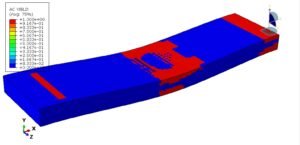
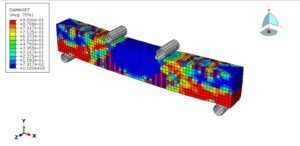
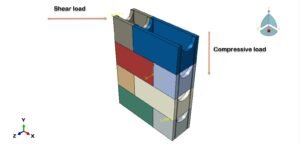
Finite Element Analysis (FEA) templates are particularly valuable for recurring structural assessments. They can pre-define element types, material models, loading conditions, and output requests.
- Typical Use Cases: Stress analysis for standard components, fatigue life prediction for welds or bolted connections, crack propagation studies, structural integrity assessments for pressure vessels, and Fitness-for-Service (FFS) Level 3 evaluations in oil & gas.
- Tools Benefiting: Abaqus, ANSYS Mechanical, MSC Patran/Nastran.
- Checklist for a Good FEA Template:
- Parametric Geometry: Ability to easily modify key dimensions.
- Pre-defined Materials: Library of commonly used material properties.
- Standard Load Cases: Pre-set loads (pressure, force, thermal) and boundary conditions (fixed, symmetry, remote displacement).
- Meshing Controls: Suggested element sizes, bias factors, and element types for different regions.
- Solver Settings: Recommended solution controls, convergence criteria (e.g., for non-linear analysis).
- Post-processing Scripts: Automated extraction of key results (stress hot spots, displacements, reaction forces, fatigue life factors).
- Report Generation: Automated population of simulation parameters and key result plots into a document template.
CFD Templates: Fluid Dynamics Made Consistent
Computational Fluid Dynamics (CFD) simulations often involve intricate geometries, complex physics, and demanding convergence criteria. Templates bring order to this complexity.
- Typical Use Cases: Flow analysis through valves or pipes, heat exchanger performance, aerodynamic studies of vehicle components in aerospace, mixing processes, and biofluid dynamics in biomechanics.
- Tools Benefiting: ANSYS Fluent, ANSYS CFX, OpenFOAM.
- Checklist for a Good CFD Template:
- Geometry Cleanup Routines: Scripts for simplifying CAD models for CFD.
- Named Selections: Standardized naming for inlets, outlets, walls, and interfaces.
- Meshing Strategies: Recommended mesh types (hexahedral, polyhedral), refinement zones, and boundary layer controls.
- Physics Models: Pre-selected turbulence models (e.g., k-epsilon, SST k-omega), multiphase models, or combustion models.
- Boundary Conditions: Default inlet velocities, outlet pressures, wall conditions, temperature profiles.
- Solver Settings: Iteration limits, convergence criteria (residuals), relaxation factors.
- Post-processing Workflows: Automated generation of streamlines, contours, vector plots, and integral values (e.g., pressure drop, drag coefficient, mass flow rates).
Practical Workflow for Simulation Templates
Implementing simulation templates isn’t just about having the files; it’s about a structured approach:
- Template Selection: Choose the most appropriate template for your specific analysis task (e.g., bolted joint fatigue template, pipe flow template).
- Geometry Integration: Import or link your specific CAD model. The template might include scripts for automatic geometry preparation (e.g., defeaturing, creating mid-surfaces).
- Parameter Input: Input specific project parameters, material properties, load values, and environmental conditions into designated fields.
- Review and Adjust: Carefully review the pre-defined settings. While templates standardize, every project has unique aspects requiring minor adjustments.
- Run Simulation: Execute the analysis.
- Automated Post-processing: Let the template’s scripts generate standard plots, tables, and preliminary reports.
- Detailed Analysis: Perform specific, in-depth post-processing tailored to the project’s unique questions, building upon the template’s standardized outputs.
Verification & Sanity Checks for Simulation Templates
Even with robust templates, vigilance is key. Never blindly trust any simulation output. Templates should ideally include sections or prompts for these critical checks:
- Mesh Sensitivity: Perform a mesh refinement study to ensure your results are independent of mesh density. A good template might include options for coarse, medium, and fine mesh setups.
- Boundary Condition (BC) Validation:
- For structural analyses: Check reaction forces. Do they balance applied loads? Are deformations physically reasonable?
- For fluid analyses: Check mass flow balance between inlets and outlets. Are velocities/pressures in expected ranges?
- Convergence History: Monitor residuals. Are they dropping to acceptable levels? For transient simulations, is the solution stable?
- Expected vs. Actual: Compare deformation patterns, stress concentrations, or flow behaviors to your engineering intuition or simplified analytical solutions.
- Hand Calculations/Analytical Solutions: For simpler aspects of the problem (e.g., beam deflection, pipe pressure drop), perform a quick hand calculation to validate the order of magnitude of simulation results.
- Parametric Studies: If applicable, run a small parametric study (e.g., varying a material property or load) to see if the results trend as expected.
CAD/Design Templates
In the realm of Computer-Aided Design (CAD), templates ensure design consistency and accelerate modeling tasks.
- Standard Parts Libraries: Pre-modeled fasteners, bearings, gears, or standard piping components.
- Drawing Formats: Standardized title blocks, borders, dimensioning styles, and annotation types ensuring all drawings conform to company or industry standards.
- Assembly Structures: Pre-defined assembly hierarchies or master models for common product architectures.
- Tools: CATIA, SolidWorks, AutoCAD, Inventor.
Project Management & Documentation Templates
Beyond technical analysis, templates are crucial for effective project oversight and communication.
- Project Plans: Standard Gantt charts, work breakdown structures (WBS), and resource allocation sheets.
- Risk Registers: Templates for identifying, assessing, and mitigating project risks.
- Design Review Checklists: Ensuring all critical design aspects are evaluated before progression.
- Technical Reports: Standardized layouts for FEA reports, CFD reports, design justifications, test reports, and engineering change orders. These ensure clarity and completeness, especially important for compliance in sectors like aerospace or biomechanics.
- Compliance Documentation: Forms and reports specifically structured to meet regulatory requirements (e.g., FAA, ISO 13485 for medical devices, API standards for oil & gas).
Automation & Scripting Templates
Leveraging scripting languages, these templates automate data handling and tool interaction.
- Python Scripts: For automating pre-processing tasks (e.g., geometry cleanup, mesh generation parameters) or post-processing (e.g., extracting data from Abaqus ODB files, ANSYS RST files, or OpenFOAM results; generating custom plots). Python is excellent for CAD-CAE workflow integration.
- MATLAB Scripts: Ideal for signal processing, control system design, data acquisition, and complex numerical analysis. Templates can include pre-built functions for common engineering calculations or data visualization.
- Macros: Within CAD software (e.g., CATIA macros) or spreadsheet software, automating repetitive drawing or calculation tasks.
Creating and Customizing Your Own Engineering Templates
While many excellent templates are available (and we offer some at EngineeringDownloads.com), creating or customizing your own empowers you to perfectly match your specific needs.
Step-by-Step Template Creation Guide
- Identify Recurring Tasks or Analyses: What do you do repeatedly? What takes disproportionately long to set up? (e.g., bolted joint analysis, heat transfer through a plate, standard report format).
- Define Scope and Objectives: What problem does this template solve? What inputs does it need? What outputs should it generate?
- Structure the Template: Create the basic layout. For a spreadsheet, define columns and tabs. For a report, define sections. For a simulation model, define initial parts, assemblies, and steps.
- Develop Content:
- Formulas & Calculations: Implement validated engineering equations.
- Input Fields: Clearly label where users need to provide data.
- Boilerplate Text: Include standard disclaimers, explanations, or introductory paragraphs for reports.
- Placeholders: Mark where specific project data, images, or results should be inserted.
- Scripts/Macros: Write and embed automation scripts if applicable (e.g., Python for Abaqus scripting).
- Test and Validate: Crucially, run the template through several realistic scenarios. Check calculations, ensure scripts run correctly, and verify outputs. Document the validation process.
- Document Usage: Create clear instructions on how to use the template, its limitations, and any prerequisites.
- Implement Version Control: Treat templates like code. Use a version control system (e.g., Git) or at least a structured naming convention (e.g.,
Template_FEA_V1.2.xlsx) to track changes and prevent accidental overwrites.
Best Practices for Template Customization
- Start with a Robust Base: If customizing an existing template, ensure it’s well-designed and validated.
- Parameterize Where Possible: Instead of hard-coding values, use variables or input fields that can be easily changed. This applies to dimensions in CAD, material properties in FEA, or flow rates in CFD.
- Document All Changes: Maintain a change log detailing what was modified, why, and by whom.
- Seek User Feedback: Involve end-users in the customization process to ensure the template meets their practical needs.
- Modular Design: Break down complex templates into smaller, interchangeable modules. This makes maintenance easier and allows for greater flexibility.
Common Mistakes to Avoid
- Over-generalization vs. Over-specialization: A template that tries to do everything will be cumbersome. One that’s too specific won’t be reused. Find the right balance.
- Lack of Documentation: Without clear instructions, even the best template is useless.
- Ignoring Version Control: Leading to confusion, lost work, and inconsistent applications.
- Not Testing Thoroughly: An unvalidated template can introduce more errors than it prevents.
- Hard-coding Values: Making templates inflexible and prone to errors when applied to different scenarios. Always aim for user-defined inputs or linked variables.
Implementing and Managing Templates Effectively
Creating templates is only half the battle; ensuring they are used effectively and maintained over time is equally important.
Strategic Deployment
- Centralized Repository: Store all official templates in a single, accessible location (e.g., network drive, SharePoint, version control system like Git, or a dedicated PLM system).
- Access Control: Implement permissions to ensure only authorized personnel can modify or approve templates, maintaining their integrity.
- Clear Naming Conventions: Use a consistent, descriptive naming scheme for templates to make them easy to find.
Training and Adoption
- Workshops & Tutorials: Provide training sessions to familiarize engineers with new templates and their proper usage.
- Documentation: Supplement templates with user manuals or ‘how-to’ guides.
- Champion Users: Identify early adopters who can serve as internal experts and advocates for template use.
Maintenance and Updates
- Regular Reviews: Periodically review templates to ensure they remain relevant, accurate, and aligned with current best practices and industry standards.
- Integration of New Standards/Software Versions: Update templates when new versions of software (e.g., Abaqus, ANSYS, MATLAB, Python libraries) are released, or when industry standards change.
- Feedback Loop: Establish a clear process for users to submit feedback, report bugs, or suggest improvements to templates.
Illustrative Table: Template Types and Benefits
| Template Category | Examples of Usage | Key Benefits | Relevant Tools | |
|---|---|---|---|---|
| Simulation (FEA) | Bolt sizing, Weld fatigue, FFS Level 3, Structural design validation | Accuracy, reduced setup time, compliance (e.g., API 579, ASME VIII) | Abaqus, ANSYS Mechanical, Nastran | |
| Simulation (CFD) | Valve flow analysis, Heat exchanger design, Aerodynamic drag, Biomechanics flow | Consistent BCs, automated post-processing, reliable results | Fluent, CFX, OpenFOAM | |
| CAD/Design | Standard part drawing, Assembly structure, Drawing title blocks | Design consistency, accelerated drafting, fewer design errors | CATIA, SolidWorks, AutoCAD | |
| Project Management | Project plan, Risk register, Design review checklist, Progress reports | Improved planning, better risk mitigation, standardized reporting | MS Project, Jira, Excel | |
| Automation/Scripting | FEA pre-processing scripts, CFD data extraction, MATLAB data analysis, CAD-CAE integration | Eliminates repetitive tasks, enhances workflow efficiency, custom reporting | Python, MATLAB, Excel VBA |
Leveraging Templates for Specific Engineering Disciplines
The versatility of engineering templates makes them applicable across a wide spectrum of specialized fields.
Structural Engineering & Structural Integrity
- Bolt Sizing & Analysis: Templates to calculate required bolt diameters, preload, and check for shear/tensile capacity under various load conditions.
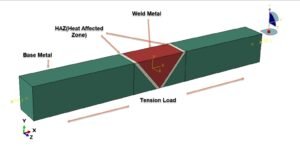
- Weld Calculation Sheets: Standardized spreadsheets to assess weld strength, fatigue life, and compliance with codes like AWS D1.1 or Eurocode 3.
- FFS Level 3 Assessments: Complex FEA templates pre-configured for crack growth simulation (e.g., using Abaqus or ANSYS) or plastic collapse evaluations as per API 579-1/ASME FFS-1.
- Fatigue Life Prediction: Scripts and spreadsheets to process stress results from FEA and calculate fatigue life using various methodologies (e.g., S-N curves, strain-life).
Oil & Gas Industry
- Pipeline Integrity Management: Templates for performing corrosion growth assessments, dent analysis, or remaining life calculations for pipelines using relevant API standards.
- Pressure Vessel Design: Standardized calculation sheets and design templates for components like flanges, nozzles, and shell sections conforming to ASME Boiler & Pressure Vessel Code (BPVC) Section VIII.
- Offshore Structure Analysis: Pre-processing templates for wave loading definitions or fatigue analysis of jacket structures, often integrated with tools like SACS or USFOS.
Aerospace Engineering
- Wing Design Load Cases: FEA templates that apply multiple aerodynamic load cases, thermal loads, and structural boundary conditions for wing box analysis.
- Fuselage Panel Sizing: Calculation sheets for buckling, crippling, and tension field analysis of fuselage panels according to aerospace standards.
- Aerodynamics Reports: Standardized CFD post-processing templates for extracting lift, drag, pitching moment coefficients, and generating specific plots for design reviews.
Biomechanics
- Medical Device Simulation Setups: FEA templates for simulating orthopaedic implants (e.g., hip prostheses, spinal implants) or cardiovascular stents, including anisotropic material models and contact definitions.
- Tissue Property Definitions: Libraries or templates for defining complex, non-linear, and time-dependent material properties of biological tissues within FEA software.
- Biofluid Dynamics: CFD templates for simulating blood flow in arteries, heart valves, or medical devices, often requiring specialized non-Newtonian fluid models and advanced meshing strategies.
Looking for ready-made FEA pre-processing scripts, CFD post-processing templates, or custom Python tools for your CAD-CAE workflow? EngineeringDownloads.com offers a curated selection of downloadable engineering templates and projects. We also provide online consultancy and tutoring to help you master these powerful tools and workflows.
Further Reading
For more information on engineering standards and their importance, visit the International Organization for Standardization (ISO) website.