In the rapidly evolving world of engineering, tackling complex challenges often requires more than just in-house expertise. Whether it’s optimizing a structural design, simulating intricate fluid dynamics, or ensuring the integrity of critical components, specialized knowledge and an objective perspective can be invaluable. This is where expert engineering consultation services come into play, offering a strategic advantage to projects across various sectors.
Our goal in this article is to demystify engineering consultation services. We’ll explore what they entail, when to consider engaging consultants, and how to maximize the value they bring to your organization. This isn’t about selling; it’s about providing clear, practical guidance from an engineer-to-engineer perspective, helping you make informed decisions for your projects.

Image: Engineers collaborating in a workspace, illustrating the partnership aspect of consultation. Source: Wikimedia Commons.
Understanding Engineering Consultation Services
Engineering consultation services provide access to highly specialized knowledge, tools, and methodologies that might not be readily available within your organization. Consultants act as an extension of your team, bringing fresh perspectives and deep expertise to solve specific problems or guide strategic initiatives.
What Exactly Do Engineering Consultants Do?
Engineering consultants offer a diverse range of services, typically focused on:
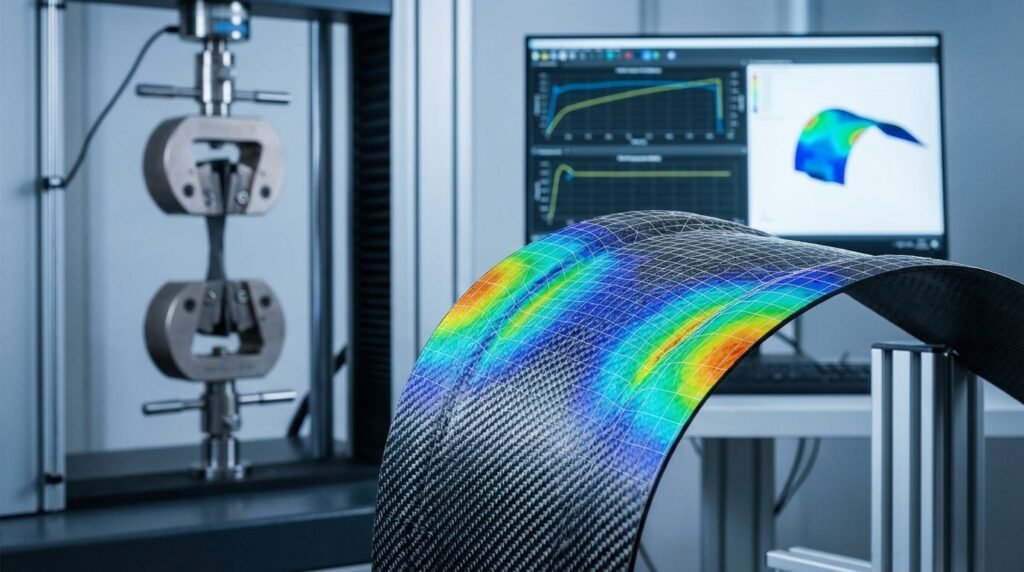
- Specialized Expertise: Providing deep knowledge in niche areas like advanced FEA (Finite Element Analysis) with Abaqus or ANSYS Mechanical, complex CFD (Computational Fluid Dynamics) using Fluent/CFX or OpenFOAM, or intricate Fitness-for-Service (FFS) Level 3 assessments.
- Objective Perspective: Offering an unbiased evaluation of designs, processes, or failure modes, free from internal biases or political pressures.
- Resource Augmentation: Bridging skill gaps or providing additional horsepower for demanding projects when your internal team is stretched thin or lacks specific proficiencies. This can range from temporary project leadership to hands-on simulation work.
- Problem Solving & Innovation: Developing novel solutions to intractable engineering challenges, optimizing existing designs, or implementing cutting-edge technologies like AI/ML integration with Python or MATLAB for CAD-CAE workflows.
- Risk Mitigation: Identifying potential design flaws, operational risks, or compliance issues early in a project lifecycle, saving significant costs and time down the line.
When to Engage an Engineering Consultant
Deciding when to bring in an external consultant is a strategic choice. Here are common scenarios where it often proves beneficial:
- Lack of In-House Expertise: Your team might be excellent, but a project demands highly specialized skills (e.g., advanced non-linear FEA, multi-phase CFD, biomechanical modeling for medical devices, or FFS Level 3 for high-pressure components) that aren’t part of your core competency.
- Tight Deadlines & Resource Gaps: When project timelines are aggressive, and your internal team lacks the capacity to deliver, consultants can quickly step in to accelerate progress without the overhead of hiring permanent staff.
- Complex or High-Risk Projects: For mission-critical projects where failure is not an option (e.g., aerospace components, oil & gas infrastructure), an external expert can provide critical analysis, design validation, or troubleshooting.
- Independent Verification & Validation (V&V): Ensuring the accuracy and reliability of your internal simulation results or design decisions through an independent third-party review.
- Strategic Planning & Technology Adoption: Guiding your organization through the adoption of new simulation software, establishing best practices for CAD-CAE workflows, or integrating automation scripts with Python or MATLAB.
- Cost-Effectiveness: For episodic or project-based needs, engaging a consultant can be more cost-effective than hiring a full-time specialist, factoring in salaries, benefits, and training.
Key Areas of Expertise in Engineering Consultation
Engineering consultation spans a wide array of disciplines. Here are some key areas relevant to advanced engineering applications:
Structural Engineering & Integrity
Structural integrity is paramount across all engineering sectors, from aerospace to oil & gas. Consultants specializing in this area provide:
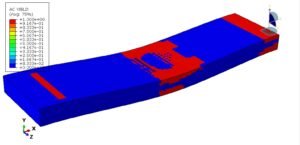
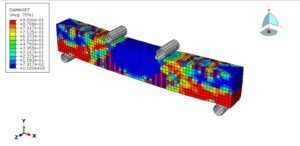
- FEA for Stress Analysis: Advanced static, dynamic, and non-linear analysis using commercial tools like Abaqus, ANSYS Mechanical, or MSC Nastran. This includes contact analysis, material non-linearity, and large deformation problems.
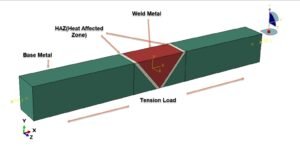
- Fitness-for-Service (FFS) Level 3 Assessments: Detailed evaluations of equipment with flaws or damage to determine its suitability for continued operation, often following API 579/ASME FFS-1 standards. This involves complex fracture mechanics and fatigue analysis.
- Fatigue & Fracture Mechanics: Predicting component life under cyclic loading, assessing crack initiation and propagation, and designing for damage tolerance.
- Life Extension & Remaining Life Assessment: Determining how long existing structures or components can safely operate beyond their original design life.
- Material Selection & Failure Analysis: Advising on appropriate materials for challenging environments or investigating the root causes of component failures.
Computational Fluid Dynamics (CFD)
CFD consultation is crucial for optimizing systems involving fluid flow and heat transfer, with applications ranging from aerospace to process engineering:
- Flow Simulation: Modeling laminar and turbulent flows, compressible and incompressible fluids, using software such as ANSYS Fluent/CFX or the open-source OpenFOAM.
- Heat Transfer & Multiphysics Coupling: Analyzing conduction, convection, and radiation, often coupled with structural mechanics (FSI – Fluid-Structure Interaction) or other physics.
- Aerodynamics & Hydrodynamics: Optimizing vehicle shapes (automotive, aerospace, marine), turbine designs, and other systems interacting with fluids.
- Process Optimization: Improving efficiency in industrial processes, such as mixing in chemical reactors, flow through pipelines (relevant for Oil & Gas), or heat exchangers.
CAD-CAE Workflows & Automation
Streamlining design and analysis processes is key to efficiency and innovation. Consultants in this domain focus on:
- Design Optimization: Using parametric modeling and optimization techniques within CAD software (e.g., CATIA, SolidWorks) or integrating with CAE tools to improve product performance and manufacturability.
- Simulation Automation: Developing scripts (often in Python or MATLAB) to automate repetitive simulation tasks, generate multiple design iterations, or process large datasets, significantly reducing manual effort and potential errors.
- Data Analysis & Post-processing: Creating custom tools and workflows for interpreting complex simulation results, extracting key performance indicators, and generating insightful visualizations.
Biomechanics & Advanced Applications
This specialized field applies engineering principles to biological systems:
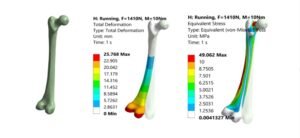
- Medical Device Design & Analysis: Simulating the performance and safety of implants (e.g., orthopaedic, cardiovascular), prosthetics, and surgical tools using FEA/CFD.
- Human Body Modeling: Analyzing stress on bones and tissues, joint mechanics, and the impact of external forces (e.g., crash simulation for injury prevention).
Oil & Gas Specific Consultations
The Oil & Gas industry has unique challenges requiring highly specialized engineering consultation:
- Pipeline Integrity: Assessing the condition of pipelines, performing FFS assessments for defects, and predicting remaining life to prevent catastrophic failures.
- Riser Analysis: Dynamic analysis of offshore risers and umbilical systems under environmental loads (waves, currents) using tools like OrcaFlex or similar.
- Offshore Structure Design: Analysis and optimization of platforms, subsea structures, and floating production storage and offloading (FPSO) units.
- Process Safety & Risk Assessment: Identifying hazards, evaluating risks, and developing mitigation strategies for complex oil and gas facilities.
The Consultation Process: A Practical Workflow
Engaging an engineering consultant follows a structured process to ensure clear objectives, efficient execution, and valuable outcomes. Here’s a typical workflow:
Step 1: Initial Scoping & Needs Assessment
- Defining the Problem: Clearly articulate the engineering challenge or opportunity. What specific questions need to be answered? What problem needs solving?
- Setting Clear Objectives & Deliverables: Define measurable goals for the project. What specific reports, analyses, designs, or recommendations are expected?
- Resource & Data Review: Identify what internal data, models, or resources can be shared with the consultant to kick-start the project.
Step 2: Proposal Development & Agreement
- Scope of Work (SOW): The consultant will develop a detailed SOW outlining the tasks, methodologies, assumptions, and expected outcomes.
- Timeline & Milestones: A clear project schedule with key milestones and deliverables will be established.
- Cost Estimation: A transparent breakdown of costs, whether fixed-price, time-and-materials, or retainer-based.
- Confidentiality & IP: Agreements on data confidentiality and intellectual property rights are crucial.
Step 3: Execution & Collaboration
- Data Collection & Model Setup: Consultants will gather necessary data, set up simulation models (e.g., CAD geometries, material properties), or review existing designs.
- Analysis & Simulation Phase: This is where the core engineering work happens, utilizing specialized software and expertise.
- Regular Communication & Feedback Loops: Consistent communication, progress reports, and opportunities for feedback are vital to keep the project on track and aligned with your expectations.
Practical Workflow Example: FEA Stress Analysis
For a typical simulation-heavy project, such as an FEA stress analysis of a new component, the execution phase might involve:
- Geometry Preparation: Importing the CAD model (e.g., from CATIA or SolidWorks), simplifying features not critical to the analysis, and cleaning up geometry for meshing.
- Material Property Definition: Accurately defining linear or non-linear material models (e.g., elasticity, plasticity, creep, fatigue properties) for all components in the assembly.
- Meshing Strategy: Selecting appropriate element types (e.g., solid, shell, beam) and densities. Implementing local mesh refinement in areas of high stress gradients or critical features to ensure accuracy without excessive computational cost.
- Boundary Conditions & Loading: Applying realistic constraints (fixed supports, symmetry conditions) and loads (pressure, force, temperature, prescribed displacement) that accurately represent operational conditions.
- Solver Setup & Run: Configuring the chosen FEA solver (Abaqus, ANSYS Mechanical, Nastran) for the specific analysis type (static, dynamic, non-linear) and initiating the computation.
- Initial Post-processing & Interpretation: Reviewing the initial results for displacement, stress, strain, and deformation patterns to ensure they are physically reasonable before diving into detailed interpretation.
Step 4: Reporting & Recommendations
- Comprehensive Reports: Delivering detailed technical reports documenting methodologies, results, observations, and key findings.
- Actionable Insights: Translating complex technical data into clear, actionable recommendations that directly address the project objectives.
- Presentation & Discussion: Presenting findings to your team, facilitating discussions, and addressing any questions or concerns.
Step 5: Follow-up & Implementation Support
- Addressing Further Questions: Providing clarification and additional support post-report delivery.
- Assisting with Implementation: If needed, consultants can offer guidance or hands-on support during the implementation of their recommendations.
The following table summarizes typical phases and expected deliverables in an engineering consultation project:
| Phase | Description | Typical Deliverables |
|---|---|---|
| Initiation & Scoping | Understanding client needs, defining problem, setting objectives. | Project Brief, Preliminary Scope, Confidentiality Agreement |
| Proposal & Contract | Detailed planning, cost estimation, legal agreements. | Detailed Scope of Work (SOW), Project Proposal, Service Agreement/Contract |
| Execution & Analysis | Data collection, model development, simulation/testing, interim reviews. | Progress Reports, Simulation Models (e.g., Abaqus, Fluent files), Raw Data, Interim Findings |
| Reporting & Review | Synthesizing results, deriving conclusions, formulating recommendations. | Comprehensive Technical Report, Executive Summary, Presentation Slides, Design Recommendations |
| Follow-up & Support | Answering questions, providing implementation assistance. | Consultation Sessions, Implementation Guidance, Further Analysis (if required) |
Ensuring Quality: Verification, Validation & Sanity Checks
For any engineering analysis, especially those involving complex simulations, ensuring the quality and reliability of results is paramount. Consultants prioritize rigorous verification and validation (V&V) protocols.
Model Verification: Are We Solving the Equations Correctly?
Verification focuses on ensuring that the numerical model accurately solves the underlying mathematical equations. Key checks include:
- Mesh Independence Studies: Performing the analysis with progressively finer meshes to ensure that the results (e.g., peak stress, maximum deflection) converge to a consistent value, indicating that the mesh is sufficiently refined. This is critical for tools like Abaqus, ANSYS, and OpenFOAM.
- Boundary Condition & Load Checks: Verifying that all applied boundary conditions and loads are correctly defined and applied. This often involves checking reaction forces, total applied load, and initial deformation patterns.
- Convergence Criteria: For iterative solvers (common in non-linear FEA or CFD), ensuring that the solution has converged within acceptable tolerance levels for residuals (e.g., flow velocities, energy conservation).
- Element Distortion & Quality Checks: Examining mesh quality metrics (aspect ratio, skewness, Jacobian) to ensure elements are not excessively distorted, which can lead to inaccurate results.
Model Validation: Are We Solving the Right Equations?
Validation addresses whether the numerical model accurately represents the real-world physical phenomenon. This often involves comparing simulation results against known benchmarks:
- Comparison with Analytical Solutions: For simplified cases or sub-models, comparing simulation results against closed-form analytical solutions (e.g., beam deflection formulas, simple heat conduction).
- Comparison with Experimental Data: The most robust form of validation involves comparing simulation predictions with physical test data from prototypes or existing systems.
- Comparison with Hand Calculations: Performing basic hand calculations for critical parameters (e.g., overall force balance, approximate stress levels) to check the order of magnitude of simulation results.
- Peer Review & Independent Checks: Having another experienced engineer or consultant review the model setup, assumptions, and results.
Sanity Checks & Common Pitfalls
Beyond formal V&V, constant sanity checks are essential:
- Expected vs. Actual Results: Always question if the results make physical sense. Are deformation patterns logical? Are stress concentrations where you’d expect them? Are magnitudes reasonable?
- Material Properties Sensitivity: Understanding how sensitive your results are to variations in material properties.
- Units Consistency: A fundamental yet often overlooked check – ensure all input parameters and software settings use a consistent system of units.
- Common Mistakes: Beware of over-constraining or under-constraining models, applying incorrect load directions, or misinterpreting software outputs.
For complex analyses requiring significant computational power, EngineeringDownloads offers affordable HPC rental to run your models efficiently, alongside expert project/contract consultancy for specialized support.
Choosing the Right Engineering Consultant: A Checklist
Selecting the right consultant is crucial for project success. Consider the following:
- Expertise & Experience: Do they have a proven track record in your specific industry and the technical domain required (e.g., FEA for offshore structures, CFD for biomedical devices)?
- Track Record & References: Ask for case studies, client testimonials, or references.
- Communication & Collaboration Style: Will they integrate well with your team? Do they communicate technical concepts clearly?
- Understanding Your Specific Needs: Do they ask probing questions and demonstrate a deep understanding of your unique challenges, rather than offering a generic solution?
- Cost vs. Value: While budget is important, focus on the value and return on investment the consultant brings, not just the lowest bid.
- Technology & Tool Proficiency: Ensure they are proficient with the tools relevant to your project, such as Abaqus, ANSYS, MSC ADAMS, Python for automation, or MATLAB for data analysis.
Common Mistakes to Avoid When Engaging Consultants
To maximize the value of engineering consultation services, avoid these pitfalls:
- Unclear Scope of Work: A vague or constantly changing scope can lead to project delays, cost overruns, and dissatisfaction.
- Insufficient Data Provision: Holding back critical information or providing incomplete data hampers the consultant’s ability to deliver accurate and effective solutions.
- Lack of Internal Collaboration: Treat consultants as part of your extended team. Foster open communication and ensure internal stakeholders are engaged.
- Ignoring Recommendations: If you invest in expert advice, be prepared to seriously consider and potentially implement their recommendations.
- Focusing Solely on Cost: While budget is important, prioritizing the lowest cost over expertise and quality can lead to suboptimal solutions or further problems down the line.
Further Reading
For those interested in delving deeper into the theoretical underpinnings of computational mechanics, a foundational understanding of numerical methods is invaluable. Princeton University’s Lecture Notes on Finite Element Methods offer a robust academic perspective.
Frequently Asked Questions (FAQs)
What types of engineering projects benefit most from consultation services?
Projects requiring highly specialized expertise (e.g., advanced FEA, complex CFD, FFS Level 3), independent verification, rapid resource augmentation, or strategic guidance on new technologies often benefit most. This includes aerospace component design, oil & gas pipeline integrity, medical device biomechanics, and complex structural analysis.
How do engineering consultants ensure the accuracy of their simulation results?
Consultants employ rigorous Verification and Validation (V&V) processes. This includes mesh independence studies, comparing results with analytical solutions or experimental data, applying strict convergence criteria, and performing comprehensive sanity checks to ensure physical realism and consistency.
Can consultants help with integrating new software or automating workflows?
Absolutely. Many consultants specialize in CAD-CAE workflow optimization, helping integrate new simulation tools (like Abaqus or ANSYS), developing custom scripts in Python or MATLAB for automation, and establishing best practices for data management and analysis, making your internal processes more efficient.
What is the typical timeframe for an engineering consultation project?
Project timeframes vary significantly based on complexity and scope. A targeted stress analysis might take a few weeks, while a comprehensive Fitness-for-Service Level 3 assessment or a large-scale CFD optimization could span several months. Clear communication during the initial scoping phase establishes realistic timelines.
How is intellectual property (IP) handled in consultation agreements?
IP terms are a critical part of the consultation agreement. Typically, the client retains ownership of the project results and any IP developed specifically for them. Consultants usually retain ownership of their proprietary methodologies or general tools used. This is always clearly defined in the Scope of Work and contract.
Is it more cost-effective to hire a consultant or train internal staff?
It depends on the frequency and nature of the need. For one-off, highly specialized projects, a consultant is often more cost-effective than training internal staff and purchasing expensive software licenses. For recurring needs in a core competency, investing in internal training (perhaps through online/live courses or internship-style training offered by platforms like EngineeringDownloads) might be a better long-term strategy.
Conclusion
Engineering consultation services are a powerful resource for navigating the complexities of modern engineering. By strategically engaging external experts, organizations can gain access to specialized knowledge, accelerate project timelines, mitigate risks, and foster innovation. Whether you’re grappling with intricate FEA challenges, optimizing fluid dynamics, or ensuring structural integrity, a well-chosen consultant can be the catalyst for success, transforming challenges into opportunities for growth and technological advancement.