Engineering Downloads

Let’s Learn and Collaborate
Engineering Downloads

New Blogs

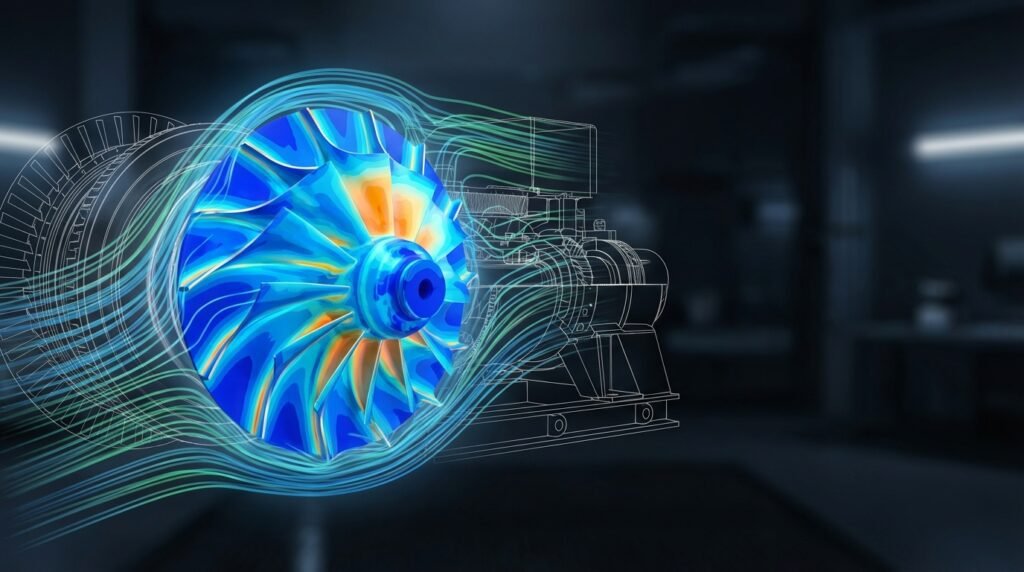
Mastering Mass Imbalance: Engineering Analysis & Mitigation

Mass imbalance is one of those fundamental engineering challenges that, if ignored, can lead to catastrophic failures, costly downtime, and significant safety risks. Whether you’re designing a high-speed turbine, analyzing an aerospace component, or maintaining heavy industrial machinery in the
FEA for Structural Integrity
FEA for Structural Integrity: Practical Guide for Engineers

Finite Element Analysis (FEA) has transformed how engineers approach structural integrity assessments. From aerospace components to oil & gas pipelines, understanding how structures behave under various loads is paramount. This guide will walk you through the practical aspects of using

AI in CAE
AI in CAE: Revolutionizing Engineering Simulation

Artificial Intelligence (AI) is no longer just a futuristic concept; it’s rapidly becoming an indispensable tool in Computer-Aided Engineering (CAE). For engineers working with intricate simulations like Finite Element Analysis (FEA) and Computational Fluid Dynamics (CFD), AI offers a powerful

Turbulence Modeling
Mastering Turbulence Modeling: A Practical Guide for Engineers

Turbulence modeling is an essential aspect of Computational Fluid Dynamics (CFD), enabling engineers to predict fluid flow behavior in complex systems. From aerospace propulsion to oil and gas pipelines, understanding and accurately modeling turbulence is critical for design optimization, performance

Simulation Governance
Mastering Simulation Governance: Ensure CAE Accuracy & Reliability

In the world of modern engineering, simulation has become an indispensable tool. From designing lighter aircraft components with FEA to optimizing fluid flow in pipelines using CFD, computational tools drive innovation. But with great power comes great responsibility. How do

Featured Blogs

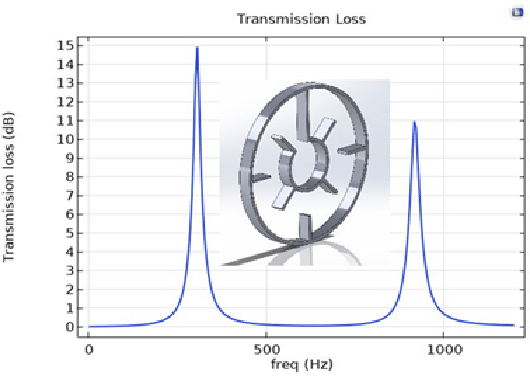
Acoustic metamaterials for advanced sound control and noise reduction
Acoustic Metamaterials and Metasurfaces: Shaping the Future of Sound Control

Intro Acoustic metamaterials and acoustic meta surfaces are changing how we control sound waves. These specially designed structures go beyond the limits of traditional soundproofing. They offer new ways to control sound, such as reducing noise over a wide frequency
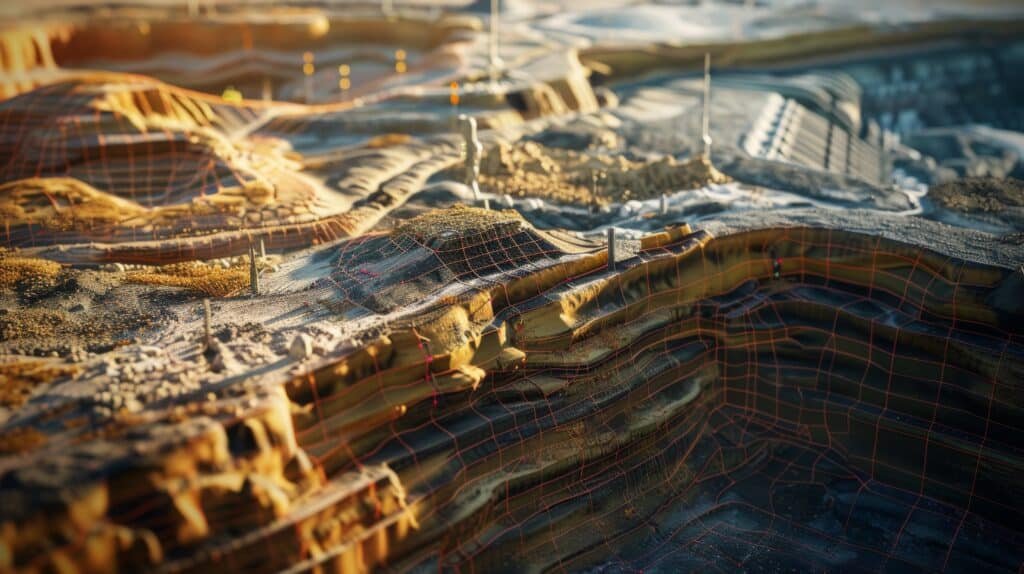
OpenSees software simulation of nonlinear seismic response in a reinforced concrete frame
OpenSees for Structural Analysis

OpenSees (Open System for Earthquake Engineering Simulation) is an open-source software framework developed primarily for nonlinear structural and geotechnical analysis, with a strong emphasis on earthquake engineering. Developed at UC Berkeley’s Pacific Earthquake Engineering Research Center (PEER), it provides a

Abaqus or ANSYS : Which one is better?
Which one is better? Abaqus or ANSYS?

As an engineer, we need to build a model to simulate a process so we can save many and reduce processing time. For this aim, we need to use conventional solvers such as Abaqus, ANSYS, Solidwork (I know, Solidwork solver

See more

Latest Blogs

Mass Imbalance
Mastering Mass Imbalance: Engineering Analysis & Mitigation

Mass imbalance is one of those fundamental engineering challenges that, if ignored, can lead to catastrophic failures, costly downtime, and significant safety risks. Whether you’re designing a high-speed turbine, analyzing an aerospace component, or maintaining heavy industrial machinery in the
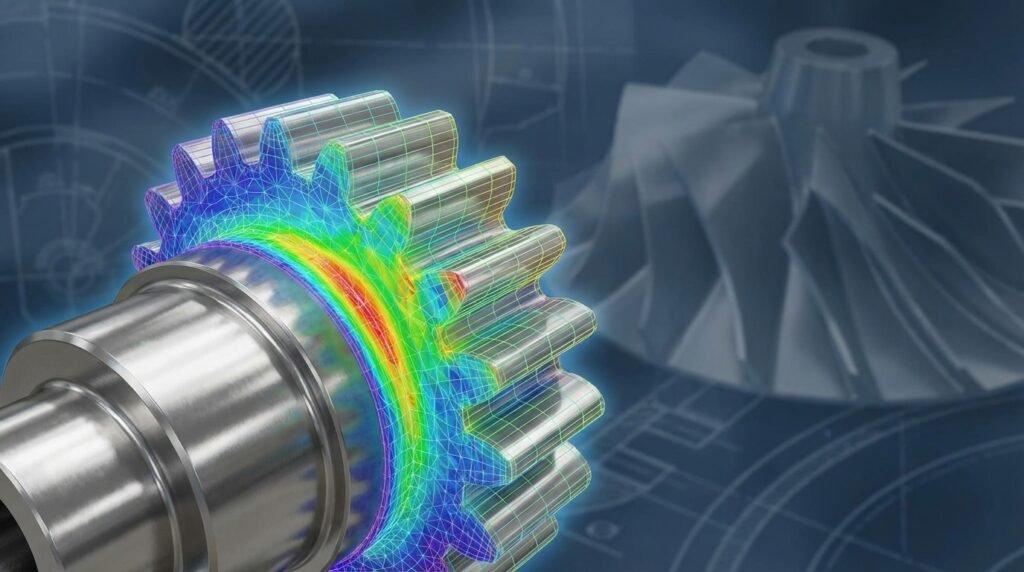
FEA for Structural Integrity
FEA for Structural Integrity: Practical Guide for Engineers

Finite Element Analysis (FEA) has transformed how engineers approach structural integrity assessments. From aerospace components to oil & gas pipelines, understanding how structures behave under various loads is paramount. This guide will walk you through the practical aspects of using

AI in CAE
AI in CAE: Revolutionizing Engineering Simulation

Artificial Intelligence (AI) is no longer just a futuristic concept; it’s rapidly becoming an indispensable tool in Computer-Aided Engineering (CAE). For engineers working with intricate simulations like Finite Element Analysis (FEA) and Computational Fluid Dynamics (CFD), AI offers a powerful

See more

All articles

Mastering MATLAB: Premier Platform for Numerical Computing

Mastering MATLAB: The Premier Platform for Numerical Computing and Engineering Design In the expansive realm of scientific computing, engineering design, and data analysis, one name consistently stands out as a foundational and indispensable tool: MATLAB. Developed by MathWorks, MATLAB, which

Impact Engineering: Principles, Applications, and Future Trends

Impact Engineering: Principles, Applications, and Future Trends In a world where safety, durability, and performance under extreme conditions are paramount, Impact Engineering emerges as a critical discipline. This specialized field of engineering focuses on understanding, predicting, and mitigating the effects

Composite Pressure Vessels
Composite Pressure Vessels: The Ultimate Guide to Manufacturing and Simulation

Composite Pressure Vessels: The Ultimate Guide to Manufacturing and Simulation Composite Pressure Vessels are revolutionizing how we store high-pressure fluids. They offer incredible strength at a fraction of the weight of traditional steel tanks. In this friendly yet professional guide,

Finite element analysis
Finite Element Analysis (FEA): Comprehensive Guide & Apps

Finite Element Analysis (FEA): A Comprehensive Guide to Modern Engineering Simulation In the realm of modern engineering, the ability to predict how designs will perform under various real-world conditions is paramount. This is where Finite Element Analysis (FEA) emerges as

Structural optimization
Structural Optimization Guide: Building Smarter, Lighter, and Stronger Designs

Introduction Structural optimization is an established engineering methodology used to improve structural designs by systematically changing material distribution, geometry, or member sizing to meet defined performance targets. In most engineering organizations, optimization is no longer “nice to have.” It is

HPC cloud for simulation
HPC Cloud: Accelerating Engineering Simulations (FEA, CFD) and AI at Low Cost

High-Performance Computing (HPC) is transforming how engineers and researchers tackle complex simulations and data-intensive tasks. Whether you’re running a finite element analysis (FEA) in Abaqus, a computational fluid dynamics (CFD) model in ANSYS Fluent, a Multiphysics simulation in COMSOL, structural

Engineering Simulation Internship Program

Our 3-month online internship immerses engineering students and researchers in hands-on simulation projects beyond the classroom. We focus on practical experience with professional CFD and FEA tools such as Abaqus, ANSYS (including Fluent), COMSOL, LS-DYNA, OpenSees, OpenFOAM and more. Under

Thermal stress analysis
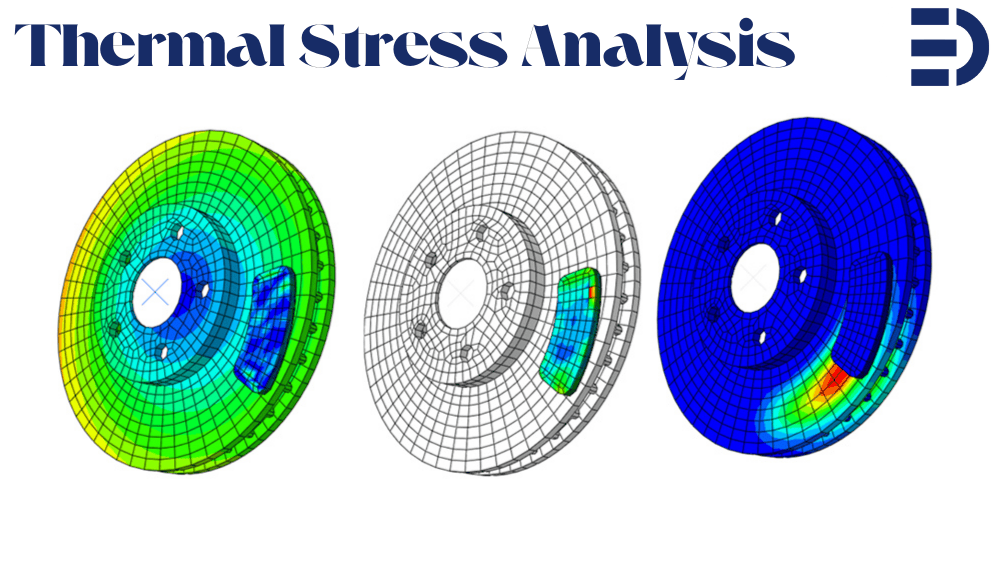
What Is Thermal Stress Analysis? Abaqus and ANSYS Guide Explained

Thermal stress analysis is the process of evaluating mechanical stress caused by temperature changes in materials and structures. When materials heat up, they tend to expand; when they cool down, they contract. If this expansion or contraction is unconstrained, the

Plane strain - plain stress
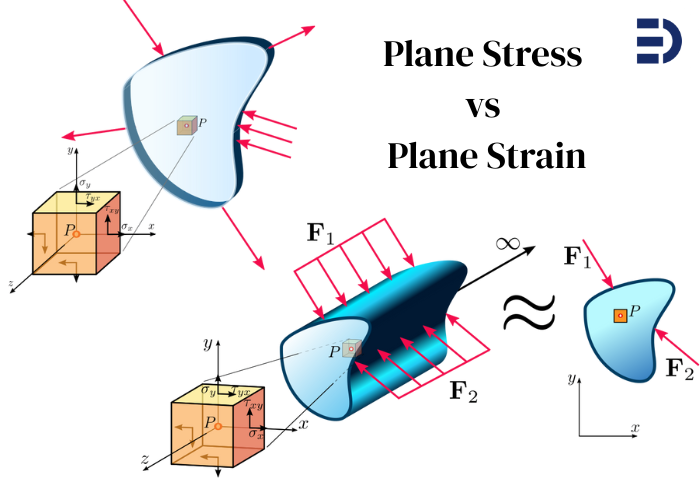
Plane Stress vs Plane Strain Explained

Have you ever faced a complex 3D stress analysis and wondered if there’s a way to simplify it? Finite element analysts often ask this question, especially when plane stress or plane strain assumptions might apply. These two concepts allow us

FEA Modeling of Steel and Concrete Columns
Steel and Concrete Columns Simulation in Finite Element Analysis (FEA)

Columns are the backbone of many structures. they support roofs, floors, and beams, keeping buildings and bridges standing strong. In construction, steel and concrete are two primary materials for columns. Each has its advantages: steel is extremely strong and ductile

Stress Strain Curve
Stress Strain Curve Explained | A Beginner’s Guide

The stress strain curve is a fundamental concept in engineering and material science that shows how a material deforms under load. It plots stress (internal force per unit area) against strain (relative deformation). By analyzing this curve, engineers can understand

UMAT subroutine
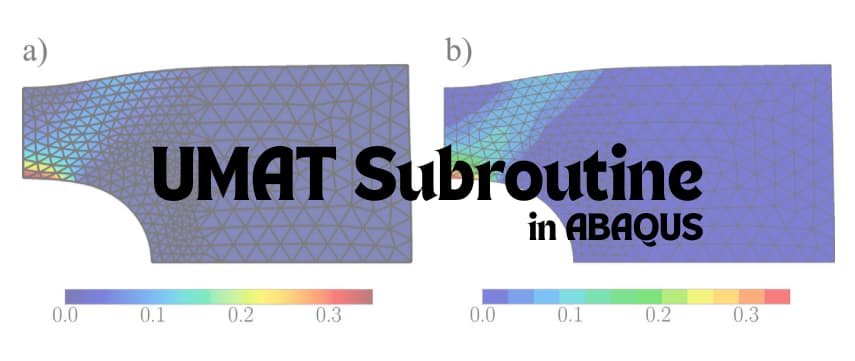
Introduction to UMAT Subroutine in Abaqus

In many engineering projects, the built-in material models in Abaqus are not enough for capturing complex material behavior. This is where user-defined material subroutines come into play. Abaqus allows advanced users to write their own material model through a User

See more