

Composite Failure Criteria: A Practical Guide for Engineers
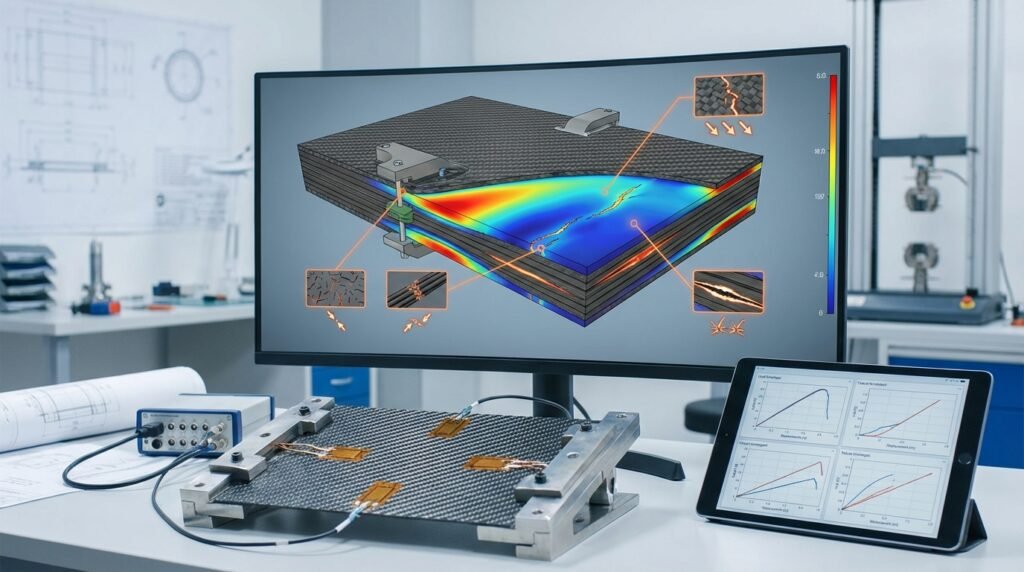
Composite materials have revolutionized engineering across industries, from aerospace and automotive to wind energy and biomechanics. Their impressive strength-to-weight ratio and tailored properties make them indispensable. However, designing with composites isn’t as straightforward as with isotropic metals. The anisotropic nature – where material properties vary with direction – introduces unique complexities, especially when it comes […]
Fracture Mechanics: A Comprehensive Guide for Engineers
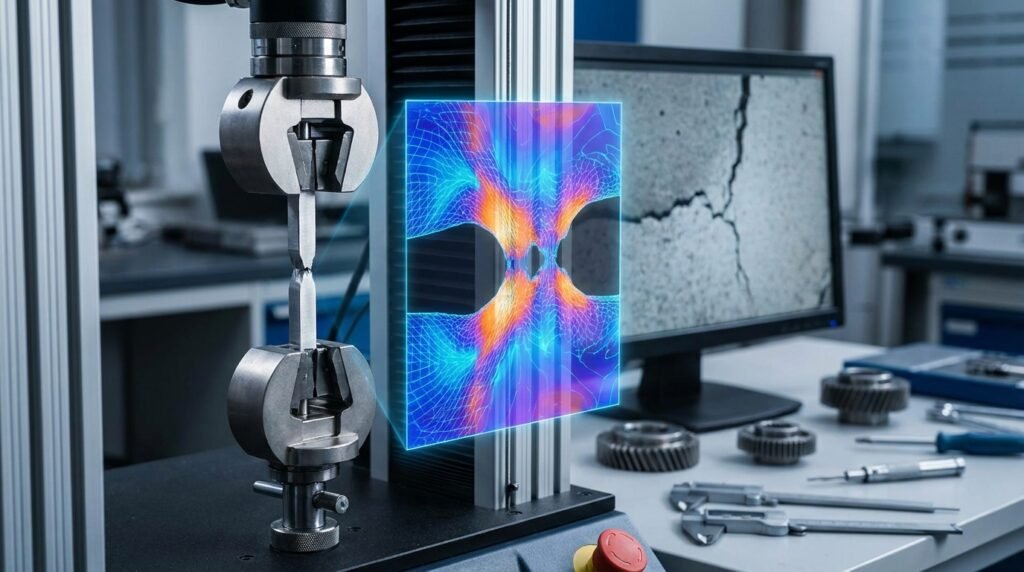
Understanding Fracture Mechanics for Structural Integrity Fracture mechanics is a critical discipline in engineering, providing the theoretical framework and practical tools to predict and prevent the failure of components and structures due to crack propagation. For structural engineers, material scientists, and design professionals, a deep understanding of fracture mechanics is paramount to ensuring safety, reliability, […]
Everything Engineers Need to Know About Fracture Mechanics and Simulation

Fracture Mechanics Explained: Concepts, Software Applications, and Simulation Insights By Saman Hosseini, Fracture Simulation Expert Hello! I’m Saman Hosseini, and I’ve spent years working on fracture mechanics simulation projects. In this post, I’ll walk you through the core concepts of fracture mechanics – like what stress intensity factors and Paris’ law mean – and share […]
Hydrogen Embrittlement in Metals: Causes, Simulation, and Prevention
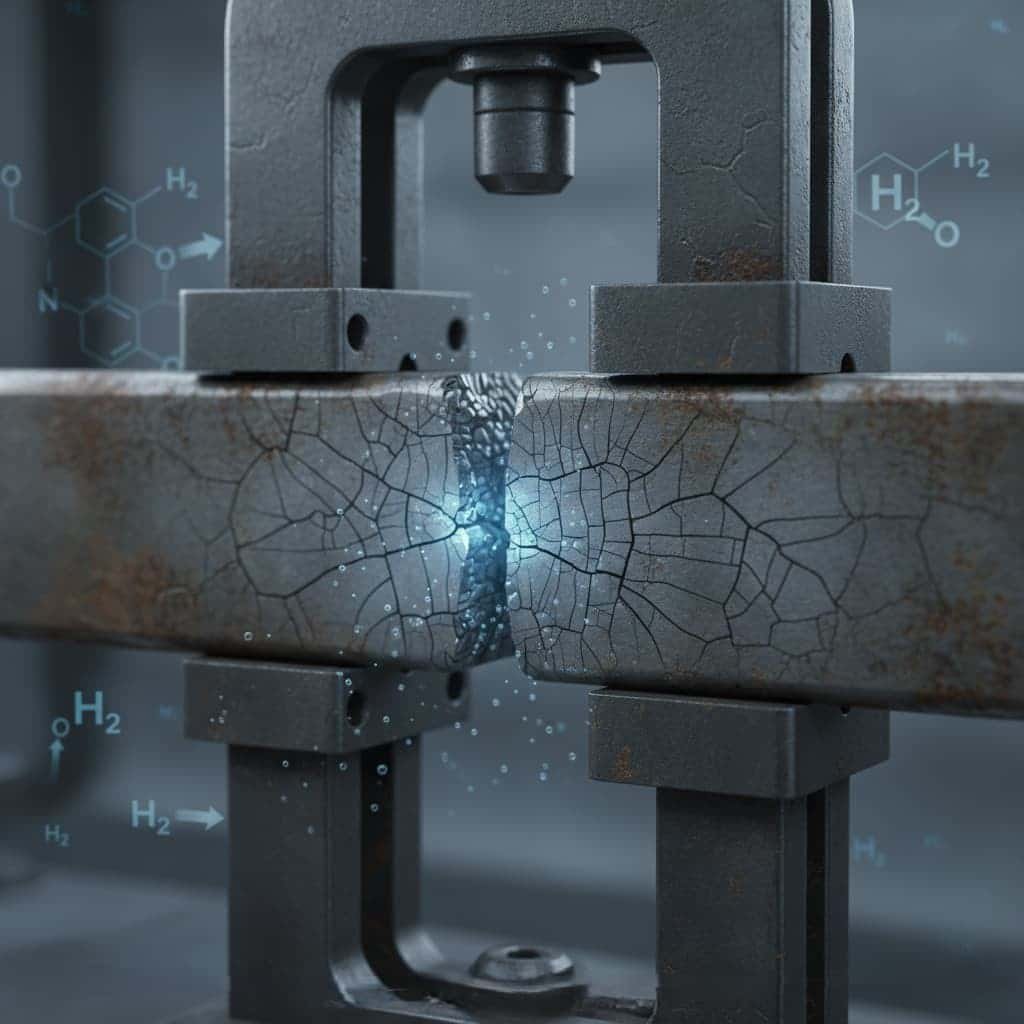
Hydrogen embrittlement (HE) is a phenomenon where metals become unexpectedly brittle and crack due to the absorption and diffusion of hydrogen atoms into the material. Essentially, hydrogen infiltrating the metal reduces its ductility and fracture toughness, so that even below the normal yield strength the material can fracture in a brittle manner. This insidious form […]
