

Composite Pressure Vessels: The Ultimate Guide to Manufacturing and Simulation

Composite Pressure Vessels: The Ultimate Guide to Manufacturing and Simulation Composite Pressure Vessels are revolutionizing how we store high-pressure fluids. They offer incredible strength at a fraction of the weight of traditional steel tanks. In this friendly yet professional guide, we’ll explore what composite pressure vessels are, why they’re superior in many ways, how they’re […]
Structural Optimization Guide: Building Smarter, Lighter, and Stronger Designs
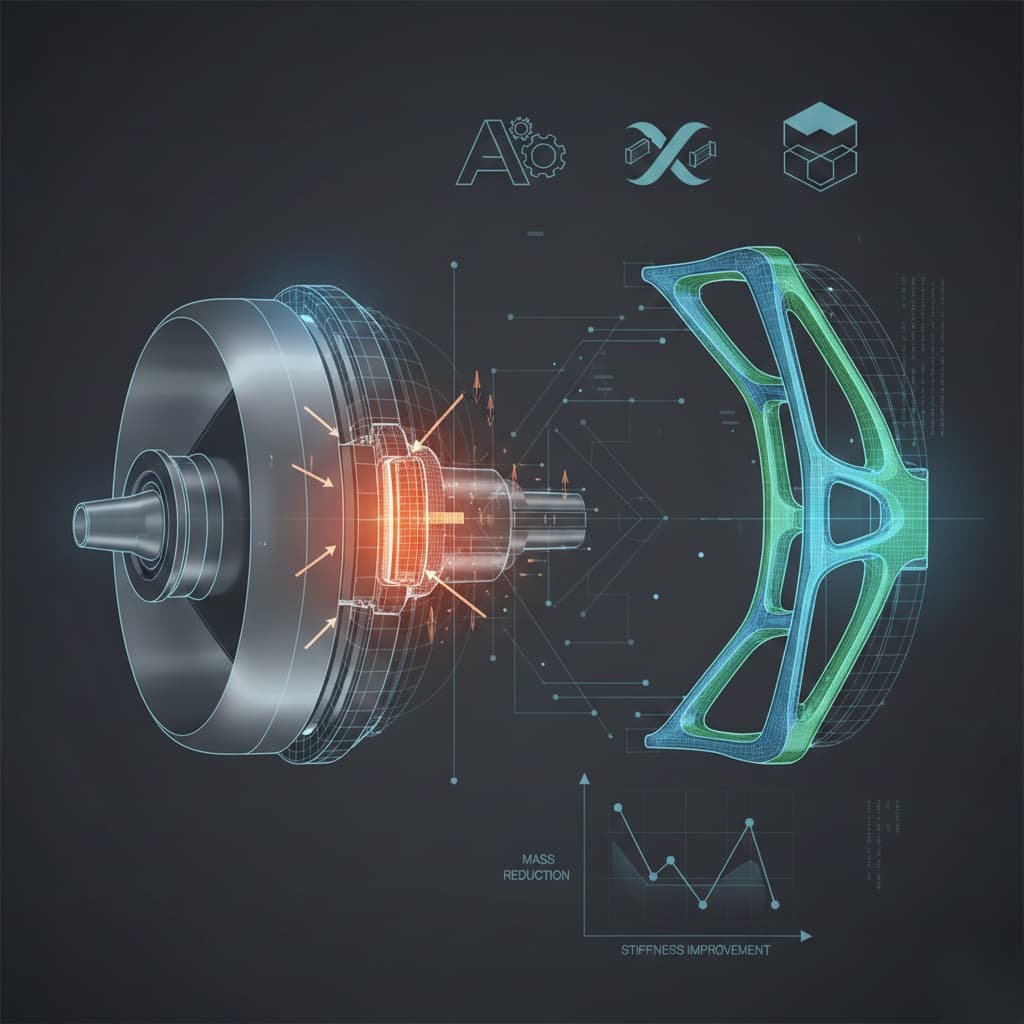
Introduction Structural optimization is an established engineering methodology used to improve structural designs by systematically changing material distribution, geometry, or member sizing to meet defined performance targets. In most engineering organizations, optimization is no longer “nice to have.” It is a practical way to reduce mass, improve stiffness, control stress hotspots, and increase overall efficiency […]
HPC Cloud: Accelerating Engineering Simulations (FEA, CFD) and AI at Low Cost

High-Performance Computing (HPC) is transforming how engineers and researchers tackle complex simulations and data-intensive tasks. Whether you’re running a finite element analysis (FEA) in Abaqus, a computational fluid dynamics (CFD) model in ANSYS Fluent, a Multiphysics simulation in COMSOL, structural analyses in OpenSees, or training a cutting-edge AI model, HPC can drastically speed up computation […]
Engineering Simulation Internship Program

Our 3-month online internship immerses engineering students and researchers in hands-on simulation projects beyond the classroom. We focus on practical experience with professional CFD and FEA tools such as Abaqus, ANSYS (including Fluent), COMSOL, LS-DYNA, OpenSees, OpenFOAM and more. Under expert mentorship, interns apply theory to real problems: preparing CAD geometry, generating meshes, running simulations, […]
What Is Thermal Stress Analysis? Abaqus and ANSYS Guide Explained
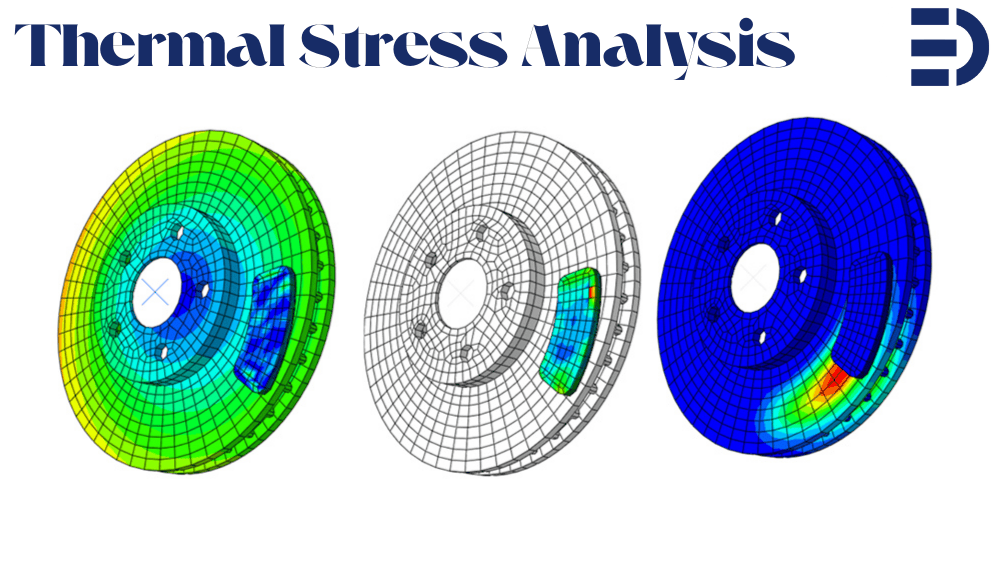
Thermal stress analysis is the process of evaluating mechanical stress caused by temperature changes in materials and structures. When materials heat up, they tend to expand; when they cool down, they contract. If this expansion or contraction is unconstrained, the material simply changes size without any stress. But if parts of a structure are restrained […]
Plane Stress vs Plane Strain Explained
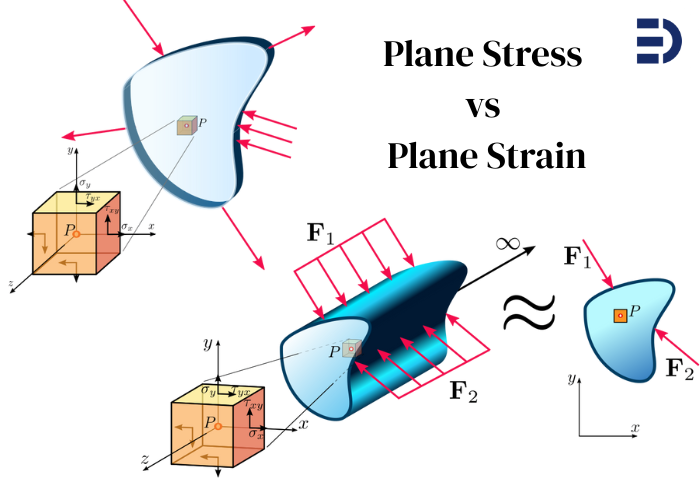
Have you ever faced a complex 3D stress analysis and wondered if there’s a way to simplify it? Finite element analysts often ask this question, especially when plane stress or plane strain assumptions might apply. These two concepts allow us to reduce certain 3D problems into more manageable 2D models without losing essential accuracy. In […]
Steel and Concrete Columns Simulation in Finite Element Analysis (FEA)

Columns are the backbone of many structures. they support roofs, floors, and beams, keeping buildings and bridges standing strong. In construction, steel and concrete are two primary materials for columns. Each has its advantages: steel is extremely strong and ductile (bends rather than breaks), while concrete is excellent in compression and can be reinforced with […]
Stress Strain Curve Explained | A Beginner’s Guide

The stress strain curve is a fundamental concept in engineering and material science that shows how a material deforms under load. It plots stress (internal force per unit area) against strain (relative deformation). By analyzing this curve, engineers can understand key properties like stiffness, strength, ductility, and toughness of a material. This knowledge is crucial […]
Introduction to UMAT Subroutine in Abaqus
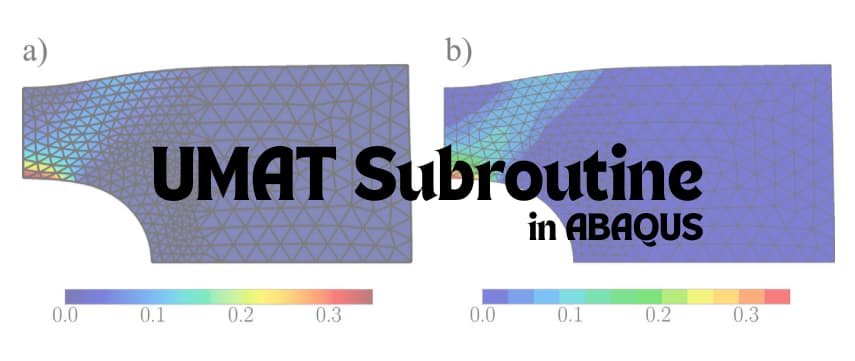
In many engineering projects, the built-in material models in Abaqus are not enough for capturing complex material behavior. This is where user-defined material subroutines come into play. Abaqus allows advanced users to write their own material model through a User MATerial subroutine, commonly known as UMAT. In simple terms, a UMAT is a piece of […]
Engineering with Cracks: Fracture Mechanics for ASME Design and FFS Using Abaqus, Ansys & COMSOL

Introduction to Fracture Mechanics in FFS and ASME Design (with Abaqus, Ansys & COMSOL) Did you know a tiny crack in a large pressure vessel or pipeline can lead to sudden failure, even if the overall stress is well below the material’s yield strength? This scary scenario has real examples – like ships splitting in […]
