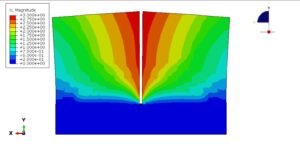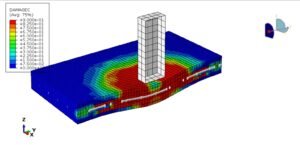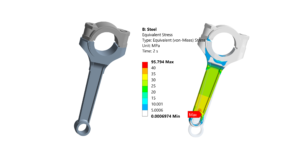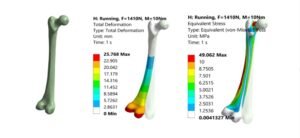
In the world of modern engineering, simulation has become an indispensable tool. From designing lighter aircraft components with FEA to optimizing fluid flow in pipelines using CFD, computational tools drive innovation. But with great power comes great responsibility. How do we ensure that our simulation results are not just fast, but also accurate, reliable, and consistent? The answer lies in robust Simulation Governance.

Conceptual diagram illustrating a data governance framework.
Simulation governance isn’t just about checking a box; it’s a strategic framework that defines the processes, roles, and standards for developing, executing, and interpreting engineering simulations. It’s about bringing clarity and control to your CAD-CAE workflows, ensuring that every result you produce is trustworthy and actionable.
Why Simulation Governance is Crucial for Modern Engineers
Without proper governance, even the most advanced simulation software can yield misleading results, leading to costly design errors, project delays, or even safety risks. Here’s why it’s non-negotiable:
Mitigating Risk & Error
- Reduced Design Failures: Unreliable simulations can lead to under-designed or over-designed components. Governance ensures that critical decisions are based on validated data.
- Avoiding Costly Recalls: In industries like Aerospace or Automotive, a single simulation error can trigger massive recalls and reputational damage.
Ensuring Consistency & Reproducibility
- Standardized Workflows: Whether it’s structural analysis of an oil rig or biomechanical simulation of an implant, consistent methods ensure comparable results across projects and teams.
- Traceability: Know exactly who did what, when, and why. This is vital for auditing and troubleshooting, especially in complex FEA or CFD models.
Boosting Efficiency & Collaboration
- Reduced Rework: Clear guidelines minimize time spent fixing flawed models or re-running simulations.
- Seamless Knowledge Transfer: Standardized documentation makes it easier for new team members to pick up existing projects, such as a legacy FFS Level 3 assessment.
Achieving Compliance & Certification
- Meeting Industry Standards: Many industries (e.g., Aerospace, Oil & Gas for structural integrity) demand rigorous proof of simulation quality for regulatory compliance and certification.
- Audit Readiness: A well-governed process provides the necessary documentation for internal and external audits.
Key Pillars of Effective Simulation Governance
Building a robust governance framework involves several interconnected elements:
Standardized Workflows & Best Practices
Define clear, documented procedures for every stage of the simulation process, from CAD model preparation to post-processing. This includes meshing strategies (e.g., in ANSYS Mechanical or Abaqus), boundary condition application (e.g., in Fluent/CFX), and result interpretation.
Data Management & Traceability
Implement systems for version control of models, input files, scripts (Python, MATLAB), and results. Ensure that all data is easily accessible, archived, and linked to specific projects and requirements.
Model & Results Verification & Validation (V&V)
Establish rigorous V&V protocols to confirm that the simulation correctly solves the mathematical model (verification) and accurately represents the real-world physical phenomenon (validation).
Competency & Training
Ensure that simulation engineers have the necessary skills and continuous training on software (e.g., OpenFOAM, MSC Nastran, CATIA, ADAMS) and simulation principles. Define roles and responsibilities clearly.
Software & Hardware Management
Manage software licenses, versions, and patches. Standardize hardware specifications where possible to minimize variability in performance and results.
Practical Workflow: Implementing Simulation Governance Step-by-Step
Ready to put governance into action? Here’s a practical guide:
1. Define Objectives & Scope
Clearly articulate what you want to achieve with simulation governance. Is it to reduce errors, speed up design cycles, or meet certification requirements for a new aircraft component?
2. Establish Standards & Protocols
Document your best practices. This table illustrates typical areas for standardization:
| Category | Key Standards/Protocols | Example Tools/Context |
|---|---|---|
| CAD Model Prep | Geometry simplification rules, feature suppression guidelines, naming conventions | CATIA, SolidWorks, NX |
| Meshing | Element quality criteria (aspect ratio, skewness), mesh density guidelines (e.g., near stress concentrators), mesh independence study procedure | Abaqus, ANSYS Mechanical, HyperMesh, Patran |
| Material Properties | Approved material databases, testing/characterization requirements, temperature-dependent data sourcing | Granta MI, internal material labs |
| Boundary Conditions & Loads | Application methods (e.g., distributed vs. concentrated loads), remote point definitions, contact settings, fluid inlet/outlet profiles | Fluent/CFX, LS-DYNA, ADAMS |
| Solver Settings | Convergence criteria (residuals, energy), time step control, non-linear solution strategies | OpenFOAM, Abaqus/Explicit, ANSYS CFX |
| Post-processing & Reporting | Standardized plots, result interpretation guidelines, report templates, safety factor calculation methods | EnSight, Tecplot, custom Python scripts |
3. Implement Version Control & Data Management
Utilize Product Lifecycle Management (PLM) or Simulation Data Management (SDM) systems. For smaller teams, robust file naming conventions and cloud-based version control (e.g., Git for Python/MATLAB scripts) are essential. Link simulation inputs and outputs to their corresponding CAD models and design iterations.
4. Develop V&V Procedures
Create clear checklists for verification (e.g., ensuring correct units, checking reactions against applied loads) and validation (e.g., comparing simulation results to experimental data or established benchmarks). Document all V&V activities rigorously.
5. Foster a Culture of Continuous Improvement
Regularly review and update your governance framework. Solicit feedback from engineers, learn from project post-mortems, and integrate new technologies or best practices. Consider regular internal audits of simulation projects.
Verification & Sanity Checks in a Governed Environment
Beyond the high-level governance, every simulation requires careful scrutiny. Here are critical checks:
- Mesh Independence & Quality: Always perform a mesh sensitivity study. Ensure element quality metrics (aspect ratio, skewness, Jacobian) are within acceptable limits for your solver (e.g., Abaqus, ANSYS) to avoid numerical artifacts.
- Boundary Condition & Load Application Review: Double-check that loads and constraints are applied correctly, representing the physical situation. A common mistake is over-constraining or under-constraining the model.
- Convergence Criteria: For implicit solvers, monitor convergence of residuals and solution variables. Ensure the solution truly converged, not just stopped at a maximum iteration.
- Material Model Validation: Confirm that material properties and constitutive models are appropriate for the loading conditions (e.g., linear elastic vs. plasticity, creep, fatigue in structural integrity assessments).
- Solution Sanity Checks: Does the deformation make sense? Are stress concentrations where you expect them? Are fluid flow patterns physically plausible? Illustrative example: if a pipe under internal pressure shows compression, something is wrong.
- Sensitivity Analysis: Understand how variations in input parameters (material properties, boundary conditions, geometry tolerances) affect your results. This is crucial for robustness and design optimization.
Common Pitfalls to Avoid
Even with good intentions, governance can stumble. Watch out for these:
- Lack of Clear Communication: If engineers don’t understand ‘why’ they need to follow procedures, compliance will suffer.
- Over-Reliance on Default Settings: Default solver settings (e.g., in Abaqus, ANSYS Fluent) are rarely optimal for all problems. Understanding their impact is part of good governance.
- Insufficient V&V: Skipping verification steps or superficial validation can undermine the entire process.
- Ignoring Organizational Buy-in: Governance requires support from management and active participation from the simulation team.
- Neglecting Documentation: Poor documentation renders even the best practices useless for future reference or audits.
Leveraging Tools & Automation for Governance
Modern engineering tools can significantly aid simulation governance:
- CAD-CAE Integration: Seamless data transfer between CAD software (e.g., CATIA) and CAE tools (e.g., ANSYS Mechanical, Abaqus) reduces errors from manual translation.
- Scripting & Automation: Python and MATLAB are invaluable for automating repetitive tasks like model setup, meshing (e.g., scripting OpenFOAM mesh generation, Abaqus INP file manipulation), post-processing, and generating standardized reports. This ensures consistency and reduces human error.
- PDM/PLM Systems: Product Data Management and Product Lifecycle Management systems provide robust version control, traceability, and workflow management for all engineering data, including simulation files.
- Dedicated Simulation Data Management (SDM) Tools: These specialized platforms manage simulation inputs, outputs, processes, and knowledge, often integrating directly with CAE software.
Industry-Specific Considerations
- Aerospace & Defense: Strict adherence to certification standards (e.g., DO-160, MIL-STD-810) for structural integrity, fatigue, and flutter analysis.
- Oil & Gas: Critical for Fitness-for-Service (FFS) Level 3 assessments, structural integrity of offshore platforms, pipelines, and subsea equipment, often involving complex material models and environmental loads.
- Biomechanics: High importance on patient-specific model validation and sensitivity analysis due to inherent biological variability in tissues and organs.
Takeaways & Call to Action
Simulation governance is not an overhead; it’s an investment in the reliability, accuracy, and efficiency of your engineering endeavors. By standardizing workflows, managing data effectively, and prioritizing V&V, you elevate the trustworthiness of your simulation results.
Looking to streamline your simulation processes? Explore our extensive library of downloadable simulation templates, Python scripts for Abaqus/ANSYS automation, and MATLAB codes to kickstart your governance journey. Our experts also offer online consultancy to tailor governance solutions to your specific engineering challenges.