Introduction to Remaining Life Estimation (RLE)
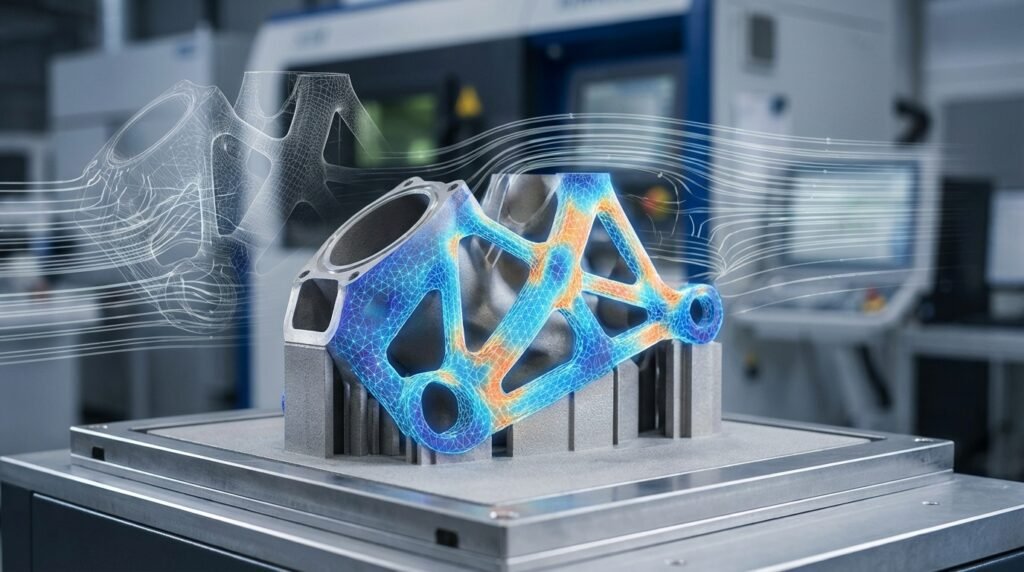
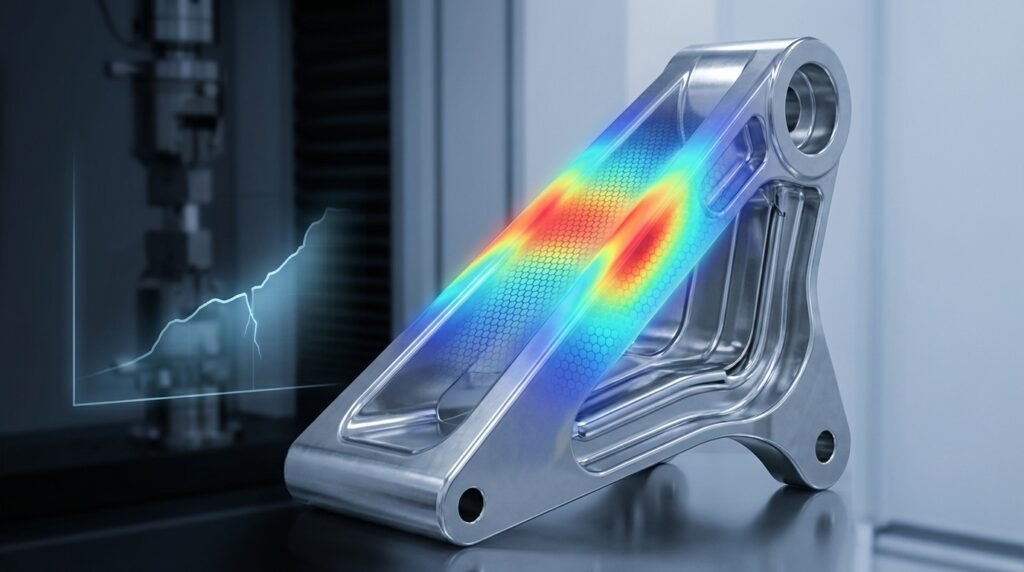
As engineers, we’re constantly striving to optimize the performance, safety, and longevity of critical assets. Whether it’s a gas turbine blade, an offshore oil rig component, an aircraft fuselage, or even a medical implant, understanding how long a component can safely remain in service is paramount. This is where Remaining Life Estimation (RLE) comes into play – a vital discipline for proactive asset management and structural integrity.
RLE is the process of predicting the future operational life of a component or structure before it fails. It’s not about guessing; it’s about applying robust engineering principles, material science, and advanced analysis techniques to make informed decisions. This guide will walk you through the practical aspects of RLE, from understanding degradation mechanisms to leveraging cutting-edge simulation tools, all in a clear, engineer-to-engineer tone.

Image: An illustrative example of a fatigue fracture surface in a metal component, a common degradation mechanism studied in RLE. (Source: Wikimedia Commons)
What is Remaining Life Estimation?
At its core, RLE quantifies the ‘time left’ until a component reaches an unacceptable state of degradation or failure. This ‘time’ can be expressed in operating hours, cycles, kilometers, or even years. It integrates historical data, current inspection findings, and future loading predictions to provide a reliable forecast. It’s distinct from design life, which is the intended life under ideal conditions; RLE accounts for real-world operational stresses and material changes.
Why is RLE Critical for Engineers?
- Safety Enhancement: Preventing catastrophic failures that could lead to injury, fatalities, or environmental damage.
- Cost Savings: Optimizing maintenance schedules, avoiding premature replacement of expensive components, and reducing unplanned downtime.
- Regulatory Compliance: Meeting industry standards and legal requirements for asset operation, especially in highly regulated sectors like aerospace, oil & gas, and nuclear power.
- Performance Optimization: Maximizing the useful life of assets, thereby increasing return on investment.
- Risk Management: Providing data-driven insights to manage operational risks effectively.
Key Industries Benefiting from RLE
RLE is indispensable across a spectrum of engineering disciplines:
- Oil & Gas: Pipelines, pressure vessels, offshore platforms, rotating equipment.
- Aerospace: Aircraft structures, engine components, landing gear.
- Power Generation: Turbines, boilers, nuclear reactor components.
- Chemical & Process: Reactors, heat exchangers, storage tanks.
- Civil & Structural: Bridges, buildings, infrastructure.
- Biomechanics: Prosthetics, implants (though failure criteria differ).
The Foundation: Understanding Degradation Mechanisms
You can’t estimate remaining life if you don’t understand how things fail. Degradation mechanisms are the ‘how’ and ‘why’ behind material deterioration over time. Identifying and characterizing these mechanisms is the first critical step.
Common Degradation Modes
Fatigue
Occurs under cyclic loading, even at stresses below the material’s yield strength. Microscopic cracks initiate and propagate, leading to sudden failure. Fatigue is a primary concern in aerospace, automotive, and rotating machinery. Examples include bridge decks experiencing traffic loads or aircraft wings flexing during flight.
Corrosion
The electrochemical deterioration of a material, often metals, due to reaction with its environment. This can manifest as uniform corrosion, pitting, crevice corrosion, galvanic corrosion, or stress corrosion cracking (SCC).
Creep
Time-dependent deformation under constant stress at elevated temperatures. Common in high-temperature applications like power plant components, jet engines, and chemical reactors. It’s a critical factor in materials like superalloys used in turbine blades.
Erosion
Material loss due to the abrasive action of fluids or particles. Relevant in pipelines, pumps, and turbine components exposed to high-velocity flows containing solid particles or corrosive fluids. CFD simulations can be crucial here to predict flow patterns and impingement points.
Stress Corrosion Cracking (SCC)
The brittle fracture of a normally ductile material under tensile stress in a corrosive environment. It’s a synergistic failure mode where stress and corrosion act together. Pipelines carrying specific fluids are highly susceptible.
Fracture
The separation of a body into two or more pieces due to static or dynamic loading. This can be brittle or ductile. Understanding fracture toughness (KIc) and applying fracture mechanics principles (e.g., Paris’ Law for fatigue crack growth) is fundamental to RLE for pre-existing flaws.
Factors Influencing Degradation Rates
- Material Properties: Alloy composition, heat treatment, microstructure.
- Operating Conditions: Temperature, pressure, load spectrum, vibration.
- Environmental Factors: Humidity, corrosive agents, radiation exposure.
- Manufacturing Defects: Porosity, inclusions, residual stresses.
- Maintenance History: Repairs, modifications, previous inspections.
Methodologies for Remaining Life Estimation
Engineers employ various methodologies, often in combination, to estimate remaining life. The choice depends on the specific degradation mechanism, available data, and required accuracy.
Damage Mechanics Approaches
These methods focus on quantifying the accumulation of damage within a material and predicting when that damage will lead to failure.
Fracture Mechanics (e.g., Paris’ Law)
If a crack or defect is present, linear elastic fracture mechanics (LEFM) or elastic-plastic fracture mechanics (EPFM) can be used. Paris’ Law, da/dN = C(ΔK)^m, describes fatigue crack growth rate based on the stress intensity factor range (ΔK). This is a cornerstone for RLE in components with known flaws. Tools like Abaqus and ANSYS Mechanical have dedicated capabilities for crack propagation analysis (e.g., XFEM, VCCT).
Creep-Fatigue Interaction Models
For high-temperature applications with cyclic loading, both creep and fatigue damage can accumulate and interact. Models like the Linear Damage Rule or more sophisticated approaches are used to combine these effects and predict failure.
Probabilistic Approaches
These methods incorporate uncertainties inherent in material properties, loading, and inspection data to provide a probabilistic estimate of remaining life.
Reliability-Based Assessment
Using statistical distributions for input parameters (e.g., material strength, crack size), Monte Carlo simulations or First-Order Reliability Method (FORM) can calculate the probability of failure over time, yielding a reliability curve. This is crucial for structural integrity assessments where safety margins are critical.
Statistical Life Data Analysis (Weibull, Lognormal)
When sufficient historical failure data is available for similar components, statistical distributions (like Weibull or Lognormal) can be fitted to predict the future failure rate and remaining life of a population of components. This is often used for fleet management.
Data-Driven and Machine Learning Approaches
With the rise of IoT and sensor technology, predictive maintenance and RLE are increasingly leveraging data science.
Sensor Data & Predictive Maintenance
Continuous monitoring of operational parameters (vibration, temperature, strain, acoustic emissions) can provide real-time insights into component health. Algorithms analyze trends and deviations to detect incipient failure and update RLE. Python and MATLAB are excellent for processing and analyzing such time-series data.
AI/ML for Anomaly Detection and Prognostics
Machine learning models (e.g., neural networks, support vector machines) can learn complex degradation patterns from large datasets. They can identify anomalies, classify damage types, and even predict remaining useful life (RUL) based on current sensor readings and historical data, often outperforming traditional physics-based models in specific scenarios.
Fitness-for-Service (FFS) Assessments (API 579 / ASME FFS-1 Level 3)
FFS assessments are structured engineering evaluations to determine if an existing component containing a flaw (e.g., corrosion, crack, dent) can continue to operate safely for a specified period. These standards (like API 579 / ASME FFS-1) provide detailed methodologies and acceptance criteria.
Role in RLE
FFS Level 3 assessments often involve complex FEA and detailed material characterization to accurately model the stress state around a flaw and predict its growth. This directly feeds into a quantitative RLE, providing a defensible engineering basis for continued operation or required repair.
Iterative Process
FFS and RLE are often iterative. An initial FFS assessment might yield a short remaining life, prompting further inspection or a more detailed (Level 3) analysis to extend it. This also ties into life extension programs.
The RLE Workflow: A Step-by-Step Guide
A systematic approach is crucial for reliable RLE. Here’s a typical workflow that engineers follow:
Step 1: Data Collection and Asset History Review
Gathering comprehensive information is the bedrock of RLE.
Design Specifications
Original design documents, drawings, material certifications, manufacturing processes.
Operating Conditions
Load spectra, temperature profiles, pressure cycles, environmental exposure (e.g., chemical media, radiation), duty cycles. Document maximums, minimums, and typical operating ranges.
Inspection Data (NDT, NDE)
Results from Non-Destructive Testing/Evaluation (NDT/NDE) such as ultrasonic testing (UT), radiographic testing (RT), magnetic particle inspection (MPI), eddy current testing (ECT), and visual inspection. Focus on flaw detection, sizing, and characterization.
Repair History
Details of any repairs, modifications, weld overlays, or previous life extension efforts. These can significantly alter a component’s residual stress state or material properties.
Step 2: Material Characterization
Accurate material data is non-negotiable.
In-situ Material Testing
If possible, samples from sacrificial parts or replicas can be taken for hardness tests, tensile tests, impact tests, or creep rupture tests to assess current material state.
Historical Material Data
Utilize existing material property databases, but be aware of potential degradation from service exposure (e.g., embrittlement, temper discoloration).
Step 3: Degradation Mechanism Identification
Based on operating history, inspection findings, and visual observations, identify the most probable and critical degradation mechanisms (e.g., fatigue cracking, localized corrosion, creep void formation).
Step 4: Model Selection and Development
Choose the appropriate analytical or numerical model based on the identified degradation mechanism and available data.
Analytical Models
Closed-form equations for simple geometries and loading conditions (e.g., basic stress calculations, simplified crack growth models).
Numerical Simulation (FEA/CFD)
For complex geometries, multi-axial loading, non-linear material behavior, or intricate degradation processes, Finite Element Analysis (FEA) using tools like Abaqus, ANSYS Mechanical, or MSC Nastran is essential. For erosion or corrosion in fluid environments, Computational Fluid Dynamics (CFD) with Fluent, CFX, or OpenFOAM might be integrated.
Step 5: Remaining Life Calculation
Execute the chosen model using the collected data to calculate the RLE. This might involve iterating through crack growth steps, accumulating damage, or running probabilistic simulations.
Step 6: Uncertainty and Sensitivity Analysis
No RLE is 100% certain. Quantify the impact of uncertainties in input parameters (material properties, load, flaw size) on the final RLE. Sensitivity analysis identifies which parameters have the largest influence, guiding where to focus further data collection or inspection efforts.
Step 7: Reporting and Recommendations
Present the RLE findings clearly, including assumptions, methodologies, uncertainties, and the calculated remaining life. Provide actionable recommendations for continued operation, inspection intervals, repair strategies, or replacement schedules. Clearly state any limitations.
Practical Workflow: Integrating Simulation into RLE
Advanced simulation tools are invaluable for robust RLE, especially for complex cases or Level 3 FFS assessments. They allow engineers to virtually test “what-if” scenarios and gain deep insights into structural behavior.
Setting Up FEA/CFD Models for RLE
Geometry and Meshing Considerations
Accurate representation of the component geometry is crucial. For crack growth, specialized meshing techniques (e.g., focused meshes around crack tips, XFEM elements) are often required. Tools like HyperMesh, Abaqus/CAE, and ANSYS Meshing provide capabilities for creating high-quality meshes. Pay attention to mesh density in critical regions. CAD tools like CATIA or SolidWorks are often the starting point for geometry creation.
Material Model Selection
Choose appropriate material models based on the degradation mechanism: elastic-plastic for plasticity, creep models (e.g., Norton-Bailey law) for high-temperature deformation, fatigue models (e.g., Basquin, Coffin-Manson) for cyclic loading, and cohesive zone models (CZM) or XFEM for fracture simulation. Obtain accurate material properties from testing or reliable databases.
Boundary Conditions and Loading
Apply realistic boundary conditions (fixed supports, symmetry planes) and operational loads. For RLE, this often involves transient or cyclic loading, thermal loads, internal pressures, and external forces. Ensure the load history accurately reflects in-service conditions.
Environmental Factors
Incorporate environmental effects like temperature gradients, corrosive fluid contact, or radiation exposure. This might involve coupled thermo-mechanical analysis or FSI (Fluid-Structure Interaction) if the fluid dynamics heavily influence degradation (e.g., erosion, corrosion assisted by flow). OpenFOAM or ANSYS Fluent/CFX can be used for the CFD part of FSI.
Typical Simulation Steps
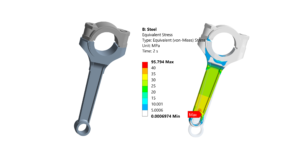
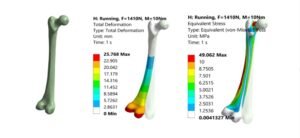
Stress/Strain Analysis
Perform a detailed stress and strain analysis under representative operating conditions. Identify high-stress concentration areas where damage is likely to initiate.
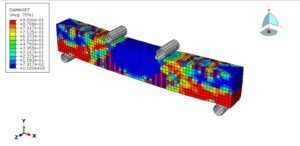
Damage Accumulation Calculation
Based on the stress/strain history, use built-in fatigue life prediction tools (e.g., in ANSYS Workbench, Abaqus/Fatigue) or custom scripts (Python, MATLAB) to calculate accumulated damage using theories like Palmgren-Miner’s rule for fatigue.
Crack Propagation Modeling
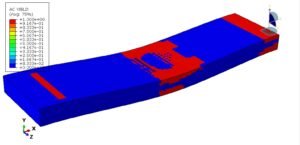
If a crack is present, use advanced simulation techniques to model its growth. This involves methods like the Virtual Crack Closure Technique (VCCT), enriched finite elements (XFEM), or cohesive elements to simulate fracture mechanics principles directly within the FEA environment. This allows for prediction of crack path and remaining cycles to failure.
Fluid-Structure Interaction (FSI) for Erosion/Corrosion
For problems involving fluid flow causing erosion or corrosion, FSI simulations are invaluable. CFD software (Fluent, CFX, OpenFOAM) can model the fluid behavior and particle impingement, and then transfer these loads to the structural model (Abaqus, ANSYS Mechanical) to predict material loss and stress changes over time.
Pro-Tip: Need to run complex RLE models efficiently? EngineeringDownloads offers affordable HPC rental services, alongside expert-led online courses, internship-style training, and project consultancy to enhance your team’s capabilities.
Verification & Sanity Checks in RLE Simulations
Trusting simulation results blindly is a recipe for disaster. Rigorous verification and validation are non-negotiable.
Mesh Quality and Independence
Ensure your mesh is of high quality (low element distortion, appropriate aspect ratios). Perform a mesh independence study: run the simulation with progressively finer meshes until key results (stress, strain, crack growth rate) converge. If results change significantly with mesh refinement, your mesh is too coarse.
Boundary Condition and Loading Accuracy
Double-check that all boundary conditions and applied loads accurately represent the real-world scenario. A common mistake is over-constraining the model or applying loads incorrectly. Use simple analytical checks for reaction forces or displacements where possible.
Convergence Criteria
For non-linear or transient analyses, ensure that the solver has converged properly at each step. Non-convergence often indicates issues with boundary conditions, material models, or excessively large load increments.
Model Validation (Experimental Data, Analytical Solutions)
Wherever possible, compare your simulation results against experimental data (e.g., lab tests, field measurements) or simpler analytical solutions for similar problems. This is the most crucial step for building confidence in your RLE. Even approximate comparisons can catch major errors.
Sensitivity Analysis
Vary key input parameters (e.g., material yield strength, modulus, crack size, load magnitude) within their expected ranges and observe the impact on the RLE. This not only quantifies uncertainty but also helps identify critical parameters that need more accurate characterization.
| Methodology | Key Principle | Primary Degradation Modes | Typical Tools/Software |
|---|---|---|---|
| Fracture Mechanics | Crack propagation under cyclic/static load | Fatigue, Fracture | Abaqus, ANSYS Mechanical, Python (for custom scripts) |
| Creep Life Assessment | Time-dependent deformation at high temperature | Creep | ANSYS Mechanical, MATLAB (for specific models) |
| FFS Assessments (API 579) | Tolerance of flaws to continued operation | Corrosion, Cracks, Dents, Pitting | Dedicated FFS Software, FEA (Abaqus, ANSYS) |
| Probabilistic RLE | Statistical likelihood of failure over time | Any (incorporates uncertainty) | MATLAB, Python (SciPy, NumPy), specialized reliability software |
| Data-Driven Prognostics | Pattern recognition from sensor data | General degradation (e.g., wear, fatigue onset) | Python (Scikit-learn, TensorFlow), MATLAB (Machine Learning Toolbox) |
Tools and Technologies for RLE
The modern engineer’s toolkit for RLE is diverse and powerful.
Commercial FEA/CFD Software
These are the workhorses for detailed stress, strain, temperature, and fluid flow analysis, critical for understanding local degradation:
- Abaqus: Renowned for its non-linear capabilities, advanced material models (viscoplasticity, damage mechanics), and excellent fracture mechanics features (XFEM, CZM).
- ANSYS Mechanical: Comprehensive suite for structural, thermal, and fatigue analysis. Strong integration with other ANSYS products for multi-physics simulations (e.g., FSI with Fluent).
- MSC Nastran/Patran: Long-standing industry standard, especially in aerospace, for structural analysis and fatigue life prediction.
- LS-DYNA: Explicit solver often used for highly non-linear, transient problems like impact and dynamic fracture, which can be relevant for assessing sudden damage.
- ANSYS Fluent / CFX, OpenFOAM: For CFD simulations to model erosion, corrosion transport, or thermal fatigue driven by fluid flow. OpenFOAM offers open-source flexibility for custom models.
CAD/CAE Integration
Seamless data transfer between CAD (Computer-Aided Design) and CAE (Computer-Aided Engineering) is vital for efficient workflows.
- CATIA, SolidWorks, PTC Creo: These CAD platforms often integrate with their own or third-party FEA modules, streamlining the design-analysis loop.
Data Analysis & Automation
Programming languages are indispensable for pre-processing, post-processing, and developing custom RLE algorithms.
- Python: With libraries like NumPy (numerical operations), SciPy (scientific computing), Pandas (data manipulation), and Matplotlib/Seaborn (plotting), Python is incredibly versatile for processing sensor data, creating custom damage models, automating FEA tasks, and performing statistical analyses.
- MATLAB: A powerful environment for numerical computation, algorithm development, data visualization, and has strong toolboxes for signal processing, control systems, and machine learning, all applicable to RLE and prognostics.
- Custom Scripts: Often used to link different software packages, automate repetitive tasks in FEA pre/post-processing, or implement proprietary RLE algorithms.
NDT/NDE Technologies
While not direct RLE tools, NDT/NDE methods (ultrasonics, radiography, eddy current, thermography) provide the crucial input data regarding current material state and flaw presence, making them integral to the RLE process.
Common Mistakes and Troubleshooting in RLE
Even experienced engineers can stumble. Being aware of common pitfalls helps you avoid them.
Over-reliance on Historical Data
Past performance isn’t always indicative of future results, especially if operating conditions have changed or maintenance practices vary. Always validate historical data against current conditions.
Neglecting Multi-physics Interactions
Often, degradation isn’t due to a single mechanism. Creep-fatigue, corrosion-fatigue (e.g., stress corrosion cracking), or thermo-mechanical fatigue are complex interactions that require careful consideration, often necessitating coupled simulations.
Insufficient Uncertainty Quantification
Failing to account for uncertainties in material properties, loading, and flaw sizing can lead to overly optimistic (and unsafe) or overly conservative (and costly) RLEs. Always perform sensitivity and uncertainty analyses.
Ignoring Inspection Limitations
NDT methods have limitations in detecting certain flaw types or sizes. Assume there might be undetected flaws below the detection threshold and incorporate this uncertainty into your RLE, especially for brittle materials.
Poor Model Validation
A sophisticated model is useless if it doesn’t represent reality. Without validation against experimental data or simpler analytical cases, your RLE is just a number. Strive for empirical validation whenever feasible.
Maximizing Asset Lifespan: Beyond Estimation
RLE isn’t just a prediction; it’s a tool for proactive management. The insights gained from RLE can inform strategies to extend asset life.
Proactive Maintenance Strategies
Shift from time-based or reactive maintenance to condition-based maintenance (CBM) or predictive maintenance. RLE provides the ‘when’ for maintenance interventions, allowing for optimal scheduling of repairs, replacements, or overhauls right before expected failure.
Design for Durability
Feedback from RLE analyses can inform future design iterations, leading to more robust components less susceptible to identified degradation mechanisms. This involves material selection, geometric optimization (e.g., reducing stress concentrations), and incorporating redundant systems.
Continuous Monitoring
Implementing sensor-based monitoring systems provides real-time data, allowing for dynamic updates to RLEs and early detection of unforeseen degradation. This forms the backbone of a true Prognostics and Health Management (PHM) system.
Conclusion
Remaining Life Estimation is an indispensable practice for engineers across all heavy industries. By systematically understanding degradation, employing robust analytical and numerical methodologies, and leveraging powerful simulation and data analysis tools, we can move beyond reactive maintenance to proactive asset management.
Accurate RLE not only safeguards human lives and the environment but also drives economic efficiency by optimizing operational lifespans and reducing costs. Embrace the methodologies and tools discussed here, and you’ll be well-equipped to tackle the complex challenges of asset integrity management.
Key Takeaways
- RLE is crucial for safety, cost savings, and regulatory compliance.
- Identify degradation mechanisms (fatigue, corrosion, creep, fracture) first.
- Utilize a systematic workflow: data, materials, models, calculation, uncertainty, reporting.
- Leverage FEA/CFD (Abaqus, ANSYS, OpenFOAM) for complex stress states and damage modeling.
- Validate your simulations rigorously (mesh, BCs, experimental data).
- Don’t neglect multi-physics interactions and uncertainty analysis.
Further Reading: For more detailed information on Non-Destructive Testing methods which are crucial inputs for RLE, refer to resources from authoritative organizations like The NDT Resource Center.