Engineering Downloads
Let’s Learn and Collaborate
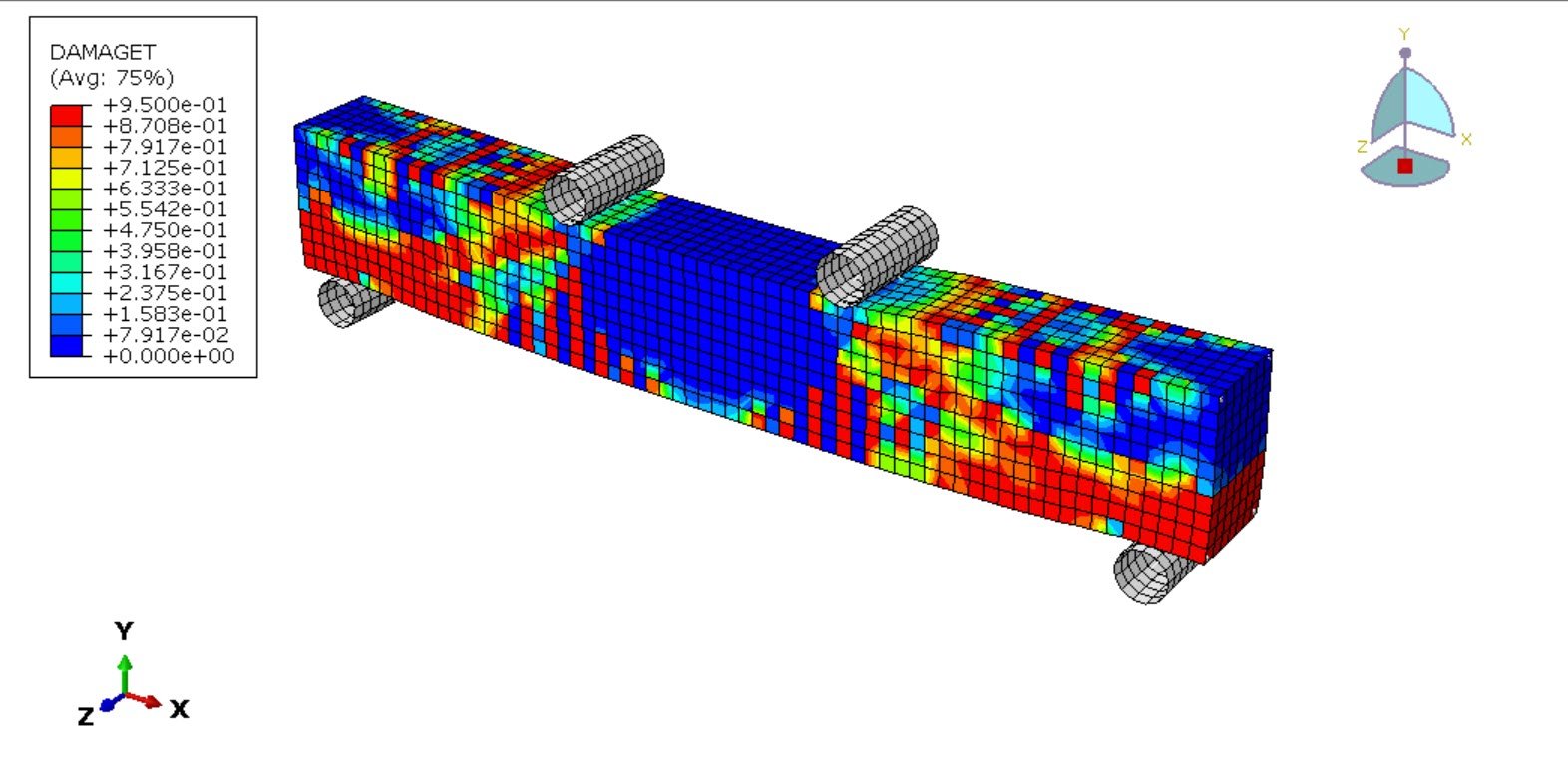
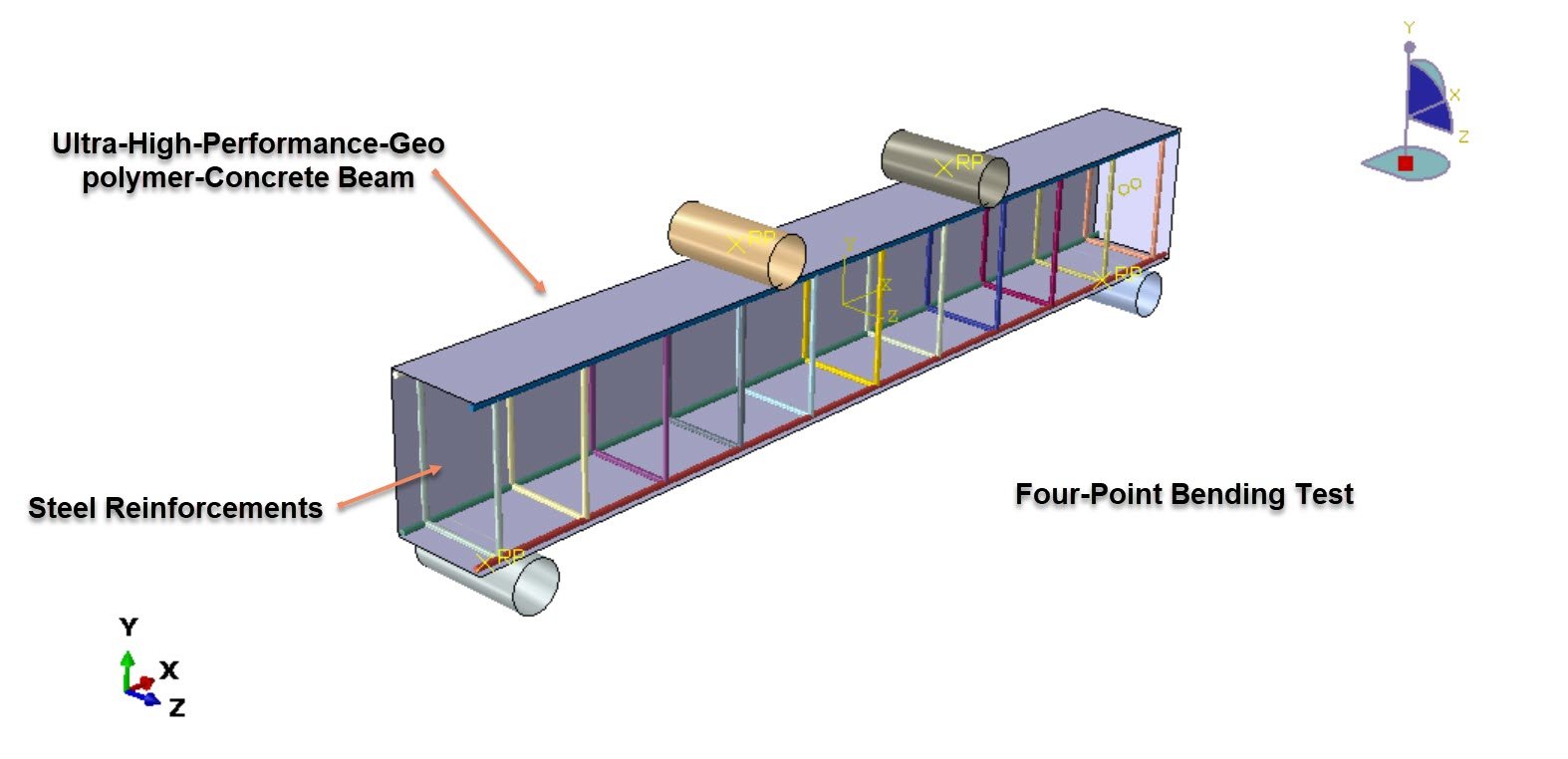
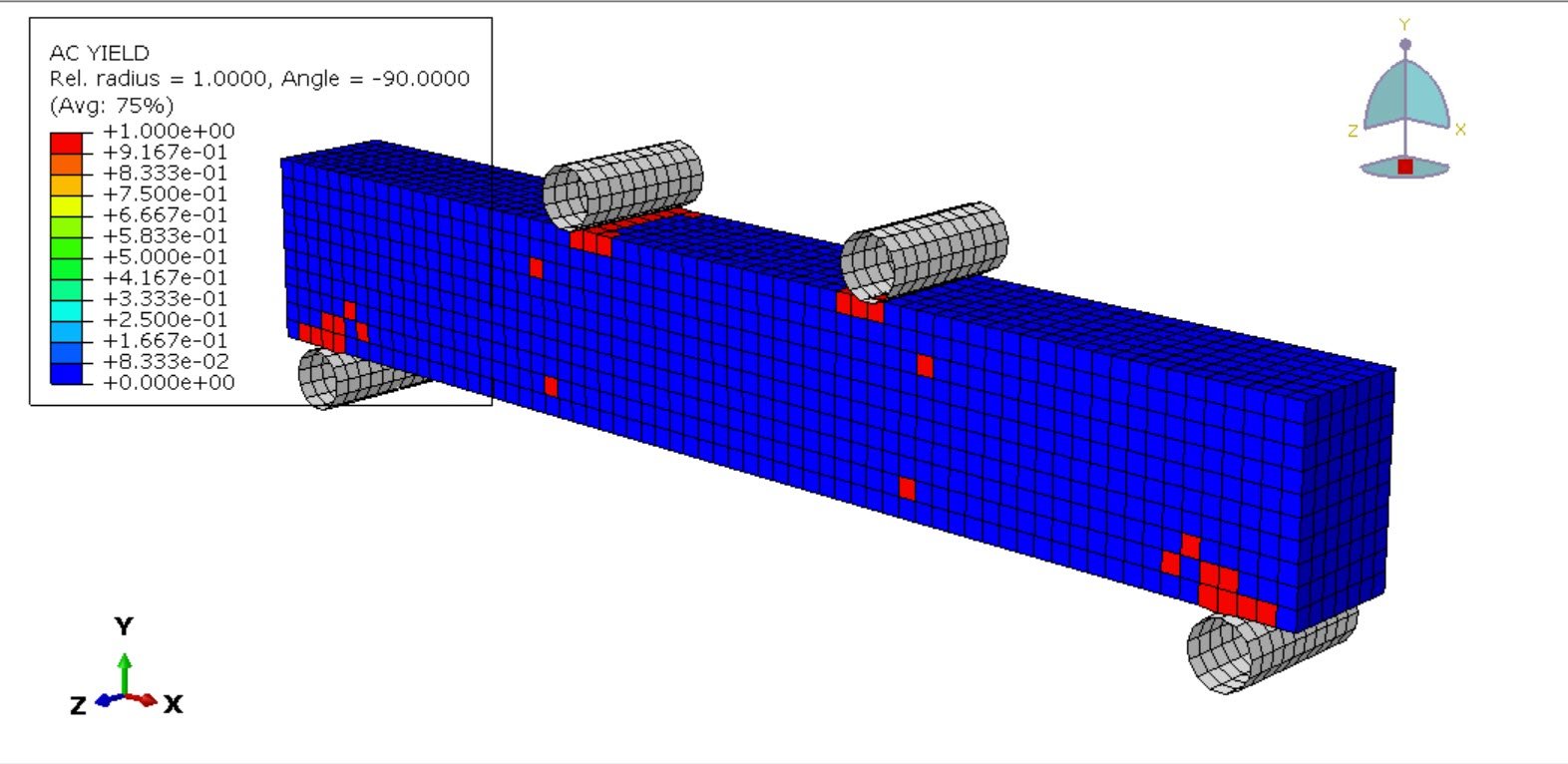
Ultra-high-performance geopolymer concrete (UHPGC) has emerged as a sustainable alternative to conventional Portland cement–based ultra-high-performance concrete due to its lower carbon footprint, superior mechanical properties, and enhanced durability. By utilizing aluminosilicate precursors activated with alkaline solutions, UHPGC exhibits high compressive strength, improved tensile resistance, and excellent resistance to chemical attack and thermal degradation. When combined with steel reinforcement, UHPGC reinforced concrete (RC) members demonstrate significant potential for advanced structural applications requiring high strength-to-weight ratios and extended service life.
Among structural elements, reinforced concrete beams remain one of the most critical components governing flexural performance in buildings and bridges. The behavior of UHPGC RC beams under flexural loading, particularly under four-point bending, is of special interest because this loading configuration creates a constant moment region between the loading points, enabling detailed investigation of cracking, stiffness degradation, ductility, and failure mechanisms. Understanding these responses is essential for developing reliable design guidelines and constitutive models for geopolymer-based ultra-high-performance systems.
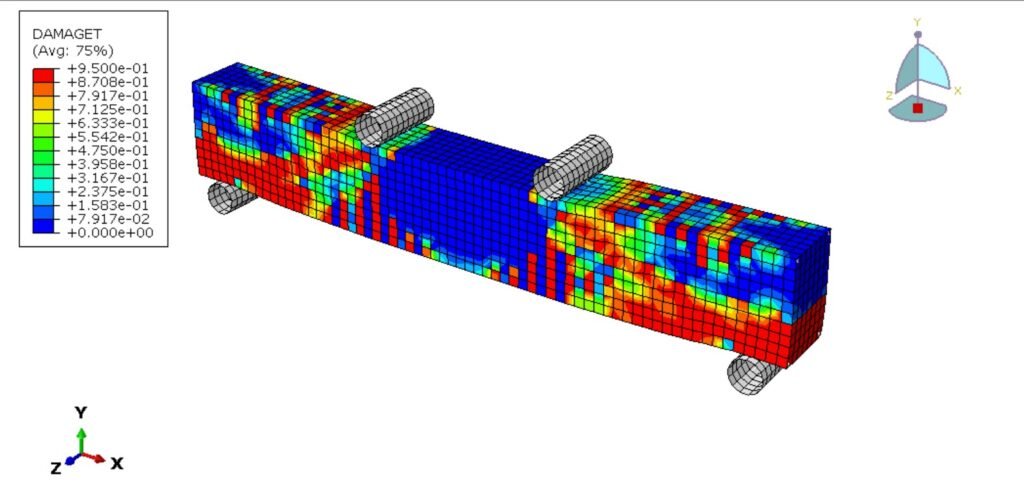
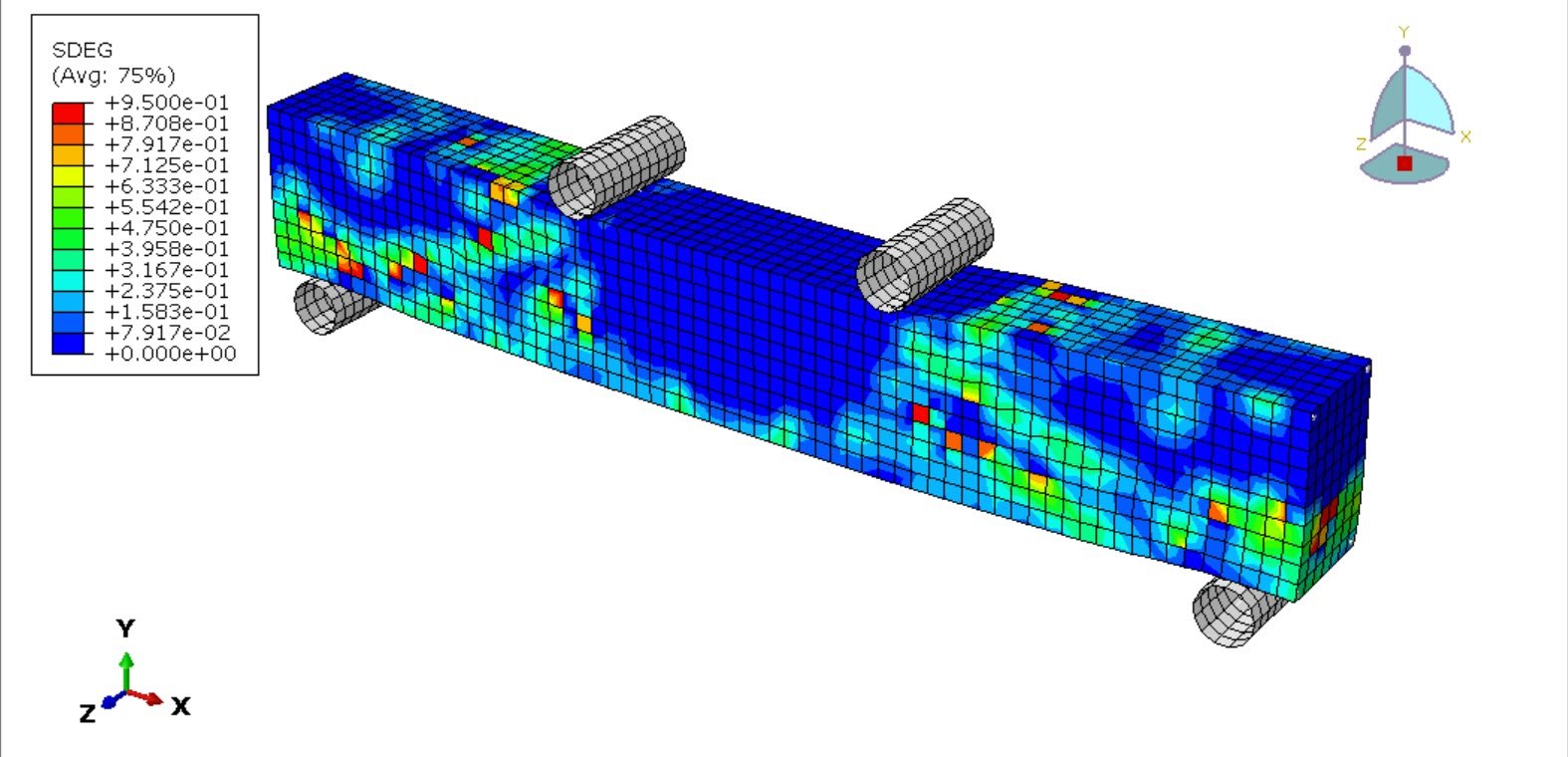
Experimental testing of UHPGC beams can be costly and time-consuming; therefore, advanced finite element (FE) simulation has become an efficient alternative for predicting structural behavior with high accuracy. In this study, nonlinear finite element analysis was conducted using Abaqus software to investigate the flexural performance of an ultra-high-performance geopolymer RC beam subjected to four-point bending loading. The concrete material behavior was modeled using the Concrete Damage Plasticity (CDP) model, which is capable of representing stiffness degradation, tensile cracking, and compressive crushing of quasi-brittle materials such as UHPGC.
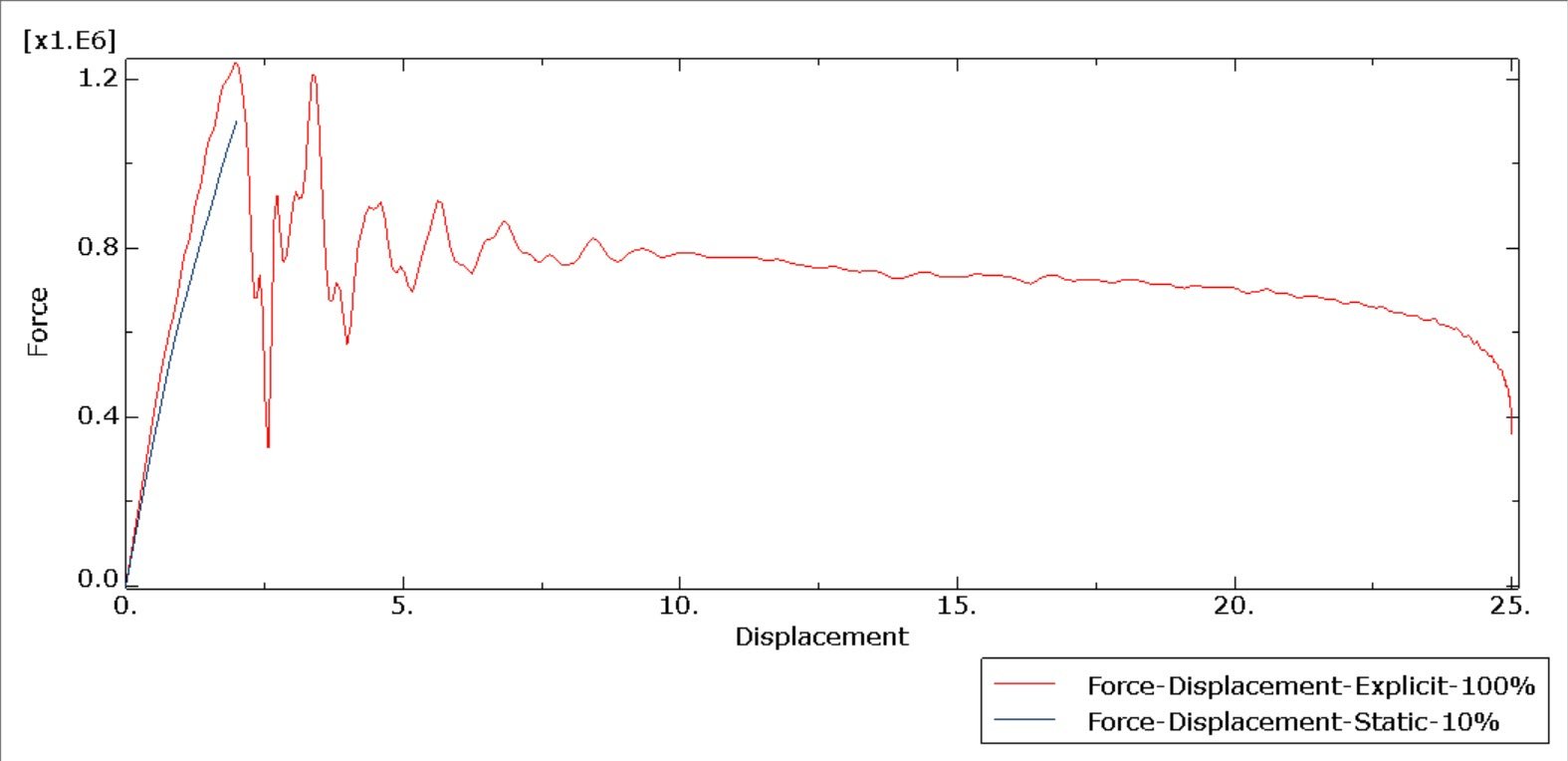
Two different analysis procedures were adopted to evaluate solution robustness and computational performance. In the first model, a General Static step was employed to capture the quasi-static response, including load–deflection behavior, crack initiation, and progressive damage evolution. In the second model, an Explicit dynamic step was implemented under quasi-static loading conditions to provide a comparative assessment, particularly in handling convergence difficulties associated with highly nonlinear damage and contact interactions during four-point bending. The explicit approach also enabled improved tracking of post-peak softening and failure progression.
The primary objective of this work is to compare the structural response predicted by the static implicit and dynamic explicit solution schemes, focusing on load capacity, stiffness response, damage distribution, and computational stability. The findings aim to provide guidance on appropriate numerical strategies for simulating ultra-high-performance geopolymer RC beams and to contribute to the broader understanding of their flexural behavior under monotonic loading.

Abaqus
€97,00 €54,00
Engineering files
€60,00 €50,00
Abaqus
€146,00 €89,00
Abaqus
€85,00 €47,00
Abaqus
€78,00 €39,00
See more

Want to receive push notifications for all major on-site activities?