Engineering Downloads
Let’s Learn and Collaborate
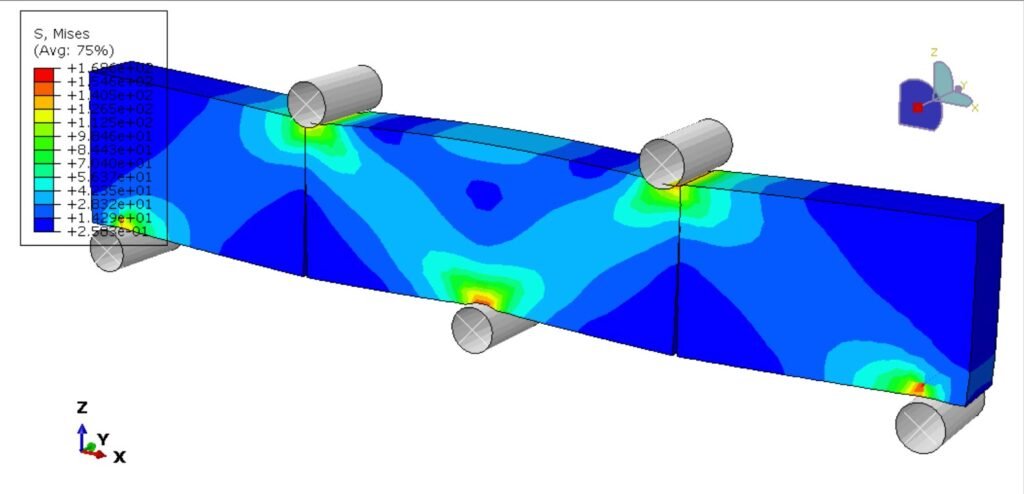
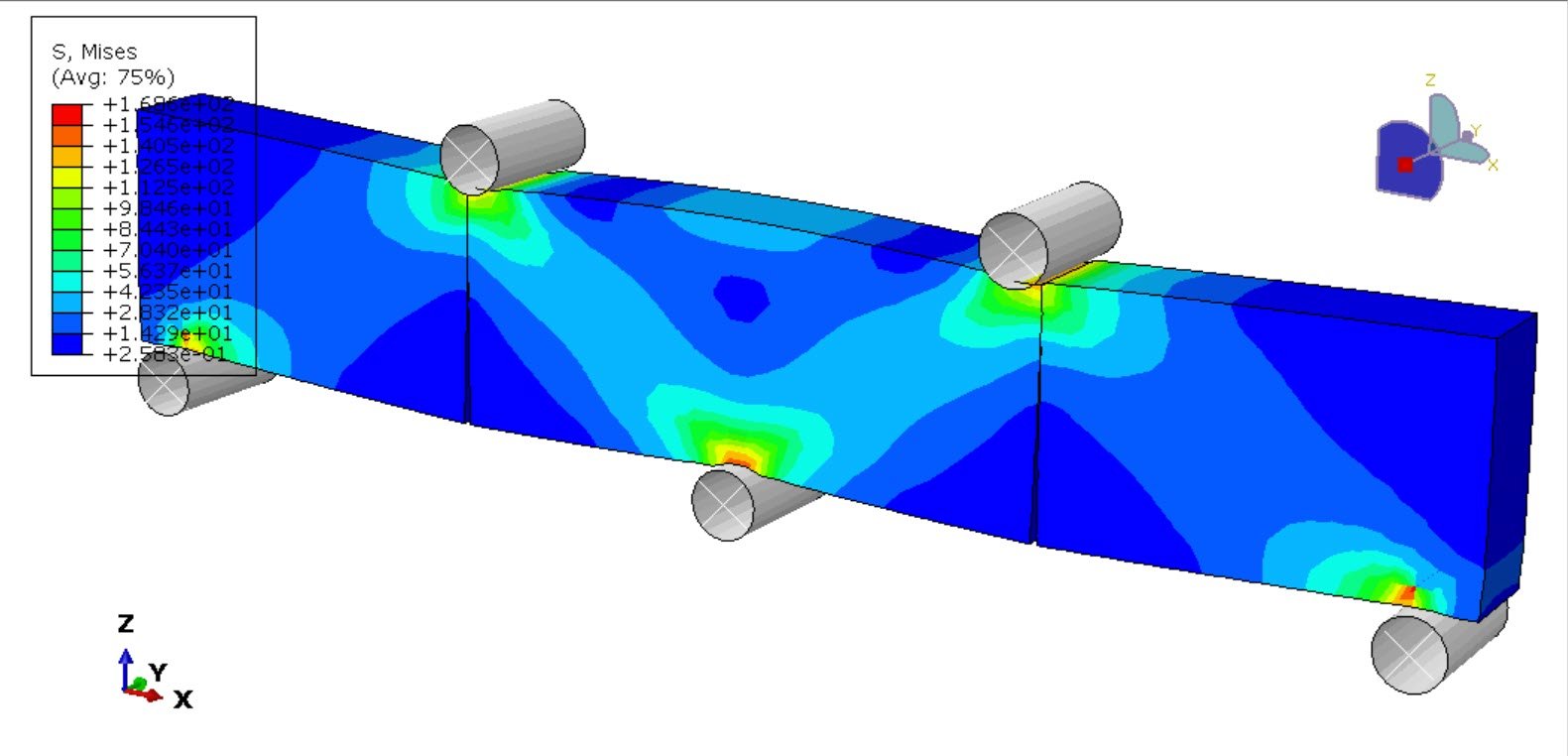
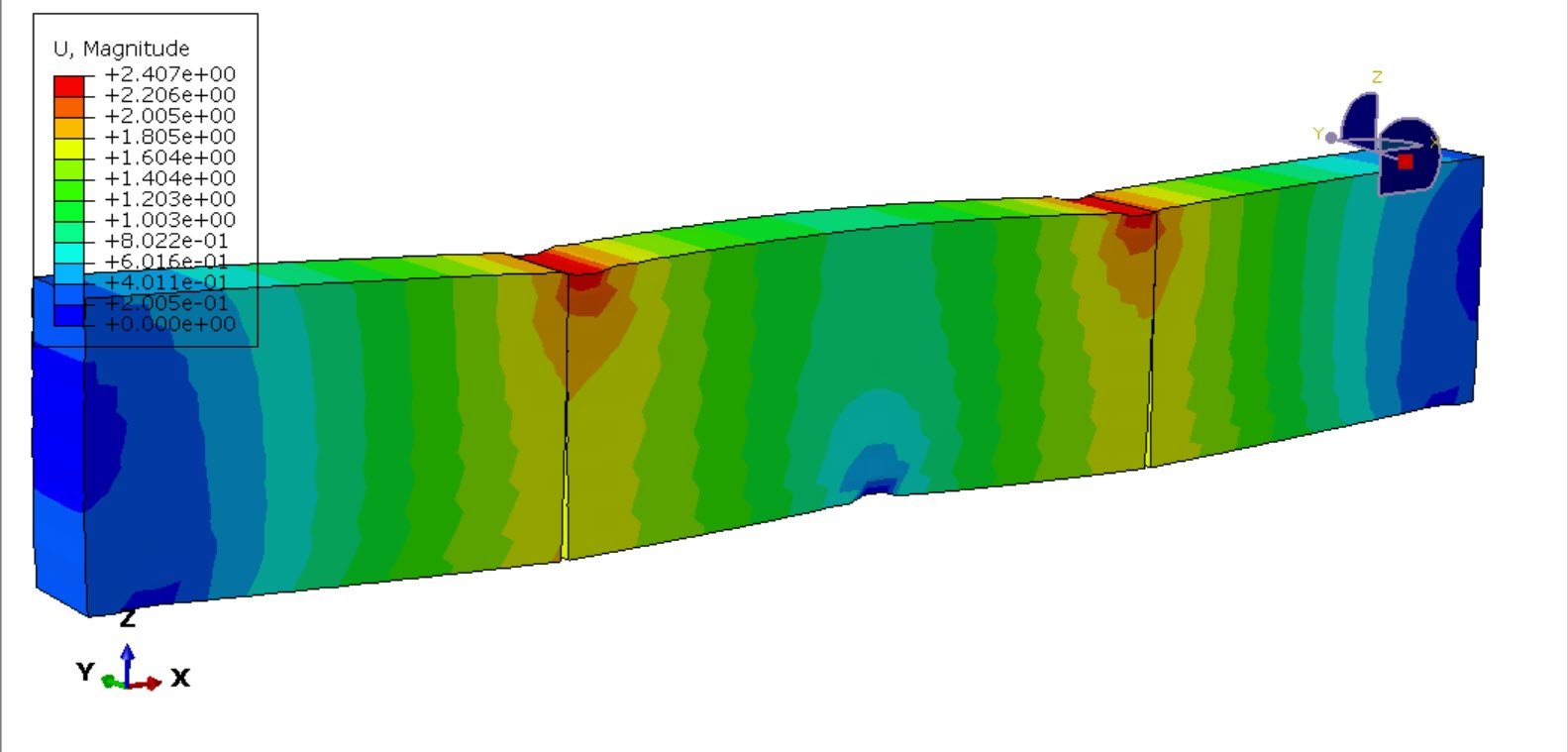
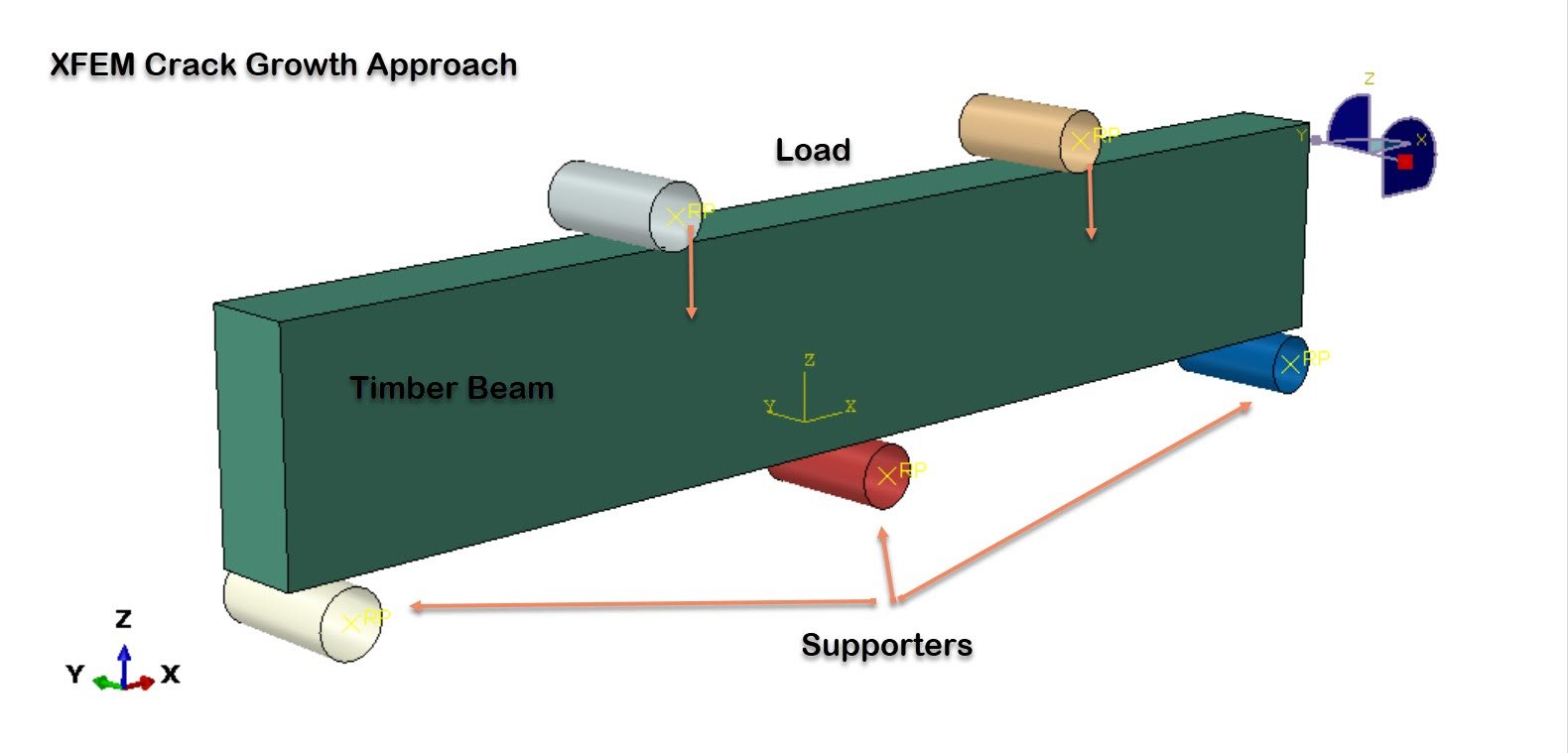
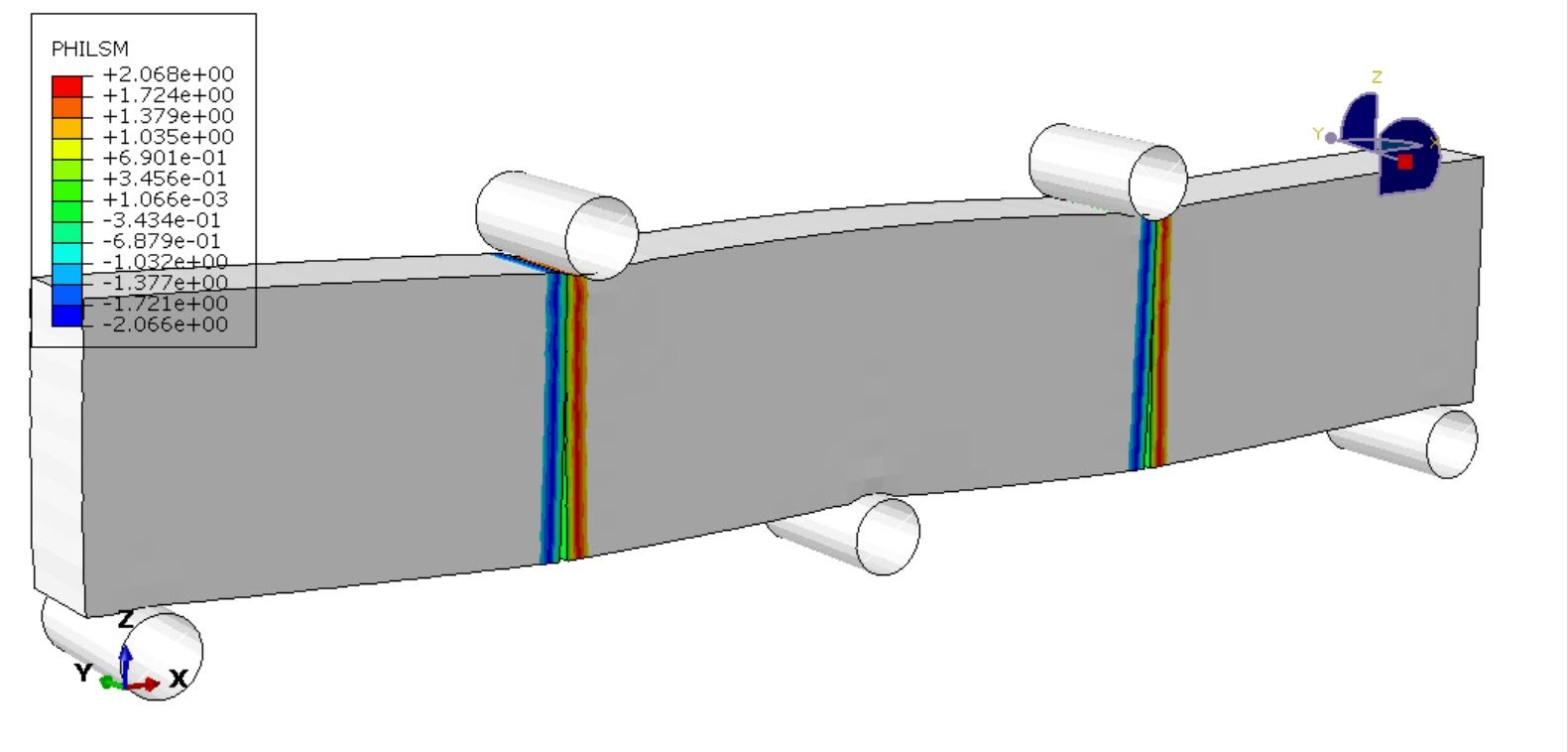
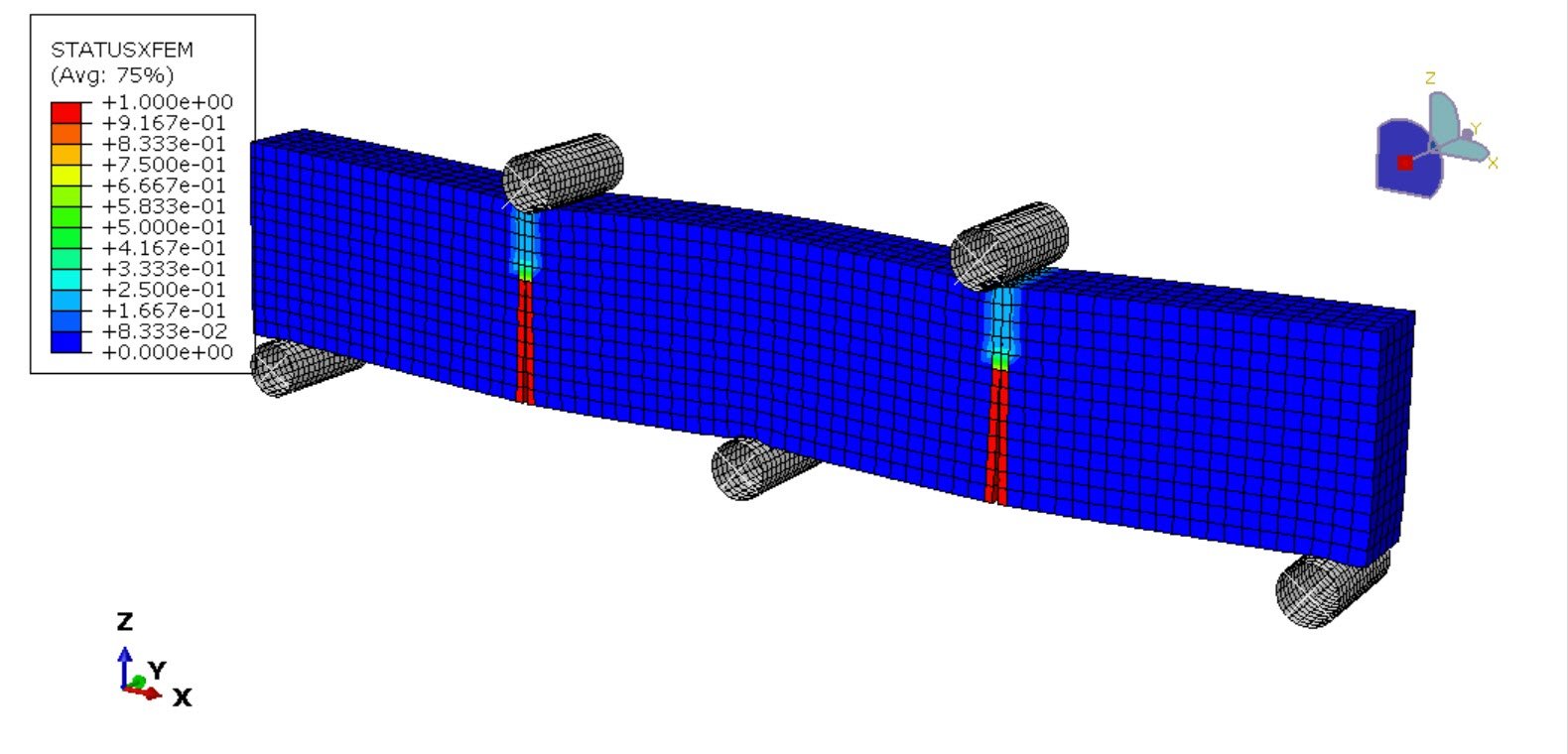
The fracture behavior of timber beams is a critical consideration in the structural performance and safety of wood-based systems. Timber is an orthotropic, quasi-brittle material whose failure is governed by crack initiation and propagation along weak planes such as the grain direction, growth rings, and adhesive interfaces (if laminated). Traditional strength-based design approaches are often insufficient to capture progressive damage and fracture processes, particularly under complex loading configurations. Consequently, fracture mechanics-based numerical methods have become increasingly important for predicting crack growth and structural failure in timber elements.
Among experimental configurations, the five-point bending test provides a refined loading condition for investigating crack initiation and stable propagation. Compared with three- or four-point bending, the five-point setup introduces multiple constant-moment regions and shear–moment interactions, enabling more detailed observation of crack evolution and energy dissipation mechanisms. This makes it especially suitable for validating advanced fracture models.
Conventional finite element methods (FEM) require the crack path to be predefined and the mesh to conform to the crack geometry. This becomes computationally expensive and less accurate when simulating arbitrary crack initiation and growth in anisotropic materials such as wood. The Extended Finite Element Method (XFEM) overcomes these limitations by enriching the displacement field with discontinuous functions, allowing cracks to initiate and propagate independently of the mesh. As a result, XFEM significantly reduces remeshing requirements while improving the robustness of fracture simulations.
In this study, XFEM crack growth analysis of a timber beam subjected to a five-point bending test is performed using the Abaqus finite element software. A general static solver is employed to capture the quasi-static response of the beam under incremental loading. Crack initiation and propagation are governed by a traction–separation law, which defines the cohesive behavior of wood at the fracture process zone. This constitutive approach relates interfacial tractions to displacement separations and incorporates damage initiation criteria and energy-based evolution laws to simulate progressive stiffness degradation leading to failure.
The traction–separation framework is particularly suitable for timber fracture modeling because it can represent mixed-mode crack growth (opening, sliding, and tearing) and capture the nonlinear softening response associated with fiber bridging and micro-cracking. When coupled with XFEM, it enables realistic prediction of crack onset location, propagation trajectory, load–displacement response, and ultimate failure mechanisms without predefining the crack path.
The objective of this analysis is to evaluate the capability of the XFEM approach in reproducing the fracture behavior of timber beams under five-point bending. Numerical results such as crack patterns, load–deflection curves, and stress are assessed to provide insight into the structural performance and fracture resistance of wood. The study also demonstrates the effectiveness of combining XFEM with traction–separation laws in Abaqus for simulating complex crack growth in orthotropic materials.

Abaqus
€97,00 €54,00
Engineering files
€60,00 €50,00
Abaqus
€146,00 €89,00
Abaqus
€85,00 €47,00
Abaqus
€78,00 €39,00
See more

Want to receive push notifications for all major on-site activities?