Engineering Downloads
Let’s Learn and Collaborate
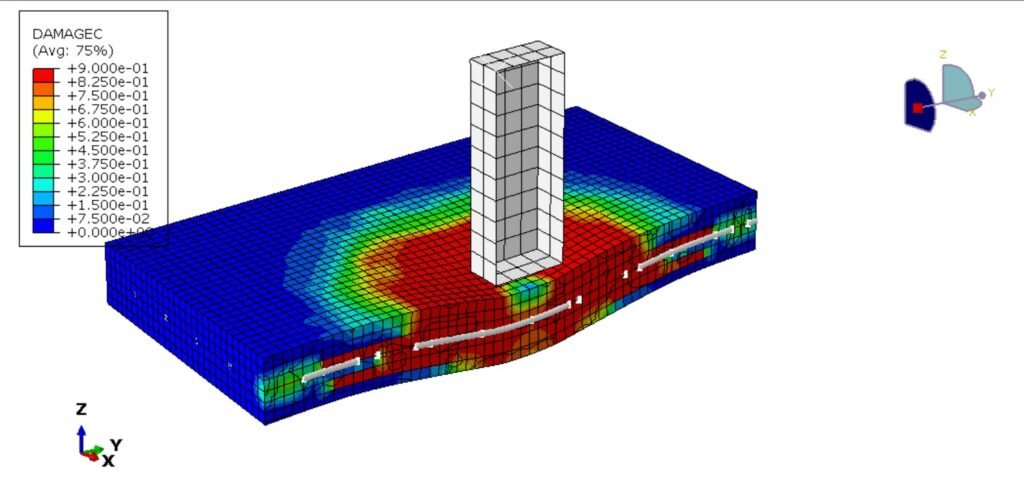
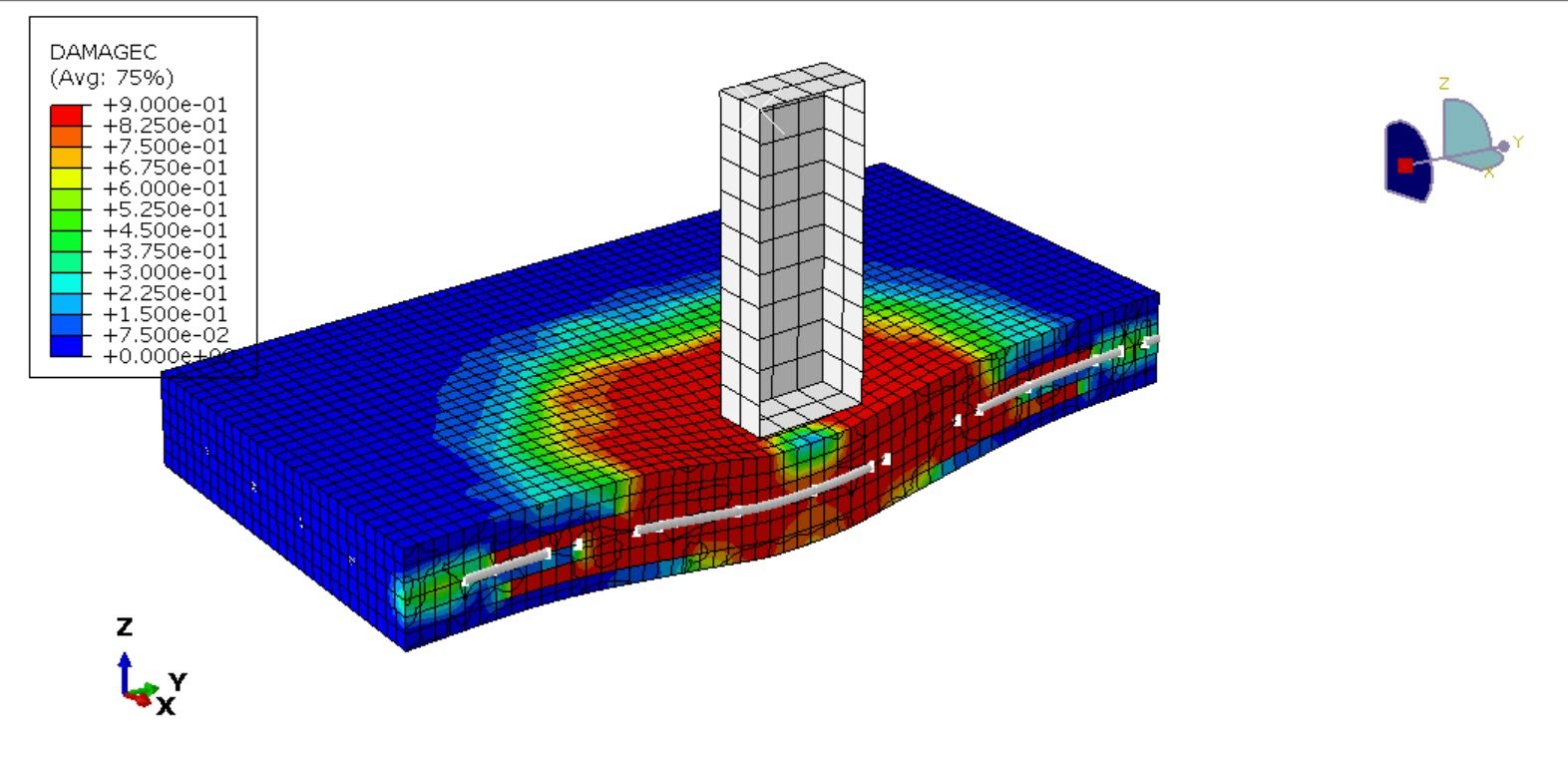
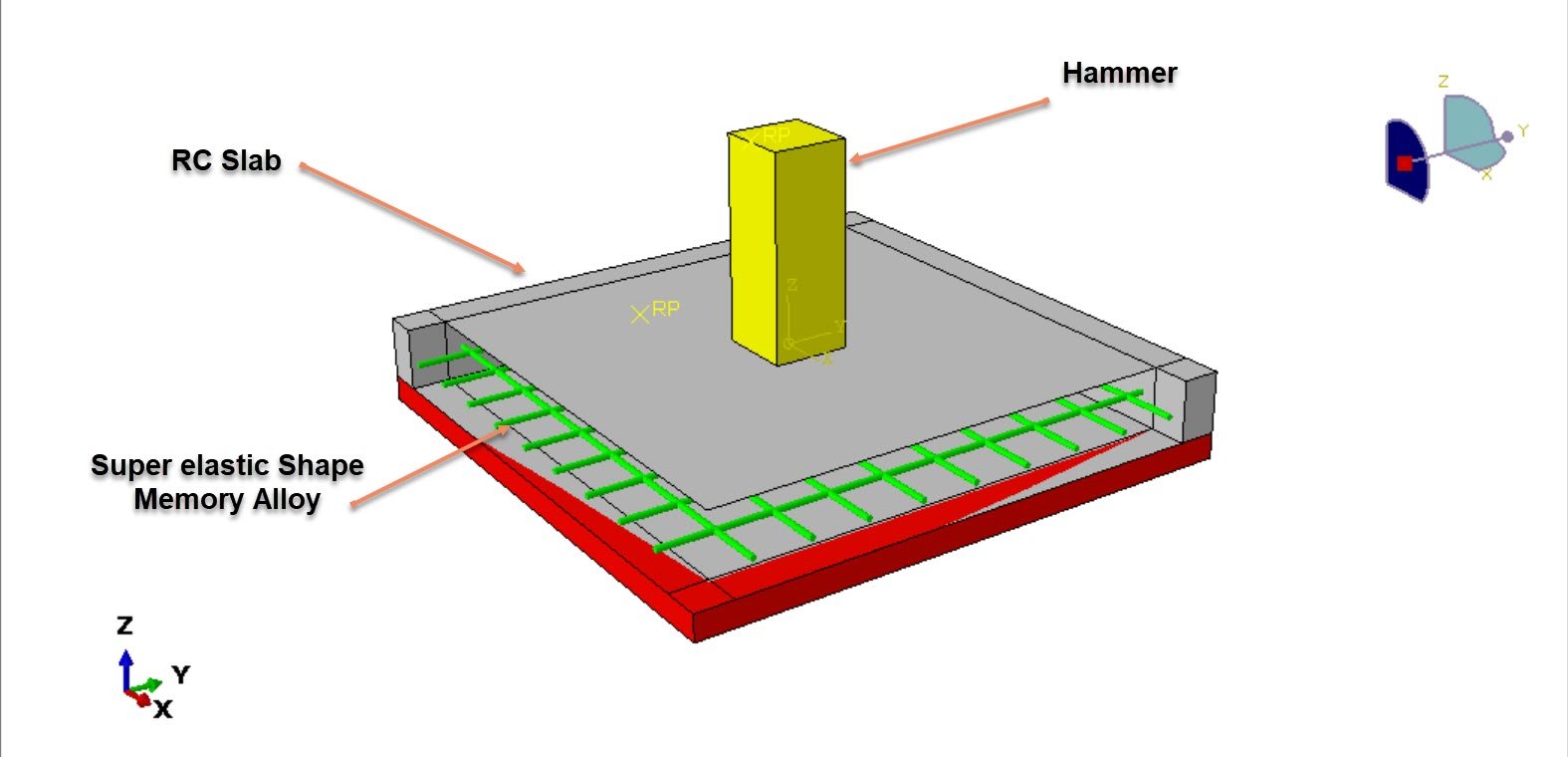
Reinforced concrete (RC) flat slabs are extensively used in residential, commercial, and parking structures due to their structural efficiency, architectural flexibility, and simplified construction. Despite these advantages, flat slabs are highly vulnerable to punching shear failure at slab–column connections. Punching shear is a brittle failure mode characterized by the formation of inclined cracks surrounding the loaded area, followed by sudden loss of load-carrying capacity with limited warning. The consequences of such failure can be catastrophic, particularly in progressive collapse scenarios.
While punching shear behavior under static loading has been widely investigated, structures are increasingly required to resist accidental impact loads, such as falling objects, vehicular collisions, rockfall, or construction-related impacts. Under low-velocity impact, the structural response differs significantly from static conditions due to inertia effects, strain-rate sensitivity of concrete, localized stress concentrations, and complex contact interactions. These dynamic effects may substantially alter crack propagation, damage evolution, and punching shear capacity. Therefore, enhancing the impact resistance of slab–column connections remains a critical research need.
Conventional strengthening techniques—such as shear studs, stirrups, steel fibers, or externally bonded composites—primarily aim to improve static shear resistance and ductility. However, their effectiveness under impact loading is often limited by inadequate energy dissipation and permanent deformation. In this context, shape memory alloys (SMAs) have emerged as promising smart materials for structural applications. Among them, superelastic Nickel–Titanium (Ni–Ti) alloys exhibit unique mechanical properties, including large recoverable strains (up to 6–8%), flag-shaped hysteretic response, and significant energy dissipation through stress-induced martensitic phase transformation.
The incorporation of superelastic Ni–Ti reinforcement in RC members offers several potential advantages under impact loading:
enhanced energy absorption capacity,
improved ductility and deformation capacity,
reduced residual displacement due to self-centering behavior,
mitigation of brittle shear failure modes.
Although previous studies have explored the application of SMAs in seismic-resistant beams, columns, and beam–column joints, limited research has focused on their effectiveness in improving the punching shear performance of flat slabs under impact loading. Moreover, the interaction between rate-dependent concrete damage and superelastic phase transformation under dynamic conditions remains insufficiently understood.
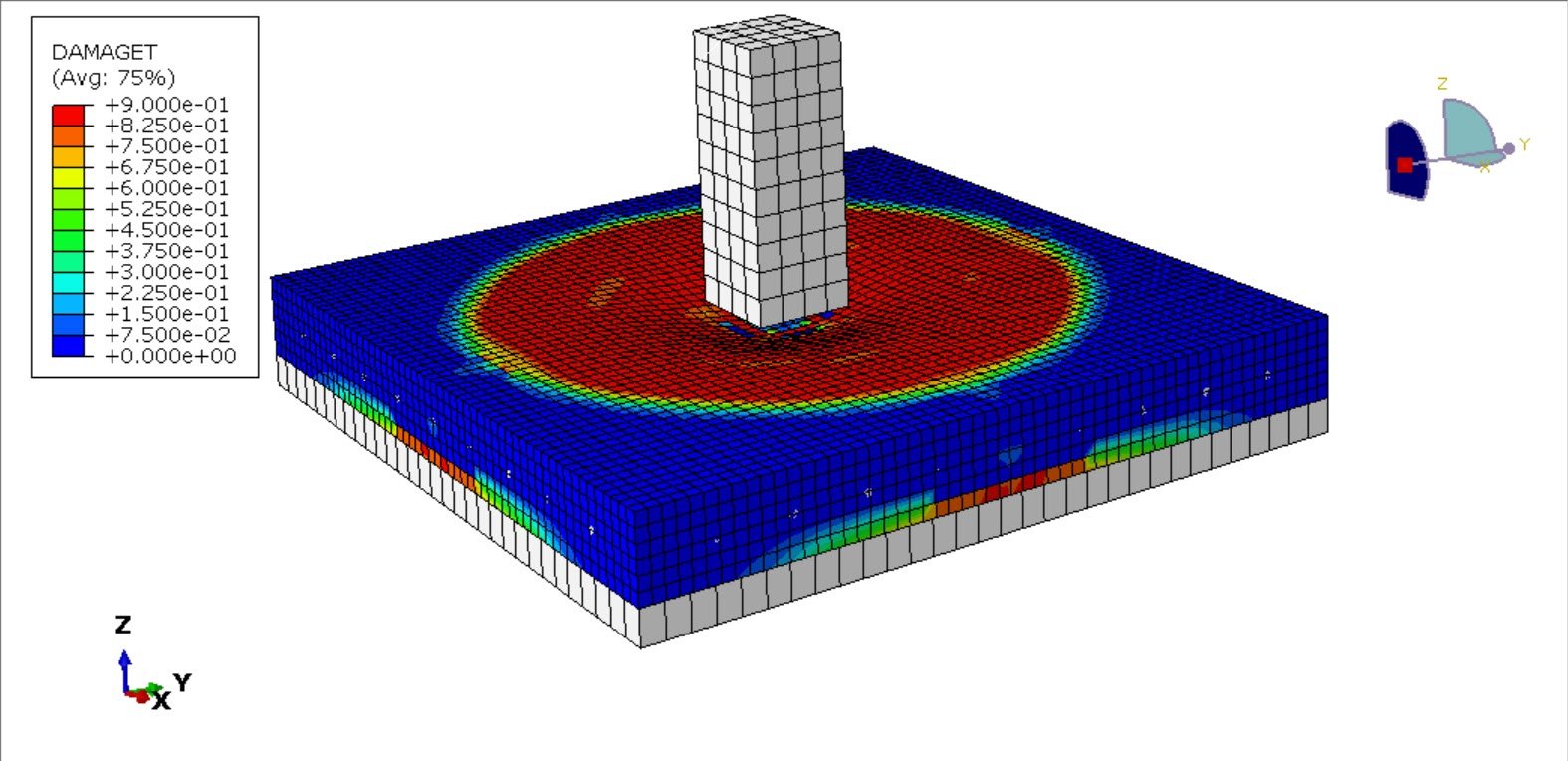
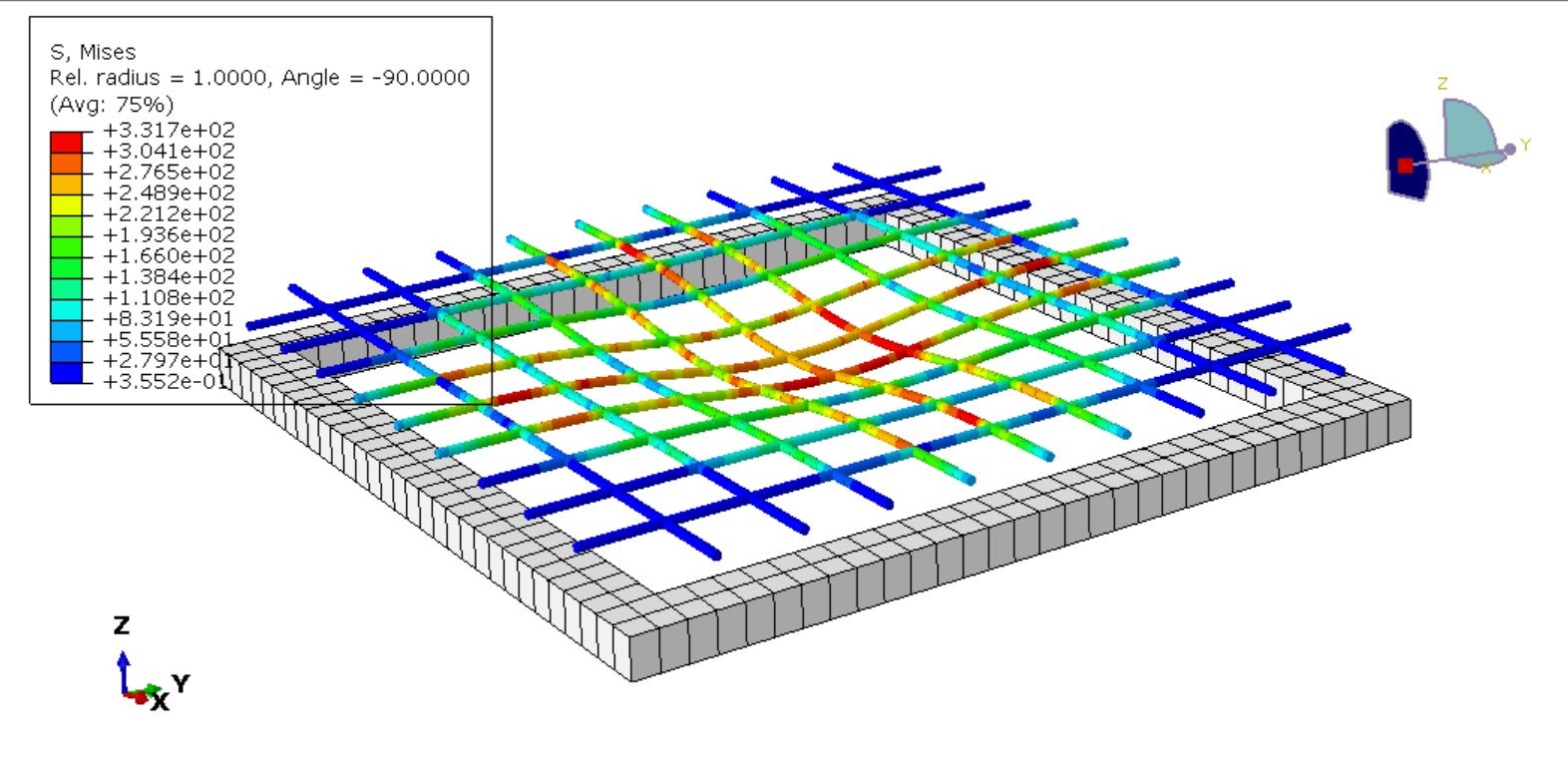
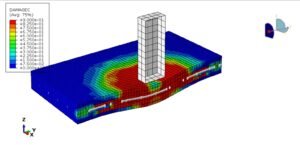
To address these gaps, this study investigates the punching shear capacity of RC flat slabs reinforced with superelastic Ni–Ti under low-velocity impact through advanced finite element modeling. Numerical simulations are conducted using Abaqus, where concrete behavior is represented by the Concrete Damaged Plasticity (CDP) model. The CDP formulation enables simulation of tensile cracking, compressive crushing, stiffness degradation, and nonlinear damage evolution. The superelastic behavior of Ni–Ti reinforcement is modeled using a constitutive law capable of capturing stress-induced martensitic transformation and reverse transformation during unloading, thereby reproducing its nonlinear hysteretic response. A Dynamic Explicit analysis procedure is adopted to accurately simulate transient impact response, contact interaction, inertia effects, and severe material nonlinearities.
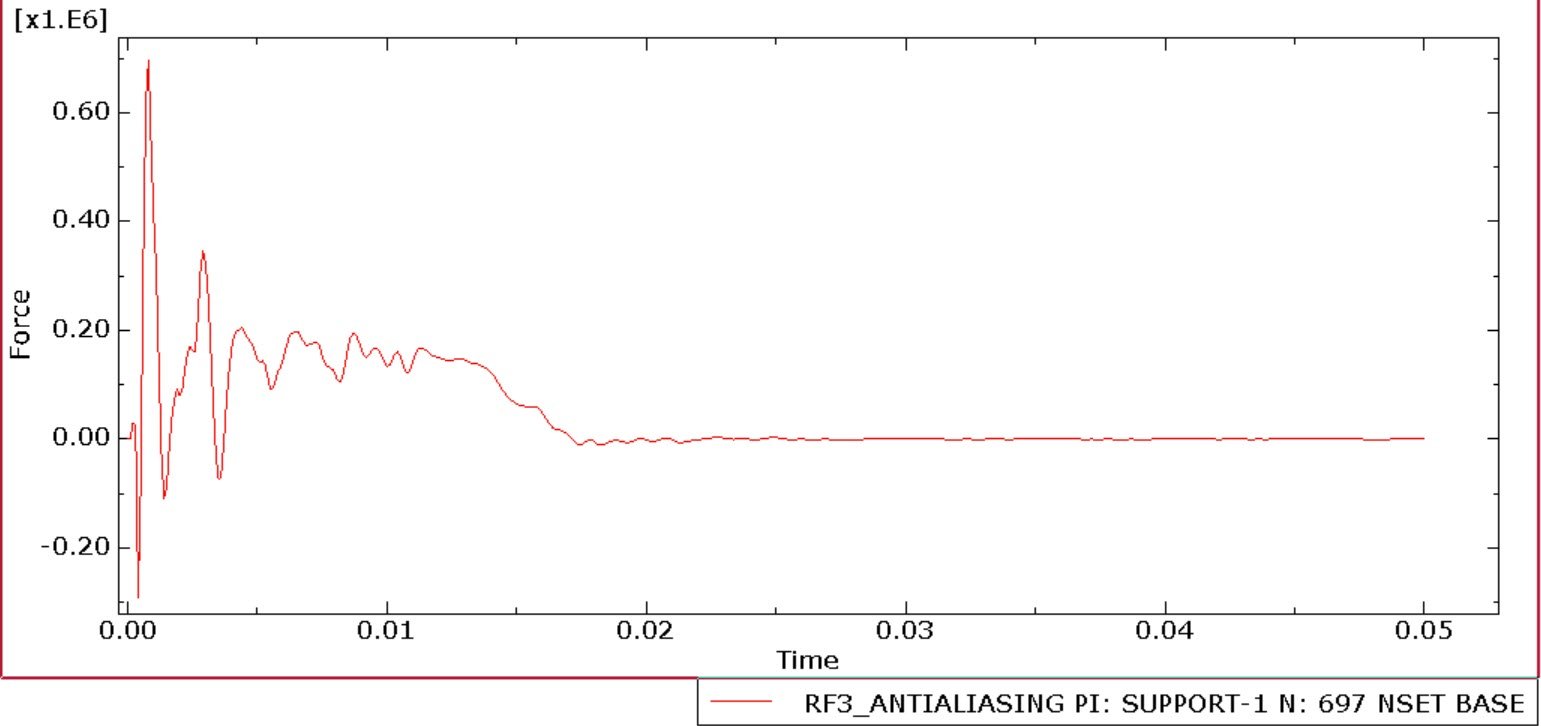
The study evaluates the influence of superelastic Ni–Ti reinforcement on impact force history, slab deflection response, energy absorption, damage distribution, crack propagation patterns, and residual deformation. Special attention is devoted to understanding how phase transformation mechanisms interact with concrete damage evolution to enhance punching shear resistance.
The outcomes of this research provide insight into the feasibility of using superelastic Ni–Ti reinforcement as an innovative strengthening strategy for improving the impact resilience and structural robustness of RC flat slab systems.

Abaqus
€97,00 €54,00
Engineering files
€60,00 €50,00
Abaqus
€146,00 €89,00
Abaqus
€85,00 €47,00
Abaqus
€78,00 €39,00
See more

Want to receive push notifications for all major on-site activities?