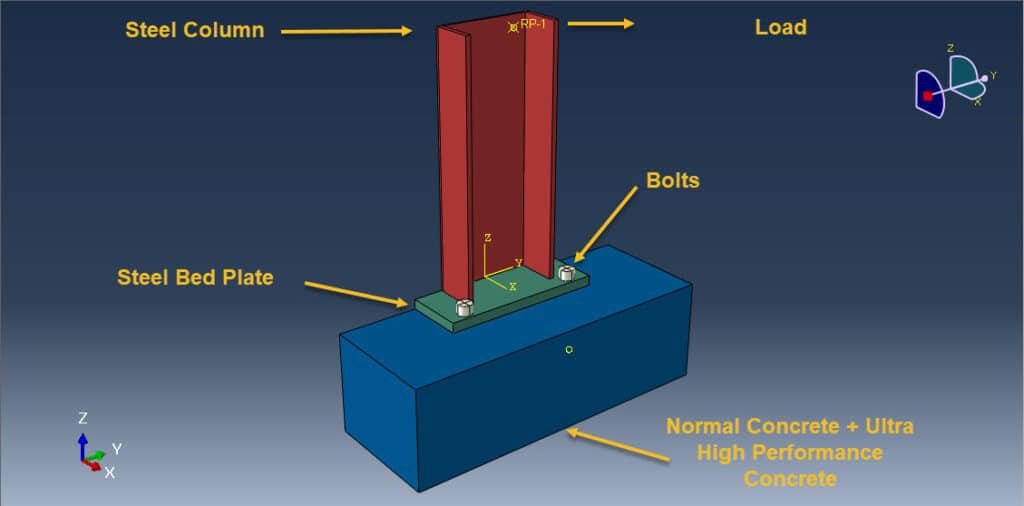
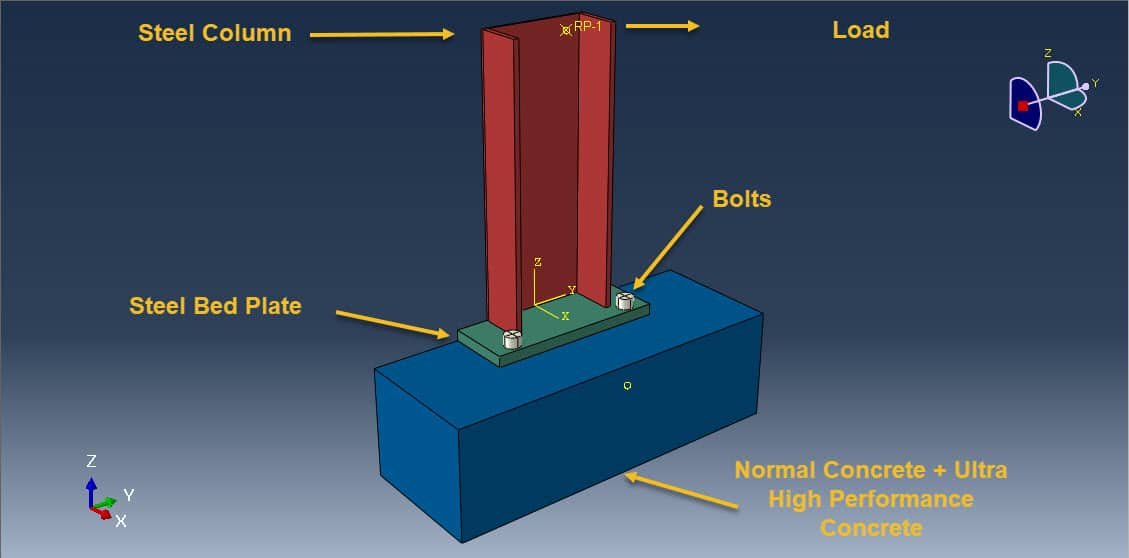
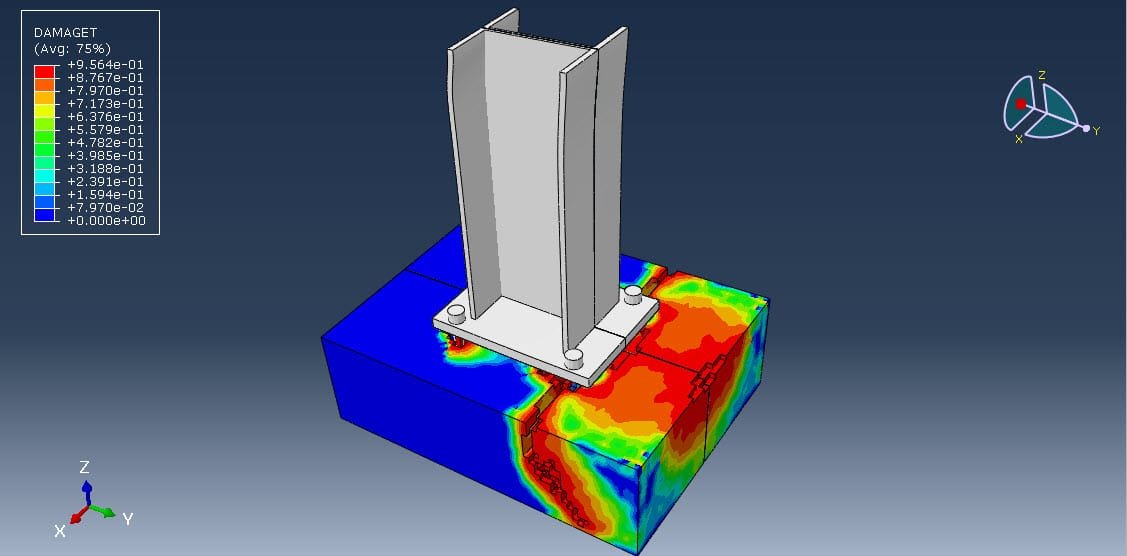
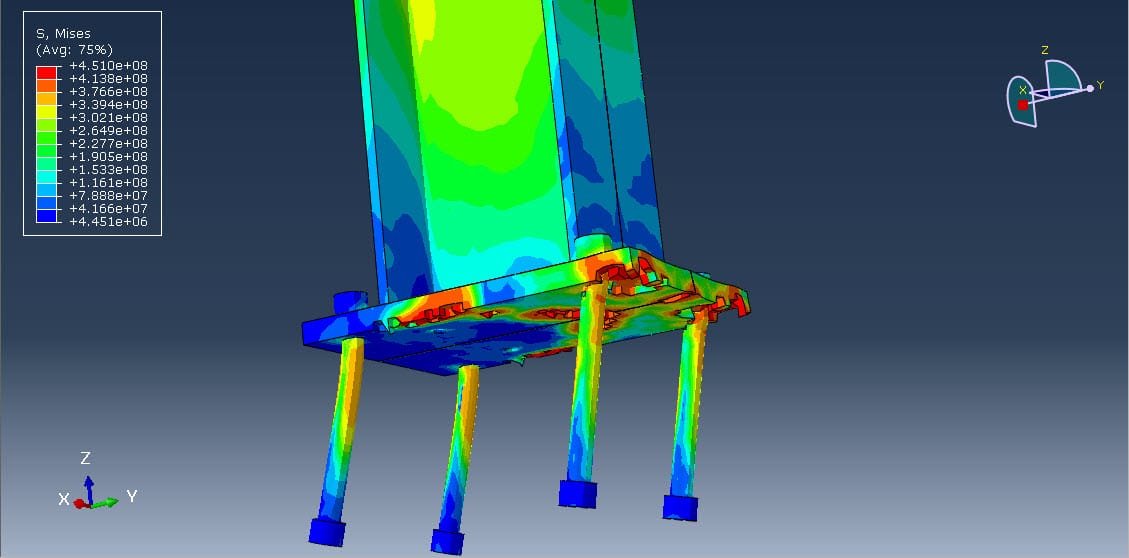
Introduction to Exposed Column Base Plate Connections in Moment Frames
In structural engineering, moment frames are used to resist lateral loads (such as wind or seismic forces)through rigid frame action, which depends on the flexural stiffness of beam-to-column and column-to-base connections. A crucial component of this system is the exposed column base plate connection, especially at the interface between a steel column and its concrete foundation.
What is an Exposed Column Base Plate Connection?
An exposed column base plate connection refers to a type of column-to-foundation connection where:
- The steel base plate is visible (i.e., not encased in concrete).
- It serves as a load-transfer interface between the steel column and the concrete footing.
- It is often used in steel moment-resisting frames and designed to resist axial, shear, and bending forces.
This connection includes:
- A base plate is welded to the bottom of the column.
- Anchor bolts are embedded in the concrete footing.
- Optional shear lugs or stiffeners to enhance performance.
- Grout between the base plate and concrete for even load transfer.
Role in Moment Frames
In moment-resisting frames, base connections are expected to:
- Transfer moment (bending) forces from the column to the foundation.
- Provide fixity (i.e., rotational restraint), which enhances the frame’s ability to resist lateral loads.
- Resist axial loads from gravity or seismic actions.
- Transfer shear forces into the footing or pile cap.
Exposed base plates can be designed as either:
- Pinned (hinged)– transfer vertical and shear forces only (no moment).
- Fixed (moment-resisting)– transfer vertical, shear, and moment forces.
For moment-resisting connections, the design is more complex due to the need to prevent rotation and ensure that the base behaves rigidly.
Design Considerations
- Base Plate Size and Thickness
- It must be sufficient to prevent excessive bending or deformation.
- Depends on the magnitude of axial load and moment.
- Anchor Bolt Design
- Critical moment connections, as they resist the tension caused by overturning moments.
- Need proper embedment length and development strength.
- Concrete Bearing
- The concrete beneath the base plate must resist bearing stresses.
- The use of grout helps distribute loads evenly.
- Shear Transfer Mechanism
- Shear lugs or friction between the plate and grout can be used.
- Design must ensure no slip or brittle failure.
- Stiffeners
- It may be added to the base plate to reduce bending and improve performance under high moments.
- Constructability and Tolerances
- Adequate access for welding, bolt installation, and grout pouring must be considered.
Behavior Under Lateral Loads
In seismic or wind conditions:
- Moment frames depend on column-base fixity to maintain structural integrity.
- The base plate connection must be ductile enough to accommodate inelastic behavior without failure.
- Base flexibility can significantly influence frame drift, natural period, and overall stability.
Exposed column base plate connections are a fundamental part of steel moment-resisting frames. Their design must account for complex interactions between axial load, shear, and moment, particularly in seismic regions. Proper detailing, material selection, and structural analysis ensure that these connections perform reliably as part of the lateral force-resisting system.
This example is close to the paper here: Exposed column base plate connections in moment frames: Simulations and behavioral insights