Engineering Downloads
Let’s Learn and Collaborate
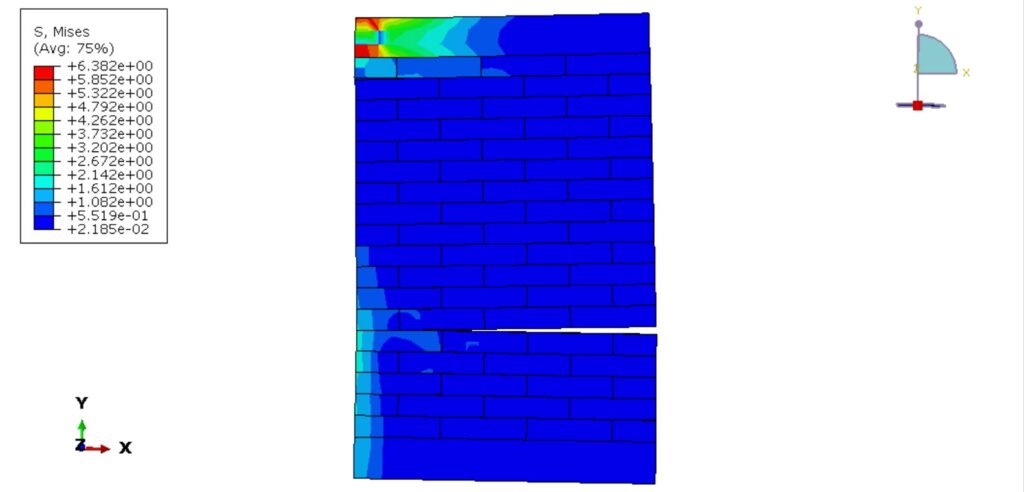
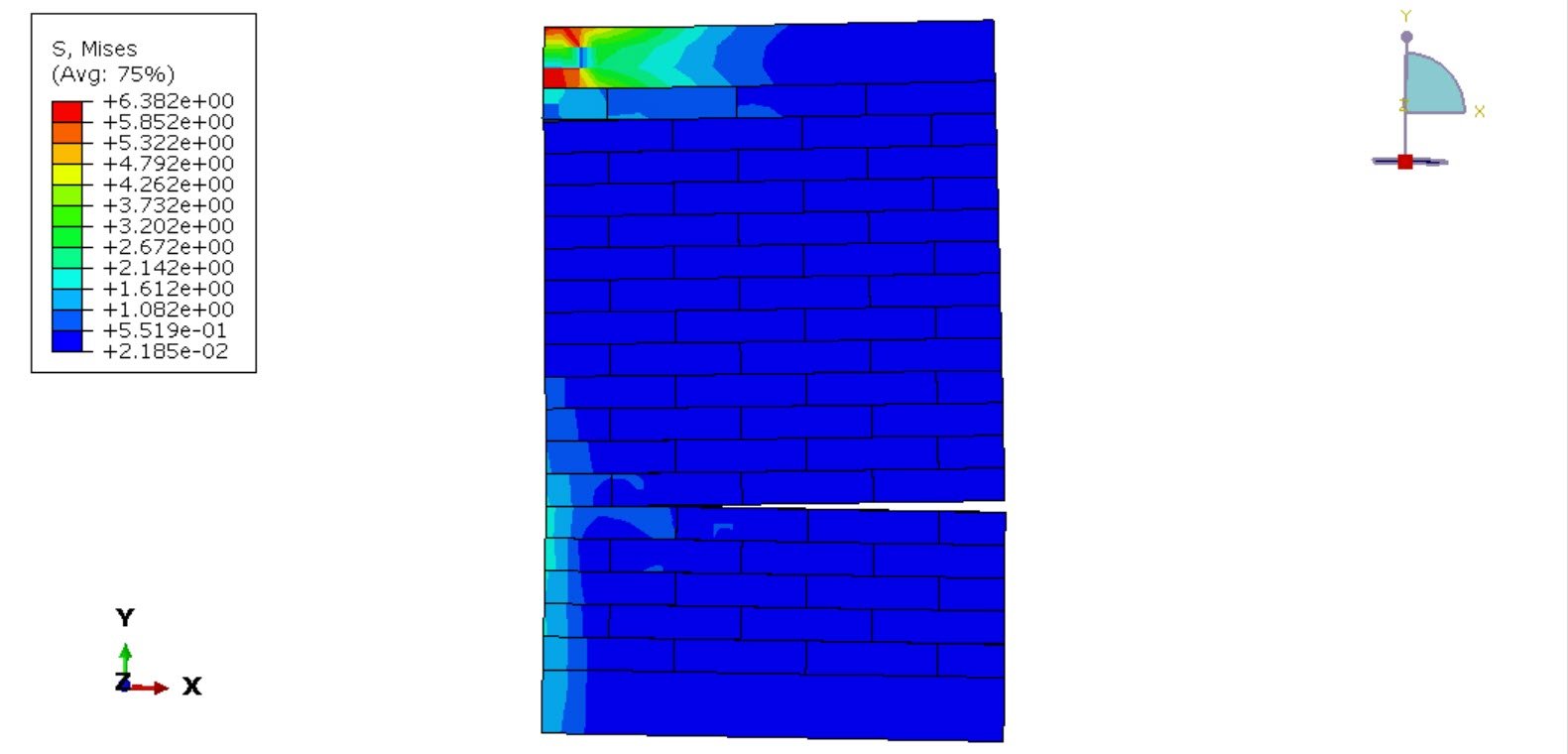
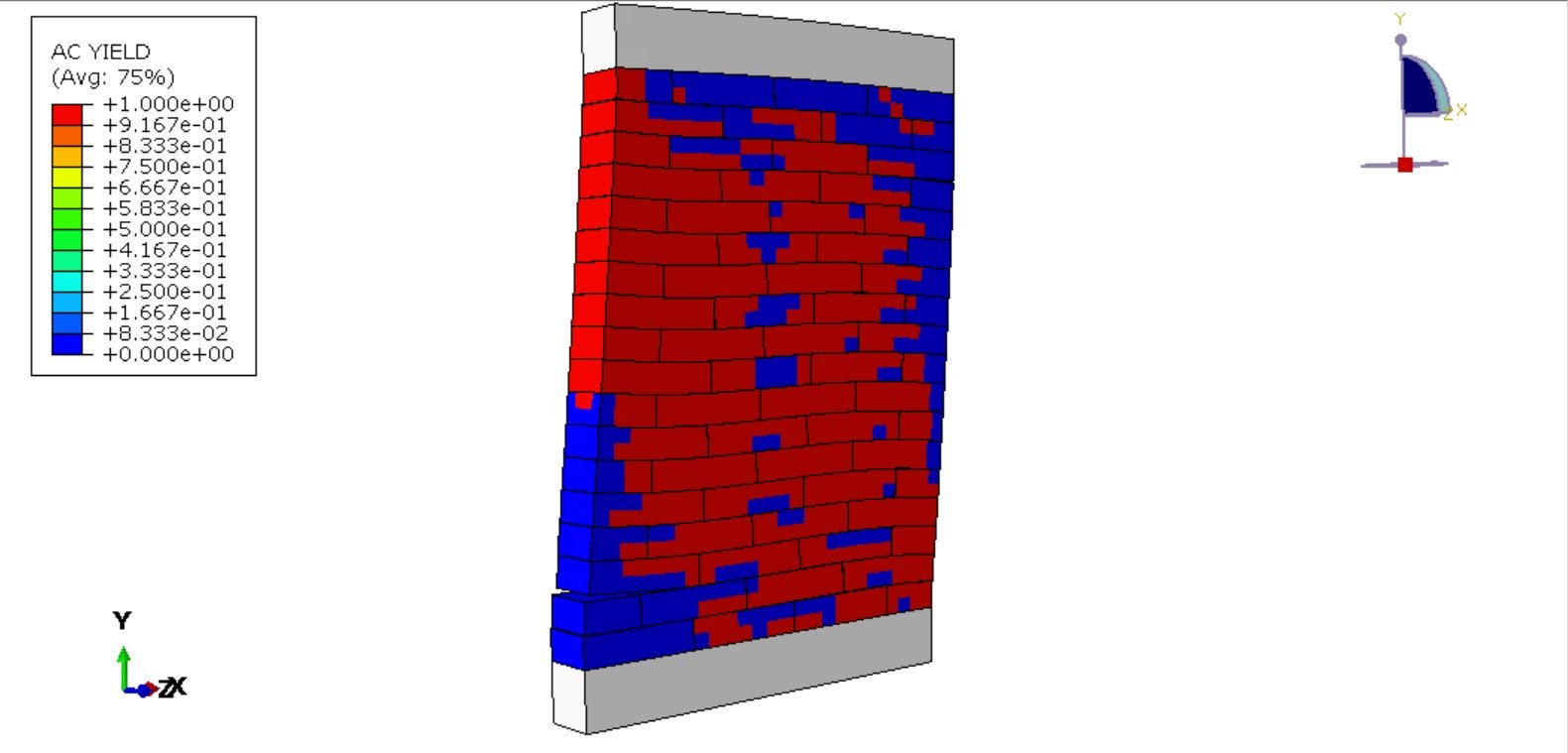
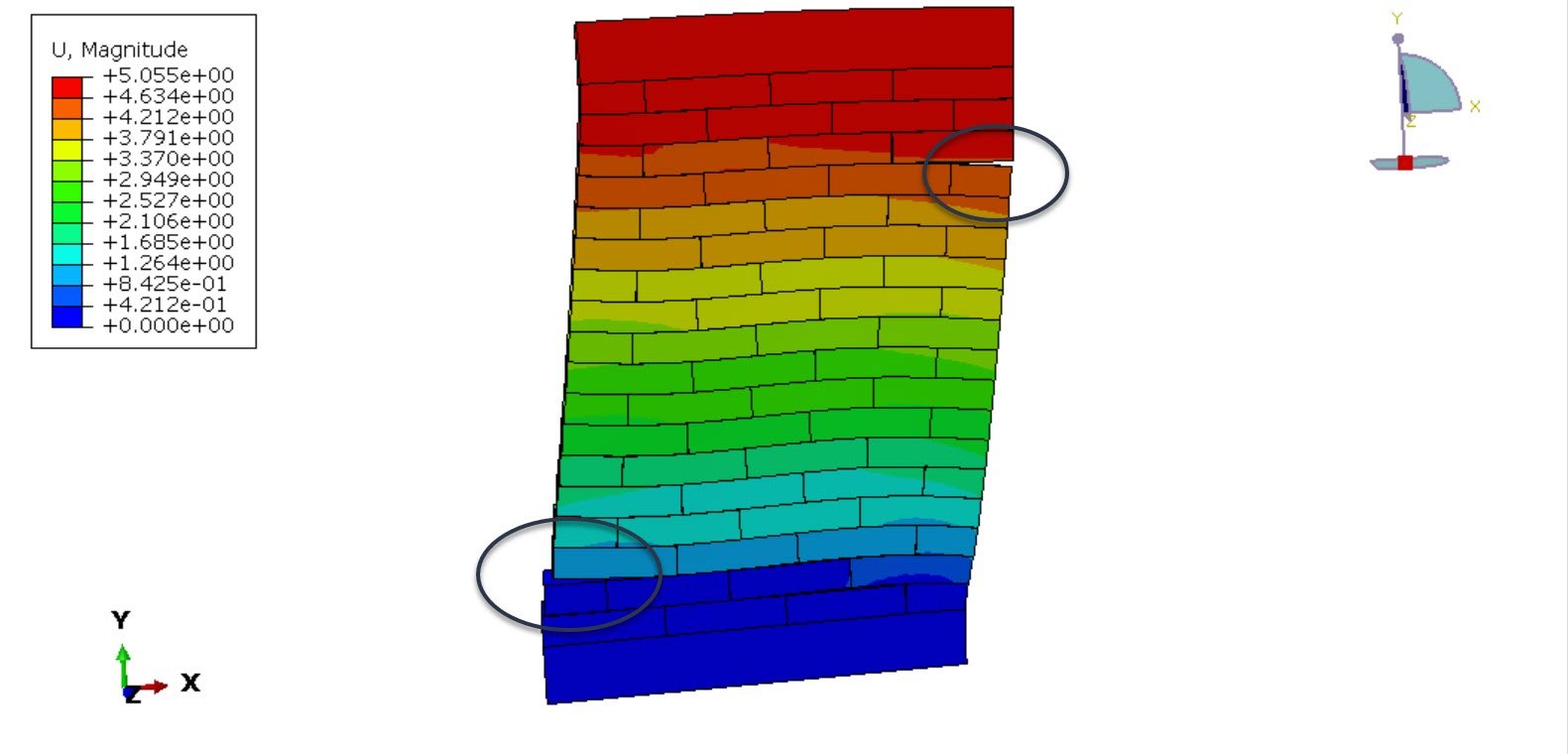
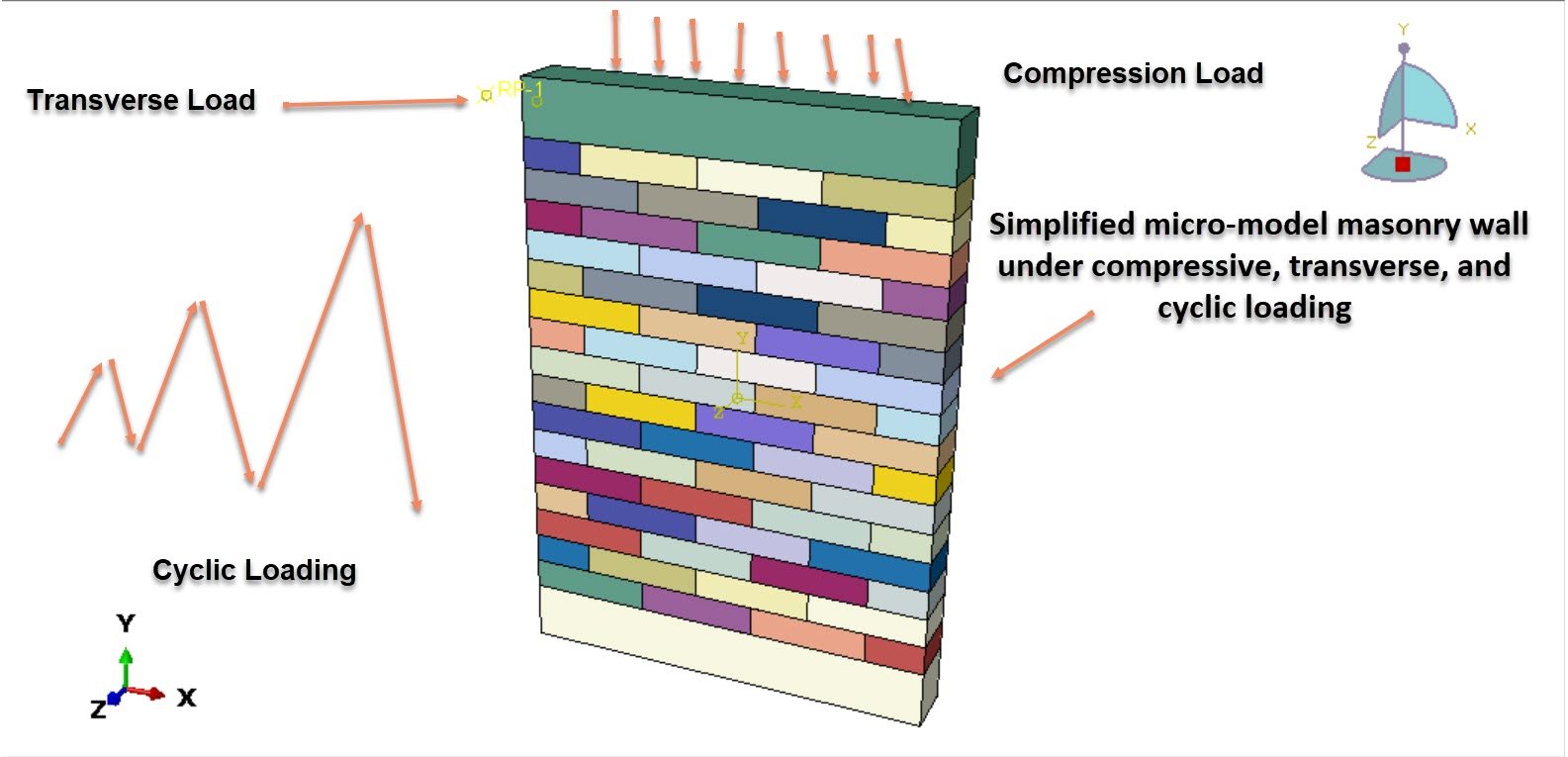
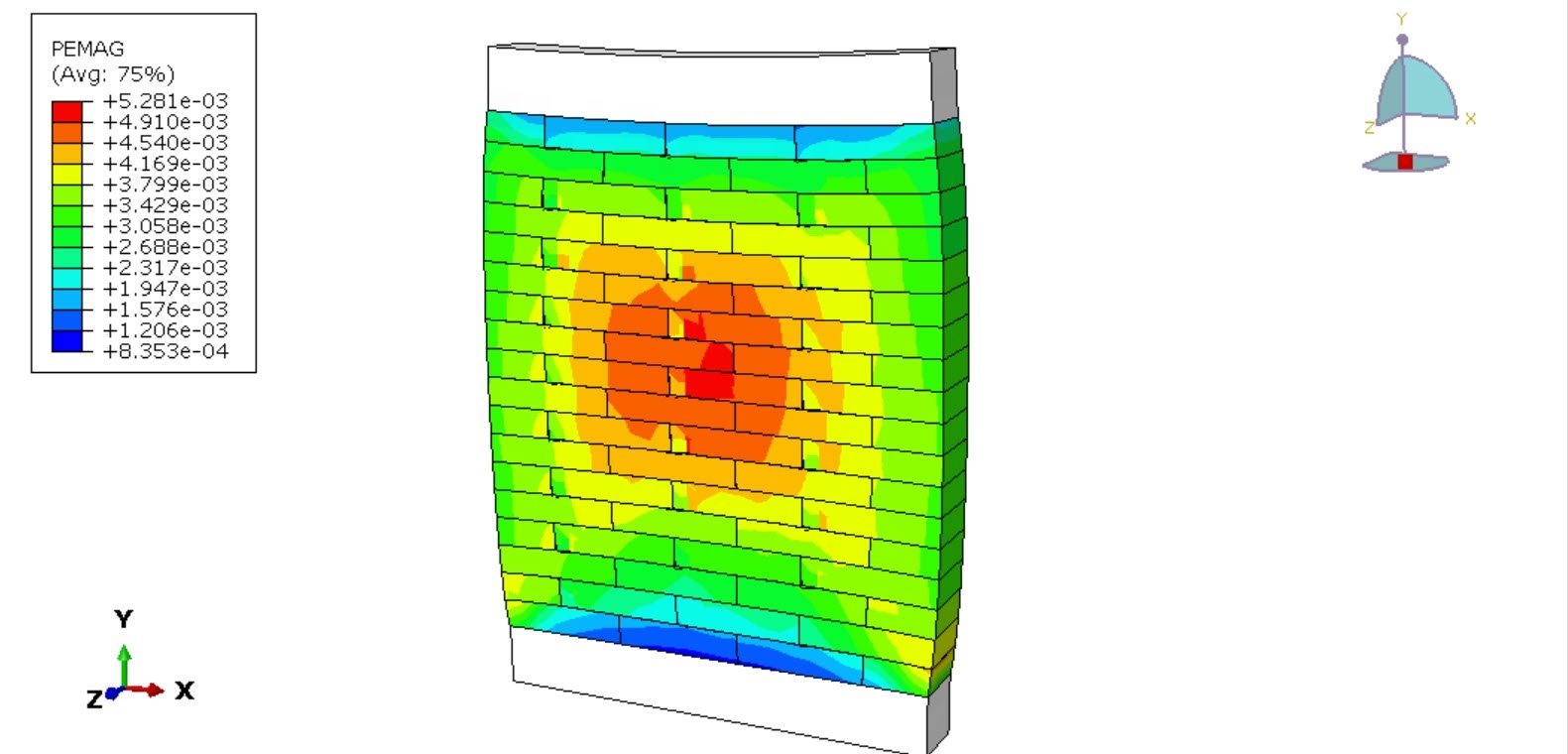
Masonry walls are widely used as structural and non-structural elements in buildings due to their durability, thermal efficiency, and cost-effectiveness. However, their structural behavior is highly complex because masonry is a heterogeneous assemblage composed of discrete units (bricks) bonded by mortar joints. The nonlinear response, brittle failure modes, and weak tensile capacity make masonry particularly vulnerable to extreme loading conditions such as earthquakes, in-plane shear, and high compressive stresses. Understanding the mechanical performance of masonry walls under these loading scenarios is therefore essential for safe design, assessment, and retrofitting of structures located in hazard-prone regions.
In this study, a detailed finite element (FE) analysis of a masonry wall is performed using Abaqus to evaluate its structural response under seismic, shear, and compressive loading. A micro-modelling strategy is adopted in which individual bricks are modeled explicitly, allowing realistic simulation of cracking, crushing, and interface debonding mechanisms. This approach provides higher fidelity in capturing localized damage compared to macro-modelling techniques.
The mechanical behavior of the brick units is represented using the Concrete Damaged Plasticity (CDP) model, which is well-suited for quasi-brittle materials such as masonry. The CDP model enables simulation of key nonlinear phenomena, including tensile cracking, compressive crushing, stiffness degradation, and irreversible plastic strains under cyclic or monotonic loading. Material parameters such as dilation angle, flow potential eccentricity, compressive strength, tensile strength, and damage evolution laws are defined to reflect the constitutive response of fired clay bricks.
To represent the mortar joints and brick–mortar interaction, cohesive surface interaction is employed. This interface modeling technique allows simulation of bond–slip behavior, stiffness degradation, and progressive debonding between adjacent masonry units. Cohesive properties are defined through traction–separation laws incorporating normal and shear stiffness, damage initiation criteria, and energy-based damage evolution. This enables realistic prediction of joint cracking and sliding, which are critical failure mechanisms in masonry walls subjected to lateral and seismic loads.
All loading cases—seismic, in-plane shear, and axial compression—are analyzed using the General Static analysis step in Abaqus. Although seismic actions are inherently dynamic, a quasi-static approach is adopted to evaluate the wall’s capacity and failure patterns under equivalent lateral loading. Incremental load application allows stable convergence while capturing nonlinear material and interface behavior.
The seismic loading case investigates global deformation, crack propagation, and potential collapse mechanisms under lateral forces. The shear analysis focuses on diagonal tension cracking, sliding along mortar joints, and shear strength degradation. The compressive loading scenario evaluates axial load-bearing capacity, stress distribution, and crushing failure of brick units.
Through these numerical simulations, the study aims to:
Examine stress–strain response and stiffness degradation of the masonry wall.
Identify dominant cracking and failure mechanisms under different load types.
Evaluate the role of brick material nonlinearity and interface cohesion.
Provide insight into the structural performance and safety margins of masonry systems.
The findings contribute to improved understanding of masonry behavior under multi-hazard loading and demonstrate the effectiveness of advanced finite element modelling techniques in predicting damage and failure of masonry structures.

Abaqus
€97,00 €54,00
Engineering files
€60,00 €50,00
Abaqus
€146,00 €89,00
Abaqus
€85,00 €47,00
Abaqus
€78,00 €39,00
See more

Want to receive push notifications for all major on-site activities?