In the world of structural engineering, understanding how materials behave under extreme loads is paramount. One critical concept is plastic collapse – a state where a structure undergoes significant, irreversible deformation due to stresses exceeding its yield strength, ultimately leading to loss of load-carrying capacity. Far from an academic curiosity, plastic collapse analysis is a cornerstone of safe, efficient design across diverse industries, from aerospace to oil & gas.

Image: Illustrative stress-strain curve for ductile materials, showing elastic and plastic regimes.
The Fundamentals of Plastic Collapse
Plastic collapse isn’t just about a structure breaking; it’s about predicting its ultimate load capacity before catastrophic failure. Engineers must understand this phenomenon to design robust and reliable components.
What is Plastic Collapse?
Plastic collapse occurs when a material or structure experiences stresses beyond its elastic limit, causing permanent deformation. Unlike elastic deformation, which is recoverable, plastic deformation is irreversible. When the structure can no longer sustain additional load without excessive, uncontrolled deformation, it has reached its plastic collapse limit.
- Yielding: The initial onset of plastic deformation where the material begins to deform permanently.
- Strain Hardening: Many ductile materials exhibit an increase in strength after initial yielding as they deform plastically.
- Permanent Deformation: The defining characteristic of plastic behavior; the material does not return to its original shape upon unloading.
- Collapse Mechanism: For structures, plastic collapse often involves the formation of ‘plastic hinges’ or localized yielding that transforms a stable structure into a kinematic mechanism.
Why is Plastic Collapse Critical for Engineers?
The ability to predict and analyze plastic collapse is indispensable for several reasons:
- Safety & Reliability: Preventing catastrophic failures in critical infrastructure like bridges, pressure vessels, and aircraft components.
- Design Optimization: Maximizing material usage by understanding a component’s true ultimate load-carrying capacity, beyond the elastic limit. This leads to lighter, more cost-effective designs.
- Structural Integrity & FFS: In industries like Oil & Gas, Fitness-for-Service (FFS) assessments (e.g., API 579 / ASME FFS-1 Level 3) heavily rely on plastic analysis to evaluate the remaining life and safety of aging or damaged components.
- Regulatory Compliance: Many industry standards and codes mandate plastic analysis for certain design scenarios to ensure public safety and environmental protection.
Mechanics Behind Plastic Collapse
Understanding plastic collapse requires a grasp of material behavior at the microscopic and macroscopic levels.
Material Behavior: Stress-Strain Relationships
The stress-strain curve is your roadmap to a material’s behavior under load.
Ductile vs. Brittle Materials
- Ductile Materials: (e.g., most steels, aluminum alloys) exhibit significant plastic deformation before fracture. These are the primary focus for plastic collapse analysis.
- Brittle Materials: (e.g., cast iron, ceramics) show little to no plastic deformation and fail suddenly after reaching their ultimate strength. Plastic collapse is generally not a relevant failure mode for brittle materials.
Yield Criteria
These criteria define the onset of plasticity under multi-axial stress states:
- Von Mises Yield Criterion: Widely used for ductile metals, it states that yielding occurs when the equivalent stress (or Von Mises stress) reaches the uniaxial yield strength. It’s a distortion energy theory, suggesting failure by shear.
- Tresca Yield Criterion: Also known as the maximum shear stress criterion, it predicts yielding when the maximum shear stress in the material reaches half of the uniaxial yield strength. Often used for pressure vessel design.
Strain Hardening
After yielding, many ductile materials become stronger as they deform plastically. This phenomenon, known as strain hardening or work hardening, is crucial. Material models often incorporate isotropic hardening (yield surface expands uniformly) or kinematic hardening (yield surface translates, accounting for Bauschinger effect) to capture this behavior accurately.
Instability and Localized Deformation
Plastic collapse often involves localized deformation or global structural instability.
- Buckling: While primarily an elastic instability, buckling can initiate plastic collapse in slender structures, where local yielding exacerbates the buckling tendency.
- Necking: In a tensile test of a ductile material, after reaching the ultimate tensile strength, the cross-sectional area begins to decrease rapidly in a localized region, leading to fracture.
- Strain Localization: Plastic deformation doesn’t always occur uniformly. It can concentrate in specific regions, forming ‘bands’ of intense plastic strain that can precede collapse.
Analytical Approaches to Plastic Collapse
Before advanced computational tools, engineers relied on analytical methods to predict plastic collapse. These methods still provide valuable insight and serve as excellent sanity checks for FEA results.
Limit Load Analysis
Limit load analysis aims to determine the maximum load a structure can sustain before plastic deformation spreads sufficiently to cause collapse. It assumes an elastic-perfectly plastic material model (no strain hardening).
- Lower Bound Theorem: If a stress field can be found that satisfies equilibrium, boundary conditions, and nowhere violates the yield criterion, then the corresponding load is a lower bound to the true collapse load.
- Upper Bound Theorem: If a kinematically admissible plastic deformation mechanism (a collapse mechanism) can be found, then the load calculated from equating external work to internal dissipation is an upper bound to the true collapse load.
Plastic Hinge Theory
For beams and frames, plastic hinge theory is a powerful simplified approach. It assumes that at certain points (plastic hinges), the material fully yields, allowing rotation without increased moment, effectively transforming a continuous beam into a mechanism. This method is particularly useful for rapid assessments of collapse loads in statically indeterminate structures.
Energy Methods (Virtual Work)
The principle of virtual work can be extended to plastic analysis. By postulating a kinematically admissible collapse mechanism, the external work done by applied loads can be equated to the internal energy dissipated by plastic deformation within the hinges or yield zones. This approach aligns with the upper bound theorem.
Simulating Plastic Collapse with FEA
Finite Element Analysis (FEA) has revolutionized plastic collapse analysis, allowing engineers to tackle complex geometries, material behaviors, and loading conditions that are intractable with analytical methods. Tools like Abaqus, ANSYS Mechanical, and MSC Nastran are indispensable here.
Setting Up Your FEA Model for Plastic Analysis
Accurate FEA requires careful consideration of several factors:
Material Models
- Elastoplasticity: Most plastic collapse analyses use an elastoplastic material model, which defines both the elastic behavior (Young’s modulus, Poisson’s ratio) and the plastic behavior (yield strength, stress-strain curve in the plastic region).
- Hardening Laws: Specify how the yield surface evolves after initial yielding.
- Isotropic Hardening: Yield surface expands uniformly in all directions (suitable for monotonic loading).
- Kinematic Hardening: Yield surface translates, accounting for the Bauschinger effect (relevant for cyclic loading and reverse yielding).
- Combined Hardening: A mix of both, offering more accuracy for complex loading.
- Strain Rate Dependence: For dynamic events (e.g., crash simulations), material properties can change with the rate of deformation.
Geometry and Meshing Considerations
- Accurate Geometry: Ensure your CAD model accurately represents the component (e.g., using tools like CATIA or SolidWorks).
- Fine Mesh in Critical Regions: Localized plastic deformation requires a refined mesh in areas expected to yield and form plastic hinges (e.g., stress concentrations, corners, welds). Higher-order elements (e.g., quadratic) are often preferred for capturing strain gradients.
- Element Type: Choose elements suitable for large deformation and plasticity (e.g., plane strain, shell, or solid elements with appropriate integration schemes).
Boundary Conditions and Loading
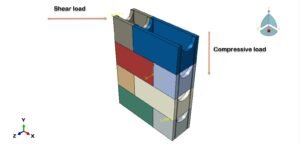
- Realistic Constraints: Apply boundary conditions that accurately reflect how the component is supported and restrained in reality.
- Incremental Loading: Plastic analysis is inherently non-linear, so loads must be applied incrementally. The solver then finds equilibrium at each step.
- Load Control vs. Displacement Control: Displacement control can often help overcome convergence issues in regions of material softening or during snap-through buckling.
Solution Control
- Non-Linear Solvers: FEA software (like Abaqus, ANSYS Mechanical) employs non-linear iterative solvers (e.g., Newton-Raphson) to handle the material and geometric non-linearities associated with plasticity.
- Convergence Criteria: Define strict criteria for force, displacement, and energy convergence to ensure accurate results.
Practical Workflow for Plastic Collapse Analysis
A structured approach ensures reliable results in your FEA plastic collapse simulations:
- Step 1: Material Characterization: Obtain precise stress-strain data for your materials, ideally from tensile or compression tests. This data is critical for defining elastoplastic models.
- Step 2: Pre-Processing (CAD-CAE): Prepare your geometry using CAD software. For complex assemblies, simplify non-critical features. Mesh your model, paying close attention to mesh quality and refinement in anticipated plastic zones. Tools like HyperMesh or MSC Patran can aid in advanced meshing.
- Step 3: Solver Setup: Define material properties, apply boundary conditions and loads, and configure non-linear solution parameters. For instance, in Abaqus, you’d define inelastic behavior; in ANSYS Mechanical, you’d specify a non-linear analysis.
- Step 4: Solve: Execute the non-linear analysis. Be prepared for longer solution times compared to linear elastic analyses due to iterative nature.
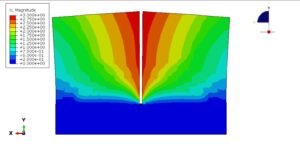
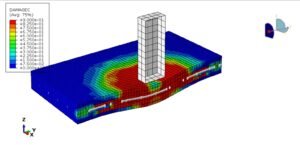
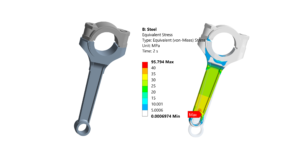
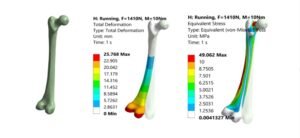
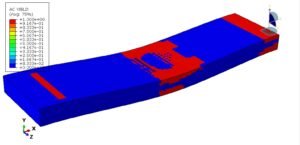
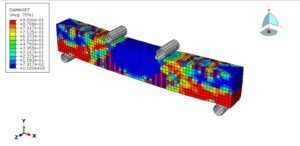
- Step 5: Post-Processing: Visualize results. Key outputs include plastic strain distribution, equivalent plastic strain, stress distribution (e.g., Von Mises stress), and total deformation. Identify the regions where plastic hinges form or where deformation localizes, indicating the collapse mechanism.
- Step 6: Interpretation & Reporting: Analyze the load-displacement or load-reaction force curve to pinpoint the collapse load. Compare your findings against design codes, standards, and safety factors. Document the assumptions, methods, and results thoroughly.
Common Challenges and Pitfalls
Plastic collapse analysis can be tricky. Here are typical issues:
- Inaccurate Material Data: Garbage in, garbage out. Poor stress-strain curves lead to incorrect predictions.
- Mesh Dependency: Results can be highly sensitive to mesh size, especially in regions of severe plastic deformation or strain localization.
- Convergence Issues: Non-linear solvers can struggle to converge, particularly near collapse loads or with material softening. Using smaller load increments or displacement control can help.
- Incorrect Boundary Conditions: Misrepresenting constraints can significantly alter the load path and collapse mechanism.
- Overlooking Strain Rate Effects: For dynamic loading, ignoring strain rate sensitivity can lead to non-conservative predictions.
- Element Distortion: Large deformations can severely distort elements, leading to solver errors. Remeshing techniques or adaptive meshing might be necessary.
Verification & Sanity Checks
Trusting your FEA results means rigorously checking them. These steps are crucial for ensuring the reliability of your plastic collapse analysis:
- Mesh Sensitivity Study: Run the analysis with several different mesh densities. Your results (e.g., collapse load, plastic strain at critical points) should converge as the mesh is refined.
- Analytical Benchmarks: For simpler components (e.g., a simply supported beam under point load), compare FEA results to established analytical solutions for plastic collapse (e.g., plastic hinge theory). This builds confidence in your complex models.
- Energy Balance Check: Most FEA solvers provide energy outputs. Ensure that the internal energy equals the external work done, indicating equilibrium. Any significant discrepancy (illustrative example: greater than 5% difference) could point to convergence issues or numerical instability.
- Deformation & Stress Visualization: Visually inspect the deformed shape. Does it make physical sense? Are plastic strains concentrating where you’d expect them to? Anomalous stress or strain hot spots might indicate modeling errors.
- Load-Displacement Curve: Plot the applied load against a characteristic displacement. For ductile materials, this curve typically shows a non-linear region after yielding, followed by a plateau or even a slight drop, clearly indicating the collapse load. This is a primary indicator of plastic collapse.
- Material Properties Validation: Double-check your input material properties against experimental data or reputable sources. Small errors in yield strength or hardening data can significantly impact results.
Applications Across Industries
Plastic collapse analysis is vital across numerous engineering disciplines, ensuring safety and optimizing design.
Oil & Gas and Pressure Vessels
- Pipeline Integrity: Assessing the remaining strength of corroded or damaged pipelines.
- FFS Assessments: Evaluating the fitness of existing pressure vessels and piping for continued service, especially when defects (cracks, thinning) are present (API 579 / ASME FFS-1 Level 3).
- Blowout Preventers & Wellheads: Ensuring components can withstand extreme pressures and loads during operation or emergency shutdowns.
Aerospace and Automotive
- Crashworthiness: Designing vehicle structures to absorb kinetic energy during collisions, protecting occupants by controlled plastic deformation.
- Impact Analysis: Simulating bird strikes on aircraft or foreign object damage.
- Fatigue Life Prediction: Plastic deformation plays a role in crack initiation and propagation.
Biomechanics
- Bone Fracture Analysis: Understanding how bones deform and fail under impact or excessive loading.
- Implant Design: Optimizing medical implants (e.g., hip replacements) to ensure they can withstand physiological loads without plastic collapse.
Civil and Structural Engineering
- Seismic Design: Designing structures to undergo controlled plastic deformation (ductile detailing) during earthquakes, preventing brittle failure and absorbing seismic energy.
- Progressive Collapse Analysis: Evaluating a structure’s ability to withstand the failure of a primary component without leading to total collapse.
Advanced Topics & Automation
Pushing the boundaries of plastic collapse analysis involves more sophisticated material models and automated workflows.
Advanced Material Models
- Damage Mechanics: Models that account for material degradation (e.g., micro-void nucleation and growth) leading to eventual fracture after significant plastic deformation.
- Fracture Mechanics: While separate, plastic collapse often precedes fracture. Understanding plastic zones at crack tips is crucial for fracture prediction.
- Creep & Viscoplasticity: For materials under high temperatures or long-term loads, time-dependent plastic deformation (creep) becomes relevant.
Python & MATLAB for Workflow Automation
Leveraging scripting languages can significantly enhance your plastic collapse analysis workflow:
- Pre-processing Automation: Generate complex geometries, boundary conditions, or meshing parameters parametrically.
- Post-processing & Data Extraction: Automatically extract key results (e.g., collapse loads, plastic strains, energy dissipation) from multiple simulations for design optimization or statistical analysis.
- Parametric Studies: Run numerous simulations with varying parameters (e.g., material properties, geometry, load magnitudes) to understand their influence on plastic collapse behavior.
- Integration with FEA Software: Most major FEA packages (Abaqus, ANSYS Mechanical) offer Python APIs, allowing for powerful customization and automation. MATLAB is excellent for data analysis and visualization.
For engineers looking to deepen their understanding or streamline their workflows, EngineeringDownloads.com offers a range of FEA project templates and Python/MATLAB automation scripts tailored for structural integrity analysis. We also provide online consultancy to tackle specific challenges.
Practical Design Considerations
Integrating plastic collapse knowledge into design is key to building durable structures.
Checklist for Designing Against Plastic Collapse
- Define Load Scenarios: Identify all credible operating, extreme, and accidental loads.
- Select Ductile Materials: Prioritize materials with sufficient ductility for components where plastic deformation is anticipated or desired (e.g., for energy absorption).
- Perform Limit Load Analysis: For simpler cases, use analytical methods to get initial bounds.
- Conduct Non-Linear FEA: Use advanced simulation tools to accurately predict plastic collapse behavior for complex geometries.
- Apply Appropriate Safety Factors: Ensure designs meet or exceed code-mandated safety factors, often applied to the collapse load.
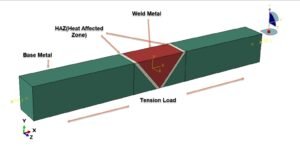
- Consider Manufacturing Effects: Account for residual stresses or material property changes due to manufacturing processes (e.g., welding, forming).
- Implement Ductile Detailing: For civil structures, ensure connections and elements can deform plastically without brittle fracture.
Strategies for Mitigating Risk
- Material Selection: Choose materials with high ductility and a clear yield plateau for predictable plastic behavior.
- Geometry Optimization: Redesign components to distribute stress more uniformly, preventing premature localization of plastic strain.
- Load Redistribution: Introduce redundancy or alternative load paths to prevent total collapse if one component yields.
- Regular Inspection & Monitoring: For existing structures, implement FFS programs to monitor condition and reassess integrity.
Analytical vs. FEA for Plastic Collapse: A Comparison
| Feature | Analytical Methods (e.g., Limit Load, Plastic Hinge) | FEA (e.g., Abaqus, ANSYS Mechanical) |
|---|---|---|
| Complexity | Limited to simple geometries, loading, and material models (elastic-perfectly plastic). | Handles complex geometries, multi-axial stress states, advanced material models (hardening, rate-dependence). |
| Accuracy | Provides bounds (upper/lower) or simplified estimates. Good for initial design checks. | Higher accuracy, captures local effects and progressive yielding. Depends on model setup and mesh quality. |
| Computational Cost | Very low (manual calculations, spreadsheets). | Moderate to high, requires significant computational resources for non-linear solutions. |
| Material Models | Typically elastic-perfectly plastic. | Elastoplastic with isotropic, kinematic, or combined hardening; damage models; creep; viscoplasticity. |
| Insights | Quick understanding of global collapse mechanisms. | Detailed insight into stress/strain distribution, deformation patterns, initiation and propagation of plastic zones. |
| Learning Curve | Relatively low for basic applications. | Higher, requires expertise in non-linear analysis, meshing, and material modeling. |
| Use Case | Preliminary design, quick checks, understanding fundamental concepts. | Detailed design, FFS, failure investigation, optimization, highly non-linear problems. |
Summary and Key Takeaways
- Plastic collapse is the irreversible deformation of a structure leading to loss of load-carrying capacity.
- It’s critical for engineering safety, design optimization, and structural integrity assessments (FFS Level 3).
- Ductile materials, yield criteria (Von Mises, Tresca), and strain hardening are fundamental to understanding plastic behavior.
- Analytical methods offer quick estimates, while FEA (Abaqus, ANSYS Mechanical) provides detailed, accurate simulations for complex scenarios.
- Accurate material data, fine meshing, and robust non-linear solver settings are crucial for successful FEA.
- Verification steps like mesh sensitivity and load-displacement curve analysis are essential for trustworthy results.
- Plastic collapse analysis is applied across Oil & Gas, Aerospace, Biomechanics, and Civil Engineering.
- Automation with Python and MATLAB can significantly enhance efficiency and capability in plastic analysis workflows.
Further Reading: For a deeper dive into the theoretical aspects of plasticity, consider resources like the NPTEL course on Theory of Plasticity.