Demystifying Plastic Collapse in Engineering Design
As engineers, we strive to create structures and components that are not only efficient but also safe and reliable. A critical concept in achieving this is understanding plastic collapse. It’s not just about a material failing; it’s about predicting when a structure can no longer sustain an increasing load due to widespread plastic deformation, leading to a loss of its load-carrying capacity.
Whether you’re designing pipelines in oil & gas, critical aerospace components, or robust civil structures, recognizing and analyzing plastic collapse is fundamental to ensuring structural integrity and preventing catastrophic failure. This guide will walk you through the essential aspects of plastic collapse, from theoretical foundations to practical simulation workflows and design considerations.

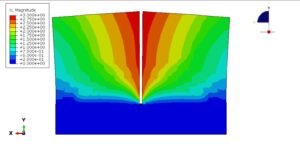
Image by en:User:Cchanng, CC BY-SA 3.0
Understanding Plasticity and Collapse
Elastic vs. Plastic Behavior
Before diving into collapse, let’s quickly differentiate between elastic and plastic behavior:
- Elastic Deformation: When a material is loaded within its elastic limit, it will return to its original shape once the load is removed. Think of stretching a rubber band – it springs back.
- Plastic Deformation: Beyond the elastic limit, the material enters the plastic region. Here, permanent deformation occurs, meaning the material won’t fully recover its original shape even after the load is removed. This is often accompanied by strain hardening, where the material becomes stronger due to further deformation.
Plastic collapse occurs when this plastic deformation becomes so extensive that the structure can no longer withstand additional load.
Mechanisms of Plastic Collapse
Plastic collapse isn’t a single event but a progressive process. Key mechanisms include:
- Plastic Hinge Formation: In beam and frame structures, concentrated plastic deformation at specific points (like joints or highly stressed regions) can form ‘plastic hinges’. Once enough hinges form, the structure becomes a mechanism and can no longer carry the load.
- Material Instability: Some materials exhibit necking (localized reduction in cross-sectional area) under tensile loading, which can lead to a sudden reduction in load-carrying capacity even before fracture.
- Yield Surface Evolution: For complex loading states, the material’s yield surface can expand (isotropic hardening) or translate (kinematic hardening), influencing its subsequent plastic behavior and ultimate collapse load.
Why Plastic Collapse Matters in Engineering
Understanding plastic collapse is crucial for several reasons:
- Safety: Predicting the true ultimate load-carrying capacity of a structure is vital for ensuring it won’t fail prematurely, protecting lives and assets.
- Efficiency & Cost: By understanding how much plastic deformation a structure can safely tolerate, engineers can optimize designs, potentially reducing material usage without compromising safety.
- Regulatory Compliance: Many industry codes (e.g., ASME, API) require plastic analysis for critical components, especially in pressure vessel design or fitness-for-service (FFS) assessments (Level 3 analysis).
- Failure Analysis: If a component fails, understanding plastic collapse mechanisms helps determine the root cause and prevent future occurrences.
Key Concepts and Theories
Yield Criteria
Yield criteria are mathematical models that predict the onset of plastic deformation under complex stress states. The two most common are:
These criteria help define the ‘yield surface’ in stress space, delineating the boundary between elastic and plastic behavior.
| Yield Criterion | Principle | Typical Application |
|---|---|---|
| Von Mises | Yields when the deviatoric stress (distortion energy) reaches a critical value. | Most ductile metals, general loading scenarios. |
| Tresca | Yields when the maximum shear stress reaches a critical value. | Materials where shear failure is dominant, certain plasticity models. |
Plasticity Models
Once yielding occurs, how does the material behave? Plasticity models describe this post-yield behavior:
- Perfect Plasticity: Material yields and deforms plastically without any increase in stress (no hardening). Often used for simplified collapse load calculations.
- Isotropic Hardening: The yield surface expands uniformly in all directions as plastic deformation occurs, meaning the material strengthens equally in all subsequent loading directions.
- Kinematic Hardening: The yield surface translates without changing size, accounting for Bauschinger effect (reduced yield stress upon load reversal). Important for cyclic loading and fatigue analysis.
Limit Load and Ultimate Load
These terms are often used interchangeably, but there’s a subtle distinction:
- Limit Load: The maximum load a structure can sustain before plastic collapse, assuming perfect plasticity. It represents a theoretical upper bound of elastic behavior.
- Ultimate Load: The maximum load a structure can sustain, considering material hardening, geometric non-linearity (large deflections), and potentially material degradation up to fracture. This is closer to the real-world failure load.
Practical Applications & Industry Relevance
Plastic collapse analysis is not just academic; it has direct implications across various engineering disciplines:
Structural Engineering
In civil and mechanical structural design, plastic analysis helps evaluate the ultimate capacity of beams, columns, and connections. It’s particularly useful for seismic design, where structures are expected to undergo controlled plastic deformation to dissipate energy without catastrophic collapse.
Oil & Gas
For pipelines, pressure vessels, and offshore platforms, plastic analysis is critical. It informs fitness-for-service (FFS) assessments, especially Level 3 (API 579/ASME FFS-1), to determine if equipment with flaws (e.g., corrosion, cracks) can still safely operate under plastic deformation conditions. It helps assess burst pressure and structural integrity under extreme loads.
Aerospace
While aerospace often emphasizes elastic design, crashworthiness simulations heavily rely on plastic deformation. Designers use plastic collapse principles to predict how airframes will deform and absorb energy during an impact, protecting occupants. It’s also relevant for assessing local buckling of thin-walled structures and post-buckling strength.
Biomechanics
In the design of medical implants or analysis of bone mechanics, understanding plastic deformation in biological tissues (e.g., bone under impact) is crucial. It helps engineers design prosthetics that mimic natural tissue behavior and predict failure modes under extreme physiological loads.
Analyzing Plastic Collapse with FEA
Finite Element Analysis (FEA) is the cornerstone for modern plastic collapse analysis, allowing engineers to simulate complex geometries and loading conditions that are intractable with hand calculations.
Advantages of Simulation
- Predictive Capability: Accurately predict the onset and progression of plastic deformation and ultimate load.
- Design Optimization: Explore various design iterations quickly to improve strength-to-weight ratios or failure resistance.
- Cost Reduction: Minimize the need for expensive physical prototyping and testing.
- Insight into Complex Behavior: Visualize stress and strain distributions, understand failure mechanisms at a detailed level.
Practical Workflow for Plastic Collapse Analysis
A typical FEA workflow for plastic collapse involves several key steps:
Material Model Selection
Choose an appropriate material model: elastoplastic with isotropic or kinematic hardening is common for metals. For some polymers or geomaterials, more advanced models (e.g., Drucker-Prager for soil/concrete) might be needed. Ensure you have a good stress-strain curve (true stress vs. true plastic strain) from experimental data.
Geometry & Meshing
Import or create the geometry. Use a fine mesh in regions expected to undergo significant plastic deformation (e.g., stress concentrations, corners, areas where plastic hinges might form). Coarser meshes can be used in areas where stresses are low and elastic behavior dominates. Higher-order elements (e.g., quadratic) are often preferred for capturing bending and plastic deformation accurately.
Boundary Conditions & Loading
Apply realistic boundary conditions (fixed supports, symmetry planes) and loads. For collapse analysis, typically apply loads incrementally, often using displacement control rather than force control to capture the post-collapse behavior where load might drop. Large deformation (geometric nonlinearity) should almost always be activated.
Solution Settings
Configure a nonlinear static or quasi-static analysis. Enable large deformation (NLGEOM in Abaqus, Nlgeom in ANSYS). For highly nonlinear problems, use automatic incrementation, and consider damping or stabilization techniques if convergence is challenging.
Post-Processing
Review results: plot stress (especially von Mises equivalent stress), plastic strain, displacement, and reaction forces. A critical output is the load-displacement or load-reaction curve, which clearly shows the limit load and ultimate load before catastrophic failure or significant softening. Check for regions of high plastic strain and potential fracture initiation.
Verification & Sanity Checks for FEA Models
To ensure your plastic collapse analysis is reliable, rigorous verification and sanity checks are paramount:
Mesh Sensitivity
Perform a mesh convergence study. Run the analysis with progressively finer meshes in critical areas and check if key results (e.g., peak stress, plastic strain, limit load) converge to a stable value. This ensures your results are not mesh-dependent.
Boundary Condition Checks
Visually inspect deformed shapes and reaction forces to confirm boundary conditions and loads are applied as intended. Misplaced constraints are a common source of error.
Material Property Verification
Compare your input stress-strain curve with raw test data. Ensure the true stress-strain values are correctly implemented, especially beyond the yield point. Small errors here can significantly alter collapse predictions.
Load Path & Convergence Monitoring
Monitor the solution process for convergence issues. If the solution struggles to converge, check for highly distorted elements, sudden changes in stiffness, or localized buckling. Adjust incrementation or stabilization settings as needed. Plot residual forces to ensure equilibrium is achieved.
Comparison with Hand Calculations or Empirical Data
For simpler cases or sub-components, compare your FEA results with theoretical limit load solutions (e.g., plastic hinge theory for beams) or available experimental data. This provides a crucial sanity check for the overall model setup.
Need powerful computing resources to run your large-scale plastic collapse models? EngineeringDownloads offers affordable HPC rental services to accelerate your simulations.
Common Pitfalls and Troubleshooting
Even experienced engineers encounter challenges with plastic collapse analysis. Here are common issues and how to troubleshoot them:
Material Model Mismatch
Problem: Using an elastic-perfectly plastic model when the material exhibits significant strain hardening, or vice-versa.
Troubleshooting: Always use experimentally derived true stress-true plastic strain data. If data is limited, perform sensitivity studies with different hardening laws to understand the impact on results.
Numerical Instabilities and Convergence Issues
Problem: The solver fails to converge, or the solution oscillates wildly.
Troubleshooting:
- Reduce Load Increments: Start with smaller load steps, especially as plasticity initiates.
- Increase Iterations: Allow more iterations per increment.
- Check Element Quality: High aspect ratio or distorted elements can cause issues. Remesh problematic areas.
- Stabilization: Use damping or arc-length methods (e.g., Riks method in Abaqus) for highly unstable post-buckling or softening behavior.
- Contact Issues: If contact is present, ensure proper contact definitions and mesh compatibility.
Underestimated Loads or Incorrect Boundary Conditions
Problem: The analysis predicts collapse at a much higher load than expected, or unrealistic deformation.
Troubleshooting: Double-check load magnitudes, directions, and application points. Ensure supports truly represent the physical constraints. Verify units consistently throughout the model.
Meshing Errors
Problem: Coarse mesh in critical regions leads to inaccurate stress/strain predictions.
Troubleshooting: Prioritize mesh refinement where plastic zones are expected. Use element types suitable for plastic deformation (e.g., reduced integration elements for large strain plasticity to avoid locking, but be mindful of hourglassing).
Ignoring Geometric Nonlinearity
Problem: Running a small displacement analysis when large deformations are expected, leading to incorrect stiffness and load-carrying capacity.
Troubleshooting: Always enable geometric nonlinearity (large displacement option) for plastic collapse analyses where deflections are significant.
Design for Plastic Collapse Resistance
Designing structures to safely handle or resist plastic collapse involves several strategies:
Material Selection
Choose ductile materials with a clear yield plateau and significant post-yield strain hardening. High ductility allows for substantial plastic deformation before fracture, providing warning and often allowing for energy absorption.
Geometric Optimization
Identify and reduce stress concentrators (sharp corners, abrupt changes in cross-section) which can trigger premature yielding. Optimize shapes to distribute stress more uniformly. Add stiffeners or reinforcements to areas prone to plastic hinge formation.
Redundancy & Load Path
Design with multiple load paths and structural redundancy. If one component plastically deforms, other parts can still carry the load, preventing immediate catastrophic collapse.
Codes & Standards
Adhere to relevant industry codes and standards (e.g., ASME Boiler and Pressure Vessel Code, API standards for pressure vessels and piping, Eurocode for steel structures). These often provide guidelines and safety factors for plastic design and analysis.
Testing & Validation
Where feasible, physical testing of components or prototypes under ultimate load conditions can validate analytical predictions and refine designs. This is especially true for novel designs or critical applications.
Advanced Topics and Tools
Damage & Fracture Mechanics
Beyond simple plastic collapse, engineers often need to predict when a component will actually fracture. This involves integrating damage mechanics or fracture mechanics principles into plastic analysis, accounting for crack initiation and propagation after significant plastic deformation.
Rate-Dependent Plasticity
For high-speed impacts or dynamic loading, the material’s yield strength and hardening behavior can be sensitive to the strain rate. Rate-dependent plasticity models (viscoplasticity) are crucial for accurate simulations in these scenarios (e.g., crash simulations in Abaqus/Explicit or LS-DYNA).
Software Tools and Automation
Leading FEA software like Abaqus, ANSYS Mechanical, and MSC Nastran/Patran offer robust capabilities for nonlinear plastic analysis. Tools like CATIA and SolidWorks integrate CAD-CAE workflows for seamless design and analysis. Furthermore, Python and MATLAB are invaluable for scripting pre-processing tasks, automating post-processing data extraction, and developing custom material models or analysis routines, enhancing efficiency in complex projects.
Checklist for Plastic Collapse Analysis
Use this checklist for your next plastic collapse project:
- ✓ Define project objectives (limit load, ultimate load, deformation).
- ✓ Gather accurate material properties (true stress-strain curve, yield criteria).
- ✓ Create or import accurate geometry.
- ✓ Apply appropriate mesh density, especially in critical regions.
- ✓ Define realistic boundary conditions and loading scenarios.
- ✓ Enable geometric nonlinearity (large displacement).
- ✓ Select suitable plasticity model (isotropic, kinematic hardening).
- ✓ Use adequate load increments for stable convergence.
- ✓ Perform mesh sensitivity studies.
- ✓ Validate results against simplified models or empirical data where possible.
- ✓ Analyze load-displacement curves, stress/strain contours.
- ✓ Identify potential plastic hinges or regions of high plastic strain.
- ✓ Document assumptions, results, and recommendations.
Further Reading
For deeper insights into the theoretical foundations of plasticity, consider exploring advanced textbooks or university lecture notes on the subject. A good starting point is MIT’s lectures on plasticity.
Conclusion
Plastic collapse is a cornerstone of advanced structural analysis, moving beyond the idealized elastic world to understand a structure’s true reserve strength. By accurately predicting how materials deform plastically and identifying the ultimate load-carrying capacity, engineers can design safer, more efficient, and more reliable components. Leveraging tools like FEA, coupled with a thorough understanding of material behavior and careful validation, empowers us to push the boundaries of engineering design and ensure robust structural integrity across all industries.