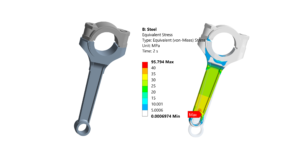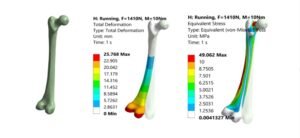
In the vast landscape of engineering, solving complex problems often requires looking at phenomena from multiple perspectives. From the atomic structure of a material to the global behavior of a full-scale component, understanding how different scales interact is crucial for accurate predictions and robust designs. This is where multiscale modeling comes into play – a powerful methodology that bridges gaps between microscopic, mesoscopic, and macroscopic behaviors, revolutionizing how we approach simulation and analysis.
Whether you’re dealing with advanced composites in aerospace, predicting fatigue in oil & gas infrastructure, or simulating cell mechanics in biomechanics, traditional single-scale analyses often fall short. Multiscale modeling provides a framework to link these disparate scales, enabling engineers to capture intricate details without sacrificing computational efficiency. This article dives deep into the practical aspects of multiscale modeling, offering actionable insights for fellow engineers.

Image: Conceptual diagram of a multiscale model. Source: Wikimedia Commons.
What Exactly is Multiscale Modeling?
At its core, multiscale modeling is a computational strategy that accounts for physical phenomena occurring across a range of spatial and temporal scales. Instead of trying to model every atom in a bridge (impossible!) or ignoring material microstructure in a microchip (inaccurate!), multiscale approaches intelligently connect different simulation models, each tailored to a specific scale.
Why Multiscale Modeling is Indispensable for Engineers
- Enhanced Accuracy: It captures crucial small-scale effects (e.g., grain boundaries, phase transformations) that dictate large-scale material response (e.g., strength, ductility, crack propagation).
- Bridging Length Scales: Addresses problems where direct simulation of all scales simultaneously is computationally prohibitive (e.g., simulating a polymer’s molecular behavior to predict its bulk mechanical properties).
- Optimized Designs: Allows for the virtual testing of new materials and designs, predicting performance under extreme conditions with greater fidelity, reducing the need for costly physical prototypes.
- Problem-Solving Power: Essential for complex materials like composites, functionally graded materials, and biological tissues where properties are highly dependent on microstructural details.
Key Concepts: Bridging Scales
Understanding multiscale modeling involves recognizing the different levels of abstraction:
- Atomistic Scale (Nanometers): Deals with individual atoms and molecules using methods like Molecular Dynamics (MD) or Density Functional Theory (DFT). Relevant for material initiation, defect formation, surface phenomena.
- Mesoscopic Scale (Micrometers to Millimeters): Bridges atomistic and continuum. Often involves methods like Discretized Continuum (e.g., Finite Element Analysis on microstructures), Phase Field Models, or Coarse-Grained Molecular Dynamics. Relevant for grain structures, micro-cracks, composite laminae.
- Macroscopic Scale (Millimeters to Meters and Beyond): The traditional continuum mechanics realm, typically handled by FEA (Finite Element Analysis) or CFD (Computational Fluid Dynamics). Relevant for structural components, fluid flow patterns, entire systems.
Approaches to Multiscale Modeling
Several strategies exist for linking different scales, each with its own advantages and challenges.
Hierarchical (Sequential) Modeling
This is the most common and often simplest approach. Information flows in one direction, from a smaller scale to a larger one. For example, you might perform a detailed micro-scale simulation (e.g., RVE analysis) to determine effective material properties, and then use these homogenized properties in a macro-scale FEA model.
- Pros: Computationally less intensive than concurrent methods, easier to implement, modular.
- Cons: Assumes a separation of scales; small-scale behavior is independent of macro-scale loading changes (unless an iterative approach is used). No feedback from macro to micro.
- Tools: Often involves separate runs in Abaqus (e.g., RVE analysis for effective properties) feeding into another Abaqus or ANSYS Mechanical structural model.
Concurrent (Coupled) Modeling
Here, simulations at different scales run simultaneously and exchange information interactively. The small-scale model provides localized material response to the large-scale model, and the large-scale model provides boundary conditions (displacements, forces) to the small-scale model.
- Pros: Captures true two-way coupling, more accurate for situations where micro-scale response is highly dependent on local macro-scale conditions.
- Cons: Extremely computationally expensive, complex to implement, requires sophisticated coupling algorithms and often dedicated software or scripting.
- Tools: Advanced features in Abaqus (e.g., FE-FE coupling via submodeling, or coupled Eulerian-Lagrangian), specialized academic codes, or Python/MATLAB scripts integrating different solvers.
Quasi-Continuum (QC) Methods
A hybrid atomistic-continuum approach often used for crystalline materials. It uses atomistic resolution only in regions of high deformation (e.g., crack tips) and a continuum approximation elsewhere, smoothly transitioning between the two.
- Pros: Reduces computational cost significantly compared to full atomistic simulations while retaining atomic-level accuracy where needed.
- Cons: Primarily applicable to crystalline solids, complex algorithm development.
Bridging Domains/Elements
These methods focus on the interface between different scales or modeling paradigms. Examples include generalized finite elements that embed microstructural information, or techniques like the Representative Volume Element (RVE) approach, where a small representative volume is modeled in detail to derive macroscopic constitutive laws.
Applications Across Engineering Disciplines
Multiscale modeling is transforming research and development across various engineering fields.
Aerospace Engineering
- Composite Materials: Predicting the macroscopic failure of composite laminates by understanding fiber-matrix interface debonding and damage propagation at the micro-scale. This involves analyzing stress concentrations around fibers using FEA on RVEs to feed into global structural models in Abaqus or ANSYS Mechanical.
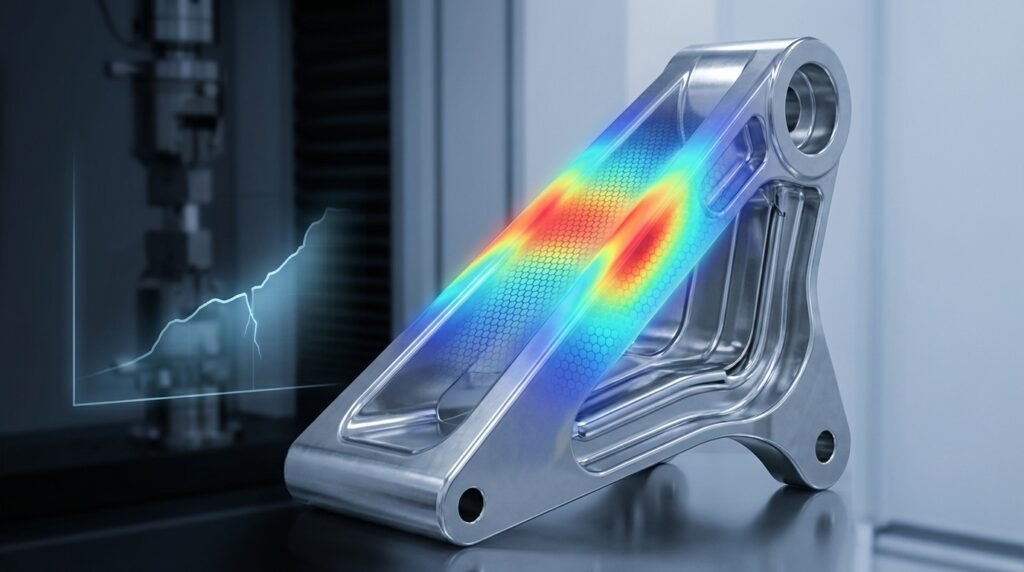
- Fatigue & Fracture: Modeling crack initiation and growth in aircraft components, linking crystallographic slip at the grain level to macro-scale crack path prediction.
- Engine Components: Simulating thermal-mechanical behavior of turbine blades, considering material microstructure evolution under high temperatures and cyclic loading.
Oil & Gas / Structural Integrity
- Pipeline Integrity: Assessing the structural integrity and remaining life of pipelines, accounting for material degradation, corrosion pits, and weld imperfections at the micro-scale that influence macro-scale fracture behavior. Critical for FFS Level 3 assessments.
- Advanced Steels: Understanding the performance of high-strength low-alloy (HSLA) steels in harsh environments, where microstructural features like precipitates and grain boundaries dictate yield strength and fracture toughness.
- Reservoir Rocks: Simulating fluid flow and geomechanical response in porous media, linking pore-scale fluid dynamics to reservoir-scale transport properties and rock deformation.
Biomechanics
- Bone Mechanics: Modeling the mechanical behavior of bone from the collagen-mineral nanoscale to the trabecular micro-scale, influencing the overall strength of bones and implants. Tools like Abaqus or ANSYS can be used for micro-CT scan based FE models.
- Soft Tissue Mechanics: Understanding the complex, anisotropic behavior of tissues like cartilage or arteries, where the orientation and properties of collagen fibers at the micro-scale determine bulk mechanical properties.
- Medical Device Design: Optimizing implant designs (e.g., stents, joint replacements) by considering interaction with biological tissues at cellular and tissue levels.
Advanced Manufacturing
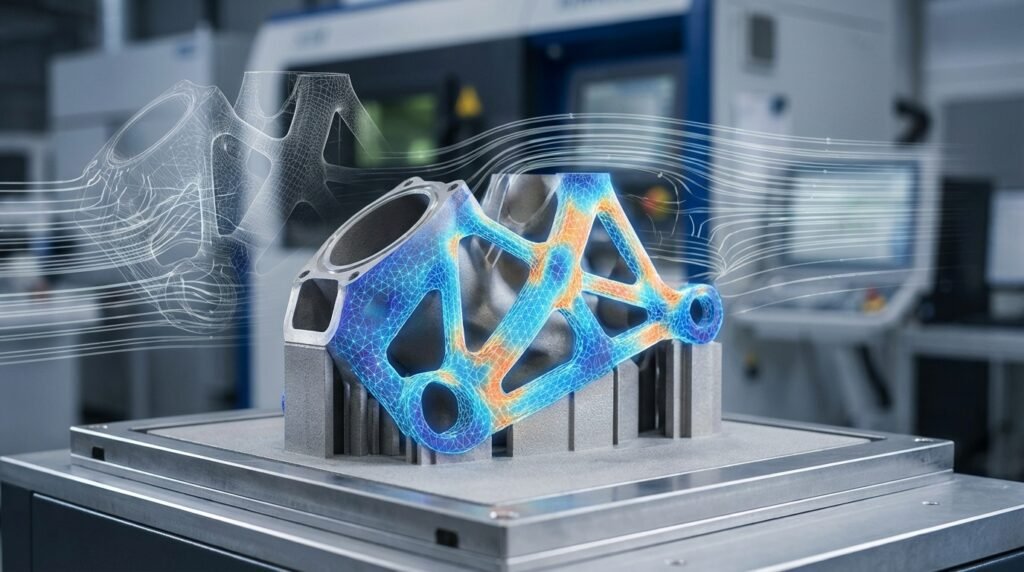
- Additive Manufacturing: Predicting residual stresses, distortion, and mechanical properties of 3D-printed parts by modeling the melt pool dynamics and solidification at the micro-scale, linking to macro-scale component performance.
Practical Workflow for Multiscale Simulations
Executing a successful multiscale modeling project requires careful planning and execution. Here’s a typical step-by-step workflow:
- Define the Problem and Scales of Interest: Clearly articulate the engineering problem. What phenomena are critical at which scales? For example, predicting crack propagation in a steel component might require linking crystal plasticity (micro) to continuum fracture mechanics (macro).
- Material Characterization & Constitutive Models: Gather experimental data at relevant scales. Select or develop appropriate constitutive models for each scale (e.g., elastoplasticity for macro-scale, crystal plasticity for micro-scale). This might involve inverse characterization.
- Model Setup: Low & High Fidelity:
- Micro-scale Model: Construct a representative model (e.g., RVE of a composite, grain structure of a metal). Define boundary conditions that represent the average deformation state from the macro-scale. Tools: CAD (e.g., CATIA) for geometry, FEA software (Abaqus, ANSYS) for meshing and analysis.
- Macro-scale Model: Develop the full component model. Initialize with homogenized material properties. Tools: Abaqus, ANSYS Mechanical, MSC Nastran for structural; ANSYS Fluent/CFX, OpenFOAM for fluid dynamics.
- Coupling Strategies: Choose the appropriate coupling method (hierarchical, concurrent, etc.). If hierarchical, decide how to homogenize micro-scale results into macro-scale properties. If concurrent, define the data exchange interface (e.g., specific regions, coupling points) and algorithms.
- Solver Selection & Execution: Select appropriate solvers for each scale. This might involve different software packages. For concurrent approaches, scripting (Python, MATLAB) is often used to orchestrate data transfer and solver calls.
- Data Transfer & Post-Processing: Develop robust methods for transferring data between scales (e.g., effective properties, local stress/strain fields). Use post-processing tools (e.g., Abaqus/Viewer, ANSYS Post, ParaView, custom Python scripts) to visualize and interpret results at all scales, linking them back to the original problem.
Common Pitfalls in Workflow
- Incompatible Constitutive Models: Ensuring that the material models chosen for each scale are consistent and physically realistic when interacting.
- Boundary Condition Mismatch: Incorrectly applying boundary conditions from one scale to another, leading to unrealistic local responses.
- Computational Cost Underestimation: Concurrent models can be extremely expensive. Plan for HPC resources early. EngineeringDownloads offers affordable HPC rental services, online courses, and project consultancy to help you manage complex simulations.
- Data Management Issues: Handling large datasets and ensuring seamless, accurate data transfer between different simulation environments.
Verification & Sanity Checks
Rigorous checks are paramount for trustworthy multiscale simulation results.
Table: Essential Verification & Sanity Checks for Multiscale Models
| Check Category | Description | Relevance to Multiscale | Tools / Methods |
|---|---|---|---|
| Mesh Sensitivity | Varying mesh density to ensure solution independence from element size. | Crucial at both micro and macro scales, especially at interfaces. | Abaqus, ANSYS meshing tools; automated scripts (Python). |
| Boundary Condition (BC) Validity | Confirming BCs accurately represent physical constraints and loading. | Ensuring consistent transfer of BCs from macro to micro models. | Pre-processing visualization; simple test cases. |
| Convergence Criteria | Monitoring solver convergence (e.g., residual norms, energy balance). | Essential for stable iterative coupling between scales. | Solver output logs (Abaqus .dat, ANSYS .out); post-processing plots. |
| Validation Against Experiments | Comparing simulation results with physical test data. | Verifying the entire multiscale chain, especially constitutive models. | Experimental data; statistical comparison (ANOVA, R²). |
| Sensitivity Analysis | Studying how input parameter variations affect output results. | Identifying critical parameters at each scale and their influence on the overall system. | Parametric studies (ANSYS DesignXplorer, Isight); Python scripting (NumPy, SciPy). |
- Unit Consistency: A common mistake, ensure all models across scales use consistent units.
- Energy Balance: For transient or highly non-linear problems, check that energy is conserved across the coupled system (or accounted for).
Tools and Technologies for Multiscale Modeling
A variety of software and programming tools facilitate multiscale analysis.
FEA Software
- Abaqus: Widely used for its advanced material models, submodeling capabilities, and ability to script complex workflows (Python API). Excellent for RVE analysis and hierarchical coupling.
- ANSYS Mechanical: Offers robust structural analysis, material libraries, and tools like ACP (for composites) which can be integrated into multiscale strategies.
- MSC Patran/Nastran: Strong in linear and non-linear structural analysis, particularly for large, complex assemblies, often used in aerospace.
CFD Software
- ANSYS Fluent/CFX: Industry standard for fluid dynamics, capable of complex multiphase flows which can be coupled with porous media models for multiscale fluid-structure interaction.
- OpenFOAM: An open-source alternative, highly flexible for customization and developing specialized solvers for bridging fluid dynamics scales.
Programming & Scripting
- Python: Indispensable for automating workflows, data transfer, pre/post-processing, and orchestrating calls to different solvers. Libraries like NumPy, SciPy, and Matplotlib are crucial.
- MATLAB: Excellent for algorithm development, data analysis, and integrating custom routines, especially for material modeling and signal processing.
Specialized Libraries & Frameworks
Many academic and research groups develop specialized libraries or coupling frameworks for specific multiscale problems, often built on top of existing commercial or open-source solvers.
Common Challenges and How to Overcome Them
Embarking on multiscale modeling projects often presents hurdles.
Computational Cost
- Challenge: Running high-fidelity simulations at multiple scales concurrently can demand immense computational resources, leading to prohibitively long solution times.
- Solution: Leverage High-Performance Computing (HPC) clusters. Employ parallel computing techniques. Optimize your models by simplifying geometries where possible, using appropriate element types, and adaptive meshing. Consider model order reduction techniques.
Data Transfer & Consistency
- Challenge: Ensuring accurate and consistent transfer of information (e.g., displacements, forces, material states) between models operating at different scales and potentially in different software environments.
- Solution: Develop robust data interfaces using scripting languages (Python is ideal). Standardize data formats. Implement rigorous checks to ensure data integrity during transfer.
Selecting Appropriate Constitutive Models
- Challenge: Choosing or developing material models that accurately capture the physics at each scale and can seamlessly integrate into a multiscale framework.
- Solution: Thorough material characterization. Consult literature and expert knowledge. Start with simpler models and gradually increase complexity as needed. Validate models against experimental data at their respective scales.
Defining Interface Conditions
- Challenge: Correctly defining the boundary conditions or coupling laws at the interfaces between different scales to ensure physically meaningful interactions.
- Solution: Careful mathematical formulation based on continuum mechanics principles (e.g., periodic boundary conditions for RVEs). Conduct sensitivity studies on interface parameters.
Tips for Successful Multiscale Projects
- Start Simple: Begin with a simplified 2D or 3D model with basic material properties before scaling up complexity. Validate each scale independently.
- Modular Approach: Break down the problem into manageable modules for each scale. This aids in troubleshooting and allows for independent development and testing.
- Leverage Automation: Use Python or MATLAB for automating repetitive tasks, setting up simulations, running parametric studies, and post-processing results. This saves immense time and reduces human error.
- Thorough Documentation: Document every step, assumption, material model, and parameter used. Multiscale models can become very complex, and good documentation is crucial for reproducibility and future modifications.
- Collaborate & Learn: Connect with peers and experts in multiscale modeling. Many resources, including online forums, courses, and workshops, can provide valuable insights. EngineeringDownloads offers internship-style training and project support to bridge skill gaps.
Future Trends in Multiscale Modeling
The field of multiscale modeling is continuously evolving. We’re seeing increased integration with machine learning for accelerated material characterization and reduced-order modeling. Cloud computing and quantum computing are poised to offer unprecedented computational power, making even more complex concurrent multiscale simulations feasible. The drive for digital twins and predictive maintenance will further push the boundaries of multiscale accuracy and real-time capabilities.
Further Reading
Stanford University: Multiscale Modeling Research