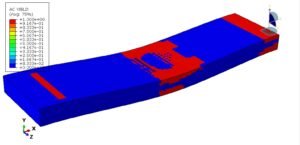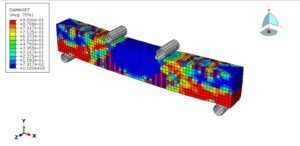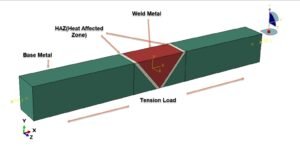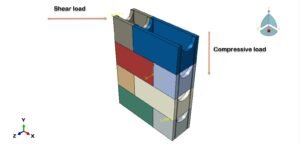
In the dynamic world of engineering, efficiency, consistency, and accuracy are paramount. Whether you’re designing complex aerospace components, analyzing structural integrity in oil & gas pipelines, or simulating biomechanical systems, repetitive tasks can consume valuable time and introduce unnecessary errors. This is where engineering templates become an invaluable asset.
Engineering templates are pre-defined frameworks, models, or documents designed to streamline common engineering tasks. They serve as a starting point, embodying best practices, standardized procedures, and often pre-configured settings. By leveraging templates, engineers can significantly reduce setup time, minimize errors, and ensure a higher degree of consistency across projects.

Image: A SolidWorks part template, illustrating how pre-defined structures streamline design workflows. (Source: Wikimedia Commons)
Why Engineering Templates Are Essential for Modern Engineering
Templates are more than just shortcuts; they are foundational tools for robust engineering workflows. Here’s why they are so critical:
Boosting Efficiency and Productivity
- Reduced Setup Time: Instead of starting from scratch, engineers begin with a pre-configured environment, saving hours on initial setup.
- Automated Repetitive Tasks: Templates can integrate scripts (e.g., Python, MATLAB) to automate data input, geometry creation, or post-processing, especially in CAD/CAE workflows.
- Faster Iterations: With a standardized base, making design changes or running parametric studies becomes much quicker.
Ensuring Consistency and Standardization
- Uniform Outputs: Templates enforce consistent naming conventions, units, reporting formats, and analysis methodologies across a team or project.
- Adherence to Standards: They can embed industry standards (e.g., ASME, API, ISO) directly into the workflow, ensuring compliance from the outset, crucial for fields like FFS Level 3 assessments.
- Brand and Quality Control: Especially for documentation and reports, templates maintain a professional and consistent appearance.
Enhancing Accuracy and Reliability
- Minimizing Human Error: Pre-validated inputs and processes reduce the likelihood of mistakes in manual data entry or setup.
- Incorporating Best Practices: Templates can encapsulate years of accumulated knowledge and proven methodologies, making them accessible to every engineer.
- Robustness: Well-designed templates are tested and validated, leading to more reliable results in analyses like FEA or CFD.
Facilitating Knowledge Transfer and Training
- Onboarding New Engineers: Templates provide a guided framework, helping new team members quickly understand and apply established workflows.
- Knowledge Preservation: They act as living documentation, ensuring that critical process knowledge isn’t lost when personnel change.
Types of Engineering Templates
Engineering templates span various disciplines and tools, each designed to optimize specific aspects of a project.
CAD Templates (Computer-Aided Design)
These templates are fundamental for product design and drafting. They establish initial settings, layers, units, and standard components.
- Part Templates: Pre-defined material properties, frequently used features (e.g., holes, fillets), custom properties for part numbers, material, revision.
- Assembly Templates: Standard mating conditions, common sub-assemblies, default environmental settings (e.g., gravity for ADAMS).
- Drawing Templates: Standard sheet sizes, title blocks, borders, projected views, annotations, and GD&T symbols.
Tools: CATIA, SolidWorks, Autodesk Inventor, Siemens NX.
CAE/Simulation Templates (Computer-Aided Engineering)
Crucial for FEA, CFD, and multibody dynamics, these templates set up the groundwork for complex analyses.
- FEA Templates: Pre-defined mesh controls for common geometries, material models, boundary conditions (loads, constraints), contact definitions, solution controls (e.g., Abaqus, ANSYS Mechanical, MSC Nastran).
- CFD Templates: Standard fluid properties, turbulence models, inlet/outlet boundary conditions, mesh refinements for specific flow regions, solver settings (e.g., ANSYS Fluent/CFX, OpenFOAM).
- Multibody Dynamics Templates: Pre-defined joints, forces, and motion drivers for standard mechanisms (e.g., ADAMS).
Tools: Abaqus, ANSYS Mechanical, ANSYS Fluent/CFX, OpenFOAM, MSC Patran/Nastran, ADAMS.
Calculation & Analysis Templates
These often involve spreadsheets or scripts for routine engineering calculations and data processing.
- Spreadsheet Templates: Excel sheets for sizing calculations, material selection, cost analysis, or basic structural checks with embedded formulas and validation rules.
- Script-Based Templates: Python or MATLAB scripts for automated data processing, specific engineering equations, parametric studies, or interfacing with CAD/CAE tools. Essential for biomechanics data analysis or oil & gas integrity assessments.
Tools: Microsoft Excel, Google Sheets, Python, MATLAB.
Reporting and Documentation Templates
Ensuring consistency in how results and project information are presented.
- Technical Report Templates: Standardized sections for introduction, methodology, results, discussion, and conclusions, often with pre-formatted tables and figures.
- Design Review Checklists: Templates outlining required checks and sign-offs at various design stages.
- Project Plan Templates: For managing timelines, resources, and deliverables.
Tools: Microsoft Word, LaTeX, Confluence.
Key Components of an Effective Engineering Template
A truly effective template goes beyond just a basic starting file. It’s a carefully crafted resource that anticipates user needs.
Standardized Headers and Footers
Automatically include project name, revision number, author, date, and company logo. This is crucial for traceability and professional presentation.
Parameterization and Variables
Allow users to easily modify key parameters (e.g., dimensions, loads, material properties) without delving deep into the model. This is critical for design studies and sensitivity analysis in FEA/CFD.
Pre-defined Geometries or Meshes
For CAE templates, including common component geometries (e.g., pipe bends, standard brackets) or pre-optimized mesh regions can significantly speed up analysis. This also includes defining element types and quality criteria for FEA/CFD.
Pre-set Boundary Conditions and Interactions
Standard loads, constraints, contact pairs, or fluid inlet/outlet conditions that are common for a specific analysis type. This reduces setup errors and ensures consistency.
Material Libraries
Access to validated material properties specific to the application (e.g., steel grades for structural engineering, specific alloys for aerospace, biological tissues for biomechanics).
Automation Scripts
Embedded Python or MATLAB scripts to perform repetitive tasks like importing data, generating specific geometries, applying complex loads, or automating post-processing and report generation. This is a game-changer for CAD-CAE integration.
Clear Instructions and Guidance
Don’t just provide the template; explain how to use it. Include notes, prompts, or even video tutorials within the template or linked documentation.
Revision Control and Versioning
Ensure templates are properly version-controlled. Old versions should be archived, and updates should be documented, preventing confusion and ensuring everyone uses the latest, validated version.
Developing Your Own Engineering Templates: A Step-by-Step Guide
Creating effective templates requires planning and a systematic approach.
Step 1: Identify the Need and Scope
- What repetitive tasks consume the most time? (e.g., setting up a specific type of FEA analysis, creating a standard drawing, generating a calculation report).
- What are the common variations? (e.g., different material properties, varying loads, geometry changes).
- Who will use this template? Understanding the user’s skill level helps in designing user-friendly interfaces.
Step 2: Define Template Requirements and Parameters
- List all essential inputs, outputs, and customizable parameters.
- Outline the core engineering principles or standards the template must adhere to.
- Determine the required level of automation.
Step 3: Design and Create the Template
- Start Simple: Begin with a basic version, then add complexity.
- Choose the Right Tool: CAD software for geometry, CAE for analysis setups, Excel for calculations, Python/MATLAB for scripting.
- Build Robustness: Use formulas, conditional formatting, and data validation to make the template resilient to incorrect inputs.
- Embed Intelligence: Leverage scripting (Python for Abaqus/ANSYS, MATLAB for data processing) to automate tasks and build in logic.
Step 4: Test, Validate, and Verify
This is arguably the most critical step. A template is only as good as its reliability.
- Unit Testing: Test individual components of the template.
- Scenario Testing: Run the template through various typical and edge-case scenarios.
- Validation Against Known Solutions: Compare template outputs to hand calculations, analytical solutions, or previously validated models.
- Peer Review: Have other experienced engineers review the template for logic, clarity, and completeness.
Step 5: Document and Deploy
- User Manual: Create clear, concise documentation explaining how to use the template, its assumptions, limitations, and how to interpret results.
- Centralized Repository: Store templates in an accessible, version-controlled location (e.g., network drive, SharePoint, Git repository).
- Training: Provide brief training sessions for users, especially for complex CAE templates.
Step 6: Maintain and Update
- Templates are living documents. Establish a process for feedback, bug fixes, and continuous improvement.
- Regularly review templates to ensure they align with current best practices, software updates, and project requirements.
Practical Workflow: Simulation Templates (FEA/CFD Focus)
Let’s consider a template for a common structural analysis in Abaqus or ANSYS Mechanical, such as a fatigue assessment of a welded joint, or a CFD analysis of flow through a valve in Fluent/CFX.
Typical Steps and Setup Logic:
- Geometry Import/Generation Logic: The template might allow importing a CAD file or generating a parametric geometry (e.g., a pipe section with a defined weld profile).
- Material Assignment: Automated assignment of material properties based on a selection from a pre-defined library (e.g., API 5L X65 steel for pipelines, aluminum alloys for aerospace).
- Meshing Strategy: Pre-set meshing parameters for critical regions (e.g., fine mesh around the weld toe or valve seat) and coarser mesh elsewhere. This might involve Python scripting for Abaqus/ANSYS to automate mesh seeding.
- Boundary Conditions & Loads: Definitions for typical loads (e.g., internal pressure, bending moments, thermal loads) and constraints (e.g., fixed ends, symmetry planes). Users input values for these parameters.
- Interaction Properties: Pre-defined contact pairs and their properties, crucial for assemblies or FFS Level 3 crack growth analysis.
- Analysis Steps & Outputs: Configured analysis steps (e.g., static, dynamic, fatigue) and requested output variables for post-processing.
- Post-Processing Script Integration: Automated extraction of key results (e.g., stress concentrations, flow velocity profiles, fatigue life predictions) and generation of plots/reports using Python or MATLAB.
Pitfalls to Avoid:
- Over-generalization: A template that tries to do too much for every scenario often becomes cumbersome and unreliable.
- Rigid Assumptions: Templates can bake in assumptions that are not always valid for all applications. Document all assumptions clearly.
- Lack of User Guidance: Without clear instructions, users might misuse the template or misinterpret its inputs/outputs.
Verification & Sanity Checks for Template-Based Simulations
Even with templates, vigilance is key. Never blindly trust simulation results.
Essential Checks:
- Mesh Quality Review: Always inspect the mesh in critical areas. Are element aspect ratios acceptable? Are there distorted elements? Tools like MSC Patran or Abaqus/ANSYS pre-processors provide detailed mesh quality metrics.
- Boundary Condition Review: Visually confirm that loads and constraints are applied correctly and in the right locations. Incorrect boundary conditions are a leading cause of simulation errors.
- Convergence Criteria: Ensure the solver has converged properly. Check residual plots for CFD (Fluent/CFX, OpenFOAM) or force/displacement convergence for FEA (Abaqus, ANSYS).
- Comparison with Hand Calculations/Analytical Solutions: For simpler load cases, perform a quick hand calculation or use a known analytical formula to get a ballpark estimate. Does the simulation output fall within a reasonable range?
- Validation Against Experimental Data/Field Observations: Where possible, validate template-generated models against physical test data or real-world observations.
- Sensitivity Analysis (Post-Template Run): Perturb key input parameters slightly (e.g., material modulus, load magnitude) to see if the output changes as expected. This builds confidence in the template’s robustness.
Common Mistakes When Using Engineering Templates
While templates offer immense benefits, misuse can lead to significant problems.
- Blind Trust: Assuming the template is infallible without understanding its underlying assumptions or limitations.
- Ignoring Documentation: Skipping the user manual or internal notes, leading to incorrect parameter input or misinterpretation of results.
- Lack of Version Control: Using outdated templates or modifying a template without proper versioning, leading to inconsistent results across projects.
- Improper Scope Application: Trying to force a template designed for one specific application onto a completely different problem.
- Insufficient Post-Processing: Relying solely on automated outputs without critical review of the raw results and understanding the engineering implications.
- Neglecting Sanity Checks: Failing to perform basic verification steps after running a template-based analysis.
Best Practices for Template Management
To maximize the utility of engineering templates, systematic management is crucial.
- Centralized Repository: Store all official templates in a single, easily accessible, and secured location.
- Clear Ownership: Assign an owner or a small team responsible for creating, validating, and maintaining each template.
- User Training and Support: Provide initial training and ongoing support to ensure users understand how to effectively utilize templates.
- Feedback Mechanism: Establish a clear process for users to report bugs, suggest improvements, or request new templates.
- Regular Audits: Periodically review existing templates to ensure they remain relevant, accurate, and aligned with current engineering practices and software versions.
- Integrate with PLM/PDM Systems: For larger organizations, integrate templates with Product Lifecycle Management (PLM) or Product Data Management (PDM) systems for seamless version control and distribution.
Industry Applications and Tools
Engineering templates are universally applicable across various sectors:
| Industry Sector | Common Template Applications | Typical Tools |
|---|---|---|
| Oil & Gas | FFS Level 3 assessment models, pipeline integrity analysis (corrosion/crack growth), riser/platform structural analysis, CFD for multiphase flow. | Abaqus, ANSYS Mechanical, ANSYS Fluent/CFX, Python, MATLAB |
| Aerospace | Component stress analysis (e.g., brackets, spars), fatigue life prediction, aeroelasticity models, CAD design standards for aircraft parts. | CATIA, MSC Nastran, Abaqus, ANSYS Mechanical, MATLAB |
| Structural Engineering | Beam/column design calculations, connection detail drawings, FEM models for concrete/steel structures, wind/seismic load analysis. | SAP2000, ETABS, RISA-3D, Excel, AutoCAD |
| Biomechanics | Prosthetic device design (CAD), FEA of implants/tissues, gait analysis data processing, CFD of blood flow. | SolidWorks, Abaqus, OpenFOAM, MATLAB, Python |
| Automotive | Crashworthiness FEA models, NVH (Noise, Vibration, Harshness) analysis, powertrain component design, multibody dynamics of suspension systems. | LS-DYNA, Abaqus, ANSYS Mechanical, ADAMS, CATIA |
| CAD-CAE Workflows | Parametric model generation in CAD linked to automated FEA/CFD setup, design optimization loops. | SolidWorks, Inventor, CATIA, ANSYS Workbench, Abaqus/Scripting |
Automation with Python & MATLAB
For truly powerful and flexible templates, Python and MATLAB scripting are indispensable. These tools allow engineers to:
- Parametrize Complex Models: Drive CAD geometries or CAE setups based on external input files or databases.
- Automate Pre-processing: Generate mesh, assign materials, apply boundary conditions programmatically. For example, Python scripting in Abaqus or using the API in ANSYS Workbench.
- Orchestrate Workflows: Link multiple software packages. For instance, extract data from a CAD model, prepare an input file for CFD (OpenFOAM), run the simulation, and post-process results, all controlled by a single script.
- Generate Custom Reports: Extract key results, create plots, and compile comprehensive reports automatically.
Leveraging these automation capabilities can transform a static template into a dynamic, highly adaptable tool, significantly enhancing productivity. For complex engineering challenges requiring advanced computation, remember that EngineeringDownloads offers affordable HPC rental to run your models, alongside online courses, internship-style training, and project consultancy to enhance your skills and project delivery.
Conclusion
Engineering templates are much more than simple document formats; they are strategic tools for fostering efficiency, ensuring quality, and capturing knowledge within engineering teams. By meticulously developing, validating, and managing these templates, engineers can dedicate more time to innovation and problem-solving, rather than repetitive setup tasks. Embrace templates, and you’ll build a more streamlined, reliable, and productive engineering workflow.
Further Reading
ISO 9001: Quality management systems (General information on quality practices)
Frequently Asked Questions (FAQs)
What is an engineering template?
An engineering template is a pre-formatted document, model, or script that provides a standardized starting point for common engineering tasks. It includes predefined settings, parameters, and structures to streamline workflows, ensure consistency, and reduce errors in design, analysis, and documentation.
Why should engineers use templates?
Engineers should use templates to significantly boost efficiency by reducing setup time, ensure consistency in outputs and adherence to standards, enhance accuracy by minimizing manual errors, and facilitate knowledge transfer within teams. They allow engineers to focus on critical thinking rather than repetitive actions.
Can templates be used for complex simulations like FEA or CFD?
Absolutely. FEA and CFD templates are highly valuable for complex simulations. They can include pre-defined mesh controls, material models, boundary conditions, solver settings, and even integrate automation scripts (e.g., Python for Abaqus/ANSYS) to handle specific geometries or load cases, making complex analyses more repeatable and less error-prone.
How do I ensure the accuracy of a template-based analysis?
Ensuring accuracy involves rigorous testing and validation of the template itself, including comparing its outputs to hand calculations or known analytical solutions. After using the template for an analysis, always perform verification and sanity checks such as reviewing mesh quality, confirming boundary conditions, checking solver convergence, and performing sensitivity analyses on key parameters.
What’s the role of scripting languages like Python or MATLAB in engineering templates?
Python and MATLAB play a crucial role in enhancing engineering templates by enabling advanced automation. They can be used to parametrize CAD models, automate complex CAE pre-processing steps (e.g., mesh generation, load application), orchestrate multi-software workflows, and automatically generate custom reports. This transforms static templates into dynamic, highly adaptable tools.
Where can I find engineering templates, or should I create my own?
Some software vendors provide basic templates, and online communities might share generic ones. However, for specific project requirements, industry standards, or proprietary workflows, it’s often best to create your own templates. This allows you to tailor them precisely to your team’s needs, embed specific best practices, and integrate with your existing tools and data. The guide above outlines steps for creating effective templates.