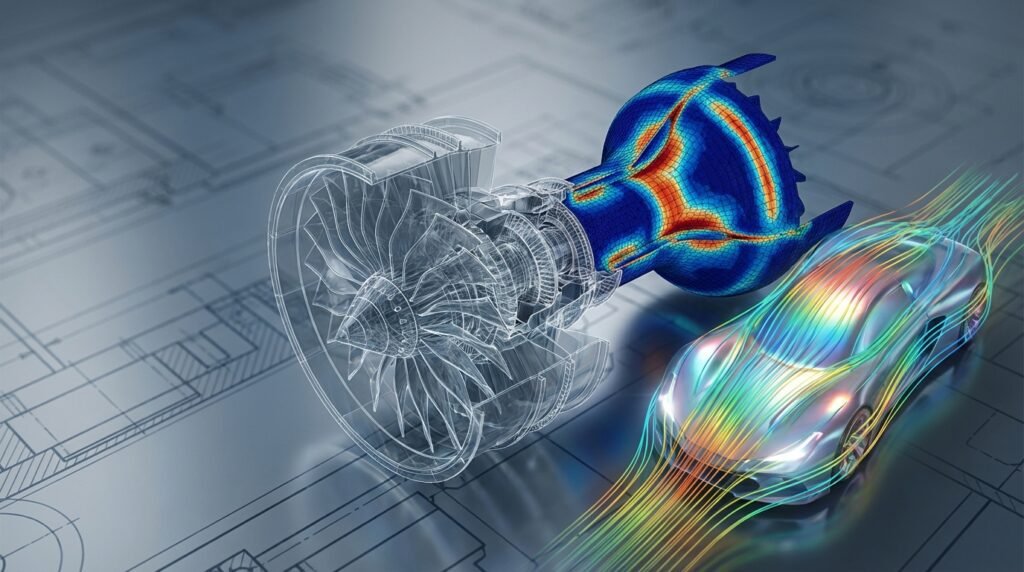
Digital Twins are rapidly transforming how engineers design, operate, and maintain complex systems. Far more than just a 3D model, a Digital Twin is a dynamic, virtual replica of a physical asset, process, or system, continuously updated with real-time data. This powerful technology enables engineers to predict behavior, optimize performance, and make data-driven decisions without impacting the physical world.

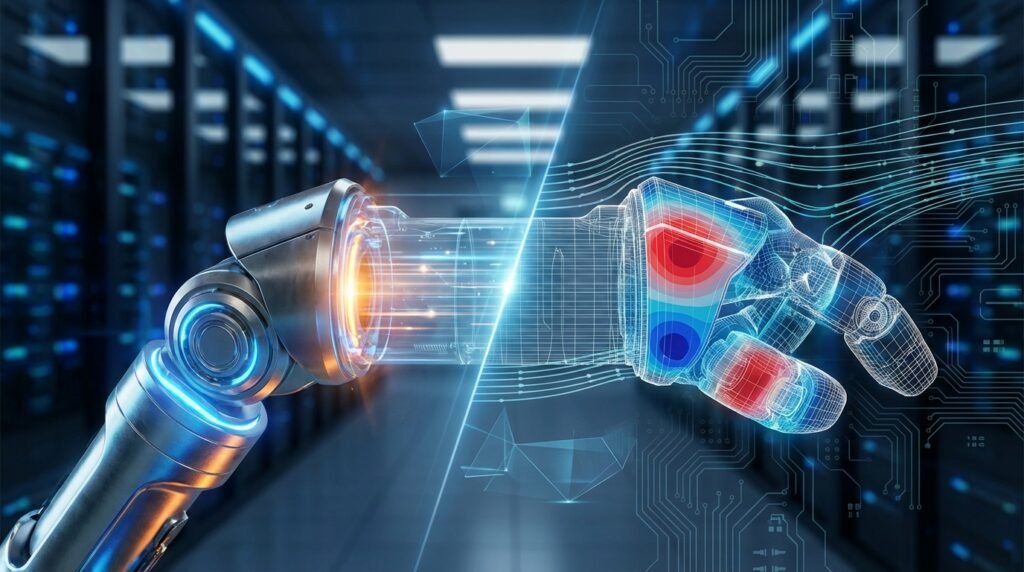
Image: Siemens.com – A conceptual illustration of a digital twin connecting physical and virtual realms.
What is a Digital Twin? The Core Concept
At its heart, a Digital Twin creates a living, breathing digital counterpart to a physical entity. Imagine a wind turbine, an oil rig, or even a human heart: a Digital Twin isn’t just a static CAD model. It’s a continuously evolving virtual model that mirrors its physical counterpart’s lifecycle, from design to operation and eventual decommissioning.
Key Components of a Digital Twin
- Physical Asset: The real-world object or system being replicated.
- Virtual Model: A detailed computational model (often leveraging CAD/CAE tools) representing the physical asset’s geometry, physics, and behavior.
- Data Link: Sensors on the physical asset feed real-time data (e.g., temperature, pressure, vibration, stress) to the virtual model. This link can be bidirectional, allowing the virtual model to influence the physical.
- Analytics & Insights: Advanced algorithms, often powered by AI/ML, process the integrated data to generate actionable insights, predict failures, and suggest optimizations.
Why Digital Twins are Game-Changers in Engineering
The practical benefits of adopting Digital Twin technology are immense, offering significant advantages across various engineering disciplines:
- Predictive Maintenance: Anticipate equipment failures before they occur, reducing downtime and maintenance costs.
- Real-time Monitoring & Control: Gain continuous visibility into asset performance and health, allowing for immediate intervention.
- Performance Optimization: Simulate ‘what-if’ scenarios to fine-tune operations, increase efficiency, and extend asset life.
- Risk Reduction: Test modifications or operational changes in a safe virtual environment before applying them physically.
- Design Validation & Iteration: Accelerate product development by rapidly prototyping and validating designs virtually.
- Improved Collaboration: Provide a shared, up-to-date view of an asset’s status for diverse teams.
The Anatomy of a Digital Twin: A Deep Dive
Creating a robust Digital Twin involves several integrated layers, each critical to its functionality.
Data Acquisition & Sensors
The foundation of any Digital Twin is reliable data. This data comes from various sensors embedded in the physical asset. These can include accelerometers, strain gauges, thermometers, pressure transducers, flow meters, and more. The quality, frequency, and relevance of this data directly impact the accuracy and utility of the twin.
The Virtual Model (Simulation & Analysis)
This is where engineering simulation plays a pivotal role. The virtual model is not just a CAD representation; it incorporates physics-based simulations to accurately mimic the asset’s behavior under various conditions.
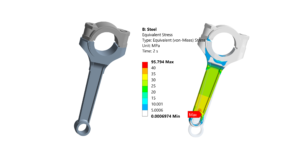
- Finite Element Analysis (FEA): For structural integrity, stress, strain, fatigue analysis (e.g., Abaqus, ANSYS Mechanical, MSC Nastran/Patran).
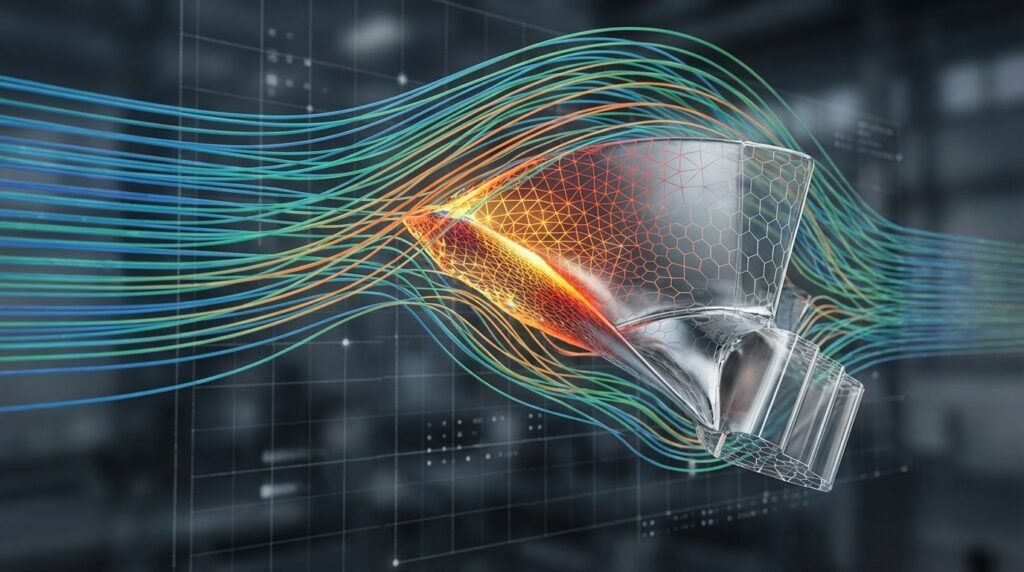
- Computational Fluid Dynamics (CFD): For fluid flow, heat transfer, aerodynamics (e.g., ANSYS Fluent/CFX, OpenFOAM).
- Multibody Dynamics (MBD): For complex mechanical systems with moving parts (e.g., ADAMS).
- Electromagnetics & Thermal: For electronic components or heat dissipation.
These models are often built using CAD software (like CATIA or SolidWorks) and then imported into CAE environments for detailed analysis. The fidelity of these simulation models is crucial for the Digital Twin’s predictive power.
Data Integration & Analytics
Raw sensor data needs to be processed, cleaned, and integrated with the virtual model. IoT platforms are often used to manage this data flow. Analytics tools, frequently implemented using Python or MATLAB, then process this integrated data to extract meaningful patterns, predict outcomes, and provide insights. Machine learning models can be trained on historical and real-time data to improve predictive accuracy over time.
Visualization & Interaction
Engineers need intuitive ways to visualize the Digital Twin’s state and interact with its data. This often involves dashboards, 3D visualizations, and augmented reality (AR) interfaces that overlay virtual information onto the physical asset.
Practical Workflow for Implementing a Digital Twin
Implementing a Digital Twin is an iterative process. Here’s a step-by-step guide:
Phase 1: Define Scope & Objectives
Start small. What specific problem are you trying to solve? Is it reducing unscheduled downtime, optimizing energy consumption, or extending asset life? Clearly define key performance indicators (KPIs).
- Identify the Asset: Choose a critical asset or system.
- Set Clear Goals: Quantifiable objectives (e.g., ‘reduce turbine downtime by 15%’).
- Stakeholder Alignment: Involve operations, maintenance, and engineering teams.
Phase 2: Data Acquisition Strategy
Determine what data is needed and how to collect it.
- Sensor Selection: Identify appropriate sensors for critical parameters (temperature, vibration, pressure, etc.).
- Data Collection Infrastructure: Plan for IoT gateways, data storage, and network connectivity.
- Data Quality & Frequency: Establish protocols for data validation and collection rates.
Phase 3: Model Development (CAD/CAE)
Build the foundational virtual representation of your asset.
- Geometric Modeling: Create or import accurate CAD models (e.g., from CATIA).
- Physics-based Simulation: Develop FEA, CFD, or MBD models (e.g., in Abaqus, ANSYS, ADAMS) representing the asset’s behavior. This includes defining material properties, boundary conditions, and loading scenarios.
- Model Simplification: Balance accuracy with computational efficiency.
Phase 4: Data Integration & Calibration
Connect the real-world data to your virtual model.
- Data Mapping: Link sensor data streams to specific parameters or boundary conditions in your simulation model.
- Model Calibration: Adjust model parameters based on initial real-world data to ensure the virtual twin accurately reflects the physical twin’s behavior. This is crucial for predictive accuracy.
Phase 5: Deployment & Monitoring
Bring your Digital Twin online and start gathering insights.
- Platform Integration: Deploy the Digital Twin on a suitable platform (cloud-based or on-premise).
- Dashboard Creation: Develop user interfaces for real-time monitoring and visualization.
- Alert Systems: Implement automated alerts for deviations or predicted failures.
Phase 6: Iteration & Refinement
A Digital Twin is never truly ‘finished’.
- Performance Review: Regularly assess the twin’s accuracy and effectiveness against its objectives.
- Model Updates: As the physical asset ages or undergoes modifications, update the virtual model.
- Algorithm Improvement: Continuously refine analytics and machine learning models based on new data and insights.
Digital Twins Across Engineering Disciplines
The versatility of Digital Twin technology makes it applicable to a wide array of engineering fields.
Structural Engineering & Integrity (FFS Level 3)
For critical infrastructure like bridges, high-rise buildings, or offshore oil & gas platforms, Digital Twins enable continuous structural health monitoring. By integrating sensor data from strain gauges, accelerometers, and environmental sensors with FEA models (Abaqus, ANSYS), engineers can predict fatigue life, detect early signs of damage (e.g., cracks, corrosion), and perform Fitness-for-Service (FFS) Level 3 assessments in real-time. This proactive approach significantly enhances safety and extends asset lifespan.
Oil & Gas
From upstream exploration to downstream refining, Digital Twins optimize operations, ensure safety, and manage asset integrity. They monitor pipeline conditions (pressure, flow, wall thickness), predict equipment failure in pumps and compressors, and optimize drilling parameters. For complex processes, CFD (Fluent, OpenFOAM) models within the twin can predict multiphase flow behavior or combustion efficiency.
Aerospace
In aerospace, Digital Twins are used for engine performance monitoring, airframe structural health management, and predicting component wear. By linking flight data with detailed FEA models, engineers can monitor stress cycles, predict crack propagation, and optimize maintenance schedules for individual aircraft components. This is crucial for both safety and cost efficiency.
Biomechanics
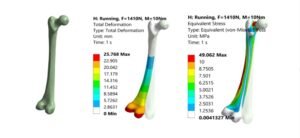
Digital Twins are emerging in biomechanics for personalized medicine, prosthetics design, and medical device performance tracking. For instance, a Digital Twin of a prosthetic limb could be fed data from embedded sensors to monitor load distribution and predicted wear, allowing for optimal fit and function for the patient.
Manufacturing & Industrial Processes
In manufacturing, Digital Twins optimize production lines, predict machine breakdown, and enhance product quality. They can simulate different manufacturing scenarios, identify bottlenecks, and allow for virtual commissioning of new equipment, saving time and resources.
Leveraging Simulation for Digital Twin Creation
Simulation tools are the backbone of the virtual model within a Digital Twin. They provide the predictive capability that distinguishes a twin from a simple data dashboard.
| Simulation Type | Key Applications in Digital Twins | Relevant Tools |
|---|---|---|
| FEA (Finite Element Analysis) | Structural integrity, stress/strain analysis, fatigue prediction, deformation under load | Abaqus, ANSYS Mechanical, MSC Nastran/Patran |
| CFD (Computational Fluid Dynamics) | Fluid flow, heat transfer, aerodynamics, multiphase flow, pressure drops | ANSYS Fluent/CFX, OpenFOAM |
| MBD (Multibody Dynamics) | Kinematics, dynamics of mechanical systems, gear trains, linkages, robotic arms | ADAMS |
| Thermal Analysis | Temperature distribution, heat dissipation, thermal stress | ANSYS Mechanical, Abaqus |
The integration of these advanced simulation capabilities with real-time data is often orchestrated using scripting languages like Python or MATLAB. These languages can automate model updates, run simulations, post-process results, and interface with data platforms. For example, Python scripts can read sensor data, update boundary conditions in an ANSYS input file, run the simulation, and then extract critical stress values for anomaly detection.
Need help with advanced simulation scripting or data integration for your Digital Twin? EngineeringDownloads.com offers specialized Python/MATLAB scripts and expert consultancy services to streamline your CAD-CAE workflows. Explore our resources for downloadable templates and project support.
Verification & Sanity Checks for Your Digital Twin
A Digital Twin is only as good as its accuracy and reliability. Rigorous verification and validation are non-negotiable.
Data Quality & Sensor Calibration
The first line of defense. Ensure all sensor data is accurate, reliable, and free from noise or corruption. Regularly calibrate sensors and implement data filtering techniques. Anomalous sensor readings can lead to misleading predictions from your twin.
Model Validation
Compare your virtual model’s predictions against known physical behavior or experimental data. This is often done through physical testing of prototypes or subsystems. If the twin predicts a certain vibration frequency or stress level, does the real asset behave similarly under controlled conditions? This is critical for establishing confidence in your simulation models.
Convergence & Sensitivity Studies
For your FEA or CFD models within the twin, perform mesh independence studies to ensure your results aren’t dependent on mesh density. Conduct sensitivity analyses to understand how variations in input parameters (e.g., material properties, boundary conditions) affect your twin’s predictions. This helps identify the most critical parameters requiring accurate real-time data.
System-level Integration Tests
Once individual components of the Digital Twin (sensors, models, analytics) are verified, test the entire integrated system. Does data flow correctly? Are predictions generated in a timely manner? Does the feedback loop function as intended?
Regular Audits
Periodically review the Digital Twin’s performance against its stated objectives. As the physical asset degrades or undergoes changes, ensure the virtual model is updated accordingly. An outdated twin is a useless twin.
Common Pitfalls & How to Avoid Them
- Poor Data Quality: GIGO (Garbage In, Garbage Out). Invest in robust sensors and data validation processes.
- Overly Complex Models: Don’t try to model everything. Focus on the critical physics relevant to your objectives. Balance fidelity with computational cost.
- Scope Creep: Define clear objectives from the start and resist the urge to add too many features too soon.
- Lack of Integration: Siloed data or disconnected simulation models will cripple your twin. Plan for seamless integration from day one.
- Security Concerns: Digital Twins handle sensitive operational data. Implement robust cybersecurity measures.
- Ignoring Human Factors: Ensure the insights generated by the twin are presented in an actionable way for human operators and engineers.
Checklist for Digital Twin Implementation Success
- ✓ Clearly defined objectives and KPIs
- ✓ Robust data acquisition strategy with quality sensors
- ✓ Accurate and validated physics-based simulation models (FEA/CFD/MBD)
- ✓ Seamless data integration platform (IoT, Python/MATLAB scripting)
- ✓ Effective data analytics and predictive algorithms
- ✓ Intuitive visualization and interaction interfaces
- ✓ Strong cybersecurity measures
- ✓ Plan for ongoing model updates and maintenance
- ✓ Cross-functional team collaboration
- ✓ Budget and resources allocated for long-term support
Further Reading
For more detailed insights into Digital Twin technology, refer to official industry resources:
Siemens – What is a Digital Twin?