Understanding Impact Engineering: The Science of Survival
Impact Engineering is a specialized field of engineering that focuses on designing structures, materials, and systems to withstand dynamic loads, sudden forces, and high-energy collisions. It encompasses the study of how materials and structures behave under conditions ranging from low-velocity impacts, such as a falling object, to high-velocity events like ballistic strikes, vehicle crashes, or blast phenomena. The core objective of Impact Engineering is to enhance safety, improve durability, and ensure the structural integrity of products and infrastructure when subjected to extreme, short-duration forces. This critical discipline leverages advanced computational mechanics, material science, and experimental testing to predict, analyze, and mitigate the potentially catastrophic effects of impact events.
From the crashworthiness of automobiles to the ballistic protection of military vehicles and the design of protective sports equipment, Impact Engineering plays an indispensable role in safeguarding lives and assets. It is not merely about preventing failure but about controlling the failure mode, absorbing energy efficiently, and managing the propagation of stress waves to protect occupants or critical components. As technology advances and safety standards become more stringent, the demand for sophisticated Impact Engineering solutions continues to grow across diverse industries.
Fundamental Principles of Impact Engineering
At the heart of Impact Engineering lies a deep understanding of physics, mechanics, and material science under dynamic conditions. Unlike static loading, impact events involve rapid changes in momentum and significant energy transfer over very short timescales, leading to complex material responses.
Dynamic Loading and Stress Propagation
Impact events introduce forces that change rapidly with time, known as dynamic loads. When an object strikes another, energy is transferred, generating stress waves that propagate through the material at the speed of sound. Understanding how these waves initiate, travel, reflect, and interact within a structure is crucial. High strain rates, often exceeding 10^3 s^-1, can significantly alter material properties, making them behave differently than under quasi-static conditions. Materials may become stiffer, exhibit different yield strengths, or undergo brittle fracture rather than ductile deformation. This phenomenon necessitates specialized constitutive models that account for strain rate dependency.
Material Response to Impact
The way a material responds to impact is fundamental to its performance. Key considerations include:
- Energy Absorption: The capacity of a material or structure to dissipate kinetic energy during an impact event, typically through plastic deformation, fracture, or viscoelastic damping.
- Deformation Mechanisms: How materials deform under impact, distinguishing between elastic (recoverable), plastic (permanent), and brittle (fracture) behaviors. Ductile materials often absorb more energy through plastic deformation before fracture.
- Failure Modes: Identifying common failure modes such as fracture, delamination (in composites), buckling, crushing, or tearing. Predicting and controlling these modes is a primary goal of Impact Engineering.
- Strain Rate Sensitivity: Many materials, particularly metals and polymers, exhibit a dependency on the rate at which they are deformed. Yield strength and ultimate tensile strength can increase significantly at high strain rates.
Energy Absorption Mechanisms
Effective Impact Engineering designs often incorporate specific mechanisms to absorb and dissipate impact energy. These include:
- Plastic Deformation: Utilizing ductile materials that can undergo significant permanent deformation, like crumple zones in cars.
- Fracture and Fragmentation: Controlled breakage or fragmentation can dissipate energy, although often avoided in primary load-bearing structures.
- Viscoelastic Damping: Materials that convert mechanical energy into heat, such as specialized polymers and rubbers.
- Friction: Energy dissipation through friction between components or layers.
- Phase Transformation: Certain materials can undergo phase changes under extreme pressure and temperature, absorbing energy.
Methodologies in Impact Engineering
Modern Impact Engineering relies on a synergistic approach combining advanced experimental techniques with sophisticated computational modeling to analyze and predict complex impact phenomena.
Experimental Testing Techniques
Empirical data from physical tests are essential for validating computational models and characterizing material behavior under impact. These tests simulate real-world scenarios and provide direct measurements of impact response.
Drop Tower Tests
Drop tower tests involve dropping a mass from a predetermined height onto a specimen to simulate low-to-medium velocity impacts. These tests are versatile for assessing energy absorption capabilities, crush resistance, and penetration resistance of materials and components. Instrumented drop towers can measure impact force, energy, and deformation characteristics with high precision.
Ballistic Impact Tests
Ballistic tests are designed to simulate high-velocity impacts, typically involving projectiles (e.g., bullets, fragments) fired at a target. These tests are critical for evaluating the protective performance of armor, aerospace components (against foreign object damage – FOD), and personal protective equipment. High-speed cameras and sensors are used to capture deformation and failure mechanisms, and to determine parameters like V50 ballistic limit (the velocity at which there’s a 50% probability of penetration).
Crash Testing
Full-scale crash tests are performed on vehicles to assess their crashworthiness and occupant safety. These highly instrumented tests involve controlled collisions against barriers or other vehicles, providing invaluable data on structural deformation, airbag deployment, occupant kinematics, and injury risk. Crash test dummies equipped with sensors measure forces and accelerations experienced by human occupants during an impact.
Computational Modeling and Simulation
Numerical simulations have revolutionized Impact Engineering, allowing engineers to explore design variations, optimize material usage, and predict complex behaviors before physical prototyping. This saves significant time and cost.
Finite Element Analysis (FEA)
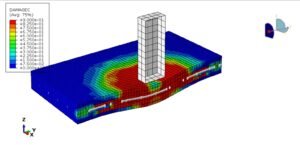
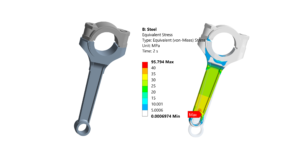
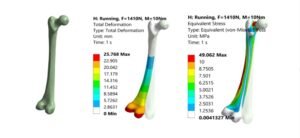
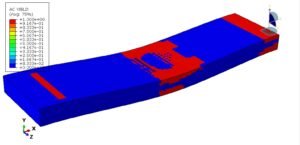
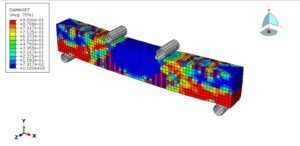
Explicit Dynamic Finite Element Analysis is the cornerstone of impact simulation. It discretizes a structure into many small elements and solves the equations of motion for each element over very small time steps. FEA can accurately model large deformations, material non-linearity, contact interactions, and fracture propagation under dynamic loads. It is widely used in automotive crash simulations, aerospace bird strike analysis, and blast modeling.
Smoothed Particle Hydrodynamics (SPH)
SPH is a mesh-free Lagrangian method particularly suited for problems involving extreme material deformation, fragmentation, and fluid-structure interaction, where traditional FEA meshes might distort excessively. It is often employed for modeling hyper-velocity impacts, blast propagation in fluids, and highly ductile material behavior.
Discrete Element Method (DEM)
DEM is used to model the behavior of granular materials and assemblies of discrete particles. In Impact Engineering, it can be applied to simulate the impact of particulate matter, the crushing of cellular materials, or the interaction of projectiles with granular media, providing insights into energy dissipation through particle-particle interactions.
Advanced Materials for Impact Resistance
Material selection is paramount in Impact Engineering. Innovations in material science continuously provide new options for enhancing impact resistance while managing weight and cost.
Composites and Layered Structures
Fiber-reinforced composites (e.g., carbon fiber, fiberglass, aramid fiber) offer high strength-to-weight ratios and tailored anisotropic properties. Layered structures, often combining different materials (e.g., ceramic strike-face with polymer backing), are highly effective in dissipating energy, arresting cracks, and preventing penetration. The interplay between layers can significantly enhance overall impact performance.
Foams and Cellular Materials
Metallic and polymeric foams, honeycomb structures, and other cellular materials are excellent energy absorbers due to their ability to undergo extensive crushing deformation at a relatively constant force. They are widely used in protective packaging, automotive crash structures, and sports equipment due to their lightweight and tunable properties.
High-Strength Alloys
Advanced high-strength steels (AHSS), aluminum alloys, and titanium alloys are engineered to offer superior strength and ductility under dynamic loading conditions. Their microstructural design provides enhanced toughness, allowing them to absorb significant energy through plastic deformation before fracture, making them vital for structural integrity in demanding applications.
Key Applications Across Industries
The principles and methodologies of Impact Engineering are applied across a vast spectrum of industries, driving innovation in safety, performance, and durability.
Automotive Sector: Enhancing Crashworthiness
Impact Engineering is perhaps most visible in the automotive industry. It dictates the design of crumple zones, side-impact protection beams, airbag systems, and pedestrian protection features. The goal is to absorb crash energy efficiently, control deformation patterns, and minimize forces transmitted to occupants during collisions. This ensures compliance with stringent safety regulations and contributes to higher NCAP (New Car Assessment Program) ratings.
Aerospace and Defense: Mitigating High-Velocity Threats
In aerospace, Impact Engineering addresses critical issues such as bird strike resistance for aircraft engines and fuselages, foreign object damage (FOD) protection, and the design of crashworthy landing gear. For defense applications, it is fundamental to the development of ballistic armor for personnel and vehicles, blast-resistant structures, and impact-tolerant components for weaponry and munitions. The stakes are incredibly high, demanding robust and reliable designs.
Sports and Personal Protective Equipment: Ensuring User Safety
From helmets for cycling, motorcycling, and contact sports to body armor and shin guards, Impact Engineering is crucial for designing protective gear. It focuses on optimizing energy absorption to reduce the risk of concussions, fractures, and other impact-related injuries, often utilizing multi-layer systems and advanced foam technologies to dissipate impact energy effectively.
Civil Engineering: Resilient Infrastructure
In civil engineering, Impact Engineering principles are applied to design structures that can withstand impacts from vehicles (e.g., bridge piers, guardrails), seismic events, and even blast loads. This includes designing blast-resistant buildings, impact-absorbing barriers, and energy-dissipating devices for earthquake protection, ensuring the safety and longevity of critical infrastructure.
Manufacturing: Precision and Protection
Impact Engineering also plays a role in manufacturing processes, such as high-speed forming, riveting, and impact welding, where controlled impact forces are used to shape or join materials. Conversely, it’s vital for protecting sensitive equipment from operational impacts, designing robust industrial machinery, and creating resilient packaging solutions for delicate components during transport.
Challenges and Future Directions in Impact Engineering
As the complexity of materials and structures increases, Impact Engineering continues to evolve, facing new challenges and exploring innovative solutions.
Multi-Scale and Multi-Physics Modeling
Future advancements will increasingly involve modeling impact events across multiple scales—from the atomic and microstructural level up to the macroscopic structural response. Integrating different physics (e.g., mechanics, thermodynamics, fluid dynamics) within a single simulation framework will enable more accurate predictions of complex phenomena, like the thermo-mechanical response of materials during hypervelocity impact or combined blast-fragmentation effects.
Smart Materials and Structures
The integration of smart materials, such as self-healing polymers, piezoelectric sensors, and active damping systems, promises revolutionary changes. These materials and structures could detect impact events, actively dissipate energy, or even repair themselves post-impact, leading to unprecedented levels of resilience and safety. Research into auxetic materials, which thicken when stretched, also holds promise for enhanced energy absorption.
Sustainable Impact Design
There’s a growing emphasis on developing sustainable Impact Engineering solutions. This involves designing with recyclable or bio-degradable materials, optimizing material usage to reduce waste, and developing manufacturing processes with lower environmental footprints, all while maintaining or enhancing impact performance.
Data-Driven Approaches and AI
The proliferation of sensor data from real-world impacts and advanced simulations is fueling the application of machine learning and artificial intelligence in Impact Engineering. AI can be used for rapid design optimization, predictive maintenance based on impact history, and even real-time adaptive response systems to mitigate ongoing threats.
Conclusion: Engineering for a Safer, More Resilient Future
Impact Engineering is a dynamic and essential field that bridges fundamental science with practical application, continuously pushing the boundaries of what is possible in terms of safety and structural integrity. Through the meticulous application of experimental testing, computational modeling, and advanced material science, engineers in this discipline design systems that can withstand the most extreme dynamic loads. As industries demand ever-higher levels of protection and performance, the innovations within Impact Engineering will continue to play a pivotal role in creating a safer, more resilient world, from the vehicles we drive to the protective gear we wear and the infrastructure that supports our lives.