Introduction
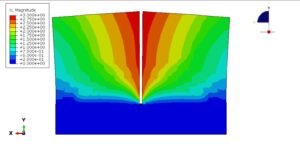
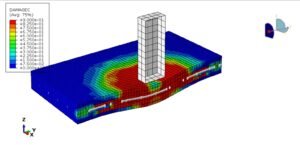
Computer-Aided Engineering (CAE) – especially Finite Element Analysis (FEA) – is at the heart of modern product development. From cars and aircraft to electronics and buildings, virtually every industry uses CAE simulations to test and optimize designs before anything is built. This widespread adoption makes CAE engineering an exciting and lucrative career path. In fact, the global market for simulation software was valued around $11 billion in 2020 and is projected to grow ~17.5% by 2028, with the FEA software segment growing about 9% in that time. In simple terms, demand for CAE/FEA skills is booming, creating plenty of opportunities to make money if you have the right expertise. In this comprehensive guide, we’ll explain how to become a CAE engineer – including the skills and qualifications you need – and seven effective ways to earn money using your FEA/CAE skills.
What Does a CAE/FEA Engineer Do?
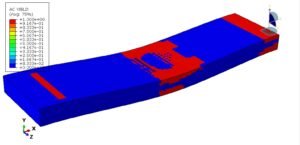
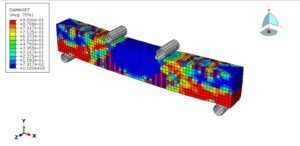
A CAE engineer (or FEA engineer) uses computer simulations to predict how products will behave under real-world conditions.
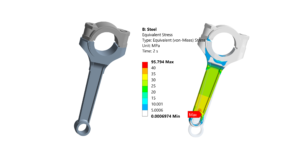
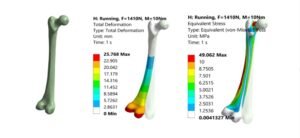
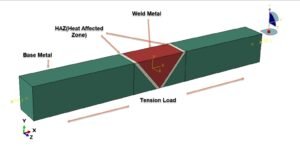
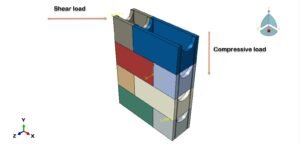
CAE is an umbrella term for computer-aided analysis techniques (like FEA, CFD, etc.), while FEA (Finite Element Analysis) specifically refers to breaking a model into many small elements to simulate physical behaviors (stress, heat, fluid flow, etc.). As a CAE/FEA engineer, your job is to build virtual models and run analyses to answer questions such as: Will this car suspension withstand potholes?, Can this aircraft wing handle turbulent airflow?, or Does this smartphone design dissipate heat effectively?
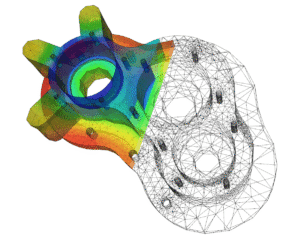
In practice, FEA engineers spend their days setting up simulations (meshing geometries, applying material properties and loads), running software like ANSYS, Abaqus, or OpenFOAM, and interpreting the results. They collaborate with design engineers to improve products based on simulation insights. Industries that heavily employ FEA include automotive, aerospace, civil engineering, energy, biomechanics, and manufacturing. Simulation is critical for optimizing performance and ensuring safety, so it’s no surprise that demand for FEA specialists is especially strong in automotive, aerospace, medical devices, and renewable energy sectors. Wherever there’s a need to reduce physical prototypes and prevent failures, CAE engineers play a key role.
Why Pursue a Career in CAE/FEA?
Becoming a CAE engineer can be highly rewarding both intellectually and financially. It’s a career at the cutting edge of technology – you get to play with advanced simulation software and tackle complex engineering problems. It’s also in demand: as products grow more complex and companies aim to cut costs, simulation experts are needed to virtually test designs. This means strong job prospects and salary potential. For example, in the United States an FEA Engineer’s total pay typically ranges from about $102,000 to $174,000 per year, with a median around $130,000 annually. Even entry-level FEA analysts often start with competitive salaries, and experienced specialists or those in high-stakes industries (like aerospace/defense) can earn six-figure incomes.
Another reason to pursue CAE is job stability and growth. The push for lighter, safer, and more efficient products ensures that FEA skills will remain in demand. Many employers report difficulty finding qualified simulation engineers, meaning opportunities should be plentiful. And it’s not just full-time jobs – as we’ll discuss, skilled CAE analysts can also freelance or consult and command excellent rates. In short, if you have a passion for engineering and computers, FEA is a fantastic niche to be in.
Key Skills and Qualifications for CAE Engineers
So, what does it take to become a CAE/FEA engineer? Here are the essential skills and qualifications you’ll need to launch a career in this field:
- Education: A Bachelor’s degree in Mechanical, Aerospace, Civil, or related Engineering is the usual baseline. Many FEA engineers also have a Master’s degree with focus on solid mechanics, finite element methods, or similar. A strong academic foundation in engineering principles is important.
- Solid Engineering Fundamentals: You must have a good grasp of engineering mechanics – strength of materials, solid mechanics, fluid mechanics, thermodynamics, etc. These fundamentals are critical for setting up correct simulations and interpreting results accurately.
- FEA/CAE Software Proficiency: Hands-on experience with one or more FEA packages (such as ANSYS, Abaqus, NASTRAN, COMSOL, or open-source tools like Code_Aster or OpenFOAM for CFD) is a must. You should know how to create meshes, apply boundary conditions, run analyses, and troubleshoot simulation errors.
- Programming & Tools: Basic programming or scripting skills can set you apart. Many companies value engineers who can automate simulations using Python, MATLAB, or C++. Familiarity with CAD software (SolidWorks, CATIA, etc.) is also useful since FEA often starts from CAD models.
- Analytical and Problem-Solving Skills: FEA is as much an art as a science. You’ll need an analytical mindset to simplify complex real-world problems into simulation models. Attention to detail is key – small mistakes (like an incorrect boundary condition or material property) can invalidate results.
- Communication Skills: It’s not enough to run simulations; you must explain the results to others. Good report-writing and presentation skills are important so that design teams or clients can understand your findings.
- Eagerness to Learn: The field of CAE is always evolving – new software features, new simulation techniques, and now even AI integration (using machine learning to optimize designs). Top FEA engineers continually learn and adapt. Being curious and proactive about learning (through courses, workshops, or self-study) will keep you competitive.
Tip: If you’re aiming for high-paying FEA roles, consider specializing in a niche skill. For example, expertise in nonlinear material modeling (like composites or hyperelastic materials), crash simulation, or multiphysics coupling can make you a sought-after specialist. Similarly, knowledge of industry standards (e.g. ASME codes for pressure vessels) can be valuable for certain projects.
How to Become a CAE/FEA Engineer (Step-by-Step)
- Build a Strong Academic Foundation: Start with a relevant engineering degree and excel in courses related to mechanics, materials, and mathematics. If possible, take electives or projects involving FEA or CAD. Universities often have courses in finite element methods – these provide theoretical underpinnings that will help you use FEA effectively.
- Learn FEA Software: Theory is important, but employers also want to see practical software skills. While in school (or through self-learning), get hands-on with popular FEA tools. Many have student versions or trial licenses. Tutorials and online courses can help – for example, learning to perform a basic static stress analysis in Ansys or Abaqus. Focus on mastering the workflow: preprocessing (meshing, etc.), running the solver, and post-processing results. If you’re interested in CFD or thermal analysis, learning a tool like ANSYS Fluent or OpenFOAM is also great.
- Do Projects and Build a Portfolio: Nothing demonstrates your skills better than real projects. Take on FEA-related projects during college (senior design project, research with a professor) or as personal side projects. For instance, you might simulate a bridge truss under load, or analyze a drone propeller for stresses and vibrations. Document these projects – save images of your simulation results, and note the objectives and outcomes. A portfolio of FEA projects (even if they’re self-initiated) shows initiative and gives you concrete talking points in job interviews.
- Consider Advanced Training/Certifications: If you want to further boost your credentials, consider a specialized FEA certification course or a Master’s degree focusing on CAE. Some online platforms and institutes offer programs in FEA/CAE. These can provide deeper knowledge and often industry-relevant exercises. While not always required, advanced training can accelerate your learning and signal to employers that you’re job-ready.
- Network and Engage with the Community: Connect with other professionals in the CAE space. Join LinkedIn groups, attend webinars or workshops on simulation, and participate in forums (like XANSYS or Reddit’s r/FEA) to discuss problems. Networking can lead to job referrals or mentorship. Don’t be afraid to reach out to FEA engineers at companies you’re interested in – sometimes a coffee chat can lead to an opportunity down the line.
- Apply for Entry-Level Positions or Internships: When you feel ready, start applying for roles like “FEA Engineer”, “Simulation Engineer”, “CAE Analyst”, or related titles. Emphasize your project experience and software skills on your resume. Be prepared to talk through how you set up an analysis, any challenges you overcame, and what the results meant. If you lack work experience, an internship in an R&D or product engineering team can be a great stepping stone – you’ll get mentorship while practicing on real-world problems.
- Continue Learning on the Job: Once you land that first CAE job, the journey isn’t over – in fact, it’s just beginning. Every simulation you run will teach you something new. Seek out variety if you can (different types of analyses, different software). Over time, you might deepen in a specialization (say, automotive crash simulation) or broaden across multiple physics. Either way, stay updated on the latest in simulation technology. Many CAE engineers find it useful to learn scripting (Python APIs for tools like Abaqus or ANSYS) to automate repetitive tasks – this can make you more efficient and even open up new roles (some engineers transition into developing custom simulation tools or workflows for their company).
By following these steps, you’ll position yourself as a capable CAE engineer. Now that we’ve covered the “how to become” part, let’s get into the exciting part: how you can earn money with your CAE and FEA skills. In the next section, we’ll explore seven proven ways – ranging from traditional employment to side hustles and freelancing.
7 Ways to Earn Money with FEA and CAE Skills
Once you have FEA/CAE expertise, there are multiple ways to monetize those skills. Many people immediately think of a full-time engineering job (which is a great option), but you’re not limited to that. You can create multiple income streams – for example, holding a day job while freelancing on the side or selling your own simulation content. Let’s explore seven popular ways to make money as a CAE/FEA specialist:
1. Land a Full-Time CAE/FEA Engineering Job
The most straightforward path is to secure a permanent job as an FEA or CAE engineer. Companies in sectors like aerospace, automotive, defense, energy, manufacturing, and civil engineering regularly hire simulation experts. Common job titles include FEA Engineer, Simulation Analyst, Structural Analyst, CAE Specialist, or Mechanical Engineer (CAE). In such roles, you’ll be part of an engineering team, running simulations to support product design and development.
Full-time jobs offer stability, a steady salary, and often benefits (health insurance, retirement plans, etc.). As mentioned earlier, the pay can be excellent – mid-career FEA engineers often make high five-figure or six-figure salaries. Furthermore, these roles can be very rewarding; you get to see your analysis directly influence real products. To maximize your earnings and growth in a full-time role, aim to become the go-to expert in your group (be proactive, ensure your simulations are accurate, and communicate results clearly). Over time, you can progress to senior or lead engineering positions, which come with higher pay.
Tip: Don’t limit yourself geographically. CAE skills are in demand worldwide, and many companies are open to hiring international talent (some even sponsor visas for skilled FEA engineers). We live in an era of remote and global work, so you might find opportunities abroad or with distributed teams. A “Simulation Engineer” position in Germany or Japan could be within reach if you have the right skills – think globally!
2. Freelance on Engineering Marketplaces
If a conventional 9-to-5 isn’t your style (or you want to supplement your income), consider working as a freelance FEA/CFD engineer. There is a booming online market for freelance engineering projects. Small companies, startups, or even individual inventors often need simulation help on a project basis but can’t afford a full-time analyst – that’s where you come in. You can work remotely on FEA projects and get paid per project or hour.
Websites like Upwork, Freelancer.com, Fiverr, and CadCrowd have categories for Finite Element Analysis, CFD, CAD, and engineering simulations. For example, a quick search on Upwork shows dozens of FEA simulation jobs posted – from analyzing a drone frame for stress to performing a heat transfer analysis on a mechanical part. As a freelancer, you’ll bid on such projects, and if selected, complete the analysis and deliver results to the client. Payment is typically handled through the platform safely.

To succeed in freelancing, it helps to niche down and highlight your specialty. Perhaps you’re really good at static structural analysis of machinery, or CFD for HVAC systems, or FEA of composite materials. Tailor your profile and portfolio to showcase that expertise. Over time, as you get good reviews, you can increase your rates. Experienced freelance CAE engineers can charge significant hourly rates (often $50–100+/hr for specialized work). It’s not unheard of to earn a full-time income through freelancing alone, if you build a strong reputation.
Pros: You have flexibility to choose projects and work from anywhere. You can also take on multiple clients for diversified income. Cons: Income can be variable, and you’ll spend time marketing yourself. Start small – maybe freelance on the side of your regular job – and if it grows enough, you could freelance full-time.
3. Start or Join a CAE Consulting Service
Closely related to freelancing, but on a larger scale, is working as a consultant or even starting your own CAE consulting business. Engineering consulting companies specialize in providing simulation and analysis services to clients on a contract basis. You might either join an established consulting firm (many engineering consulting companies hire FEA specialists), or if you have an entrepreneurial spirit, launch your own consultancy offering FEA/CFD services.
As a consultant, you’ll handle more end-to-end projects: scoping the problem with the client, executing the analysis, and often making design recommendations. Consulting projects can range from a quick verification analysis to long-term support for a client’s R&D. The earning potential in consulting can be high – clients pay a premium for expert advice. However, building a consultancy requires networking and trust-building. If going solo, you’ll need to find clients (perhaps local businesses or via your professional network). Delivering quality results on time is key to getting repeat business.
One strategy is to start consulting on the side. For instance, you could do small jobs for local firms (ensuring there’s no conflict with your main job) to gain experience. If demand grows, you might transition to consulting full-time. Alternatively, some FEA engineers partner up to form a small consulting team, which can be effective to handle larger projects. Keep in mind that consulting might involve additional responsibilities like writing proposals, handling contracts, and ensuring you have the necessary software licenses.
Case in point: Many experienced industry engineers pivot to consulting later in their careers. They leverage their niche expertise (say, 20 years experience in automotive crash simulation) and industry contacts to get consulting gigs after leaving their corporate job. This can be a flexible way to semi-“retire” while still earning a solid income through consulting projects. Even early-career engineers can do it successfully if they identify a market need and prove their capability.
4. Sell Your Simulation Models, Templates, or Courses
This is a more passive income approach: create digital products related to FEA/CAE and sell them online. Think of it as “productizing” your knowledge. For example, over the years you might develop highly detailed FEA models (like a validated model of a wind turbine blade, or a finely meshed human femur bone for biomedical analysis). Or maybe you have written a comprehensive tutorial series on using Abaqus for geotechnical simulations. There are plenty of fellow engineers or researchers who would happily pay for quality models and learning resources to save themselves time.
Platforms like EngineeringDownloads allow engineers to upload and sell validated simulation models, example files, and even full training courses. By sharing your models or analysis templates, you help others and earn a commission from each sale. For instance, if you have a great FEA model of a composite material layup that took you weeks to develop and validate, you can list it for sale – other engineers or students can purchase it to learn from or adapt to their projects. EngineeringDownloads (the site hosting this blog) is one such marketplace that welcomes FEA/CAE content from creators. They boast hundreds of categorized models and encourage experts to “share your validated models with us and boost your income.”
Other avenues for selling include more general marketplaces: CGTrader, TurboSquid, or GrabCAD for 3D models (though these cater more to CAD models, some simulation-specific content might fit). If you’ve authored an e-book or video course (for example, “Mastering ANSYS Explicit Dynamics – from Beginner to Advanced”), you can sell that on platforms like Udemy, Skillshare, or Gumroad. The e-learning market is booming, and a well-made technical course can generate substantial revenue over time (some online instructors in engineering niches report earning thousands of dollars per year from course sales).
Keep in mind, selling products is not a “get rich quick” scheme – it takes effort up front to create high-quality content. But once created, those products can be sold repeatedly (earning passive income). One success story: an FEA specialist packaged his knowledge of 3D printing simulations into a detailed training bundle and reportedly earned over \$10,000 in one year from that course alone. The key is to identify what unique knowledge or asset you have that others value, and present it in an accessible format.
Important: Ensure you respect any company IP. Only sell models or tutorials that you have rights to. It’s fine to use things you developed on your own time or that are publicly shareable. But you shouldn’t, for example, upload a model that you created at your day job unless you have permission. When done properly, selling your FEA expertise and tools can be a win-win for you and the buyers.
5. Teach or Tutor (Online or Offline)
Another way to monetize your FEA skills is through teaching and tutoring. Many people want to learn FEA – from university students to working professionals looking to upskill. If you enjoy explaining concepts and mentoring others, you can turn that into an income stream. Here are a few approaches:
- Private Tutoring: Offer one-on-one tutoring in FEA/CAE or related subjects (mechanics, MATLAB, CAD, etc.). This can be done locally or via video calls. You could help a college student debug their simulation assignment, or guide an entry-level engineer through learning a new software. Hourly rates for specialized tutoring can be quite good, especially if you have an advanced degree or lots of experience.
- Live Workshops or Webinars: Conduct group training sessions. For instance, you might host a weekend workshop on “Introduction to CFD using OpenFOAM” or “FEA for Civil Engineers – Basics of Earthquake Simulation.” You can charge attendees a fee. Companies might also hire you to train their staff on a specific tool if you position yourself as an expert.
- Adjunct Teaching: With a master’s or PhD, you could teach part-time at a local university or community college. Some schools offer evening courses in CAE or related topics for continuing education programs. This is more of a supplemental income (and a service to the community) than a high-paying gig, but it can be rewarding and enhance your credibility.
- Online Mentoring Platforms: There are websites that connect experts with learners (such as Superprof, Wyzant, or even an “Experts” section on some forums). You can list your profile and take on mentoring for a fee.
Teaching not only earns money but also reinforces your own knowledge. As the saying goes, the best way to learn is to teach. By fielding questions from students, you’ll deepen your understanding of FEA. Additionally, being active in education can raise your profile – which might indirectly lead to other opportunities (like a company noticing you and offering a consulting gig).
One caution: teaching can require significant time and energy. Be sure to balance it with your other commitments. However, even a couple of tutoring hours per week can add a nice side income. And you might find it personally fulfilling to help the next generation of engineers master these tools.
6. Create Online Content (YouTube, Blog, etc.)
We live in the age of the content creator. Sharing your knowledge online for free can eventually pay off through monetization strategies. The idea is to build an audience interested in engineering and then earn via ads, sponsorships, or community support. For example:
- Start a YouTube Channel: YouTube has a thriving community of engineering enthusiasts. You could create videos demonstrating FEA tutorials, offering career advice, or showcasing cool simulation projects. While growth might be slow at first, consistent quality content can attract viewers. Once you meet YouTube’s criteria (currently at least 1,000 subscribers and 4,000 hours of watch time in the past 12 months to join the Partner Program), you can monetize your videos with ads. Some YouTubers also get sponsorship deals from software companies or engineering firms to feature or review products. It’s even possible to earn through viewer support (Patreon or channel memberships) if your content has loyal fans.
- Write a Blog or Articles: If you prefer writing, start a blog (like “FEA For All” or “Simulation Tips”) where you publish helpful articles. As your site gains traffic, you can use display advertising or affiliate marketing (e.g. refer readers to books or courses and get a commission). Blogging also boosts your professional visibility – it’s like a living portfolio demonstrating your expertise. Who knows, a blog post you write about meshing techniques might impress a hiring manager someday!
- Social Media and Forums: Share insights on LinkedIn, Twitter (X), or engineering forums. While you might not directly earn money from a single post, building a personal brand can lead to opportunities (such as being invited to speak at events, or getting consulting inquiries). Some experts eventually get paid to write guest articles or appear on podcasts/webinars, thanks to their online presence.
One great aspect of creating free content is that it forces you to stay sharp and updated. To teach others or produce content, you’ll often research and experiment more yourself. Over time, you’ll become known as an authority in your niche. It does take patience – don’t expect YouTube ad revenue to replace your salary overnight. But some creators do eventually make substantial income. Even if it remains a modest side hustle, it can be fun and opens doors. Just remember to keep the tone friendly and engaging – online audiences appreciate a human, conversational style (no one wants a dry lecture after all).
Pro tip: Consistency is key in content creation. Pick a schedule (say one video every two weeks or one blog post a month) and stick to it. Engage with your audience – answer questions in comments, take their suggestions for future topics, etc. This builds a community, which is both rewarding and beneficial for growth.
7. Leverage Your CAE Skills in Emerging Tech or Startups
As a final point, consider that your FEA/CAE expertise could be a springboard into new tech areas that are emerging – potentially leading to even more ways to earn. For example, combining mechanical engineering with programming and AI is a hot trend. Companies are increasingly using AI for design optimization and predictive maintenance. A mechanical engineer who can also write machine learning algorithms is quite valuable. You could freelance or consult in this intersection (there are projects where clients need both domain knowledge and AI know-how). Or you might even develop a software tool – for instance, a custom app that automates a specific FEA process or uses AI to interpret FEA results – and sell it as a product.
Alternatively, with the rise of startups in hardware and tech, your skills could earn you equity if you join a venture as the go-to CAE person. Startups often can’t pay high salaries, but they might offer stock options. If you’re passionate about a domain (say renewable energy devices or biomedical implants), joining a startup lets you work on cool projects and possibly share in the company’s success down the line.
Another angle is research and patents. If you innovate a new simulation technique or a design improvement through FEA, you could patent it and potentially license the technology. While this is a longer play and not guaranteed, it’s another facet of monetizing your skills – turning brainpower into intellectual property.
In summary, think creatively. Your CAE skills don’t exist in a vacuum – they intersect with coding, business, education, and more. By keeping an eye on industry trends and being willing to step out of your comfort zone, you might discover a niche that’s both fulfilling and profitable.
Turn Your CAE Skills into a Thriving Career
Becoming a CAE/FEA engineer opens up a world of opportunities. Not only can you land excellent jobs solving real-world engineering challenges, but you can also diversify your income through freelancing, consulting, teaching, or creating content. The key steps are to build solid expertise and then to put yourself out there – whether by applying to that dream job, bidding on a freelance project, or publishing an insightful article that gets noticed.
Remember, success won’t come overnight. Each of the paths we discussed takes effort: you might spend late nights debugging simulations or editing a YouTube video or answering a student’s questions. But this work can pay off both financially and in personal satisfaction. Few things are as rewarding as knowing your analysis prevented a product failure, or your tutorial helped someone land their first job.
As you advance, continue honing your skills. The field of CAE is continuously evolving with new tools (and yes, even AI integration). Stay curious and keep learning – it will make you better and open even more doors. Also, be patient and persistent, especially if you’re pursuing a non-traditional route like online content or a personal business. It may take time to build momentum, but with consistency you’ll get there.
Finally, don’t hesitate to seek support and collaborate. The engineering community is vast – you can find mentors, peers, or even future clients just by reaching out. For instance, if you’re looking for a platform to get started, consider joining communities or marketplaces dedicated to engineering (like EngineeringDownloads for selling models, or Upwork for freelancing). Take advantage of these resources to showcase your capabilities.
In the end, CAE/FEA is more than just a skill – it’s a career catalyst. Companies need your know-how, and individuals around the world are eager to learn what you know. By following the guidance in this blog and leveraging the avenues that suit you best, you can turn your simulation skills into a thriving source of income. So go ahead – run that analysis, post that gig, record that tutorial – and take your CAE journey to the next level. The world of engineering needs you, and there’s no limit to what you can achieve (or earn) with your FEA expertise!
Turn Your CAE Skills into Income
EngineeringDownloads is a global marketplace built by engineers, for engineers. Upload your tutorials, training packages, ready-to-use FEA/CFD models, codes, and tools—for Abaqus, Ansys/Fluent, COMSOL, LS-DYNA, MATLAB/Python, OpenFOAM, OpenSees, Simufact, and more—and start earning immediately while building a public portfolio that clients can trust. Our community already spans multiple software categories and disciplines, with dedicated sections for Packages & Tutorials, Engineering Files & Tools, and Ready-to-use Models—plus clear paths to sell your models or even join as a consultant.
Why publish on EngineeringDownloads?
-
No tool lock-in: List projects from any CAE software category—Abaqus, Ansys/Fluent, COMSOL, LS-DYNA, MATLAB/Python, and “Other Software” are all supported.
-
Multiple product types: Sell courses, models, scripts, spreadsheets, and hand calculations—whatever showcases your expertise best.
-
Instant credibility: Your storefront doubles as a living portfolio that helps you win freelance work and consulting engagements. (You can also join as a consultant right on the platform.)
-
Proven demand: Visitors browse categorized, validated models and training daily—“Sell Your Models” is a core site pathway designed to boost creator income.
Get started in minutes
-
Step 1: Create an account and upload your first tutorial/model.
-
Step 2: Add a clear title, short description, visuals, and tags (software + discipline).
-
Step 3: Set your price and publish. Share your product link in your CV, LinkedIn, and proposals to build authority and drive sales.
Hundreds of learners, dozens of experts, and a growing catalog of courses and models are already live—join them and turn your CAE skills into a new revenue stream today.