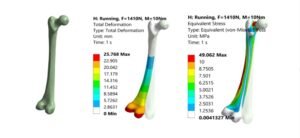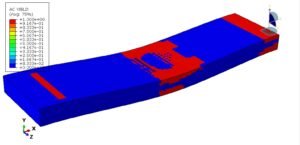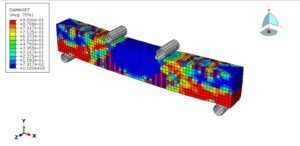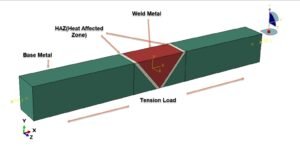
Fatigue failure is a significant concern in engineering design, accounting for a large percentage of structural failures in components subjected to cyclic loading. Predicting when a component will fail due to fatigue is crucial for ensuring product safety, reliability, and optimizing maintenance schedules. While traditional analytical methods provide initial estimates, Finite Element Analysis (FEA) offers a powerful and detailed approach to simulate and predict fatigue life, especially for complex geometries and loading conditions.
This guide dives into the practical aspects of using FEA for fatigue life prediction. We’ll explore the essential steps, common pitfalls, and best practices to help you achieve reliable results in your structural integrity assessments.

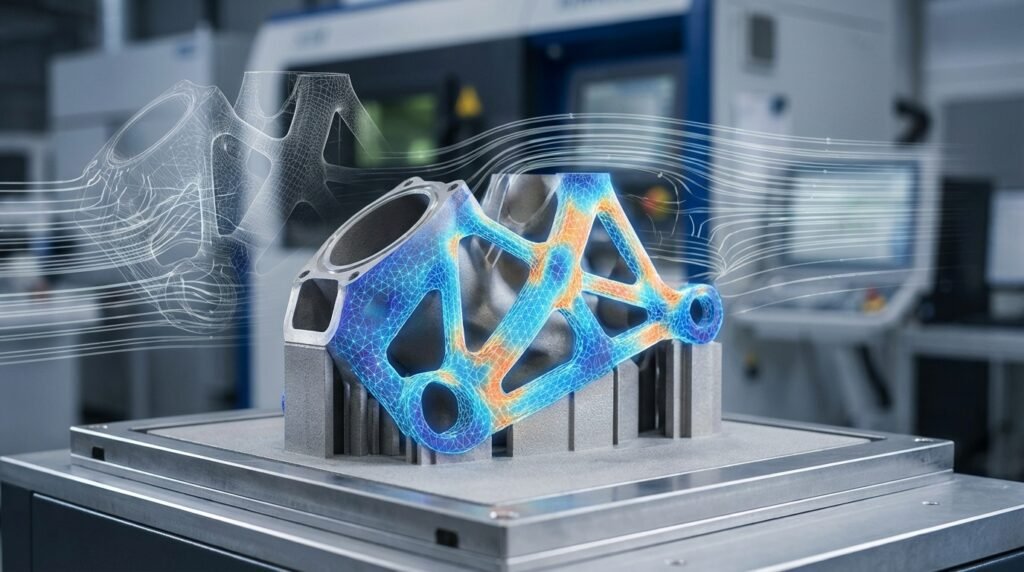
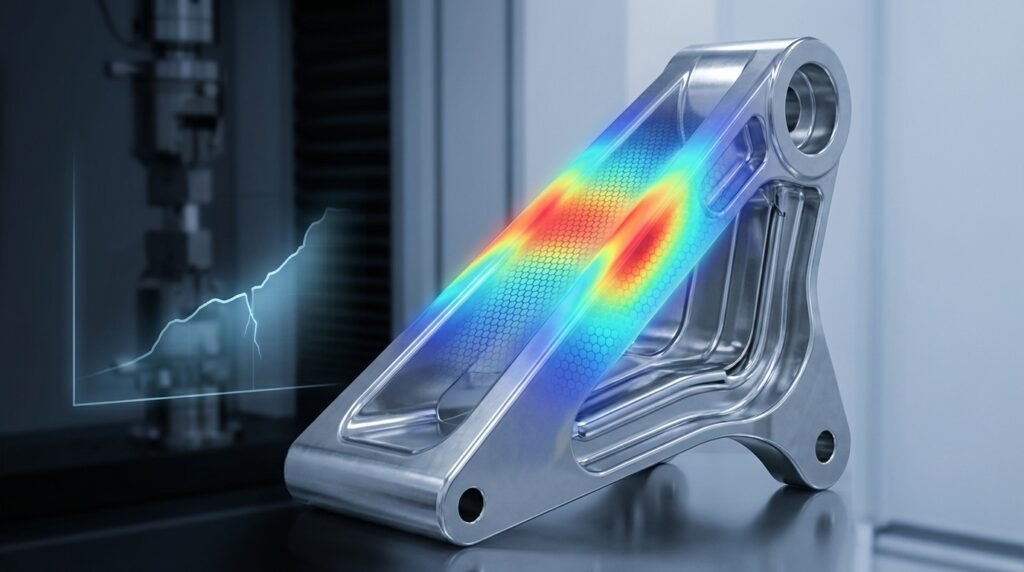
Image by Gerd Altmann from Pixabay.
Understanding Fatigue Failure in Engineering
Before diving into the FEA specifics, it’s vital to grasp the fundamentals of fatigue failure.
The Basics of Fatigue
Fatigue is a progressive and localized structural damage process that occurs when a material is subjected to cyclic or fluctuating stresses below its yield strength. Over time, these cyclic loads can initiate cracks, which then propagate, leading to ultimate fracture. Unlike static failure, fatigue failure can occur at stress levels far below a material’s ultimate tensile strength.
- Crack Initiation: Typically occurs at stress concentrations (e.g., notches, holes, fillets, surface defects).
- Crack Propagation: The crack grows under cyclic loading.
- Final Fracture: Occurs when the remaining cross-section can no longer sustain the applied load.
Why Predict Fatigue Life?
Accurate fatigue life prediction is paramount for several reasons:
- Safety: Prevents catastrophic failures in critical components (e.g., aircraft, bridges, pressure vessels).
- Reliability: Ensures products meet their design lifespan and perform as expected.
- Cost Savings: Optimizes material usage, reduces warranty claims, and informs maintenance scheduling.
- Design Optimization: Allows engineers to compare different designs, materials, and manufacturing processes for improved fatigue resistance.
The FEA Advantage in Fatigue Analysis
FEA transforms complex engineering problems into solvable numerical models, providing detailed insights into stress and strain distributions that are critical for fatigue analysis.
Key Benefits of Using FEA
- Complex Geometries: Handles intricate shapes and assemblies where analytical solutions are impossible.
- Detailed Stress/Strain Fields: Provides highly localized stress and strain data, essential for identifying fatigue critical locations.
- Varied Loading Conditions: Accommodates complex cyclic loading, including multi-axial and non-proportional loading.
- Material Behavior: Can incorporate advanced material models, including plasticity and anisotropic properties.
Common Challenges
- Material Data Accuracy: High sensitivity to correct material fatigue properties (S-N curves, ε-N curves).
- Computational Cost: Detailed transient or non-linear analyses can be computationally intensive.
- Mesh Quality: Results are highly dependent on appropriate mesh refinement, especially at stress concentrations.
- Software Complexity: Requires skilled operators to correctly set up analyses and interpret results.
Practical Workflow for Fatigue Life Prediction with FEA
Here’s a step-by-step guide to conducting a fatigue life prediction using FEA, applicable with tools like Abaqus, ANSYS Mechanical, or MSC Nastran.
Step 1: Geometry & Meshing
The foundation of any FEA is the geometry and its discretization into finite elements.
- Simplify Geometry: Remove minor features (small chamfers, fillets not critical to stress) if they do not significantly affect stress concentration in the region of interest.
- CAD Integration: Import your CAD model (e.g., from CATIA or SolidWorks) into your FEA software.
Tips for High-Quality Meshes
- Refinement: Ensure fine mesh refinement in regions of expected high stress concentration (e.g., holes, fillets, weld toes).
- Element Type: Use higher-order elements (e.g., quadratic tetrahedral or hexahedral) for better accuracy. Hexahedral meshes are often preferred for their accuracy and computational efficiency where possible.
- Aspect Ratio & Skewness: Aim for good element quality (low aspect ratio, low skewness) to avoid numerical errors.
Step 2: Material Properties & Constitutive Models
Accurate material data is non-negotiable for reliable fatigue predictions.
- Elastic Properties: Young’s Modulus, Poisson’s Ratio.
- Fatigue Properties: Crucially, obtain S-N (Stress-Life) or ε-N (Strain-Life) curves. These are typically derived from experimental testing.
- Tensile Properties: Yield strength, ultimate tensile strength, elongation.
Illustrative Material Properties for Structural Steel (Example)
| Property | Value (Illustrative) | Unit |
|---|---|---|
| Young’s Modulus (E) | 200 | GPa |
| Poisson’s Ratio (ν) | 0.3 | – |
| Yield Strength (Sy) | 350 | MPa |
| Ultimate Tensile Strength (Sut) | 500 | MPa |
| Fatigue Strength Coeff. (σ’f) | 800 | MPa |
| Fatigue Strength Exp. (b) | -0.08 | – |
Step 3: Loading & Boundary Conditions
Apply realistic loads and boundary conditions that accurately represent the component’s operational environment.
- Cyclic Loads: Define the load history (e.g., constant amplitude, variable amplitude, random loading). Specify minimum and maximum load values.
- Boundary Conditions: Correctly constrain the model to prevent rigid body motion and simulate supports (fixed, pinned, rollers).
- Contact: If relevant, define contact interactions between parts, as contact can significantly influence local stresses.
Step 4: Static or Transient Stress Analysis
Perform a stress analysis to get the stress/strain response of the component under the applied loads.
- Static Analysis: For constant amplitude loading or when inertial effects are negligible. This is often the first step, where peak stresses are identified.
- Transient Analysis: For dynamic loading or when time-dependent effects are significant.
- Non-Linearity: Consider non-linear material behavior (plasticity) if local stresses exceed the yield strength, especially for strain-life approaches.
Step 5: Fatigue Model Selection
Choose the appropriate fatigue theory based on material behavior, loading conditions, and desired accuracy.
Stress-Life (S-N) Approach
- Principle: Relates stress amplitude to the number of cycles to failure.
- Application: High-cycle fatigue (where stresses are predominantly elastic).
- Key Data: S-N curve, mean stress correction models (e.g., Goodman, Soderberg, Gerber).
- Tools: Most FEA software have built-in S-N fatigue modules.
Strain-Life (ε-N) Approach
- Principle: Relates local strain amplitude to the number of cycles to failure.
- Application: Low-cycle fatigue (where plastic deformation is significant).
- Key Data: ε-N curve, cyclic stress-strain curve.
- Considerations: Requires more complex material characterization and often non-linear FEA.
Fracture Mechanics (Paris’ Law)
- Principle: Predicts crack propagation rates based on stress intensity factor range (ΔK).
- Application: When an initial crack or flaw is assumed to exist.
- Key Data: da/dN vs. ΔK curve (Paris’ Law constants).
- Methods: Often used with XFEM (Extended Finite Element Method) or sub-modeling techniques in FEA.
Step 6: Post-Processing & Life Calculation
Once the stress/strain fields are obtained, the FEA software’s fatigue module or external scripts (e.g., in Python or MATLAB) can calculate fatigue life.
- Stress Extraction: Extract principal stresses, von Mises stress, or critical plane stresses.
- Critical Location Identification: Identify hot spots with the highest fatigue damage.
- Life Calculation: Based on the chosen fatigue model and material data, calculate cycles to failure (Nf) or damage accumulation.
- Visualization: Plot fatigue life contours on the model for easy interpretation.
Key Tools for Fatigue FEA
Several commercial FEA packages offer robust capabilities for fatigue analysis.
Commercial Software
- Abaqus: Known for its powerful non-linear capabilities and advanced material models, suitable for both stress-life and strain-life approaches.
- ANSYS Mechanical: Features comprehensive fatigue modules that integrate seamlessly with its structural analysis capabilities, supporting various fatigue theories and mean stress corrections.
- MSC Patran/Nastran: A long-standing solution in structural analysis, including strong fatigue analysis functionalities, particularly in aerospace and automotive sectors.
Additionally, specialized fatigue analysis tools can be integrated with these solvers to provide advanced capabilities.
Verification & Sanity Checks for Reliable Results
No FEA result should be accepted without thorough verification and validation.
Mesh Sensitivity Studies
Perform analyses with progressively finer meshes in critical regions. The results (e.g., peak stress, fatigue life) should converge to a stable value. If not, your mesh may be too coarse.
Boundary Condition Validation
Double-check that your constraints and loads accurately represent the physical system. A common mistake is over-constraining the model, leading to artificially low stresses.
Convergence Criteria
For non-linear or iterative analyses, ensure that the solver’s convergence criteria (force, displacement, energy) are met. Unconverged solutions are unreliable.
Comparison with Hand Calculations & Test Data
- Simple Cases: For simplified versions of your component, compare FEA results with classical analytical solutions.
- Experimental Data: Ideally, validate your FEA model against physical test data. This is the ultimate verification. If direct test data is unavailable, seek similar component test data or published literature.
Sensitivity Analysis
Explore how variations in input parameters (e.g., material properties within tolerances, load magnitudes, boundary condition locations) affect the fatigue life prediction. This helps understand the robustness of your design.
Common Mistakes and How to Avoid Them
Awareness of these common pitfalls can save significant time and improve accuracy.
Incorrect Material Data
Mistake: Using generic or incomplete material fatigue properties.
Avoid: Always strive for experimentally derived S-N or ε-N curves for your specific material and processing condition. Account for temperature effects if applicable.
Overlooking Stress Concentrations
Mistake: Failing to identify or adequately model geometric features that cause high-stress gradients.
Avoid: Thoroughly inspect CAD models for sharp corners, sudden changes in cross-section, and use fine mesh refinement at these locations. Use sub-modeling techniques if necessary.
Inadequate Mesh Refinement
Mistake: Using a uniformly coarse mesh, especially in critical regions, leading to inaccurate stress predictions.
Avoid: Always perform mesh sensitivity studies and apply local mesh refinement where high stresses are expected.
Ignoring Mean Stress Effects
Mistake: Assuming zero mean stress or applying a correction factor inappropriately.
Avoid: Understand the mean stress state of your loading cycle and apply appropriate mean stress correction theories (Goodman, Gerber, Soderberg) as part of your fatigue analysis.
Misinterpreting Results
Mistake: Taking fatigue life numbers at face value without considering scatter, safety factors, or the probabilistic nature of fatigue.
Avoid: Always apply appropriate safety factors. Remember that fatigue life predictions are statistical, and results represent a mean or characteristic life, not an absolute guarantee. Consider the context and limitations of your chosen fatigue theory.
Takeaways for Engineers
Fatigue life prediction using FEA is an indispensable tool for modern engineering. By combining robust FEA modeling with accurate material data and a systematic verification approach, you can significantly enhance the reliability and safety of your designs.
Remember, while FEA is powerful, it’s a tool that requires engineering judgment. Start with simple models, validate against known data, and progressively increase complexity. For advanced analysis techniques or if you’re looking for specialized templates and scripts to streamline your fatigue analysis workflows, explore the resources available at EngineeringDownloads.com. We also offer online consultancy and tutoring to help you master these critical skills.
Frequently Asked Questions (FAQs)
Further Reading
For more in-depth information on fatigue and fracture mechanics standards, consider reviewing resources from ASTM International: ASTM International – Fatigue and Fracture