Introduction: The Evolving Landscape of Mechanical Engineering Skills
Mechanical engineering is a dynamic field, constantly evolving with technological advancements. From designing the next generation of aerospace components to optimizing energy systems in oil & gas, mechanical engineers are at the forefront of innovation. But what specific mechanical engineer skills are truly essential in today’s demanding industry? It’s more than just knowing equations; it’s about combining deep theoretical knowledge with practical application, computational prowess, and vital soft skills.
This comprehensive guide will break down the core competencies every aspiring and experienced mechanical engineer needs. We’ll explore technical expertise, software proficiency, automation skills, and the indispensable professional attributes that drive success in roles spanning structural engineering, biomechanics, and beyond.

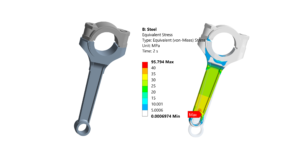
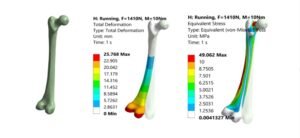
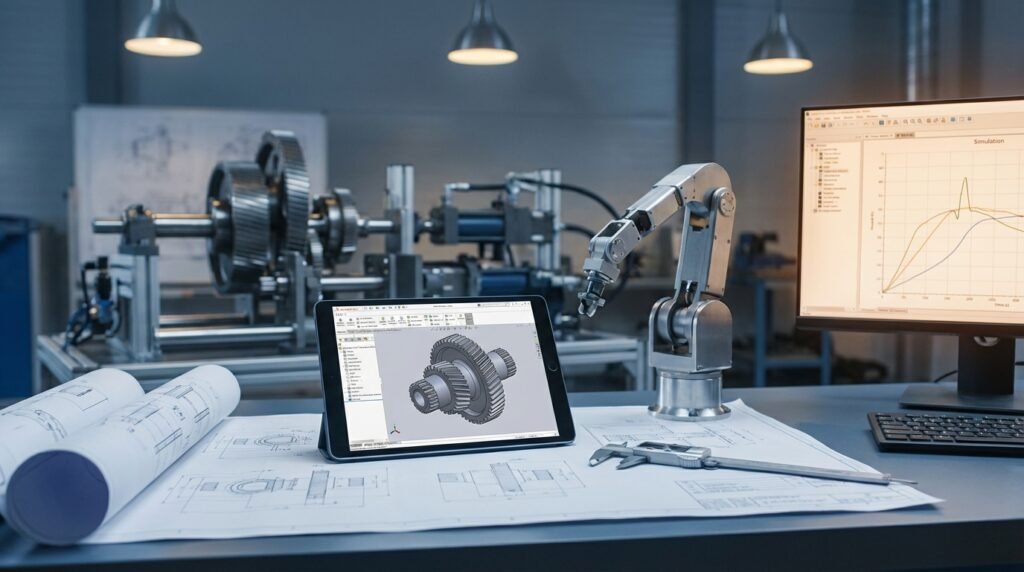
Image Credit: Wikimedia Commons / This file is licensed under the Creative Commons Attribution-Share Alike 4.0 International license.
Why Skill Specialization Matters Now More Than Ever
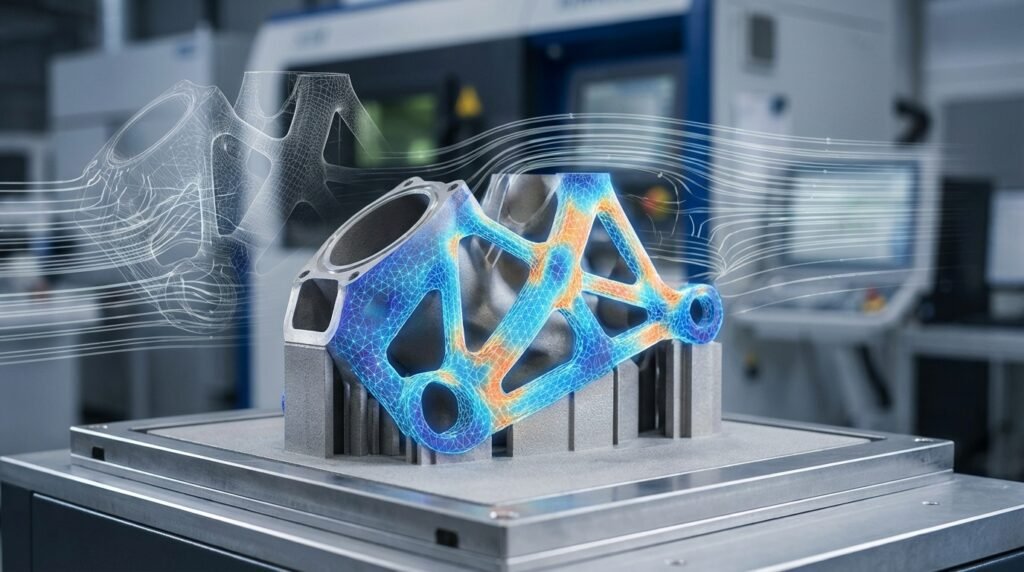
The days of being a ‘generalist’ mechanical engineer are fading. Employers increasingly seek professionals with specialized mechanical engineer skills, whether that’s expertise in Finite Element Analysis (FEA), Computational Fluid Dynamics (CFD), or advanced materials science. Understanding where to focus your development can significantly impact your career trajectory and value to a project team.
Core Technical Mechanical Engineer Skills
At the heart of mechanical engineering lies a robust understanding of fundamental scientific and engineering principles. These are the bedrock upon which all specialized skills are built.
Fundamentals of Engineering Science
Without these foundational concepts, advanced applications are impossible. A strong grasp of these areas ensures you can tackle diverse problems, from structural integrity assessments to complex fluid flow scenarios.
-
Solid Mechanics and Materials Science
- Key Concepts: Stress, strain, elasticity, plasticity, fatigue, creep, fracture mechanics, material properties (tensile strength, yield strength, toughness), heat treatment, crystallography.
- Application: Designing safe and durable components, selecting appropriate materials for specific operating conditions (e.g., high-temperature alloys in jet engines, corrosion-resistant materials for offshore platforms). Understanding failure mechanisms is crucial for ensuring FFS Level 3 compliance.
- Practical Tip: Regularly review your statics, dynamics, and strength of materials textbooks. These principles are perpetually relevant.
-
Thermodynamics and Heat Transfer
- Key Concepts: Energy conservation, entropy, heat conduction, convection, radiation, thermodynamic cycles (Rankine, Brayton).
- Application: Designing efficient engines, HVAC systems, heat exchangers, and thermal management solutions for electronics or industrial processes (e.g., cooling systems in power plants).
-
Fluid Dynamics
- Key Concepts: Fluid properties, viscosity, pressure, flow regimes (laminar, turbulent), Navier-Stokes equations, boundary layers, lift, drag.
- Application: Optimizing aerodynamic shapes in aerospace, designing efficient piping networks in oil & gas, analyzing blood flow in biomechanics, or designing hydraulic systems.
- Common Mistake: Neglecting the difference between ideal and real fluid behavior, leading to inaccurate performance predictions.
Design & CAD Proficiency
Computer-Aided Design (CAD) is the universal language of modern mechanical engineering. It’s not just about drawing; it’s about translating concepts into manufacturable designs.
-
CAD Software Mastery
- Tools: CATIA, SolidWorks, Inventor, Creo, AutoCAD.
- Skills: Sketching, part modeling, assembly design, drafting, surface modeling, sheet metal design.
- Actionable Tip: Become proficient in at least one industry-standard CAD package. Certifications (e.g., Certified SolidWorks Professional) can be a significant advantage.
-
Design Principles & Methodologies
- Key Concepts: Design for Manufacturability (DFM), Design for Assembly (DFA), Design for Cost (DFC), concurrent engineering, modular design.
- Application: Ensuring designs are not only functional but also cost-effective and easy to produce and maintain.
-
Geometric Dimensioning & Tolerancing (GD&T)
- Key Concepts: Understanding datum features, feature control frames, form, orientation, location, and runout tolerances (e.g., flatness, perpendicularity, position, concentricity).
- Application: Precisely communicating design intent and manufacturing requirements to ensure parts fit and function correctly, especially in high-precision industries like aerospace or medical devices.
- Common Mistake: Over-tolerancing, which increases manufacturing cost without providing functional benefit.
Computational Analysis Skills (CAE)
Computational tools are indispensable for predicting performance, identifying potential failure points, and optimizing designs before physical prototyping. This is where CAD-CAE workflows truly shine.
-
Finite Element Analysis (FEA)
- Tools: Abaqus, ANSYS Mechanical, MSC Nastran/Patran.
- Skills: Meshing (hex, tet, shell elements), material model definition (linear elastic, plastic, hyperelastic), boundary conditions, load application, contact analysis, buckling, fatigue analysis, modal analysis.
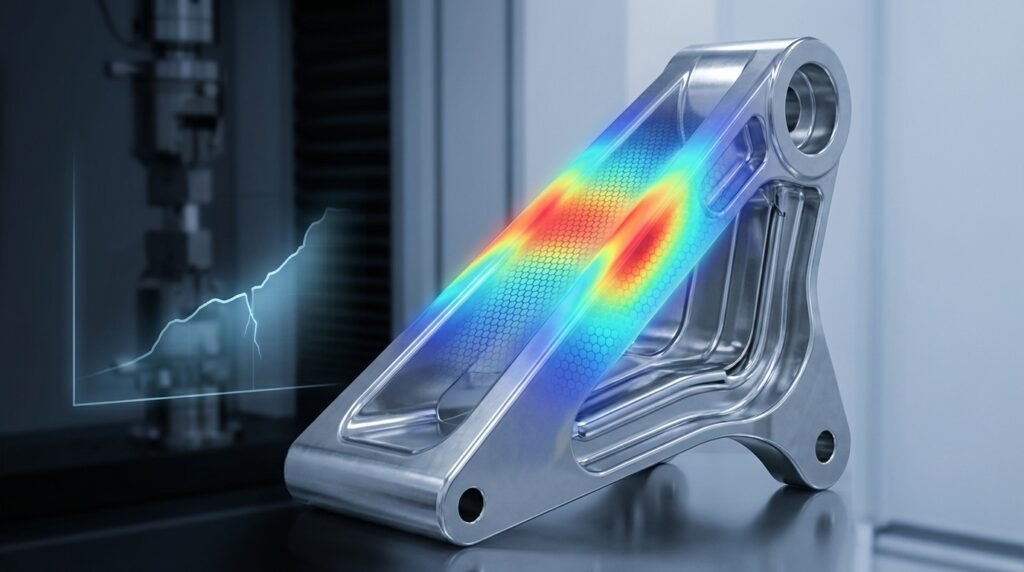
- Application: Assessing structural integrity of bridges, simulating stress in aircraft wings, analyzing biomechanical implants, predicting deformation in pressure vessels, FFS Level 3 assessments.
-
Computational Fluid Dynamics (CFD)
- Tools: ANSYS Fluent/CFX, OpenFOAM, STAR-CCM+.
- Skills: Mesh generation (volume meshing, boundary layer meshing), turbulence modeling (RANS, LES, DES), multiphase flow, heat transfer, chemical reactions.
- Application: Optimizing flow around airfoils, analyzing fluid mixing, simulating combustion in engines, predicting heat dissipation in electronics, designing pipelines for oil & gas.
-
Multibody Dynamics (MBD)
- Tools: ADAMS, RecurDyn.
- Skills: Kinematics, dynamics, joint definition, force elements, flexible bodies, co-simulation.
- Application: Simulating the motion and forces in complex mechanical systems like robotic arms, vehicle suspensions, or landing gear mechanisms.
Practical Workflow for CAE Simulations
A structured approach to simulation is key to reliable results.
- Problem Definition: Clearly define the objectives, expected outcomes, and critical parameters. What question are you trying to answer?
- Pre-processing:
- Geometry Cleanup: Simplify the CAD model for analysis, removing irrelevant features.
- Material Properties: Assign accurate material models (linear elastic, elastoplastic, hyperelastic, etc.).
- Meshing: Generate an appropriate mesh (element type, size, distribution). Consider mesh density in critical regions.
- Boundary Conditions (BCs) & Loads: Apply realistic constraints and forces that represent the real-world scenario. Think about fixed supports, pressure, temperature, gravity, etc.
- Solver Execution: Run the simulation. This often requires significant computational power. EngineeringDownloads.com offers affordable HPC rental to run your complex models efficiently.
- Post-processing: Visualize and interpret the results (stress contours, displacement plots, velocity vectors, temperature maps). Extract quantitative data.
- Reporting: Document methodology, results, and conclusions, including any assumptions or limitations.
Verification & Sanity Checks for CAE
Simulation results are only as good as their inputs and the understanding of the underlying physics. Never trust a simulation without rigorous checks.
- Mesh Sensitivity Study: Rerun the simulation with finer and coarser meshes to ensure results are independent of mesh density. Look for convergence of key output parameters.
- Boundary Condition (BC) Checks: Visualize applied BCs to confirm they are correct. Do the reactions make sense? Are there unintended constraints?
- Convergence Checks: For iterative solvers (common in CFD and non-linear FEA), monitor convergence criteria (e.g., residual plots) to ensure the solution has stabilized.
- Hand Calculations/Analytical Solutions: For simplified cases, compare simulation results with basic hand calculations or known analytical solutions. Even an order-of-magnitude check is valuable.
- Validation: If possible, compare simulation results with experimental data or published literature for similar problems.
- Sensitivity Analysis: Vary key input parameters (e.g., material properties, load magnitudes) within their expected ranges to understand their impact on the results. This helps identify critical inputs.
- Physical Plausibility: Do the results make physical sense? Is the deformation direction correct? Is the temperature distribution logical?
Manufacturing Processes & Systems
A design is only good if it can be manufactured. Understanding manufacturing constraints is vital for practical engineering.
-
Traditional & Advanced Manufacturing
- Processes: Machining (milling, turning), welding, casting, forging, sheet metal fabrication, injection molding, additive manufacturing (3D printing).
- Application: Designing parts optimized for specific manufacturing methods, reducing production costs, and improving product quality.
-
Lean Manufacturing & Quality Control
- Key Concepts: Value stream mapping, Kaizen, Six Sigma, statistical process control (SPC), root cause analysis.
- Application: Improving efficiency, reducing waste, and ensuring consistent product quality in production environments.
Materials Selection & Characterization
The choice of material profoundly impacts a product’s performance, cost, and lifespan.
-
Material Properties & Failure Analysis
- Concepts: Understanding the mechanical, thermal, electrical, and chemical properties of metals, polymers, composites, and ceramics. How materials fail under different loading conditions (e.g., brittle fracture, ductile fracture, fatigue, creep).
- Application: Selecting the optimal material for a given application, predicting material behavior in service, and investigating failures to prevent recurrence. This is critical for structural integrity in high-risk applications.
Automation & Data Science Skills
The digital revolution has brought data and automation to the forefront, transforming how engineers work.
Programming & Scripting
Automating repetitive tasks and processing large datasets are invaluable skills.
-
Python & MATLAB Proficiency
- Tools: Python (with libraries like NumPy, SciPy, Matplotlib, Pandas), MATLAB.
- Skills: Scripting for automation (e.g., CAD/CAE pre/post-processing, parametric studies), data analysis, algorithm development, scientific computing.
- Application: Automating report generation, customizing simulation workflows, developing control algorithms, performing advanced data analysis. For example, using Python to parse FEA results files or drive Abaqus/ANSYS through their APIs.
- Actionable Tip: Start with small scripting projects, like automating a simple report or generating a batch of input files.
Data Analysis & Visualization
Turning raw data into actionable insights is a critical skill for design optimization and troubleshooting.
-
Statistical Analysis & Data Interpretation
- Concepts: Descriptive statistics, inferential statistics, regression analysis, hypothesis testing.
- Application: Analyzing experimental data, understanding variations in manufacturing processes, validating simulation models, identifying trends in performance data.
-
Data Visualization
- Tools: Matplotlib (Python), Plotly, Excel, Power BI, Tableau.
- Skills: Creating clear, concise, and informative graphs and charts to communicate complex data effectively.
- Common Mistake: Presenting raw data without context or proper visualization, making it difficult for stakeholders to understand.
Soft Skills & Professional Acumen
Technical brilliance alone isn’t enough. Effective mechanical engineers are also excellent communicators, problem-solvers, and team players.
Problem-Solving & Critical Thinking
The essence of engineering is solving problems.
-
Systematic Problem Solving
- Skills: Defining problems, root cause analysis, brainstorming solutions, evaluating options, implementing and verifying solutions.
- Application: Troubleshooting equipment failures, optimizing designs, resolving project roadblocks.
Communication & Teamwork
You can have the best idea, but if you can’t communicate it, it’s useless.
-
Technical Communication
- Skills: Writing clear technical reports, proposals, and documentation; delivering engaging presentations; active listening; translating complex technical concepts for non-technical audiences.
- Application: Presenting design reviews, documenting research findings, collaborating with manufacturing teams, explaining project progress to management.
-
Collaboration & Interpersonal Skills
- Skills: Working effectively in multidisciplinary teams, conflict resolution, negotiation, empathy.
- Application: Seamlessly integrating with electrical engineers on mechatronics projects, coordinating with project managers, collaborating with clients.
Project Management
Engineers often lead or contribute to complex projects.
-
Planning, Execution & Risk Management
- Skills: Defining scope, setting timelines, resource allocation, budget management, identifying and mitigating risks, tracking progress.
- Application: Managing the entire product development lifecycle from concept to launch, ensuring projects stay on track and within budget.
Continuous Learning & Adaptability
The field never stands still.
-
Staying Current with Technology
- Skills: Proactively researching new tools, methodologies, and industry trends (e.g., AI in engineering, advanced materials, sustainable design).
- Actionable Tip: Dedicate time each week to read industry journals, blogs, or participate in webinars.
Building Your Skillset: A Practical Roadmap
Developing these skills is an ongoing journey. Here’s a structured approach:
Formal Education & Specialization
A bachelor’s degree is foundational. Consider a master’s for specialization in areas like structural analysis, fluid dynamics, or biomechanics.
Hands-On Experience
Internships, co-op programs, and personal projects provide invaluable real-world application of theoretical knowledge. Build things, break things, learn from them.
Certifications & Online Courses
Industry certifications (e.g., ASME GD&T Professional, specific software certifications) validate your expertise. Online and live courses can fill knowledge gaps quickly. EngineeringDownloads.com provides online/live courses and internship-style training to help you master these critical skills.
Mentorship & Networking
Seek out experienced engineers. A mentor can guide your development, provide insights, and open doors. Attend industry conferences and workshops to expand your professional network.
Mechanical Engineer Skill Levels Overview
| Skill Area | Entry-Level Engineer | Mid-Career Engineer | Senior/Lead Engineer |
|---|---|---|---|
| Foundational Theory | Solid grasp of basics | Applies advanced concepts routinely | Deep expertise, able to teach/innovate |
| CAD Proficiency | Basic modeling & drafting | Complex assembly, DFM/DFA | Customization, advanced surfacing, standards development |
| CAE (FEA/CFD) | Runs basic simulations, interprets results | Sets up complex models, troubleshooting, sensitivity analysis | Develops methods, validates, advises on complex non-linear problems |
| Programming | Understands basic logic/scripts | Automates tasks, develops small tools (Python/MATLAB) | Develops robust applications, integrates software via APIs |
| Soft Skills | Communicates clearly | Effective team player, presents well | Mentors, leads teams, influences decisions |
Common Pitfalls to Avoid in Skill Development
- Tunnel Vision: Focusing too narrowly on one skill (e.g., only CAD) and neglecting others like CAE or programming.
- Ignoring Soft Skills: Believing technical expertise alone is sufficient. Poor communication can derail even the best technical solutions.
- Lack of Verification: Trusting simulation results without critical sanity checks and verification steps.
- Avoiding Programming: Seeing scripting as ‘not a mechanical engineer’s job.’ Automation is increasingly vital.
- Stagnation: Failing to continuously learn new tools, techniques, and industry trends. The field evolves rapidly.
Conclusion: Your Path to Engineering Excellence
The role of a mechanical engineer is more exciting and challenging than ever. By focusing on a strong foundation in engineering science, mastering modern computational tools, embracing automation, and cultivating essential soft skills, you position yourself for a highly successful and impactful career. Continuously evaluate your skillset, identify areas for growth, and proactively seek opportunities to learn and apply new knowledge. Remember, engineering is a journey of lifelong learning.
Further Reading
To deepen your understanding of fundamental mechanical engineering principles, consider exploring resources like the American Society of Mechanical Engineers (ASME).